

Friday, June 19, 2020
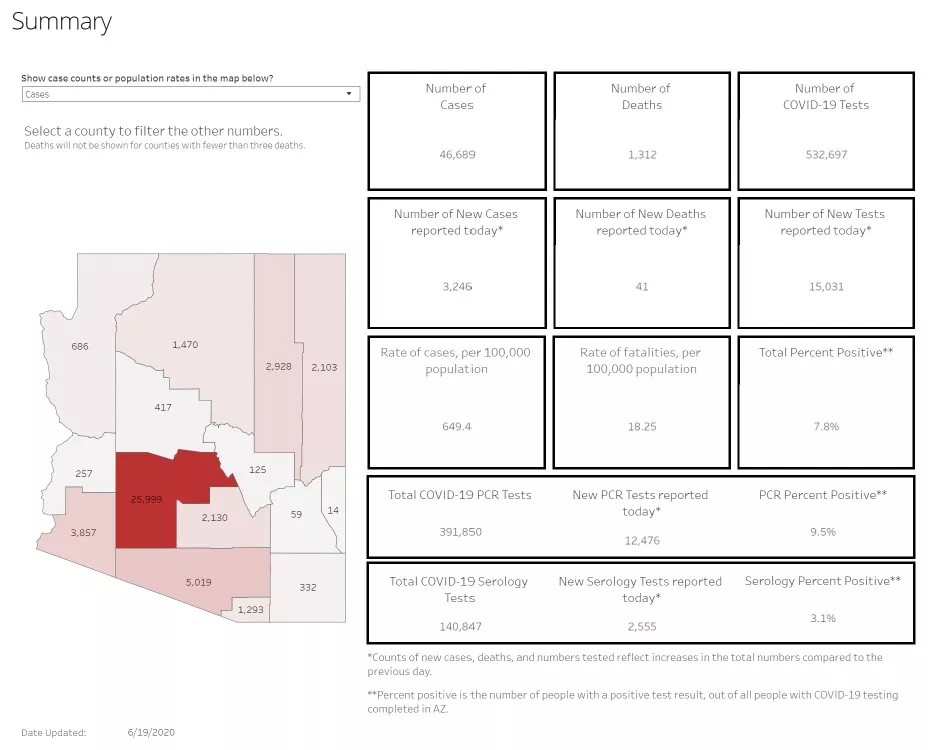
Pima County had 5,019 of the state's 46,689 confirmed cases. That's up almost 10,000 from Monday's total of 36,705 cases.

A total of 1,312 people have died after contracting the virus, including 240 in Pima County.
Maricopa County has more than half the state's cases, with the number of confirmed COVID-19 cases hitting 25,999.
Because symptoms can take as long as two weeks to appear after exposure to the virus (while some people can remain entirely asymptomatic), health officials continue to urge the public to avoid unnecessary trips and gatherings of more than 10 people, especially if you have underlying health conditions, and have advised people to cover their faces with masks in public.
Arizona hospitals continue to see a steady rise in the number of people hospitalized with COVID symptoms, as well as more people visiting emergency rooms. This morning's Arizona Department of Health Services report shows that as of yesterday, a record 1,832 Arizonans were hospitalized, a jump of 823 people from the 1,009 hospitalized on June 1.
964 arrived at emergency rooms with COVID-like symptoms on June 18. Previous to June, the number of people seeking help in emergency rooms never topped 667, but the daily number hasn't dipped below 800 since June 5.
The number of patients in ICU beds hit a small drop to 519 yesterday.
At a press conference this week, Gov. Doug Ducey conceded that Arizona's soaring numbers were trending in the wrong direction.
"There is an indication that we are not out of the woods yet," Ducey said,
Ducey, who wore a mask for the first time before beginning his press briefing, said he would allow cities and counties to set their own policies in regard to mandating the wearing of masks.
While he had previously blocked local jurisdictions from setting standards more strict than the state's emergency regulations, Ducey said different areas of the state were facing different circumstances, so he was relaxing his emergency regulations that limited the actions of local communities. He said it would be up to local communities to set up rules and penalties.
Tucson Mayor Regina Romero wasted little time in taking advantage of Ducey's relaxed standard. She issued a proclamation yesterday requiring the wearing of masks for everyone older than 2 years old when out in public when physical distancing is difficult beginning at 6 a.m. Saturday, June 19. Violators could face a civil infraction.
“We saw numbers spiking related to the reopening of businesses in the state of Arizona,” Romero said yesterday. “Just Tuesday we saw one of the biggest spikes of cases throughout the state.”
Thursday, June 18, 2020

- The number of confirmed coronavirus cases in Arizona jumped over 43,000 as of Thursday, June 18, after the state reported a record number of 2,519 new cases this morning, according to the Arizona Department of Health Services.
- Three months ago, Gov. Doug Ducey signed Executive Order 2020-14 which intended to halt residential evictions due to hardships related to COVID-19.
- The Small Business Administration and the Department of the Treasury are making it easier for business owners to apply for Paycheck Protection Program's loan forgiveness by culling down the application process.
- Today the United States Supreme Court handed down a 5-4 decision that blocked the Trump administration from ending the Deferred Action for Childhood Arrival program.
- Mayor Regina Romero issued a proclamation during Thursday’s press conference requiring COVID-19 masks to be worn in public settings by all Tucsonans age two and up when physical distancing is difficult or they could potentially face a civil infraction.
- The Bighorn Fire made a large run Wednesday night, burning more than 10,000 additional acres throughout the western flanks of Mount Lemmon and the Catalina Mountains.
- As the Bighorn Fire continues to burn across the Santa Catalina Mountains, residents in two new areas have been warned to evacuate.
- What does it feel like to have the fires approach you? Find out in this timelapse video from Mt. Lemmon.

Violators could potentially face a civil infraction.
“We saw numbers spiking related to the reopening of businesses in the state of Arizona,” Romero said today. “Just Tuesday we saw one of the biggest spikes of cases throughout the state.”
The proclamation defines a facemask as "a covering made of cloth, fabric, or other soft or permeable material that covers the nose and mouth and surrounding areas of the lower face". Acceptable facemasks can be factory-made, handmade, a bandana, scarf, or any face-covering that shields the nose and mouth areas, according to the proclamation.
The new guidance carries a $50 fine or five hours of community service for those who exhibit a “blatant disregard” for public health and safety, according to Romero. The city will take an educational approach in enforcement, reserving civil infractions for repeat offenders, Romero said.
“We’re going to have an educational approach to the requirement. If there is a blatant disregard for the public health of others, then we will, if absolutely necessary, a civil infraction of $50 or five hours of community service,” Romero said. “This is something we’re asking of everyone to practice social responsibility, practice caring for themselves and others, and it will take all of us to accomplish.”
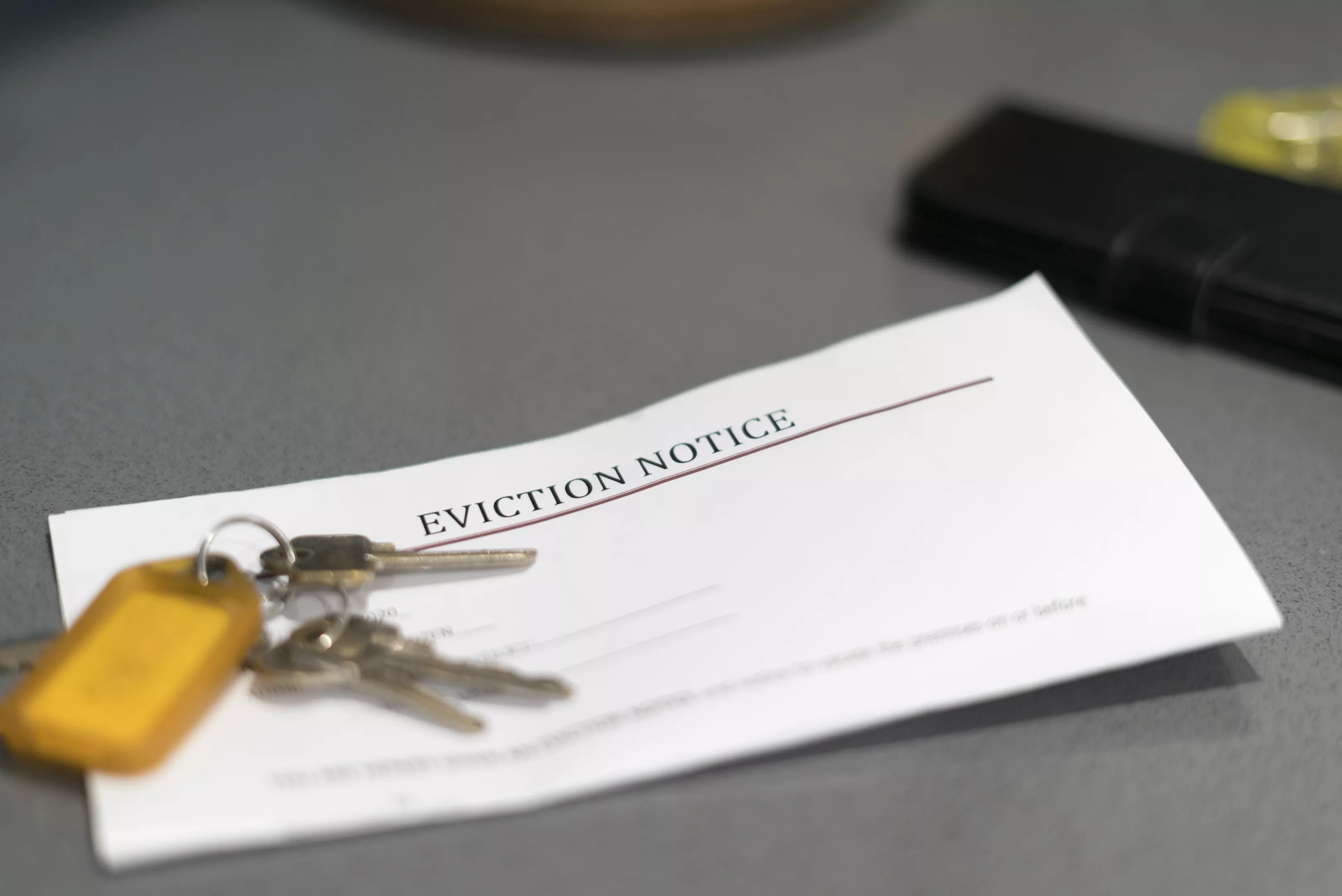
Three months ago, Gov. Doug Ducey signed Executive Order 2020-14 which intended to halt residential evictions due to hardships related to COVID-19.
Tenants are protected from eviction if they are in quarantine due to a positive diagnosis or related symptoms; if someone in their home has a diagnosis or related symptoms; or if they have a health condition that puts them at increased risk. Additionally, if a tenant has suffered a substantial loss of income due to COVID-19 (such as a job loss, pay cut or an reduction in pay or an obligation to stay home from work to care for children or “other pertinent circumstances") they are protected by the executive order.
But the rules are not being uniformly enforced across Pima County, according to a June 15 memo from County Administrator Chuck Huckelberry, who recommended that the Pima County Attorney's Office and the Arizona Office of the Courts investigate some questionable actions in recent evictions. He suggested the Constables Ethics and Training Board become involved as well.
Some Pima County constables (the elected officials who enforce eviction orders) are taking a “proactive approach” to COVID-19 evictions while others are not, Huckelberry said. Some constables won't enforce eviction orders if a tenant can provide proof of COVID-19-related hardships, while others will evict no matter what. This leaves tenants susceptible to unequal treatment, determined solely by which constable is assigned to their case.
Since June 1, all eviction proceedings in Pima County Justice Court have been conducted by telephone or video meetings in an effort to curb the spread of COVID-19. Justices of the Peace Charlene Pesquiera and Adam Watters told Huckelberry that evictions in April and May were down by hundreds compared to the same time in 2019 and 2018.
But Arnold Palacios and Marcos Ysmael with Pima County Community Services reported that in the first three weeks of June, 783 eviction cases have been scheduled for hearings—an average of 52 cases per day. During a normal period, constables say between 10 and 30 cases are heard each day.
With an elevated number of evictions happening during the COVID-19 pandemic, Palacios and Ysmael reported that the switch to telephonic and video meetings instead of in-person court hearings has caused complications for defendants who want to participate in their eviction hearings.
“Obviously, individuals who are in the process of being evicted may not have the best access to this electronic information to effectively participate in the eviction hearing,” Huckelberry wrote in his memo. “They often do not even have access to a phone or know where and who to call.”
Tags: Eviction , Pima County , Govenor Doug Ducey , Executve Order 2020-14 , Chuck Huckelberry , Constable , Justice Court , COVID19 , Coronavirus , Image
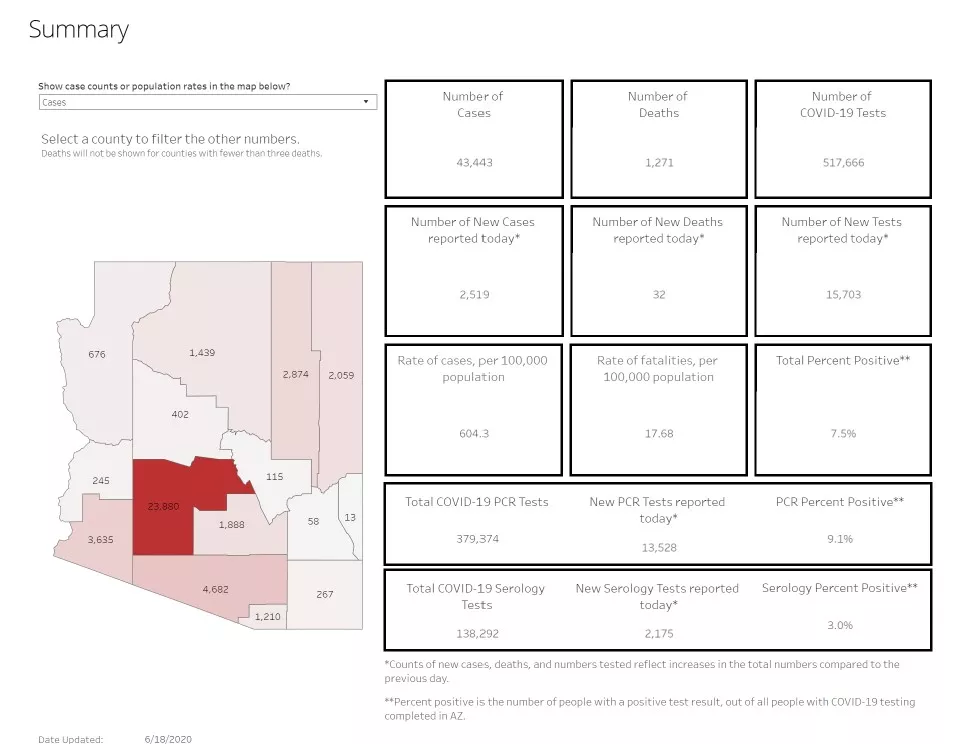

Pima County had 4,682 of the state's 43,443 confirmed cases.
That's more than double the 20,123 confirmed cases the state had on June 1.
A total of 1,271 people have died after contracting the virus, including 235 in Pima County.
Maricopa County has more than half the state's cases, with the number of confirmed COVID-19 cases hitting 23,880.
Because symptoms can take as long as two weeks to appear after exposure to the virus (while some people can remain entirely asymptomatic), health officials continue to urge the public to avoid unnecessary trips and gatherings of more than 10 people, especially if you have underlying health conditions, and have advised people to cover their faces with masks in public.
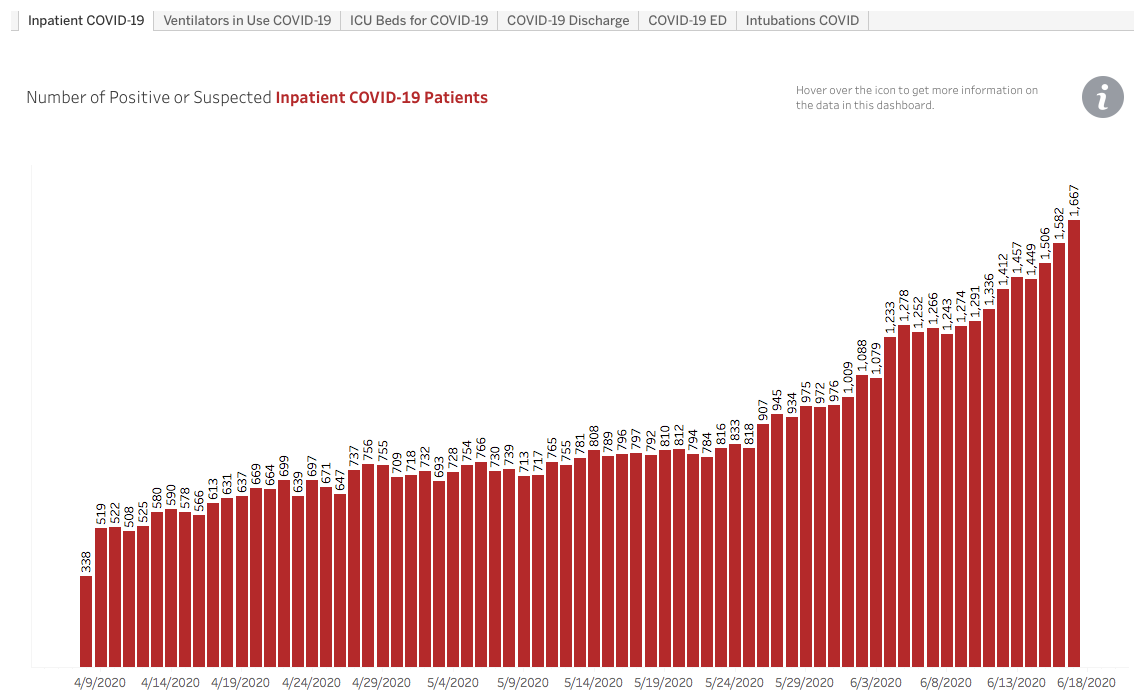
Although Gov. Doug Ducey told Arizonans that the state was "clearly on the other side of this pandemic" when he lifted his stay-at-home order on in mid-May, Arizona hospitals continue to see a steady rise in the number of people hospitalized with COVID symptoms, as well as more people visiting emergency rooms. This morning's Arizona Department of Health Services report shows that as of yesterday, a record 1,667 Arizonans were hospitalized, a jump of 658 people from the 1,009 hospitalized on June 1. A record number of 1,109 arrived at emergency rooms with COVID-like symptoms on June 17. Previous to June, the number of people seeking help in emergency rooms never topped 667, but the daily number hasn't dipped below 800 since June 5. The number of patients in ICU beds hit another record of 540 yesterday.
At a press conference yesterday, Ducey clarified that when he said the state was "clearly on the other side of this pandemic," he meant that the state had a lot more information about how the virus behaves, not that the COVID-19 outbreak had peaked. He also said he could now see a trend in the rising cases; at a press conference two weeks ago, he said the rising cases were data but he couldn't see a trend.
"There is an indication that we are not out of the woods yet," Ducey said.
Ducey, who wore a mask before beginning the press conference for the first time, said he would allow cities and counties to set their own policies in regard to mandating the wearing of masks. While he had previously blocked local jurisdictions from setting standards more strict than the state's emergency regulations, Ducey said different areas of the state were facing different circumstances, so he was relaxing his emergency regulations that limited the actions of local communities. He said it would be up to local communities to set up rules and penalties.
Wednesday, June 17, 2020
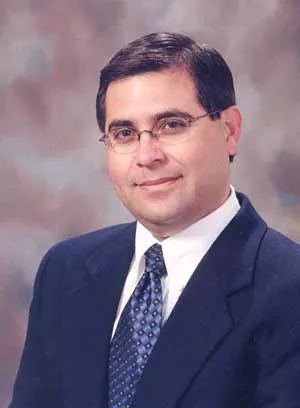
After Gov. Doug Ducey announced this afternoon that he would give local jurisdictions the power to mandate masks, Board Chairman Ramon Valadez called for the 3 p.m. meeting.
The ordinance, which is still being drafted, would apply countywide, including within all jurisdictions, Valadez said.
Pima County Supervisor Sharon Bronson said she was in favor of mandating masks.
Ducey, who wore a mask before beginning the press conference for the first time, said different areas of the state were facing different circumstances, so he was relaxing his emergency regulations that limited the actions of local communities. He said it would be up to local communities to set up rules and penalties.
Earlier today, Romero said she had asked City Attorney Michael Rankin to develop a legal strategy to require masks.
Tucson City Councilman Steve Kozachik, who last week called on Ducey to allow local communities to set their own standards, called Ducey's announcement a "half-step."
"The fact that we can do masks is fine," Kozachik said. "We ought to be able to do more."
Kozachik had earlier today called for the city to return to the emergency proclamation issued by Romero in March that limited restaurants to curbside service and closed bars, gyms, theaters and other gathering places. Kozachik said he believed the city's charter gave the council that authority, although he said he expected it would be challenged by Republican state lawmakers.
Ducey, who had not emphasized the wearing of face masks before last week, recommended that people should “act responsibly” and wear the masks when out in public.
“Every Arizonan should wear a face mask,” Ducey said. “It’s the smart thing to do.”
Ducey also said his administration would be providing more guidance to businesses to prevent large gatherings.
Ducey's action comes as the number of confirmed coronavirus cases in Arizona soared to nearly 41,000 as of today after the state reported 1,827 new cases reported this morning.
Pima County had 4,385 of the state's 40,924 confirmed cases, according to the Arizona Department of Health Services. That's more than double the 20,123 confirmed cases the state had on June 1.
A total of 1,239 people have died after contracting the virus, including 229 in Pima County.
Maricopa County has more than half the state's cases, with the number of confirmed COVID-19 cases hitting 22,272.
In a reversal of his previous policy, Gov. Doug Ducey announced today that he will allow local jurisdictions to mandate the wearing of face masks in an effort to slow Arizona’s skyrocketing spread of COVID-19.Protect yourself.
— Doug Ducey (@dougducey) June 17, 2020
Protect others.
Help contain the spread of #COVID19.
Wear a mask. #MaskUpAZ pic.twitter.com/jtWuZmyiqF
Ducey, who wore a mask before beginning the press conference for the first time, said different areas of the state were facing different circumstances, so he was relaxing his emergency regulations that limited the actions of local communities. He said it would be up to local communities to set up rules and penalties.
Tucson officials, including Mayor Regina Romero and Councilmember Steve Kozachik, had been asking Ducey to allow them to set local standards in accordance with CDC guidelines. Earlier today, Romero said she had asked City Attorney Michael Rankin to develop a legal strategy to require masks.
Ducey, who had not emphasized the wearing of face masks before last week, recommended that people should “act responsibly” and wear the masks when out in public.
“Every Arizonan should wear a face mask,” Ducey said. “It’s the smart thing to do.”
Following Ducey's announcement, Pima County Supervisor Sharon Bronson said she believed the county should mandate the wearing of face masks.
Ducey also said his administration would be providing more guidance to businesses to prevent large gatherings.
Ducey's action comes as the number of confirmed coronavirus cases in Arizona soared to nearly 41,000 as of today after the state reported 1,827 new cases reported this morning.
Pima County had 4,385 of the state's 40,924 confirmed cases, according to the Arizona Department of Health Services. That's more than double the 20,123 confirmed cases the state had on June 1.
A total of 1,239 people have died after contracting the virus, including 229 in Pima County.
Maricopa County has more than half the state's cases, with the number of confirmed COVID-19 cases hitting 22,272.
Because symptoms can take as long as two weeks to appear after exposure to the virus (while some people can remain entirely asymptomatic), health officials continue to urge the public to avoid unnecessary trips and gatherings of more than 10 people, especially if you have underlying health conditions, and have advised people to cover their faces with masks in public.
This is a developing story with newly added reaction from local officials.

It’s been six months since researchers in China said they had identified a novel coronavirus spreading in the city of Wuhan. Hope and desire for a vaccine to end the global devastation is growing with each passing week.
Almost every day, I hear people making plans around the eventual arrival of a coronavirus vaccine — office reopenings, rescheduled weddings, family reunions and international travel. In recent weeks, colleagues and friends have asked me with growing urgency: “When will we have a vaccine? Will it be any good?”
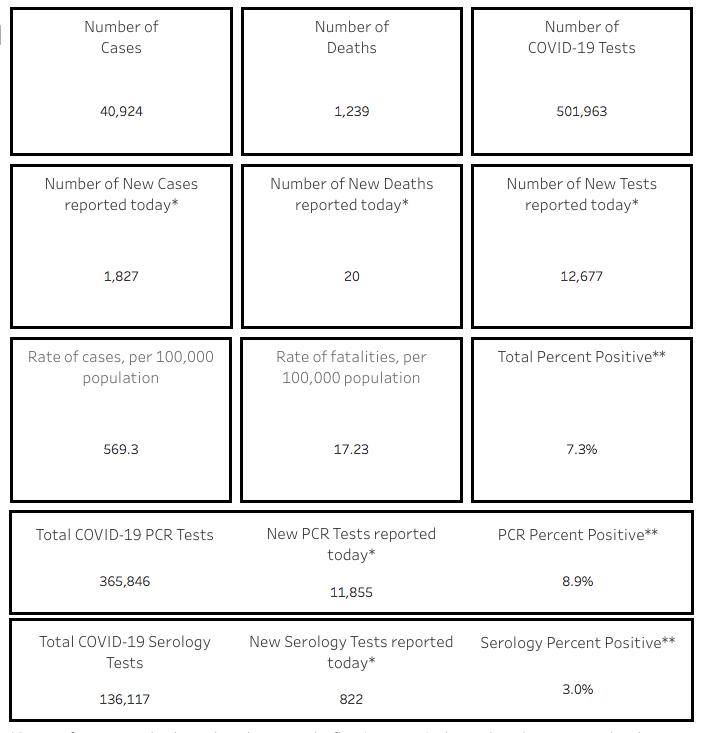
Pima County had 4,385 of the state's 40,924 confirmed cases.

That's more than double the 20,123 confirmed cases the state had on June 1.
A total of 1,239 people have died after contracting the virus, including 229 in Pima County.
Maricopa County has more than half the state's cases, with the number of confirmed COVID-19 cases hitting 22,272.
Because symptoms can take as long as two weeks to appear after exposure to the virus (while some people can remain entirely asymptomatic), health officials continue to urge the public to avoid unnecessary trips and gatherings of more than 10 people, especially if you have underlying health conditions, and have advised people to cover their faces with masks in public.
Although Gov. Doug Ducey told Arizonans that the state "was clearly on the other side of this pandemic" when he lifted his stay-at-home order on in mid-May, Arizona hospitals continue to see a steady rise in the number of people hospitalized with COVID symptoms, as well as more people visiting emergency rooms.
This morning's Arizona Department of Health Services report shows that as of yesterday, a record 1,582 Arizonans were hospitalized, a 50 percent jump of 573 people from the 1,009 hospitalized on June 1. A total of 1,093 arrived at emergency rooms with COVID-like symptoms on June 16, the first time that number has topped 1,000. Previous to June, the number of people seeking help in emergency rooms never topped 667, but the daily number hasn't dipped below 800 since June 5. The number of patients in ICU beds hit a new record of 531 yesterday.
Dr. Steven Oscherwitz tweeted yesterday that there was just one bed left in TMC's ICU.Just a #single #ICU #bed available this AM at Tucson Medical Center.
— Steven Oscherwitz MD (@drdetectve) June 15, 2020
Better contact your #governor (quickly!)
Tucson officials, including Mayor Regina Romero and Tucson City Councilman Steve Kozachik, have asked Gov. Doug Ducey to allow local communities to set their own standards to reduce the rapid spread of COVID-19. Under his executive order, Ducey has prohibited local jurisdictions from setting standards tougher than state regulations.
Romero yesterday urged Ducey "to remove the restrictions he has placed on local governments from taking their own public health measures."
"For example, I believe that face masks should be mandatory in areas of the state with high community transmission for indoor spaces where social distancing is not feasible," Romero said. "Gov. Ducey needs to untie the hands of local governments and allow us to make decisions that are in the best interest of our communities and account for local conditions."
Ducey, who has rarely been seen with a mask or face covering and whose administration has frequently neglected to include the advice in various health advisories it has sent out, said last week he did wear them while shopping when he cannot physically distance from others by at least 6 feet. He advised Arizonans to wear them if they felt comfortable doing so.
Despite the rising number of hospitalizations, Ducey said last week there's no reason to be concerned about hospital capacity.
Tuesday, June 16, 2020

- The number of confirmed coronavirus cases in Arizona jumped past 39,000 as of Tuesday, June 16, after the state reported a record new 2,392 new cases reported this morning, according to the Arizona Department of Health Services.
- The Arizona-Sonora Desert Museum began a phased reopening today, June 16, with new safety precautions based on the Center for Disease Control and Prevention guidelines.
- The Pima County Sheriff's Department has issued a "GO" order to the areas of Mt. Lemmon and Mt. Bigelow north of Organization Ridge Road, including Summerhaven, due to the encroaching Bighorn Fire, now nearly 16,000 acres.
- The Trump administration has unveiled its furthest-reaching plan yet to change asylum law in the U.S., redefining the meaning of “persecution” and raising the bar for refugees seeking protection under the Convention Against Torture, among other changes.
- The Supreme Court ruled Monday that the Civil Rights Act protections against “sex discrimination” also protect gay or transgender employees from discrimination, even if they are not specifically mentioned in the 1964 law.

