Thursday, August 12, 2021
Wednesday, August 11, 2021

A sixth-grade class in the Amphitheater Unified School District will shift to remote learning until Aug. 19 after reported cases of COVID-19 in the class, Principal Jason Weaver announced in a letter to families on Tuesday.
Amphi students returned to school on Aug. 5 during a wave of COVID-19 cases. Most school districts in Pima County, including Amphi, decided not to require masks, which would be a violation of state law. District officials are only encouraging mask-wearing.
In the letter, Weaver said the district provided contact tracing information to the Pima County Health Department for anyone in the Harelson Elementary School class. Close contacts are defined as anyone who was within six feet of an infected person or within three feet if one of the contacts was wearing a mask for a total of 15 minutes or more over a 24-hour period.
As of Wednesday, the school district reported nearly 30 cases district-wide - six cases among teachers and 21 students - with three active cases at Harelson Elementary. Since July 20, the health department has received reports of 386 COVID-19 cases and 19 outbreaks across Pima County school districts.
The sixth-grade class will receive remote instruction from a certified teacher who has worked at the school for many years and has taught for Amphi Academy Online, according to Michelle Valenzuela, director of Communications.
“During this time and as we move forward during this year, I encourage all of us to provide support and strength to one another,” said Weaver. “I am grateful to my staff and the wider Harelson community for their patience, understanding and dedication to our students.”
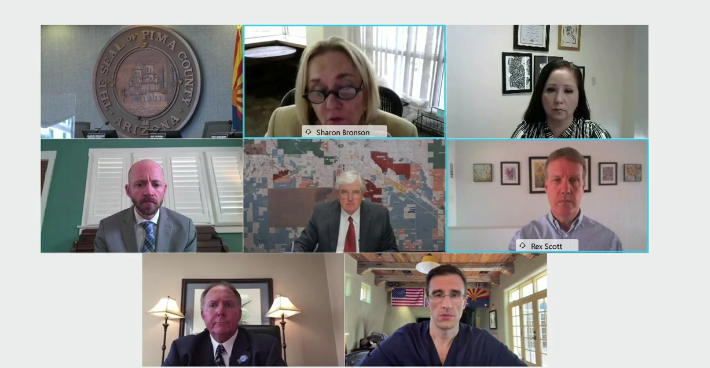
Supervisors Matt Heinz and Adelita Grijalva supporting the emergency proclamation The Pima County Board of Supervisors voted against several COVID-19 related motions at its Tuesday meeting.
With the number of COVID-19 on the rise because of the Delta variant, the board considered several resolutions including, reinstating an emergency proclamation for COVID-19, mandating vaccinations for county employees, instituting mask mandates for K-12 county schools and mandating vaccinations for all healthcare workers in Pima County.
The board voted 3-2 against proclaiming the COVID-19 pandemic an emergency situation. Supervisors Matt Heinz and Adelita Grijalva supporting the emergency proclamation.
Supervisors Matt Heinz and Adelita Grijalva, who supported the emergency proclamation, argued that the declaration would signal to county residents the seriousness of the current state of the pandemic.
During the past month, Pima County’s level of transmission changed from moderate to high, with a rate of 120 cases per 100,000 individuals in the last seven days, according to the CDC.
“People will understand that we have a state of emergency and will take this more seriously and hopefully move to get vaccinated,” Heinz said. “The county will have more ability to more quickly respond to the changing conditions on the ground on behalf of the health department to make the residents safer and to protect lives.”
Tuesday, August 10, 2021
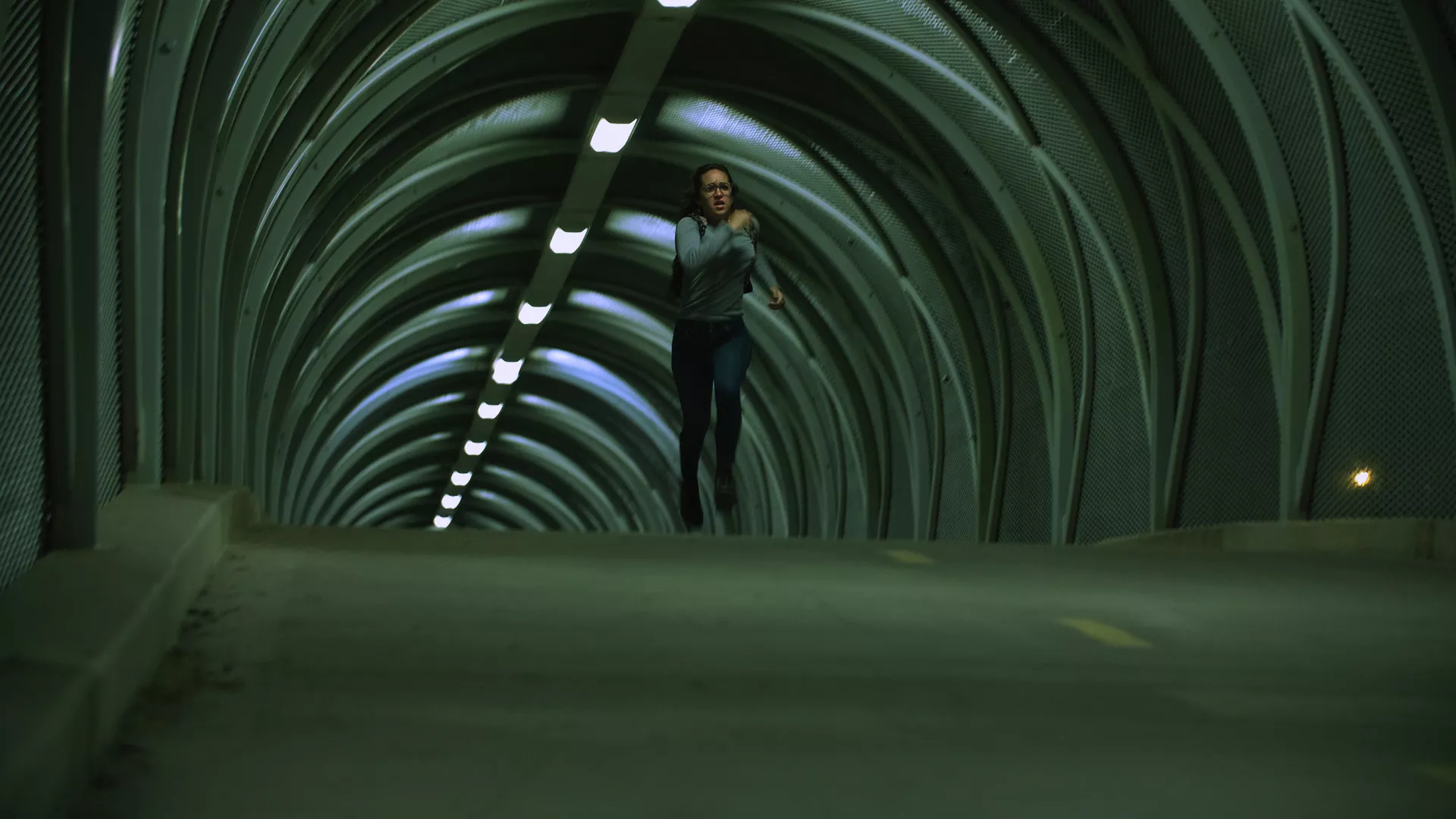
"Time-traveling lesbians." That was all the pitch Tierney Harris needed when their friend Will Holst asked if they wanted to participate in a short film, Mind Over Time. It tells the story of Dawn, a young woman who has been haunted for years by a mistake she is desperate to undo. But also, yeah, lesbian time travel. The film premieres at the Phoenix Film Festival on Aug. 14 and will also be shown at OUTFEST Los Angeles on Aug. 20.
Holst is a sci-fi fan, but it was important to him to tell a story where the main characters didn’t all look like him, a white man. He wanted the story to display some of the diversity he knows and loves among his loved ones. For example, the character who proposes the theory for how to time travel is a young black professor. And the story centers around an interracial lesbian relationship.
“I thought it was really awesome to make it a very obviously LGBTQ story, because you do see a lot of, ‘Oh, here’s the story line and it happens to be gay.’ But definitely while I was on set I was like, ‘I’m gonna make this so gay, on purpose,” says Harris, who plays Dawn’s partner, Grace. “I’m bisexual, and I loved an opportunity to really express myself on film like that. It was the first project that I’ve ever been on where I get to show that side of myself.”
Many of the cast and crewmembers are University of Arizona alumni, and all are, or were, affiliated with the university in some way. The group’s familiarity with the city came through in the film: The main characters hike through the Tucson desert, sip coffee at Espresso Art over on University Boulevard, walk across Rattlesnake Bridge over Broadway Boulevard, and even take shelter from a sudden downpour, like all Tucsonans have had to do. In some ways, it serves like a love letter to Tucson as much as it is a love story between two people.
“I was really excited abut making something in Tucson with people that I know and love,” says Isa Ramos, who played Dawn. “It was really cool to add a little magic to places that have formed me.”
While COVID stalled or even annihilated many people’s creative endeavors, Holst said it acted as a catalyst for the movie project.
“We’d always talk about movies or come up with cool ideas and they never come to fruition,” he says. “And this time it was l just like, ‘Well, we should do it,’ because you never know what the future holds. You really have to take every opportunity you can to be creative or do something you love or are passionate about.”
It’s hard to imagine a better year to make a movie about time travel than the year where time felt completely out of whack. Some months in 2020 seemed to drag on for months, while others felt like they lasted seconds. This collectively warped sense of time set the scene well. People’s schedules were different. People’s priorities were different. People’s creative processes were different. But in between other jobs, and in early mornings and late into the night, the 13-member team made it happen. They shared a COVID bubble and worked as safely as they could – the most people on set at any given time was six, and many crew members did their post-production work remotely. Holst said everyone on the crew had a handful of jobs within the project.
“It was something I’d never done before, and it was the middle of 2020, so what else were we doing?” said Dani Danec, who did the show’s makeup and hair (and was second AD, and kept track of the schedule, and was a stunt driver, and did audio work, etc…) She added that, besides being able to make it to filming when she was also working another job, one of the biggest challenges was shooting a film in the heat of summer that takes place in November. “How do we make you look like you’re bundled up without actively killing you?”
Holst said he calculated the budget as approximately $7,000 – which includes both the cost of equipment he already owned, rented pieces and equipment he bought as part of the universally self-prescribed retail therapy movement of 2020.
The team was thrilled when the film was accepted to Phoenix Film Festival, the largest film festival in Arizona, as well as to OUTFEST Los Angeles, one of the largest LGBTQ+ film festivals in the world.
See Mind Over Time at the Arizona Shorts A Program at the Phoenix Film Festival, at 4:50 p.m. on Saturday, Aug. 14. Or see it in the OUTFEST Los Angeles’ What a Girl Wants shorts program at 7 p.m. on Friday, Aug. 20. For more information, visit MindOverTimeFilm.com.

Monday, August 9, 2021
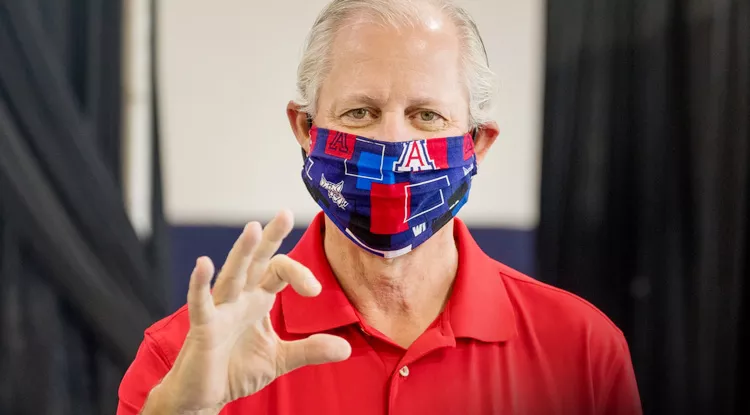
University of Arizona officials are urging students and staff to get vaccinated and mask
as they prepare to welcome students in two weeks to all in-person campus courses.
“We recognize the challenges presented to all of us by the Delta variant, which is more contagious than the lineages of SARS-CoV-2 to that we dealt with last academic year, and which is now the dominant strain in the United States,” said University of Arizona President Robert C. Robbins at the press briefing Monday morning. “This is a very critical moment. I know many of us relaxed over the summer, and we began to think that the pandemic was well behind us.”
At the end of the last school year, the University of Arizona held in-person commencement ceremonies and closed out the year with in-person courses. Over the past year, the university had required masks and implemented mandatory testing, but this year the university faces a rise in cases and an inability to implement key mitigation strategies.
Like K-12 schools, state law bars universities and community colleges from requiring that “a student obtain a COVID-19 vaccine or place any conditions on attendance or participation in classes including mandatory testing or face covering usage.”
Robbins said the university has decided to not challenge state law and will wait to see how the situation “plays out” for some K-12 schools, some of which have instituted mask mandates in Arizona.
When asked if the university considered implementing masks mandates or requiring vaccination before Sept. 29, when some argue the law comes into effect 90 days after the legislative session adjourns, former surgeon general and distinguished professor of Public Health Dr. Richard Carmona said the law was formerly an Executive Order, mandated by Gov. Doug Ducey.
“It is a law or an Executive Order, prior to the law, which mandates what we can and can't do, and we're working tirelessly to try and maximize our ability to keep the university safe, and open it as much as possible,” said Carmona.
Friday, August 6, 2021

Wednesday, August 4, 2021
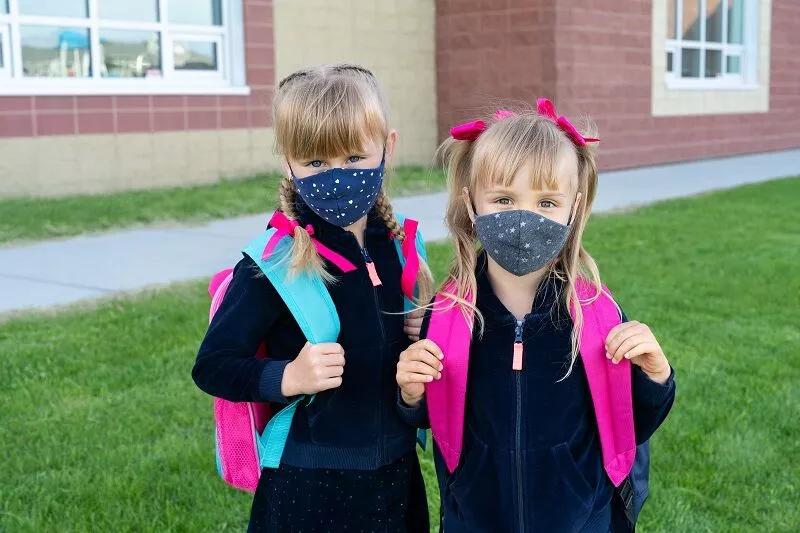
The Tucson Unified School District board voted 4-0 at an emergency meeting Wednesday morning to require everyone to wear a mask on TUSD property.
Before school begins Thursday, the board decided to mandate masks on all TUSD campuses, motivated by the outbreaks in the Vail School District and with the growing number of pediatric cases.
Vail School District began school on July 19 and officials have reported 25 COVID-19 cases from students and staff as of July 25. On Monday, the district reported 57 student cases and 12 staff cases as of Aug. 1. TUSD is almost four times the size of Vail.
Last week, Dr. Theresa Cullen, director of Pima County's Health Department, said the county received reports of 56 cases since July 19 and eight outbreaks at schools.
For weeks, health experts warned of the expected outbreaks and high transmission in schools, especially with the inability of school districts to implement masking, because state law passed in June prohibits districts from mandating masks.
Dr. Joe Gerald, an epidemiologist with the UA Zuckerman School of Public Health, who has been tracking the virus since March of 2020, alerted the public to the impending outbreaks in his weekly forecast.
”Unlike the summer of 2020 when we were headed into school re-opening with generally declining rates, the match has been lit and the kindling is aflame this time,” wrote Gerald in an email. “For good measure, we are going to throw on some wet wood (children) in the coming weeks to ensure a robust bonfire for the Labor Day Marshmallow Roast. In the absence of greater vaccination or mask mandates, it is difficult to be optimistic about what might happen when schools are running at full capacity.”
The warning came along with the exponential rise in COVID-19 cases and the prevalence of the Delta variant, which is highly transmissible. Arizona has a high rate of transmission at 175 cases per 100,000 individuals for the seven day rolling average, while Pima County has about half that rate.
Tuesday, August 3, 2021