

Thursday, May 21, 2020
For many musicians and performers out of work due to COVID-19, virtual performances have served as a mild bandage. But while performing in front of webcams may help ease the quarantine time, it doesn't replicate the community engagement found around Tucson’s stages and venues. But in recent weeks, a community of artists have worked to develop an online variety show, not only to get money in the pockets of local artists and businesses, but to rekindle the spirit of Tucson’s art.
Tucson Helping Tucson hosts a weekly livestream to “foster virtual community connections” and raise money for locals in need. The artists who perform on the show get paid, and the show also raises donations for a Revolving Loan and Grant Fund operated by the Community Investment Corporation for small businesses. So far, Tucson Helping Tucson has distributed more than $200,000, helping 80 businesses and paying 35 artists, according to its website.
“When it became very apparent that our small businesses were going to be suffering, the idea popped in my head that we’d have a lot of artists out of work and businesses that need help, and we could potentially stimulate the creative class to provide a fundraising mechanism for the business community,” said Tom Heath of Nova Home Loans, who helped organize the movement.
THT’s weekly livestream, hosted by Frank Powers, is a collaboration with Brink Media, Local First Arizona and the Tucson Metro Chamber that showcases local musicians, artists and entrepreneurs, who get paid for their time on-air.
Now five weeks into their show, THT has hosted local musicians like Gabriel Sullivan, Seanloui and Miss Olivia & The Interlopers, as well as standup comedians, local teachers and business owners.
As the COVID-19 pandemic disrupted an untold number of events and businesses throughout the nation, the census continued quietly in the background. While local census offices had to close and the national Census Bureau pushed back operational dates, the virus’ impact was lessened thanks to this being the first census able to be completed online.
“Obviously we never want to go through a pandemic like this again, but if there was a year to launch the online ability to respond, I think it was convenient it lined up because it gave people a way to respond and the census to continue being conducted in a safe way that protected both the workers and the residents of Arizona,” said Alec Thomson, executive director of the Arizona Complete Count Committee, created by the Governor's Office for this decade's census.
Although census workers have not yet visited non-response homes, data and trends are emerging for this year’s census. As of print, the national self-response rate—including online, mail and phone responses—is 59.6 percent. Arizona is just under the national average at 56 percent, and Pima County is just over at 61 percent. The City of Tucson is at 58 percent, Oro Valley at 73 percent and Marana at 65 percent. But perhaps most important is that the majority of all these responses were submitted over the internet.
“These census numbers and population counts are being used by the federal government to determine how much money is coming into the state for relief efforts. And on top of that, those numbers are also being used by the state to determine how much relief funding goes to each individual county or city or town,” Thomson said. “These numbers are critical in making sure we have the resources we need to take care of people. And also the fact that hospitals and health care providers use this data to determine where they need locations to treat people.”
According to Thomson, Arizona’s response rate started out above the national average, but gradually fell just beneath. He says this is due to Arizona having a higher number of tribal and rural communities, which were impacted by delays in the census’ Update Leave Operation.
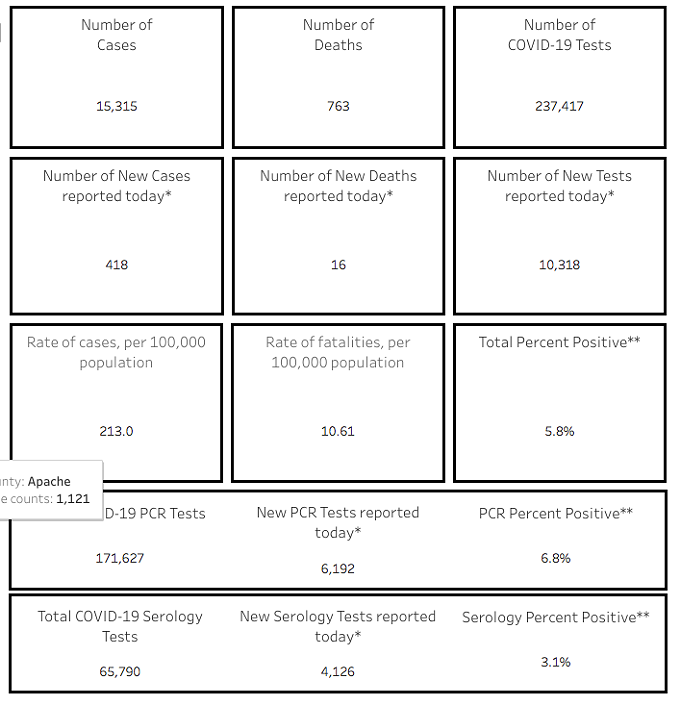
Pima County had 1,944 of the state's 5,315 confirmed cases.

The coronavirus had killed 763 people statewide, including 174 in Pima County, according to the report.
In Maricopa County, the number of confirmed COVID-19 cases had risen to 7,835.
Because symptoms can take as long as two weeks to appear after exposure to the virus (while some people can remain entirely asymptomatic), health officials continue to urge the public to avoid unnecessary trips and gatherings of more than 10 people, especially if you have underlying health conditions, and have advised people to cover their faces with masks in public.
With Arizona's stay-at-home order lifted, businesses are reopening across the state, some more cautiously than most. While Gov. Doug Ducey has praised the responsibility approach he sees Arizonans taking, local elected officials such as Tucson Mayor Regina Romero have warned that he is proceeding too quickly and Arizona may see a resurgence of the virus.
"I don’t want our economy to just re-open, I want it to remain open," Romero said. "That will not happen if there is a second wave of the virus and we are forced to shut down again."
Dr. Bob England, the director of the Pima County Health Department, said people who are vulnerable to COVID-19 should continue to take precautions.
"Just know that if you're vulnerable, if you're older, if you have underlying health conditions that put you at higher risk, then please, please, please hunker down for a while longer," England cautioned.
England said last week that the results of reopening so many establishments wouldn’t be known for weeks as test results tend to lag behind the actual spread of the virus.
“It will take a few weeks to know the impact of this so we won’t know until early June what all of this is doing to the epidemic curve,” England said in a recent daily briefing.
Wednesday, May 20, 2020

- The number of confirmed coronavirus cases in Arizona reached 14,897 as of Wednesday, May 20, according to the morning report from the Arizona Department of Health Services.
- The University of Arizona has launched a new webinar series aimed at analyzing the ways COVID-19 has impacted the university, the state, and the entire world, and what our post-pandemic future might look like.
- The Pima County Board of Supervisors yesterday delayed revising new regulations added to the county health code to help prevent a COVID-19 outbreak as the state reopens for business during the pandemic.
- Old Tucson will welcome guests this Memorial Day weekend with new safety precautions in place.
- As the COVID-19 pandemic continues, some Native Americans have found a way to safely host traditional powwows by moving them online.
- A new business initiative created by Local First Arizona aims to help regional businesses of all sizes find ways to adopt more environmentally responsible practices and become resilient in a post-COVID-19 world.
- Sharing meals is generally frowned upon in the socially distanced, stay-at-home world of COVID-19, but one aid group is embracing the notion – figuratively, at least.
- Since the University of Arizona announced they will resume in-person classes for the fall semester, President Dr. Robert Robbins has employed a team to find ways to do so as safely as possible.

At the core of the university’s reentry plan are three steps: test, trace and treat. If any member of the UA community has COVID-19 symptoms, they can get a swab test performed at Campus Health.
In addition, the university is scaling up their antibody testing to find out how many people already had the virus and have recovered from it.
Tags: University of Arizona , UA , COVID19 , Coronavirus , Test , Trace , Treat , Return to Campus , Robert Robbins , Richard Carmona , Image
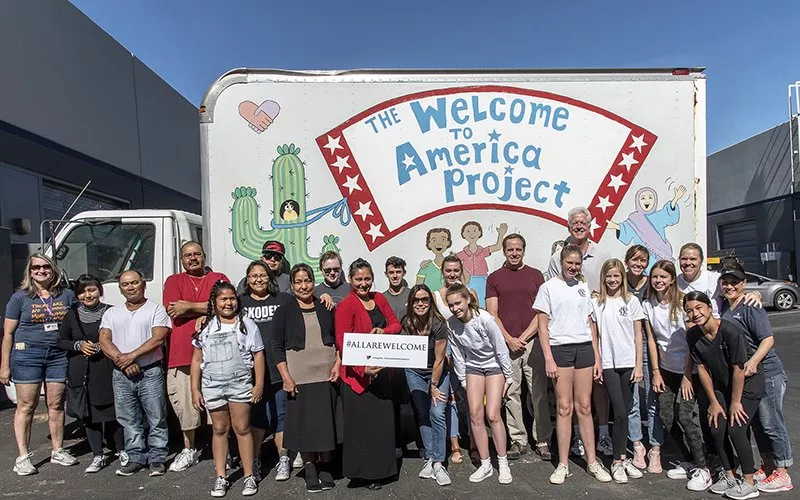
“Share a Meal With a Refugee,” a program run by the Welcome to America Project, collects donated gift cards to share with refugee families, a group that has been hit particularly hard by the effects of the coronavirus and its shutdowns.
“The goal is to get at least 200 gift cards and to share with families so that I could sit at home with my family and during the meal and say, ‘You know what, we’re having a meal with the refugee family tonight,'” said Mike Sullivan, the agency director for the Welcome to America Project.
It is just one of a growing number of programs by relief agencies that have stepped up to offer everything from gift cards to computers to crowdsourced fundraising to help refugee families grappling with COVID-19 in the Valley.
While COVID-19 has upended most lives, it has been particularly hard on refugees who are more likely to have jobs that put them at risk and less likely to qualify for unemployment if they lose those jobs. They also face challenges unimaginable to most Americans, like not having a computer at home for their children to get schooling and language barriers that prevent them from helping their kids with their studies.
“The jobs that they take are also often invisible jobs, meaning we’re in the front room dining in the restaurant, they’re in the back room making sure that the meals are prepared and that the utensils are cleaned,” Sullivan said.

In many Indigenous communities, powwows are celebrations of culture in which tribes gather to share art, stories, food, song, dance and the company of one another.
But the ongoing pandemic has made it impossible to hold these gatherings safely – in person, anyways. The Navajo Nation, for example, has set curfews and asked the 173,000 tribal members living on the reservation to stay home because 142 Navajos have died of COVID-19 and 4,071 cases have been diagnosed.

Old Tucson will welcome guests this Memorial Day weekend with new safety precautions in place. They will be open from 4 to 9 p.m. on Friday, May 22 through Monday, May 25.
The outdoor entertainment venue hopes to protect public health and provide their “spirit of the Old West” experience through the use of social distancing, frequent sanitation, and personal protective equipment.
The Old Tucson company provides a classic Western movie experience at their theme park located west of the Tucson metro area. They produce daily live historical reenactments of cowboy gunfights, put on comedy shows and live music with singing and dancing and offer themed attractions, shopping, and eateries. They recently celebrated their 80th anniversary.
Tags: COVID19 , Coronavirus , Old Tucson , Reopen , Social Distance , CDC , Safety Guidelines , Event , Image
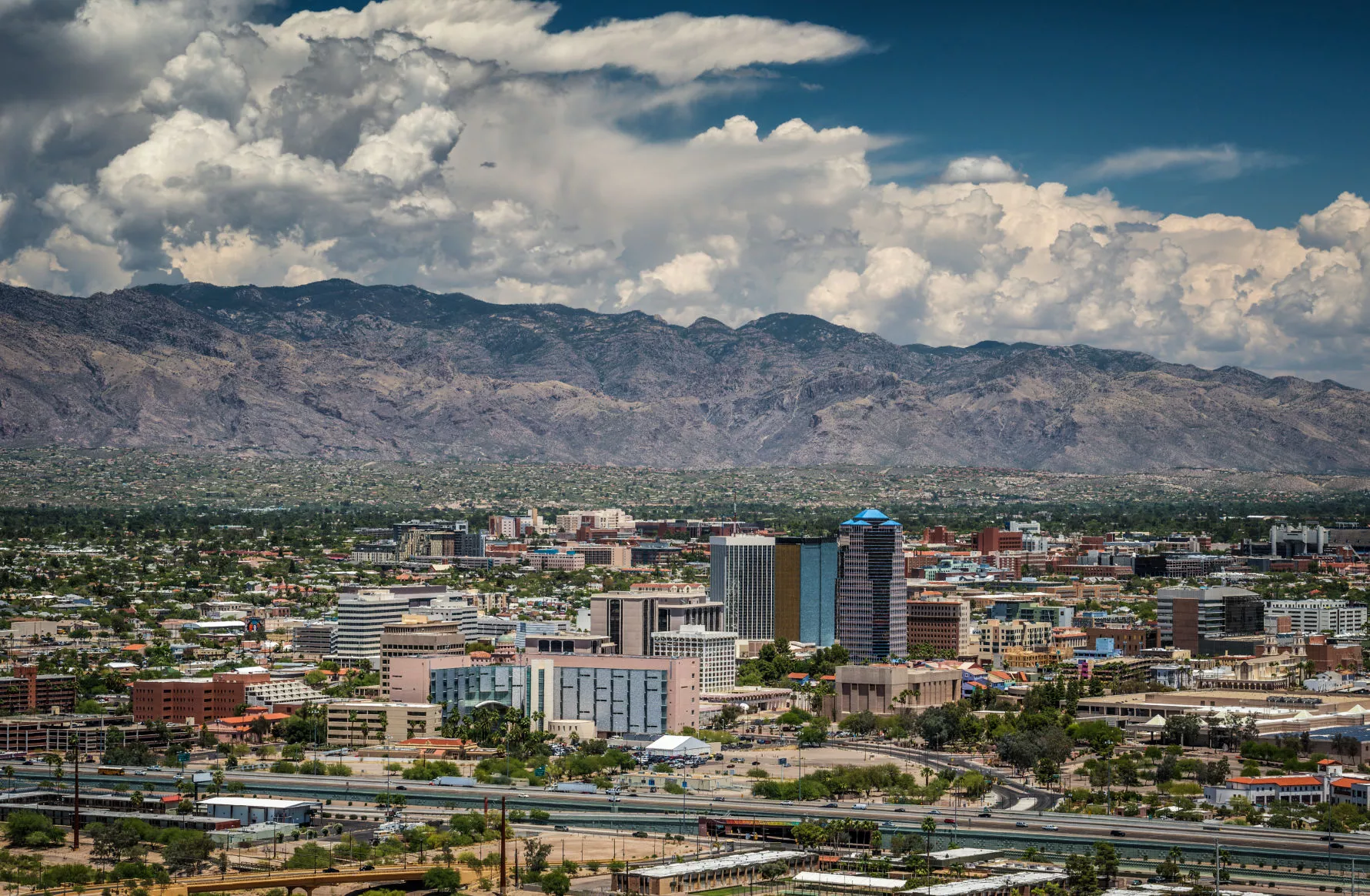
The University of Arizona has launched a new webinar series aimed at analyzing the ways COVID-19 has impacted the university, the state, and the entire world, and what our post-pandemic future might look like.
In the first installment of the series, professors from the Eller College of Management discussed the varying impacts on the local and national economy and highlighted how some industries are affected differently than others.
By April, more than 20 million jobs were lost nationwide due to the COVID-19 pandemic. At that time, more than 400,000 Arizonans were filing for unemployment benefits.
George Hammond, director of the Economic and Business Research Center at Eller, said Arizona unemployment numbers tend to reflect the national average. But restaurants, travel, tourism, retail stores, salons, and childcare services are the ones who are majorly affected by the pandemic.
“The rest of the economy is going to feel the ripple effects as those shocks spread through the economy,” Hammond said. “So we’ve experienced a big hit. The big question now is what will the recovery be like?”
He explained that economists have drawn up a variety of predictions for the recovery from COVID-19. The most optimistic follow a “V” shaped curve, where businesses are able to bounce back as quickly as they fell. The most pessimistic follows a “W” shaped curve, where economic impacts are felt well into the future, and recovery is shaky.
Hammond predicts a “U” shaped recovery for Arizona.
Tags: COVID19 , Coronavirus , University of Arizona , UA , Eller , Webinar , Price Fishback , George Hammond , Economy , Recovery , Image
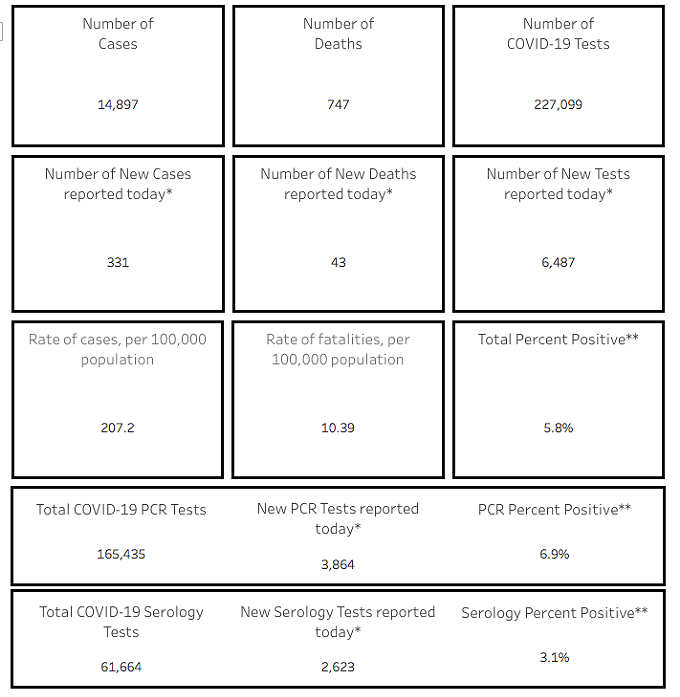
Pima County had 1,903 confirmed cases.

The coronavirus had killed 747 people statewide, including 167 in Pima County, according to the report.
In Maricopa County, the number of confirmed COVID-19 cases had risen to 7,644.
Because symptoms can take as long as two weeks to appear after exposure to the virus (while some people can remain entirely asymptomatic), health officials continue to urge the public to avoid unnecessary trips and gatherings of more than 10 people, especially if you have underlying health conditions, and have advised people to cover their faces with masks in public.
Arizona's stay-at-home order expired at the end of Friday, May 15. Arizona Gov. Doug Ducey announced last week that gyms, pools and movie theaters can now reopen. Ducey also invited major-league sports to play in Arizona, although he said it would have to be without fans in the audience.
Ducey gave the green light for for restaurants and bars that offer food service to reopen last week. Restrictions were previously lifted on stores, barber shops and salons.
Ducey said he hoped that schools would be able to reopen in the fall but was yet not ready to make that call.
Tucson Mayor Regina Romero said last week that Ducey was moving forward too quickly on reopening the state.

