

Thursday, May 7, 2020
AZ Department of Health Reverses Course, Says It Will Continue Working with University Modeling Team
The decision to tell the local team their work was no longer necessary had drawn criticism from health experts and Democrats.
Chris C. Minnick, a spokesman for the Arizona Department of Health, said in a statement that the partnership is back on.
"Earlier today we communicated with the members of the University modeling team and we’re pleased to announce an ongoing partnership to continue providing models," Minnick said. "Our initial request for the team was to produce the model that they delivered on April 20th. We were very pleased with the model they provided. Understanding the demands on their time, we let them know that we were putting the modeling project on pause until we could bring them back to assist with modeling COVID-19 resource requirements during the influenza season. Since then, the Universities and team members have expressed a willingness to continue doing this work. We are grateful for their dedication and we look forward to an ongoing partnership."
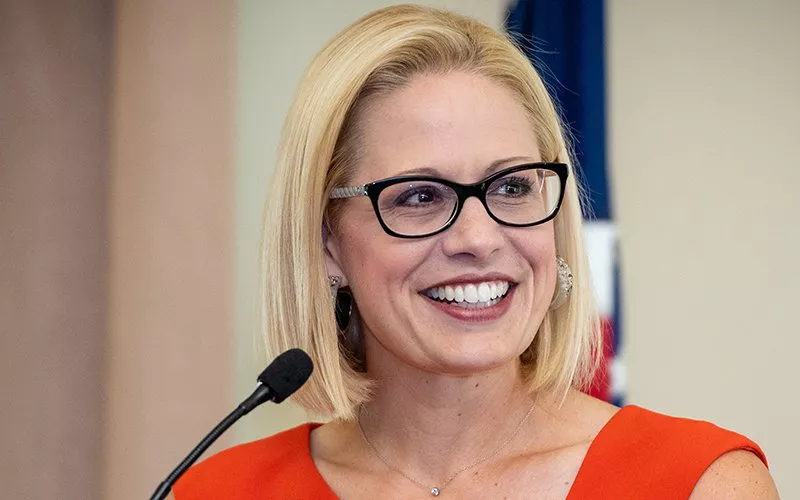
The Ducey administration came under criticism this week after the Arizona Department of Health officials told university professors who had been modeling COVID-19’s spread to cease work.
Ducey spokesman Patrick Ptak said that the state had decided to go with a model that had been developed by the Federal Emergency Management Agency and the Centers for Disease Control and Prevention. “When we first started tracking data, the state utilized various models to help predict future outcomes and make decisions in real-time,” Ptak said. “Their projections were often widely divergent and constantly changing. … We now have two months of on-the-ground data. We’ve been able to see which models are accurate—which match the actual facts and are most useful—and which are not. Dr. Cara Christ, the director of the Arizona Department of Health Services, is an infectious disease epidemiologist and public health expert. She made the decision after reviewing all the data. The modeling we are utilizing going forward is developed by FEMA and CDC and ensures our hospitals have capacity for any situation. That is the case currently, but we aren’t taking any chances.”
But Will Humble, the former director of the Arizona Department of Health, criticized the decision to shut down the local modeling effort in a Wednesday blog entry on the Arizona Public Health Association website.
“Astonishingly, the ADHS sent a letter to the Working Group last night hours after the governor’s press conference telling them to stop their work, discontinue producing predictive models, and to return the data that the working group was given by the ADHS,” Humble wrote. “Interestingly, the request came hours after the governor announced a relaxation of the Stay at Home Order. The letter asking them to stop work didn’t provide any reason for the request except that it was at the direction of ADHS’ senior leadership.” Humble said the decision to shut down the Arizona COVID-19 Modeling Working Group “begs the question of whether the Modeling Working Group was discontinued because they had been producing results that were inconsistent with messaging and decisions being made by the executive branch.”
U.S. Sen. Kyrsten Sinema had likewise expressed concern about the disbanding of the modeling team and said she was glad to hear the modeling work would continue.

“As a non-profit, member-owned utility, putting our members first is a guiding principle that has never been more important than it is now,” said Trico CEO and General Manager Vincent Nitido. “We will continue to support our membership and the communities we serve throughout this crisis.”
Individuals and small businesses can apply for bill assistance online at this website.
Trico has already assisted several local nonprofits and charitable organizations in the region, including United Way of Tucson, Southern Arizona’s COVID-19 Fund, Interfaith Community Services, the Community Food Bank of Southern Arizona and Marana Health Care.
According to the company, Trico has also pledged $200,000 to Wildfire, an Arizona nonprofit working through local agencies to provide aid to low-income individuals. For more information you can also call 744-2944.

Granted, you can spend your time doing all of the things she mentions, or you can sit and binge Tiger King for the seventh time. You can even go outside for some hiking or other outdoorsy goodness, as long as you maintain social distancing - though, do be careful with the heat.
There's one other tried and true way to spend your time that some people have been using with or without a pandemic, and that's video games. It's fun, it's interactive, and at times the storyline or interactions with friends can be really fulfilling. Unfortunately, it's also becoming really expensive.
While maintaining an MMO monthly subscription is cheaper than going to the club every weekend, some people are looking for a more casual or family-friendly way to pass the time. When you think of gaming in those terms, one brand name usually pops up pretty consistently, and that's Nintendo. Their catalog is huge and contains a vast amount of titles that you can play either as an adult or a child. With the recent release of Animal Crossing, loads of people have been maintaining their islands and coming up with some amazing creations to pass the time during the quarantine.

But, if you don't already have their latest Switch system, you could be waiting a while - or at the very least paying a ridiculous amount of money.
Tags: gaming , nintendo , switch , covid19 , to do , pricing , price gouge , supply , demand , Image , Video
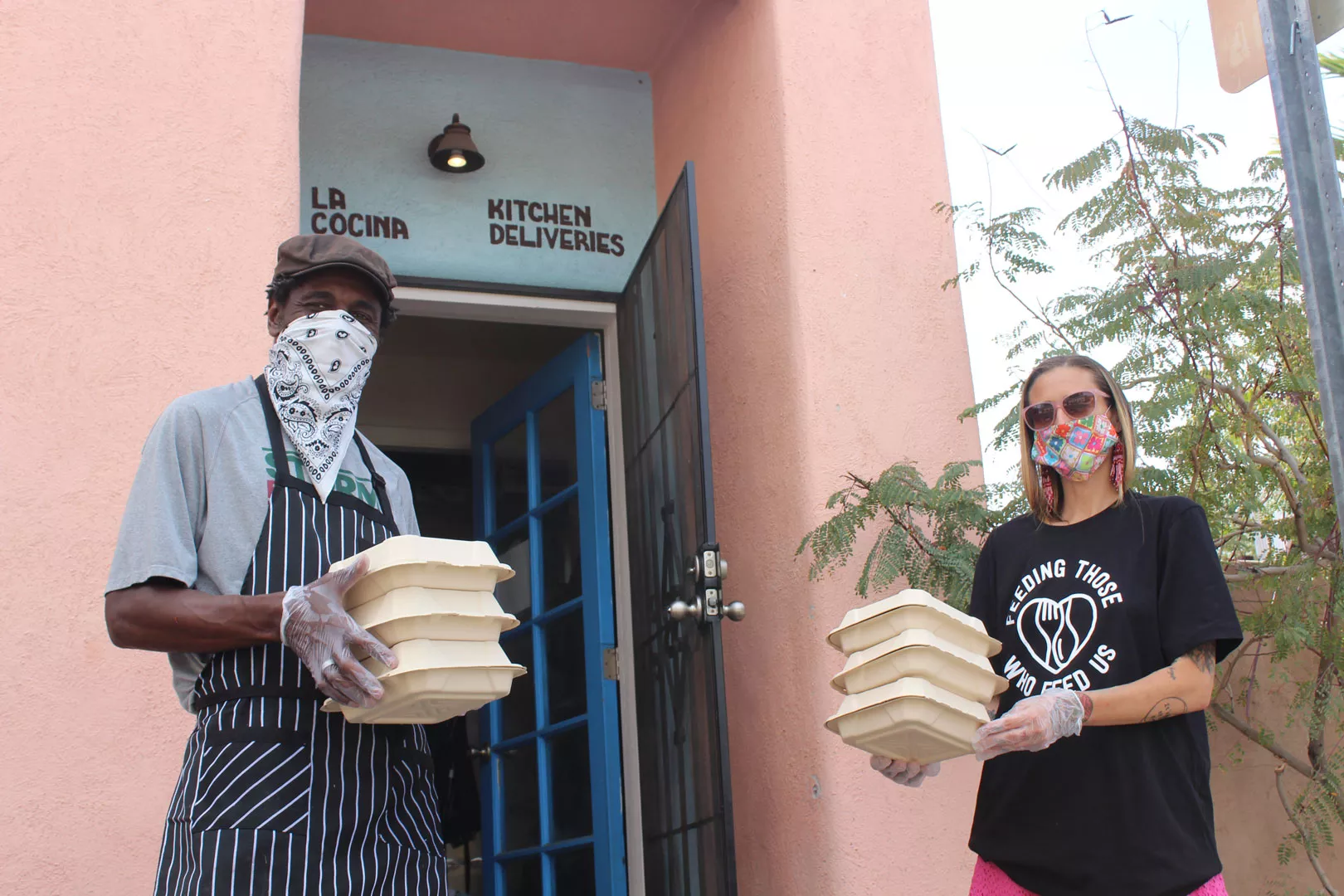
Feeding Those Who Feed Us is a non-profit program offering free meals, pre-packaged for pick up for service industry workers - and the community at large - currently struggling to make ends meet. Restaurants like La Cocina, Geronimos Revenge & Forbes Meat Company, Pop’s Hot Chicken, and 4th Avenue Deli are all onboard making sure the downtown community is fed.
“We’re trying to make a lot of comfort food and meals that are easy to eat and could last a day or two in the refrigerator,” said La Cocina Owner Jo Schneider. “We’re serving decent-sized meals”.
Schneider started the program after receiving donations from the community once Mayor Regina Romero’s shutdown order went into effect on March 17. Her two sons, Ben and Eli, also shuttered their popular restaurants - TallBoys and Bentley’s Tea House - instead of offering to-go service (TallBoys has since reopened for to-go service). The Schneider family didn’t want to compete against other restaurants pivoting to carryout/delivery service. But with all the newfound downtime came time to think of how to put those recently received donations to good use.
Tags: good deeds , in need , food , restaurants , feeding those who feed us , volunteer , service , pandemic , Image
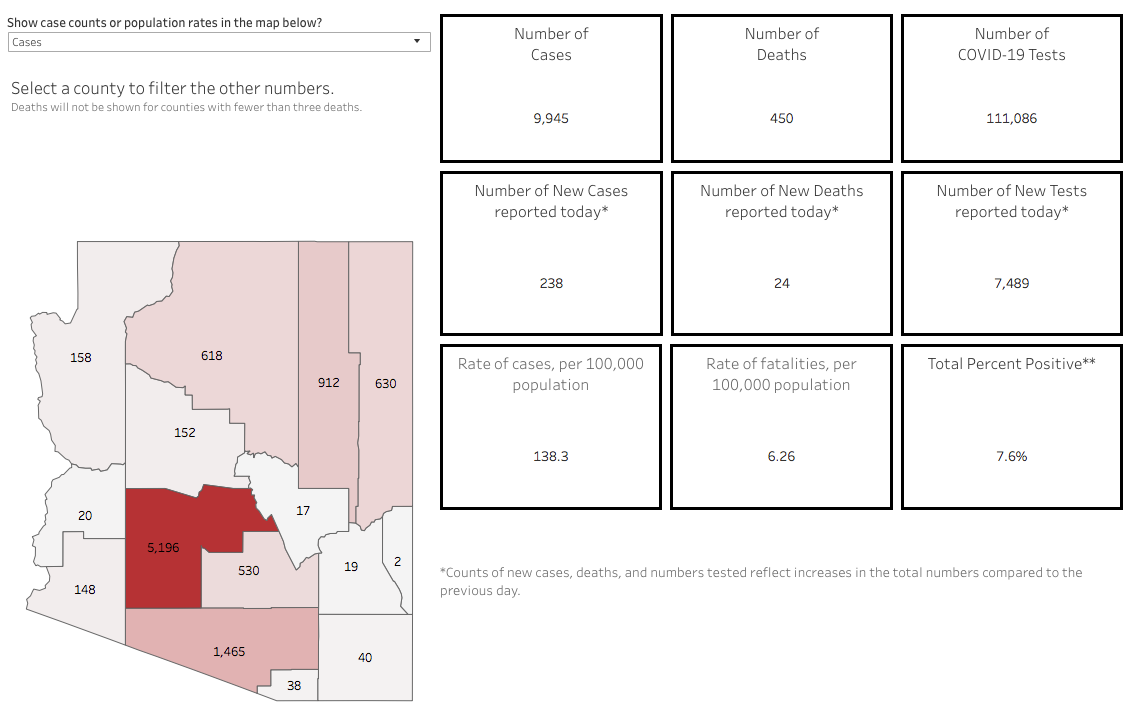
The number of confirmed coronavirus cases in Arizona closed in on the 10,000 mark as of Thursday, May 7, according to the morning report from the Arizona Department of Health Services.
Pima County had 1,465 of the state's 9,945 confirmed cases.

The coronavirus had killed 450 people statewide, including 118 in Pima County, according to the report.
In Maricopa County, the number of confirmed COVID-19 cases had risen to 5.196.
Although the state began a “testing blitz” over the weekend, Arizona lags other states in testing for COVID-19. Because symptoms can take as long as two weeks to appear after exposure to the virus (while some people can remain entirely asymptomatic), health officials continue to urge the public to avoid unnecessary trips and gatherings of more than 10 people and have advised people to cover their faces with masks in public.
Arizona remains under a stay-at-home order through May 15, but Gov. Doug Ducey has modified his emergency declaration. Stores can now reopen with curbside and delivery business. Customers will be able to browse inside stores and get haircuts beginning on Friday, while restaurants can begin serving customers next week. Ducey has set up various new regulations, including requirements to wear masks and a heightened cleaning regimen.
People are still advised to limit contact and many businesses must remain closed, but Ducey said he wanted the state’s economy to gradually reopen.
“These habits we've acquired over the last 45 days will not be with us forever, but they will be with us for the time being,” Ducey said.
But some members of the medical community said Ducey’s move may have come soon and will result in greater spread of the virus. Dr. Bob England, the outgoing director of the Pima County Health Department, warned yesterday that by relaxing so many standards so quickly, Ducey was risking losing all the progress that state has made in stemming the disease, but the true results wouldn’t be known for weeks as test results tend to lag behind the actual spread of the virus.
“It will take a few weeks to know the impact of this so we won’t know until early June what all of this is doing to the epidemic curve,” England said in a daily briefing.
England urged people to continue social distancing and wear masks and said older people and those with underlying health conditions should remain at home as much as possible.
The Ducey administration came under criticism this week for telling university professors who had been modeling COVID-19’s spread to cease work.
Ducey spokesman Patrick Ptak said that the state had decided to go with a model that had been developed by the Federal Emergency Management Agency and the Centers for Disease Control and Prevention.
“When we first started tracking data, the state utilized various models to help predict future outcomes and make decisions in real-time,” Ptak said. “Their projections were often widely divergent and constantly changing. … We now have two months of on-the-ground data. We’ve been able to see which models are accurate—which match the actual facts and are most useful—and which are not. Dr. Cara Christ, the director of the Arizona Department of Health Services, is an infectious disease epidemiologist and public health expert. She made the decision after reviewing all the data. The modeling we are utilizing going forward is developed by FEMA and CDC and ensures our hospitals have capacity for any situation. That is the case currently, but we aren’t taking any chances.”
But Will Humble, the former director of the Arizona Department of Health, criticized the decision to shut down the local modeling effort in a Wednesday blog entry on the Arizona Public Health Association website.
“Astonishingly, the ADHS sent a letter to the Working Group last night hours after the governor’s press conference telling them to stop their work, discontinue producing predictive models, and to return the data that the working group was given by the ADHS,” Humble wrote. “Interestingly, the request came hours after the governor announced a relaxation of the Stay at Home Order. The letter asking them to stop work didn’t provide any reason for the request except that it was at the direction of ADHS’ senior leadership.”
Humble said the decision to shut down the Arizona COVID-19 Modeling Working Group “begs the question of whether the Modeling Working Group was discontinued because they had been producing results that were inconsistent with messaging and decisions being made by the executive branch.”
U.S. Sen. Kyrsten Sinema likewise expressed concern about the disbanding of the modeling team and said she was glad to hear the modeling work would continue.
“The Governor's choice to disregard the science that should be the basis of Arizona public health policies—and the White House's guidelines for re-opening—is concerning and disappointing,” Sinema said in a prepared statement. “I'm grateful that Arizona State University and the University of Arizona will continue this work, and I plan to rely on their findings and conclusions in my work to keep Arizonans healthy, safe, and economically secure.”
That criticism was echoed by state Rep. Randy Friese, a Tucson Democrat who works as an emergency room doctor.
Friese called the disbanding of the eam “hugely alarming to me.”
“We need unbiased, scientific data and analysis and unbiased interpretation of that data,” said Friese, who worried that the dismissal came because the group’s advice was at odds with Ducey’s decision to move forward with relaxing restrictions related to his stay-at-home order..
“The modeling was saying the safest thing was to wait until late May to reopen,” Friese said. “The predictions are saying now that if we reopen now, we will be shutting down again in a couple of weeks and we may have to shut down for even longer if we had just waited a little longer.”
Friese said he was concerned that Ducey made the decision to accelerate efforts to reopen Arizona's stores and restaurants under pressure from President Donald Trump, who visited a Phoenix Honeywell plant that is now manufacturing N-95 face masks.
Trump and U.S. Sen. Martha McSally toured the plant on Tuesday while while speakers blared out the song “Live and Let Die.”
Trump said the U.S. “is now in the next stage of the battle” against COVID-19 and called for the lifting of restrictions that have slowed the outbreak’s progression.
Nationwide, more than 1.18 million people had tested positive for the novel coronavirus, which had killed an estimated 69,000 people as of Tuesday, May 5, according to tracking by Johns Hopkins University.
Trump, who said he didn’t expect more than 60,000 Americans to be killed by the coronavirus a few weeks ago, said at a Sunday Fox News town hall he expects the death toll to remain under 100,000.
The New York Times revealed that a recent forecast prepared by the Federal Emergency Management Agency predicted that by the end of May, the nation would see 200,000 new cases every day, with the death toll rising to 3,000 a day, up from the current 1,750. Trump administration officials said the report hadn’t been properly vetted by the White House cononavirus task force.
The IHME model now predicts roughly 135,000 deaths in the United States by the beginning of August.
COVID-19 symptoms typically occur two to 14 days after exposure, and include headache, fever, cough, and shortness of breath, according to the CDC. However, some cases of the virus are entirely asymptomatic. Practices to avoid infection include social distancing (of at least six feet), washing your hands, avoiding unnecessary trips and not touching your face. COVID-19 can survive on cardboard for up to 24 hours, and on stainless steel and plastic surfaces up to three days.
If you think you have been exposed to COVID-19 and develop a fever, cough or difficulty breathing, speak with a healthcare provider for medical advice. According to the CDC, people who are mildly ill with COVID-19 are able to recover at home. Stay at home and avoid public transportation, but stay in touch with your doctor. If you do leave your home, wear a facemask and clean your hands often. If you develop more severe symptoms (persistent pain or pressure in the chest, confusion, bluish lips) get medical attention immediately. Your local health authorities will give instructions on checking your symptoms and reporting information.
Have you caught COVID-19? Are you feeling ill? Is your small business struggling to make it? Have you lost your job as a result of the outbreak? Are you struggling to manage your kids while schools are closed? Tell us your COVID-19 stories. Send an email or photo to [email protected].
Wednesday, May 6, 2020

Here are some of the stories we've covered today:
- The number of confirmed coronavirus cases in Arizona hit 9,707 as of Wednesday, May 6, according to the morning report from the Arizona Department of Health Services.
- The Rialto Theatre and 191 Toole have joined forces with the National Independent Venue Association to ask legislators to provide federal funding for struggling concert halls - and they need your help.
- While park officials are still determining how to best reopen amenities, they are encouraging park users to prepare for soaring temperatures in the Sonoran Desert.
- For those who've lost their job or can no longer afford diabetes supplies due to COVID-19, Tucson Medical Center is hosting a diabetes resource page listing discounts and cost-saving information from the three major insulin manufacturers.
- You can ditch the suit-and-tie look while working from home, but that doesn't mean you shouldn't still dress in stylish T-shirts.
- At least five Arizona prisoners have died from complications related to COVID-19, validating the fear of many advocates and family members of incarcerated people.
- The Alliance of Arizona Nonprofits, an advocacy group representing more than 20,000 nonprofits, estimates the state's nonprofit sector has already lost more than $40 million due to the COVID-19 pandemic and anticipates a $433 million loss by year's end.

Of the survey's 306 respondents, one-quarter reported laying off or furloughing a total of 1,962 employees and nearly 60 percent (155 nonprofit organizations) applied for Paycheck Protection Program loans, totaling more than $37.7 million in relief funding. Of those applying for loans, 48 percent were approved, 45 percent are waiting for approval, and 7 percent were denied funding.
"The collaboration among grantmaking organizations have made more than $36 million available to nonprofits, but, unfortunately, we’re a long way from assessing the full impact," Merrifield said.

In 2019, 11 percent of the state's prison population was over 55 years old. Prison healthcare vendor Centurion recently identified 6,600 incarcerated people that are vulnerable to COVID-19 based on their age group, health status and diagnoses.
One of those vulnerable people is Jenny Scriba’s husband. In 2016, he was convicted of possessing half an ounce of methamphetamine. Because he had a previous criminal record he was sentenced to eight years in prison. He is currently incarcerated in the Arizona State Prison Complex in Douglas, and is set to be released in 2025.
When COVID-19 reached Arizona, Scriba called everyone she could think of—her husband’s attorney, the Arizona Department of Corrections, the Governor’s Office and more—desperately trying to get him moved from the dorm where incarcerated people live communally in a large open room, to a private cell where he could have some chance of isolating away from others.
Her husband has Alpha-1 Antitrypsin Deficiency, a genetic disease that leaves a person extremely vulnerable to lung infections. A COVID-19 diagnosis would likely be fatal.
“They give him a bar of soap and two extra phone calls and that’s what their response to the virus is,” Scriba said. “They just keep telling him he’s perfectly safe. His attorney called the warden, the warden told him that he’s perfectly safe.”
She said the Governor’s Office told her that the state is prepared to handle infectious diseases inside their prisons. But that statement has received pushback from a variety of groups involved in the criminal justice system.
In early March, a coalition of state and nationwide criminal justice reform organizations called for the Arizona Department of Health Services to perform health inspections in all state prisons, as the risk of COVID-19 spread grows each day.
In a letter to DHS Director Dr. Cara Christ, they urged her and other health officials to make sure that Center for Disease Control and Prevention guidelines are being followed consistently inside prisons.
The coalition included examples of why they believe the Department of Corrections, Rehabilitation and Reentry is putting people at great risk of becoming seriously ill. Numerous accounts show "serious inconsistencies between what ADCRR has publicly announced it is doing to adhere to CDC guidelines and the reality of what people who live and work in these facilities are seeing."
These first-hand accounts report a lack of personal and communal hygiene supplies, personal protective equipment and inconsistent health screenings for employees.
"If COVID-19 begins to spread inside our state prisons, it will endanger entire communities where those prisons reside,” AFSC-AZ Program Director Caroline Isaacs said in a press release. “Tens of thousands of people across this state will be impacted: correctional officers, their families, the businesses in their communities, as well as people who are incarcerated and their loved ones."
On April 7, the department announced plans for incarcerated people to make non-medical masks for all prison employees to wear during work. Their announcement did not include whether incarcerated people would get widespread access to masks themselves.
This move came after reports of department leadership actively discouraging employees from wearing masks during work, in order to "prevent panic."
Around the same time, the Arizona Correctional Peace Officers Association announced in a press release that Corrections Director David Shinn, Gov. Doug Ducey and Dr. Christ have all "utterly failed" to protect correctional officers, incarcerated people and the general public from COVID-19.
"Director Shinn has created a COVID19 disaster in Arizona prisons," the association said.
They said the department covered up early reports of correctional officers who contracted COVID-19, and have continuously allowed sick employees to come to work. As of today, 50 correctional staff have reported positive COVID-19 diagnoses.
Scriba was already hearing reports of sick people through her husband before the Department of Corrections released any confirmatory information. Her husband recently witnessed 30 new people come into the Douglas prison from the reception center in Phoenix.
She said the prison staff told everyone that they had been quarantined for 21 days and were all healthy, but there was a debate between people in prison as to whether that is true or not.
During his time in prison, Scriba said her husband has shown a strong change in character. He is enrolled in college classes, hasn’t gotten into any trouble, and is currently at the lowest security classification. This is his second time in prison, but she believes her husband has been a totally different person.
“The fact that I can’t even get him into a cell is seriously so stressful,” Scriba said. “I can't even explain how helpless I feel. I’m just watching and there’s nothing I can do.”
Since her husband went to prison, Scriba has been tasked with caring for their son by herself. She’s afraid of what will happen if she contracts the virus. She doesn’t have a support system near her home in Cochise County to help with childcare, and her nearest family member lives in Texas.
Ultimately, Scriba’s husband was denied the chance to move to a cell because of the order to limit the movements of incarcerated people between prisons.
According to the department’s website, four incarcerated people at the Douglas prison were tested for COVID-19 and their results came back negative. However, Scriba suspects that the virus has already made its way inside the walls that confine her husband and more than 2,000 other incarcerated people.
“Our loved ones are going to die,” Scriba said. “If they figure out that he’s got it, it’ll be way too late. If he gets it, he will die.”
Tags: Arizona Department of Corrections , Douglas , Prison , COVID19 , Coronavirus , AFSC , Doug Ducey , Cara Christ , Image

The TW T is just one of several you can choose from when you visit this virtual showroom. Here's the deal: $10 of the $24 price goes to the Weekly (or any other biz or nonprofit whose shirt you purchase).
But don't delay: This limited-edition T-shirt will only be available through midnight on Wednesday, May 20.
With the current pandemic-related economic crash rippling across our newspaper enterprise just as it's hammering many others, you'll also be supporting independent local journalism, which is vital in this day and age. Plus, we'll be donating half of our $10 take to the Community Food Bank of Southern Arizona, so you'll also be helping feed the community with your purchase.
Get yours today!

For those who've lost their job or can no longer afford diabetes supplies due to COVID-19, Tucson Medical Center is hosting a diabetes resource page listing discounts and cost-saving information from the three major insulin manufacturers.

