

Wednesday, April 21, 2021
With 649 new cases reported today, the total number of Arizona’s confirmed novel coronavirus cases closed in on 856,000 as of Wednesday, April 21, according to the Arizona Department of Health Services.

Pima County, which reported 93 new cases today, has seen 114,438 of the state’s 855,804 confirmed cases.
With six new deaths reported this morning, a total of 17,199 Arizonans have died after contracting COVID-19, including 2,388 deaths in Pima County, according to the April 21 report.
A total of 584 coronavirus patients were in the hospital as of April 20. That’s roughly 11.5% of the number hospitalized at the peak of the winter surge, which reached 5,082 on Jan. 12. The summer peak was 3,517, which was set on July 13, 2020. The subsequent lowest number of hospitalized COVID patients was 468, set on Sept. 27, 2020.
A total of 1,015 people visited emergency rooms with COVID-like symptoms on April 20. That number represents 43% of the record high of 2,341 set on Tuesday, Dec. 29, 2020. That number had peaked during the summer wave at 2,008 on July 7, 2020; it hit a subsequent low of 653 on Sept. 28, 2020.
A total of 169 COVID-19 patients were in intensive care unit beds on April 20, which roughly 14% of the record 1,183 ICU patients set on Jan. 11. The summer’s record number of patients in ICU beds was 970, set on July 13, 2020. The subsequent low was 114 on Sept. 22, 2020.
New appointments available daily; Pima County transitioning to indoor vaccination sites, closing Banner South drive-thru clinic next month
The state of Arizona expects new first-dose appointments to open daily this week at the University of Arizona vaccination site, so they urged those 16 and older who are interested in an appointment to regularly check podvaccine.azdhs.gov.
Tuesday, April 20, 2021
With 702 new cases reported today, the total number of Arizona’s confirmed novel coronavirus cases rose past 855,000 as of Tuesday, April 20, according to the Arizona Department of Health Services.

Pima County, which reported 51 new cases today, has seen 114,345 of the state’s 855,155 confirmed cases.
With 40 new deaths reported this morning, a total of 17,193 Arizonans have died after contracting COVID-19, including 2,386 deaths in Pima County, according to the April 20 report.
A total of 562 coronavirus patients were in the hospital as of April 19. That’s roughly 11% of the number hospitalized at the peak of the winter surge, which reached 5,082 on Jan. 12. The summer peak was 3,517, which was set on July 13, 2020. The subsequent lowest number of hospitalized COVID patients was 468, set on Sept. 27, 2020.
A total of 969 people visited emergency rooms with COVID-like symptoms on April 19. That number represents 41% of the record high of 2,341 set on Tuesday, Dec. 29, 2020. That number had peaked during the summer wave at 2,008 on July 7, 2020; it hit a subsequent low of 653 on Sept. 28, 2020.
A total of 155 COVID-19 patients were in intensive care unit beds on April 19, which roughly 13% of the record 1,183 ICU patients set on Jan. 11. The summer’s record number of patients in ICU beds was 970, set on July 13, 2020. The subsequent low was 114 on Sept. 22, 2020.
Ducey nixes ‘vaccine passports’
Gov. Doug Ducey yesterday banned state and local governments and some businesses from requiring vaccination status.
Monday, April 19, 2021
Friday, April 16, 2021
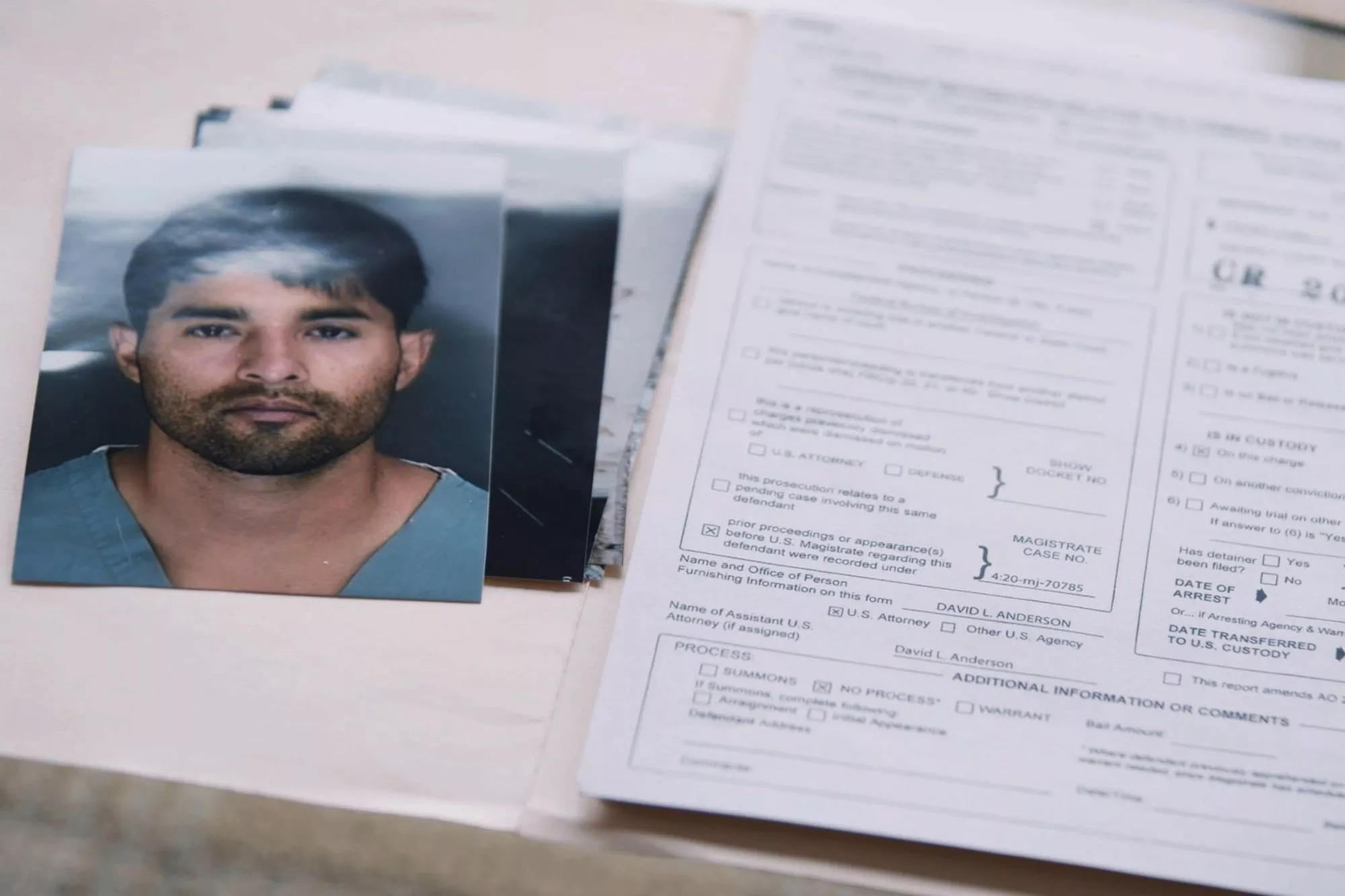
Steven Carrillo’s path to the Boogaloo Bois shows the hate group is far more organized and dangerous than previously known.
This story is part of a collaboration between ProPublica, Berkeley Journalism’s Investigative Reporting Program and FRONTLINE that includes the documentary American Insurrection. Watch the documentary.
It was 2:20 p.m. on June 6, 2020, and Steven Carrillo, a 32-year-old Air Force sergeant who belonged to the anti-government Boogaloo Bois movement, was on the run in the tiny mountain town of Ben Lomond, California.
With deputy sheriffs closing in, Carrillo texted his brother, Evan, asking him to tell his children he loved them and instructing him to give $50,000 to his fiancée. “I love you bro,” Carrillo signed off. Thinking the text message was a suicide note from a brother with a history of mental health troubles, Evan Carrillo quickly texted back: “Think about the ones you love.”
In fact, Steven Carrillo had a different objective, a goal he had written about on Facebook, discussed with other Boogaloo Bois and even scrawled out in his own blood as he hid from police that day. He wanted to incite a second Civil War in the United States by killing police officers he viewed as enforcers of a corrupt and tyrannical political order — officers he described as “domestic enemies” of the Constitution he professed to revere.
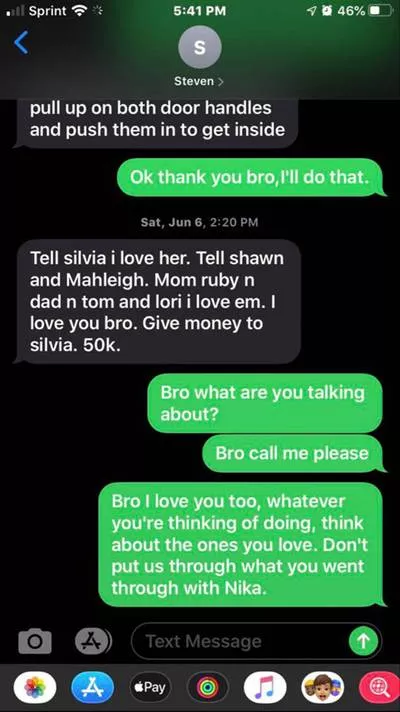
Now, as he texted with his brother and watched deputies assemble so close to him that he could hear their conversations, Carrillo sent an urgent appeal to his fellow Boogaloo Bois. “Kit up and get here,” he wrote in a WhatsApp message that prosecutors say he sent to members of a heavily armed Boogaloo militia faction he had recently joined. The police, he texted, were after him.
“Take them out when theyre coming in,” the text read, according to court documents.
Minutes later, prosecutors allege, Carrillo ambushed three deputy sheriffs, opening fire with a silenced automatic rifle and hurling a homemade pipe bomb from a concealed position on a steep embankment some 40 feet from the deputies. One deputy was shot dead, and a second was badly wounded by bomb shrapnel to his face and neck. When two California Highway Patrol officers arrived, Carrillo opened fire on them, too, police say, wounding one.
“The police are the guard dogs, ready to attack whenever the owner says, ‘Hey, sic ’em boy,’” Carrillo said in an interview, the first time he has spoken publicly since he was charged with murdering both the deputy sheriff in Ben Lomond and, a week earlier, a federal protective security officer at the Ronald V. Dellums Federal Building and U.S. Courthouse in Oakland.

Experts say we should investigate “breakthrough infections” to look out for variants and understand who’s vulnerable. In many cases, that’s not happening. Crucial pieces of the puzzle are being tossed in the trash.
Dr. Carey Washington was eager to be vaccinated. The psychologist, who was still working at 80 years old, got his first coronavirus shot on Jan. 12 and followed up with the second Pfizer dose on Feb. 4. With both shots done, he let his guard down at the office he shared with another doctor, sometimes leaving his mask off.
Then he woke up on March 7 with aches and fatigue, feeling as though he might have a cold. When he started experiencing chest pain and finding it hard to breathe, he booked an appointment with his primary care physician, who sent him on to his cardiologist. Both thought that his symptoms must be related to his past heart issues. But Washington’s symptoms got worse. He was so tired he could barely get out of bed. His cardiologist reassured him that the fatigue was likely due to the irregular heartbeat he was experiencing, and that the medications prescribed for that would take a while to kick in. But on March 12, Washington’s son took him to the emergency room anyway. A test revealed Washington was positive for COVID-19.
A week later, he was transferred to the intensive care unit. On March 25, he died.
Washington’s daughter, Tanya Washington, says that after her father was admitted to the Prisma Health Richland Hospital, she was determined to understand why. Why had Washington gotten sick despite being fully vaccinated? “Doctors said that because he was vaccinated, we think this may be a variant,” a strain of the coronavirus that could be more contagious or dangerous, Tanya recalls. She said they originally thought it might be a variant found in South Africa.
WASHINGTON – Backed by a field of flowers that represent the thousands killed by gun violence each year, former Arizona Rep. Gabrielle Giffords said Wednesday that Congress can act on gun reform or “can let the shooting continue.”
Giffords, who was severely wounded by a gunman in a 2011 mass shooting, joined congressional Democrats to call for Senate action on the Bipartisan Background Checks Act, a House bill that would stiffen checks on gun buyers.
The bill has yet to get a hearing in the Senate since it passed the House in March – a period during which 80 people were killed in mass shootings in the U.S., according to the Gun Violence Archive.
“We are at a crossroads,” Giffords said. “We can let the shooting continue, or we can act.”
The news conference came almost a week after President Joe Biden unveiled a series of steps aimed at curbing gun violence, by making it easier for states to adopt “red flag” laws, which keep guns out of the hands of those who are a danger to themselves or others, and by stiffening restrictions on “ghost guns” – those assembled from kits which are almost impossible to trace.
Biden also proposed new restrictions on gun modifications that allow a pistol to fire like a semi-automatic gun – a modification that was used by the shooter in the March 22 attack that killed 10 at a King Soopers grocery in Boulder, Colorado.
“We want to treat pistols modified with stabilizing braces with the seriousness they deserve,” Biden said. “Essentially, it makes that pistol a hell of a lot more accurate and a mini-rifle.”
But whatever changes the federal government makes could hit a wall in Arizona, where Gov. Doug Ducey last week signed the 2nd Amendment Firearm Freedom Act into law. It preempts federal law by making it illegal to use state funds or personnel to “enforce, administer or cooperate with any act” that is more restrictive than current state laws.
The bill, sponsored by Rep. Leo Biasiucci, R-Lake Havasu, passed both chambers of the Legislature on largely party-line votes. In a series of tweets after Ducey signed it into law, Biasiucci, called the law an “extra layer of protection” that makes Arizona a “2nd Amendment Sanctuary.”
The vote on HR 8, the federal background check bill, also fell mostly along party lines, with just eight Republicans supporting it and only one Democrat voting against it. Critics, like Rep. Debbie Lesko, R-Peoria, call the bill an “assault on our Second Amendment right to keep and bear arms.”
“The bill turns law-abiding citizens into criminals by subjecting them to criminal penalties for simply lending a friend or a neighbor a gun on a temporary basis,” Lesko said on the House floor before the March 10 vote.
Since that vote, there have been a series of unrelated mass shootings across the country that have grabbed headlines.
Before the King Soopers shooting there was the March 16 shootings at several Atlanta-area spas that killed eight people, including six Asian-American women, and an apparent family dispute the same day in Phoenix that left four dead. On April 8, a former NFL player killed five people in Rock Hill, South Carolina, before killing himself.
The shooter in Atlanta bought his gun the day of the attack, as Georgia – like Colorado and Arizona – does not have a waiting period between a gun purchase and delivery.
Speakers at the Giffords event included House Speaker Nancy Pelosi, who noted the toll of gun violence by pointing to the 40,000 flowers on the National Mall behind her, about the number of firearm deaths in a year, according to the Centers for Disease Control and Prevention.
“It takes your breath away to see the beauty of this art installation, but gun violence takes away the breath of so many people,” Pelosi said.
The Bipartisan Background Checks Act of 2021 would close a loophole that lets someone buy a firearm at a gun show or online without undergoing a background check.
It also targets the “Charleston loophole” that let an individual flagged for investigation by the FBI still get a gun, because the background check on him had not been finished within three days of his purchase. Dylann Roof used that gun to kill nine worshipers in 2015 after a Bible study at the Emanuel African Methodist Episcopal Church, a historic Black church in Charleston.
Rep. James Clyburn, D-S.C., said that extending the waiting period beyond three days could have saved the lives of those victims.
“I don’t know why the system did not catch the perpetrator,” Clyburn said Wednesday. “It may have been an error unintentional, or it may have been an error intentional.”
Giffords survived a Jan. 8, 2011, assassination attempt at a constituent event outside a Tucson supermarket that killed six people and left 13 injured, including Giffords. She has since worked for gun reform, starting Giffords.org to work toward tighter gun laws. And she said Wednesday she plans to keep fighting.
“I’ve known the darkest of days, days of pain and uncertain recovery, but confronted by despair I’ve summoned hope,” Giffords said. “I put one foot in front of the other, I found one word and then I found another.”
With 845 new cases reported today, the total number of Arizona’s confirmed novel coronavirus cases rose past 852,000 as of Friday, April 16, according to the Arizona Department of Health Services.

Pima County, which reduced the total number of cases by 31 today, has seen 113,998 of the state’s 852,570 confirmed cases.
With 30 new deaths reported this morning, a total of 17,153 Arizonans have died after contracting COVID-19, including 2,378 deaths in Pima County, according to the April 16 report.
A total of 569 coronavirus patients were in the hospital as of April 15. That’s roughly 11% of the number hospitalized at the peak of the winter surge, which reached 5,082 on Jan. 12. The summer peak was 3,517, which was set on July 13, 2020. The subsequent lowest number of hospitalized COVID patients was 468, set on Sept. 27, 2020.
A total of 893 people visited emergency rooms with COVID-like symptoms on April 15. That number represents 38% of the record high of 2,341 set on Tuesday, Dec. 29, 2020. That number had peaked during the summer wave at 2,008 on July 7, 2020; it hit a subsequent low of 653 on Sept. 28, 2020.
A total of 154 COVID-19 patients were in intensive care unit beds on April 15, which roughly 13% of the record 1,183 ICU patients set on Jan. 11. The summer’s record number of patients in ICU beds was 970, set on July 13, 2020. The subsequent low was 114 on Sept. 22, 2020.
Pima County resumes jury trials
Pima County courts resumed jury trials this week after nearly a year-long hiatus, county officials announced Thursday.
Thursday, April 15, 2021
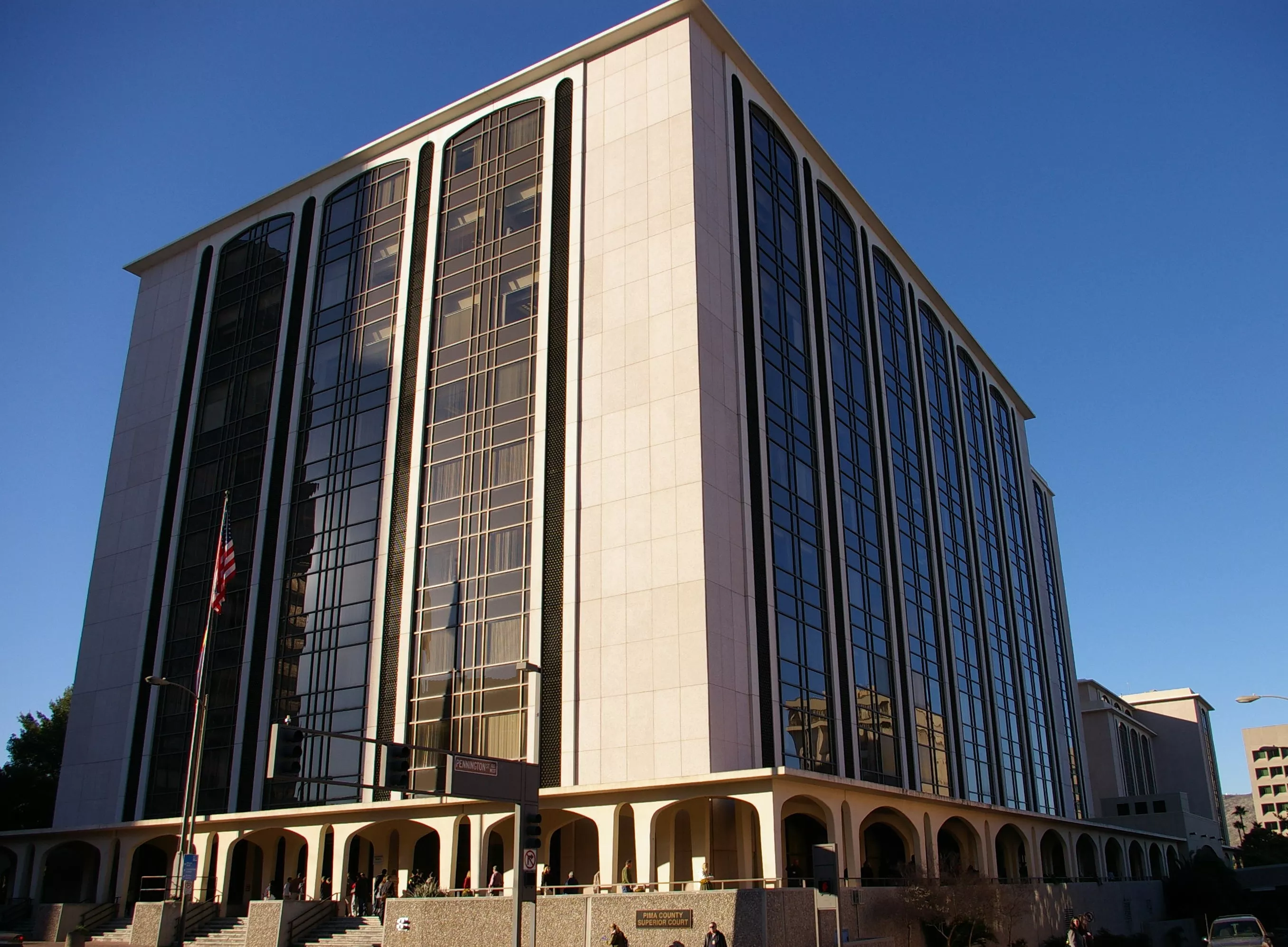
Pima County courts resumed jury trials this week after nearly a year-long hiatus, announced county officials Thursday.
“We’re excited to end the moratorium on jury trials in Pima County,” said Presiding Judge Kyle A. Bryson, citing a decrease in COVID-19 cases and an increased availability of the vaccine.
With new COVID-19 protocols, the courts are ready to welcome back jurors. Jurors will be seated throughout the courtroom with a wide use of plexiglass, and given a trial package with a notepad, mask and hand sanitizer.
“We remain devoted to the principle of maintaining a safe environment for court users and staff while providing access to justice for the citizens of Pima County,” said Bryson. “Like litigants, attorneys, victims, and defendants, we have keenly awaited the time that trials can proceed while still protecting the health and safety of all who enter our court buildings.”
Potential jurors will receive questionnaires in advance that may be submitted online or through the mail. They will also have the opportunity to complete a separate form to address any COVID-19 related concerns.
The courts are not requiring vaccination or asking about a community member’s vaccination status, but those visiting the courthouses will be asked to wear a mask, have their temperatures checked, and follow social distancing guidelines.
For information about jury service in Pima County visit https://www.sc.pima.gov/jurors/ or call 520.724.4222.

