

Wednesday, March 31, 2021

Tuesday, March 30, 2021
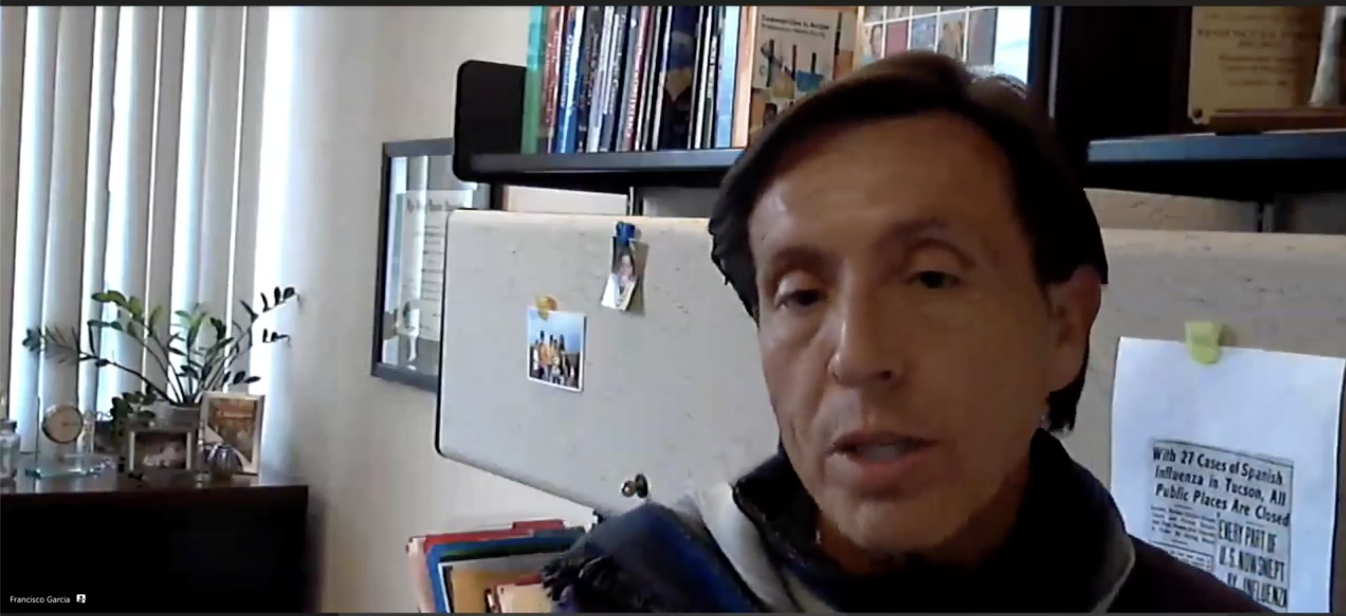
Pima County's mask mandate remains in effect and health inspectors have the legal authority to enforce those mandates in food establishments, county officials argued on Tuesday morning.
In a March 26 letter, the Pima County Attorney’s Office informed County Administrator Chuck Huckelberry that Gov. Doug Ducey does not have the legal authority to prevent the County Health Department from enacting reasonable public health measures.
Everyone in Pima County over the age of 5 must wear a face mask over their nose and mouth unless they have a qualifying exemption or are able to maintain physical distance, according to Resolution 2020-96, said Deputy County Attorney Jonathan Pinkney. The Board passed the resolution on Dec. 4, 2020.
Pima County Chief Medical Officer Dr. Francisco Garcia said the board has authority, through an Arizona statute (ARS11-251), to adopt provisions to preserve the health of the county, and the Arizona Supreme Court recognized counties “may enact public health measures that are equal to or more restrictive than ADHS.” Garcia called Ducey’s order an “overreach on the part of the executive.”
Garcia admits the arguments being made are similar to those made in court when local bars sued the county for the mandatory curfew passed on Dec. 15, but believes they stand on “solid ground.” and brushed off concerns about a legal challenge.
“Bring it on,” Garcia said.
Contrary to Ducey’s statement that mask mandates are neither followed nor enforced, Garcia said Pima County receives complaints through their portal.
He explained the county has a “‘three strikes and you're out” process in place to process complaints. The county receives complaints and works with businesses to resolve the conflict. He said there have been very few cases the county needed to take action.
With 586 new cases reported today, the total number of Arizona’s confirmed novel coronavirus cases topped 841,000 as of Tuesday, March 30, according to the Arizona Department of Health Services.

Pima County, which reported 85 new cases today, has seen 112,562 of the state’s 841,078 confirmed cases.
With 23 new deaths reported this morning, a total of 16,941 Arizonans have died after contracting COVID-19, including 2,348 deaths in Pima County, according to the March 30 report.
A total of 549 coronavirus patients were in the hospital as of March 29. That’s roughly 11% of the number hospitalized at the peak of the winter surge, which reached 5,082 on Jan. 11. The summer peak was 3,517, which was set on July 13, 2020. The subsequent lowest number of hospitalized COVID patients was 468, set on Sept. 27, 2020.
A total of XXX people visited emergency rooms with COVID-like symptoms on March 29. That number represents XX% of the record high of 2,341 set on Tuesday, Dec. 29, 2020. That number had peaked during the summer wave at 2,008 on July 7, 2020; it hit a subsequent low of 653 on Sept. 28, 2020.
A total of 864 COVID-19 patients were in intensive care unit beds on March 29, which roughly 73% of the record 1,183 ICU patients set on Jan. 11. The summer’s record number of patients in ICU beds was 970, set on July 13, 2020. The subsequent low was 114 on Sept. 22, 2020.
UA moving to larger classes
The University of Arizona will offer larger in-person classes, but with “COVID exhaustion” and multiple variants of COVID-19 on campus, President Robert C. Robbins urged continued compliance with mitigation strategies.
University coronavirus policies will not change despite Gov. Doug Ducey’s lifting of COVID-19 related restrictions last week.
“We are in the fourth quarter of this term, and we need to keep doing what we've been doing that's been so successful and gotten us to this point,” said Robbins in the press briefing Monday morning. “The recent executive order from Gov. Ducey regarding COVID-19 restrictions does not affect university policies, nor does it bar enforcement of these policies.”
He said university face-covering and all other mitigation strategies will remain in place.
Dr. Michael Worobey, head of the university's Department of Ecology and Evolutionary Biology, found a total of 12 cases of the UK variant (B.1.1.7) and two cases of the California variant (B.1.429) on campus within the past two weeks as part of the research using COVID-19 genomic sequencing to track COVID-19 variants.
These variants, which are highly transmissible and have higher mortality rates, may be contagious for a longer period of time, said Worobey.
“When we look at the literature, we can see that the time when people are likely infectious is probably carried over a little bit later with this variant,” said Worobey. “So you've just got more virus that you're putting out into the world, but it's also a combination of that high viral load over a longer period of time, and that really indicates that a slightly longer isolation or quarantine time is really a smart move. We're dealing with a different beast here and we need to act accordingly.”
In response to these new variants on campus. Robbins announced the university would extend the quarantine period from 10 days to 14 days.
“This is really a wake-up call that we're not done yet,” said Worobey. “We still need to, not just maintain, but to some degree redouble our efforts in terms of mitigation measures, wearing those masks, keeping social distance, and everyone getting, as soon as they can, vaccines through our tremendous POD that we have here on campus.” More details here.
Conditions continue to improve but health officials urge caution
Arizona has now seen 10 straight weeks of declining COVID cases and is moving from a period of substantial risk to a period of moderate risk, according to Dr. Joe Gerald, an epidemiologist and professor in the UA Zuckerman College of Public Health.
Gerald noted that for the week ending March 21, 3,993 people tested positive for COVID, a drop of 12% over the previous week’s tally of 4,445.
For Pima County, 426 people tested positive for COVID in the week ending March 21, a drop of 16% over the previous week’s 548 cases. New cases are being diagnosed at a rate of 44 per 100K residents a week, which is lower than the 46% per 100K that Pima County hit during the lowest week during the fall relief between the summer and winter waves.
But Gerald warned that “it is becoming more likely that improvements will stall or reverse owing to more transmissible variants and/or further normalization of business and social activities.”
Gerald said it was reasonable to resume low-risk activities but encouraged residents and businesses to continue to follow public health recommendations to wear masks, physically distance when possible, wash hands and, if medically compromised, stay home as much as possible.
16+ now eligible at state vaccine centers; Pima County expands eligibility to anyone with a chronic medical condition
All adults older than 16 are now eligible for appointments at state vaccination PODs.
Previously, vaccines were limited to people 55 and older as well as frontline workers, educators, first responders and healthcare workers.
New appointments for the UA POD will open up at 11 a.m. on Fridays, with the Arizona Department of Health Services announcing the number of appointments opening up on Fridays via a Wednesday Twitter post. As of last week, Pima County expanded COVID-19 vaccine eligibility to anyone 55 and older and anyone older than 16 with at-risk circumstances.
Anyone living with a high-risk medical condition or disability, experiencing homelessness or living in a group setting, or receiving in-home or long-term care can get the vaccine. Some of the high-risk medical conditions include cancer, chronic kidney disease, heart conditions or compromised immunity.
Those in high-risk jobs will also be eligible.
Although the state has expanded eligibility to anyone over 16, Pima County's guidelines had to be limited, said Dr. Theresa Cullen, Health Department director.
“Our decisions are based on the current vaccination rates for 55 and up (which is at 42%), as well as our commitment to ensure ongoing access to vulnerable populations,” Cullen said last week. “We anticipate appointments will be filled quickly and as we move these groups, we look forward to being able to align with the state's recommendations within the next six weeks.”
You can register for your vaccine appointments at a state POD by visiting pod vaccine.azdhs.gov, and those who need assistance can call 1-844-542-8201.
Those who qualify in Pima County’s priority group of eligible vaccine recipients can register for a vaccine at www.pima.gov/covid19vaccineregistration or by calling 520-222-0119.
Many local pharmacies are now receiving vaccine doses. To find one near you, visit the ADHS website.
ADHS will now announce on Wednesdays via Twitter, @AZDHS, and Facebook the approximate number of first-dose appointments available. The Arizona Department of Health Services (ADHS) will release those new COVID-19 vaccination appointments every Friday.
Get tested: Pima County has free COVID testing
Pima County is continuing to offer a number of testing centers around town.
You’ll have a nasal swab test at the Kino Event Center (2805 E. Ajo Way) and the Udall Center (7200 E. Tanque Verde Road).
The center at the northside Ellie Towne Flowing Wells Community Center, 1660 W. Ruthrauff Road, involves a saliva test designed by ASU.
Schedule an appointment at these or other drive-thru or pop-up sites at pima.gov/covid19testing.
The University of Arizona’s antibody testing can determine if you have had COVID and now have antibodies. To sign up for testing, visit https://covid19antibodytesting.arizona.edu/home.
—with additional reporting from Austin Counts, Christina Duran, Jeff Gardner and Mike Truelsen
Monday, March 29, 2021
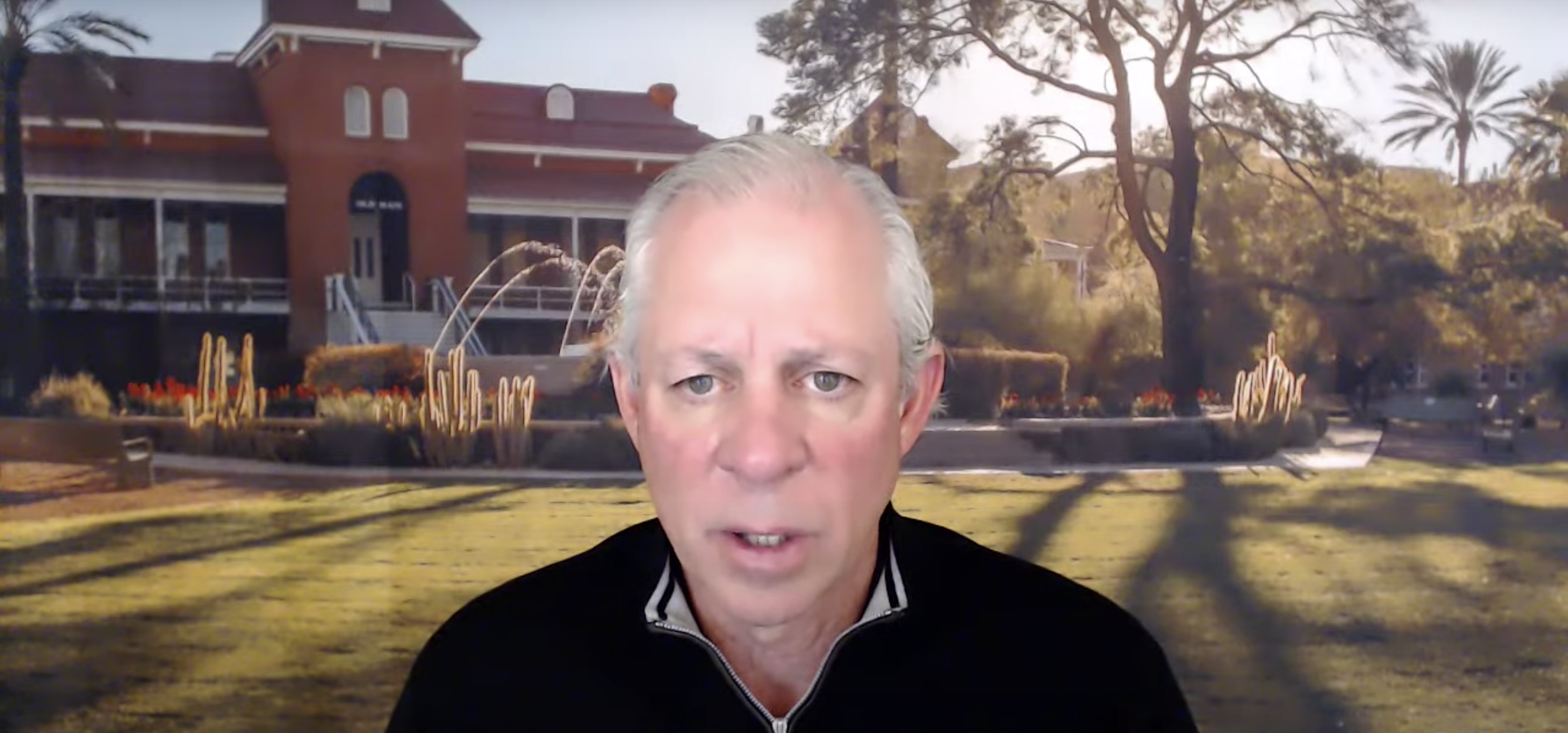
The University of Arizona will offer larger in-person classes on Monday, but with “COVID exhaustion” and multiple variants of COVID-19 on campus, President Robert C. Robbins urged continued compliance to mitigation strategies.
University coronavirus policies will not change despite Gov. Doug Ducey’s lifting of COVID-19 related restrictions last week.
“We are in the fourth quarter of this term, and we need to keep doing what we've been doing that's been so successful and gotten us to this point,” said Robbins in the press briefing Monday morning. “The recent executive order from Governor Ducey, regarding COVID-19 restrictions, does not affect university policies, nor does it bar enforcement of these policies.”
He said university face-covering and all other mitigation strategies will remain in place.
The university moves to Stage 3 on Monday, where in-person and flex in-person courses of up to 100 students may offer in-person instruction.
Dr. Michael Worobey, head of the university's Department of Ecology and Evolutionary Biology, found 12 cases of the UK variant (B.1.1.7) and two cases of the California variant (B.1.429) on campus within the past two weeks as part of the research using COVID-19 genomic sequencing to track COVID-19 variants.
These variants, which are highly transmissible and have higher mortality rates, may be contagious for a longer period of time, said Worobey.
“When we look at the literature, we can see that the time when people are likely infectious is probably carried over a little bit later with this variant,” said Worobey. “So you've just got more virus that you're putting out into the world, but it's also a combination of that high viral load over a longer period of time, and that really indicates that a slightly longer isolation or quarantine time is really a smart move. We're dealing with a different beast here and we need to act accordingly.”
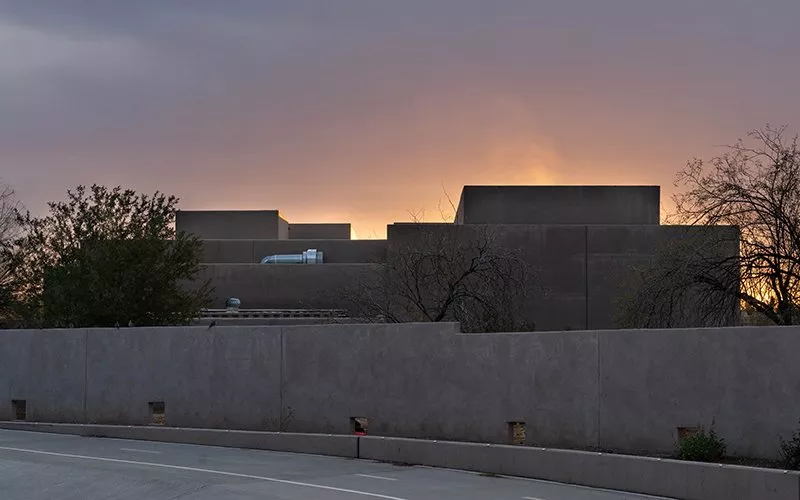
PHOENIX – Rows of cardboard boxes containing corpses line the walls of refrigerated storage containers, waiting for charred human remains to be cleared from the incineration chamber to make room for the next body.
The cremations continue through the night in a scene that has unfolded across America as COVID-19 deaths have risen to more than 540,000 over the past year.
In Arizona, where almost 17,000 have died in the pandemic, the smoke and the hum of crematoriums working overtime have left some neighbors desperate for relief from the odor and pollution.
Arizonans opt for cremation more frequently than the national average, with 67% choosing that option in 2020, according to a July 2020 report from the National Funeral Directors Association.
The national cremation rate reached 56% last year, an increase from 47.9% in 2015, the last reported year. The rise was fueled by the COVID-19 death toll and pandemic restrictions, the low cost of cremation services and the flexible timing for funeral arrangements with cremated ashes.
Some condo owners in east Scottsdale have taken notice of unexpected wafts of smoke and a lingering odor coming from the nearby Paradise Memorial Crematory near 93rd Street and Shea Boulevard.
With 604 new cases reported today, the total number of Arizona’s confirmed novel coronavirus cases topped 840,000 as of Monday, March 29, according to the Arizona Department of Health Services.

Pima County, which reported 135 new cases today, has seen 112,477 of the state’s 840,492 confirmed cases.
With no new deaths reported this morning, a total of 16, 16,918 Arizonans have died after contracting COVID-19, including 2,345 deaths in Pima County, according to the March 29 report.
A total of 549 coronavirus patients were in the hospital as of March 28. That’s roughly 11% of the number hospitalized at the peak of the winter surge, which reached 5,082 on Jan. 11. The summer peak was 3,517, which was set on July 13, 2020. The subsequent lowest number of hospitalized COVID patients was 468, set on Sept. 27, 2020.
A total of 864 people visited emergency rooms with COVID-like symptoms on March 28. That number represents 37% of the record high of 2,341 set on Tuesday, Dec. 29, 2020. That number had peaked during the summer wave at 2,008 on July 7, 2020; it hit a subsequent low of 653 on Sept. 28, 2020.
A total of 169 COVID-19 patients were in intensive care unit beds on March 28, which roughly 14% of the record 1,183 ICU patients set on Jan. 11. The summer’s record number of patients in ICU beds was 970, set on July 13, 2020. The subsequent low was 114 on Sept. 22, 2020.
Friday, March 26, 2021
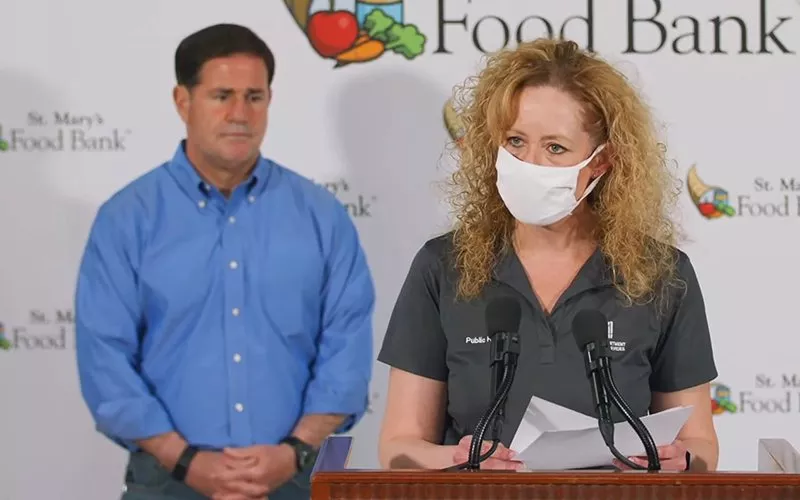
The Arizona Department of Health Services will allow Pima County to independently work with FEMA to run a federal vaccination POD, as long as it does not impact state allocation, said ADHS Director Dr. Cara Christ on Friday afternoon.
Christ said a letter was sent before Friday's media briefing that allows Pima County to work with FEMA.
“Pima County has provided their assurances that they will be able to support these sites,” said Christ. “We are hoping that is without having any impact on any of the other currently operating sites or activities that they have planned and to have in writing that FEMA said that this would remain.”
Christ outlined several assurances the state would like to allow at the federal vaccination site in the letter to FEMA Acting Regional Administrator Tammy L. Littrell.
"To accommodate your offer, and the County’s interest, we are working to ensure they have delegated authority to independently partner with FEMA on a site if they deem it appropriate for their community so long as it does not result in a reduction of existing vaccine supply to the state or impact state vaccine resources and operations. This should include fulfillment by Pima County and the federal government to provide the resources required by FEMA of state or local jurisdictions in order to have a FEMA-operated vaccination site.
These include:
She added, "In addition, while not included in the list of requirements provided by your team, the site will need to comply with Arizona immunization reporting requirements, reporting all required vaccination data back to the Arizona State Immunization Information System within 24 hours of administration as required by Governor Ducey’s Executive Order 2021-01.”
Christ noted the state’s hesitancy to authorize the federal vaccination site because of recent experiences with Pima County, citing the county’s request that the state reimburses them for COVID-19 testing during the height of the pandemic and calling them a “frequent requestor” of administrative staff for vaccination sites.
Christ wrote, “Given the dramatic financial constraints they claim to experience from these activities, we would like to get written assurance that Pima County and/or the federal government is able to appropriately fund the activities required to operate a FEMA site until reimbursement from FEMA is obtained.”
Pima County Health Department Director Dr. Theresa Cullen received the news about Christ’s letter during her own briefing and said she was happy to hear about a possible reversal in the decision and hoped to have it in writing soon.
“We've been doing planning, with the expectation that perhaps a miracle would happen that there'd be a significant change in the decision making,” said Cullen. “I think what it points out, in this case, is this recognition that Pima County itself was very vocal in sharing its concern, and its commitment to get additional vaccine into the county. This can only be a win for us.”
Cullen said that while it has been clear to the county and reiterated by FEMA that the federal POD would not affect the federal government’s vaccine allocation to the state, she is unsure whether the county allocation would be affected.
“Now, is it possible that the state itself could then, subsequently, make a decision about our allocation? Yes.
“We have no transparency into how the state decides what to allow to us.”
In discussions with Littrell, Cullen said they discussed the reasons why they would want access to the vaccine and PODs. She told them they “would intentionally focus on improving our access to our vulnerable population” and hoped to show “HHS, FEMA, the state and other jurisdictions, perhaps a more targeted way to do this to reach the more vulnerable populations.”
Cullen said it was difficult to change the number of vaccinated Hispanics, and noted that for two to three weeks it remained at about 14 percent, but changed to 16 percent as of Friday.
Pima County Updates Public Health Advisory
After the decision by Gov. Doug Ducey to loosen restrictions on businesses and sporting events as well as “phase out” mask mandates, Pima County Health Department released their Public Health Advisory on Friday afternoon.
It says that mitigation strategies, including wearing masks at all times in public or when less than six feet from someone not in the same household, and washing your hands. All gatherings should be held outdoors wherever possible. They should be limited to know more than 200 people and only held in settings and venues where social distancing is possible. Indoor events must be in spaces that provide at least 150 square feet per person, with mitigation strategies in place.
More than 1 out of every 450 Pima County residents has died due to COVID-19. With about 90 people in the hospital with COVID-19 and more than 30 in intensive care units and eight cases of the UK variant at the University of Arizona, Cullen is worried but wants the community to continue to comply with layered mitigation measures.
“We know we have not adequately immunized the community. We know we still have reported cases in the community, we still have hospitalizations, we still have ICU admissions,” said Cullen. “Now is not the time for individuals, businesses, organizations or government, in my opinion, to lift any of the mitigation measures that are available to them to help stop the transmission of this virus.”
Pima County also decided not to join the rest of the state after Ducey opened eligibility to all those 16 and older.
The county limited eligibility to those 16 and older living with a disability, experiencing homelessness, living in a congregate setting/receive in-home or long-term care or with a high-risk medical condition.
“The state's decision came as a surprise to us,” said Cullen. “We were not in the discussion and so we heard about it at the same time that you heard about it.”
She said they always anticipated that the county would go to full opening on May 1, when the Biden administration set that date as a goal.
However, in the past few weeks, Cullen said they got an “increasing number of concerning emails, social media and calls from people that had chronic diseases 25-year-olds with diabetes, 32-year-olds who have cancer and they've been unable to get vaccinated.”
They wanted to give them a “protected slice of the pie” and ensure that they could get vaccinated.
Cullen said when more of those in at-risk groups are vaccinated, the county will open up to all 16 and older. She said she expected that to happen in the next 10 days.
As of Friday, Pima County has administered 432, 779 vaccines and 26.6 percent of residents have been fully vaccinated. Cullen said to reach 70 percent vaccination in the county, about 700,000 vaccines are needed.

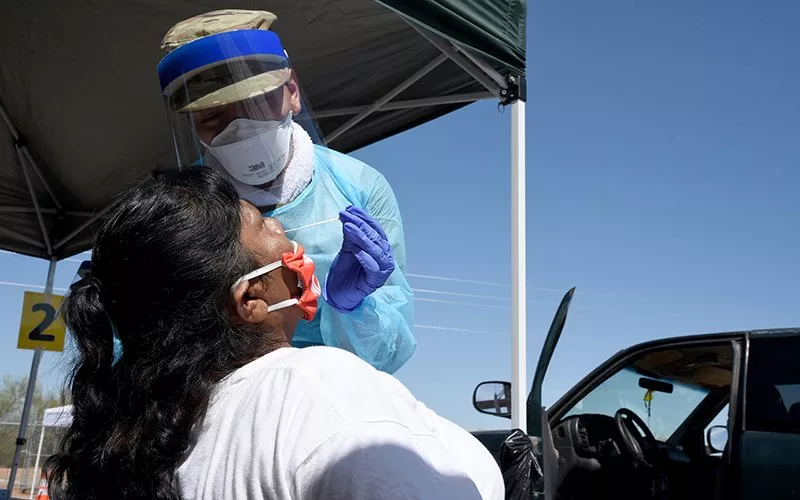
WASHINGTON – Advocates said the billions in aid slated for Native Americans under the latest COVID-19 relief bill is welcome, but they told a House committee Tuesday that a one-shot infusion will not solve all the challenges facing tribes.
“While the American Rescue Plan provides much-needed support to Indian Country’s ongoing requests, the pandemic is far from over and there is much work still left to be done,” said William Smith, the National Indian Health Board chairperson.
That includes not just health care, they said, but the whole range of infrastructure shortfalls, from health facilities to lack of broadband access to overcrowded housing, that have combined to contribute to the devastating effects of COVID-19 on Indigenous people.
Members of the House Natural Resources subcommittee that was holding the hearing appeared to be receptive to the range of challenges the advocates brought to the table.
“Many tribal communities lack proper water delivery systems, sanitation facilities and other disparities, which create the perfect storm,” said Rep. Bruce Westerman, R-Ark., and ranking member of the committee.
Tribal communities have been hammered by COVID-19. Smith said in his written testimony that COVID-19 has led to 5,981 American Indian/Alaska Native deaths over the past year. The Indian Health Service reported 189,231 total positive COVID-19 cases as of Sunday, almost one-third of which were reported in Arizona.

