

Monday, March 22, 2021
Friday, March 19, 2021
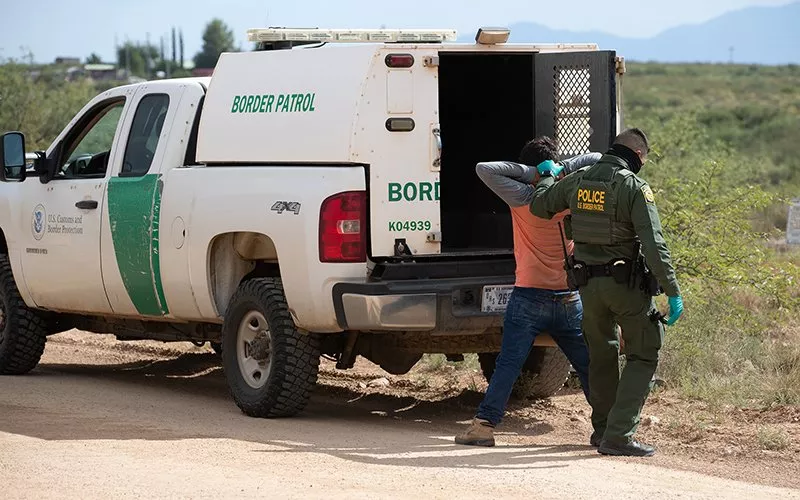
WASHINGTON – Homeland Security Secretary Alejandro Mayorkas defended the Biden administration’s immigration policies Wednesday, but conceded the department faces “historic and unprecedented challenges” coping with a surge in migrants, particularly unaccompanied minors, in recent months.
Mayorkas’ comments came in his first appearance as secretary before a congressional committee, where Republican lawmakers continued to blame the surge on Biden policies that they said amount to an incentive to migrants to come to the U.S.
“We are seeing an unprecedented crisis unfold during the pandemic,” said Rep. John Katko, R-N.Y. “The situation at the border continues to get worse every day with inadequate action or even proper acknowledgment of the severity of the situation.”
But Mayorkas pushed back against calls for a return to the harsh methods of the Trump administration, many of which President Joe Biden reversed soon after taking office. He said Trump’s “zero-tolerance” policies that led to the separation of families and forced return of asylum seekers were the true border crisis.
“A crisis is when a nation is willing to rip a 9-year-old child out of the hands of his or her parent and separate that family to deter future migration,” Mayorkas told lawmakers on the House Homeland Security Committee.
With 423 new cases reported today, the total number of Arizona’s confirmed novel coronavirus cases topped 835,000 as of Friday, March 19, according to the Arizona Department of Health Services.

Pima County, which reported 75 new cases today, has seen 111,582 of the state’s 834,607 confirmed cases.
With 46 new deaths reported this morning, a total of 16,691 Arizonans have died after contracting COVID-19, including 2,322 deaths in Pima County, according to the March 19 report.
A total of 686 coronavirus patients were in the hospital as of March 18. That’s roughly 13% of the number hospitalized at the peak of the winter surge, which reached 5,082 on Jan. 11. The summer peak was 3,517, which was set on July 13, 2020. The subsequent lowest number of hospitalized COVID patients was 468, set on Sept. 27, 2020.
A total of 958 people visited emergency rooms with COVID-like symptoms on March 18. That number represents 40% of the record high of 2,341 set on Tuesday, Dec. 29, 2020. That number had peaked during the summer wave at 2,008 on July 7, 2020; it hit a subsequent low of 653 on Sept. 28, 2020.
A total of 184 COVID-19 patients were in intensive care unit beds on March 18, which is just under 16% of the record 1,183 ICU patients set on Jan. 11. The summer’s record number of patients in ICU beds was 970, set on July 13, 2020. The subsequent low was 114 on Sept. 22, 2020.

WASHINGTON – An attorney for Arizona native Jacob Chansley, the face-painted “Q-Anon Shaman” charged in the Jan. 6 Capitol insurrection, dismissed new government video showing his client as part of the mob that broke into the building and confronted police.
The attorney, Albert Watkins, said two videos released this week are “one-dimensional snippets” that lack context over Chansley’s participation in the riot that sent lawmakers scrambling for cover and temporarily halted the certification of President Joe Biden’s election.
But the judge in the case said the video shows that Chansley’s “perception of his actions on January 6th as peaceful, benign and well-intentioned shows a detachment from reality.” U.S. District Judge Royce Lamberth ordered the videos made public this week as part of his order denying Chansley’s request to be released from jail while awaiting trial.
Chansley, who also goes by the name Jake Angeli, is one of at least four Arizona residents who are among the 254 charged so far by federal prosecutors in the Jan. 6 riot, when a crowd of former President Donald Trump’s supporters stormed the Capitol to halt what they believed was a stolen election.
U.S. Capitol Police were overwhelmed by the crowds, who shouted profanities at officers, sprayed them with chemical irritants, shoved and beat them with flagpoles, sticks and – in some cases – the officers’ own shields. The crowd forced its way into the Capitol, breaking windows and doors and eventually taking over the Senate chamber.

Thursday, March 18, 2021
With 284 new cases reported today, the total number of Arizona’s confirmed novel coronavirus cases topped 834,000 as of Thursday, March 18, according to the Arizona Department of Health Services.

Pima County, which reported 80 new cases today, has seen 111,507 of the state’s 834,607 confirmed cases.
With 59 new deaths reported this morning, a total of 16,645 Arizonans have died after contracting COVID-19, including 2,317 deaths in Pima County, according to the March 18 report.
A total of 743 coronavirus patients were in the hospital as of March 17. That’s roughly 15% of the number hospitalized at the peak of the winter surge, which reached 5,082 on Jan. 11. The summer peak was 3,517, which was set on July 13, 2020. The subsequent lowest number of hospitalized COVID patients was 468, set on Sept. 27, 2020.
A total of 1,031 people visited emergency rooms with COVID-like symptoms on March 17. That number represents 44% of the record high of 2,341 set on Tuesday, Dec. 29, 2020. That number had peaked during the summer wave at 2,008 on July 7, 2020; it hit a subsequent low of 653 on Sept. 28, 2020.
A total of 200 COVID-19 patients were in intensive care unit beds on March 17, which is roughly 17% of the record 1,183 ICU patients set on Jan. 11. The summer’s record number of patients in ICU beds was 970, set on July 13, 2020. The subsequent low was 114 on Sept. 22, 2020.
How to get a vaccine
More than 1 million Arizonans are now fully vaccinated against COVID, according to the Arizona Department of Health Services.
Nearly 1.7 million Arizonans have at least one shot of the vaccine.
A total of 235,558 Pima County residents have received at least one vaccine shot and 159,969 residents are fully vaccinated as of today, according to ADHS.
Between the state POD, the county PODs and private pharmacies, the county is now receiving between 40,000 and 50,000 doses a week, according to Pima County spokesman Mark Evans.
To find out if you are eligible for a vaccine, visit the Arizona Department of Health website.
Pima County is providing vaccination appointments to people 55 and older as well as frontline workers, educators, first responders and healthcare workers. Those who qualify in Pima County’s priority group of eligible vaccine recipients can register for a vaccine at www.pima.gov/covid19vaccineregistration or by calling 520-222-0119.
A state-run vaccination site at the University of Arizona accepts registration and appointments at pod vaccine.azdhs.gov, and those who need assistance can call 1-844-542-8201. More details here.
Many local pharmacies are now receiving vaccine doses. To find one near you, visit the ADHS website.
Get tested: Pima County has free COVID testing
Pima County is continuing to offer a number of testing centers around town.
You’ll have a nasal swab test at the Kino Event Center (2805 E. Ajo Way) and the Udall Center (7200 E. Tanque Verde Road).
The center at the northside Ellie Towne Flowing Wells Community Center, 1660 W. Ruthrauff Road, involves a saliva test designed by ASU.
Schedule an appointment at these or other drive-thru or pop-up sites at pima.gov/covid19testing.
The University of Arizona’s antibody testing can determine if you have had COVID and now have antibodies. To sign up for testing, visit https://covid19antibodytesting.arizona.edu/home.
—with additional reporting from Austin Counts, Christina Duran, Jeff Gardner and Mike Truelsen
WASHINGTON – Children from 6 months up to 12 years old could soon start getting the COVID-19 vaccine in Phoenix as part of a trial of the drug’s effectiveness on young people.
Drug-maker Moderna announced this week that Phoenix will be one of the cities where it will test smaller doses of its COVID-19 vaccine, which has currently only been approved for adult use, on preteens. The company has already started trials of the vaccine on teenagers.
While children have proven to be less susceptible to the disease, health experts say it’s important to have the option of a vaccine for younger kids as schools reopen and to improve the odds of “herd immunity” for the overall population.
“The reason we want to make sure that all of these kids get vaccinated is so we can truly achieve herd immunity. We don’t want to have little pockets of people who might be infectious and not be protected,” said Dr. Georges C. Benjamin, director of the American Public Health Association.
The preteen trials were announced Tuesday by Moderna, one of three pharmaceutical companies with vaccines approved for emergency use in adults in the U.S., along with Pfizer-BioNTech and Johnson & Johnson. Moderna and Pfizer vaccines require two doses, while the newer Johnson & Johnson vaccine has a one-dose protocol.
The announcement came the same day that the Arizona Department of Health Services announced that just over 1 million Arizonans have been fully vaccinated against the coronavirus. Overall, the state has administered about 2.6 million doses to a little more than 1.6 million people.
Moderna CEO Stéphane Bancel said in a statement that more than 53 million doses of his company’s version of the vaccine have been administered in the U.S., but “this pediatric study will help us assess the potential safety and immunogenicity of our COVID-19 vaccine candidate in this important younger age population.” The statement said the new trials would take place in the U.S. and Canada.
Dr. Steven Plimpton, the lead investigator for the Phoenix trial, said Tuesday that his office has “already gotten hundreds of calls” from parents interested in getting their children into the trial. He said parents interested in the trial in Phoenix can go the KidCOVE site for more information or can call 602-368-1928 or 866-913-5454.
One University of Arizona expert said it will likely take a little while to get the trials in motion.
“I would say sometime in the next several weeks, as they get recruitment on board and they have a critical mass to start with and they have all of the aspects of the trial set up in terms of location, staffing, and everything that they need in place,” said Dr. Shad Marvasti, director of public health and prevention at the University of Arizona College of Medicine.
Moderna said that children in the first phase of the trial will receive doses of 25, 50 or 100 micrograms of the vaccine – an adult dose is 100 – depending on their age. Results from that phase will be used to determine dosages in a second phase when come subjects will get a placebo.
Ultimately, Moderna expects to include 6,750 children in the latest trials.
“The adult dose for the Moderna is 100 micrograms, but they are starting with 25 micrograms and then basically watching folks and kids to see how they react,” Marvasti said. “If that looks good and there are no major issues, then they will have a group of kids in the study with 50 micrograms and then if that looks okay they will have another group that has 100 micrograms.”
He added that Moderna’s trust that the vaccine is safe enough to begin trials on kids could have the added benefit of helping to quell vaccine hesitancy among others.
“Hopefully, depending on the results, it will help give people more confidence to get the vaccine, especially if it proves to be as safe and effective in children as it has been in adults,” Marvasti said.
The announcement of the preteen trials also comes as the state has ordered schools to begin to resume in-person schooling, after a year in which most students have attended class virtually.
Benjamin said that with schools reopening, in Arizona and across the U.S., a vaccine for youth would make a definite difference in controlling the virus, as it would prevent kids from spreading it to each other and then bringing it home with them. Vaccination would also expedite kids’ ability to return to normal
“Getting kids vaccinated, I think, will certainly improve their quality of life and their ability to effectively interact with their friends,” he said.
Wednesday, March 17, 2021
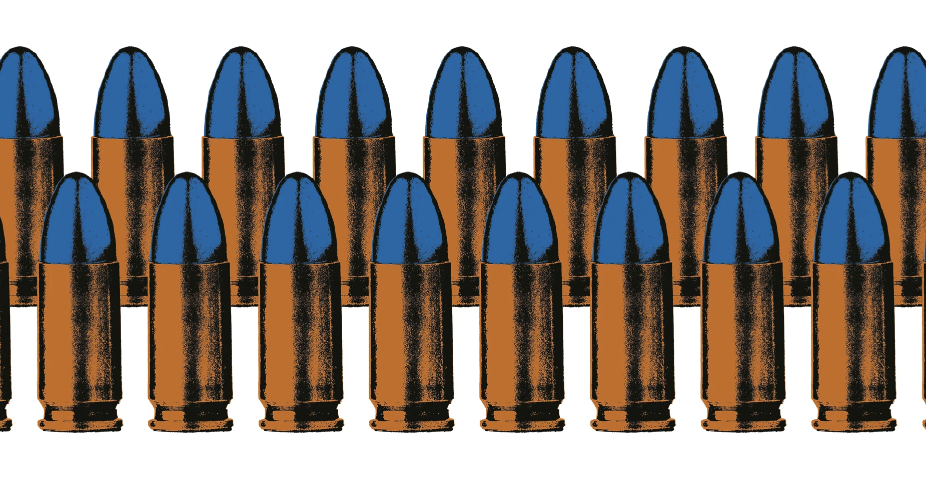
With a pandemic, nationwide protests, record-breaking weather events and political upheaval, it’s no wonder the past 12 months saw record gun sales across the nation. In 2020, the FBI conducted nearly 40 million background checks for gun purchases, an increase of 40% from 2019.
In the same year, Jennifer Carlson, a University of Arizona associate professor of sociology, earned a National Science Foundation grant to document the surge in American gun purchases. This resulted in her latest book, "Policing the Second Amendment: Guns, Law Enforcement and the Politics of Race."
Ahead of a weekly webinar series with gun experts, UA highlighted some of Carlson’s research and work.
“Gun sellers' reports about why people were buying guns related to uncertainty. The fact that people were going to the grocery store and there was no toilet paper, that places were shut down, people were getting laid off – there is this sense of uncertainty and chaos,” Carlson told the university. “The striking aspect of 2020, though, is that this becomes a moment when guns become appealing to a much broader sector of the population who either thought about getting a gun but never took that step, or were adamantly opposed to guns and gun ownership.”
Carlson spoke with gun sellers who reported seeing more gun purchases from first-time gun owners, including women, people of color and members of the LGBTQ community.
“With this shift to first-time gun buyers, I think the question is: Does owning a gun make you part of gun culture?” Carlson said. “You may buy a gun in the context of acute insecurity when you find that for the first time in your life you can't go to the store and buy toilet paper, but that doesn't necessarily mean that you've invested in the broader political project that's represented by pro-gun politics. So I think that's a question that's still waiting to be unraveled."
The next webinar takes place at 1:30 p.m., Tuesday, March 23, and will cover gun culture and gun violence during coronavirus. The final webinar will be 1:30 p.m., Tuesday, March 30, and will cover guns and democracy.
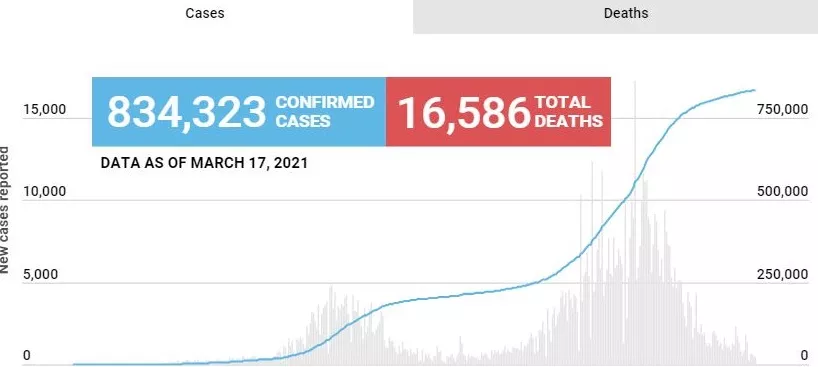
With 445 new cases reported today, the total number of Arizona’s confirmed novel coronavirus cases topped 834,000 as of Wednesday, March 17, according to the Arizona Department of Health Services.

Pima County, which reported 56 new cases today, has seen 111,427 of the state’s 834,323 confirmed cases.
With 12 new deaths reported this morning, a total of 16,586 Arizonans have died after contracting COVID-19, including 2,308 deaths in Pima County, according to the March 17 report.
A total of 773 coronavirus patients were in the hospital as of March 16. That’s roughly 15% of the number hospitalized at the peak of the winter surge, which reached 5,082 on Jan. 11. The summer peak was 3,517, which was set on July 13, 2020. The subsequent lowest number of hospitalized COVID patients was 468, set on Sept. 27, 2020.
A total of 1,095 people visited emergency rooms with COVID-like symptoms on March 16. That number represents 47% of the record high of 2,341 set on Tuesday, Dec. 29, 2020. That number had peaked during the summer wave at 2,008 on July 7, 2020; it hit a subsequent low of 653 on Sept. 28, 2020.
A total of 208 COVID-19 patients were in intensive care unit beds on March 15, which is roughly 17% of the record 1,183 ICU patients set on Jan. 11. The summer’s record number of patients in ICU beds was 970, set on July 13, 2020. The subsequent low was 114 on Sept. 22, 2020.

