
Tuesday, March 2, 2021

Monday, March 1, 2021
PHOENIX – For the second time since 2019, the Arizona Department of Corrections has been found in contempt for its failure to follow health care guidelines designed to protect prisoners.
In a ruling issued Wednesday, U.S. District Court Judge Roslyn Silver fined the Arizona Department of Corrections Rehabilitation & Reentry $1.1 million for neglecting health care guidelines the department agreed to follow in 2015. The fine is to be paid this month.
This is the second time the department has been found in violation of these regulations. The original lawsuit, filed in 2012 on behalf of over 33,000 inmates by the American Civil Liberties Union and Perkins Coie LLC, cited concerns about the lack of care within Arizona’s 48 correctional facilities, whether it be comprehensive health care, dental or mental health care. Through the settlement, 112 benchmarks were created and agreed upon. To avoid fines, the department would have to remain 70% compliant with the settlement.
In 2019, however, the department was held in contempt for failing to meet enough of those benchmarks. Lawyers for the plaintiffs say that equates to inadequate health care for those in the system who have needs that go beyond basic care.
“Within correctional facilities, we see individuals with cancer and heart disease as well as drive-by mental health encounters that can last anywhere from two to three minutes,” said David Fathi, director of the ACLU National Prison Project. “These incarcerated individuals need to go and see outside specialists, and are more often than not not taken to those specialists.”
A spokesperson for the Department of Corrections confirmed officials had received the order from the court and would be reviewing it with their attorneys.
The Department of Corrections is required to report to the ACLU each month with documentation of the care inmates receive through its health care providers. Through these documents and the department’s medical records, the ACLU has been able to repeatedly determine noncompliance in the system, Fathi said.
The new $1.1 million fine only applies to February. To avoid being fined for the whole year – which could be up to $17 million – the state must be able to show cause for this month as well as why they should not be fined for the whole year.
“A large part as to why this is happening is a lack of awareness in the Legislature,” said Daniel Barr, ACLU co-counsel and an attorney with Perkins Coie. “We’ve met with several legislative bodies and many of them had never even heard of the case.”
In Barr’s opinion, this lack of awareness is due in part to the blatant disregard by lawmakers as well as the news media.
“There are 36,000 prisoners in the state of Arizona right now, and these people have the constitutional right to health care just like everyone else,” Barr said. “The Eighth Amendment right to this care is extremely basic, and these people aren’t even getting that much.”
Fathi said the February fine will be used to fund a systemwide study to identify the root causes of the persistent negligence. Some key factors, he said, are the understaffing of correctional facilities, as well as the political unpopularity of criminal offenders.
“These people have been abused, neglected and victimized,” Fathi said. “I haven’t seen a lot of attention on these individuals from elected officials. It all comes down to a lack of resources and attention.”
Fathi and Barr find the lack of action in the nine years since the original suit appalling.
“It is historic to hold a state agency in contempt not once, but twice in three years,” Fathi said. “It‘s a rebuke of the state’s failure to acknowledge the need for change.”
Friday, February 26, 2021
With 1,621 new cases reported today, the number of Arizona’s confirmed novel coronavirus cases reached 814,528 as of Friday, Feb. 26, according to the Arizona Department of Health Services.
Pima County, which reported 185 new cases today, has 109,137 of the state’s cases.
With 83 new deaths reported today, a total of 15,897 Arizonans have died after contracting COVID-19, including 2,212 deaths in Pima County, according to the Feb. 26 report.
The number of hospitalized COVID cases statewide has declined in recent weeks, with 1,354 coronavirus patients in the hospital as of Feb. 25. That’s less than a third of the number hospitalized at the peak of the winter surge, which reached 5,082 on Jan. 11. The summer peak was 3,517, which was set on July 13, 2020. The subsequent lowest number of hospitalized COVID patients was 468, set on Sept. 27, 2020.
A total of 1,190 people visited emergency rooms on Feb. 25 with COVID symptoms, a big drop from the record high of 2,341 set on Tuesday, Dec. 29, 2020. That number had peaked during the summer wave at 2,008 on July 7, 2020; it hit a subsequent low of 653 on Sept. 28, 2020.
A total of 419 COVID-19 patients were in intensive care unit beds on Feb. 25, down from a peak of 1,183 set on Jan. 11. The summer’s record number of patients in ICU beds was 970, set on July 13, 2020. The subsequent low was 114 on Sept. 22, 2020.
How to get a vaccine
While supplies are limited, Pima County is providing vaccination shots to people 65 and older as well as educators, first responders and healthcare workers. Those who qualify in Pima County’s 1B priority group of eligible vaccine recipients can register for a vaccine at www.pima.gov/covid19vaccineregistration or by calling 520-222-0119.
A state-run vaccination site opening at the University of Arizona began appointments last week. The new site follows the state’s current vaccine eligibility, which includes those 65 and older, educators, childcare workers and protective service workers.
The POD is expanding its hours of operation from 10 a.m. to 10 p.m seven days a week.
As the state-run POD, or point of distribution, registrations will go through ADHS’s website. Online registration will be available at podvaccine.azdhs.gov, and those who need assistance can call 1-844-542-8201. More details here.
Eight CVS pharmacies throughout Arizona are set to begin offering COVID-19 vaccines starting today, but CVS is not yet announcing which locations. Company officials say this is to avoid “stores from being overwhelmed by those who may seek a vaccination without making an appointment," but they have confirmed vaccinations will be offered in Pima, Maricopa, Mohave, Pinal and Yuma counties. Rather than selecting a specific store, patients choose their city.
Patients must register in advance at CVS.com or through the CVS Pharmacy app. People without online access can contact CVS Customer Service: (800) 746-7287. Walk-in vaccinations without an appointment will not be provided. Per the state of Arizona, eligible individuals for the Federal Retail Pharmacy Program are people age 65 and over, health care workers, protective services, teachers and childcare providers.
As more supply becomes available, the company will expand vaccine access through an increasing number of store locations and in more Arizona counties.
Click here to register in advance for a vaccine at a CVS location.
Get tested: Pima County has free COVID testing
After the state agreed to provide additional funding to keep testing centers open through at least March 2, Pima County is continuing to offer a number of testing centers around town.
You’ll have a nasal swab test at the Kino Event Center (2805 E. Ajo Way), the Udall Center (7200 E. Tanque Verde Road) and downtown (88 E. Broadway).
The center at the northside Ellie Towne Flowing Wells Community Center, 1660 W. Ruthrauff Road, involves a saliva test designed by ASU.
In addition, the Pima County Health Department, Pima Community College and Arizona State University have partnered to create new drive-thru COVID-19 testing sites at three Pima Community College locations. At the drive-thru sites, COVID-19 testing will be offered through spit samples instead of nasal canal swabs. Each site will conduct testing from 9 a.m. to noon, and registration is required in advance. Only patients 5 years or older can be tested.
Schedule an appointment at these or other pop-up sites at pima.gov/covid19testing.
The University of Arizona’s antibody testing has been opened to all Arizonans as the state attempts to get a handle on how many people have been exposed to COVID-19 but were asymptomatic or otherwise did not get a test while they were ill. To sign up for testing, visit https://covid19antibodytesting.arizona.edu/home.
—with additional reporting from Austin Counts, Jeff Gardner, Nicole Ludden and Mike Truelsen
Thursday, February 25, 2021

This past year the pandemic has subjected our economy to massive, unprecedented challenges in nearly every sector. We’ve heard from countless constituents who struggled after losing their jobs due to the pandemic and the associated government restrictions on businesses. Hundreds of thousands of hard-working Arizonans have been affected, and nearly one-half million people have applied for unemployment since the COVID-19 pandemic began.
Unemployment assistance benefits exist for this singular reason: to provide a temporary safety net to bridge the gap and meet the needs of Arizona’s working families who find themselves without a source of income. We fully believe it is the duty of state legislators to help hard-working Arizonans across the state as they manage the impacts of this crisis.
Arizona’s unemployment insurance benefit is currently limited to $240 – the second-lowest in the nation – providing little help for a family when expenses average $1,120 per week for basic needs like housing, food, and health care. unfortunately, Current unemployment law also punishes people for accepting part-time work by reducing their benefit after earning just $30.
That’s why we introduced bipartisan legislation, HB 2805, to provide much-needed, additional unemployment assistance to Arizonans who have been put in this terrible situation. This legislation raises the weekly unemployment benefit cap to $300, giving the people of Arizona the equivalent of one more assistance payment per month. It also allows people to earn up to $160 per week from part-time hours while looking for a new job without a reduction in their weekly benefit.
With 939 new cases reported today, the total number of Arizona’s confirmed novel coronavirus cases closed in on 813,000 as of Thursday, Feb. 25, according to the Arizona Department of Health Services.

Pima County, which reported 180 new cases today, has seen 108,952 of the state’s 812,907 confirmed cases.
With 121 new deaths reported today, a total of 15,814 Arizonans have died after contracting COVID-19, including 2,202 deaths in Pima County, according to the Feb. 25 report.
The number of hospitalized COVID cases statewide has declined in recent weeks, with 1,385 coronavirus patients in the hospital as of Feb. 24. That’s less than a third of the number hospitalized at the peak of the winter surge, which reached 5,082 on Jan. 11. The summer peak was 3,517, which was set on July 13, 2020. The subsequent lowest number of hospitalized COVID patients was 468, set on Sept. 27, 2020.
A total of 1,210 people visited emergency rooms on Feb. 24 with COVID symptoms, a big drop from the record high of 2,341 set on Tuesday, Dec. 29, 2020. That number had peaked during the summer wave at 2,008 on July 7, 2020; it hit a subsequent low of 653 on Sept. 28, 2020.
A total of 415 COVID-19 patients were in intensive care unit beds on Feb. 24, down from a peak of 1,183 set on Jan. 11. The summer’s record number of patients in ICU beds was 970, set on July 13, 2020. The subsequent low was 114 on Sept. 22, 2020.
How to get a vaccine
While supplies are limited, Pima County is providing vaccination shots to people 65 and older as well as educators, first responders and healthcare workers. Those who qualify in Pima County’s 1B priority group of eligible vaccine recipients can register for a vaccine at www.pima.gov/covid19vaccineregistration or by calling 520-222-0119.
A state-run vaccination site opening at the University of Arizona began appointments last week. The new site follows the state’s current vaccine eligibility, which includes those 65 and older, educators, childcare workers and protective service workers.
The POD is expanding its hours of operation from 10 a.m. to 10 p.m seven days a week.
As the state-run POD, or point of distribution, registrations will go through ADHS’s website. Online registration will be available at podvaccine.azdhs.gov, and those who need assistance can call 1-844-542-8201. More details here.
Eight CVS pharmacies throughout Arizona are set to begin offering COVID-19 vaccines starting today, but CVS is not yet announcing which locations. Company officials say this is to avoid “stores from being overwhelmed by those who may seek a vaccination without making an appointment," but they have confirmed vaccinations will be offered in Pima, Maricopa, Mohave, Pinal and Yuma counties. Rather than selecting a specific store, patients choose their city.
Patients must register in advance at CVS.com or through the CVS Pharmacy app. People without online access can contact CVS Customer Service: (800) 746-7287. Walk-in vaccinations without an appointment will not be provided. Per the state of Arizona, eligible individuals for the Federal Retail Pharmacy Program are people age 65 and over, health care workers, protective services, teachers and childcare providers.
As more supply becomes available, the company will expand vaccine access through an increasing number of store locations and in more Arizona counties.
Click here to register in advance for a vaccine at a CVS location.
Local school districts moving toward more on-campus instruction
TUSD remains on track to reopen its schools on Wednesday, March 24, for the first time since it went to remote learning after the March 2020 spring break.
But TUSD Superintendent Gabriel Trujillo said teachers remained concerned about vaccination appointments and class sizes, among other issues.
“I don't think it's any secret that our teachers are not happy,” he said at a press conference yesterday. “They're very concerned right now about coming back.”
Trujillo said the district would be surveying employees and hoped that many of their concerns would be worked out before students return to campus.
Trujillo also said that the district would extend a Feb. 28 deadline for parents to choose their learning option to March 7 because more than four out of 10 parents have yet to make a choice about whether they want to return to school or remain remote.
So far, 30% of TUSD parents have said they will continue with remote learning, 29% have said they will return to in-school instruction and 41% have yet to make a choice.
“If this trend holds up for the remaining 41%, it looks like we're going to be an even 50/50 split, in terms of a district that has half of its student body studying remotely and half of it studying in some sort of in-person learning opportunity,” Trujillo said.
For elementary schools grades K-5 and three K-8 schools (Drachman, C.E. Rose and McCorkle), there are two options available: either attend full-time on-campus Monday through Friday or remain 100% remote. High schools and middle schools, grades 6-12, also have two options. A parent can choose to have their child stay 100% remote or four half-days of in-person learning, meaning students will be on-campus in the morning and remote learning in the afternoon, with Wednesday as 100% remote learning.
Trujillo said the district also came to an agreement with the Tucson Education Association and the Educational Leadership Institute to allow teachers to simultaneously teach both in-person and remote learning students at elementary schools.
“[This] would eliminate the need for any schedule changing that has been a big concern from parents, from teachers and from principals,” said Trujillo. “This new option is going to require a supermajority of each campus's teaching community, 80%, to be able to have a particular school declared campus-wide simultaneous teaching sites.”
However, high schools and middle schools do not have this option as they are required by the state to show 720 hours of instruction through their bell schedules.
Other school districts are also working toward resuming more on-campus activity as COVID cases in Pima County continue to decline from the winter surge.
Marana Unified School District is planning to move to full five days of in-person instruction as of March 22, while keeping remote learning as an option for families. However, the district is still coordinating with schools and aims to confirm the March 22 return date next week, said Alli Benjamin, Director of Public Relations and Community Engagement for Marana.
The district outlined three approaches to return to a full five days of in-person learning: a phased approach, where pre-K through 6th-grade students would return to instruction first; another phased approach in which pre-K through 8th-grade students would return first to in-person learning; or a third approach with a “full implementation, returning students in pre-K through 12th grade at once.”
The nearby Amphi School District, which now has a hybrid program with students attending two days a week and working remotely three days a week, is still considering when to have students back on campus five days a week.
“A lot of people, of course, given the actions of other school districts across our community, are asking the $64,000 question,” said Superintendent Todd Jaeger at the Amphitheater School District’s board meeting on Tuesday, Feb. 23. “‘Can that be, for example after spring break, on March 22?’ The truth is, as I sit here right now. I still don't know.”
Jaeger said the Amphi staff is looking into phased-in approaches or a full reopening and will be sending out another survey to families as well as looking for input from staff, including not only teachers, but “our custodians and our groundsman and carpenters and whoever supports the operations of our schools.”
Jaeger noted that returning to full in-person learning depends on the vaccination progress as well and said their district is ahead in the percent of vaccinations.
Get tested: Pima County has free COVID testing
After the state agreed to provide additional funding to keep testing centers open through at least March 2, Pima County is continuing to offer a number of testing centers around town.
You’ll have a nasal swab test at the Kino Event Center (2805 E. Ajo Way), the Udall Center (7200 E. Tanque Verde Road) and downtown (88 E. Broadway).
The center at the northside Ellie Towne Flowing Wells Community Center, 1660 W. Ruthrauff Road, involves a saliva test designed by ASU.
In addition, the Pima County Health Department, Pima Community College and Arizona State University have partnered to create new drive-thru COVID-19 testing sites at three Pima Community College locations. At the drive-thru sites, COVID-19 testing will be offered through spit samples instead of nasal canal swabs. Each site will conduct testing from 9 a.m. to noon, and registration is required in advance. Only patients 5 years or older can be tested.
Schedule an appointment at these or other pop-up sites at pima.gov/covid19testing.
The University of Arizona’s antibody testing has been opened to all Arizonans as the state attempts to get a handle on how many people have been exposed to COVID-19 but were asymptomatic or otherwise did not get a test while they were ill. To sign up for testing, visit https://covid19antibodytesting.arizona.edu/home.
—with additional reporting from Austin Counts, Christina Duran, Jeff Gardner, Nicole Ludden and Mike Truelsen
Wednesday, February 24, 2021
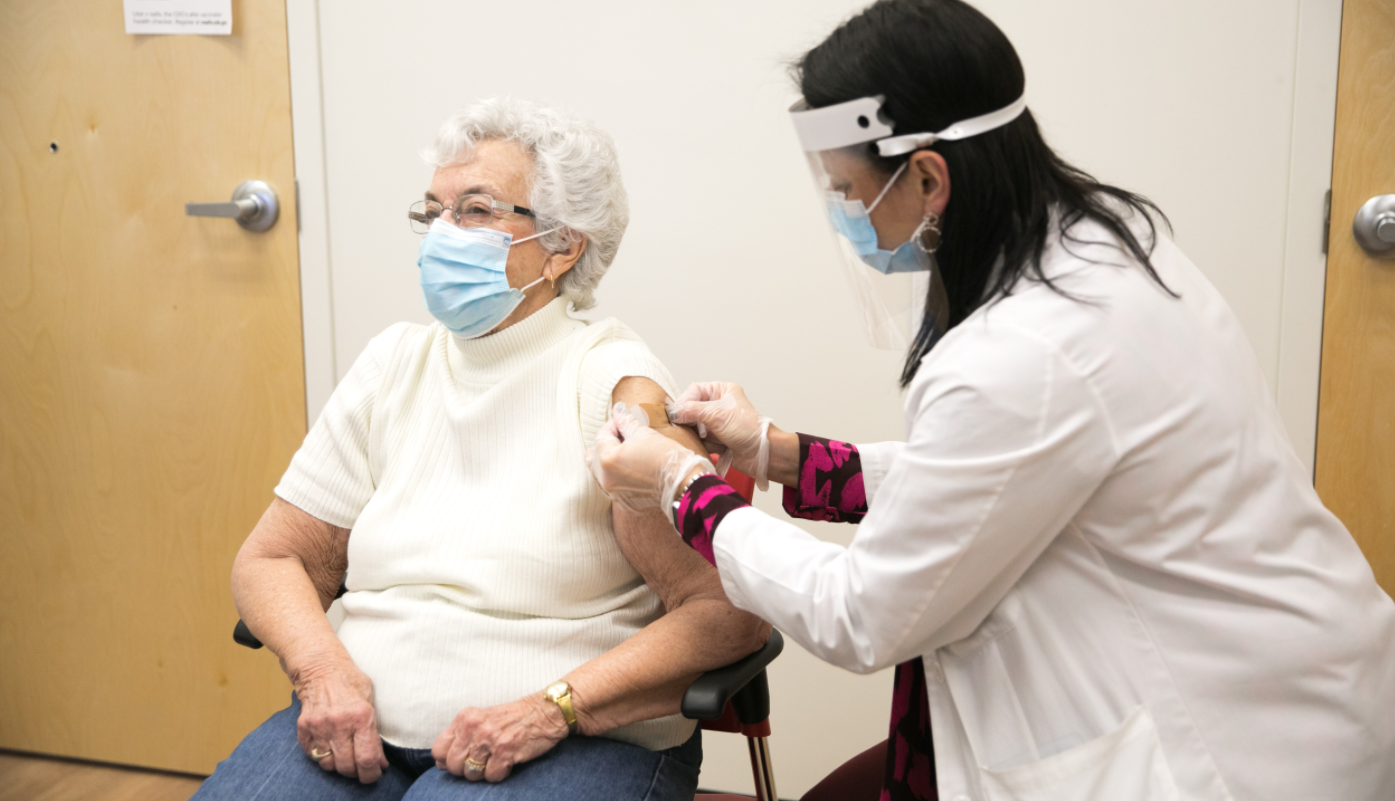
Eight CVS pharmacies throughout Arizona are set to begin offering COVID-19 vaccines starting Thursday, however, CVS is not yet announcing which locations. Company officials say this is to avoid “stores from being overwhelmed by those who may seek a vaccination without making an appointment," but they have confirmed vaccinations will be offered in Pima, Maricopa, Mohave, Pinal and Yuma counties. Rather than selecting a specific store, patients choose their city.
Patients must register in advance at CVS.com or through the CVS Pharmacy app. People without online access can contact CVS Customer Service: (800) 746-7287. Walk-in vaccinations without an appointment will not be provided. Per the state of Arizona, eligible individuals for the Federal Retail Pharmacy Program are people age 65 and over, health care workers, protective services, teachers and childcare providers.
As more supply becomes available, the company will expand vaccine access through an increasing number of store locations and in more Arizona counties.
Click here register in advance for a vaccine at a CVS location.
Tuesday, February 23, 2021
After hearing the distressing story of a mother desperate to conceive children only to find out the artificial insemination treatments she received were sourced from the very doctor she entrusted to provide her sperm from an anonymous donor, Arizona Sen. Victoria Steele (D-Tucson) decided to use her position of power to help other victims.
When Kristen Finlayson took an Ancestry DNA kit in 2019, her mother, Debra Guilmette, discovered that Dr. James Blute III, who provided her fertility treatments in the ’80s, used his own sperm to inseminate her instead of using sperm from an anonymous Hispanic donor as she requested.
Finlayson went 34 years believing she was of Hispanic descent, only to find out the DNA test results showed she had no Hispanic DNA and was primarily Irish. The Ancestry site shows that Finlayson has 12 half-siblings, including children of the doctor who delivered her.

Finlayson’s DNA tests revealed that Blute is her biological father.
Steele saw the story, first reported by Lupita Murillo of KVOA News 4 Tucson, and drafted a bill that would make fertility fraud a criminal offense in Arizona as it is in California, Indiana and Texas.
Steele introduced the bill before the 2021 state legislative session began, but her bill was never assigned to a committee.
“I requested a meeting with [Senate President Karen Fann], I said I'd like to see her because I want to ask her to please reconsider, and please assign this to a committee so it can get a hearing,” Steele said. “I think that she may be thinking that this is a controversial bill, but I think that actually, I put a bill up here that everybody can get behind, and we could have a real bipartisan bill . . . I assumed that in a few days, it would be assigned to a committee because she would look at it, and in her heart of hearts, she would get that this really does make sense.”
On Jan. 20, Steele found out a bill criminalizing fertility fraud did make it to a committee to be voted on, but it was not hers.
Sen. Nancy Barto, R-Phoenix, had introduced a similar bill that would make fertility fraud a criminal offense. It was assigned to the Senate Judiciary Committee on Jan. 20.
“I was floored. I knew [Barto] would like it, but I didn't know she'd like it that much,” Steele said. “It's not against the rules, and so she has every right to take my bill and put it in and take credit for it. It doesn't matter, as long as the bill gets passed. But it does matter because that kind of highly unethical behavior makes it really difficult to have bipartisanship, and it's really difficult to get good bills to pass.”
Barto said she never knew about Steele’s bill, but that she was contacted by a constituent who had a story of fertility fraud and felt moved to draft legislation to criminalize the act.
Barto’s bill, SB 1237, proposed making “human reproductive material fraud” a class 6 felony while providing victims liquidated damages of $10,000.
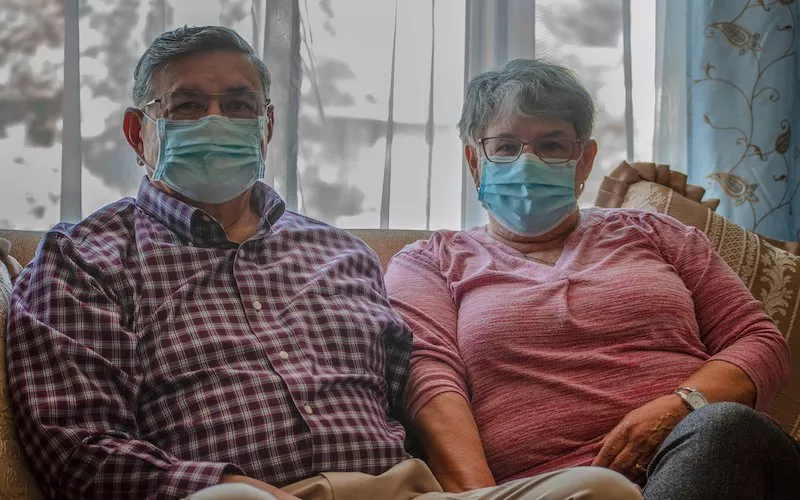
Lupe Solis’ prayers were answered when she received her second dose of COVID-19 vaccine recently at the State Farm Stadium mass vaccination site in Glendale. Now the 77-year-old is being cautious and patient, waiting to worship in person again at St. Timothy Catholic Church in Mesa.
“Prayer takes up a big part of our life,” Solis said. “We cannot participate in church activities. I will not feel safe now.”
Some churches have resumed in-person worship in Arizona, but Solis, who lives in Chandler, is still playing it safe after receiving both doses of the Pfizer vaccine.
Like so many of the nearly 1.3 million Arizonans 65 or older, Solis has adjusted to the safety precautions that have upended life since the onset of the pandemic. With COVID-19 ravaging Arizona’s senior community, many long to return to normal activities but remain apprehensive.
As of Friday, more than 11,500 Arizonans 65 or older have died from COVID-19 since the start of the pandemic, with a majority of those deaths in Maricopa County, according to the Arizona Department of Health Services. Now, in accordance with phase 1B of vaccine rollout, the state has been doing what it can to get vaccinations to the older population as quickly as possible. Seniors make up more than half of the 1,027,816 people in the state who have received at least the first dose.

Monday, February 22, 2021
The University of Arizona moved to phase two of its reentry plan Monday with its nearly 8,000 students now able to attend in-person classes of 50 or fewer.
From Feb. 12-21, UA administered 15,047 COVID-19 tests and found 20 positive cases for a positivity rating of 0.1%, down from last week’s percent positivity of 0.3%.
The university’s goal is to keep this number below 5%, which they’ve maintained for several weeks.
“National and state and even Pima County data continues to look better. We are reassured that all of the programs that we have put in place to continue to operate our university have been working well because of the data that we have seen,” said Dr. Richard Carmona, UA's reentry task force director and former U.S. surgeon general. “But with that in mind, we still cannot be complacent. We must still work hard, tirelessly to maintain the privilege to keep our university open, to educate our students and be part of a bigger community.”
Dorm residents or students who attend classes in person are required to take one COVID-19 test a week. To enforce the testing requirement, university students won’t be able to access the school’s Wi-Fi network until they’ve verified they received a COVID-19 test.
The university is loosening some restrictions in dorms and will allow guests in common areas to use recreational amenities such as pianos and game tables, Carmona said.
UA expands hours of operation as a state-run POD
The university began operations as Pima County’s first state-run POD, or point of distribution, on Feb. 18.
Carmona announced on Monday the POD will expand its hours of operation from 10 a.m. to 10 p.m seven days a week.
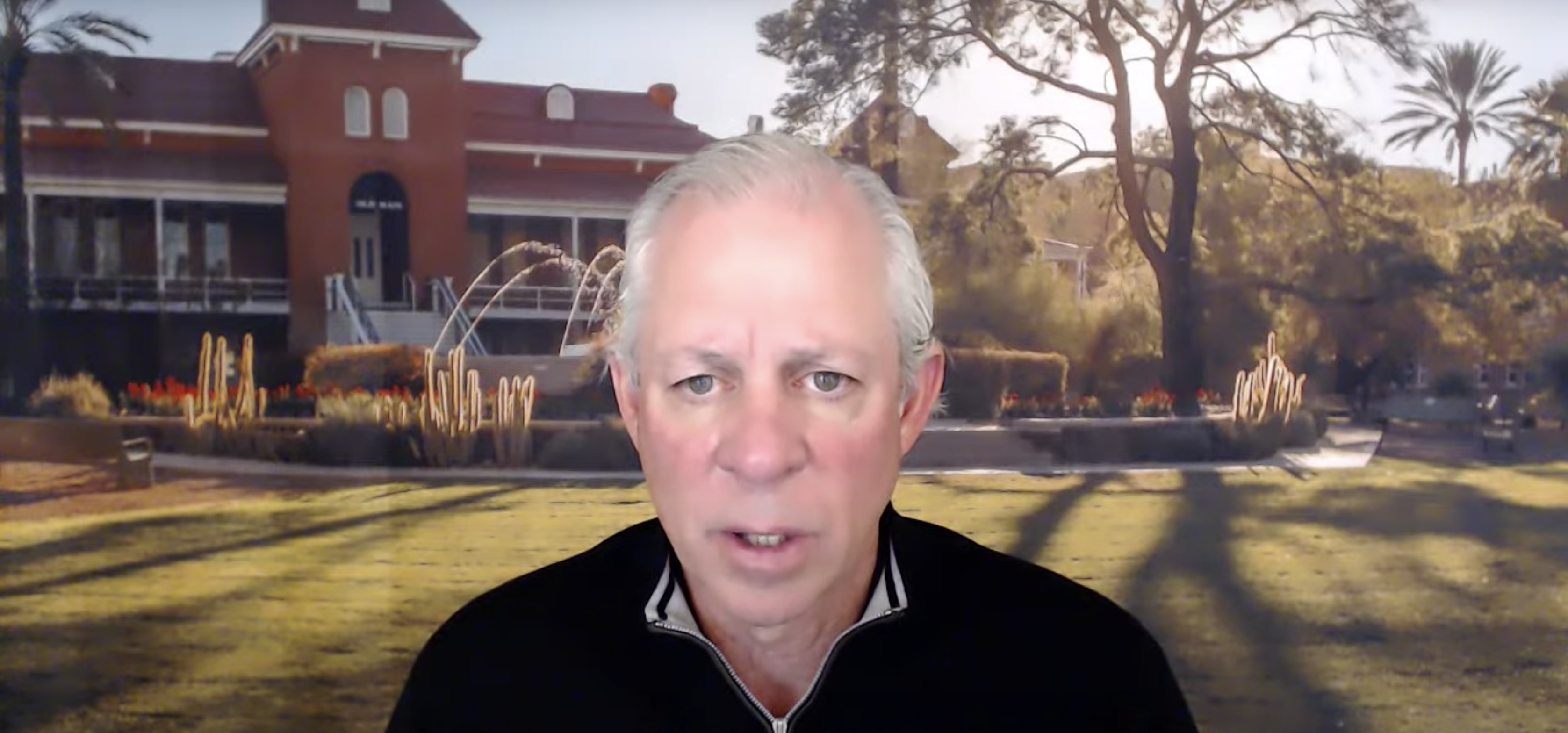
“Nationwide, the number of cases in the last couple of weeks is down by 40%. The number of deaths down by 30%. But over the weekend, we as a nation reached a very bad milestone: 500,000 people have died from this disease,” University President Robert C. Robbins said. “This is still a deadly virus. So the fastest way we can get a hold of this pandemic is to get as many people vaccinated as possible.”