

Tuesday, December 1, 2020
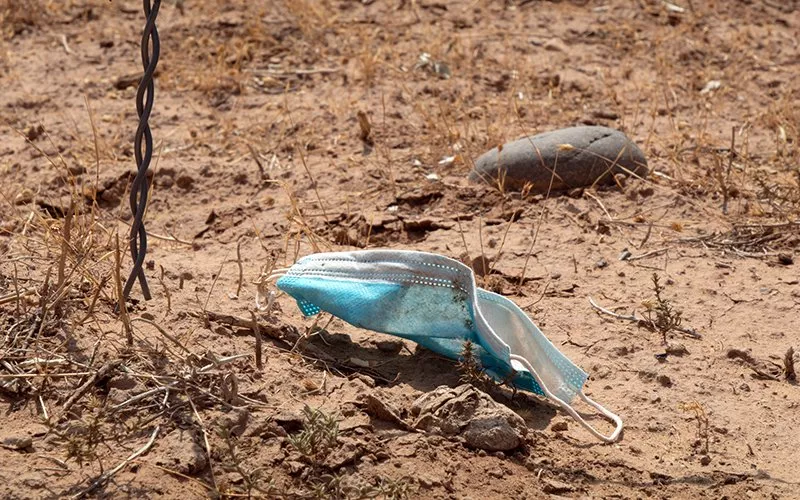
PHOENIX – The number of COVID-19 infections in Arizona’s most populous county probably is far higher than what official counts show, according to a survey that found 1 in 10 residents have likely had the novel coronavirus that causes the disease.
As health experts worry about a new spike in infections, a study by the Maricopa County Department of Public Health, in partnership with Mayo Clinic and Arizona State University, estimates that 10.7% of the county’s 4.49 million residents have antibodies for the virus.
That means about 470,000 people have potentially been infected in Maricopa County alone, officials said. That’s far more than the 197,000 cases officially reported, and it would surpass the statewide total of 337,000 positive cases.
Marcy Flanagan, executive director of the Maricopa County Department of Public Health, said the results show the need for precaution over the holidays when social events could push numbers even higher.
“Unfortunately, we really would recommend that individuals limit their social gatherings and their family gatherings for the holidays,” she said. “I would really encourage families to think about eating outside with their household family members and being creative to do Zoom check-ins for mealtime and other things with family that can’t come to town.”
The findings stem from an 11-day study conducted in September that tested 260 participants in 169 households across strategically selected areas of Maricopa County to look for the presence of coronavirus antibodies.
Monday, November 30, 2020
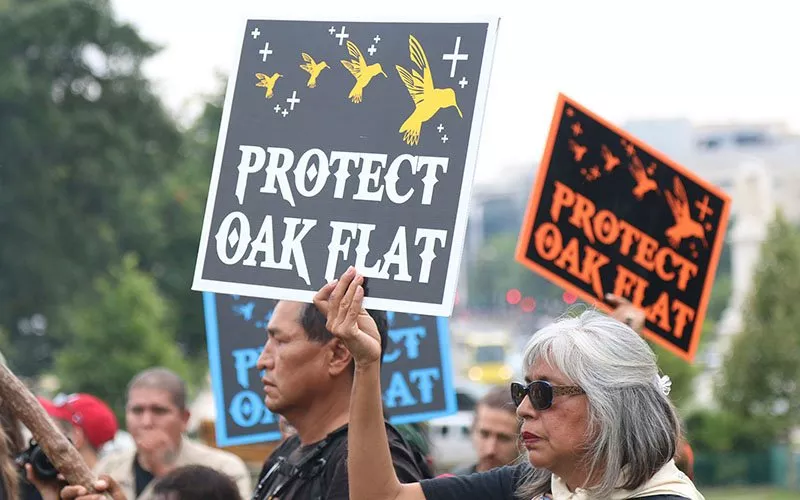
WASHINGTON – Activists worry that the Trump administration has fast-tracked the final environmental impact statement for the massive Resolution Copper mine, a project planned for lands near Superior that are claimed as sacred by the San Carlos Apache.
Opponents became alarmed when the U.S. Forest Service’s schedules of proposed action, which said the environmental statement would be completed by December 2021, suddenly shifted this year to a finishing date of this December, before President Donald Trump leaves office.
“A lot of alarm bells went off when we saw this,” said Randy Serraglio, Southwest conservation advocate at the Center For Biological Diversity. “We realized … they’re just rushing this through to get it done, while Donald Trump is still president.”
But officials with the Forest Service and Resolution Copper mine insist nothing is being fast-tracked.
Ivan Knudsen, a Forest Service spokesman, said more than “30,000 submittals received during the public and tribal comment periods” were cataloged since the last draft of the environmental impact statement was published in August 2019. He stressed that the timeline adjustment from 2021 to 2020 does “not reflect an acceleration of the … process” and that federal and local appraisals are being conducted.
“Once completed, they will be reviewed by the regional appraiser, and after they are accepted, made available to the public for review,” said Knudsen.
Friday, November 27, 2020
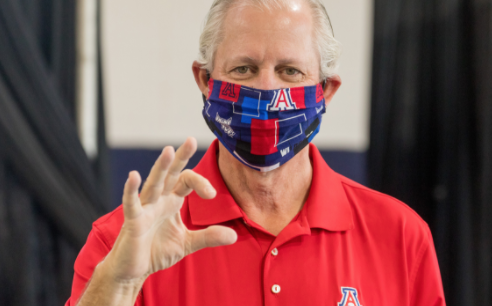
PHOENIX – As cases of COVID-19 continue to surge in Arizona and the rest of the nation, the state’s three public universities are wrangling their approaches to the pandemic in similar but separate ways.
Arizona State University developed a saliva-based test and aims to monitor the spread through frequent mass testing.
The University of Arizona, unlike its counterparts, invested in a wastewater test to monitor the spread in highly populated places on campus and suggested a schoolwide shelter-in-place initiative.
Northern Arizona University, the smallest of the three, has changed the least. It adopted ASU’s saliva test and shares UArizona’s system for contact tracing, but it has been the most lenient with in-person education, offering classes with fewer than 45 students.
As the end of the semester nears, holiday travel ramps up and the pandemic reaches a critical juncture, college campuses and their thousands of students are being further scrutinized.
All three Arizona universities will end all in-person classes after the Thanksgiving holiday and recommended students and faculty get tested before any holiday travel and before they return in the spring.
As of Tuesday, Nov. 24, the Arizona Department of Health reported 4,544 new cases with a percent positive rate of 9.9%. In Maricopa County, which includes four of ASU’s campuses, the positivity rate exceeded the state average by nearly 1%.
Nationally, there have been more than 12 million cases of COVID-19 and more than 1 million cases in the past seven days alone, according to the Centers for Disease Control. Johns Hopkins University reports a national seven-day percent positive rate of 9.6%.
“They’re using their strengths,” Will Humble, executive director for the Arizona Public Health Association, said of the slight differences in approaches among Arizona campuses. “But in the end it will be really interesting to see (when) we can look back at the three universities and compare their outcomes and we’ll be able to tell which approaches were most effective.”
Humble said it is too early to draw definitive conclusions, but he praised each university for acting fast.

Six days after President Donald Trump lost his bid for reelection, the U.S. Department of Agriculture notified food safety groups that it was proposing a regulatory change to speed up chicken factory processing lines, a change that would allow companies to sell more birds. An earlier USDA effort had broken down on concerns that it could lead to more worker injuries and make it harder to stop germs like salmonella.
Ordinarily, a change like this would take about two years to go through the cumbersome legal process of making new federal regulations. But the timing has alarmed food and worker safety advocates, who suspect the Trump administration wants to rush through this rule in its waning days.
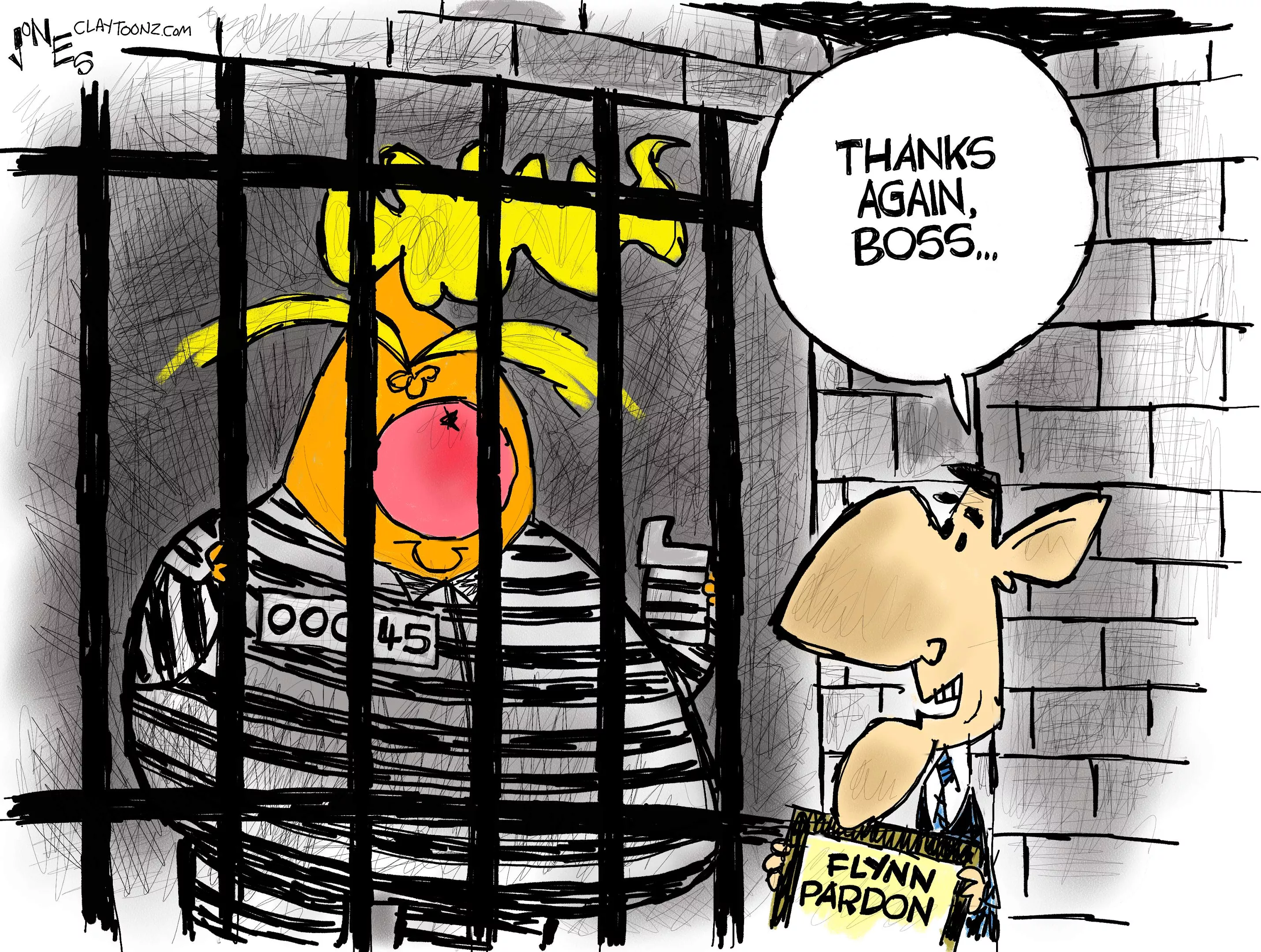
Even as Trump and his allies officially refuse to concede the Nov. 3 election, the White House and federal agencies are hurrying to finish dozens of regulatory changes before Joe Biden is inaugurated on Jan. 20. The rules range from long-simmering administration priorities to last-minute scrambles and affect everything from creature comforts like showerheads and clothes washers to life-or-death issues like federal executions and international refugees. They impact everyone from the most powerful, such as oil drillers, drugmakers and tech startups, to the most vulnerable, such as families on food stamps, transgender people in homeless shelters, migrant workers and endangered species. ProPublica is tracking those regulations as they move through the rule-making process.
Every administration does some version of last-minute rule-making, known as midnight regulations, especially with a change in parties. It’s too soon to say how the Trump administration’s tally will stack up against predecessors. But these final weeks are solidifying conservative policy objectives that will make it harder for the Biden administration to advance its own agenda, according to people who track rules developed by federal agencies.
“The bottom line is the Trump administration is trying to get things published in the Federal Register, leaving the next administration to sort out the mess,” said Matthew Kent, who tracks regulatory policy for left-leaning advocacy group Public Citizen. “There are some real roadblocks to Biden being able to wave a magic wand on these.”
In some instances, the Trump administration is using shortcuts to get more rules across the finish line, such as taking less time to accept and review public feedback. It’s a risky move. On the one hand, officials want to finalize rules so that the next administration won’t be able to change them without going through the process all over again. On the other, slapdash rules may contain errors, making them more vulnerable to getting struck down in court.
The Trump administration is on pace to finalize 36 major rules in its final three months, similar to the 35 to 40 notched by the previous four presidents, according to Daniel Perez, a policy analyst at the George Washington University Regulatory Studies Center. In 2017, Republican lawmakers struck down more than a dozen Obama-era rules using a fast-track mechanism called the Congressional Review Act. That weapon may be less available for Democrats to overturn Trump’s midnight regulations if Republicans keep control of the Senate, which will be determined by two Georgia runoffs. Still, a few GOP defections could be enough to kill a rule with a simple majority.
Wednesday, November 25, 2020

WASHINGTON – The recent surge in COVID-19 cases could push hospital staff and hospital bed capacity to the limit in coming weeks, particularly if people are not careful over Thanksgiving, an Arizona hospital official said Tuesday.
Marjorie Bessel, chief clinical officer for Banner Health, said its projections show the system will be using 125% of its licensed hospital beds by Dec. 4 as it grapples with the usual winter rise in patients and the sudden spike in COVID-19 cases. She compared this holiday weekend to Memorial Day weekend, when unrestricted gatherings were followed by a sharp spike in coronavirus cases.
“If you reflect back in May, you know that Memorial Day weekend was a significant catalyst that caused continued exponential growth of our COVID pandemic here in the state of Arizona,” Bessel said in a press conference Tuesday.
Unlike May, however, when Arizona was one of the few states facing a COVID-19 surge, the current outbreak is widespread. That means hospitals in the state will be hard-pressed to find relief workers from other states, Bessel said, even if they can work around the shortage of beds.
“We have been accumulating pharmaceutical supplies, beds and ventilators since the surge in the summer and we believe that we are prepared,” she said. “What we will have a shortage of will be staff.”
A spokesperson for the Arizona Department of Health Services said the agency is not able to comment on projections from Banner or any other external organization. But Holly Poynter said that while “hospital ICU bed availability has decreased over the past few weeks, there is still adequate capacity in Arizona’s hospitals.”
Tuesday, November 24, 2020
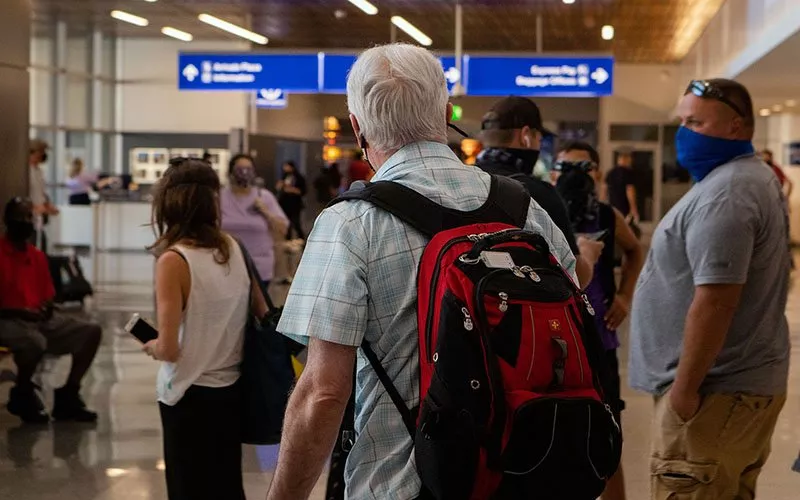
WASHINGTON – Thanksgiving travel is expected to be down sharply this year because of COVID-19, but as many as 50 million Americans are still expected to travel this week despite pleas from health experts to stay home.
And those people who do travel could run into a bewildering array of restrictions when they reach their destinations, experts say.
“It is important to know the risks involved and ways to keep yourself and others safe,” the AAA said in its annual Thanksgiving travel outlook. “In addition to CDC (Centers for Disease Control and Prevention) guidance, travelers should also be aware of local and state travel restrictions, including testing requirements and quarantine orders.”
The AAA forecast predicts an overall decline of at least 10% in holiday travelers, from 55 million last year to just over 50 million this year.
But that’s still a lot of people and officials are making changes to accommodate safe travel in a time of COVID-19.
“We have encouraged our business partners to establish touchless applications where possible and we encourage travelers to use mobile boarding passes wherever possible,” said Greg Roybal, a spokesman for Phoenix Sky Harbor International Airport.
Sky Harbor announced a partnership Monday with XpresSpa Group Inc., a health and wellness company, that has set up a COVID-19 testing facility in a former urgent care clinic in Terminal 4. The six testing rooms should be able to handle more than 400 travelers per day.

Monday, November 23, 2020

A science fiction author and his wife were found dead from gunshot wounds after Pima County Sheriff’s deputies discovered the couple in their Foothills home late Thursday, Nov. 19.
Sheriff’s deputies discovered 78-year-old Hayford Peirce with a self-inflicted gunshot wound while conducting a welfare check at the couple’s home on the 6000 Block of Pontotoc Road, near Sunrise Drive. His wife, 51-year-old Wanda Zhang Peirce, was pronounced dead on the scene from gunshot wounds, according to PCSD.
Peirce later died from his injuries at a local hospital on Saturday, Nov. 20.
The sci-fi author is best known for the novel Napoleon Disentimed.
Zhang Peirce previously owned Oro Valley restaurant Wanda Z’s Chinese, formerly Harvest Moon Chinese, which closed in 2015.
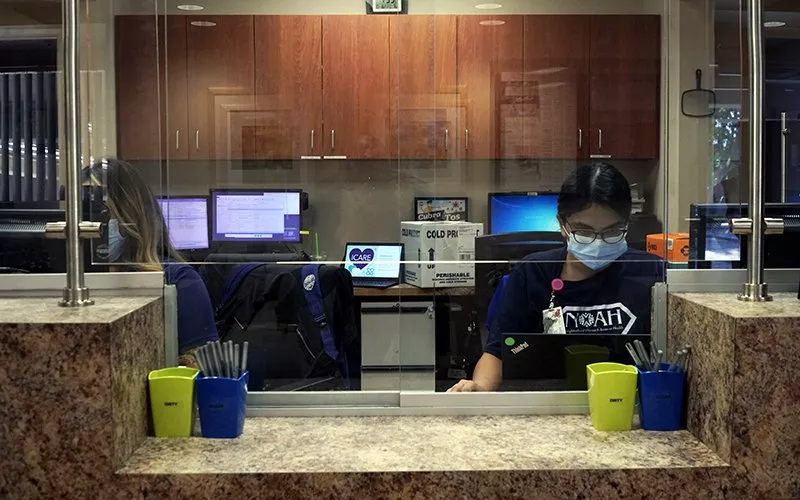
Financial aid from last spring's federal CARES Act allowed Neighborhood Outreach Access to Health and other community health centers to retain employees amid declining patient visits and other threats to funding streams.
The financial hit is estimated to be at least $2.9 billion nationwide, according to a study from the Milken Institute School of Public Health at George Washington University.
In addition to providing standard health services, these clinics have been on the front lines of COVID-19 testing efforts in underserved urban and rural communities.
In Arizona, 23 community health centers operate 176 sites throughout the state. Tara McCollum of the Arizona Alliance for Community Health Centers said most centers in Arizona experienced drops of 35% to 80% for in-person patient visits.
“Even the sliding fee scale wasn’t enough to bring people in,” she said, referring to discounts offered to uninsured patients. With the sliding scale, the less money a patient earns, the lower the cost.
Such discounts are made possible with financial assistance from the Community Health Center Fund, a federal program created through the Affordable Care Act of 2010. Congress renewed funding for the program last year at $5.6 billion, but that money is set to expire later this year.
With the ACA now under review by the U.S. Supreme Court, advocates worry the health center fund could be wiped out if the court decides to repeal the Affordable Care Act.

