

Friday, November 20, 2020
Tucson Mayor Regina Romero joined three other Arizona mayors on Friday to discuss the surge in cases across the state and call for stricter COVID-19 mitigation actions from Gov. Doug Ducey.
Coronavirus cases are surging across the state and county, with 562 new cases reported in Pima County on Friday.
“Here in Pima County, we are seeing numbers we've seen only in the summer. Positivity rate is increasing throughout our state, and these things are very, very troubling for all of us,” Romero said. “The fact is that currently, we are heading in the wrong direction.”
Romero is calling for Ducey to implement a statewide mask mandate and a 14-day self-quarantine or a negative test for travelers entering the state.
In a media conference Wednesday, Ducey said he won’t implement a statewide mask mandate because 90% of Arizona is under local mask mandates.
“As much as I'd love the city of Tucson to be in a bubble, all it takes is one person traveling to Tucson to visit family during the holidays to make a huge impact in terms of spread here in the city of Tucson,” Romero said. “That's why it's so important that we have a statewide mandate for masks because we should all be holding hands in this. This should not be a political issue, this should be an issue that we hold hands that we work together and that we defeat.”
Phoenix Mayor Kate Gallego, Flagstaff Mayor Coral Evans and Tolleson Mayor Anna Tovar joined Romero in calling for a mask mandate statewide.
The Arizona Department of Health Services issued an emergency measure that masks be worn on all school premises, but the mayors are calling for further action.
“There are very significant portions of rural Arizona that do not have a mask requirement. We are certainly seeing a surge in cases in rural Arizona,” Gallego said. “I think it would send an important message to rural Arizona, the governor has extended mask requirements for our students, their parents and grandparents deserve the same.”
If a statewide mask mandate is implemented, Romero says the Pima County Health Department would be responsible for enforcing it.
“[Tucson Police Department] doesn't go into a business and take it upon themselves to enforce the mask mandate,” Romero said. “What we're doing is coordinating and cooperating with Pima County Health Department. Pima County Health Department then has the ability to call that restaurant or bar and take further action.”
At the onset of the pandemic, the group of mayors said Ducey’s staff held daily coronavirus briefings, which then turned into biweekly briefings. The updates have since ceased altogether.
“In regards to communication, I think that's something that is very much needed in regards to all 91 cities and 15 counties throughout the state of Arizona. We used to have daily updates at the beginning of COVID . . . and then suddenly those were terminated,” Tovar said. “One of my biggest frustrations is not having that communication to update us to stay proactive in trying to come up with solutions, hearing from mayors all across Arizona.”
In addition to communication, some of the mayors expressed concerns about a lack of funding to address the pandemic in their jurisdictions.
Evans says the state received $1.86 billion in federal CARES Act funding, but cities and towns that were less than 500,000 in population did not receive a direct allocation.
“Instead, the monies went to the governor's office, and those monies were then dispersed with regulations, and also not fully dispersed . . . only $441 million was actually dispersed to the smaller cities and towns,” Evans said. “One of the things that we could use is for the rest of the money that is currently with the governor's office to be dispersed to the smaller cities and towns without restrictions, that way we can utilize that money to take care of the issues that we see here at a local level.”
Romero says Tucson received $95 million in CARES Act funding, and that “the city of Tucson Mayor and Council have put millions of dollars for workers and families for utility and rent assistance, for small business assistance, nonprofit assistance for arts and culture entertainment venues.”
Tucson's mayor says Ducey’s executive order in April implementing his “stay home, stay healthy, stay connected” policy prevented local municipalities from creating their own mitigation strategies.
“Back in the summer, when cases were spiking as they are now, [Ducey] untied the hands of mayors and health departments across Arizona, but only to institute a face mask mandate. All other mitigation strategies are off the table for mayors across Arizona, because of their prevention from Governor Ducey,” Romero said. “Here in Pima County, we just saw 660 cases reported Thursday, more than 4,400 cases across the state. If this is not an emergency to get our governor to institute additional mitigation strategies and in a mandatory face-covering across the state, I really don't know what is.”
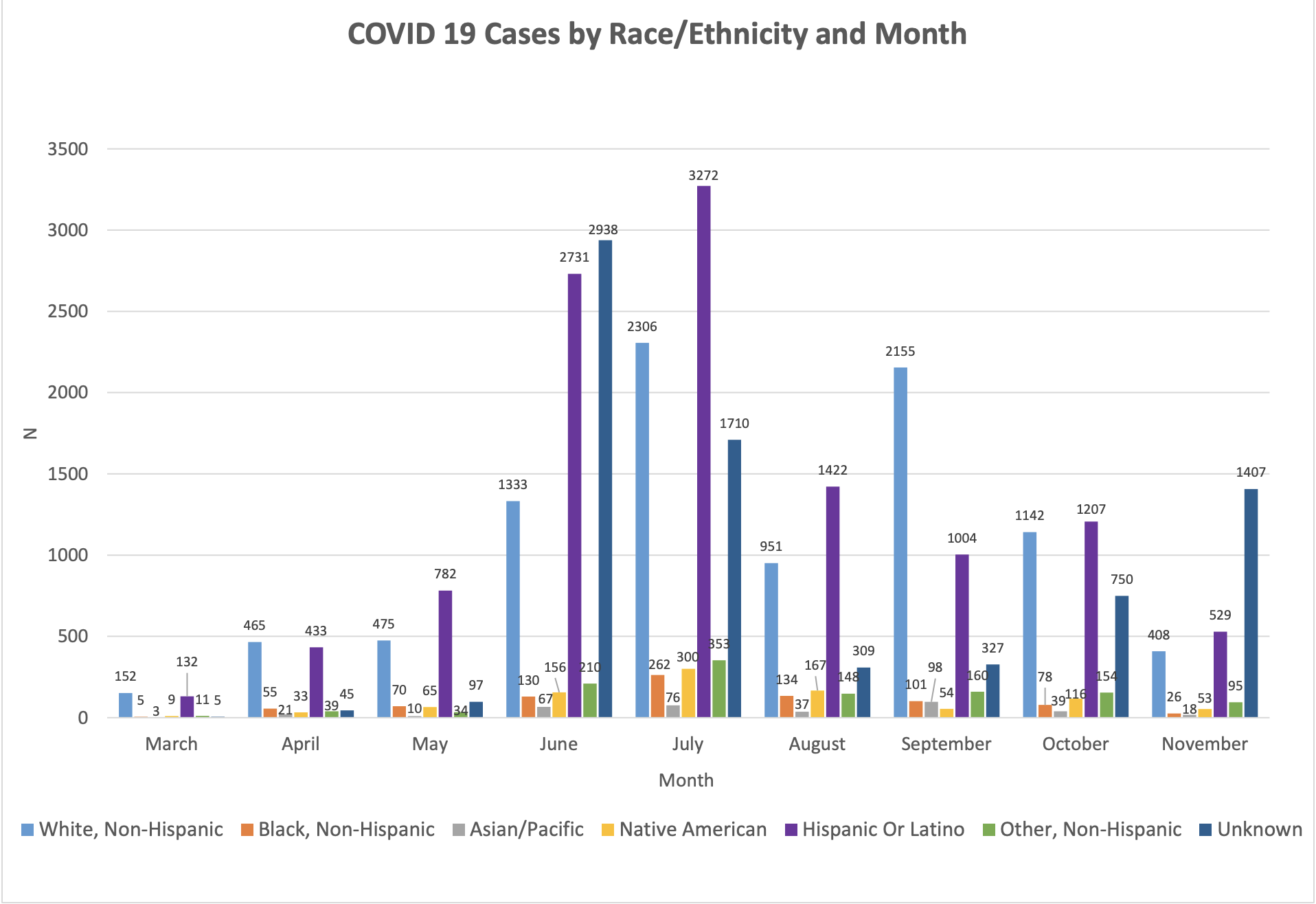
Romero also expressed concerns about the disproportionate amount of minorities affected by COVID-19.
“With this pandemic, we have seen the ills of our society highlighted. We are seeing here in Arizona, that our indigenous communities, Latino communities and communities of color are much more exposed and are the numbers that we're seeing rise in exponential levels,” she said. “That is much more of a systemic issue that this country has the inability to provide health care for Americans and provide a safety net to our low-income communities and communities of color. That is the underlying issue that COVID-19 is highlighting.”
Although evidence of potentially effective COVID-19 vaccines has recently surfaced, the mayors say Arizona is in need of a united voice to actually implement them.
“We also are concerned in regards to the vaccine that is months away. We are excited about the news that is coming out of the potential releases of multiple manufacturers that have vaccines that are showing great scientific data that they are effective . . . but that message falls short here, nationwide, and also at our state level,” Tovar said. “We need a plan of action in place so that when the vaccines do come out, we have a strong unified message on how we vaccinate our communities.”
Whether Ducey takes statewide executive action for further COVID-19 mitigation, Romero said “it's up to all of us to take a personal responsibility of following public health guidelines.”
The mayors implore all Arizonans to wear a face mask, frequently sanitize and avoid large gatherings as Thanksgiving approaches.
“Masks are important. I understand they hurt your ears, mine too. But wearing a mask is more comfortable than wearing a ventilator,” Gallego said. “Thousands of Arizonans have lost their lives, there will be empty seats at Thanksgiving. We can take steps to make sure that we stop this growth and save lives.”
Romero echoed the same message.
“I know this pandemic has been frustrating, it has been exhausting, but we need to maintain our resolve for a little bit longer. I know this will be especially hard during Thanksgiving….We have to stay the course, we need to wear a mask, we must avoid gatherings, and all of these actions will save lives,” she said.
“Here in Arizona, we’ve lost 6,600 lives. 6,600 lives that are not going to join their families for Thanksgiving or Christmas or any other holidays. 6,600 lives that we are not going to recover. And so we are asking for clear statewide action and leadership by Governor Ducey.”

Districts report their coronavirus cases to the Pima County Health Department, which provides guidance to schools based on metrics in its COVID-19 progress report. However, these are merely guidelines, and schools aren’t necessarily obliged to follow them.
The health department recommends each school site designate a team to implement a COVID-19 mitigation plan, who are then connected to a liaison at the department.
In a reference guide for school reopenings, the health department says to reopen, schools should be ready “to consult with the local health authorities if there are cases in the facility.”
As many districts reopen for hybrid learning, they’re reporting COVID-19 cases among students and staff causing groups of potential contacts to quarantine.
Sunnyside Unified and Marana Unified have created dashboards listing their positive cases. Public information officials from the Amphitheater Unified District and Flowing Wells Unified School District have been responsive in providing their positive case numbers to the press.
However, Tucson’s largest school district is not revealing their case counts.
Although Tucson Unified School District doesn’t plan to implement hybrid learning until January, is has on-campus learning spaces available to some students.
Thursday, November 19, 2020
Wednesday, November 18, 2020
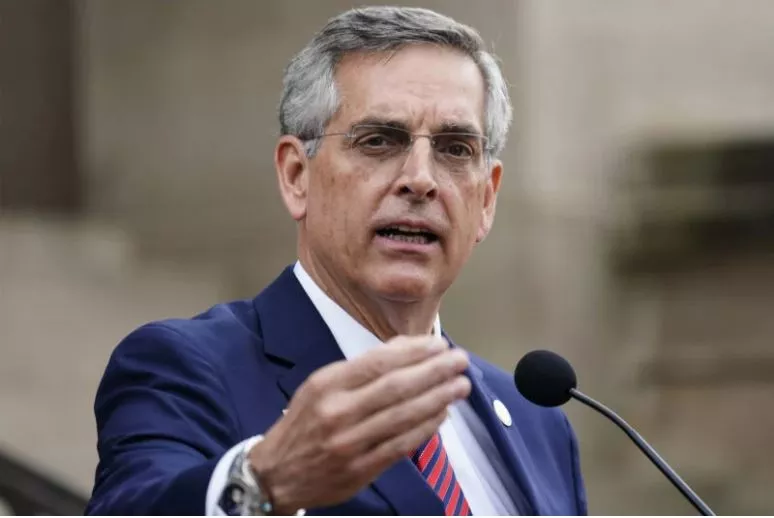
Long before Republican senators began publicly denouncing how Georgia Secretary of State Brad Raffensperger handled the voting there, he withstood pressure from the campaign of Donald Trump to endorse the president for reelection.
Raffensperger, a Republican, declined an offer in January to serve as an honorary co-chair of the Trump campaign in Georgia, according to emails reviewed by ProPublica. He later rejected GOP requests to support Trump publicly, he and his staff said in interviews. Raffensperger said he believed that, because he was overseeing the election, it would be a conflict of interest for him to take sides. Around the country, most secretaries of state remain officially neutral in elections.
The attacks on his job performance are “clear retaliation,” Raffensperger said. “They thought Georgia was a layup shot Republican win. It is not the job of the secretary of state’s office to deliver a win — it is the sole responsibility of the Georgia Republican Party to get out the vote and get its voters to the polls. That is not the job of the secretary of state’s office.”
Leading the push for Raffensperger’s endorsement was Billy Kirkland, a senior adviser to the Trump campaign who was a key manager of its Georgia operations. Kirkland burst uninvited into a meeting in Raffensperger’s office in the late spring that was supposed to be about election procedures and demanded that the secretary of state endorse Trump, according to Raffensperger and two of his staffers.
When reached by phone, Kirkland directed the request for comment to the Trump campaign, which did not respond. The White House and the Georgia Republican Party also did not respond to repeated requests for comment.
Joe Biden has been projected as the winner of the presidential election in Georgia by a margin of roughly 14,000 votes. The state is now conducting a hand recount at the Trump campaign’s request. Raffensperger’s office has said that the recount won’t swing enough votes to tip the state into Trump’s column.
As the Georgia results have become increasingly clear, Republicans have unleashed intense criticism on the secretary of state’s office, accusing it without evidence of mismanaging the election and allowing Biden to carry the state by fraudulent means. Georgia’s U.S. senators, Republicans David Perdue and Kelly Loeffler, both of whom failed to win majorities for reelection on Nov. 3 and face Democratic opponents in January runoffs, called for Raffensperger’s resignation. All of the Republicans representing Georgia in Congress also signed a letter sent to Raffensperger’s office from the personal email account of the chief of staff to U.S. Rep. Earl “Buddy” Carter, criticizing the office for a series of supposed irregularities.
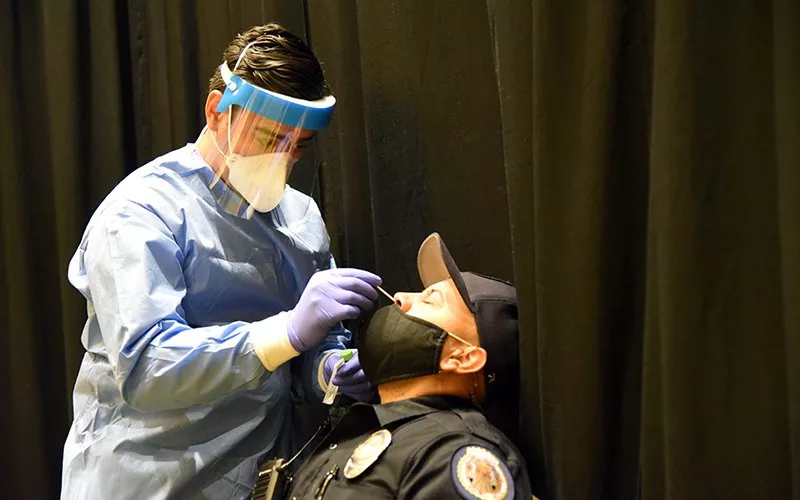
As coronavirus cases continue to rise county and statewide, experts are raising alarms about a COVID-19 surge worse than Arizona experienced this summer.
Pima County is on track to exceed the number of COVID-19 cases it had in July, according to a Nov. 17 memorandum from County Administrator Chuck Huckelberry.
The first 17 days of November saw 4,620 coronavirus cases, whereas the first 17 days of July, “the worst month of COVID-19 case increases to date,” had 5,057 cases, according to the memo.
The week of Nov. 8-14, 1,165 more coronavirus cases were reported than the week prior.
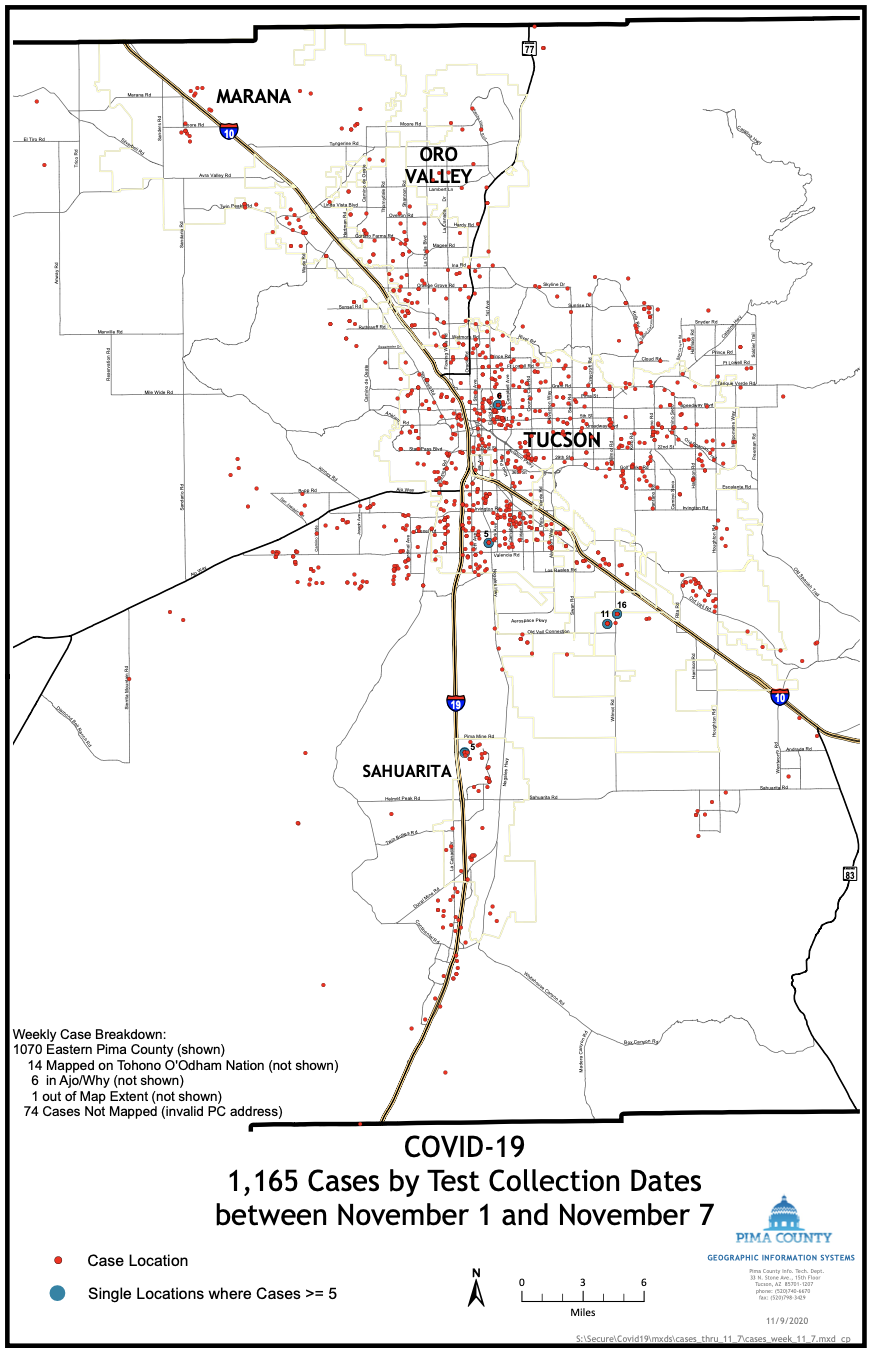
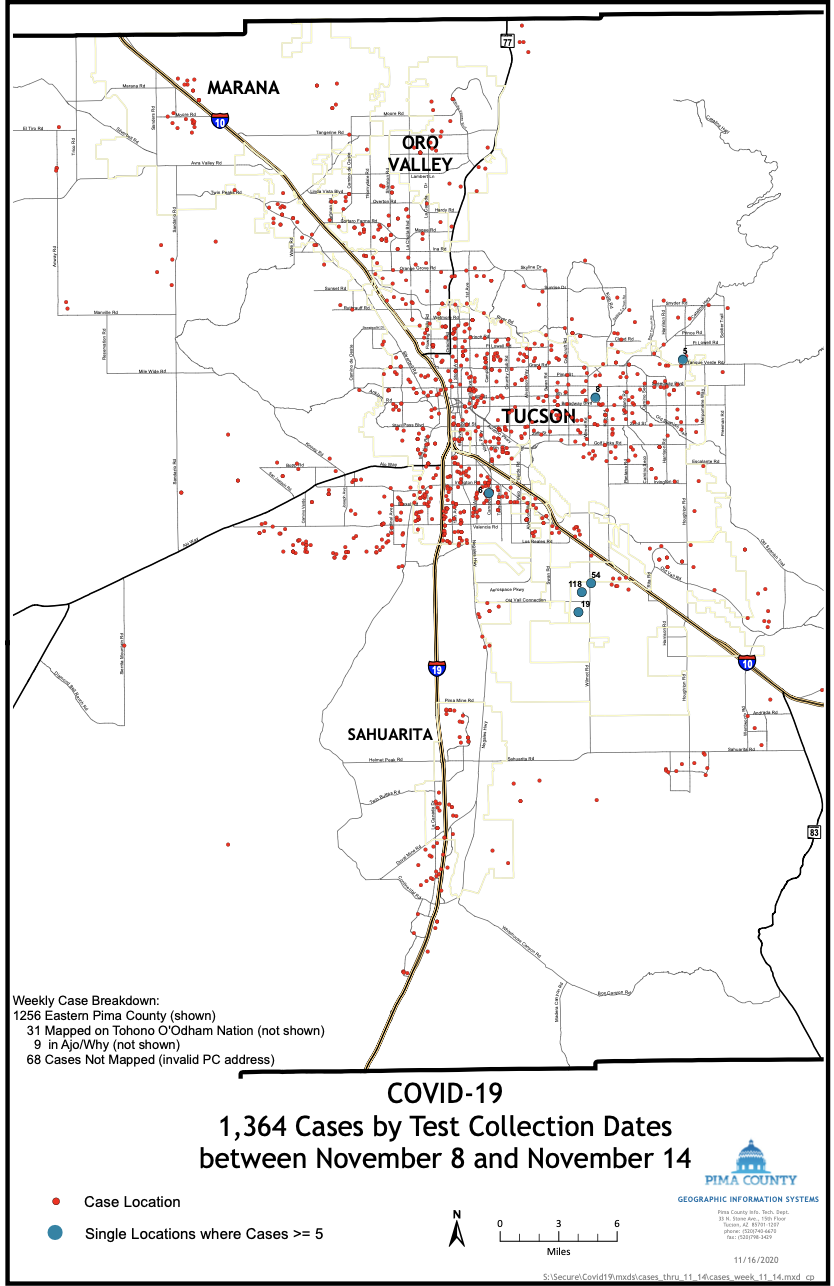
“The continued growth of COVID-19 cases in Pima County during the last 4 weeks has been geographically diffused reflecting a substantial degree of community spread in Pima County,” Huckelberry said in the memorandum.
Federal prison is a “hot spot” for COVID cases
However, the memo says there are specific "hot spots" contributing to the surge in cases, including a case outbreak at the federal prison at 8901 S. Wilmot Road. Nearly 500 infections were found in a facility with 1,600 detainees and 600 employees.
“The initial cases were identified quickly, and the institution implemented an aggressive program of inmate testing, case identification, and isolation and quarantine to mitigate the risk of spread,” Huckelberry said in the memo.
On-site medical services for inmates are “limited to outpatient acute care” from a team of four nurse practitioners or mid-level providers, 12 supporting nursing and paramedics and a medical director from inside the facility, according to the memo.
About 24 detainees had to leave the prison facility for hospital care, and the memo says “even fewer required inpatient care at local hospitals, principally TMC.”
“These numbers are modest however given the current staffing issues that are being experienced throughout Pima County and the state, we remain very concerned about the additional strain this may place on local hospital resources,” Huckelberry said in the memo. “TMC is working with the federal facility to improve the process by facilitating direct admission of patients where appropriate.”
According to the memo, 160 staff members have been tested for COVID-19, but it did not reveal how many tested positive. However, Huckelberry says in the memo, “there appears to be a large amount of unmet testing need in this population of essential workers.”
The county administrator said plans are in place to create an employee roster to keep track of COVID-19 infections for contact-tracing efforts and that all staff should be tested.
The memo says although comprehensive mitigation tactics are in place at the prison, “significant lapses in basic mask and PPE use have been noted among correctional staff participating in transport and hospital settings.”
“These anecdotal observations...lead us to believe that there is still significant staff education and reinforcement must continue at the facility for the protection of the workforce and the detainees,” Huckleberry said in the memo. “In general, our interactions with the leadership at the federal prison have been collaborative and productive.”
As coronavirus cases and hospitalizations continue to rise across Pima County, the county administrator emphasized the importance of social distancing, wearing masks and frequent sanitization as the holiday season approaches.
Huckleberry writes in the memo, “While there may be prevention fatigue from these practices, they are essential to minimize the spread of COVID-19 and need to be practiced for at least another 6 months while the public health agency is able to obtain and vaccinate a significant portion of the regional population. “
Tags: COVID-19 , coronavirus , Pima County , County Administrator , Chuck Huckelberry , County Administrator Chuck Huckelberry , federal prison , prison COVID-19 cases , Image
Tuesday, November 17, 2020
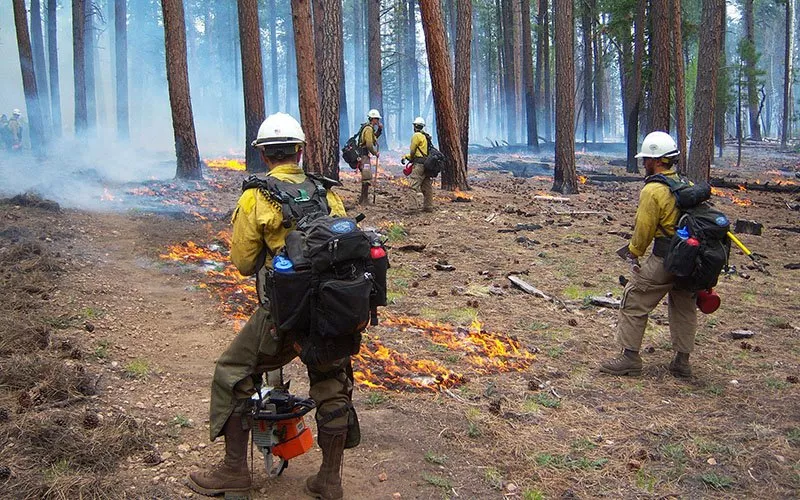
WASHINGTON – The acreage torched by wildfires in Arizona was up sharply this year, but fire officials said it was still not a particularly bad season in terms of lives lost and structures burned in the blazes.
The 2020 wildfire season had burned just under 955,000 acres as of Wednesday, according to the Arizona Department of Forestry and Fire Management, That’s almost double the 520,000 acres that burned in 3,627 fires over the previous two years combined.
The state recorded 2,357 fires statewide this year, of which 1,919 were caused by human activity.
“We don’t say there’s a fire season in Arizona anymore, because we are seeing fire activity in January, February, April and November,” said Tiffany Davila, public affairs officer for the Arizona Department of Forestry and Fire Management. “We are seeing fires year-round now.”
But unlike other Western states, Davila said Arizona has had only one confirmed fire-related death this year – when the pilot of a helicopter bringing supplies to the Polles fire was killed in the crash of his aircraft – and “multiple” structures burned. California, by comparison, recorded 31 deaths and 10,488 structures damaged or destroyed by wildfires that have burned almost 4.2 million acres so far this year.
“We’ve had examples this year in Arizona, large fires that were quite destructive, and also large fires that are burning entirely within the range of variation that you would expect prior to white settlement of the West,” said Joe Trudeau, a Southwest conservation advocate at the Center for Biological Diversity.
Friday, November 13, 2020
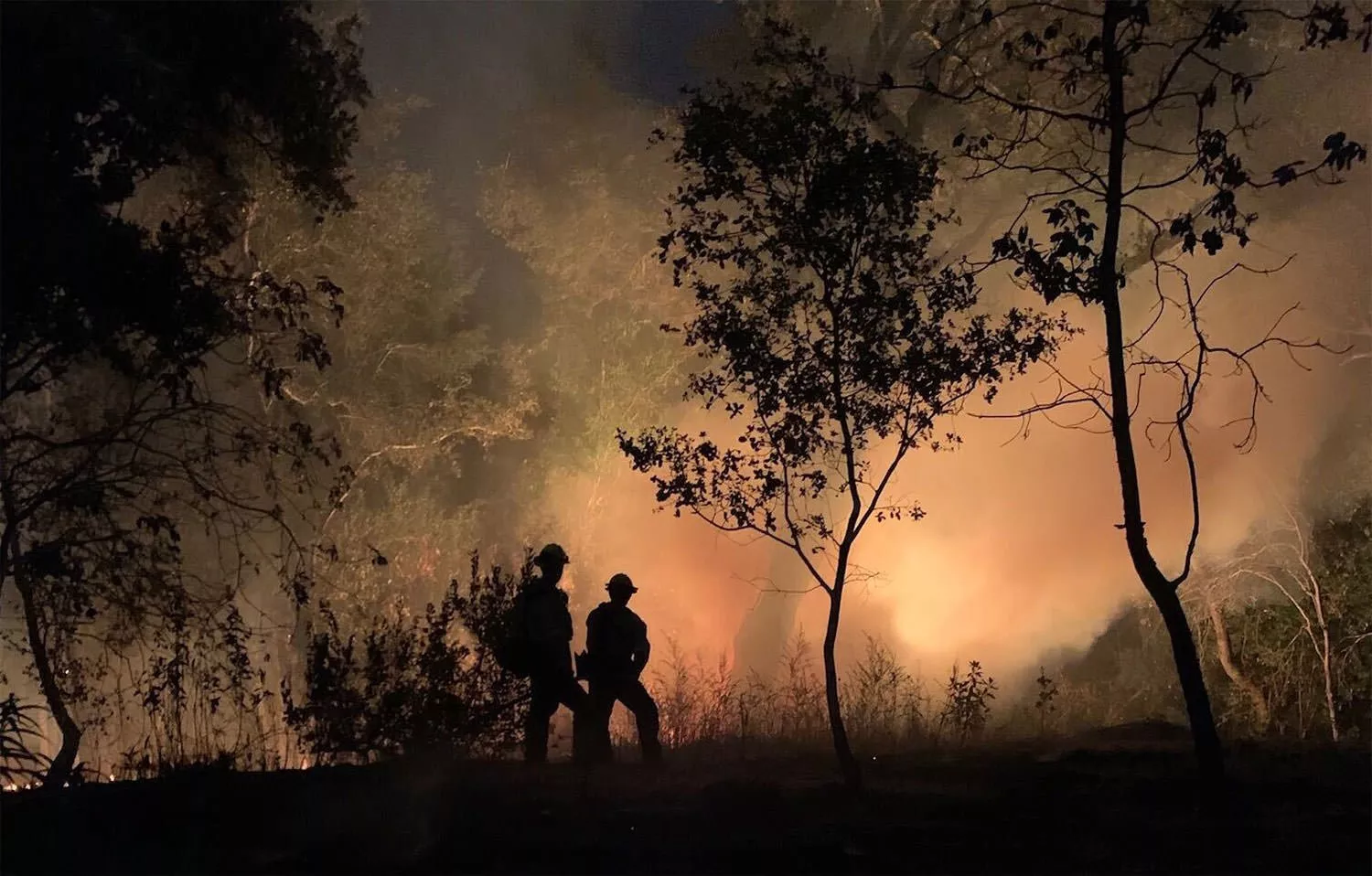
LOS ANGELES – California’s record wildfire season has left many cannabis growers concerned about Croptober – the primary harvest season for marijuana sold in California, where it’s legally consumed.
As fires continue burning into the record book, California growers – whose operations are federally illegal and therefore difficult to insure – are demanding protections for their billion-dollar industry.
Cannabis farms, as well as wineries, agricultural farms, have been hard hit by the wide range of California fires, and the toll faced by cannabis farms is among the worst.
Since January, California has had more than 9,177 wildfires burning more than 4.1 million acres, which is more than double the old record in 2018, according to Cal Fire.
High in the hills overlooking the Russian River Valley in Sonoma County, Kila Peterson and her daughter, Keala Peterson, are partners on Sweet Creek Farm, a small family-owned and licensed cannabis farm that also grows avocados and sweet bananas.
The cannabis venture started more than 10 years ago when Kila began growing it to produce CBD for her father, who had cancer. The mother-daughter approach is rooted in sustainability; their techniques include a solar-powered irrigation system fed by rainwater catchment and pollinator-friendly companion flowers, according to the farm’s website.
Thursday, November 12, 2020
Wednesday, November 11, 2020

WASHINGTON – A Navajo Nation probe of a controversial, Navajo-owned hemp operation has turned into a federal investigation into reports of marijuana production, interstate drug trafficking and violations of labor and child labor laws.
The FBI said Monday it had executed search warrants “in the area of Shiprock” in an operation that included nine federal agencies as well as state, tribal and local agencies from at least three states. It released few other details.
But the Navajo Nation Department of Justice said the search warrants targeted “suspected illegal marijuana farming” at the Navajo Gold hemp farming operation run by Dineh Benally, former president of the nation’s San Juan River Farm Board.
“Dineh Benally and his investors sought to take advantage of what they believed to be a jurisdictional gap on the Navajo Nation that would allow them to operate outside the law,” Navajo Nation President Jonathan Nez said in a statement Tuesday.
“They did not count on the diligence or effectiveness of the Navajo Nation Department of Justice to be able to enforce our own laws through our own courts,” Nez’s statement said.

