

Thursday, November 5, 2020

The IRS is warning about a new text scam that attempts to trick people into disclosing bank account information by promising they’ll receive an “Economic Impact Payment” of $1,200, according to a news release from the Internal Revenue Service.
The scam message includes a link to a fake phishing web address and reads: “You have received a direct deposit of $1,200 from COVID-19 TREAS FUND. Further action is required to accept this payment into your account. Continue here to accept this payment.”
The phishing URL leads to a fraudulent website impersonating the IRS “Get My Payment” website. If recipients of the text enter personal financial information, those behind the scam will have access to it.
“The IRS, states and industry, working together as the Security Summit, remind taxpayers that neither the IRS nor state agencies will ever text taxpayers asking for bank account information so that an EIP deposit may be made,” the release said.
IRS Commissioner Chuck Rettig said the scammers behind the texts are “relentlessly using COVID-19 and Economic Impact Payments as cover to try to trick taxpayers out of their money or identities,” according to the release. “This scam is a new twist on those we’ve been seeing much of this year. We urge people to remain alert to these types of scams.”
The IRS says anyone who receives the text scam should take a screenshot of it and email the photo to [email protected] with the following information:
Date/Time/Timezone that they received the text message
The number that appeared on their Caller ID
The number that received the text message
Those who think they qualify for Economic Impact Payment should visit IRS.gov, but the government agency will never send unsolicited texts or emails.
Tuesday, November 3, 2020
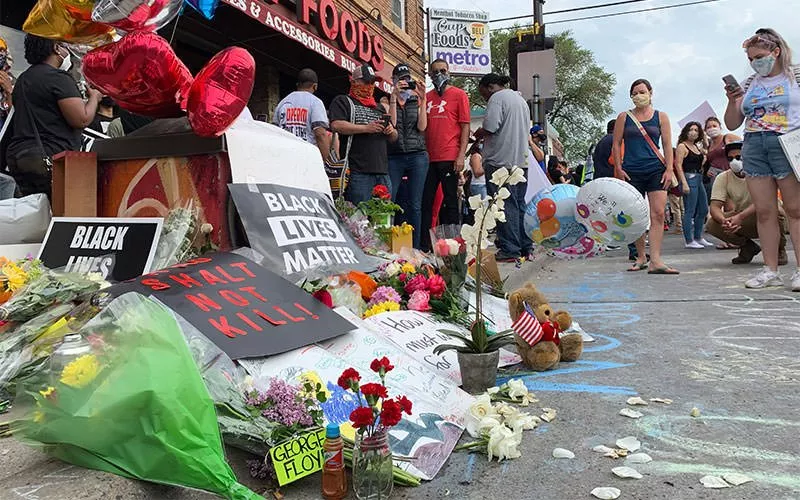
PHOENIX – In the wake of George Floyd’s death last May and subsequent demands for social justice for Black Americans, corporations are pledging to improve hiring practices, institute antiracism training and provide more advancement opportunities for people of color.
Others have taken a different approach – vowing to specifically address health disparities that leave Black people more likely than whites to die from heart disease, stroke, cancer, asthma, diabetes and, now, COVID-19.
Pharmaceutical giants Bristol Myers Squibb and Novartis, along with FitBit and Bank of America, are among those promising to act to address disparities in health care, even as some local and state leaders declare racism itself to be a public health issue.
“All those commitments are good and they’re needed. It’s sad that it took a revolutionary act in the murder of George Floyd to bring about some of this attention,” said Steven Humerickhouse, executive director of The Forum on Workplace Inclusion, a diversity and inclusion resource hub at the University of St. Thomas in Minneapolis.
“The health disparities, that diversity and inclusion stuff in health care, literally becomes a life and death situation.”
The coronavirus pandemic has renewed attention on how diseases disproportionately affect people of color. Federal statistics show Black Americans have the highest COVID-19 death rates; they are more than twice as likely as whites to die from the disease and almost five times more likely to be hospitalized.
Monday, November 2, 2020
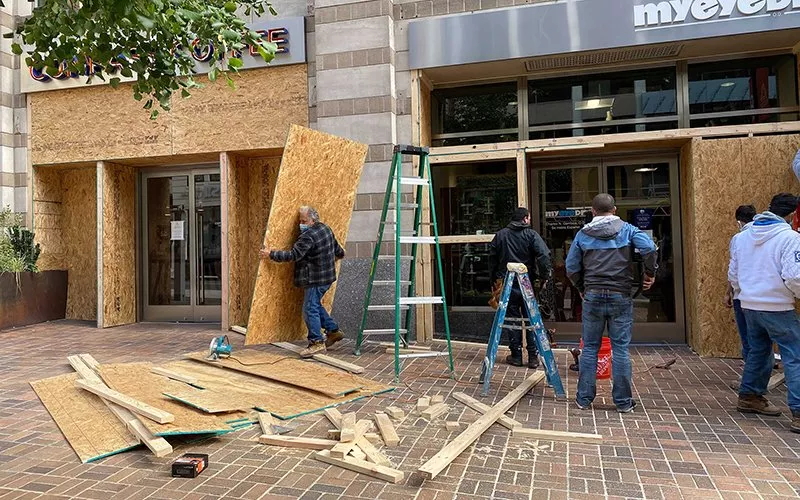
WASHINGTON – National and local law enforcement agencies are preparing to respond in case civil disturbances break out after Tuesday’s elections, which experts fear may have a “different venue for challenging election results, namely in the streets.”
And that may be true whichever side wins.
Seth Jones, director of the Transnational Threats Project at the Center for Strategic and International Studies, sees the possibility of “radicalized white supremacist militias and other related individuals” rioting in the event of a win by Democratic presidential nominee Joe Biden. But he can just as easily see “street-level violence for political purposes” if President Donald Trump wins re-election.
Local, state and federal police agencies did not address the possibility of violence next week, saying only that they will be ready to ensure the safety and well-being of residents and protect protesters’ rights to “peaceful assembly.”
That was echoed Thursday by Gov. Doug Ducey, who said he does not expect unrest but that the state will be ready if it comes.
Tags: tucker carlson , biden , Image
Wednesday, October 28, 2020

Democrats agree that Trump’s caused asylum-seekers unacceptable misery. But the goal of deterring people from migrating to the U.S. — which has motivated Trump’s complex web of border policies — has seduced some Democrats, too.
In early October, hundreds of migrants in Honduras set out in a “caravan” with plans to travel through Mexico to the United States.
The timing was similar to a caravan two years ago, which swelled to thousands of people, overwhelmed Guatemalan and Mexican border authorities and became the leading issue for President Donald Trump and Republicans going into the 2018 midterm election.
The latest caravan was stopped hundreds of miles short of the U.S. border, hardly making a blip in the news cycle. Shortly after entering Guatemala, police and migration authorities set up roadblocks and rounded up the group for deportation back to Honduras.
It was so routine that Trump, ill with COVID, didn’t even bother to bang out a celebratory tweet, much less talk about deploying the military to avert an invasion as he did in 2018.
The fate of the caravan is a symbol of a larger success. Over the past year and a half, Trump and his relentlessly focused aide, Stephen Miller, have largely achieved their goal of choking off the flow of unauthorized immigrants into the United States — especially families from Central America, many of whom come with the intention of requesting asylum. They have done so with a combination of policies that Tom Jawetz, a former Democratic aide to the House Judiciary Committee, describes as a “waterproof fabric” to repel migrants.
New U.S. regulations and legal precedents make it harder for someone to be granted asylum once they arrive. But few these days even get the chance to ask. As much as possible, the Trump administration has simply expelled asylum-seekers.
A mother of two has been killed and her 14-year-old son has been charged with second-degree murder in her death.
Pima County Sheriff’s Deputies responded to a report of a disturbance Sunday, Oct. 25, at a residence in the 4900 block of West Didion Drive near Cortaro Farms where they found Tiana Keen, 45, with obvious signs of trauma.
She was pronounced dead after deputies and Northwest Fire Department responders were unable to revive her.
Keen’s son—whose name has not been released because he is a juvenile—was taken into custody after an initial investigation. Detectives with the department’s Criminal Investigations Division said Keen’s injuries were consistent with “sharp force trauma."
Keen and her two children had been visiting relatives in the Marana area.
Her family has posted a Go Fund Me page that has raised $5,210.
Thursday, October 22, 2020
Two petitions are currently circulating on change.org, seeking to ban no-knock warrants in Arizona: one aimed at city lawmakers in Phoenix, and one aimed at state lawmakers. Together, the petitions have garnered more than 5,000 signatures.
“If our home is invaded, how are we to differentiate between a home invader and the police if they don’t announce their presence?” said Kenneth Cochran, a Tucson smoke shop owner who started the statewide petition. “With a huge percentage of Arizonans legally carrying firearms, this will almost always lead to tragedy."
These calls for reform are not limited to citizens. In July 2020, Pima County Sheriff Mark Napier issued a document calling for law enforcement reform under the initials ACT: Accountability - Community Engagement - Transparency. Among Napier's calls for reform is a ban on no-knock warrants, unless approved by the Sheriff, which would "only occur under the extreme circumstances."
Click below to read the specifics of the petitions:
Ban No-Knock Warrants In Phoenix
Ban No-Knock Warrants in Arizona
Tuesday, October 13, 2020
With the election just days away, Cronkite News is taking a closer look at some of the measures on the Nov. 3 ballot.
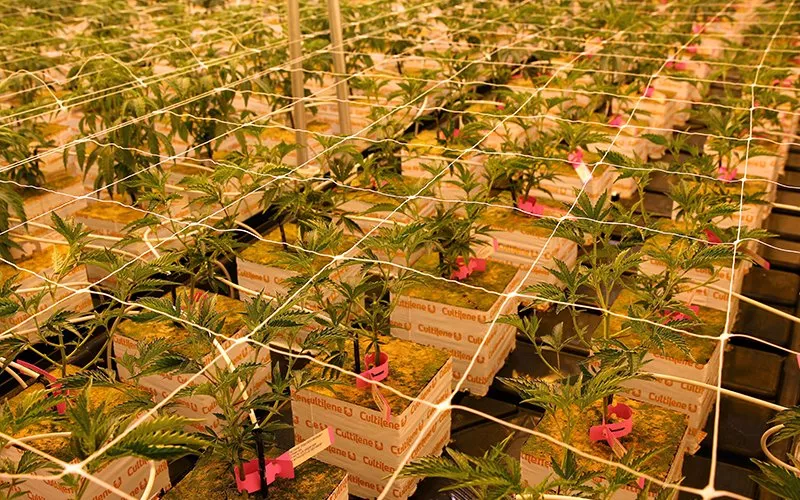
Four years after Arizona voters rejected legalizing recreational marijuana, the issue is back, appearing on November’s ballot as Proposition 207.
Eleven states have legalized recreational marijuana. Arizona joins three others – Montana, New Jersey and South Dakota – with the question on the Nov. 3 ballot.
The Marijuana Legalization Initiative, also known as the Smart and Safe Arizona Act, would legally allow people 21 and older to possess up to 1 ounce of marijuana, although smoking it in public places and open spaces would be prohibited. Arizonans would be allowed to grow up to six plants in their personal residences, and anyone arrested for, charged with or convicted of less serious marijuana-related offenses would be allowed to petition to have their criminal records expunged beginning July 21, 2021. Those offenses include possession of 2.5 ounces of marijuana or less and possessing paraphernalia used to smoke marijuana.

