

Monday, October 12, 2020
Thursday, October 8, 2020
PHOENIX – La Palma Correctional Center, a privately run immigration detention center in Eloy, is facing an alarming spike in COVID-19 cases among immigration detainees.
U.S. Immigration and Customs Enforcement officials confirmed the first case of COVID-19 at the La Palma Correctional Center on April 6. On May 30, at least 76 undocumented immigrants tested positive for COVID-19. As of Oct. 4, ICE reported 400 cases. Those numbers are the highest of active COVID-19 cases at any federal immigration facility in the nation, followed by Atlanta Field Office Stewart Detention Center with 360.
Dulce Granados of Phoenix said her husband has been detained at La Palma for more than two years, and she fears he could get infected by the novel coronavirus that causes the deadly disease.
“This whole virus thing is a difficult situation because they have people in quarantine there,” Granados said. “They are mixed with the people who tested negative, with people who tested positive.”
Tuesday, October 6, 2020
Thursday, October 1, 2020
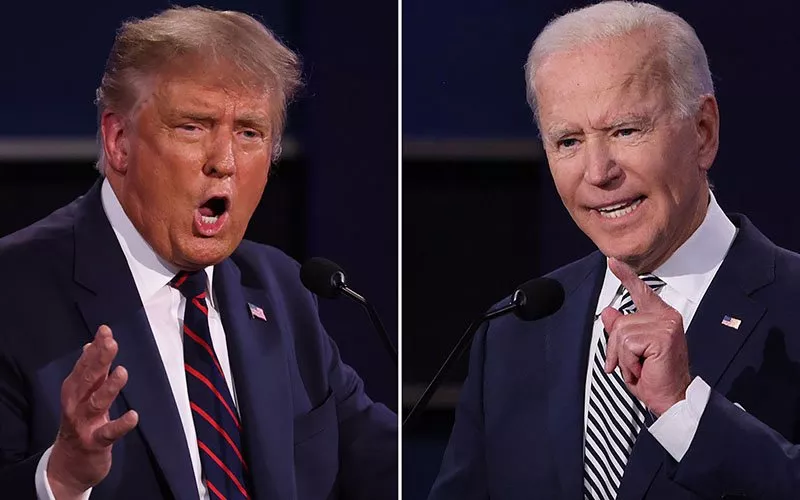
WASHINGTON – President Donald Trump on Wednesday defended his debate comments on the right-wing extremists known as the Proud Boys, but reaction from officials in Arizona ranged from dismissal to dismay.
The furor began Tuesday night during the nationally televised debate with Democratic presidential nominee Joe Biden, when Trump was asked to condemn violent groups like the Proud Boys. He said they should “stand back and stand by,”
That set off alarm bells for Rep. Ruben Gallego, D-Phoenix, a Marine veteran who said others in the audience immediately noticed Trump’s choice of words.
“We Marines know what it means to be told to ‘stand by.’ It means get ready to fight,” Gallego tweeted. “Trump’s words tonight are a dangerous call to get ready for action. We need to heal this country, not divide it more.”
Tags: proud boys , trump , biden , election , white supremacy , Image
Wednesday, September 30, 2020
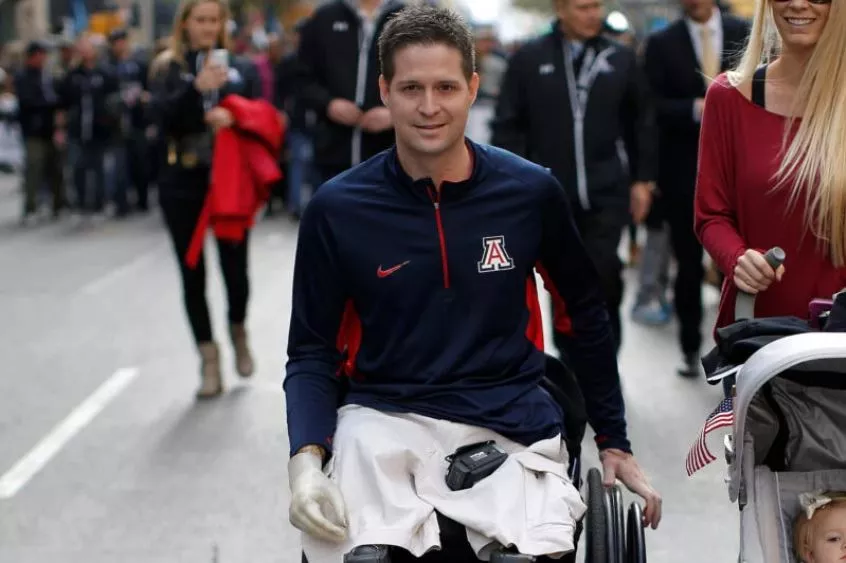
A ban from Facebook has apparently done little to slow Brian Kolfage, charged last month for defrauding thousands in a “build the wall” effort, and who regularly uses personal attacks and misinformation to sic his online following on perceived detractors.
This article is co-published with The Texas Tribune, a nonprofit, nonpartisan local newsroom that informs and engages with Texans. Sign up for The Brief weekly to get up to speed on their essential coverage of Texas issues.
War hero. Veterans advocate. Family man.
It was an image years in the making. Brian Kolfage had lost three limbs in an Iraq bomb blast in 2004, making him the most badly wounded airman to survive the war. He had become a motivational speaker, was the subject of sympathetic news profiles and was even a guest at former President Barack Obama’s State of the Union address in 2012.
Monday, September 28, 2020
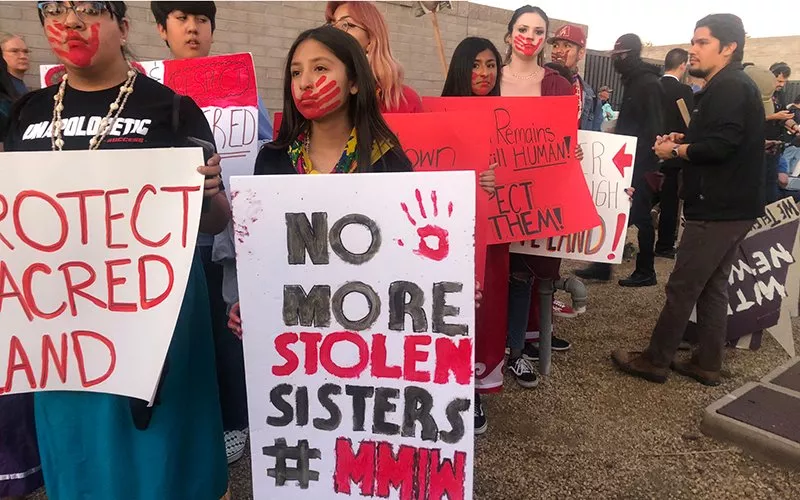
WASHINGTON – Native American advocates and victim’s families have worked for years to draw attention to Indian Country’s epidemic of missing and murdered Indigenous women.
The federal government finally passed legislation that could help do something about it.
The House gave final approval this week to two bills, Savanna’s Act and the Not Invisible Act, that would essentially force a review of the problem and create a federal plan of action. The bills are awaiting the president’s signature.
“We’re not celebrating necessarily, but we also recognize that for Congress to take action is a pretty big deal in terms of acknowledging that there’s an issue, first and foremost,” said Elizabeth Carr, an adviser at the National Indigenous Women’s Resource Center. “And then, secondly, taking some actions to address some of the issues that contribute to the crisis.”
Murder was the third most common cause of death for young Native women in 2017, according to the Centers for Disease Control and Prevention. Four out of five Native women experience violence in their lifetimes, according to the National Institute of Justice. And an Urban Indian Health Institute report on missing and murdered indigenous women in urban areas found Tucson had the fourth-highest number of cases among cities studied and Arizona was third among states.
“Survivors and families of countless missing and murdered” have been “doing the best they can to address the missing and murdered crisis throughout Indian Country,” said Navajo Nation Council Delegate Amber Kanazbah Crotty, a vocal leader on the issue.
In 2018 testimony to the Senate Indian Affairs Committee, Crotty highlighted the jurisdictional complexity of tracking such cases in and around Indian Country, where the FBI, state and tribal jurisdictions create a patchwork that often slows down missing persons investigations.
Savanna’s Act and the Not Invisible Act will improve coordination between agencies, force an official review of the problem and create an overarching plan to combat the ongoing crisis of murdered, missing and trafficked Native Americans – something that hasn’t happened before. Most importantly, advocates say, the bills bring Native Americans who have been combating the crisis on the ground into the process.
Tribal and survivor input was missing from President Donald Trump’s creation last year of a task force on missing and murdered Native Americans, dubbed Operation Lady Justice, advocates said. That task force only includes federal officials, though some of them are tribal members.
“A real solution to this crisis will never be found without the explicit inclusion of survivors, which is what is so special about this bill,” said Rep. Deb Haaland, D-N.M., who introduced the Not Invisible Act.
Haaland introduced her bill to complement Savanna’s Act, which focuses on collecting data on missing and murdered Native Americans, especially women, which has been a major hurdle in search efforts. The Not Invisible Act aims to improve coordination across the agencies that deal with violence involving Native Americans.
“They complement each other,” said Terrelene Massey, executive director of the Southwest Women’s Law Center in Albuquerque, N.M. The bills “are needed, they are tangible and … they are action-oriented in addressing the problems that we see out in Indian Country.”
Savanna’s Act requires the Justice Department to report statistics on missing and murdered Native Americans, train tribal law enforcement to use the national missing persons database and develop law enforcement protocols on dealing with missing Native Americans.
Named for Savanna LaFontaine-Greywind, a North Dakota member of the Spirit Lake Tribe who was murdered in 2017 while pregnant, the bill provides some grant funding to agencies who help develop these protocols and complete annual reports on missing and murdered Native Americans.
The Not Invisible Act will create a position in the Bureau of Indian Affairs to coordinate federal efforts to combat violence against Native Americans and form a joint commission between the departments of Justice and the Interior. It requires the commission to include tribal representatives, health experts and victims’ families.
Advocates like Carr would rather see funding in Savanna’s Act go to victim services, violence prevention and increased visibility for the problem, but concede that some funding is better than none. And neither bill addresses shortfalls that Crotty outlined in her testimony, which spelled out how much funding would be needed to update tribal data collection systems, correct the overall shortage of tribal officers and provide services to affected families.
Despite that, advocates overwhelmingly welcomed the bills.
“It’s bringing more resources, more authority … making some of the major players do work to address the issues,” Massey said. “It’s bringing in that accountability.”
Carr called the bills a “pat on the back,” but said advocates will continue to push for more.
“It’s just a baby step, but for us a baby step is better than no step at all,” she said.
Tags: native american , Image
Thursday, September 24, 2020
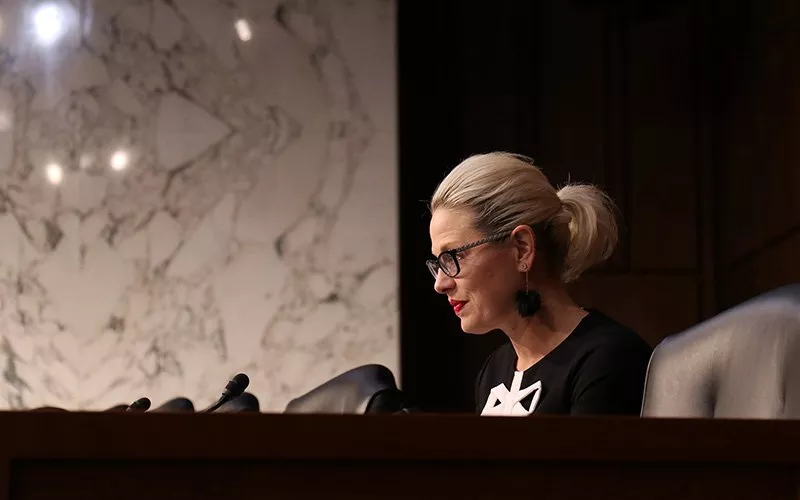
WASHINGTON – Arizona Sen. Kyrsten Sinema confronted the acting head of Homeland Security Wednesday over border wall construction she said has ignored the needs of local communities and bypassed environmental assessment reports.
The questions came during a Senate Homeland Security Committee confirmation hearing on the nomination of acting Secretary Chad Wolf – who has been serving in an acting capacity for close to a year.
“Construction began before mitigation plans were complete. I will note that my office received reports of dynamite blasting in Guadalupe Canyon yesterday related to wall construction,” said Sinema, a Democrat. “That will have a permanent impact on our land.”
But Wolf said his agency’s primary concern is national security, not environmental damage, to respond to the national emergency declared by the president.
“The president did issue a national emergency to build a new border wall system, so we’re appropriate. We are waiving regulations to make sure that that work does not slow down and is not delayed,” Wolf told Sinema.
The exchange came during a wide-ranging hearing that touched on everything from the actions of DHS officers during protests this summer in Portland, Oregon, to threats posed by states like Russia, China and Iran.
Republican lawmakers on the committee generally lauded the direction of the agency under Wolf. Sen. Ted Cruz, R-Texas, spent most of his time praising Wolf and defending his choices as acting secretary while Sen. Ron Johnson, R-Wisc. and the committee chairman, ceded his time to let Wolf address scandals affecting DHS.
But most Democrats on the committee grilled Wolf on his decision to send DHS officers to cities like Portland and his focus on left-wing anarchists over white supremacists. They also questioned the legitimacy of decisions made by a secretary who has served in an acting capacity for so long.
The border wall was just one of the immigration issues that was touched on. Lawmakers also asked about the care of migrants in Immigration and Customs Enforcement custody and reports that trafficking victims have been returned to their home countries where they could face further danger.
Complaints about the wall are hardly new. After Congress refused to meet his demands for border wall funding, President Donald Trump in February 2019 declared a national emergency at the border that he said allowed him to shift funding from other departments and let DHS waive environment and other regulations as necessary.
That has led to repeated run-ins with local communities.
In February of this year, the Tohono O’Odham Nation said that “dynamiting these sacred sites and burial grounds” where the wall is going up “is the same as bulldozing Arlington National Cemetery or any other cemetery. Our history as a people is being obliterated and our ancestors’ remains are being desecrated.”
“The National Park Service has acknowledged these areas are sacred to the Nation,” the statement said. “Yet in the rush to build the wall, U.S. Department of Homeland Security (DHS) has waived cultural preservation and environmental laws.”
Earlier this month, Border Patrol agents assisted the National Park Service with the arrest of two O’odham women for “interfering with agency functions” and “violating a closure” by trying to block construction equipment at Quitobaquito Springs, an oasis near the border. Environmental groups have charged that DHS’ use of groundwater to make cement for the wall has caused the spring’s water level to fall in recent months.
Sinema criticized the agency for rushing to construct the southern border wall before environmental assessment reports could be done and provided to Congress. She also accused the department of failing to communicate with local tribal leaders whose sacred sites are imperiled by the project.
“It seems like there’s a cart before the horse situation, and I do want to note that residents of southern Arizona have expressed intense concern about this,” she said.
But Wolf insisted that DHS, Customs and Border Protection and the Army Corps of Engineers were doing their part to minimize and mitigate damage to cultural resources along the southwest border, but the main goal is to build the wall.
Wolf said the department plans to deliver an environmental assessment of its actions on the wall to Congress in October, but did not specify when.
“We’ll continue to abide by our responsibilities to make sure that we’re good stewards of the environment … but it’s been very clear that that is a national security issue and we’re going to continue to build that new border wall system,” Wolf said.
Tags: border , immigration , homeland security , Image
Wednesday, September 23, 2020
PHOENIX – A years-old movement to reform police departments, which reentered the national debate last spring when a Minneapolis police officer dug his knee into George Floyd’s back until he couldn’t breathe, has taken root in Arizona.
“No justice, no peace, defund the police!”
The chant is a nationwide call to action, voiced by millions at protests, on social media and at city halls across the U.S. and in Arizona, where some police departments claim a quarter of a city’s annual budget.
Friday, September 4, 2020
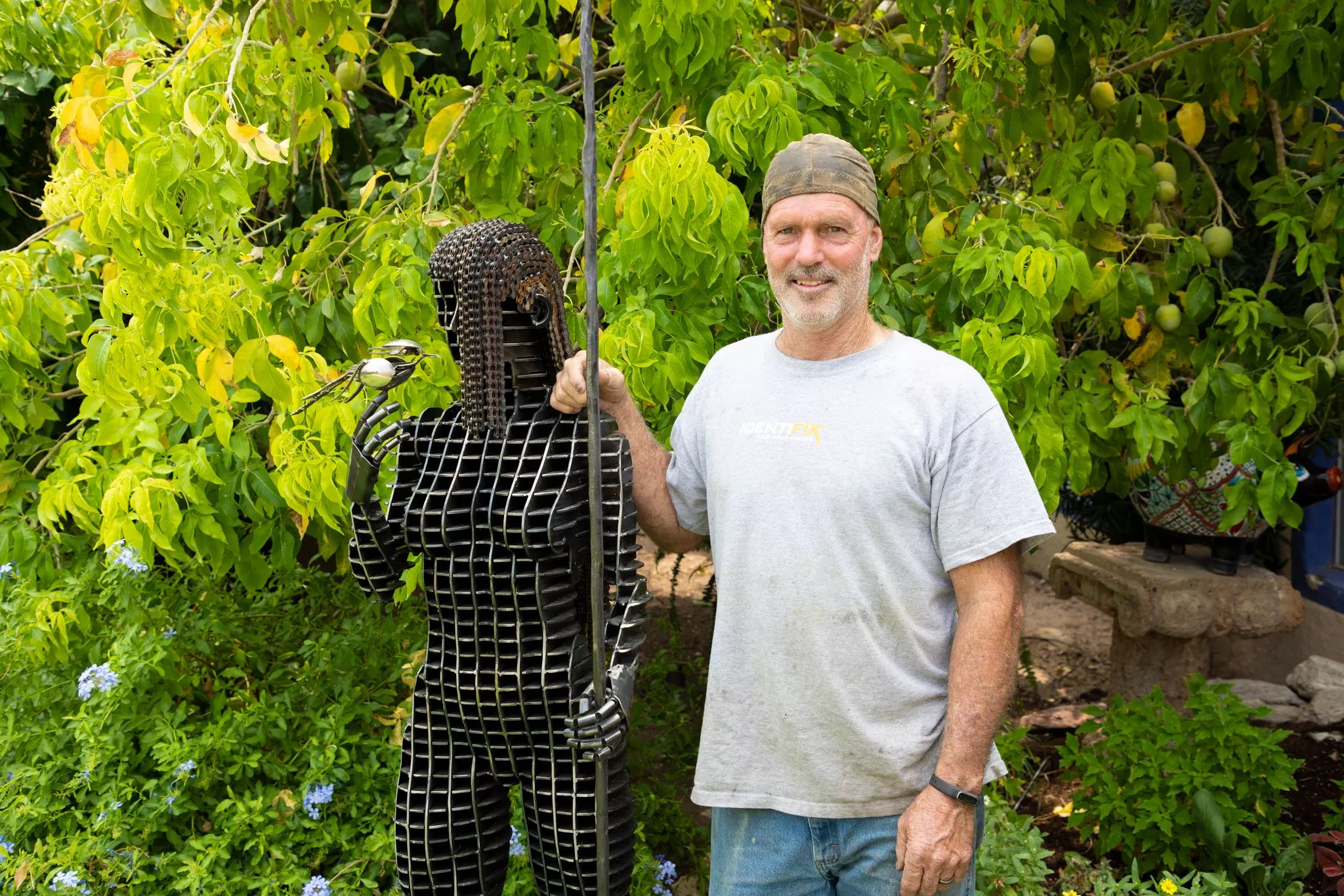
Ever wanted to see a 6-foot-tall, over 200-pound work of art that someone thought was so beautiful they decided to steal it?
The recently stolen and recovered metal sculpture known as Angelica is back on display at Hacienda del Sol Guest Ranch Resort's inner courtyard from 8 a.m. to 8 p.m. through Saturday, Sept. 12. Artist John Benedict will be on hand to meet with guests on Friday, Sept. 4 and Saturday, Sept. 12 from 6:30 p.m. until 8 p.m.
Benedict said the return of his art was “remarkable,” considering he thought the case had gone cold—Angelica was stolen last May during a pop-up drive-thru art exhibit at the resort. He said the exhibit was intended to help local sculptors affiliated with SculptureTucson, a non-profit organization dedicated to furthering the profession.
“It was a good concept but it had a slight flaw,” Benedict said.
The guest ranch’s parking lot—where the drive-thru art exhibit was held—had recently been renovated. Electricity needed for lighting and security cameras in the area had not been restored at that time.
Benedict doesn’t fault the resort.
“Hacienda del Sol did everything they could. They had someone sitting out there in a car for the majority of the time,” Benedict said. “I believe the person who did this was an opportunist who waited for the right time when no one was around, dropped his tailgate, popped it in and drove away.”
The metal sculptor also said he isn’t mad at the man accused of stealing Angelica, 56-year-old Kelly Friedman. Friedman was arrested and charged with felony theft after an anonymous tip led the Pima County Sheriff’s Department to an eastside storage unit belonging to the 56-year old. Sheriff’s deputies served a search warrant and the sculpture was located.
“I heard second hand from a detective who was present at (Friedman’s) interview that he absolutely fell in love with it,” Benedict said. “I take that as a compliment but you don’t steal it. I’m not mad at the guy, though. I’ve done things I’m not proud of.”
Benedict said the multiple friendships forged and strengthened over the two months the work of art was missing is the experience's silver lining. The sheriff’s department and Hacienda del Sol both went out of their way to locate the lifted sculpture, said the artist.
“I have huge respect for the community of people who made this happen,” Benedict said. “The person who called in the tip didn’t even know there was a reward. They did it out of the goodness of their heart.”
Saturday, Sept. 12, will be the last chance for the public to view Angelica before Benedict sets the sculpture in her new home on the art walk in front of his residence. Benedict’s wife encouraged him to keep Angelica since the work has such a unique story.
“I was asking my wife what I should do with it? Should I put it back on the market? Should I donate it?” Benedict said. “She shook her head at me and said we should keep it because of the amazing story. So, I poured a concrete pad in the front yard and I’m going to bolt her down after the exhibit.”
For more information, contact haciendadelsol.com.
Friday, August 28, 2020
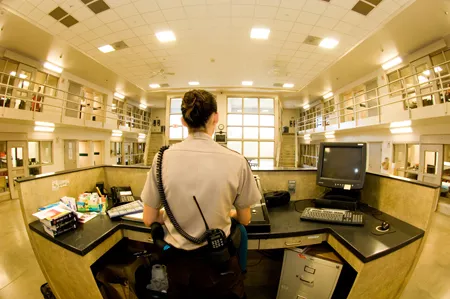
Since 2018, Pima County’s criminal justice agencies have been working on a proposal for a new Community Bond Program wherein the county would fund a non-profit bonding agency and help bail out qualifying defendants in the Pima County jail, under certain circumstances.
The program is intended to help reduce the size of the county jail population, and help prevent defendants from being incarcerated for weeks, months or years when they have not been convicted of a crime. It would apply to defendants in both felony and misdemeanor cases.
“Individuals who are incarcerated pre-trial are mostly confined not because they were denied bail or were a flight risk or were a danger to the public, but rather because they could not muster the financial resources needed to secure their freedom,” said Public Defense Services Director Dean Brault in the proposal. “An individual’s inability to afford monetary bail is not an indicator of that individual’s guilt, an accurate predictor of the risk of danger that individual poses to others, or an indicator of whether that individual will show up for a scheduled court proceeding.”
Brault said incarcerating individuals who cannot afford money bail without meaningfully considering other alternatives is a violation of those individuals’ due process and equal protection rights under the law.
The non-profit in charge of the Community Bond Program would offer to bail out any defendant who Pretrial Services recommends be released, and their bond is $30,000 or less. This program would not be available in cases with homicide, sex or child exploitation charges or if the defendant has a hold from another jurisdiction.
Tags: Public Defense Services , Pima County , Community Bond Program , Image

