
Monday, August 3, 2020
ProPublica is a nonprofit newsroom that investigates abuses of power. Click here to read their biggest stories as soon as they’re published.
A New York grand jury on Thursday indicted two former leaders of the Mexican federal police force, including one who oversaw the anti-narcotics units that were specially vetted by the U.S. Drug Enforcement Administration and were linked to two brazen massacres in Mexico that left dozens, possibly hundreds, of people dead and missing.
The indictments marked a stunning fall from grace for Ramón Pequeño García and Luis Cárdenas Palomino, who had been celebrated by U.S. national security and diplomatic officials as trusted partners in the fight against Mexican drug cartels.
On Thursday, a federal grand jury found that instead of combating the cartels, there was evidence that the men had been collaborating with and accepting millions in bribes from them. Cárdenas Palomino had served as the director of regional operations for the federal police force between 2006 and 2012. During that time, Pequeño was head of the federal police anti-narcotics division, which controlled the DEA’s Sensitive Investigative Units.

A New York grand jury on Thursday indicted two former leaders of the Mexican federal police force, including one who oversaw the anti-narcotics units that were specially vetted by the U.S. Drug Enforcement Administration and were linked to two brazen massacres in Mexico that left dozens, possibly hundreds, of people dead and missing.
The indictments marked a stunning fall from grace for Ramón Pequeño García and Luis Cárdenas Palomino, who had been celebrated by U.S. national security and diplomatic officials as trusted partners in the fight against Mexican drug cartels.
On Thursday, a federal grand jury found that instead of combating the cartels, there was evidence that the men had been collaborating with and accepting millions in bribes from them. Cárdenas Palomino had served as the director of regional operations for the federal police force between 2006 and 2012. During that time, Pequeño was head of the federal police anti-narcotics division, which controlled the DEA’s Sensitive Investigative Units.
ProPublica Illinois is a nonprofit newsroom that investigates abuses of power.
As violent crime continued to climb in Chicago and other cities across the country, Attorney General William P. Barr announced that the U.S. Department of Justice was mobilizing to help: Dozens of federal agents would be sent to work with local police to combat gangs and illegal guns.
“Our message to gangs, gang leaders and gang members is this: When we throw the federal book at you, it will be a knockout blow,” Barr said.
That was in 1992, during Barr’s first stint leading the Justice Department, under former President George H.W. Bush.
If it sounds too recent or familiar to have happened nearly three decades ago, that’s because Barr, now attorney general under President Donald Trump, made a strikingly similar announcement on July 22.
Some of the details were different, of course. In 1992, Barr said the FBI was shifting about 300 agents from monitoring spies from the recently collapsed Soviet Union to taking on gangs and violent crime in American cities. Eighteen of the agents would be redeployed to Chicago.

As violent crime continued to climb in Chicago and other cities across the country, Attorney General William P. Barr announced that the U.S. Department of Justice was mobilizing to help: Dozens of federal agents would be sent to work with local police to combat gangs and illegal guns.
“Our message to gangs, gang leaders and gang members is this: When we throw the federal book at you, it will be a knockout blow,” Barr said.
That was in 1992, during Barr’s first stint leading the Justice Department, under former President George H.W. Bush.
If it sounds too recent or familiar to have happened nearly three decades ago, that’s because Barr, now attorney general under President Donald Trump, made a strikingly similar announcement on July 22.
Some of the details were different, of course. In 1992, Barr said the FBI was shifting about 300 agents from monitoring spies from the recently collapsed Soviet Union to taking on gangs and violent crime in American cities. Eighteen of the agents would be redeployed to Chicago.
Wednesday, July 29, 2020
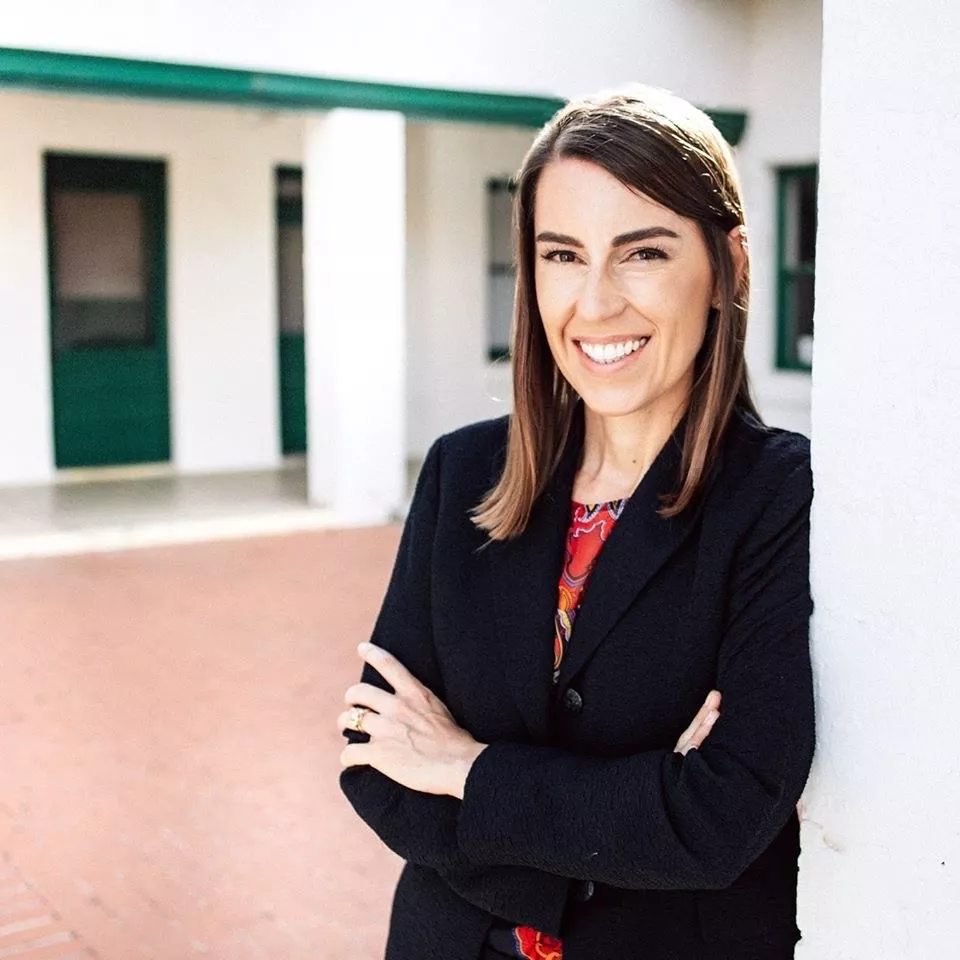
County Attorney candidate Laura Conover said she didn't know she'd received a contribution from a man facing charges of manslaughter after shooting his girlfriend in the head in front of their 3-year-old son in 2012. “I receive dozens of contributions a day from complete strangers here in our community, including modest contributions from laborers,” Conover said. “Thank goodness, because grassroots contributions keep me in the race while the heart of the Republican party pumps so much money into my opponent's coffers.”
Laura Conover refunded a $250 donation made to her campaign by Ronald Corbin Jr., who is accused of shooting his girlfriend in the head in front of their 3-year-old child in 2012. Charges were filed six years later after a grand jury found cause to indict Corbin in 2018.
Conover said she was unaware of the contribution due to her campaign being short staffed and having limited resources. She insists the contribution isn’t an issue that should be reported.
“I receive dozens of contributions a day from complete strangers here in our community, including modest contributions from laborers, and thank goodness, because grassroots contributions keep me in the race while the heart of the Republican party pumps so much money into my opponent's coffers. ” Conover wrote in an emailed response upon learning about Corbin’s contribution.
In next week's Democratic primary, Conover, a defense attorney who has never worked as a prosecutor, is facing two prosecutors from the Pima County Attorney's Office: Jonathan Mosher and Mark Deibolt. Mosher, who was a registered Republican until 2014, has received a number of contributions from Republicans, including auto dealer Jim Click, who has encouraged people to support Mosher. No Republican is in the race so the primary will likely determine who will take over the office that current Pima County Attorney Barbara LaWall has held since she was first elected in 1996. LaWall has endorsed Mosher.
Within an hour after being contacted by Tucson Weekly yesterday, Conover verified the contribution did in fact come from Corbin along with two donations from one of Corbin’s relatives totaling $250. She refunded the money yesterday.
"After being informed as to who Mr. Corbin is, I sent word to Ms. Ayup's family with my heartfelt sentiments and word that I had returned the contribution,” Conover wrote in a second email after refunding the campaign donations.
In June 2012, Corbin shot his girlfriend in front of the couple’s child after he had been drinking at Maloney’s on 4th. Corbin maintains the shooting was an accident and happened while trying to change the grip of his pistol.
Originally, the Tucson Police Department arrested Corbin on one count of manslaughter for the death of 27-year-old Genna Ayup. However, the accused was later released after prosecutors from Barbara LaWall’s office decided not to file charges citing lack of evidence.
Ward 6 Councilman Steve Kozachik hired private investigator and former Pima County Sheriff’s Department sergeant Weaver J. Barkman to look into the case after Ayup's mother, Toni Solheid, told her story to the councilman. Barkman found several problems with TPD’s original investigation.
“We hired a P.I. and he comes back and said he thought it was Murder One,” Kozachik said. “All we can do at this point is to actually have the trail.”
Kozachik not only takes issue with the Corbin family’s contribution, but also several donations coming from the defendant’s attorneys Laura Udall and Lance Wood because he believes it could delay the trial again should Conover win the Aug. 4 primary.
“This is nothing but a contrived effort by Corbin and his defense team to get this case in front of a new county attorney who would have to say 'My office can’t prosecute because these people donated to my campaign,'” Kozachik said. “If she wins, she’ll have to ask for a change of venue or start all over again and Genna’s family gets screwed.”
In an emailed response, Corbin’s attorney, Lance Wood, said he believes his client was exercising his rights as a free citizen.
“Mr. Corbin is presumed innocent,” Wood wrote. “Mr. Corbin has the right to vote, and the right to participate in the political process.”
Corbin’s trial is set to take place in March 2021.
Friday, July 17, 2020
ProPublica is a nonprofit newsroom that investigates abuses of power. Click here to read their biggest stories as soon as they’re published.
As hospitals across the United States brace for a difficult six months — with the first wave of the coronavirus pandemic still raging and concerns about a second wave in the fall — some are acutely short-staffed because of an ill-timed change to immigration policy and its inconsistent implementation.
A proclamation issued by President Donald Trump on June 22, barring the entry of most immigrants on work visas, came right as hospitals were expecting a new class of medical residents. Hundreds of young doctors were unable to start their residencies on time.
Trump’s order included the H1-B visa for highly skilled workers, which is used by some practicing doctors abroad who get U.S. residency slots. The proclamation stated that doctors “involved with the provision of medical care to individuals who have contracted COVID-19 and are currently hospitalized” should be exempt from the ban, but it delegated the issuing of guidance to the departments of State and Homeland Security. That guidance has been slow and inconsistent.

As hospitals across the United States brace for a difficult six months — with the first wave of the coronavirus pandemic still raging and concerns about a second wave in the fall — some are acutely short-staffed because of an ill-timed change to immigration policy and its inconsistent implementation.
A proclamation issued by President Donald Trump on June 22, barring the entry of most immigrants on work visas, came right as hospitals were expecting a new class of medical residents. Hundreds of young doctors were unable to start their residencies on time.
Trump’s order included the H1-B visa for highly skilled workers, which is used by some practicing doctors abroad who get U.S. residency slots. The proclamation stated that doctors “involved with the provision of medical care to individuals who have contracted COVID-19 and are currently hospitalized” should be exempt from the ban, but it delegated the issuing of guidance to the departments of State and Homeland Security. That guidance has been slow and inconsistent.
As COVID-19 began to spread across the Southwest in March, lawyers representing incarcerated Arizonans reported “unsanitary conditions,” “inadequate medical staffing and treatment” and a “failure to take strong and sensible precautionary measures” in state prisons.
The combination left prisoners “highly vulnerable to outbreaks,” the attorneys wrote in a letter to the state before asking a federal judge to intervene. The judge did by issuing an order for officials to release more information, but prison advocates say it hasn’t been enough.
Nearly four months later, complaints of insufficient safety measures and subpar medical care continue to plague Arizona prisons. At least 569 prisoners at 13 of the state’s 16 prison complexes had tested positive for COVID-19 as of July 15, according to the Department of Corrections, Rehabilitation and Reentry, and at least 371 staffers have reported positive results.
Justice reform advocates and others with ties to the correctional system worry the state is running out of time to prevent an even more dangerous surge in cases. COVID-19 can spread swiftly in crowded indoor spaces and among individuals with chronic health problems.
“(Inmates) are scared,” said Jared Wagoner, who was incarcerated in the Cibola Unit at the Arizona State Prison Complex in Yuma until June 8. He cited close quarters, insufficient testing and indifferent medical staff as ongoing obstacles.
“They’re scared that their two-year sentence is going to become a life sentence,” Wagoner said.

The combination left prisoners “highly vulnerable to outbreaks,” the attorneys wrote in a letter to the state before asking a federal judge to intervene. The judge did by issuing an order for officials to release more information, but prison advocates say it hasn’t been enough.
Nearly four months later, complaints of insufficient safety measures and subpar medical care continue to plague Arizona prisons. At least 569 prisoners at 13 of the state’s 16 prison complexes had tested positive for COVID-19 as of July 15, according to the Department of Corrections, Rehabilitation and Reentry, and at least 371 staffers have reported positive results.
Justice reform advocates and others with ties to the correctional system worry the state is running out of time to prevent an even more dangerous surge in cases. COVID-19 can spread swiftly in crowded indoor spaces and among individuals with chronic health problems.
“(Inmates) are scared,” said Jared Wagoner, who was incarcerated in the Cibola Unit at the Arizona State Prison Complex in Yuma until June 8. He cited close quarters, insufficient testing and indifferent medical staff as ongoing obstacles.
“They’re scared that their two-year sentence is going to become a life sentence,” Wagoner said.
Monday, July 13, 2020
ProPublica is a nonprofit newsroom that investigates abuses of power. Click here to read their biggest stories as soon as they’re published.
Jason Cardiff didn’t want his new business to end up like his last one, an alleged pyramid scheme involving robocalling and selling unwitting customers bogus remedies to lose weight or quit smoking. One of his ventures, Prolongz, falsely claimed to offer men “increased ejaculation control.”
“I am not going to lose another company,” Cardiff told his lawyer in an April 5 email, just before detailing a fantasy list of people he wanted to place on the board of his new venture, VPL Medical Inc.
His wish list included Brian Travis Kennedy, a right-wing think tank leader and pundit with connections to the Trump administration, who Cardiff cryptically said could be the company’s “advisor to the White House.” That didn’t work out, Cardiff says.
He also wanted to make sure he had controlling stock of the company and the ability to buy out his business partner if he wanted, according to the email.
“As I (have) raised all the capital and done all the work once again,” Cardiff wrote in typo-laden prose, “I am not going to lose out on perhaps my biggest company to date. Further I have a group that wants to put in 10 mil this week.”

Jason Cardiff didn’t want his new business to end up like his last one, an alleged pyramid scheme involving robocalling and selling unwitting customers bogus remedies to lose weight or quit smoking. One of his ventures, Prolongz, falsely claimed to offer men “increased ejaculation control.”
“I am not going to lose another company,” Cardiff told his lawyer in an April 5 email, just before detailing a fantasy list of people he wanted to place on the board of his new venture, VPL Medical Inc.
His wish list included Brian Travis Kennedy, a right-wing think tank leader and pundit with connections to the Trump administration, who Cardiff cryptically said could be the company’s “advisor to the White House.” That didn’t work out, Cardiff says.
He also wanted to make sure he had controlling stock of the company and the ability to buy out his business partner if he wanted, according to the email.
“As I (have) raised all the capital and done all the work once again,” Cardiff wrote in typo-laden prose, “I am not going to lose out on perhaps my biggest company to date. Further I have a group that wants to put in 10 mil this week.”
Friday, July 10, 2020
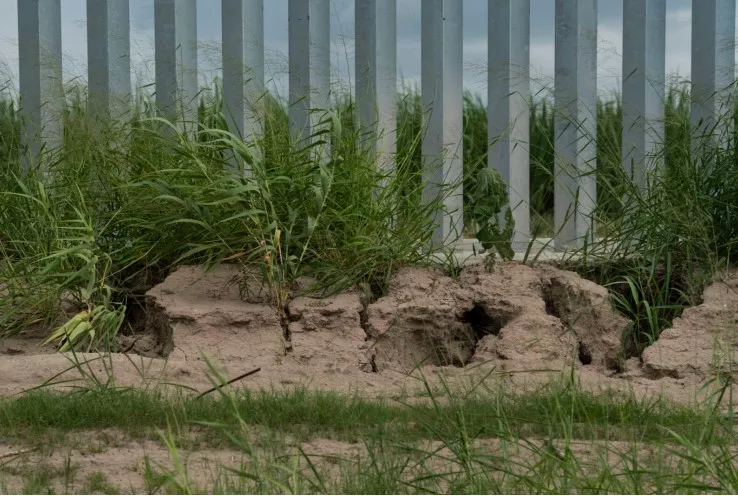
Gashes and gullies at the fence’s foundation show potentially dangerous erosion. (Verónica G. Cárdenas for The Texas Tribune/ProPublica)
This article is co-published with The Texas Tribune, a nonprofit, nonpartisan local newsroom that informs and engages with Texans.
The builder of a privately funded border wall along the shores of the Rio Grande agreed to an engineering inspection of his controversial structure, which experts say is showing signs of erosion that threatens its stability just months after the $42 million project was finished.
Tommy Fisher, president of North Dakota-based Fisher Industries, had bragged he could build faster and smarter than the federal government, calling his wall design method a “Lamborghini,” compared with the government’s “horse and buggy.”
On Wednesday, U.S. District Judge Randy Crane instructed attorneys to work out details of the inspection and to come to an agreement about fixes for a part of the 3-mile fence that violates a treaty with Mexico by deflecting too much water during floods. Crane is overseeing a lawsuit brought by the federal government and the neighboring National Butterfly Center over the construction of the fence and its potential threat to the Rio Grande.
Thursday, June 25, 2020
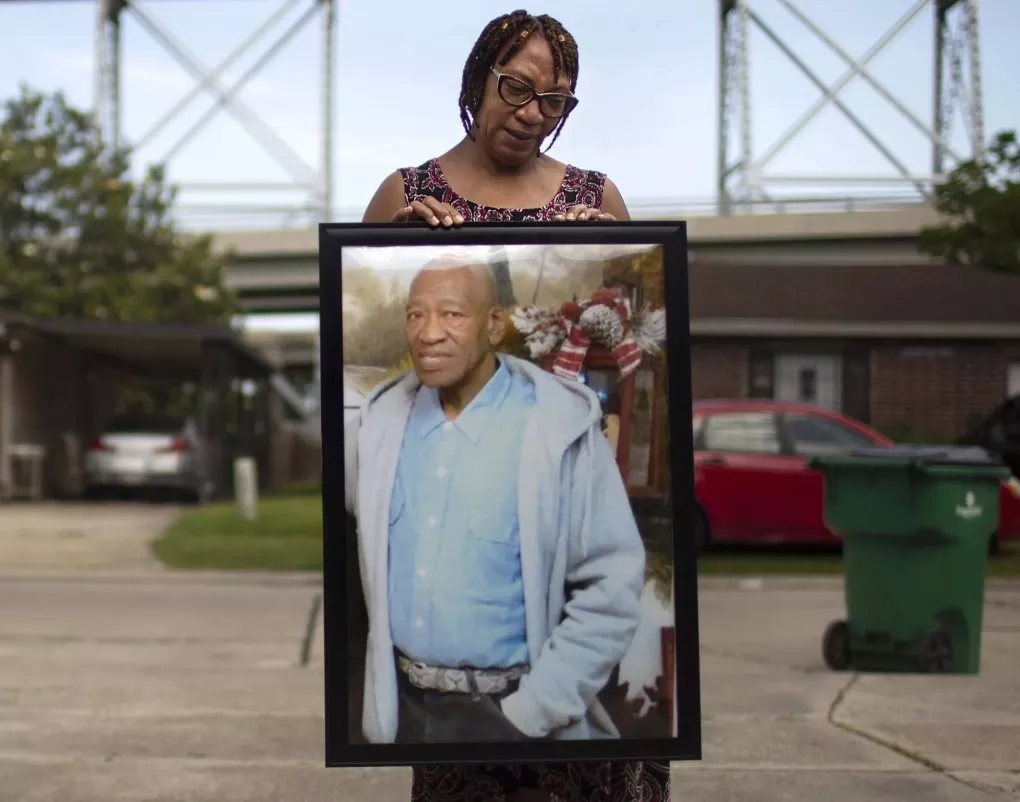
Terry Rogers holds a photo of Michael Williams, her brother, in front of her home in Bridge City, Louisiana, on May 17, 2020. (Kathleen Flynn/ProPublica)
By the time he persuaded the guards to let him call his family, Michael Williams could feel his life slipping away. His body ached, and he was struggling to breathe. For three days, he had been locked behind the heavy metal door of a cramped prison cell, terrified and alone.
“They weren’t treating him,” his son, Kevin Cooks, recalled. “He kept telling me, ‘Son, I’m going to die in here.’” Williams, a 70-year-old diabetic, was serving a life sentence for a 1974 convenience store murder he had always maintained he did not commit. It was the first time his son had ever heard him cry.
Williams’ family and his lawyer called over and over to the Louisiana State Penitentiary in Angola, pleading with guards and nurses to have him moved to a hospital. When they finally reached one of the senior guard officers, family members said, he told them Williams didn’t have the virus.
On May 7, a nurse assured one of Williams’ sisters that he was improving. The next day, he was rushed to a regional hospital in critical condition. The day after that, a doctor called to say Williams had gone into cardiac arrest. If they wanted to say goodbye, he said, they should hurry.
While the novel coronavirus burned through Angola, as the country’s largest maximum-security prison is known, officials insisted they were testing all inmates who showed symptoms, isolating those who got sick and transferring more serious cases to the hospital in Baton Rouge, about 60 miles to the south.
But from inside Angola’s walls, inmates painted a very different picture — one of widespread illness, dysfunctional care and sometimes inexplicable neglect. They said at least four of the 12 prisoners who have died in the pandemic, including Williams, had been denied needed medical help for days because their symptoms were not considered sufficiently serious.
Austin Counts
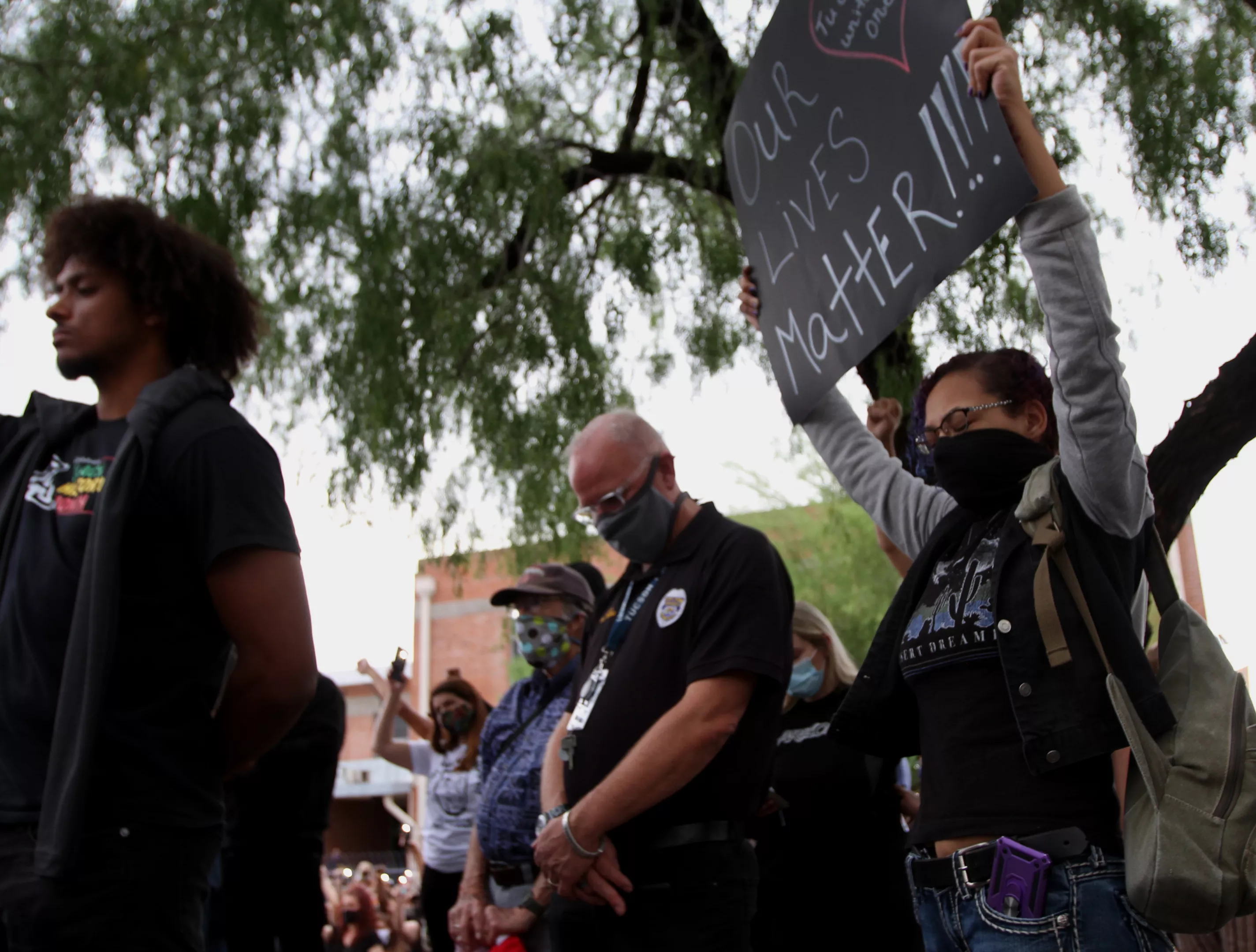
Tucson Police Chief Chris Magnus bows his head during a moment of silence during a vigil for George Floyd earlier this month.
Tucson Mayor Regina Romero today said she did not believe Tucson Police Chief Chris Magnus should resign following yesterday's press conference during which Magnus offered to step down following the completion of an investigation into the in-custody death of 27-year-old Carlos Adrian Ingram, who died of cardiac arrest as he was physically held down by TPD officers.
UPDATE: City Manager Mike Ortega has declined to accept Magnus' resignation.
Romero's statement:
City Manager Ortega's email to Romero and City Council members:In this moment, my focus is on the fact that the life of a fellow Tucsonan, Carlos Adrian Ingram-Lopez, was needlessly lost. The Chief’s abrupt announcement at the press conference yesterday should not take away from that. I continue to extend my most sincere condolences to the family of Carlos Adrian during this incredibly difficult time for them. The best way we can honor Carlos Adrian’s memory is by coming together and taking immediate action to build a better, more just community.
By city charter, it is the City Manager’s responsibility to accept resignations or fire Department Directors. After listening to the feedback of my colleagues on the Council, I do not believe the Chief should resign.
Chief Magnus has brought forward thinking changes to TPD policies, practices and trainings, and has built strong relationships with our community since he joined the Department in 2016. Now is the time to work together and rebuild public trust in our police department by increasing transparency, ensuring accountability, and re-imagining how we provide safety to our community. I look forward to working with Chief Magnus to accomplish these reforms.
Wednesday, June 24, 2020
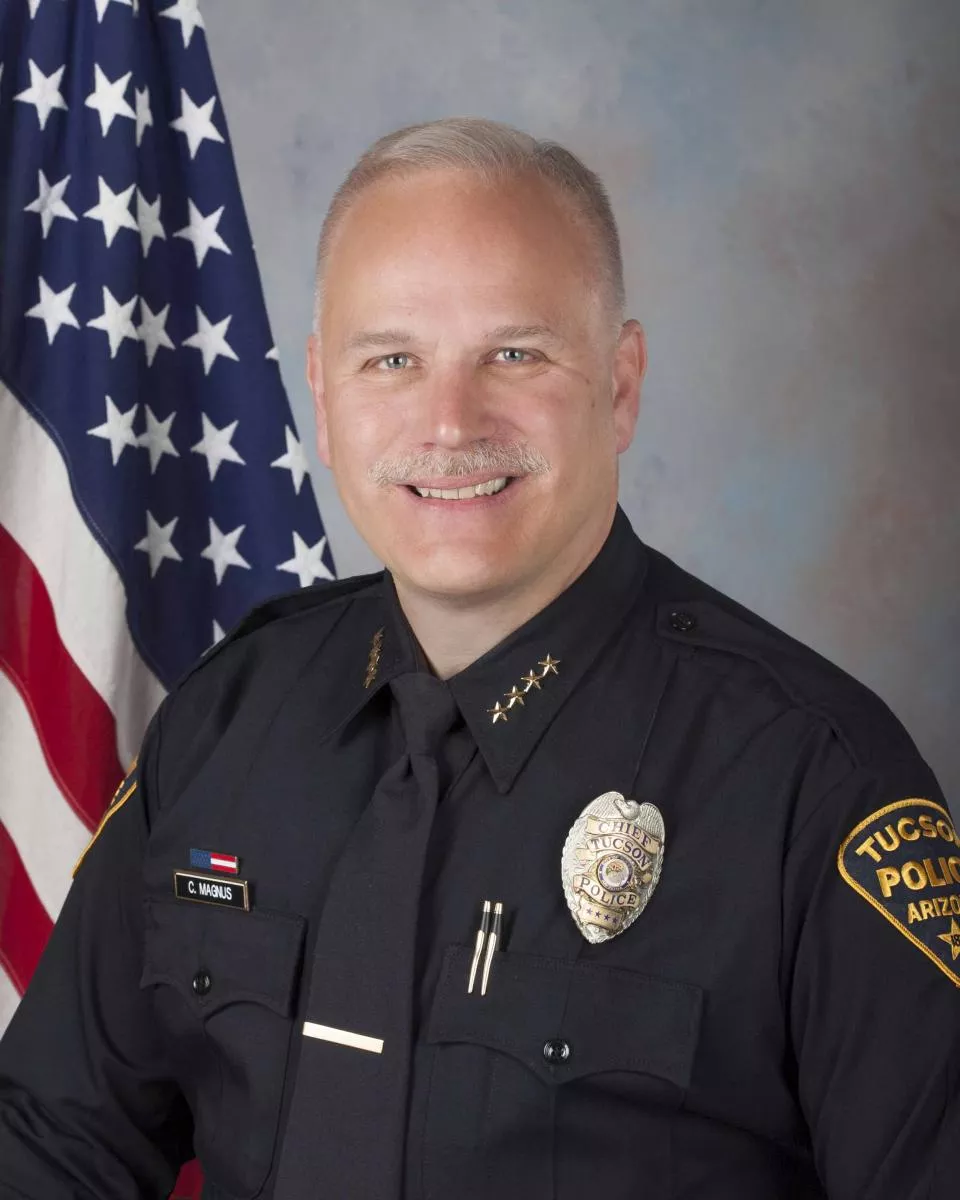
"As chief, I accept responsibility for both these serious misstep, although I believe neither was a result of any sort of malevolence or deliberate attempt to hide anything," Tucson Police Chief Chris Magnus said. "To demonstrate my willingness to take accountability for these mistakes, I am offering my resignation to the mayor, city council and the city manager, which they can accept or handle as they deem fit."
Before announcing his offer of resignation, Magnus addressed and accepted responsibility for the department's failure to notify the public of the in-custody death of Ingram-Lopez while he was in their custody. He also took responsibility for TPD executive officers' failure to review bodycam footage of the incident in a timely manner.
"As chief, I accept responsibility for both these serious misstep, although I believe neither was a result of any sort of malevolence or deliberate attempt to hide anything," Magnus said. "To demonstrate my willingness to take accountability for these mistakes, I am offering my resignation to the mayor, city council and the city manager, which they can accept or handle as they deem fit."
Ward 2 Councilmember Paul Cunningham said Magnus still has his full support.
"I've already asked the chief not to resign," Cunningham said. "While the incident in April was tragic and demonstrates the need for police reform, our chief has a track record of being community-oriented and a police reformer. I think it would be a mistake to let Chief Magnus go."
Ward 6 Councilmember Steve Kozachik also thinks accepting Magnus' resignation would be a mistake.
"He was let down by people who work for him and he has been an excellent chief," Kozachik said. "I don't think there is any rational reason for (Magnus) to resign and I've already told (City Manager) Mike Ortega if he is polling people, my vote is to retain him."
After Kozachik viewed the bodycam footage, he believes the fault lies with the officer's handling of the situation—not the chief.