

Tuesday, November 27, 2018
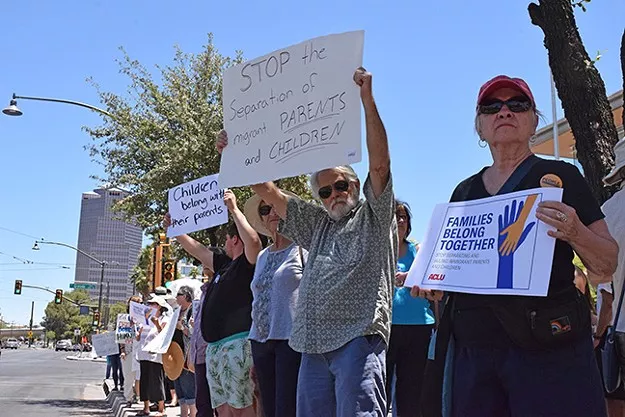
 The Trump administration has quietly resumed separating immigrant families at the border, in some cases using vague or unsubstantiated allegations of wrongdoing or minor violations against the parents, including charges of illegally re-entering the country, as justification.
 Over the last three months, lawyers at Catholic Charities, which provides legal services to immigrant children in government custody in New York, have discovered at least 16 new separation cases. They say they have come across such instances by chance and via their own sleuthing after children were put into temporary foster care and shelters with little or no indication that they arrived at the border with their parents.
ProPublica stumbled upon one more case late last month after receiving a call from a distraught Salvadoran father who had been detained in South Texas, and whose 4-year-old son, Brayan, had literally been yanked from his grasp by a Customs and Border Protection agent after they crossed the border and asked for asylum. Julio, the father, asked to be identified only by his first name because he was fleeing gang violence and worried about the safety of relatives back home.
“I failed him,” said Julio, 27, sobbing uncontrollably. “Everything I had done to be a good father was destroyed in an instant.” Get Our Top Investigations Subscribe to the Big Story newsletter.
ProPublica tracked down Brayan, who has reddish-blond hair and an endearing lisp, at a temporary foster care agency in New York City, and reached out to the lawyer who represents him. Until that phone call, the lawyer, Jodi Ziesemer, a supervising attorney at Catholic Charities, had no idea that Brayan had been separated from his father. The chaos, she said, felt disturbingly like zero tolerance all over again.
“It’s so disheartening,” Ziesemer said “This was supposed to be a policy that ended.”
Officially it has. On June 20, President Donald Trump signed an executive order retreating from his so-called zero-tolerance immigration enforcement policy, which called on authorities to criminally prosecute adults caught illegally crossing the border and separate them from any children they brought with them. A week later, a federal judge, Dana M. Sabraw, issued an injunction against the separations and ordered the government to put the thousands of affected families back together.
Sabraw, however, exempted cases in which the safety of the child was at risk, and crucially, imposed no standards or oversight over those decisions. As a result, attorneys say, immigration officials — taking their cues from an administration that has made it clear it still believes family separations are an effective deterrent — are using whatever justification they can find, with or without substantiation, to deem immigrant parents unfit or unsafe.
“If the authorities have even the most specious evidence that a parent was a gang member, or had some kind of blemish on their record,” said Neha Desai, a senior attorney at the National Center for Youth Law, “anything they can come up with to say that the separation is for the health and welfare of the child, then they’ll separate them.”
In an email, a senior CBP official acknowledged that immigrant families are still being separated, but said the separations had “nothing to do with zero tolerance.” The official added that “this administration continues to comply with the law and separates adults and children when required for the safety and security of the child.” The official declined to say how many children have been taken from their parents for what was said to be their own protection.
Tags: families , separated , separation , immigration , border , ProPublica , Image
Thursday, November 22, 2018

SERVPRO Fire Damage Restoration Specialists recently sent out a memo to Tucson residents for how to stay fire safe during the holidays. Spoiler alert, frying a turkey is much harder to do successfully than you think it is.
A 2017 study from the National Fire Protection Association found that 47 percent of home fires are caused by cooking equipment. So let's try and save the brave men and women of the firehouses some trouble.
When you fry your turkey it has to be 100 percent thawed. If it is not, the water vapor produced can catch fire in an explosive manner. Also once your turkey is thawed it’s important to dry it as well as you can. Water in hot oil is bad news for turkey day.
SERVPRO also said that when cooking on the stove there are a few things to help ensure nothing goes wrong. First, don’t leave your food unattended. If you need to leave the room, turn off the burner. Also, try and turn pot handles toward the back of the stove so they can be bumped into.
18 percent of fire fatalities happen because of ignited clothing, so please, wear short sleeves! It’s also a good idea to keep a lid or cookie sheet close, so you can cover your pan in case it catches fire.
Here are some more holiday safety tips from The Weekly staff that you should keep in mind during the holiday season:
Don’t let your cat climb the Christmas tree.
Take a conservative approach to lighter fluid on the campfire.
Make sure your fire extinguisher is up to date. They expire every 5-15 years depending on the brand.
Smoking inside might provide shelter from the cold but it could end very badly.
Opening presents by the fireplace might be cozy but shredded wrapping paper next to open flame is a bad idea.
Don’t leave your fire unattended and when you're done, make sure to completely cool the coals.
Stay up to date with city and county fire restrictions. When air quality is bad, check to see if it is a "no-burn" day.
Tags: fire safety , Tucson , Turkey , Christmas , Holidays , cooking , SERVPRO , Image
Friday, October 12, 2018

Hosted by the Pima County Sheriff’s Department, the Rape Aggression Defense (R.A.D.) course is open to women 12 and up, teaching and empowering them to protect themselves against rape and sexual assault.
Established in 1989, the R.A.D. Systems “believes self-defense should be easy to learn, easy to retain, and relatively easy to employ during confrontational situations.”
Funded by grant from the Department of Justice, the class is free to women and girls who want to learn self-defense tactics.
It will be offered on Oct. 13th and 20th, make an appointment Pima County Sheriff’s Department Community Resources Unit at (520) 351-4615.
Tags: No means no , Rape Aggression Defense , RAD , Pima County Sheriffs Department , self defense , Image
Friday, September 28, 2018

Every year, migrants crossing into the U.S. die in the desert borderlands. More often than not, when and if the bodies are recovered, their identity remains a mystery.
Meanwhile in the countries from which they came, families are also left with many unanswered questions. Did they make it? Are they okay? Are they alive? Encompassing forensic scientists, scholars, and human rights partner organizations, part of the Forensic Border Coalition's mission is to answer those questions.
The FBC will be heard by the Inter-American Commission on Human Rights (IACHR) at the University of Colorado Law School in Boulder, Colorado to address problems identifying “missing” migrant remains found along the border.
The FBC is supported by 46 different human rights entities on and along both sides of the border. One of which is Colibrí Center for Human Rights, based here in Tucson, which uses forensic anthropology to try to make those matches and provide closure to the families of the deceased.

A large-scale comparison— comparing all available DNA information from relatives of missing migrants against all DNA data from unidentified remains found on U.S. soil, has not been done. The FBC will be arguing for the creation of a formalized process to allow such large-scale comparisons, which should yield a significant number of matches and identifications, allowing hundreds, if not thousands, of families to finally know the fate of their missing loved ones.
Families of the missing will also be there to provide testimonies in addition to forensic scientists and human rights experts, according to the press release.
A vigil will be held on the CU Boulder campus following the hearing in honor of the countless missing migrants lost among our borderlands.
Tags: Human Rights Issues , Missing Migrants , Unidentified Remains , US Borderlands , Colibri Human Rights Center , Forensic Border Coalition , Border Issues , Image
Thursday, September 27, 2018
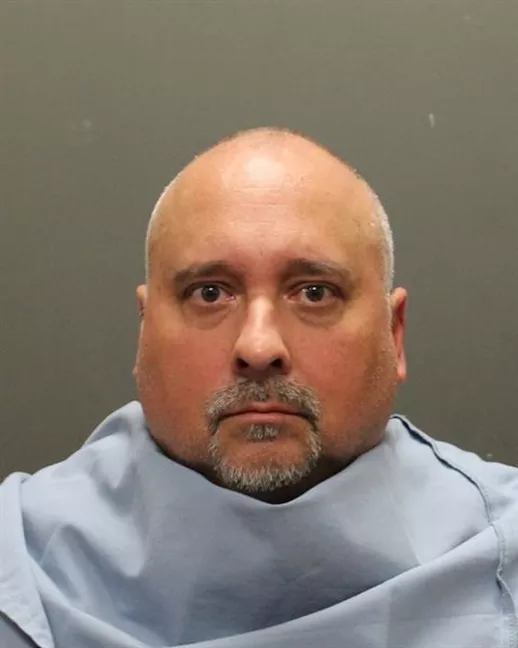
Following a 16-month investigation by the Oro Valley Police Department and picked up by the Arizona Attorney General’s Office, Marshall is accused of embezzling more than $54,000 from the nonprofit youth sports organization.
The investigation into Marshall centers around the use of an account linked to the Broncos organization to cover various personal expenses for Marshall and his family.
Marshall, an Oro Valley resident who did not immediately respond to messages from Tucson Local Media, resigned as president of the organization during its annual board meeting to decide its leadership last March.
According to OVPD reports related to the investigation, current Broncos President Juliette Gutierrez went to Canyon Community Bank to gain access to the organization’s account after Marshall resigned, only to find that Marshall was the only active person on the account.
That information evidently came as a surprise, given that organization by-laws require all financial transactions be approved with two signatures.
Board members found out that Marshall had closed the Broncos’ account on March 6, 2017, opening a new one to place, as the report states, “a couple thousand dollars of the organization’s funds into said account.”
Board members asked Oro Valley police to investigate Marshall in May 2017 after they discovered that Marshall had opened a debit card linked to the organization’s bank account, which was also in clear violation of their by-laws.
According to the investigation, some of the items Marshall is accused of using organizational funds on include more than $850 in repairs to a personal vehicle, as well as charges for rental cars, rent payments, dental work and hotel rooms.
A board member told the investigating officer at that time that she believed Marshall had knowingly under-reported earnings for the Broncos and provided false information to the Internal Revenue Service.
The OVPD investigation references a breakdown of the Broncos’ finances, stating that the organization raised funds through summer football camps, as well as registration fees for the club’s cheerleading and football squads.
Multiple interviewees told police they had no idea that Marshall was using the organization’s funds in an improper fashion, as he never told them anything about the charges or opening a debit card and cashing checks linked to the Broncos.
According to a police report, a former Broncos general manager told the investigating officer that she thought Marshall was improperly moving money between teams, going so far as to question him on why he was using money to take teams to Florida for a national youth sports championship game.
The same person told an officer she initially joined the Broncos board when Marshall became president in 2009 because she “didn’t want Marshall on the board without someone watching him.”
Gutierrez reported the club generated $52,500 from camps and registration fees on average between 2014 and 2017, starting each season with $56,000 deposited into its bank account.
The organization also raised funds through an in-season cash raffle, which cost $10 per ticket, with 4,500 tickets distributed, raising an additional $45,000 for the league.
In total, the Broncos organization raised $106,500 in 2015, with expenses totaling at $57,732.
Tucson Youth Football and Spirit Federation Commissioner Julius Holt and Gutierrez met with concerned parents Wednesday night at Arthur Pack Park, addressing a crowd of more than 50 about several subjects.
One such topic was how the federation’s members file their taxes, with Holt assuring the crowd that steps have been taken to ensure that each club reports its taxes through the same accountant, so there are no discrepancies.
The OVPD investigation cited multiple Broncos board members and Gutierrez as not knowing exactly where the organization’s excess funds go, with Gutierrez telling the officer that their CPA would file taxes for the non-profit organization, with the CPA giving the teams’ financial numbers to whoever the club president was at the time.
Outside of the Broncos organization, Marshall is known in Oro Valley for his work as a volunteer assistant coach for the Canyon del Oro High School football team from 2015 to 2017.
He also previously operated a 7-on-7 football team, known as Team 520, which disbanded in 2018.
Marshall was indicted on Sept. 13 in Pima County Superior Court with eight felony charges, including fraudulent schemes, forgery and theft.
TYFSF and the Arizona Attorney General’s Office declined comment for this story, the latter explaining that the case is an “ongoing matter.”
Tags: youth sports , football , court case , stolen money , funds , Marana , Oro Valley , Image
Wednesday, September 5, 2018

Toni Solheid never stopped hoping the man who shot and killed her daughter would see his day in court. And now, more than six years later, he is.
“For as much as I was never going to quit fighting, I wondered if it would ever happen in my lifetime,” she said.
In 2012, the Tucson Police Department booked Ronald Corbin Jr. on one count of manslaughter after he shot and killed Solheid’s daughter, 27-year-old Genna Ayup. But the Pima County Attorney’s Office declined to indict him.
When Ayup was killed, her and Corbin lived together with their 3-year-old son. Corbin told police the shooting was an accident, that he had been putting a new grip on his gun and it went off. When police arrived that night, the packaging for the new grip was on an ottoman in the living room, next to the gun, a barely touched plate of food, a fresh beer and a pile of their child’s toys.
Neighbors later told police they heard screaming coming from the house; some said a male and female yelling at each other. Police saw no signs of struggle and concluded the screaming must have happened after the shooting.
Last week Corbin was indicted on one count of manslaughter for the reckless killing of another human being, according to the Pima County Attorney’s Office. He's pleading not guilty to the charges. On Wednesday, he was arraigned in court. Until the trial is over, the County Attorney’s Office can’t address why they declined to try the case in 2012 or why they’re indicting Corbin now. But old case records suggest a reason.
A detective in the case wrote that she had TPD’s armorer review the scenario about how the gun could have accidentally fired.
“He not only advised me the scenario was possible, and that he was familiar with people, even officers making the same mistake, he actually demonstrated the scenario to me,” she wrote.
The report goes on to say Chief Deputy County Attorney Kellie Johnson said she was declining to file criminal charges against Corbin due to accidental circumstances.
An April 2018 TPD Crime Laboratory report for the case says the gun was test fired and “found to function as designed without any malfunctions” and that installation of the grip would not cause it to accidentally fire. Furthermore, the report says the gun’s trigger has two parts that both have to be pulled with a weight of about seven-and-a-half-pounds of force to fire the gun.
Solheid never believed the shooting was an accident, and about a year-and-a-half ago, she took her story to Tucson City Councilmember Steve Kozachik, who began pushing for the case to be re-opened.
“Even if you agree with what [Corbin] says, it’s irresponsible to go out drinking for three hours, come home with two other people in the room and try and change the grip on your gun and accidentally kill somebody,” he said. “That can’t be our standard for responsible gun ownership.”
Kozachik hired private investigator Weaver J. Barkman, a retired Pima County Sheriff’s Department sergeant with extensive experience in felony investigations.
In November 2017, Barkman met with Kozachik, Solheid and her husband Earl. Barkman agreed to evaluate the investigation, warning them his findings may not support their belief that Ayup was murdered. Two months later, he presented his assessment to TPD Police Chief Chris Magnus.
“The totality of the evidence provided establishes that Ronald James Corbin intentionally shot and killed Genna Louise Ayup...during a domestic violence episode,” he wrote as his conclusion.
“Mr. Corbin’s claim(s) that his Glock semi-automatic pistol ‘accidentally’ discharged while in his ‘lap’ as he was ‘changing’ or ‘attempting to change the grips’ is conclusively disproven. An accidental discharge by that weapon was and is objectively impossible.”
According to police reports, Corbin got off work at Tucson Electric Power at 2:30 p.m., June 26, 2012, and headed to O’Malley’s Bar and Grill. Over the next three hours, he ordered three 23-ounce Dos Equis and a vodka drink.
Reviewing Corbin and Ayup’s texts from that night, police concluded that she frequently texted him, asking him when he was coming home and if they could hang out together, and his replies were short and cold. Just before 6 p.m., Corbin got on his motorcycle and headed the 10 miles home.
At home, he put his backpack and TEP work shirt in on the kitchen counter. He changed out of his work clothes and sat in front of the TV with a beer and plate of food and, according to Corbin, began to change the grip on his Glock 27 semi-automatic pistol.
By 6:30, he called 911 and said his girlfriend had been shot.
When police arrived, Ayup was on the floor in the front entryway of the house, a large pool of blood under her head. Corbin was distraught. The police report says his demeanor was “an appropriate reaction to an accident.” He was crying and vomited twice. He told police it was an accident but that he wouldn’t say any more until he spoke with an attorney.
Police found a chunk of Ayup’s hair on the ground near her feet, by her discarded shoes and a broken wine glass. She had a bruise on the side of her face.
On an ottoman in the living room was the gun, grip fully installed, and the grip’s packaging.
While they handcuffed Corbin outside, one of the officers brought over a basket of toys for his little son. “Daddy get the gun and shoot mommy,” the boy told the police. “I think he did. Daddy’s a bad boy.”
The police report says the child told police his father hit his mother. Police wrote they believed the child was referring to the incident, that he was very verbal for his age and his details were consistent with evidence at the scene. Corbin was released on his own recognizance that night.
Barkman’s report draws attention to the neat placement of the gun, grip packaging and other key items on the ottoman.
Corbin told police he ejected the live round and set it next to him on the couch right before he began installing the grip. Police photos show a live round on the ottoman, under the empty holster and gun. Barkman points out that Corbin would have had to take the holster off the gun before ejecting the live round. This means the round wouldn’t likely be underneath the holster even if Corbin had set it on the ottoman rather than on the couch like he stated.
Barkman’s report also states that Corbin has “a history of attempting to avoid criminal responsibility by staging and misdirection.”
About six months before Ayup’s shooting, Corbin’s car was involved in a hit and run collision. Corbin told police he had been assaulted leaving the bar by three men who then stole his car. When police interviewed people in regards to Ayup’s shooting, several of them, including Ayup’s close friend, her cousin, and Corbin’s cousin, all said Corbin had told them he had crashed his car while drunk, filed a false report and made an insurance claim.
In both cases, Barkman writes that Corbin “provided no meaningful details about the facts and circumstances surrounding the events,” and when asked to do so, Corbin asked to speak with an attorney.
Corbin was a gun enthusiast, so he should have been familiar with gun safety, a number of people interviewed with the case, including Ayup’s family members and Corbin’s drinking buddy from work, told police Corbin had a gun collection and went out shooting on a regular basis.
Corbin’s cousin told police that due to Corbin’s knowledge of guns, he found it hard to believe he shot Ayup on accident, according to the police report.
Ayup’s close friend told police that Corbin had called her almost two weeks after the incident. He told her Ayup had been watching their son playing with a hose in the yard when the gun accidentally went off. Ayup’s cousin told police the same story, adding that Corbin said his son was playing in the mud.
Police photos show there is no water or mud on the ground outside the house. The hose is neatly wound.
In Barkman’s 16-page report, he writes that the bruise on Ayup’s right cheek, shown in police photos, may have come from a fist. He also writes that the clump of hair found near her body appears to have intact roots, suggesting it was yanked from her scalp. Also, the drywall by the front door is damaged, which he says is consistent with Corbin slamming Ayup against the door, causing the knob to smash into the wall.
Barkman concluded that it’s likely that Corbin assaulted Ayup before shooting her. In his report to TPD, he writes that the likely assault led to her dropping the wine glass she was holding and losing her sandals.
People in Ayup’s life — her close friend, her cousin and mother — told police that Corbin was emotionally and verbally abusive toward her, that he went out drinking every day, didn’t help her much with their child and that she was concerned he was doing cocaine. None of them were aware of any physical abuse. Corbin’s cousin told police Corbin was an angry person, had a drinking problem, drank and drove frequently and had been doing cocaine.
On Wednesday, during Corbin’s arraignment, a judge ordered that he’s prohibited from drinking alcohol or possessing firearms. According to Solheid, Ayup and Corbin’s child lived between both sets of grandparents, half-time each, for three years following the incident, but now he lives with his father full-time and Solheid only sees him for monthly visits.
A few weeks before Corbin’s arraignment, Solheid told the Tucson Weekly she would be elated to see Corbin indicted.
“I want him to be charged and convicted and I want him to go to prison,” she said. “I want justice for my daughter. And I want for the first time in his life, for him to realize that there are consequences in life, because in 25 years, never once did he ever have consequences for all the things he did.”
Tags: Genna Ayup , Ronald Corbin , trial , Tucson , accidental shot , investigation , gun safety , Image
Monday, September 3, 2018

September is National Preparedness Month which reminds everyone to prepare themselves, their communities and families from now and throughout the year for disasters that could happen. Prepare in advance to any situation by improving your skills such as CPR and first aid.
The Federal Emergency Management Agency, or FEMA, is encouraging people to get involved on social media by helping others understand the need to prepare for emergencies. In 2017, Hurricane Harvey left the nation devastated. About 80 percent of households impacted by Hurricane Harvey did not have flood insurance.
The theme of this year's National Preparedness Month is "Disasters Happen, Prepare Now, Learn How." FEMA has releaased a calendar of four events, one per week of the month-long event. Homeowners can take these steps to make sure they are ready for any disaster that might come their way:
Week 1. Create an emergency plan that includes signing up for emergency alerts and making contingency plans for shelter, evacuation, and family communication.
Week 2. Learn life-saving skills. CPR is a good place to start, but also be certain you know how to turn off the utilities in your home and ensure your smoke and CO detectors are properly installed and working.
Week 3. Check your insurance coverage. Once the emergency is over, appropriate and sufficient insurance will be key to getting your life back to normal, or at least on track.
Week 4. Plan financially for the possibility of a disaster. This goes beyond having a “rainy day fund” for immediate needs. Gather and organize important home, business, insurance, financial, and personal documents and keep them up-to-date and stored in a secure, water-and-fire proof location.
Tags: September , prepare , disasters , emergencies , family , community , Image
Wednesday, August 29, 2018
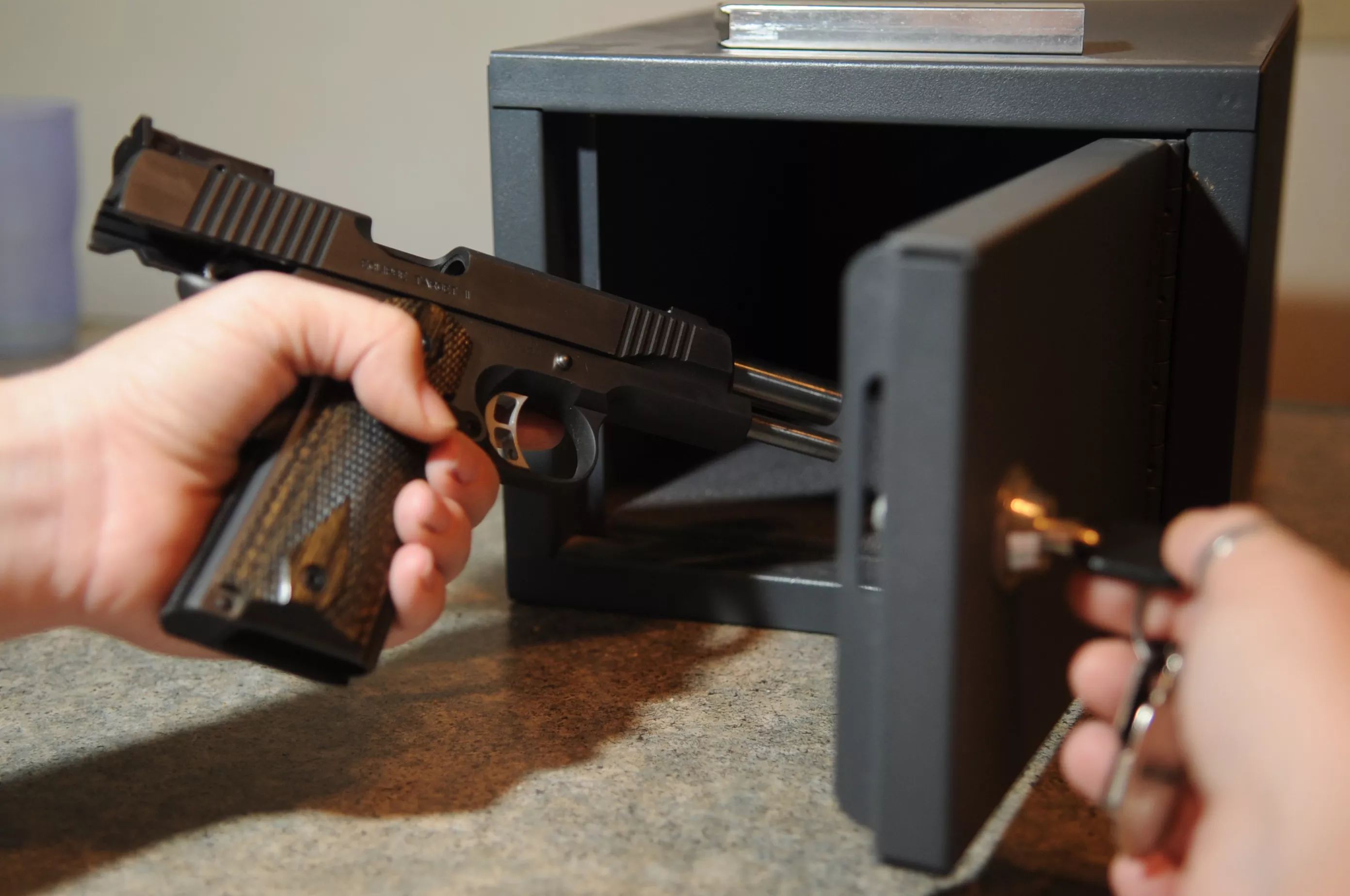
The new guidelines, being adopted this week, say that officers “shall ensure that all firearms and ammunition are locked or safely secured while in their homes, vehicles, or any other area under their control in a manner that will keep the firearms inaccessible to others who should not be allowed to access them.”
The guidelines also say that off-duty officers can’t leave their firearms in a vehicle for more than 10 consecutive hours and that no unauthorized person may handle an officer’s department-issued firearm. And perhaps the most significant part, the new rules add that “negligent storage of a firearm could result in criminal and civil liability.”
TPD’s previous rules around gun storage simply said: “Members shall not damage, abuse or lose any department property entrusted to them….Items such as firearms, identification cards, key cards, badges, and radios require a greater degree of care. Officers shall evaluate what arrangement best ensures the safety of the community under the given circumstances.”
Tucson City Councilmember Steve Kozachik asked the department to look at their rules after he heard the story of a woman whose daughter committed suicide with an officer’s duty weapon.
In the summer of 2009, Rebecca Sturman’s daughter, 22-year-old Chelsie Raidiger, was living with her boyfriend, an Oro Valley police officer, when she used his gun to shoot herself in the heart.
According to Tucson Weekly archives, at the time, OVPD’s policy on securing duty weapons was this: “Members of the department shall at all times handle and safeguard firearms and other weapons consistent with department training. Officers shall be responsible for the security of their weapons. Weapons shall not be left unattended in public view.”
After her daughter’s death, Sturman was pushing for OVPD and other local departments to strengthen their rules around safe firearm storage but says local officials told her it would never happen. She says seeing law enforcement strengthen their firearm storage rules is a huge success.
“I just hoped for that change, so other people don’t have to experience this,” she said. “Had those laws been in place, maybe she’d still be here.”
It wasn’t until 2012 that OVPD started looking at making a change and in 2015 that they implemented new rules, according to Lt. Curtiss Hicks. The current policy, which Hicks says has had slight changes since the 2015 update, is almost identical to the first part of TPD’s policy, that officers are required to lock and secure their firearms and ammunition and not allow access to unauthorized individuals.
OVPD’s rule includes the part about negligent storage could result in civil liability, but leaves out the part about criminal liability. Hicks says this is just legal jargon created by the policy management software that creates their general rules.
As far as how an officer locks up their firearm, Hicks says that is left up to the officer’s discretion. TPD also leaves it up to an officer’s discretion, but suggests a firearm safe, lock box, trigger or camber lock, or workplace locker in the new general rules.
The rules around off-duty firearm storage at other local law enforcement agencies is more vague. The Sheriff Department’s only rules that could relate to off-duty firearm storage simply state: “Department members shall be responsible for: The care, cleaning, and security of personal and Department firearms and associated items issued to them,” as well as “Firearms shall not be unnecessarily drawn, displayed, or carelessly handled at any time.”
Marana’s orders include that all firearms “shall be handled and stored safely and securely, both on and off duty,” as well as being kept out of view, out of the reach of children and secured in a safe location.
Kozachik echoes Sturman’s call for more specific rules on storage requirements and consequences in case of negligence. But MPD Public Information Officer Chriswell Scott says the force’s rules and regulations are sufficient just as they are.
TPD Chief of Staff Michael Silva says the department had been looking into changing their general orders for some time, actually since the OVPD incident. TPD’s in-house lawyers with the Pima County Attorney’s office conferred with colleagues throughout the state to decide on the new rules.
Silva said while there haven’t been any negligence that would result in criminal liability at TPD, they’ve noted such instances in other parts of the country.
“There’s a world of possible scenarios, some that could be pretty terrible,” he said. “Even though a remote possibility, if the wrong set of circumstances could take place, it could be a criminal liability.”
Silva says TPD is always looking to update policies to stay current. He noted that other policies TPD looked at varied widely, with some jurisdictions leaving the issue of safe gun storage pretty open.
Sturman just hopes that if something like what happened to her daughter ever happens again, the officer responsible for the gun is held accountable.
“Him leaving his gun fully loaded with her, and going out of town, wasn’t for her to have,” she said. “You need to be held responsible. You need to be held accountable for your actions.”
Tags: gun safety , regulations , police , safety , gun laws , rules , TPD , Tucson City Council , Image
Thursday, August 16, 2018
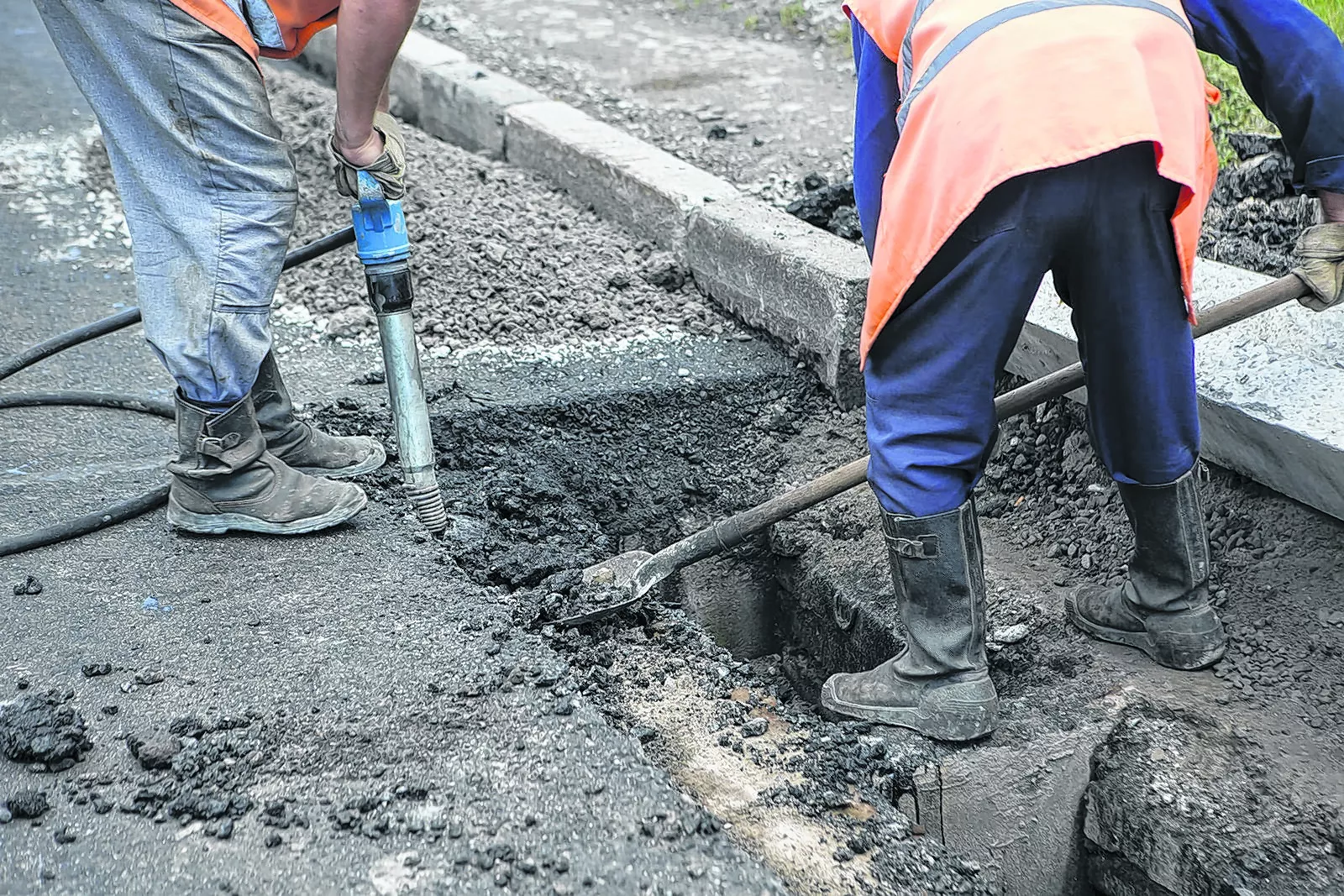
Arizona ranks second lowest on highway spending per driver, only beat by Michigan, according to a new report by financial news site 24/7 Wall Street. The state spends an annual $239 per driver on state highways.
"While the article doesn't draw a direct connection between per capita spending and the quality of state infrastructure, it does demonstrate how poorly Arizona funds its transportation infrastructure," wrote Pima County Administrator Chuck Huckelberry in a memorandum, highlighting the report.
He also wrote that the Pima County is still looking at ways to fund transportation needs and that the state gas tax would be the best source. The tax that everyone pays when they fill up their tank is meant to fund road repair. But the state has been sweeping those funds for years to cover other needs, like paying for highway patrol.
As well, Arizona's gas tax is below the national average, and the state hasn't raised it since 1991. In the interim, 44 other states have, according to The Institute on Taxation and Economic Policy, a nonpartisan nonprofit.
Huckelberry wrote that he will continue to advocate for increasing transportation spending at local, state and national levels.
Tags: news , highways , driving , Arizona , cars , potholes , funding , Image
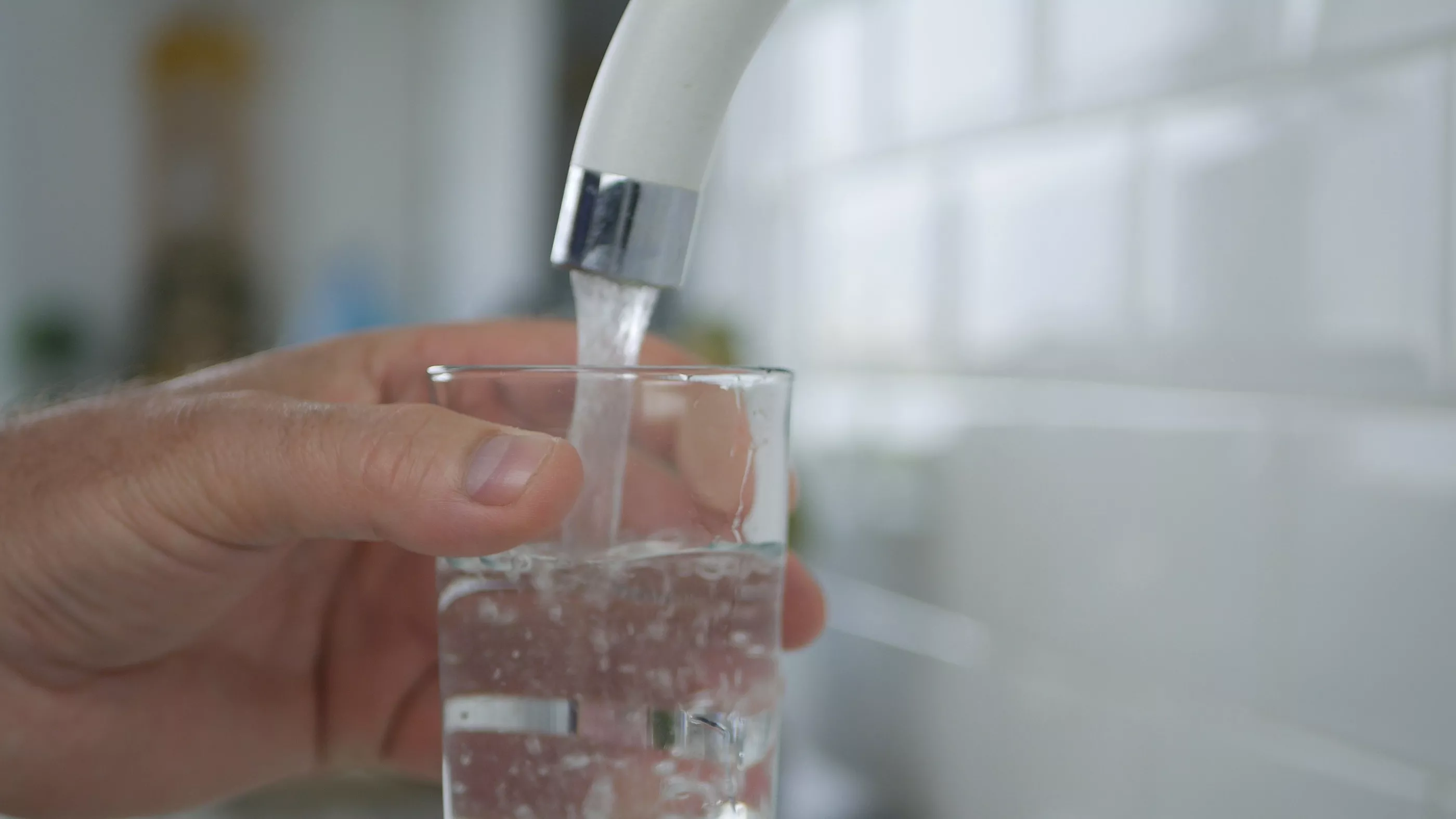
Marana residents who live in the affected residential areas have been asking the Council to treat the tap water ever since news broke last month of two types of contaminants exceeding the Environmental Protection Agency’s health advisory levels. Marana had been sending out mailers informing Marana Water users of the contaminants since December 2016.
The contaminants, PFAs and 1, 4-Dioxane are unregulated compounds that Marana Water staff found in the two separate water systems that feed Saguaro Bloom and Continental Reserve. These compounds have been found in water sources all over the country, including elsewhere in the Tucson Metro Region.
According to the EPA, the risk exposure for the dioxane health advisory level is one in one-million, over a lifetime. Adverse effects include kidney and liver damage. Marana’s levels go as high as two-and-a-half times the advisory level.
Marana Water Director John Kmiec said the EPA is due to release new standards for soil and groundwater contamination this fall, but there’s no guarantee they will meet their deadline. Arizona currently has no set guideline, but some states have set their own, which vary widely. For example, the EPA’s health advisory level for 1, 4 Dioxane is 0.35 parts per billion, but Alaska set their standard at 77 parts per billion and New Hampshire’s is 0.25.
Several town residents spoke at the meeting, expressing concern over the water and satisfaction that the Council seemed on board for treatment as soon as possible.
Saguaro Bloom resident Joyce Reid called the contamination a health hazard and said she’s “happy to hear that there may be some light at the end of the tunnel.”
Shawna Larsen, a cancer survivor, said the low odds of risk exposure are no comfort to her.
“I heard the presentation using the phrase ‘one-in-million chance,’” she said. “Well my chance is over. That already happened. So what I’d really like to be able to tell my coworkers is, ‘I live in Marana. They had a problem. They put in a treatment facility. It’s working great. They’re testing it consistently. And we’re really happy where we’re at. We’re living in our dream home.’”
Vice Mayor Jon Post was the first council member at the meeting to say he thinks the town should build the treatment plants, followed by a chorus of applause. As far as a funding source, he suggested that an additional sales tax might be an option.
“Just one-tenth of a percent for the town of Marana is $1 million a year,” he said. “It’s not even something that people that shop in Marana would even notice. But yet, it would be a revenue stream that would guarantee us quality water for our residents.”
Two water treatment centers, built around the contaminated wells, would cost about $13.5 million to build and then run for 20 years, about $1.5 million less than a previous estimate the town manager shared with Tucson Local Media.
Marana and other local jurisdictions, along with the Arizona Department of Environmental Quality, are continuing to investigate whether the contaminants came from Davis-Monthan Air Force Base or another source, but so far no definitive source has been identified.
Councilmember Roxanne Ziegler said she’s definitely in favor of treating the water but not fond of creating a tax to pay for it. She suggested holding off on capital improvement projects to divert funds to cover the treatment centers right away, and hopefully recover the funds in the future.
“I don’t want to play the blame game right now, but I’m all for fixing this and then going back and recovering what we can if indeed it was Davis Monthan or some other area,” she said.
The contamination levels in a number of the wells has dropped since the town began testing the water in late 2016, though a few have slightly increased. Kmiec said there’s no way to know if the wells that are dropping will continue that trend.
Marana Water looked at other options besides treating the water, but advised against them. One of those options is “water blending,” which happens when a contaminated system is connected with a clean system.
One such project was already in the design stages, connecting the water systems that serve Continental Reserve and the Twin Peaks area, for the benefit of optimal water usage rather than to dilute contaminants. It should be completed in the next two years. But Kmiec said Marana Water found the blending technique had a low effectiveness rate at bringing the contaminants down to and maintaining a comfortable level.
The Northwest Recharge, Recover, and Delivery System is another project in the works, to be constructed in 2023. It’s a joint pipeline project with Marana, Oro Valley and Metro Water to transport water that all three jurisdictions have stored by the Marana Airport.
Another option is looking at accessing Central Arizona Project water, but would take a considerable amount of infrastructure, treatment and precaution. Kmiec said because of these challenges, this option “quickly fell off the radar.”
Town Manager Jamsheed Mehta said the town staff will put together a proposal on how and when to build the treatment centers, which should be ready to present to council sometime in late-September to early-October.
Mayor Ed Honea said the council wants to see the treatment facilities happen as quickly as possible.
“We have to work on financing and everything else, but that is not the most important issue,” Honea said. “The most important issue is cleaning up the water, and we’ll figure out the financing down the road. It may be from three or four different sources.”
Tags: water , contamination , chemicals , Marana , wells , action , Image

