
Thursday, July 8, 2021
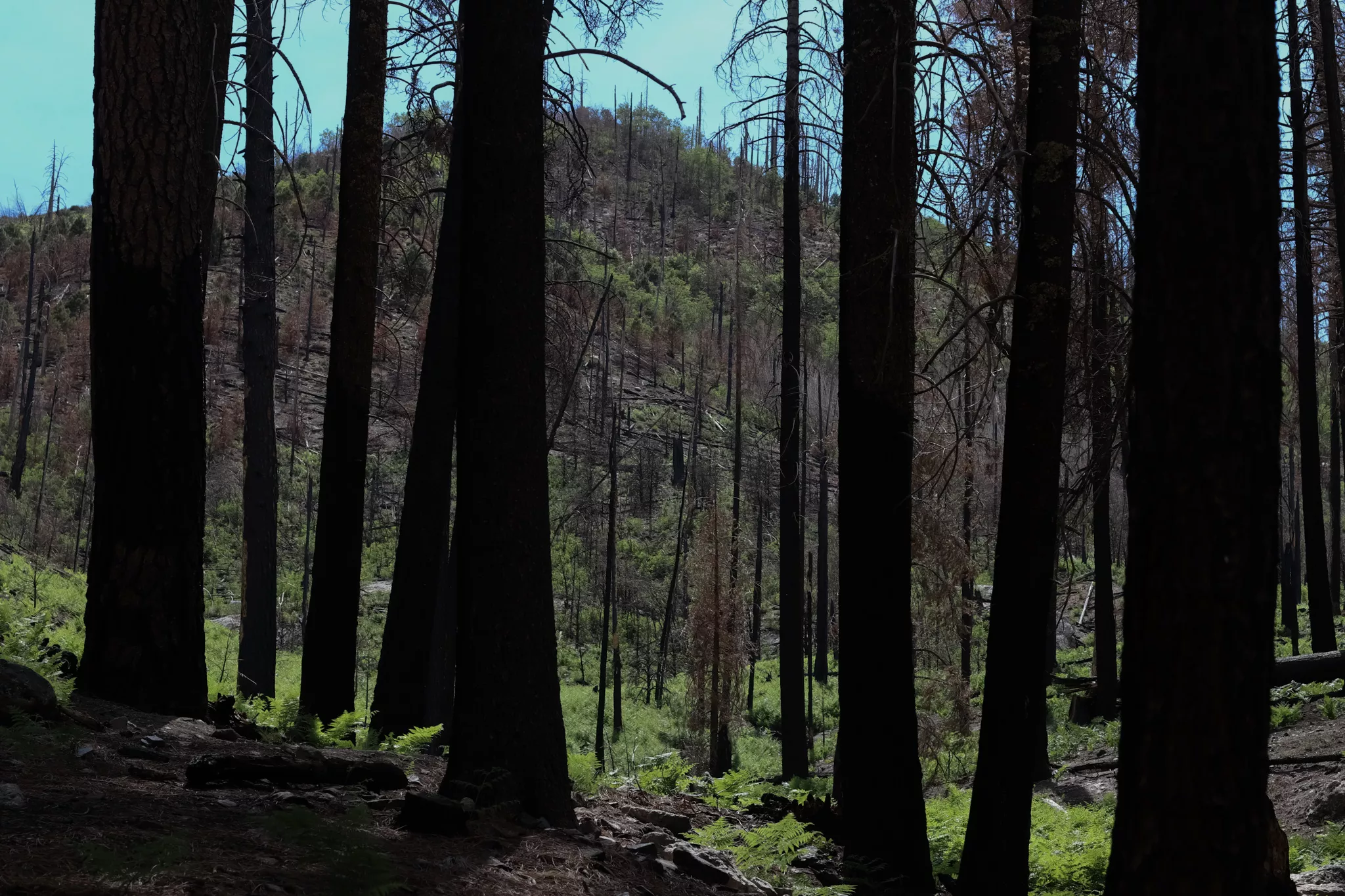
TUCSON – It’s been a year since the Bighorn Fire blackened broad swaths of the Santa Catalina Mountains north of Tucson. Now, a recent tour of Catalina State Park and Mount Lemmon reveals sprigs of new growth peeking through the forest floor. Wildlife, including bighorn sheep, are returning. Life in Summerhaven, a tiny community near the summit of Mount Lemmon, has returned to normal.
But at a time when more than 20 wildfires are burning across drought-wracked Arizona, the memory of – and respect for – fire is never far away.
“The mountain was lit up like the Fourth of July, and it was very startling to many people – scary, in fact,” Mark Hart, public information officer for the Arizona Game & Fish Department, recalled on the news media tour.
The fire began June 5, 2020, after lightning struck the Pusch Ridge Wilderness. It burned for 48 days, growing into one of the biggest fires in Arizona history at nearly 120,000 acres.
Residents of the Southwest are intimately familiar with the devastating effects of fire on homes and businesses, but Hart said wildlife in the rugged Catalina range can benefit from such events as the Bighorn Fire.
“It clears dense vegetation, promotes new growth and, indeed, can alter the landscape in many positive ways,” he said.
Wednesday, July 7, 2021

Tuesday, July 6, 2021

Friday, July 2, 2021

Thursday, July 1, 2021
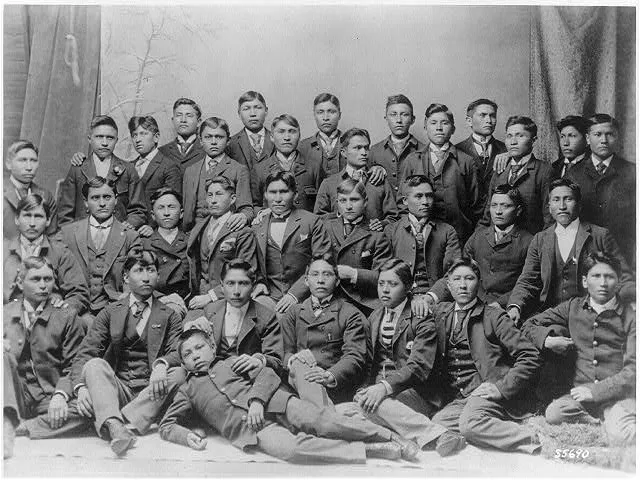
PHOENIX – When the Phoenix Indian School was established in 1891, the top federal administrator considered it a budgetary win to send Native American children to boarding schools to enforce assimilation into white society.
“It’s cheaper to educate Indians than to kill them,” Indian Commissioner Thomas Morgan said at the opening of the school.
The true cost of Indigenous boarding schools in the United States and Canada, and the abuses Native Americans endured in them, continues to be revealed. With nearly 1,000 bodies in mass graves discovered this month on the grounds of Canadian boarding schools amid their ongoing investigation, and Secretary of the Interior Deb Halaand’s recent pledge to investigate past abuses in the U.S., Arizona’s Indigenous boarding schools will face fresh scrutiny.
Rosalie Talahongva, who curates the Phoenix Indian School Visitor Center, said she and many of her Hopi relatives went to school there.
“If you ask, was that voluntary, I would ask you, is it voluntary when there isn’t any other option?” Talahongva said.
The Phoenix Indian School closed in 1990 by order of the federal government. But a handful of Indian boarding schools remain in operation.
“Lieutenant Richard Henry Pratt had a lot to do with the structure of these boarding schools,” Talahongva said, referring to the founder of the influential Carlisle Indian School in Pennsylvania. “His idea was ‘Kill the Indian, save the man.’ So the whole destruction, annihilation of Indian identity – Indian culture was to be destroyed at these federal boarding schools.
“There were many children that were just forcibly taken away from their families and made to come to boarding school.”
By 1900, 20,000 children were in Indian boarding schools. By 1925, that number had more than tripled, according to Boarding School Healing.
Tuesday, June 29, 2021
Friday, June 25, 2021

WASHINGTON – The Navajo Nation has yet to record a single case of the Delta variant of COVID-19, but now is not the time for tribe members to let down their guard, Navajo President Jonathan Nez said Wednesday.
Nez spent much of the time during a Washington Post program on public health talking about the Navajos’ success in fighting the pandemic, falling from a national COVID-19 hotspot at one point last year to negligible case numbers today.
But while the tribe has “been very cautious … I think we need to continue to be cautious,” Nez said, in part because of the arrival of the highly contagious Delta variant.
“We have heard updates that the city of Tucson has identified a Delta variant … so we are concerned,” Nez said.
An Arizona Department of Health official said Wednesday that the Delta variant has been found in northern, central and southern Arizona.
“The Alpha variant currently is the predominant strain in Arizona, but we anticipate that there will be an increase in the Delta variant since it appears to be more transmissible than the Alpha variant,” said Steve Elliott, a health department spokesperson.
Arizona Public Health Association Executive Director Will Humble said experts “expect that the Delta variant will be dominant by mid-to-late summer in Arizona.”
“It’s going to take over,” he said. “It’s just outcompeting the other strains. The question is how long it’s going to take.”
But Humble said that despite the high transmission rates health experts have seen for the Delta variant, it will likely not spread as fast as previous variants because of the availability now of COVID-19 vaccines.

Thursday, June 24, 2021

Wednesday, June 23, 2021

PHOENIX – Amid recent violence in the Middle East, Arizona Gov. Doug Ducey tweeted “Arizona stands with Israel,” joining Republican leaders across the country in a show of political support.
It also provoked outrage among those who support Palestinians, with one activist calling Ducey’s position a “violation of human rights.”
Despite the polarized viewpoints, Arizona’s aerospace and defense industry not only “stands with” Israel, but technology developed here stands watch over the country: Israel’s Iron Dome defense system was created here. In partnership with Rafael Advanced Defense Systems in Israel, Raytheon Missiles & Defense in Tucson produced the anti-missile defense system credited with blocking thousands of missiles fired by Hamas and other groups since it was first deployed in 2011.
Raytheon employs 15,000 Arizonans, according to its spokesperson, and Israeli partner Rafael formed a joint venture last year to build a version of the Iron Dome for use in the United States.
Leib Bolel, president and CEO of Arizona Israel Technology Alliance, said that when the U.S. provides military aid to Israel, it’s primarily in the form of government contracts.
Raytheon and Rafael “work very closely with the Israeli government to supply them with a number of military applications, but most notably is the Iron Dome,” Bolel told Cronkite News. The midair interception technology came “out of Rafael and Arizona, so there’s a lot of military collaboration between the two governments.”
The Iron Dome is a short-range anti-rocket system, with an intercept range of 2.5 to 43 miles, and has been relied on during the recent conflict. A shaky ceasefire remains in place, but the Associated Press reported Israel launched airstrikes on the Gaza Strip late last week.
Last month, clashes escalated between Palestinians and Israeli police when Israel tried to block some Muslims gathering at al-Aqsa Mosque in Jerusalem’s Old City at the beginning of Ramadan, the AP reported. Tensions over a plan to evict dozens of Palestinians from an east Jerusalem neighborhood also fueled confrontations.