

Wednesday, January 6, 2021
For Arizona’s students, 2020’s winter break is over, but the alarming spread of COVID-19 remains. As a result, students are returning to school this January predominantly in remote online models.
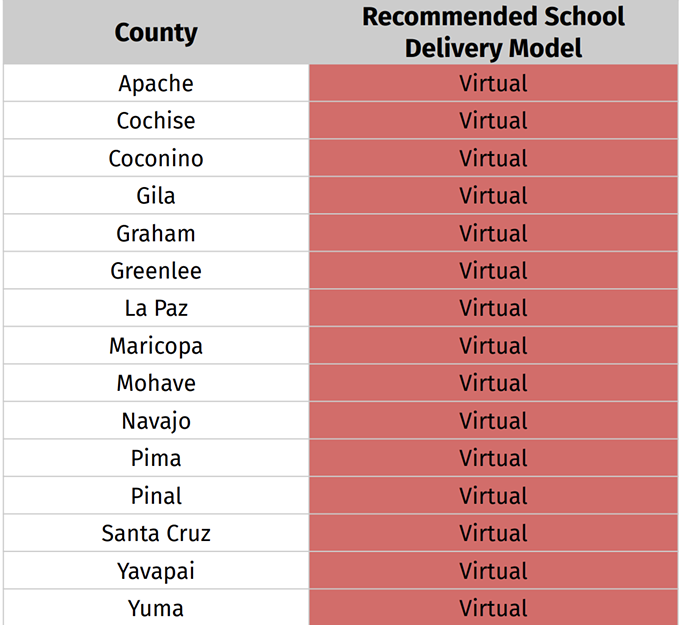
The Arizona Department of Health Services is recommending all counties in the state commit to virtual learning for students to attend classes online with some onsite support services available.
ADHS makes its recommendation based on three key benchmarks: cases per 100,000 individuals, percent positivity and hospital visits for COVID-like illness. All benchmarks are currently in a state of substantial transmission throughout the state.
In Pima County, ADHS data shows 7,298 COVID-19 cases per 100,000 individuals and an 11.2% positivity rate of the virus as of Jan. 6. The most recent data available on the state health department’s school benchmarks website shows hospital visits for COVID-like illnesses at 13.2% as of Dec. 13.
On Twitter, State Superintendent Kathy Hoffman called on Gov. Doug Ducey to order schools to remain in distanced learning for two weeks and allow school leaders to make reopening decisions after this two-week quarantine.
Given the severity of our state's situation and the virus's trajectory after the holiday period, Gov. @dougducey should order schools to remain in distance learning for a limited two-week period to align with quarantine protocols and current @azdhs benchmark recommendations.
— Kathy Hoffman (@Supt_Hoffman) January 2, 2021
The governor’s spokesman, C.J. Karamargin, made clear Ducey will not be issuing the mandatory two-week quarantine for schools.
“Gov. Ducey will not be considering this request or issuing this kind of mandate," Karamargin said. "This is a local decision.”
Of the local public school districts in northwest Tucson, only Catalina Foothills remains open for in-person instruction.
Amphitheater Public Schools
Amphitheater schools returned to classes online only Monday and anticipate staying in a remote model until at least Jan. 19. According to the district’s Communications Director Michelle Valenzuela, Amphi will continue to work with Pima County on its recommendation for schools’ learning models.
Students are expected to participate in remote learning five full days a week and interact with their teachers live at designated times in addition to participating in offline tasks.
Valenzuela says the district has been working with the Amphi Foundation to provide internet service to students in need of it through partnerships with Cox and Comcast. Around 60 families have been provided Wi-Fi, and according to Valenzuela, the district plans to provide more services to families through a partnership with the City of Tucson in the coming weeks.
Teachers are also working with students without internet access to provide them paper packets that contain enough material for the entire academic week. Teachers will be in regular contact with offline students “to provide feedback and support,” according to Amphi’s website.
Catalina Foothills
Catalina Foothills is one of the only local public school districts to remain open for in-person learning after returning from winter break. According to Director of Alumni and Community Relations Julie Farbarik, the decision to remain open was based on the district’s relatively low case counts.
Since Nov. 20, the district has reported 27 new COVID-19 cases throughout its school sites.
“Keeping schools open is important to our students’ social-emotional well-being and their overall academic engagement,” Farbarik wrote in an email. “In their December communication to superintendents, the PCHD made it clear that it supports each school district’s decision based on its local COVID case experience. The numbers at our schools are very low, so we are continuing to offer an in-person learning option.”
Of the district’s seven K-12 schools, two elementary schools began offering five-day in-person instruction starting Jan. 4. The other five offer hybrid learning with two days of in-person learning and three days of remote work. All schools are offering a completely remote option.
Although Catalina Foothills doesn’t have any direct services for students without internet access, students can access its onsite support service for access to Chromebooks, laptops or Wi-Fi, depending on availability.
Flowing Wells Unified School District
Flowing Wells has returned to school remotely, but anticipates reinstating their hybrid option on Jan. 19. However, Superintendent David Baker said this may change in the future. Remote work entails daily scheduled classes via Zoom.
According to Baker, the district provided over 400 hot spots to provide internet to students at home while nearly 100 students come to campus through on-site services to access the internet.
The Emily Meschter Early Learning Center, the district’s preschool, remains open for in-person learning with a remote option. Most students attend four half days a week, Baker said.
“In all reviewed studies and articles, preschool students and pre-schools have very low virus transmission rates and that has proved to be true at our site this school year. Pima County Health has also communicated that preschools and early childhood care facilities across the county have remained opened with very low classroom transmission,” Baker said in an email. “There are also many educational benefits for students to participate in classroom instruction, as compared to virtual learning.”
Marana Unified School District
The Marana district plans on returning to hybrid instruction on Jan. 25 while monitoring public health metrics from the Pima County Health Department, according to Director of Public Relations and Community Engagement Alli Benjamin.
Every student has been issued a Chromebook laptop while remote learning takes place five full days a week with both live teacher-led lessons and independent learning.
According to Benjamin, the district has struggled to locate and purchase Wi-Fi hotspots, but Marana has a limited number of hotspots they’re issuing to families in need. Parents can also apply for students to attend the district’s onsite services for internet access.
Sunnyside Unified School District
Sunnyside schools will be in a remote learning model until Jan. 19. Hybrid learning will commence unless the Pima County Health Department makes the recommendation to stay remote before Jan. 19.
Students are expected to log into their devices to interact with teachers at least three times a day. Kindergarten through first-grade students are provided iPads while second through twelve graders are assigned Chromebooks for participation in remote learning.
Students without internet access are being provided with mobile Wi-Fi devices, according to Sunnyside’s Director of Public Information Marisela Felix. Felix said Sunnyside families can also qualify for a low-cost internet program through Cox.
Tucson Unified School District
Tucson’s largest school district is remaining in a remote-only model as it transitions to 2021. All curriculums can be accessed online through live lessons with teachers and independent work on online educational platforms. Unlike other local districts, TUSD never reopened for in-person instruction during the fall semester.
TUSD has in-person learning spaces where students can access classes online while socially distanced at school sites. According to Leslie Lenhart, TUSD’s director of communications and media relations, there’s no set limit on the number of students attending the learning spaces, but they’re reserved for “at-risk” and “exceptional education” students.
The district doesn’t have an anticipated start date to move to in-person learning.
“The Governing Board will be a part of this decision, but no details are currently available, as we follow the science and the guidelines of PCHD,” Lenhart wrote in an email.
Lenhart said TUSD will provide a free hotspot for internet connection for any family in need of one.
Wednesday, December 23, 2020
WASHINGTON – After years of steady declines, enrollment in Affordable Care Act coverage ticked up in Arizona and held steady in the U.S. this year in what one advocate called a “pleasant surprise” after a challenging year.
The six-week open enrollment period that ended last Tuesday showed enrollment going from 153,020 in Arizona for coverage plans for this year to 154,265 people who signed up for coverage in 2021, according to preliminary numbers released Friday by the Centers for Medicare and Medicaid Services.
Nationally, the number of people signing up for coverage in the federal exchange dipped from 8.3 million last year to 8.2 million this year – but federal officials note that New Jersey and Pennsylvania shifted from the federal marketplace to state-based marketplaces this year. That removed 578,251 people from those states who would otherwise have been counted on the federal rolls.
CMS Administrator Seema Verma said in a statement Friday that the Trump administration’s “focus on delivering more choices along with a smooth and streamlined consumer experience continues to drive strong enrollment.”
“We’ve opened more pathways to enroll by taking advantage of the private sector and people are clearly finding the coverage they need at this critical time,” she said.
Morgan Tucker, state director for Protect Our Care Arizona, agreed that more people took advantage of coverage this year – but she said it was no thanks to the Trump administration, which she accused of trying to “sabotage” the Obama-era health insurance program.
“Despite anything they may have heard over the last four years, it is safe, reliable health insurance that they can trust,” Tucker said of coverage available under the “Obamacare” program.
The ACA has also been under assault by a coalition of states, including Arizona, that argued before the Supreme Court this fall that the plan is unconstitutional. A ruling in that case is not expected for months, but Tucker said it cast a shadow over this year’s open enrollment.
Thursday, December 10, 2020
PHOENIX – Step inside Biosphere 2’s tropical rainforest, which thrives beneath an enormous glass dome, and visitors are met by a wall of warm humidity and lush greenery. The sprawling complex north of Tucson in Oracle provides climate-change researchers with unique opportunities to test theories in ways that would be impossible in the field.
This is where a team of ecologists recently found that tropical forests may be more resilient to rising temperatures than originally predicted. The key isn’t the heat but the humidity, according to the study, which was published in October in the journal Nature Plants.
Biosphere 2 – constructed by Space Biospheres Ventures in 1986 for Earth research and the development of “self-sustaining space-colonization technology” – now is a living, breathing laboratory for University of Arizona scientists.
Marielle Smith, a postdoctoral research associate at Michigan State University and the lead author of the study on tropical rainforest resilience, called the tropical rainforest biome a “bewildering wall of green.”
Smith, who has studied in natural rainforests as a tropical ecologist, said researching in the rainforest biome at the Biosphere 2 – so named because Earth is the original biosphere – facility feels comfortable.
“It’s humid, it’s hot, you’re taking measurements in there and you get a sweat up just like you would in a real tropical forest,” she said.
The enclosed biome in Biosphere 2 allows scientists to control the environment in ways not possible in natural rainforests. With the ability to change such factors as humidity and temperature, the researchers can better understand the impacts of climate change on tropical rainforests, which play a vital role in the planet’s health by absorbing carbon dioxide and releasing oxygen.
The Amazon rainforest plays a pivotal role in combating climate change by absorbing 2 billion tons of carbon dioxide each year, about 5% of annual emissions, according to climatologists. CO₂ is a main contributor to rising temperatures across the world.
Monday, December 7, 2020
As University of Arizona students finish the fall semester remotely, they’ll return to more stringent guidelines to prevent the spread of coronavirus in the spring semester.
The university will require weekly COVID-19 testing for all students attending in-person classes on its main campus or living in dorms, UA President Robert Robbins said in a press conference this morning.
Any students visiting campus will be required to complete a COVID-19 diagnostic test within the prior week. If students aren’t noted as having completed a test in UA’s system, they will be denied access to the university’s Wi-Fi network.
“We think this is an incentive for people to comply with our mandatory testing,” Robbins said. “We think it’s really going to be important, and we’re changing our approach because we’re going to be able to expand our testing capability.”
Robbins announced a testing blitz to coincide with dorm move-in dates from Jan. 6-12, similar to the one it conducted before fall break. Residents are required to test negatively before moving into their dorm rooms.
While the tests conducted during the testing blitz will still be in the form of antigen nasal swabs, the university has developed a new saline gargle test for its regular weekly testing.
New saline gargle test
Developed by the head of the university’s Department of Ecology and Evolutionary Biology Michael Worobey, the saline gargle test detects present coronavirus material and amplifies it to a traceable amount.
Those receiving the test swish and gargle 5 milliliters of saltwater three times, and spit the solution into a tube to be tested for the presence of COVID-19.
Instead of the oftentimes unpleasant nasal swab that reaches the pharynx, or deep into the back of the nasal cavity, the swish test is “much more tolerable,” according to Worobey.
Wednesday, December 2, 2020
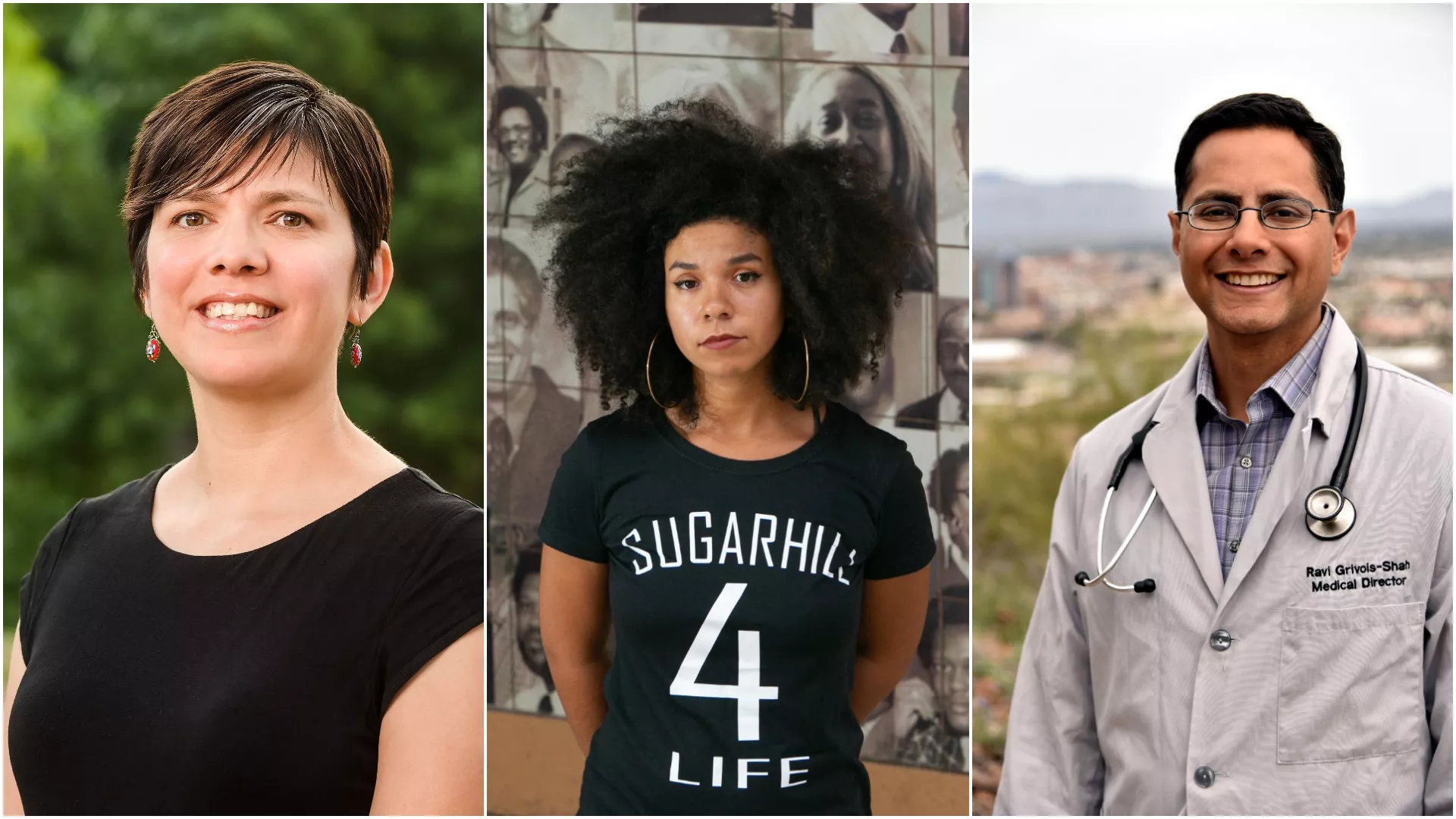
Pima County’s voters elected three new board members to Tucson’s largest school district this November, bringing a variety of new faces and experiences to the school board.
Of the three new board members elected to Tucson Unified School District’s Governing Board, Natalie Luna Rose was elected with 24% of the vote, Sadie Shaw with 18% of the vote and Ravi Grivois-Shah with 17%.
All three new board members have children in the district and will be joining current TUSD parents and board members Adelita Grijalva and Leila Counts, whose terms expire December 31, 2022.
All the incoming board members agree with Superintendent Gabriel Trujillo’s decision to delay implementing a hybrid learning plan throughout the district until January as COVID-19 spreads substantially throughout the county.
Luna Rose, the communications and outreach manager for the Arizona Center for Disability Law, is considering the possibility of the entire school year being remote as metrics tracking the spread of coronavirus reach alarming levels.
“Frankly, judging by the numbers right now, I don't think we're going back Jan. 4, and I'd be really surprised if we're even going to be going back at all,” Luna Rose said. “I saw news reports that they're going to try to start rolling out the vaccine very soon, probably after the first of the year, but even then, that's going to take months for it to even reach Tucson and how are they going to distribute that?”
Shaw, an artist, was pleased with the superintendent's decision due to concerns for students and staff members, but she doesn’t agree with the hybrid model the TUSD school board approved on Oct. 6, which has been put on hold until January.
Wednesday, November 25, 2020
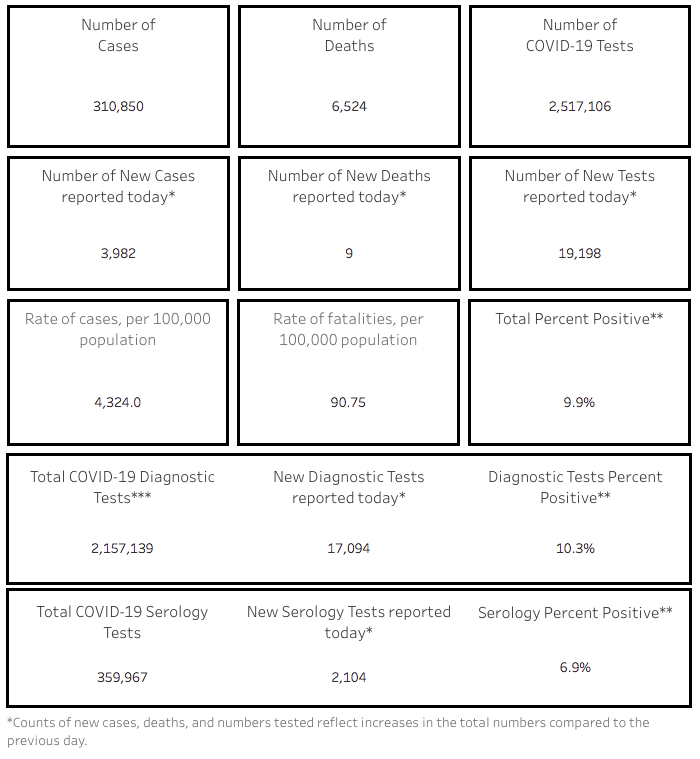
With nearly 4,000 new cases reported today, the number of Arizona’s confirmed novel coronavirus cases closed in on 310,000 as of Wednesday, Nov. 25, according to the Arizona Department of Health Services.

Pima County, which reported 532 new cases today, has seen 37,518 of the state’s 310,850 confirmed cases.
With nine new deaths reported yesterday, a total of 6,524 Arizonans had died after contracting COVID-19, including 679 deaths in Pima County, according to the Nov. 24 report.
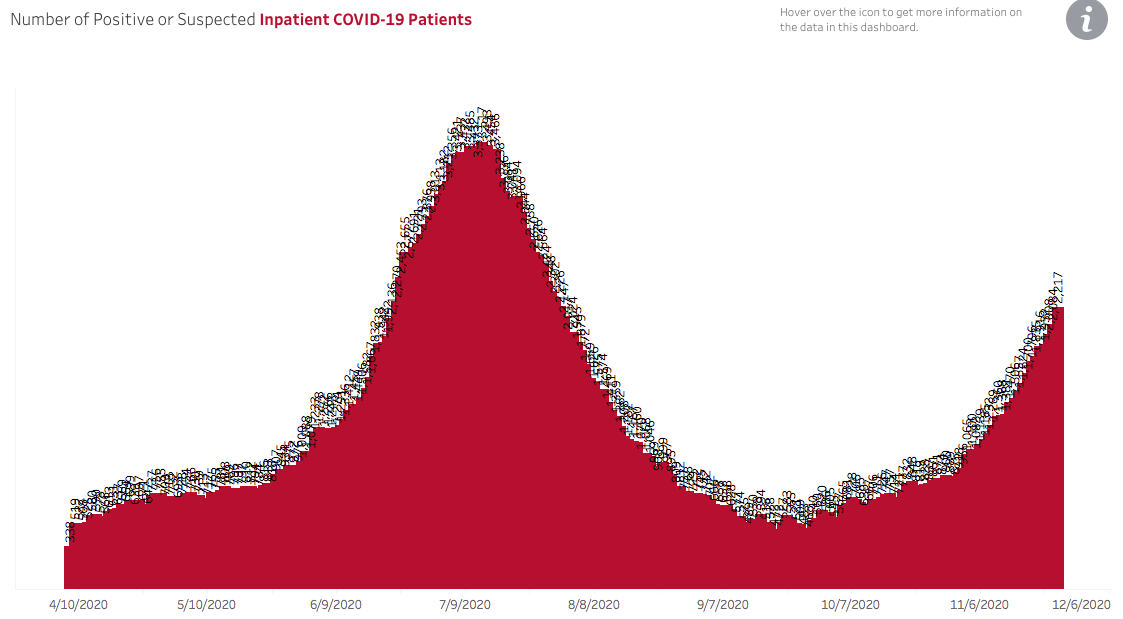
The number of hospitalized COVID cases statewide continues to climb upward as the virus has begun to spread more rapidly, putting stress on Arizona’s hospitals. ADHS reported that as of Nov. 24, 2,217 COVID patients were hospitalized in the state, the highest that number has been since July 31. That number peaked with 3,517 hospitalized COVID patients on July 13; it hit a subsequent low of 468 on Sept. 27.
A total of 1,593 people visited emergency rooms on Nov. 24 with COVID symptoms, the highest that number has been since July 15. That number peaked at 2,008 on July 7; it hit a subsequent low of 653 on Sept. 28.
A total of 531 COVID-19 patients were in intensive care unit beds on Nov. 24, the highest that number has been since Aug. 7. The number of COVID patients in ICUs peaked at 970 on July 13 and hit a subsequent low of 114 on Sept. 22.
On a week-by-week basis in Pima County, the number of positive COVID tests peaked the week ending July 4 with 2,452 cases, according to an Nov. 23 report from the Pima County Health Department. (Numbers in this report are subject to revision.)
Pima County is seeing a dramatic rise in cases in recent weeks. For the week ending Oct. 31, 1,348 cases were reported; for the week ending Nov. 7, 2,122 cases were reported; and for the week ending Nov. 14, 2,561 cases were reported; and for the week ending Nov. 21, 2,575 cases were reported.
Pima County Administrator Chuck Huckelberry noted last week that the county had seen 4,620 cases in the first 17 days in November.
“For the first 17 days in July, the worst month of COVID-19 case increases to date, there were 5,057 cases,” Huckleberry said in a Nov. 17 memo. “Therefore, we are on pace to exceed the total number of monthly COVID-19 infections in our previous worst month, July.”
Tuesday, November 24, 2020

The superintendent of Tucson Unified School District announced the remainder of the district’s football season has been suspended today after considering guidance from the Pima County Administrator’s Office and public health recommendations from the Pima County Health Department, according to an email announcement.
Superintendent Gabriel Trujillo announced all winter sports practices and after-school performing arts rehearsals “are temporarily suspended and will be revisited on December 7th,” according to the email.
“Please know that Tucson Unified is not the only district to take this action as all southern Arizona school districts have also canceled the remainder of their respective game schedules which leaves our schools without opponents to play,” Trujillo said in the email. “I want to thank all of the hard-working coaches, athletes, and supportive parents that worked so hard to make this shortened season possible.”
TUSD initially allowed full-contact football practice after parents signed a waiver of release of all future claims against the district for any COVID-19 related damages, Trujillo said in a press conference on Nov. 12.
At the press conference, the superintendent said the district’s football games wouldn’t have public attendance, transportation was to be provided by parents and communal areas such as locker rooms and showers were off-limits.
Now, winter contact sports like soccer and basketball will also be postponed until further notice.
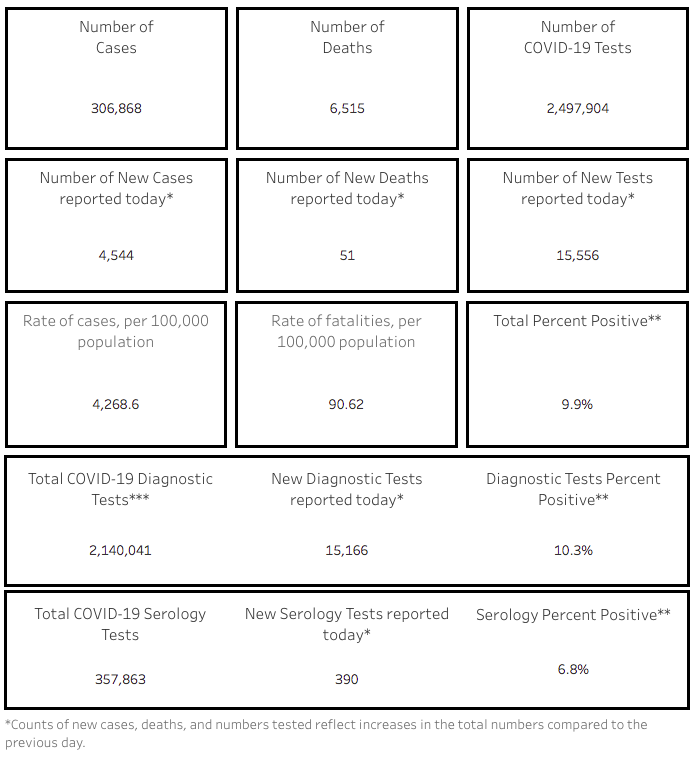
With more than 4,500 new cases reported today, the number of Arizona’s confirmed novel coronavirus cases closed in on 307,000 as of Tuesday, Nov. 24, according to the Arizona Department of Health Services.
Pima County, which r

eported 327 new cases today, has seen 36,986 of the state’s 306,868 confirmed cases.
With 51 new deaths reported yesterday, a total of 6,515 Arizonans had died after contracting COVID-19, including 679 deaths in Pima County, according to the Nov. 24 report.
The number of hospitalized COVID cases statewide continues to climb as the virus has begun to spread more rapidly, putting stress on Arizona’s hospitals. ADHS reported that as of Nov. 23, 2,084 COVID patients were hospitalized in the state, the highest that number has been since Aug. 1. That number peaked with 3,517 hospitalized COVID patients on July 13; it hit a subsequent low of 468 on Sept. 27.
A total of 1,372 people visited emergency rooms on Nov. 23 with COVID symptoms. That number peaked at 2,008 on July 7; it hit a subsequent low of 653 on Sept. 28.
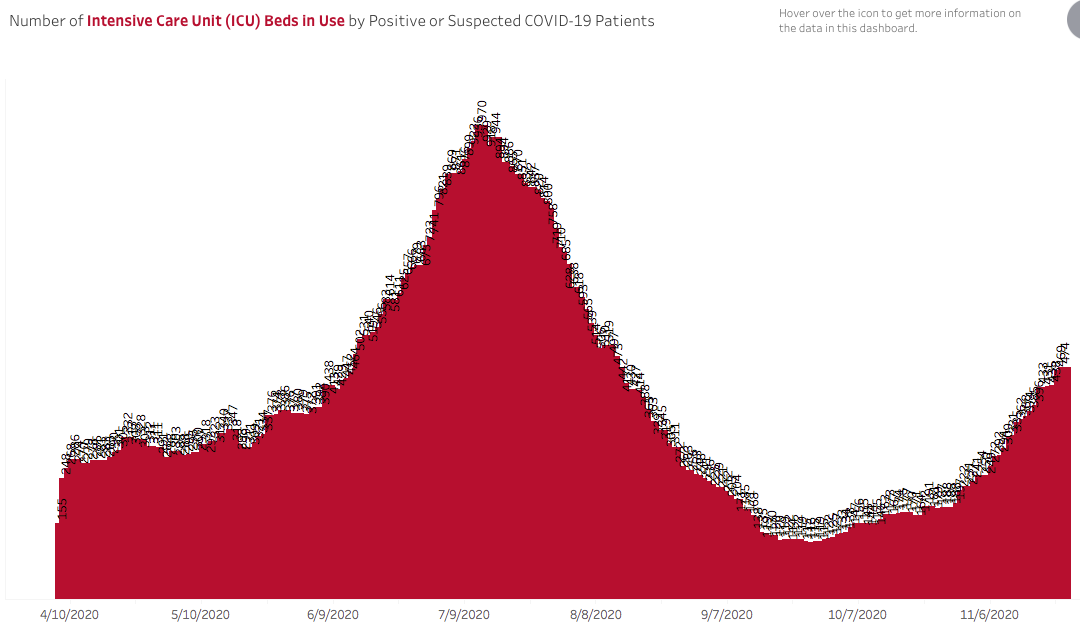
A total of 474 COVID-19 patients were in intensive care unit beds on Nov. 23, the highest that number has been since Aug. 12. The number of COVID patients in ICUs peaked at 970 on July 13 and hit a subsequent low of 114 on Sept. 22.
On a week-by-week basis in Pima County, the number of positive COVID tests peaked the week ending July 4 with 2,452 cases, according to an Nov. 23 report from the Pima County Health Department. (Numbers in this report are subject to revision.)
Pima County is seeing a dramatic rise in cases in recent weeks. For the week ending Oct. 31, 1,348 cases were reported; for the week ending Nov. 7, 2,122 cases were reported; and for the week ending Nov. 14, 2,561 cases were reported; and for the week ending Nov. 21, 2,575 cases were reported.
Pima County Administrator Chuck Huckelberry noted last week that the county had seen 4,620 cases in the first 17 days in November.
“For the first 17 days in July, the worst month of COVID-19 case increases to date, there were 5,057 cases,” Huckleberry said in a Nov. 17 memo. “Therefore, we are on pace to exceed the total number of monthly COVID-19 infections in our previous worst month, July.”
Monday, November 23, 2020

Some districts have chosen to revert to remote online learning after Thanksgiving break, while others have closed down classrooms and school sites as outbreaks occur.
The Pima County Health Department guides districts in their reopening process, suggesting hybrid or remote-only learning based on three key metrics: two weeks with new case rates below 100 per 100,000, two weeks of percent positivity below 7 percent and hospital visits for COVID-19 illness below 10 percent.
At first, only one of these benchmarks had to move into the “substantial spread” category for the health department to recommend schools move to remote learning, but the Arizona Department of Health Services changed this guidance in late October to say all three had to be in the substantial category to recommend schools go remote.

On Nov. 19, Pima County’s COVID-19 metrics report, which has a 12-day lag time in reporting data, showed substantial spread for COVID-19 cases over two consecutive weeks.
“Right now, our current stance is still that hybrid can work. That's been our position for a while now and remains our position,” Health Department Communications Manager Aaron Pacheco said. “However, this is changing really quickly, and if for some reason we need to change that stance, we're willing to do whatever we need to do to stop the spread, and keep it from continuing to increase.”

In its final week of in-person instruction for the fall semester, the University of Arizona is reporting slightly elevated COVID-19 case numbers as it finishes its pre-fall break testing blitz this week, UA President Robert C. Robbins shared in a news conference Monday, Nov. 23.
From Nov. 12 through Nov. 21, UA found 126 positive coronavirus cases after administering 11,504 tests for a positivity rate of 1.1%, an increase from the 0.9% positivity rate the university reported the previous 10-day period.
On Nov. 9, the university began its "testing blitz" to reduce the spread of COVID-19 as travel is likely to increase over the holiday season. Testing will end on Nov. 25, and students have been asked to register for an appointment-only test after completing a survey with their traveling plans.
If students travel outside the Tucson area over fall break, the university is asking them to complete the semester outside the area or remotely online. Those who don't travel can complete the semester from their student residences.
“Case numbers are rising here in Arizona and nationwide. I strongly encourage everyone to exercise extreme caution over this break. This means don’t travel. If you don’t have to, don’t do it.” Robbins said. “If you do travel, including going home from your student residence, quarantine after arrival.”
All students will complete the semester remotely when classes resume Nov. 30. In January, the university plans to return to stage two of its reentry plan with up to 50 students attending classes in person.
However, Robbins said if the current surge in COVID-19 cases continues over winter break, “we’re gonna have to go back and start all over like we did with this term.”
Pima County Public Health Director Theresa Cullen lauded the university for its coronavirus mitigation efforts but says the county is seeing alarming levels of cases.
According to Cullen, the seven-day rolling average for COVID-19 cases per day is at 439 throughout Pima County. In mid-October, the county saw 59 cases a day.
On Nov. 22, the county reported 878 new coronavirus cases, which Cullen says is the highest daily case count ever reported in Pima County.
“We are in a post accelerated stage of the pandemic right now. So while the university continues to do incredibly well and is an exemplar for us of what we could be doing, we are not seeing that in the general community,” Cullen said.

