
Monday, October 12, 2020
With three seats up for grabs on the Tucson Unified School District’s school board, seven new candidates are vying for a chance to govern Tucson’s largest school district.
A local watchdog group that critically monitors the district, CARE 4 TUSD, hosted an online forum Thursday night for each candidate to outline their views on issues including reopening schools during the coronavirus pandemic, dwindling enrollment numbers and what they would cut from the district’s budget.
Although the current TUSD board has approved a new hybrid learning model, they have yet to vote on a date to return to in-person instruction.
The candidates running for three board positions include Ravi Grivois-Shah, Natalie Luna Rose, Nicolas Pierson, Adam Ragan, Sadie Shaw, Cindy Winston and write-in candidate Cristina Mennella.
Three volunteer, nonpartisan positions on the school board are opening when the terms of current board members Bruce Burke, Kristel Foster and Rachael Sedgwick expire in November.
While the candidates answered questions on a variety of topics at CARE 4 TUSD’s candidate forum, here are the highlights on what they had to say at the virtual gathering.
Meet the candidates
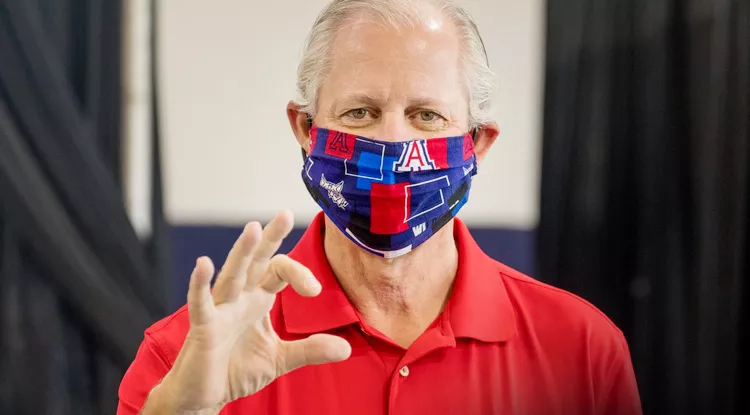
The University of Arizona will allow students to attend in-person classes of 30 students or fewer this week, UA President Robert C. Robbins said in a news conference Monday, Oct. 12.
The change will bring 1,500 more students to campus every week, and classes will continue “if and only if” public health data gauging the spread of coronavirus in the county permits, Robbins said.
The university first predicted 2,500 students would return to class as it moves into Phase 2 of its reopening plan, but fewer students wanted to return than expected.
“Students and their instructors had the opportunity to evaluate what they wanted, and in the spirit of shared governance, make collective decisions about how to proceed at this point,” Robbins said. “There are many, many students who want that in-person interaction . . . but obviously, there are people who don’t want it.”
From Oct. 1-10, UA found 42 positive coronavirus cases after administering 6,963 tests for a positivity rate of 0.6%, down from 2.3% in the previous 10-day period.
“What we’ve been able to show over the last two, four weeks . . . is an ability of how we respond,” Pima County Health Department Director Dr. Theresa Cullen said at the press conference. “We’ve developed this deep collaboration, transparency, sharing of data, sharing resources and a recognition that working together is required for us to combat this pandemic.”
During the past week, the university’s CART team, a collaboration with the UA and Tucson police departments that looks for incidents of noncompliance to COVID-19 precautions, issued five university-related red tags, seven citations and eight code-of-conduct referrals.
Robbins said nine parties CART responded to had more than 10 people, while three parties had about 50.
“It’s important that more and more, we see less and less of these large gatherings, which really are events that you might even term super spreader events when they become too large,” said Richard Carmona, UA Reentry Task Force Director.
Robbins said the university has no recorded cases of COVID-19 transmission within a classroom or laboratory setting.
With six weeks left in UA’s fall semester, the administration is looking ahead to potential coronavirus-spreading events. Halloween falls on a Saturday this year, and many students have traveling plans during fall break.
“We’re working hard to prevent an uptick in positive cases, in part because it could impact positive rates as students are preparing to travel home for the fall break,” Robbins said.
Robbins outlined steps the university is asking students to take to prevent the spread of coronavirus, which include requiring all main campus students to complete a survey with their fall break traveling plans.
UA will also conduct a “testing blitz” from Nov. 9-15, and those who test positive will be required to quarantine for 10 days. Students are also “strongly encouraged” to complete the semester remotely if they travel.
Robbins said a “small number” will be allowed to travel and return to campus in-person, and students will be able to stay on campus during the fall break to access the university’s WiFi.
“We are all happy that all the processes we’ve put in place have resulted in these changes,” Carmona said. “But we still aren’t happy enough to not be very aggressive and continue these processes to keep those numbers down.”
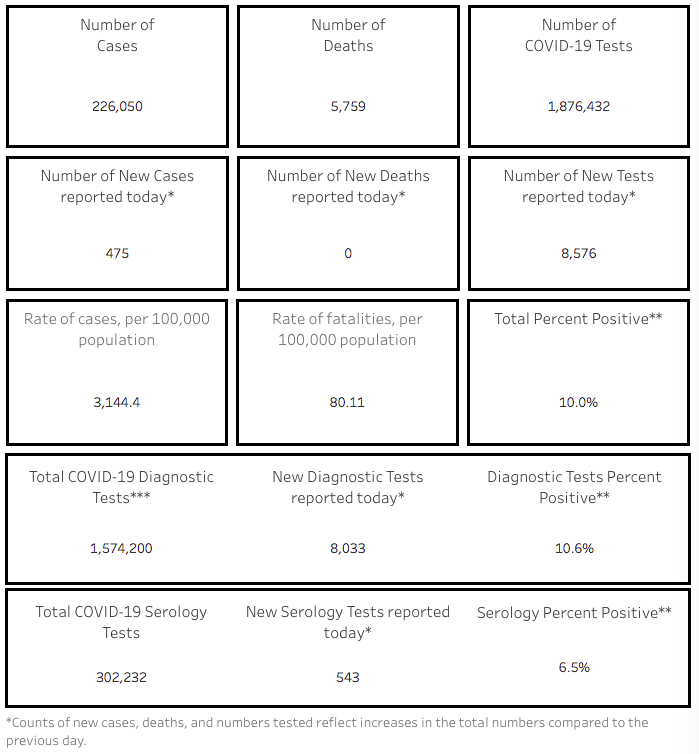
With 475 new cases reported today, the number of Arizona’s confirmed novel coronavirus cases topped 226,000 as of Monday, Oct. 12, according to the Arizona Department of Health Services.

Pima County had seen 26,465 of the state’s 226,050 confirmed cases.
A total of 5,759 Arizonans had died after contracting COVID-19, including 633 deaths in Pima County, according to the Oct. 12 report.
The number of hospitalized COVID cases continues to decline from July peaks. ADHS reported that as of Oct. 11, 667 COVID patients were hospitalized in the state. That number peaked with 3,517 hospitalized COVID patients on July 13.
A total of 710 people visited emergency rooms on Oct. 11 with COVID symptoms. That number peaked at 2,008 on July 7.
A total of 155 COVID-19 patients were in intensive care unit beds on Oct. 11. The number of COVID patients in ICUs peaked at 970 on July 13.
On a week-by-week basis in Pima County, the number of positive COVID tests peaked the week ending July 4 with 2,453 cases, according to an Oct. 7 report from the Pima County Health Department. With the return of UA students, local numbers ticked upward in September but have begun to decline again. For the week ending Sept. 5, a total of 863 cases were reported; for the week ending Sept. 12, 1,105 cases were reported; for the week ending Sept. 19, 1,219 cases were reported; for the week ending Sept. 26, 582 cases were reported; for the week ending Oct. 3, 472 cases were reported. (Recent weeks are subject to revision.)
Deaths in Pima County are down from a peak of 54 in the week ending July 4 to 10 in the week ending Sept. 5, one in the week ending Sept. 12, three in the week ending Sept. 19, two in the week ending Sept. 26 and one in the week ending Oct. 3. (Recent weeks are subject to revision.)
Hospitalization peaked the week ending July 18 with 221 COVID patients admitted to Pima County hospitals. In the week ending Aug. 29, 37 COVID patients were admitted to Pima County hospitals; in the week ending Sept. 5, 26 patients were admitted to Pima County hospitals; in the week ending Sept. 12, 23 patients were admitted; in the week ending Sept. 19, 14 patients were admitted; in the week ending Sept. 26, 11 people were admitted and in the week ending Oct. 3, 17 patients were admitted. (Recent weeks are subject to revision.)
Amphi School District begins in-person classes today
The Amphi School District will start hybrid learning with in-classroom instruction starting today.
Students will attend smaller classes two days a week and learn remotely three days a week.
Thursday, October 8, 2020

A local watchdog group that critically monitors the Tucson Unified School District will hold a forum with the seven candidates running for three open seats on the district’s school board at 6:30 p.m. tonight, Thursday, Oct. 8.
CARE (Coalition for Accountability, Respect and Excellence,) a group that aims to hold TUSD board members accountable, will give the candidates a chance to answer questions emailed by constituents.
The seven candidates running for three open school board positions include Ravi Grivois-Shah, Natalie Luna Rose, Nicolas Pierson, Adam Ragan, Sadie Shaw, Cindy Winston and write-in candidate Cristina Mennella.
Three volunteer, nonpartisan positions on the school board are opening when the terms of current board members Bruce Burke, Kristel Foster and Rachael Sedgwick expire in November.The candidate forum will be available live at: youtube.com/channel/UCNxtVlmWkpT8K9NzP8DGy-g?view_as=subscriber
Meet the candidates
Ravi Grivois-Shah: Family physician
Natalie Luna Rose: Communications manager for the Arizona Center for Disability Law
Cristina Mennella (write-in candidate): Speech-language pathologist
Nicolas Pierson: Former U.S. Army veteran and financial advisor
Adam Ragan: Public high school teacher
Sadie Shaw: Art educator
Cindy Winston: Science teacher
Wednesday, October 7, 2020
TUSD Delays Return to In-Person Instruction Until November (at the Soonest), Unveils New Hybrid Plan
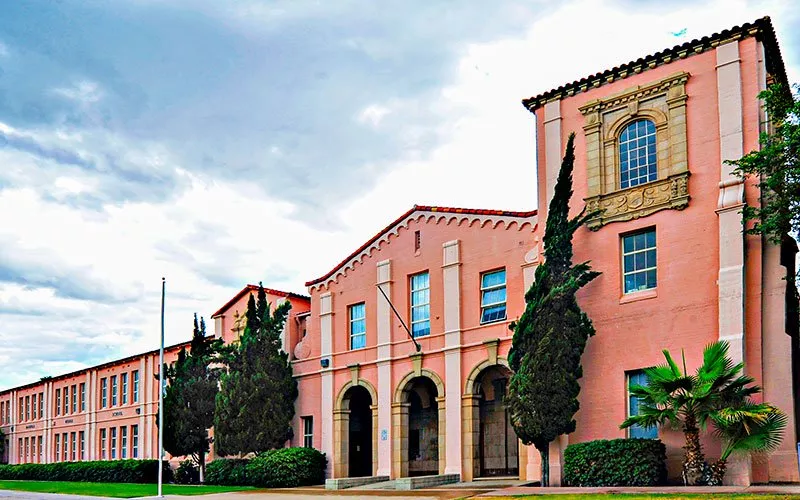
The Tucson Unified School District’s governing board approved a new hybrid learning model for returning to classes but delayed voting on when to implement it.
In a 4-1 vote, the board approved the new model but put off deciding on a return date until the next TUSD board meeting Oct. 27.
Superintendent Dr. Gabriel Trujillo asked board members to consider a new start date for the revised hybrid model on Nov. 12, dependent on Pima County data tracking the spread of coronavirus in the county.
To move to the hybrid model, TUSD must meet criteria from Pima County’s COVID-19 Progress Report, which tracks local disease data, healthcare capacity and public health capacity. As of Oct. 1, eight of the nine health criteria are making “progress” or have been officially “met.”
Pima County has not met the benchmark of a two-week decline in the number of COVID-19 cases, and therefore, the district does not currently meet guidelines set out by the Pima County Health Department to return to in-person classes.
Trujillo says this guideline hasn’t been met because of some TUSD schools’ proximity to the University of Arizona campus.
“TUSD is unique amongst the school districts in that we have six schools that are directly on the U of A campus or adjacent to it, so this is really close to home for us,” Trujillo said. “It’s the fact that the COVID-19 spike at the U of A has most influenced the movement backward of this key metric in the last two weeks that still does have me concerned.”
According to a survey taken by more than 20,000 parents and teachers within TUSD, 56% support remote learning only, while 44% support returning to classes with a hybrid model.
“This hybrid model places education utterly last on the list of priorities,” Cheryl Watters, a teacher and parent in the district said in an email read aloud at the board meeting. “Instead of teaching, I will be disinfecting my classrooms and monitoring my students to be sure they are complying with the safety protocols. I will now be responsible for the physical health of my students. How can I focus on teaching when I carry that weight?”
Vicki Saunders, an office assistant at Rincon High School, wrote, “I’m strongly in favor of moving to a hybrid model on Oct. 19, because our students are asking to return and begging to return... We have so many students struggling academically, mentally and physically.”
Largely split on the decision of returning to schools, the TUSD board voted to delay the vote 3-2 with members Adelita Grijalva and Rachael Sedgwick opposing.
“If this item passes and we table this until [Oct.] 27, I would hope that on that date, we can have a real honest discussion about pushing this off and the majority of the board will make a decision then,” Grijalva said. “While I know that our teachers are in limbo and will feel it, I think that will give us an opportunity to get some breathing room.”
Sedgwick said delaying the vote will put a further burden on teachers who would have to quickly adapt their lesson plans to fit a new hybrid model.
“I think we understand how difficult it is to prepare a classroom for a school year with just two weeks’ notice, and for this board to continue to put this decision off is to make hundreds of thousands of people wait for our decision every two weeks,” Sedgwick said.
Trujillo mentioned many teachers’ concerns about adjusting to a hybrid model, but ultimately recognized that nearly half of survey respondents want in-person learning.
Tuesday, October 6, 2020
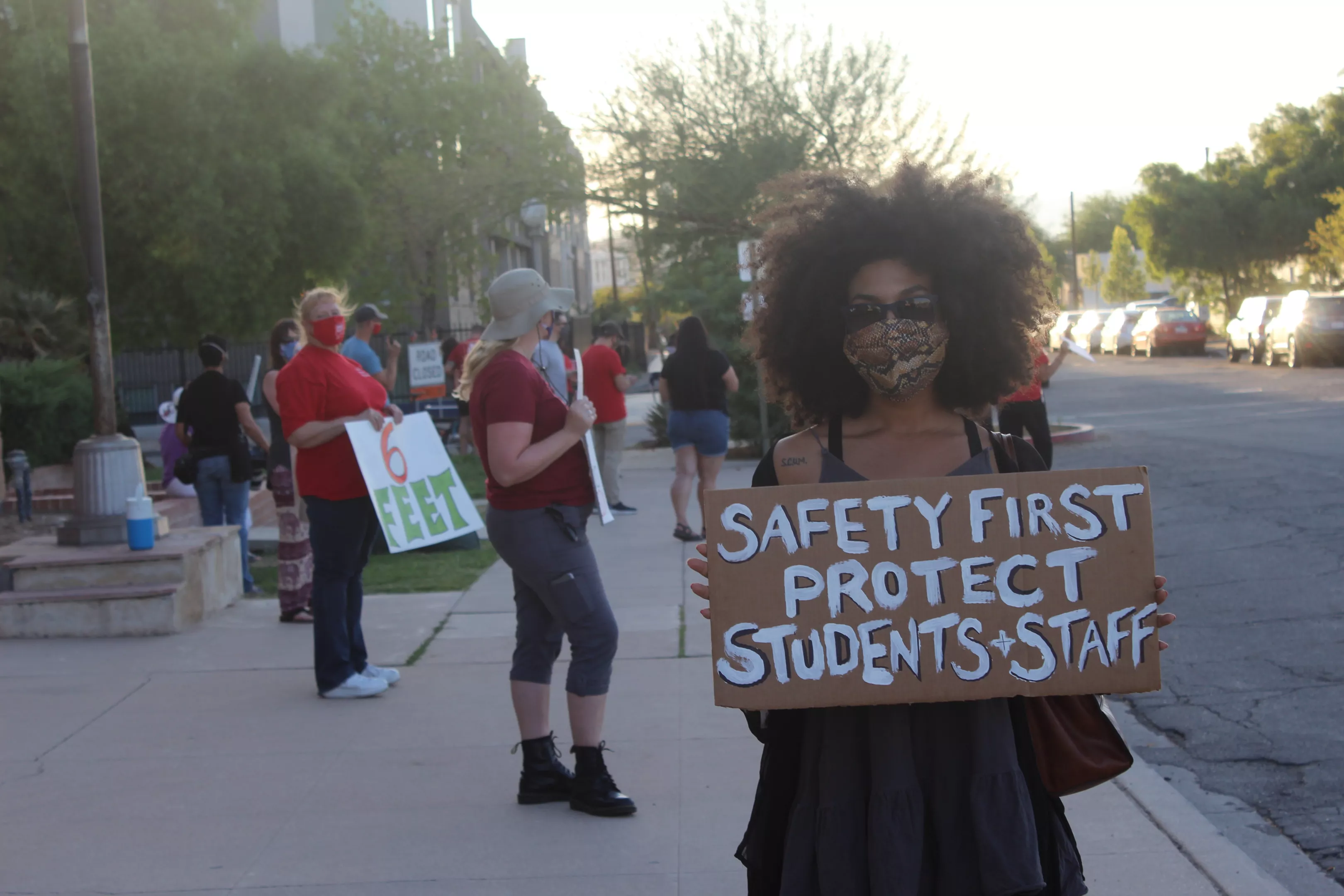
After school hours on Monday, Oct. 6, dozens of members of the Tucson Unified School District gathered in front of the district headquarters to protest planned school reopenings.
In a meeting last month, the school board voted to move forward with a hybrid learning model beginning Monday, Oct. 19. However several teachers and staff are demanding in-person classes to be delayed until classroom gatherings are safe, citing Pima County Health Department’s recommendation that there should be no groups more than 10.
The TUSD Board is scheduled to meet tonight to determine the next step in reopening schools. The district's plan, as it stands now, is to have students attend schools two days a week in separate groups and work independently at home or elsewhere on the other three days.
“This is a public expression of our sentiment: We simply don’t want to reopen until it’s safe,” said Marea Jenness, a science teacher at Tucson High. “I don’t think the masks cut it. In my opinion, we should wait until there’s a vaccine.”
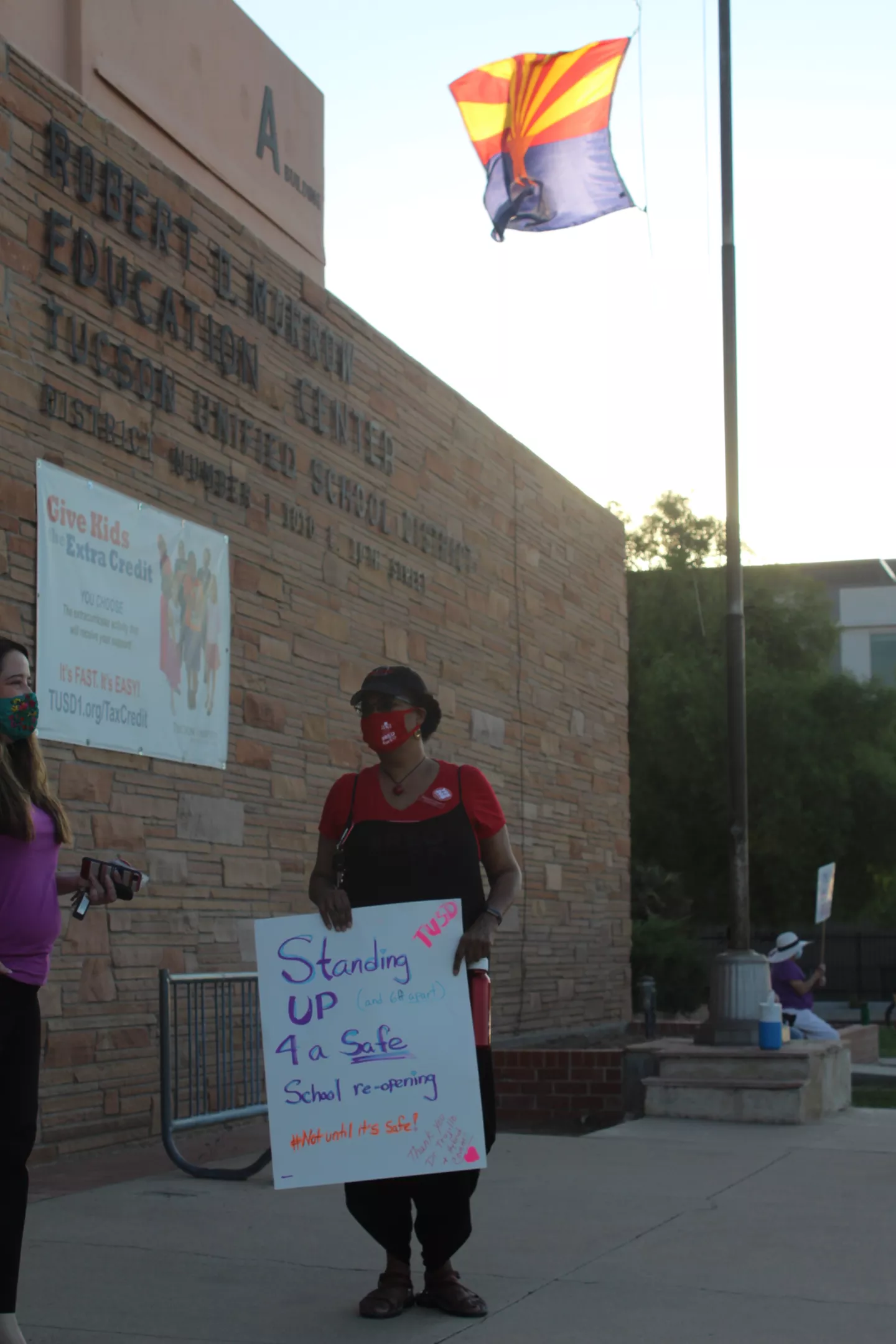
While PCHD's COVID-19 Progress Report indicates the majority of local health criteria are making progress or have been met, the demonstrators argue social distancing and telecommuting remain vital to stop the virus’ spread.
Demonstrators displayed a quote from one Pueblo High School student: “I miss my friends and remote learning is hard! But I don’t want to risk infecting my family. I couldn’t live with the guilt.”
Jenness, who has a preexisting lung condition, says she received a letter from the school district acknowledging her condition, but stating she should prepare for schools to reopen regardless.
“We are talking about human lives, not just a number,” Jenness said. “It’s mostly a case of the right hand not knowing what the left hand is doing, which can happen in a large district like ours… We’re talking about potential funerals for teachers and students.”
Monday, October 5, 2020
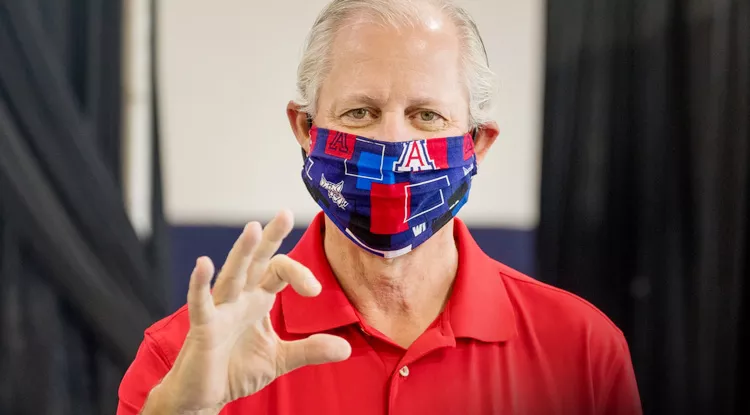
This week, the University of Arizona will remain in phase one of their staged plan for reopening but anticipates moving into phase two of the plan next week, UA President Dr. Robert C. Robbins said in a news conference this morning.
Phase one allows students to attend essential in-person classes only, but the university plans to add in-person instruction for classes of 30 or fewer students the week of Oct. 12.
According to Robbins, about 2,500 additional students will have the option to attend in-person classes, and the new opportunity only applies to those who signed up for in-person classes during the registration period at the beginning of the school year.
Phase 2 was originally set to begin on Aug. 31, but the high numbers of positive coronavirus cases delayed the step toward having more in-person classes on campus.
Since Aug. 24, about 6,200 UA students have attended essential in-person courses.
Robbins said the university has no recorded cases of COVID-19 transmission within a classroom or laboratory setting, but they will only move into phase two if public health metrics continue a positive trend.
“This strategic reintroduction of more students to a university campus is a part of layered mitigation,” Pima County Health Department Director Dr. Theresa Cullen said at the press conference. “If the numbers go up, we will not support more introduction of students on campus. Our hope is in this next 7-10 days, we will see those numbers stabilize.”
Over the 10-day window from Sept. 23-Oct. 2, the university reported 181 positive coronavirus tests for a positivity rate of 2.3%. This is an improvement from the previous 10-day period, which saw a COVID-19 positivity rate of 7.9%.
As of Friday evening, the university had 68 dorm students in isolation housing and 450 beds available.
Robbins partly credits the decrease in cases to the university’s voluntary 14-day self-quarantine program in which students were asked to stay home and avoid unnecessary trips, which ended Sept. 29. However, he warns the quarantine period may be restored if the number of coronavirus cases rises.
“If noncompliance remains a significant issue or if we see an increase in cases, it may need to be reinstated and we’re not going to be able to progress to this stage two that we’re thinking about doing next week,” Robbins said.
Tuesday, September 29, 2020

This story was co-published with The Arizona Republic, a member of the ProPublica Local Reporting Network.
Aubrie Sloan expected to start sixth grade in a virtual classroom where she would learn from her teacher each day and engage with classmates for the first time since the coronavirus forced her school to close in March.
Instead, she marks her attendance at Kaibeto Boarding School, on the western side of the Navajo Nation, by texting or calling her teacher each morning. Then she dives into paper packets the school delivers to her home, breezing through assignments that her mother says aren’t a challenge because she already knows the material.
Aside from two phone calls from her teacher, the 11-year-old has received little instruction from the federally-operated school since classes started nearly two weeks ago.
Tags: native american , Image
Monday, September 28, 2020

Although the number of positive coronavirus cases on campus is trending downward, the University of Arizona will again delay phase 2 of its reentry plan and remain open only for in-person instruction of essential courses through the week of Oct. 5, UA President Dr. Robert C. Robbins said in a news conference this morning.
According to the university’s data, on Friday, Sept. 25, UA had a COVID-19 positivity rate of 3.4 percent, with 36 new positive cases out of 1,051 new tests.
This is a significant improvement from a week prior, on Friday, Sept. 18, which saw a 6.4 percent positivity rate and evidence of off-campus gatherings lacking safety precautions against COVID-19.
“We certainly like to see it down under 5 percent, so well done everyone,” Robbins said. “I’m pleased to report that our outreach and enforcement initiatives are having a very positive effect on compliance with public health guidelines.”
The university had 252 students in isolation housing as of Friday evening, with 348 isolation beds available and 43 dorm students isolating off-campus.
According to Robbins, around 5,200 students are attending in-person classes with strict guidelines in place for social distancing, use of protective gear and frequent sanitation. He says cases are not being transmitted in the classroom, but rather, “in off-campus large gatherings.”
The university has a staged plan for reopening but still remains in phase one of the plan, which allows students to attend essential in-person classes only.
Robbins recognized some students’ and faculty’s desire to slowly integrate to more in-person learning, noting it may help improve mental health amid isolating conditions. However, he said the university is not yet ready to move into the next stage of reopening the university.
Robbins says the university is seeing fewer off-campus gatherings and calls regarding public health violations—an important step in quelling the transmission of the virus.
The university responded to 13 properties for violations throughout Thursday, Friday and Saturday nights, which Robbins said is four fewer than the week prior.
The previous week, the university issued three university-related red tags, 10 citations and 13 code of conduct referrals to the dean of students. Last weekend, 10 red tags, 19 citations and 25 code of conduct violations were issued.
“This is not a time to become complacent, however,” Robbins warned. “I continue to see groups of students around University Boulevard and elsewhere without face coverings. I beg you, please listen and follow the guidelines.”
Robbins also announced the university’s voluntary 14-day self-quarantine program, in which students were asked to stay home and avoid unnecessary trips, will end tomorrow, Sept. 29.
“We believe there has been a significant positive impact. If case numbers begin to rise again, there may be a need to reinstate this self-imposed quarantine, but if the cases skyrocket again, then working with the county health department, more legal quarantine issues may need to be enacted,” Robbins said.
All asymptomatic students, faculty and staff have access to COVID-19 testing through the university’s “test all test smart” program, while symptomatic individuals can be tested at a campus health center.
According to the university’s Reentry Task Force Director, Dr. Richard Carmona, the number of tests administered by day has decreased toward the end of September. In the future, this could lead to calls for mandatory coronavirus testing on campus.
“As students start to see that as they test positive, they may be quarantined, they’re less likely to want to be tested. So it maybe we have to consider mandatory testing for students who come on campus,” Carmona said.
According to Robbins, the university has the capacity to administer nearly 10,000 tests a week.
“My hope would be that the technology evolves quickly and by the coming months, by January when we all come, that we have the capability of testing at least all the students who come to classes in person,” Robbins said.
While satisfied with a seemingly increased compliance to public health guidelines throughout the university, Robbins still stresses the importance of maintaining public health safety protocols even as the campus’s COVID-19 positivity rate slows.
“I encourage all of you, students, faculty, staff and other members of our southern Arizona community, to continue to follow to rules so we can protect one and another and move forward,” Robbins said. “We cannot control the virus on our own.”
Friday, September 25, 2020

Thousands of students across Pima County will soon return to their classrooms as local public school districts solidify their plans for new hybrid models of instruction.
According to the county health department’s COVID-19 Progress Report, five of the nine health criteria are making “progress” and three have been officially “met.” The progress report tracks local disease data, healthcare capacity and public health capacity.
As COVID-19 data trends downward from its spike in June and July, many families have expressed interest in sending their children back to school. As a precaution, most districts are preparing to offer a hybrid model of in-person and remote instruction.
However, the Marana Unified School District is planning to offer families a fully in-person traditional learning option beginning Monday, Oct. 19.
“This is a critical topic, it’s a challenging topic, it’s a topic that’s proven to be emotional and divisive at times, but I think this community has an opportunity to come out the other end together and stronger together as we work through this process,” said Superintendent Dan Streeter during the Sept. 17 special board meeting.
MUSD received about 12,000 responses to a parent survey about learning model preferences. Streeter reported about 70 percent of families want to return to in-person classroom instruction and 30 percent want to remain in remote learning.
These numbers allow the district to begin planning logistically about class sizes, physical distancing in schools and other mitigation strategies.