

Wednesday, September 23, 2020

The Tucson Humanities Festival, facilitated by the University of Arizona College of Humanities, will focus on justice and morality this year, with a wide range of events throughout October. Unsurprisingly, all of the events are virtual but are hosted on a variety of platforms and websites.
"We chose the theme out of a moral necessity and obligation. The college is committed to advancing the cause of justice, and the festival will demonstrate the various ways that the work of our faculty is action toward justice," said College of Humanities dean Alain-Philippe Durand. "The humanities are critical for creating the open-mindedness, understanding and shared perspective that can eradicate racism, prejudice and intolerance in our increasingly interconnected world."
Event schedule:
Thursday, Oct. 1, 4 p.m.
Everyday Justice: How Students Can Create Equality on Campus
College of Humanities Student Panel
Moderated by Marcus Hastings and Karina Rodríguez, College of Humanities
Live on Zoom
Monday, Oct. 5, 4 p.m.
Film Commentary: "Us"
Film commentary by Tani Sanchez, Africana Studies
View on the Tucson Humanities Festival website
Wednesday, Oct. 7, 4 p.m.
Freedom in Africa: A Documentary & Digital Humanities Archive
Introduction by Phyllis Taoua, French and Italian
View on the Tucson Humanities Festival website
Thursday, Oct. 8, 4 p.m.
Black Lives Matter: A Global Call for Justice and Liberation
Panelists: Bryan Carter, Africana Studies; Erika Gault, Africana Studies; Obenewaa Oduro-Opuni, German Studies; Praise Zenenga, Africana Studies
Moderated by Daisy Jenkins
Live on Zoom
Monday, Oct. 12, 4 p.m.
Film Commentary: "Purgatorio: A Journey into the Heart of the Border"
Film commentary by Chuck Tatum, Humanities Seminars Program
View on the Tucson Humanities Festival website
Thursday, Oct. 15, 4 p.m.
Religion, Race & Health: Solutions to Disparities in Care
Panelists: Jerome Dotson, Africana Studies; Kristy Slominski, Religious Studies and Classics; Johnathan Vaknin, Spanish and Portuguese; Dr. Francisco Garcia, Pima County
Moderated by Dr. David Beyda, College of Medicine-Phoenix
Live on Zoom
Part of the UA Foundation’s Wonder at Home Series
Friday, Oct. 16, 5 p.m.
The Criminal Song: Voicing Soviet Intelligentsia's Dissent
Guest DJ: Anastasiia Gordiienko, Russian and Slavic Studies
Live on KXCI
Monday, Oct. 19, 4 p.m.
Film Commentary: "Fire at Sea"
Film commentary by Francesco Rabissi, French and Italian
View on the Tucson Humanities Festival website
Wednesday, Oct. 21, 4 p.m.
Art for Justice: New Poems & Digital Humanities Archive
Introduction by Diana Delgado, Poetry Center
View on the Tucson Humanities Festival website
Thursday, Oct. 22, 5 p.m.
Justice Across Boundaries: Migration, Multilingualism & Exchange
Panelists: Carine Bourget, French and Italian; Wenhao Diao, East Asian Studies; David Gramling, German Studies; Anita Huizar-Hernández, Spanish and Portuguese
Moderated by Liudmila Klimanova, Russian and Slavic Studies
Live on Zoom
Friday, Oct. 23, 5 p.m.
Race and Religion in Contemporary Hip-Hop
Guest DJ: Alex Nava, Religious Studies and Classics
Live on KXCI
Monday, Oct. 26, 4 p.m.
Tuesday, Oct. 27, 4 p.m.
and Thursday, Oct. 28, 4 p.m.
Toward Justice for All: The Global Impact of Humanities Research
College of Humanities faculty will give PechaKucha presentations. PechaKucha is a storytelling format in which a presenter shows 20 slides for 20 seconds of commentary each, totaling six minutes, 40 seconds. Presentations are grouped together for a fast-paced, simple and engaging showcase of new topics and ideas.
View on the Tucson Humanities Festival website
Friday, Oct. 30, 5 p.m.
Makes Me Wanna Holler: The Minefield and Hopes of Being Black in America
Guest DJ: Ntare Gault, Africana Studies
Live on KXCI
For more information, visit humanitiesfestival.arizona.edu
Monday, September 21, 2020
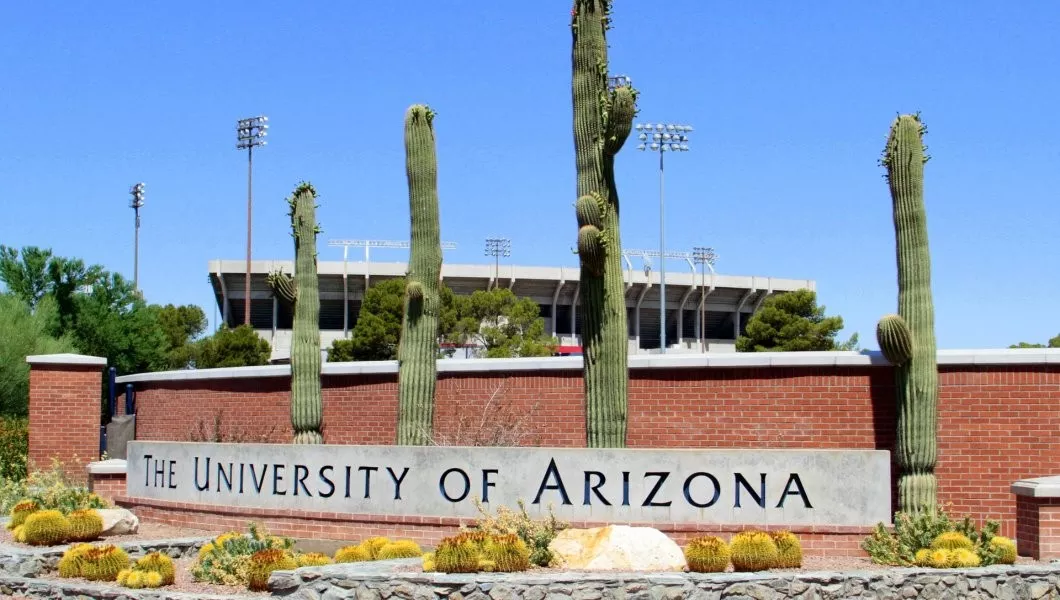
Dozens of official actions have been taken against students who violated COVID-19 safety precautions and hosted social gatherings off-campus.
The university and the Tucson Police Department administered 20 red tags, 19 citations and 24 Code of Conduct violations over the weekend for student parties, according to UA President Robert C. Robbins, who shared the numbers during a press conference this morning.
Robbins and other university leaders point to this behavior as the reason COVID-19 is spreading among the community, not the essential in-person classes that are currently taking place.
Robbins described a party he witnessed last weekend that drew more than 300 college students. He said the gathering was dispersed and student sanctions resulted from the incident.
“This kind of behavior will negatively affect everyone,” he said.
Beginning in late August, the university has been tracking a gradual increase in COVID-19 prevalence among students. Robbins reported 79 new cases from 1,300 tests performed this past week, which puts them at a 6.1 percent positivity rate.
Over the previous 10 days, the university had a 11 percent positivity rate. When the state of Arizona went into lockdown at the beginning of the pandemic, there was a 10 percent positivity rate in testing.
While the drop to 6.1 percent is a noticeable improvement, Robbins said the university needs to stick with their heavy-handed mitigation strategy. The university will remain in an “only essential classes in person” phase for this upcoming week, which brings about 5,000 students to the campus for a traditional in-person learning experience.
Tags: University of Arizona , COVID-19 , Robbins , Carmona , Student Party , Citation , Image
Tuesday, September 15, 2020

The Amphitheater School District board will review a reopening proposal during their meeting at 6 p.m. today, Sept. 15. The proposal includes reopening school sites on Oct. 12 for a new hybrid in-person and online learning model for their K-12 students.
“The hybrid model consists of students being divided into cohorts with only certain cohorts attending school on certain days, with the other cohorts still receiving instructional services remotely at that same time, and then the cohorts reversing those modalities on alternating days,” the proposal states.
Amphi leaders had previously hoped that COVID-19 data trends would look good enough by this point to allow for a full reopening of campuses in October. But the Pima County Health Department has strongly advised against any school returning to fully traditional in-person classroom learning during the month of October.
In an email, the district stated that families and staff are concerned about the need for social distancing relative to class sizes. The administration believes their new hybrid approach will allow them to reduce in-person class sizes and safely offer an in-person learning option to families who want it.
“We recognize the need for a balance between getting students back in school and doing so safely,” the email states. “We believe our proposal does both.”
The hybrid learning model is required to follow the district’s mitigation plan, which lays out logistics of public health practices (such as handwashing and social distancing) that are intended to prevent the transmission of COVID-19 in school settings.
For more information on the newest proposal, visit https://meetings.boardbook.org/Public/Organization/2065.
Monday, September 14, 2020
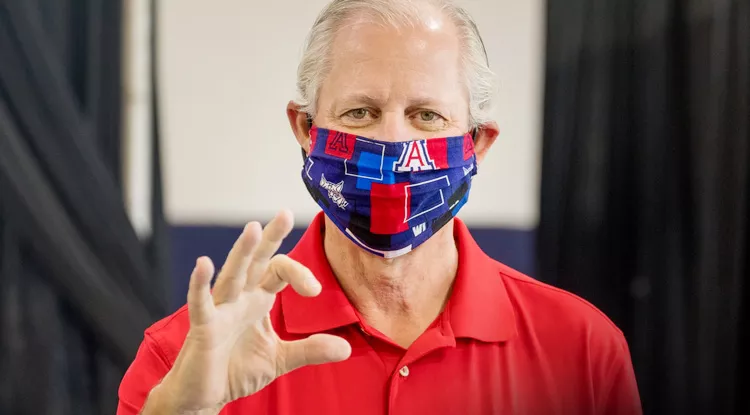
University of Arizona President Dr. Robert Robbins and Pima County Public Health Director Dr. Theresa Cullen today announced they are recommending a 14-day quarantine for students living on and off campus within a geographical boundary they have identified as showing high transmission of the novel coronavirus.
Robbins said this is a “last ditch” effort to get students to follow public health directives before they have to take more drastic measures. Robbins gave off a frustrated tone at the press conference, saying the university is dealing with a “blatant disregard for public health measures.”
“I’m short of saying I’m mad as hell and I'm not going to take it anymore,” Robbins said. “This is part of being a good member of society, to take into account the health of others, not just your individual health and your individual desire to go out and party.”
High-density apartments near campus are included in the recommendation, with specific boundaries of the quarantine are expected to be released later today. Robbins said there is COVID-19 transmission happening around campus because of the “selfish behavior of a few individuals.”
Cullen said they aren’t seeing transmission as a result of classes, labs or on-campus activity, but more so off-campus social activities and parties.
The quarantine allows exceptions for students enrolled in essential in-person classes such as science labs and performance and fine arts classes. Students in the quarantine boundary are also allowed to go on essential shopping trips, appointments and work if necessary.
“There are a clear subset of individuals, primarily students, who are not following the rules,” Robbins said during a press conference. “Today, we’re going to ratchet up the warnings, the encouragement to please follow the rules.”
Cullen said that by establishing a recommended two week quarantine, they will have the potential to ensure that the increased virus transmission will go back down.
Robbins said enforcement of the recommended quarantine will be difficult, but the university has established a support system to assist students during this time and he hopes they will follow this recommendation before the condition of COVID-19 spread at UA worsens.
He said the university administration anticipated this problem once students came to campus at the beginning of the semester. He hoped the university wouldn't have to institute “more draconian measures, but we're to that point.”
Robbins said the university will have to move toward an all-digital learning model if they cannot get the situation under control.
“This is it, this is your last chance,” he said.
Cullen said the county is actively looking at other potential options besides an optional quarantine that they could legally pursue if the spread of COVID-19 around the university continues.
Tags: University of Arizona , Quarantine , Robert Robbins , Theresa Cullen , COVID-19 , Students , Image
Thursday, September 10, 2020
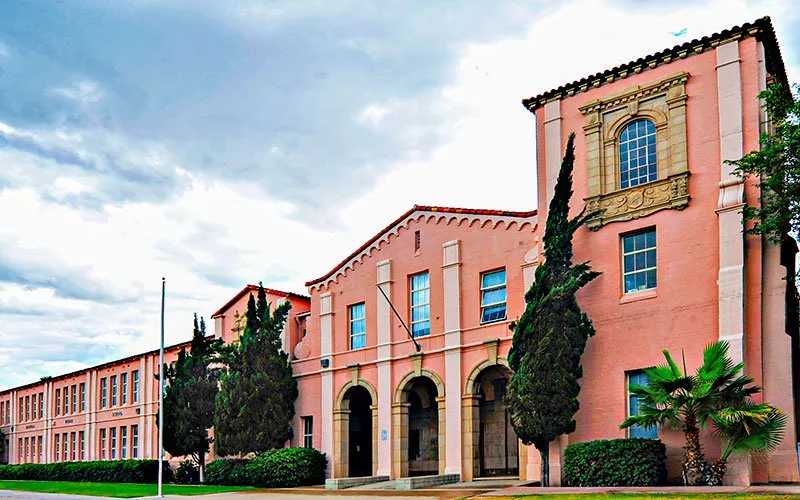
Last night, the board of Tucson’s largest public school district voted to move forward with a hybrid learning model on Monday, Oct. 19, if Pima County’s downward COVID-19 data trends continue.
The Tucson Unified School District has been teaching the majority of its student body through remote learning since March, when in-person classes were canceled in the face of the coronavirus outbreak. Although new cases spiked in June and July, a steady decrease in viral transmission throughout the state has been evident in recent weeks.
According to Pima County’s COVID-19 Progress Report, five of the nine health criteria are making “progress” or have been officially “met.” The progress report tracks local disease data, healthcare capacity and public health capacity.
Because of this, TUSD Superintendent Gabriel Trujillo recommended to the board members during their Sept. 9 meeting that the district embrace the public health data indicating it is safe for a hybrid model of education. This would comprise “some kind of a combination of return to traditional in-person learning, standing alongside the online learning model that parents will still be able to opt-in to,” Trujillo said.
While some district staff and families have expressed concern over reopening schools during a global pandemic, Trujillo said the entire plan is contingent on the Pima County Health Department’s recommendation that it is safe to move to a hybrid model during the week of Oct. 19. If Coronavirus cases begin to rise again, the plan may be put on hold.
The board also agreed to begin a phased reopening of district administration departments on Monday, Sept. 21.
At the board’s next meeting on Sept. 22, Trujillo will bring forward his initial proposal with more detail on what hybrid learning will look like in TUSD.
For more information, visit govboard.tusd1.org.
Tags: Tucson Unified School District , TUSD , Hybrid Learning , Reopening , Gabriel Trujillo , Image
Wednesday, August 26, 2020
The University of Arizona administration announced they will delay their staged reopening plan just one day after the fall semester began on Aug. 24.
In an Aug. 25 email to faculty, students and staff, UA Provost Liesl Folks said the administration decided to continue Stage 1 of the reopening (essential in-person classes only) during the second week of instruction, which begins Monday, Aug. 31.
Stage 2 was originally set to begin on Aug. 31 and would have allowed small classes to resume in person, bringing another 9,000 people to campus. But Folks said they’ve decided to hold off on Stage 2 for the time being, after consulting with local public health officials.
“Based on the test data and discussions with our campus community, we have decided to continue in Stage 1 during Week 2,” Folks said in her letter. “While nearly all the data we have today shows improving trends for limiting the spread of the coronavirus in Arizona, we feel that we should continue in Phase 1 to allow more time for public health data to be collected and analyzed before we move to instruction to Stage 2: Essential In-Person / Outdoor / Small In-Person courses.”
Out of more than 9,000 antigen tests performed in the university community between July 31 and Aug. 25, the UA has uncovered 37 positive COVID-19 cases. On Aug. 25 alone, 342 antigen tests were conducted and six positive COVID-19 results were identified.
The university is using far more antigen tests—which are less expensive and produce rapid results—than traditional PCR tests, which can take 48 hours or longer to produce results. There has been controversy over the effectiveness of antigen testing. During the same time period, only 37 PCR tests were performed and reported no positive COVID-19 results.
For more information, visit covid19.arizona.edu/updates.
Tags: COVID19 , Coronavirus , University of Arizona , Reentry , Testing , Image
Wednesday, August 19, 2020

The Arizona Supreme Court will allow the Invest in Education initiative to appear on the November 2020 ballot after it was previously tossed out by a Maricopa County Superior Court Judge, who ruled its petition summary was “fraudulent or substantially confusing to Arizona voters."
The initiative proposes a 3.5 percent surcharge in state income tax on Arizona’s wealthiest residents—individuals earning more than $250,000 per year or couples earning more than $500,000 per year.
The measure could potentially raise about $940 million in tax revenue per year for the benefit of Arizona public schools and their stakeholders and would affect only the top 1 percent of Arizona earners, according to the Invest in Ed campaign.
Maricopa County Superior Court Judge Christopher Coury made the ruling to toss the initiative last month, saying that their 100-word description on petitions signed by voters didn’t include key components of what the initiative would actually do.
The Invest in Education campaign appealed his ruling, and today the Arizona Supreme Court unanimously agreed that the initiative’s description “did not create a significant danger of confusion or unfairness and reverses the trial court ruling.”
“Today’s ruling by the Arizona Supreme Court keeping Invest in Education on the November ballot is an important victory because it gives millions of Arizona voters the opportunity to put more resources into our schools,” said Invest in Education Chairwoman Amber Gould in a press release. “We are confident voters will say ‘yes’ to improving Arizona’s K-12 schools by voting ‘yes’ on Invest in Education this November. The Invest in Education Initiative was crafted to benefit all Arizona’s 1.1 million K-12 students while not taxing working and middle-class families impacted by the pandemic.”
Election officials are expected to complete a review of petition signatures for the proposition this week.
To learn more about the ballot initiative, visit investined.com.
Tags: Invest in Ed , Ballot Initiative , Arizona Supreme Court , Image
Who spent much of her allotted 30 seconds in the national spotlight talking about the reopening schools during the COVID-19 pandemic.
It was part of an unorthodox roll call of the states during an unorthodox Democratic National Convention, where almost all of the business is being conducted virtually because of coronavirus concerns.
As they announced the voted that led to former Vice President Joe Biden’s official nomination Tuesday, delegates from each of the 50 states and seven U.S. territories were encouraged to spend part of their time talking about an issue important to them – and the party.
For Garcia, that was the challenges schools are facing.
“So clearly as an Arizona educator I wanted to talk about what reopening schools is looking like for us. I wanted to talk about being a mother of a high school freshman,” she said Tuesday.
“I wanted to talk about being a union leader in this state and then I also wanted to talk about the fact that I am a very proud Chicana Latina living in Arizona where the majority of us are really going to take our chance and have our voices heard this fall,” Garcia said.
Tuesday, August 18, 2020
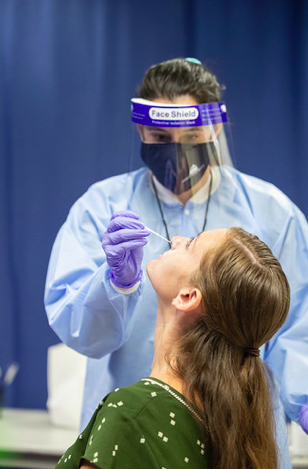
As Gov. Doug Ducey celebrates a significant decrease in COVID-19 cases across the state, the Pima County Health Department has interpreted the data more conservatively and is cautioning local school districts against bringing students back to campus.
According to the county's nine metrics based on local public health data, the current COVID-19 situation is too dangerous for schools to reopen for in-person classroom instruction.
Pima County Administrator Chuck Huckelberry said that when progress is made in all nine metrics, schools should be allowed to operate in a hybrid fashion with some in-person instruction combined with online learning, according to his Aug. 17 memo to the Board of Supervisors.
“The key concern for students, parents, teachers, administrators and all support personnel is when it is safe for schools to begin to transition and ultimately return to face-to-face classroom instruction,” Huckelberry wrote. “The scientifically based criteria offered by the State of Arizona and Pima County have been aligned to avoid any possible contradiction or confusion.”
The metrics include a variety of data concerning disease spread, healthcare capacity and public health capacity. As of Aug. 10, some had reached the “progress” state, but none have been fully met:
1. The county health department wants to see “decreasing cases over two consecutive weeks.” The number of new cases this week is currently lower than the number of cases last week, so the department designated progress made in this metric.
2. The health department wants to see “decreasing deaths over 14 days.” This data is delayed by four weeks, so as of Aug. 9 the data from June 21 through July 4 showed the death rate at a plateau. The department designated that this metric was not met.
3. The health department wants to see less than two new hospitalizations per 100,000 residents across a three-day average. As of Aug. 9, this metric was not met.
4. The health department wants to see a “sustained number of completed tests for 14 days.” Currently, the number of new tests being completed is beginning to increase after a seven-day period, so the department designated progress made in this metric.
Tags: COVID-19 , Coronavirus , Pima County Health Department , Back to School , School Reopening , Image
Thursday, August 6, 2020

The AIA board voted for a staggered athletics season based on the information received from AIA member schools through a July online survey. Factors like student and personnel safety protocols that can be easily administered by athletic directors and coaches across the state helped board members reach a decision.
"The health and safety of our student participants, coaches, officials and essential personnel, including volunteers, is the primary concern for the return of interscholastic athletics and activities," AIA Executive Director David Hines said. "We are very grateful to those who share our commitment of a return to these highly beneficial educational activities and athletics."
Fall sports will continue to proceed under the out-of-season/summer rules as a part of AIA’s Bylaws and Policies until the first day of practice. The fall 2020 interscholastic athletics calendar will be shorted to accommodate for winter sports at the end of the year. All fall sports will still have an opportunity for a championship tournament.
The AIA Executive Board is made up representatives of member schools, each with concerns of how to proceed forward with interscholastic sports during the pandemic. While members brought up numerous concerns about the difficulty of creating a streamlined approach for schools statewide, they ultimately agreed upon the schedule below:
Football
First Practice – Sept. 7
First Competition – Sept. 30-Oct. 3
Championships – Dec. 11/12 (4A-6A & Open)

