

Friday, April 24, 2020

While some districts have had a relatively smooth transition, others have found themselves forced to provide everything from wireless access to laptops for families – and sometimes teachers – who might not otherwise be able to participate.
“Many of our districts were able to shift pretty quickly to online learning, many of our districts already had laptops that they were able to loan out to students,” Superintendent of Public Instruction Kathy Hoffman said in a web conference Wednesday organized by the Arizona Capitol Times.
On the other hand, Hoffman said, “far too many districts” did not have the resources to make the switch, specifically the Navajo Nation.
“This digital divide is crippling to Arizona and it’s not going to be a short-term problem, it’s going to be a long-term issue that we need to address,” Hoffman said, highlighting issues such as a lack of technology devices and internet access.
The Baboquivari Unified School District on the Tohono O’odham Nation is a case in point.
Because of spotty internet access, the district had to bring in wireless hotspots, said Superintendent Edna Morris, then followed that by distributing Chromebooks to families that did not have a computer, so students could do their schoolwork at home.
Wednesday, April 15, 2020
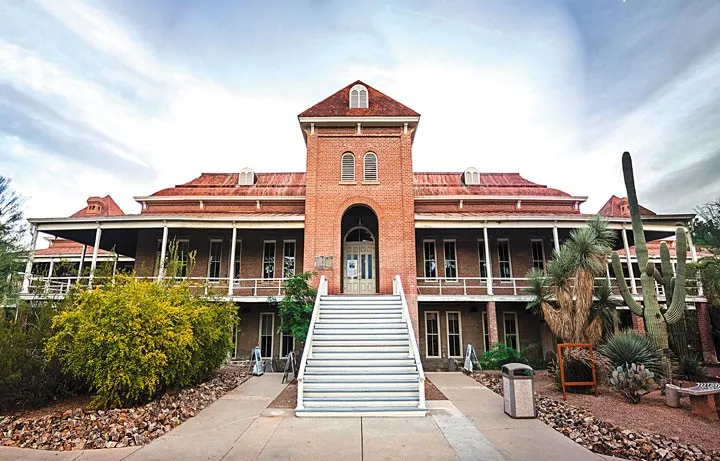
In the age of COVID-19, college students all over the world are adapting to a new normal of online classes, shortened semesters and canceled graduations. As a college student myself, it has been difficult to come to terms with losing that typical college experience of being away from home and actively working towards a career. However, with this new obstacle, I’ve acquired a few new skills; learning to adapt to online classes and manage my time as well as stay focused long enough to complete my schoolwork is toughest.
Graduate student Eloy Ramirez, who was on track to graduate this semester with a master’s degree in musicology, is having a similar problem.
“As a musician there is a level of discomfort with playing my instrument to the fullest volume because I don't want to disturb the people I live with,” Ramirez said. “As a teaching assistant for a music class it’s also a challenge to play good quality music examples and administer listening exams online.”
Ramirez says he's grateful for his online classes.
“As a graduate student completing the last semester of my master's degree, cancelling classes would provide a bit more time to complete my thesis work,” Ramirez said, “But I really love what I am studying and I love teaching. Even if it is online, I am happy I am still able to attend my seminars and I am grateful to have the opportunity to attend school.”
At first, it seemed like we were just going to have an extended vacation. I got to stay home and watch movies and learn how to play guitar, but after a while, all the changes began to sink in. The University of Arizona’s reaction to the pandemic is a bittersweet one; I thought it was the right call to continue classes online since it would make me feel useful during this uncertain time, but as the days went by, it became harder to keep track of time—and therefore assignments—because I am easily distracted at home. And I'm not alone.
“It’s hard for me because I can’t withdraw from classes because it would ruin my FAFSA,” said Luis Espinoza, a junior at UA. “But I also can’t seem to get the hang of online classes which will inevitably ruin my GPA. It feels like a lose/lose situation.”
Life as we know it has also changed. Not only has our academic career changed, but I began to realize that there would be no more concerts, lectures or large school events.
Paulina Lopez, a UA senior set to graduate this May, was disappointed by the graduation cancellation.
“I was actually really sad to find out that there wasn’t going to be a ceremony this May,” said Lopez. “I obviously understand why there can’t be one and it’s in everyone’s best interest and for their safety, but it’s still upsetting because commencement is such a huge part of the college experience. In a way it’s kind of like the last four years are going unnoticed.”
On April 3, the UA stated their commencement team is "evaluating what a postponed main ceremony could look like in the future and preparing for the streaming graduation experience on May 15."
Ana Espinoza is a University of Arizona journalism student and Tucson Local Media intern.
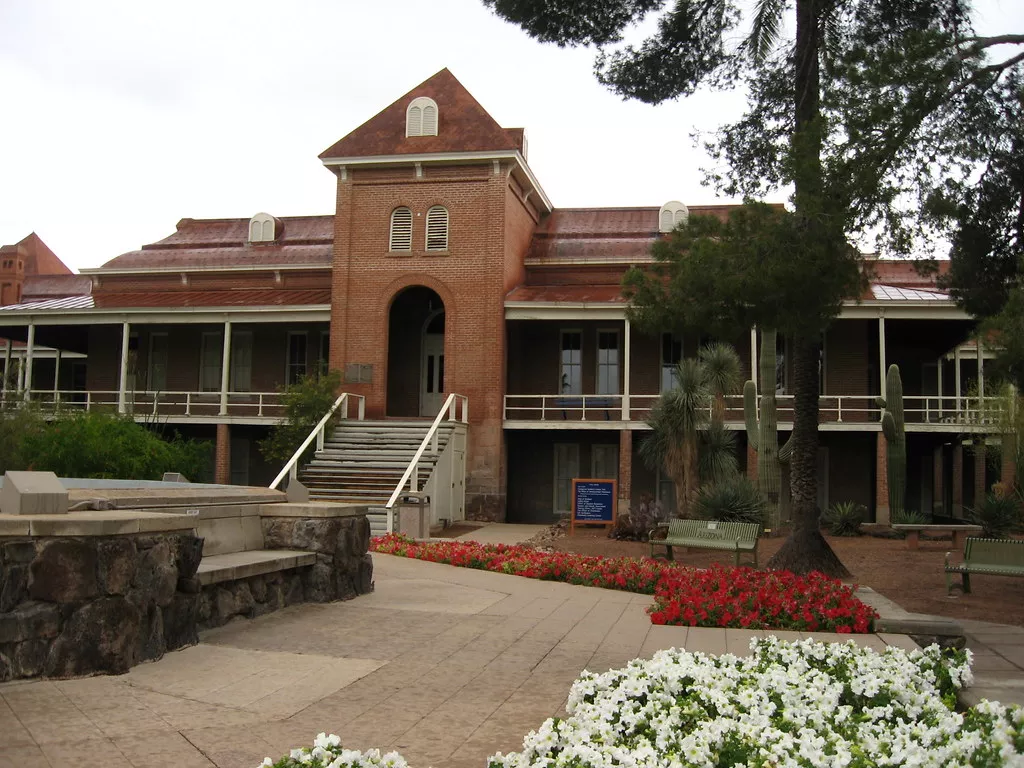
Facing large projected losses in revenue due to COVID-19, the University of Arizona is taking steps to trim their budget.
"Over the next 15 months we anticipate a significant loss of revenue and expect to see increased expenses related to the effects of COVID-19," UA President Dr. Robert Robbins and other leaders said in an email to faculty and staff. "This is going to have profound impacts on how we successfully achieve our mission."
While the university is ramping up efforts to create thousands of COVID-19 testing kits, they are also expecting a drop in tuition revenue. If community spread of the virus is still significant in the beginning of the fall semester, international and out-of-state students likely will not return to campus.
In a conference call last Wednesday, Robbins told Tucson Weekly that 40 percent of the university's students are from outside Arizona, and about 15 percent are international students. He said they’re currently modeling what that hit in revenue could look like, but they are expecting "significant shortfalls."
UA leaders are urging faculty and staff to share their insights with the new Financial Sustainability Emergency Response Taskforce, which was created to determine the financial impact coming up and make recommendations for immediate and future cost-saving measures.
These changes are categorized into six areas where future changes could be made: Capital Projects, Debt & Investments; Intercollegiate Athletics; New Opportunities; Operational Efficiencies; Strategic Plan Investments; Students and Workforce.
New information from university leaders is expected in the coming weeks.
Tags: University of Arizona , Staff , Faculty , Revenue Loss , President Robert Robbins , Lisa Rulney , Employer , Image
Monday, March 30, 2020
Ducey and Hoffman released the following statement:
In alignment with yesterday’s updated federal guidance, today we are announcing the extension of school closures through the remainder of the school year. Today’s announcement is intended to give parents and educators as much certainty as possible so they can plan and make decisions. While this isn’t the outcome any of us wanted, we are grateful for the partnership of schools around the state, who have stepped up to offer virtual and take-home learning opportunities for our students. These efforts are crucial, and we recognize that schools are making every effort possible to continue providing instruction during closures. We also thank our legislative partners for passing legislation ensuring all educators and staff see no disruption in pay. Our number one priority will continue to be health and safety, and we will continue to work closely with public health officials to make the best decisions for kids, families, and our school communities.
Arizona's schools closed while most were on spring break earlier this month, with districts moving toward online learning. Last week, Ducey signed legislation ensuring that schools would be held harmless by the loss of instruction days and teachers and other school employees would be receive their full pay.
School districts have set up alternative delivery of meals for families in the community.
Health and government officials have urged the public to avoid unnecessary trips and gatherings of more than 10 people. They warn that the extremely contagious virus is rapidly spreading in the community. Symptoms can take up to 14 days to appear, so people can pass COVID-19 without realizing they have been infected with it. Some people remain entirely asymptotic but are carriers.
In the face of the spreading virus, Ducey has also halted to evictions for 120 days; ordered bars, gyms and theaters to be closed in any county with confirmed COVID-19 cases. Critics say Ducey should go further and issue a state-at-home order for the state.
Ducey has also halted all elective surgery to keep hospital beds available for COVID-19 patients; loosened regulations to make telemedicine more available and increase eligibility for AHCCCS, the state's Medicaid program; and activated the National Guard to assist in grocery stores as Arizonans clear the shelves.
COVID-19 symptoms typically occur two to 14 days after exposure, and include headache, fever, cough, and shortness of breath, according to the CDC. However, some cases of the virus are entirely asymptomatic. Practices to avoid infection include social distancing (of at least six feet), washing your hands, avoiding unnecessary trips and not touching your face. COVID-19 can survive on cardboard for up to 24 hours, and on stainless steel and plastic surfaces up to three days. If you think you have been exposed to COVID-19 and develop a fever, cough or difficulty breathing, speak with a healthcare provider for medical advice.
According to the CDC, people who are mildly ill with COVID-19 are able to recover at home. Stay at home and avoid public transportation, but stay in touch with your doctor. If you do leave your home, wear a facemask and clean your hands often. If you develop more severe symptoms (persistent pain or pressure in the chest, confusion, bluish lips) get medical attention immediately. Your local health authorities will give instructions on checking your symptoms and reporting information.
Have you caught COVID-19? Are you feeling ill? Is your small business struggling to make it? Have you lost your job as a result of the outbreak? Are you struggling to manage your kids while schools are closed? Tell us your COVID-19 stories. Send an email or photo to [email protected].
Wednesday, March 25, 2020
It's not something most parents have prepared to do, but districts are offering up whatever resources they can while schools remain shut down at least through April 10—and potentially longer, given that cases of COVID-19 are still rising across the state.
If you're looking for some lesson plans, here are some online resources:
Amphi School District has a list of fun resources for learning at home, including math games, free worksheets and printables, Duolingo and virtual field trips to places like the Louvre and the Great Wall of China. Visit amphi.com.
Expect More Arizona has a list of learning resources for kids and suggestions for how to talk to your kids about COVID-19, as well as resources in Spanish. Details here.
Though the Pima County Public Libraries are closed until further notice, you can still access digital materials 24/7 (and the due dates for items have been extended). Details here.
Arizona educator Joy Novack Rosson compiled a list of resources on ways to learn at home, including a website to explore the surface of Mars, elementary science lessons and classes for older teens or adults. Find the complete list here.
Tags: covid-19 , schools , resources for teaching at home , coronavirus , tucson news , arizona news , Image
Friday, March 20, 2020

The press release from Ducey's office:
Governor Doug Ducey and Superintendent Kathy Hoffman today announced a two-week extension of school closures through Friday, April 10, 2020. Going forward, Governor Ducey and Superintendent Hoffman will continue to provide updates and guidance about the need for continued school closures beyond that date.
View Governor Ducey and Superintendent Hoffman’s open letter to Arizona families, educators, school leaders, and education community members HERE.
“Our goal is to get kids safely back in the classroom as soon as possible while providing parents and educators certainty so they can plan and make decisions,” said Governor Ducey. “I’m grateful to Superintendent Hoffman for her continued partnership and leadership. We are unified in our efforts to address COVID-19, and will continue to keep parents and educators informed.”
“Our number one priority is the health and safety of all Arizonans, especially our kids,” said Superintendent Hoffman. “Our office continues to work closely with school administrators and partners to provide parents, families, and schools resources and flexibility to mitigate the impact of school closure. This will continue to be our top priority.”
Additional information about meals for kids, childcare, special education considerations, learning resources for families and educators and more can be found at azed.gov.
In their letter, Governor Ducey and Superintendent Hoffman requested that schools continue to adhere to the following measures:
School administrators should make every effort to provide continued education learning opportunities through online resources or materials that can be sent home.
School administrators should work with the Arizona Department of Education to provide breakfast and lunch services for Arizona students.
As demand rises on healthcare professionals and first responders, schools should consider expanding child care programs currently available to ensure minimal disruption to these critical jobs as a result of the school closure.
When school resumes, school administrators should develop and implement precautions to ensure schools are a safe learning environment, including social distancing measures, regular intervals for administrators to wash and sanitize their hands, and guidance on how to properly and frequently sanitize election equipment and common surfaces.
More information about COVID-19 can be found at azhealth.gov/COVID19.
Sunday, March 15, 2020

Here's the press release from Ducey's office:
Governor Doug Ducey and Superintendent Kathy Hoffman today announced a statewide closure of Arizona schools from Monday, March 16, 2020 through Friday, March 27, 2020. Governor Ducey and Superintendent Hoffman will work with education officials and public health officials to reassess the need for the school closures and provide further guidance through March 27, 2020.
View Governor Ducey and Superintendent Hoffman’s open letter to Arizona families, educators, school leaders, and education community members HERE.
“Over the past few weeks and in coordination with public health officials, we have been in close communication with school administrators to provide guidance and be a resource as it relates to the recent outbreak of COVID-19,” said Governor Ducey. “As more schools announce closures and education administrators express staff shortages within their schools, now is the time to act. A statewide closure is the right thing to do. While this measure will not stop the spread of COVID-19, it will bring certainty and consistency in schools across Arizona.”
“The health and safety of all our students is our top priority, and we’ve worked hard to keep our school doors open — schools provide important services and many families rely on them for nutrition, access to health care and in order to do their own jobs,” said Superintendent Hoffman. “I am in close contact with school superintendents, teachers, and parents and will continue working closely in partnership with schools to ensure that our families needs are met.”
Monday, January 20, 2020

"This is an impressive crowd - the haves and the have-mores. Some people call you the elites. I call you my base." George W. BushBush made the comment at a high-rollers charity dinner where presidential candidates poke fun at themselves and their campaigns. Like any good self-deprecating joke, Bush's quip is on the money. In this case, literally on the money.
The HHM, the haves and have-mores. They're as much Doug Ducey's base as they were George Bush's. You see their fingerprints all over Ducey's education agenda. When he favors tax cuts over bringing schools back to their 2008 funding levels, that's all about the HHM. And he was thinking about their children when he created the results-based funding scheme. The way the funding is given out, the HHM's children are nearly certain to come out winners.
In my last post I compared how much results-based funding went to students in TUSD, Vail and the BASIS charter chain. Vail, it turns out, gets more than three times as much per student as TUSD. With one exception, every BASIS school is fully funded. That's because funding is based on the percentage of a school's students who pass the state's high stakes test, which is right in the wheelhouse of schools in high rent areas. For a district like TUSD which draws from many families living below the poverty level, passing the state test and qualifying for the funding is more hit-and-miss.
In a world where Ducey is governor and the legislature is majority Republican, the rich get richer, and their children get a richer education courtesy of results-based funding.
I decided to take a deeper dive into the data to see how the money is distributed to schools with children across the economic spectrum. I found funding inequities everywhere I looked.
Before I lay out the numbers, here are a few things I know for sure.
• A school doesn't deserve results-based funding just because it has no more than 10 percent of its students living below the poverty level.
• A school with 60 percent of its students below the poverty level is not 10 times more deserving of results-based funding than a school with 59 percent of its students below the poverty level.
• Any competent computer programmer could create a system for giving out the results-based funding in a more equitable way.
Tags: Results-based funding , Vail school district , TUSD , BASIS charter chain , Doug Ducey , Image
Thursday, January 16, 2020

If Doug Ducey bragged about adding $70 per student to the K-12 education budget, the news would be received with yawns from the vaguely interested and howls of outrage from people who know Arizona needs to add a thousand dollars per student to reach Mississippi funding levels, two thousand to reach Arkansas and three thousand to reach Louisiana. In Arizona funding dollars, that translates to an added one billion, two billion and three billion dollars respectively.
So $70 per student, about $72 million total, doesn't even qualify as small potatoes compared to the funding Arizona needs to equal some of the poorest southern states, let alone the rest of the nation. It's chump change.
But Ducey is getting away with bragging about $72 million for schools by spending it, using words from his State of the State speech, "to reward and replicate success in our best public schools." Those "successful" schools will get either $225 or $400 per student from a program with the impressive-sounding name, results-based funding. True, only a quarter of the state's district and charter schools get any money, but it's supposed to be a reward for success, which sounds like a good thing.
Except that "success" is measured by the percentage of a school's students who pass the state's AZMerit exam, and as most everyone knows, students from higher income families tend to do a whole lot better on the tests than students from lower income families. So if it's all about passing rates, all the money would go to schools in high rent areas, and that would be too obviously, grossly unfair, even for Governor Ducey.
What to do?
Tags: Results-based funding. Doug Ducey. TUSD. Vail School District , Catalina School District , BASIS charter schools , Image
Friday, January 3, 2020

Two recent, lengthy reviews on charter schools are both worth taking a look at.
One is a series of articles by the Arizona Republic reporter Craig Harris, who visited seven states to put together a big picture look at the charter school scene. Harris is probably the most even-handed reporter I've read on the subject. Most writers, including me, come at charter schools with some set agenda, which means the analyses are shaped by the writers' educational preconceptions. That's what makes Harris' reporting so refreshing. He detests charter waste and fraud and has gone after financial corruption in Arizona's charter sector with a passion. But when he looks at schools themselves, he tries to evaluate them on their merits. He finds things to like and dislike.
Harris' most recent investigative report focuses on charters in states other than Arizona which have a record of increasing the performance of students from low income families. The article links back to the earlier articles if you want to read the whole series.
The other important piece of investigative reporting comes from the Network for Public Education, a group begun by educational historian Diane Ravitch and others which has grown into a significant force in the educational battles raging across the country. NPE is decidedly against education privatization and the so-called "education reform" movement in general, which means you're not likely to hear much from them in the way of praise for charter schools. The recent report from NPE details the $1 billion in federal money wasted on charter schools which either never opened or closed since receiving the funds.
Tags: Charter schools , IDEA schools , KIPP schools , Arizona Republic , Network for Public Education , Image

