

Friday, May 31, 2019

If you look at the numbers in next year's state budget, you might think education made out pretty well. There's all this new money: $136 million in additional assistance for schools; $130 million for teacher raises; $20 million to hire counselors or security officers; $30 million for results based funding.
You might also think I made out pretty well if I told you my boss said I'm doing a great job and handed me a crisp new hundred dollar bill. Until I told you the boss cut my salary by five hundred dollars.
Same thing with the state budget. All that brand spanking new education money sounds good until you realize, the decade-long cuts to education have been so deep, even with the new money, schools are a billion dollars behind where they were in 2008. And back then, Arizona had the lowest per student spending in the country.
To see how we dug ourselves in a hole so deep that adding $300 million to the education budget still leaves the schools a billion dollars behind, we need to start back in 2008 with the Great Recession.
Like most other states, Arizona was hit hard when the economy sank like a stone. The state was desperately short of funds. The budget had to be cut, and education took a big hit. The Republicans in charge told us, shaking their heads sadly, we have no choice. There just isn't enough money to go around.
A few years later in 2010, after more cuts to education, Governor Jan Brewer decided we did have a choice. She defied the standard Republican "No new taxes" mantra and supported a ballot measure for a one cent sales tax increase for education. The voters agreed with Brewer. The measure passed with 64 percent of the vote.
The problem was, it only lasted three years.
Tags: Arizona state budget , Doug Ducey , education , funding , dollars , recession , students , K-12 , schools , budgets , Image
Wednesday, May 29, 2019
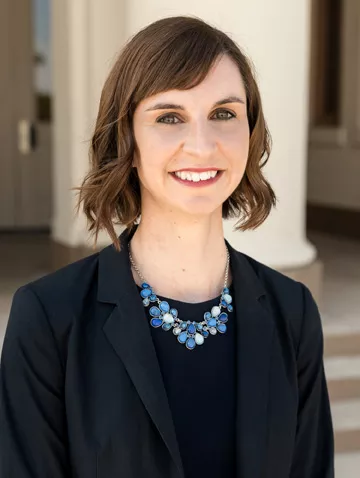
My posts about Douglas were sighs of relief that she wasn't acting like the fire-breathing ultraconservative she played on the campaign trail. In the early going, Douglas was making reasonable, inclusive statements about Arizona's schools and students. She was doing no harm, which was the best I could hope for. To my surprise, she even did some good. So I offered her praise and encouragement during the early going. When Trump came into the picture, Douglas reverted to wingnut type, but that was years later.
Hoffman, meanwhile, began doing the kind of job I hoped she would from her first days in office. I've been waiting to see if the trend would continue, and it has. Almost halfway through her first year, Hoffman has created enough of a track record for me to say, I'm impressed.
It's important to understand the nature of the superintendent' job to put Hoffman's accomplishments in perspective. She administers a multi-billion dollar budget but has no direct impact on legislators or legislation. Any political clout Hoffman has comes from the way she uses her bully pulpit. Thus far, she's used it effectively. She continues to emphasize her perspective as an educator, which is a welcome relief after three decades of non-educators running the Department of Education. Hoffman makes it clear, she knows teachers, she knows students, she knows public schools.
Hoffman took her oath of office with her hand on a children's book. That could be called gimmicky, I suppose, but I appreciated the symbolism. She was swearing an oath to serve the students, to put their needs foremost. Most teachers make a similar oath to themselves every year before the first day of school. It was a promising start.
There was no symbolism involved in Hoffman's strong stance against the Arizona law stating that sex education courses can't say anything positive about what the law calls "a homosexual life-style." Referring to it as the "no promo homo law" in her State of Education speech, Hoffman said the policy is "outdated . . . harmful and wrong."
The law may have been on the way out regardless. The board of education was facing a suit over the statute, and Attorney General Mark Brnovich said he wouldn't come to its defense. The board of education voted unanimously against it, then in April the legislature repealed the law. Whether or not Hoffman's aggressive stance on the topic moved votes, her full-throated condemnation of the old law helped clarify the issue and boost it into statewide prominence.
Tags: Kathy Hoffman , Superintendent of Public Instruction , English Language Learners , "No Promo Homo" law , Empowerment Scholarship Accounts , Image
Tuesday, May 21, 2019

Once again, Governor Ducey refuses to talk with Democratic legislators about the budget. In Monday's Republicans-only budget compromise, Ducey gave up more of his priorities than might have been necessary if he were willing to create a bipartisan deal where he could pull together enough votes from both sides to get a budget to his desk. Bipartisanship isn't in fashion these days.
Still, things look dicey for Ducey's compromise. A few Republicans are holding out, and with their slim legislative majority, a few is all it will take to kill the bill. The proposed budget throws a bone or two in the Democrats's direction in hopes it can get some of them to vote Yes even though they weren't allowed into the negotiating room. But as Tucson Rep. David Bradley said, "Placating is not negotiating." At this moment, the Dems look like they're holding firm.
Then there's the May 27 Memorial Day deadline, after which some Republicans will skip town and lower the chances of getting the budget through on a straight party line vote.
Wanna bet, when the dust settles, it will still be an all-Republican budget passed in the dead of night just before the Monday deadline, with enough giveaways to lure the few strays back to the fold? That's where my money would be if I were a betting man. It's a bet I'd be delighted to lose.
Tags: Arizona state budget , Doug Ducey , K-12 education , Republican , legislature , politics , State government , Image
Friday, May 17, 2019
When the New York Times carried a story about the progress students have been making in the "I Promise School" started by LeBron James in Cleveland, I put the article in my "Post about it when you have a chance" pile. Two weeks later, before I wrote about it myself, mayoral candidate Steve Farley used LeBron's school as a starting point for one on his Ideas For Tucson emails, titled "Turning our public schools into community schools." The email began,
LeBron James has rightfully received a lot of publicity for the work he is supporting at previously failing Cleveland public schools — work that is producing astonishing results.In the email and on his website's Ideas page, Farley embraces the idea of turning schools into places where families can benefit along with their children, places which provide "GED classes, basic healthcare, low income bus passes, use of the computer lab, career counseling, microlending, and job training for parents as well as kids." The city, he wrote, can be a partner in creating and implementing a community school approach to education.
Farley got it exactly right.
Before I go further, I need to say, this isn't an endorsement of Farley's candidacy. Both he and Regina Romero are strong candidates. I definitely want one of them as mayor, but honestly, I'm not sure which of them would do a better job. What I'm endorsing is the idea of forging a partnership between school districts and city government to bring the community school idea to Tucson. Farley deserves credit for featuring that idea in his campaign.
People in city government like to say they are strong advocates for local public schools, but too often, city governments and school districts remain separate entities with too little overlap.
The community school concept is a way to bridge the gap between the two institutions. City government is ideally situated to coordinate a coalition between a school district and governmental social services, businesses, nonprofit organizations and volunteers. A program can be ramped up gradually, school by school, service by service without incurring large costs for the city or the school district. In other words, it's doable, even with a cash-strapped district and a city on a tight budget. And the payoff can be significant.
Bringing services for underserved families inside the school walls makes those services more accessible to families and helps parents buy into their children's educations. When individual parents become involved in their children's schools, when they become members of the school family, the parents benefit and their children's chances of succeeding inside and outside the classroom improve.
I can't think of anything Tucson's city government can do which would be more beneficial to our schools than working with a district to move toward the community school approach.
I know Regina Romero is an advocate for strong public education and she has endorsements from members of the local and statewide educational community, but looking through her platform (It's a good platform, by the way) and reading her emails, I haven't seen concrete ideas for ways city government can have a direct impact on our schools. It would be great if she publicly embraced the community schools idea or something similar.
Tags: Steve Farley , Regina Romero , Tucson mayor , Elections , Community schools , LeBron James , I Promise School , Image
Tuesday, May 14, 2019

I don't know which state senator, or senators, stuck a half million dollar request for a new "Freedom School" at Northern Arizona University into the Republican senators' budget proposal. But someone did.
UA and ASU both have versions of the Koch brothers' libertarian outpost on their campuses, but Flagstaff's NAU is currently Freedom-School free. That could change, however, if the proposed funding makes it into the budget.
Don't mistake the request for extra money for a new Freedom School as a Republican change of heart when it comes to funding education. The same budget proposal cuts millions from Ducey's proposed university and K-12 budgets.
I've written often about UA's Freedom Center and less often about its ideological sibling, ASU's School of Civic and Economic Thought and Leadership. Both received lots of money from members of the Koch donor network when they started out. FC became a state budget item in 2014, and SCETL's state funding began in 2017. The current budget includes $3.5 million for FC and $4 million for SCETL. Both centers will likely get the same funding in the upcoming budget.
As for that modest half million dollar funding request for the proposed NAU Freedom School. The small figure is a ruse, a way to get the thing up and running with as little controversy as possible. After all, what's a half million budget request between friends? The UA Freedom Center began the same way, with a half million state budget for its first three years. Now FC's annual budget is seven times that original figure.
Here are a few interesting and unusual facts about the funding for FC and SCETL.
• They are the only university "schools" or departments with their own line items in the state budget.I expect the same deal will hold for the NAU outpost if it's approved.
• Neither school has been able to spend all the money it gets from the state.
• The schools don't have to return what they don't spend. At the end of the year, they just stick the surplus in the bank, to be used at some later time.
Tags: Northern Arizona University , Arizona senate , Freedom School , Koch donor network , Freedom Center , School of Civic and Economic Thought and Leadership , Doug Ducey , Arizona budget , Image
Wednesday, May 8, 2019

LeBron James' I Promise School in Akron, Ohio, populated by low income, low achieving students, opened in August. It's too soon to proclaim the school a success, but so far it is keeping its promise.
On the first set of school district assessments using a nationally recognized test, 90 percent of the students met the goals set for them based on their previous achievement, which is higher than the 70 percent rate for the rest of the district. Even more impressive, the students' growth was in the 99th percentile nationally. In other words, only one percent of schools' students grew at a higher rate.
Those are phenomenal results, but they need to be put into perspective. It's easy to misread the results and think these children have been turned into whiz kids who can give students from affluent districts a run for their money. We're dealing the real world here, not a made-for-TV movie.
That 99th percentile ranking is about growth. It doesn't mean the kids' reading and math scores are in the top 1 percent. They began the year in the bottom two percent of the country in reading and math. They jumped to 9th and 16th percentile in reading, and the 18th and 30th percentile in math, depending on which grade we're talking about. It's an indication of strong improvement, but it still means the students are far below the 50th percentile in their reading and math skills. They have a long way to go before they reach the nation's academic middle. And frankly, the odds of the students continuing to grow at the same pace for the rest of this school year or in the years that follow are slim.
If it sounds like I'm downplaying the success of the I Promise School I'm not. The results are pretty damned amazing. I just want to make sure I don't fall into the trap of implying there is some educational magic wand that you can wave over low income, low achieving students to level the academic playing field. There isn't. But the hope is, it's possible to improve the children's odds for success, and a school like the one LeBron has helped create is an indicator of a way to do that.
So, what are the ways the school is managing to beat the odds with these children? That's a complicated question with no absolute answers, but it's worth looking at some of the factors involved.
Tags: I Promise School , LeBron James , Trauma-informed curriculum , students , success , low income , education , community school , Image
Friday, April 26, 2019

In December, the TUSD board voted unanimously to remove the high school course, Ethics, Economy, and Entrepreneurship, from its curriculum. The course was created by faculty at UA's Freedom Center, the local outpost of the Koch networks' nationwide web of think tanks and university centers. The effort to get the course out of TUSD was led by a local group, Kochs Off Campus.
That's the short version of a much longer story. You can read more here.
That left three local districts, Amphitheater, Vail and Sahuarita, still offering the course, as well as a small number of charter and private schools.
Now you can cross Amphi off the list as well, for the moment anyway.
After its successful efforts convincing TUSD the course didn't belong in the district curriculum, Kochs Off Campus turned its attention to Amphi. The group's members sent Freedom of Information requests to the district asking for relevant records and emails, spoke at two recent board meetings and sent a number of emails expressing specific concerns about the course.
Monday, April 22, Amphi Superintendent Todd Jaeger wrote an email to members of Kochs Off Campus saying the course will not be taught at Ironwood Ridge High School next year, the only school in the district currently offering it. The reason, he wrote, is that not enough students signed up.
"Interest in the course, quite frankly, has waned and can no longer justify its continuation based on enrollment alone." According to Jaeger, that means there is no reason to discuss the issue further. "Thus, the matter is rather moot at this point," he wrote, "without even getting to the merits of concerns raised with respect to the course or its materials."
Tags: Ethics , Economy , and Entrepreneurship , TUSD , Amphitheater School District , Freedom Center , Koch network , Image
Tuesday, April 23, 2019

It's a classic quid pro quo. The Koch brothers' network of donors helped fund then-Treasurer Doug Ducey's 2012 campaign against a one cent sales tax for schools, then it contributed big bucks to his gubernatorial campaigns. In return, Ducey made sure state funds go to the latest additions to the Koch's nationwide network of think tanks and university outposts: UA's Freedom Center and ASU's School of Civic and Economic Thought and Leadership.
Ducey gets a few millions in contributions. The many-tentacled Koch network, often referred to as the Kochtapus, gets $7.5 million a year from the state to extend its influence. Small investment, big return. That's how the rich and powerful like to do things.
In 2014, 2015 and 2016, UA's Freedom Center received half a million dollars each year from the state. In 2017, the amount increased to three-quarters of a million. In 2018 and 2019 it leapt to $3.5 million. It's on track to get the same amount in this year's budget.
ASU's School of Civic and Economic Thought and Leadership began getting state funding in 2016, with half a million. In 2017 it went up to three-quarters of a million. In 2018, 2019 and most likely in this year's budget, its allocation is $4 million.
Over the last few years, the two programs have pulled in a total of $7.5 million per year.
Tags: Koch brothers network , Doug Ducey , University of Arizona , Arizona State University , Freedom Center , School of Civic and Economic Thought and Leadership , Image
Friday, April 19, 2019

It's coming up on state budget time, which means it's time to start looking at budget numbers while they're still in flux. For me, that means looking at education numbers. Right now, what we have is Ducey's budget proposal, so that's the place to begin.
I'm starting with Ducey's Results-Based Funding proposal. That's the extra money a select number of schools will get because they have shown "results." During its first two years, the program, gave out just under $40 million a year. Ducey wants to more than double the funding this time around. He's proposing $98.3 million, a $58 million increase.
The overall education budget is starved for cash, as it has been for years and will continue to be so long as Republicans run the government. Ducey's proposed Results-Based Funding increases the pain for most of the state's schools by taking $98.3 million out of their budget, money which should be divvied up among all district and charter schools, and hands it to a select group of schools.
If a school wants a piece of the RBF pie, the best thing it can do is serve a wealthy community. That's because schools with an "A" state grade are assured of making the list, and "A" schools are disproportionately in high rent areas. The proposed budget's extra cash will enlarge the pool of schools. That means even more schools in wealthy communities will make the cut.
Ducey has added a new wrinkle this year. His proposal would give some of the funding to "B" schools which serve low income populations.
By adding the "B" schools, Ducey hopes to leave the impression that he needs the $58 million increase for the added low income schools. It's not a lie exactly. That's where more than half of the new money will go, but plenty of it will go to expand the number of schools in high rent areas as well.
Tags: Results-Based Funding , Doug Ducey , education , schools , news , education funding , budgets , Results-Based Funding , Image
Friday, April 12, 2019

Take a look at the per student expenditures in three Arizona districts.
Alpine Elementary District: $16,338 per studentThat's twice to four times the average spending in the state. Now take a look at another set of figures: the number of students in each district.
Bouse Elementary: $31,381 per student
Young Elementary: $34,400 per student
Alpine Elementary District: 60 studentsAnother school district consolidation bill is being pushed in the legislature by members of the "Schools have plenty of money, they're just wasting it" club. Consolidation may be a good thing for some districts, but having the state set up mandated guidelines for consolidation is a bad idea.
Bouse Elementary: 25 students
Young Elementary: 21 students
(I often wonder: How is it that conservative States Rights advocates oppose city and county rights so adamantly? A possible answer: They fell in love with the Goldilocks story as children, and it carried over into their adult lives. "Congress is too big. City Hall is too small. But the State Legislature is just right.")
Coincidentally, while I was doing research for a recent post, I looked at what small districts spend per student. I came across 32 districts with fewer than 100 students that receive between $14,000 and $34,000 per student, with one outlier receiving a whopping $47,000. Looking at the state's map of school districts, I found most of the districts were large and sparsely populated, which accounts for the greater cost of educating the students.
Admittedly, this is only indirectly related to the district consolidation issue, but it demonstrates how different districts have unique sets of circumstances which can't be taken into account in a one-size-fits-all consolidation plan. Besides, the research presented me with a new and interesting perspective on Arizona education, so I figure it might be interesting to some of you too. If so, read on.
Tags: Small school districts , Per student costs , Bouse Elementary School District , students , teachers , education , funding , Image

