

Tuesday, March 19, 2019

According to a recent study by Edbuild, Arizona spends $7,613 more per student in predominantly white districts than predominantly nonwhite districts. That would make us the most inequitable state in the nation when it comes to funding our school districts.
Edbuild's study was picked up by media outlets across the country. You can read all about it in the New York Times, the Washington Post and hear about it on CNN and NPR, to name a few major outlets that carried the story. It's also been covered by Arizona media.
If the $7,613 figure comes from a reputable nonprofit which focuses on problems of funding inequality and segregation in the nation’s public schools and is repeated often enough in the media, it must be right. Right?
Wrong. As I explain in an article which will be running in Thursday's print edition of the Weekly, the figure is not only wrong, it's wildly wrong. Arizona may do a lousy job of funding its schools, but it does a reasonably good job of spreading the money out evenly across districts.
For almost 30 years, Arizona has used a funding equalization formula to distribute money to school districts. Before that, schools were funded primarily by local property taxes, which meant districts with expensive homes were rolling in education dough while districts with lower property values struggled to find enough money to run their schools.
Arizona's equalization system is far from perfect. Some school districts, mainly in high rent areas, find ways to game the system and bring in extra money for their students. But compared to other states, we do a fairly good job of evening out the money each district receives.
Instead of being labeled as one of the worst offenders in the way we distribute our education funds, we should be praised as one of the best.
Here are three reasons I know we're doing a reasonably good job of equalizing education funding:
Tags: Edbuild , District funding , Education funding equalization formula , schools , money , students , districts , funding , educaiton , Image
Wednesday, March 13, 2019

Some parents paid hundreds of thousands of dollars, even millions of dollars, to bribe and cheat their children's way into big name colleges. That means an equal number of deserving students were denied admission. Fifty people have been named in the scandal so far.
And that's supposed to be a big deal? The college admissions scandal of the century? You can't be serious.
Here's a genuine scandal: the number of "legacy" students at top colleges. Take Harvard as an example. Legacies make up 14 percent of the undergraduate population. One in seven undergrads strolling around Harvard Yard are there because one of their parents strolled down those same ivy-league walkways.
That's about 950 of Harvard's 6,700 undergrads. Next September, 280 new legacies will cycle into the school. And that's just one big-name school.
"Legacies" are students who have a parent who attended the college, which increases their chances of admission. If the parents put a little cash into the college coffers — a lot of cash is even better — admission chances are even higher.
People who work in Harvard admissions have said its applicants are so strong, the college could admit two freshman classes of equal quality. If Harvard got rid of the legacies, 280 more highly qualified students could be admitted.
To be fair, I'm sure some of the legacies have what it takes to do well at Harvard, but I'm equally sure the vast majority would not have made the freshmen class if they had to rely on their own merits. What are the odds that 280 of the top Harvard applicants each year just happen to be children of a handful of alumni?
Back to the college admissions "scandal of the century." All that's happened is the people involved in the scandal have taken the initiative to create their own "Make your own legacy" reality show. It's the same kind of privilege for the same class of people, with a felonious twist thrown in.
Tags: College admissions , Harvard , Legacy admission , scam , scandal , education , Image
Monday, March 11, 2019

Jessica Barnes is starting at the UA next semester as an assistant professor at the Lunar and Planetary Laboratory. She and her research team have been chosen by NASA to receive funding to study the lunar samples.

Barnes and her team will be studying rock from Apollo 17, the last mission where humans visited the moon on Dec. 11, 1972. Since the samples were brought to Earth, they have been stored frozen and undisturbed.
"The question we want to answer is, are we measuring the true moon signature? Or are there terrestrial influences that have affected the samples during their storage?'" Barnes said in a release. "The beauty of a frozen sample is that it's been kept curated in a different way from the samples stored at room temperature. We could not do this research without opening the frozen samples."
The research team will encase the samples in resin and slice them microscopically thin to analyze their chemical makeup.
Barnes and her team hope that their research will inform the handling and storage of samples collected by the UA-led OSIRIS-REx mission currently en route to retrieving samples from asteroid Bennu.
Barnes' full team includes Tom Zega, also at the Lunar and Planetary Laboratory, Jeremy Boyce and Scott Messenger at NASA's Johnson Space Center, Jed Mosenfelder of the University of Minnesota, Carolyn Crow of the University of Colorado Boulder and Maryjo Brounce of the University of California Riverside.
Tags: moon samples , NASA , UA , lunar science , Lunar and Planetary Laboratory , science , space , moon , Apollo , Image
Wednesday, March 6, 2019

It's coming up on state budget time, and the big national money-in-education story is, Arizona is one of twelve states spending less per student now than they did before the 2008 recession— and we know Arizona was hardly generous with its schools before that. But that story makes it sound like the legislature needs to put a whole lot more money into schools, and that's not something they're about to do.
So it's time to revive the blame-the-schools story about how unwisely Arizona districts spend their education dollars. It's a great way to justify under-funding schools. Nothing says "wasteful spending" like a low percentage of funding going into the classroom.
According to an article that came out last week, Arizona schools put 54 percent of their budgets into instruction. The national average is 60.4 percent.
Shame on Arizona schools! Shame! Shame!
Or maybe not. Let's take a look at those same numbers in a different, but not entirely different, situation.
A family of four has an income of $26,000. It spends $1,000 a month on housing, or $12,000 a year. The remaining $14,000 goes for general family expenses. Housing eats up 46 percent of their income. That leaves 54 percent for family expenses.
Another family of four lives next door and also spends $12,000 a year on housing. However, their income is $30,400, meaning they have $18,400 to spend on general family expenses. For this family, housing only takes up 40 percent of their income, which means they have 60 percent left for family expenses.
I guess you could say the second family makes wise use of its money because it spends 60 percent on food, clothing, transportation, entertainment and other miscellaneous expenses. Using the same logic, I suppose you could blame the first family for budgeting too little on general family expenses.
But you would be missing the point. The point is, both spend the same amount on housing. The difference is, the second family has a bigger pot of money to dip into, so it has more left over for everything else. The other family has to make do on far less.
Now, let's take what we've learned from the example back to the education arena.
Tags: Instructional spending , Non-instructional spending , education , schools , funding , budgets , national average , teachers , schools , Image
Friday, March 1, 2019
I suppose it's possible that Mesa Public Schools have the finest civic engagement programs in the state, and that's why its schools make up 17 of the 31 schools recognized by the Arizona Department of Education for their "Dedication to High Quality Civic Engagement." Maybe Mesa schools are that good.
Or maybe their schools' most stellar achievement in civic engagement is engaging with the ADE by turning in applications to receive the honor.
(Two schools in southern Arizona were among those recognized, both in Tucson: TUSD's Safford K-8 School and the Paulo Freire Freedom School University charter school.)
Ex-Superintendent John Huppenthal instituted the program and handed out its first recognitions in 2013. That year 28 schools applied and 22 were recognized. In 2014, 31 schools applied and 27 were recognized. When Diane Douglas took over, she ended the tradition of including the number of schools that applied, so I don't know if she continued the tradition of accepting all but a handful of applicants.
Since 2014, Mesa schools captured at least half the awards each year.
The application isn't especially long or detailed. It asks schools to estimate the percentage of teachers who engage in civic education with their students in ten categories, then asks for a brief explanation of the nature of the engagement. A panel goes over the applications and decides if they make the cut. If so, they are designated Schools of Merit, Schools of Distinction or Schools of Excellence.
Civic engagement for students is important, and it's a nice idea to recognize standout schools, but this honor bestowed on schools by the ADE is meaningless. It gives schools the opportunity to hang a banner in the halls and brag in a newsletter, but that's pretty much it. Apply and you shall likely receive, the ADE signals schools, so long as you're generous in your estimation of the percentage of your teachers whose students are civically engaged.
This is Superintendent Kathy Hoffman's first year and the deadline for the civic engagement application ended before she took office, so she gets a pass on this one. I recommend she takes a look at the six year old program and either figure out a way to make it mean something or choose to opt out of the self parody her two predecessors indulged in.
Tags: Arizona Department of Education , Mesa Public Schools , John Huppenthal , Diane Douglas , Kathy Hoffman , Dedication to High Quality Civic Engagement , schools , education , students , children , teachers , Image
Tuesday, February 26, 2019

As I write this, teachers in Oakland, California, are out on strike for the fourth day. Some charter school teachers are organizing a sick-out to join the district teachers.
In Los Angeles, teachers went on strike in January, ending with a contract agreement with the district. A small group of charter school teachers joined them on the picket lines.
Charter teachers joining a school district strike should put a scare into the privatization/"education reform" crowd. Here's something even scarier. Last December, unionized teachers from a Chicago charter network held the nation's first charter school strike. The teachers succeeded in getting a pay raise, lowering class sizes and granting undocumented students sanctuary.
Then this month, 200 teachers at another Chicago charter school chain were out on strike for two weeks.
Led by the Chicago Teachers Union, striking charter educators staged a camera-ready civil disobedience campaign that filled downtown sidewalks with loud protests, blocked access to a Loop office tower used by CICS board President Laura Thonn and crowded outside Mayor Rahm Emanuel’s office for a Valentine’s Day card writing campaign.The new contract will include "pay raises, class-size limits, one week of paid parental leave and shorter work schedules."
The strikes are the visible tip of the charter school unionization iceberg. Many other charters have unionized teachers who regularly engage in collective bargaining with their charter organizations.
It's a privatizer's nightmare.
Tags: Charter schools , Unions , Strikes , Chicago Teachers Union , Arizona schools , education , students , teachers , Image
Friday, February 22, 2019

Also nearly absent in local reporting (I can't say it hasn't been reported, but I haven't seen it) is the team of reporters who put together the articles that won the prestigious Polk Award in Journalism.
So let me be [among] the first in the southern Arizona news media to congratulate reporters Craig Harris, Anne Ryman, Alden Woods and Justin Price for sharing the honor, as well as the investigative editor Michael Squires.
The reporters received the Polk Education Reporting award, one of 14 Polk awards given in 2018, for:
"disclosing insider deals, no-bid contracts and political chicanery that provided windfall profits for investors in a number of prominent Arizona charter schools, often at the expense of underfunded public schools that educate all but 30,000 of Arizona’s 1.1 million students."This is one of those series that demonstrates the power of the press.
Governor Ducey and Attorney General Mark Brnovich expressed outrage about the corruption and self dealing when the stories were published during the 2018 campaign season. Partially in response, Ducey put money to hire 10 new staff for the Charter School Board into his budget proposal, which would increase the board's ability to spot problems and remedy them.
Republican Senator Kate Brophy McGee eked out a slim win over her Democratic opponent by promising she would work to clean up charter school corruption. She was the sponsor of a charter reform bill, which is a good thing, but it included a loophole letting the biggest charter chains off the hook. After complaints from Brnovich, some legislators, citizens and the media, she closed the loophole. The bill is still weaker than it should be, but it's hard to imagine it would even be considered if it wasn't for the fuss the Republic journalists raised.
Tags: Polk Award in Journalism , Arizona Republic , Charter schools , StarShine Academy , education , schools , students , Charters , Image
Monday, February 18, 2019
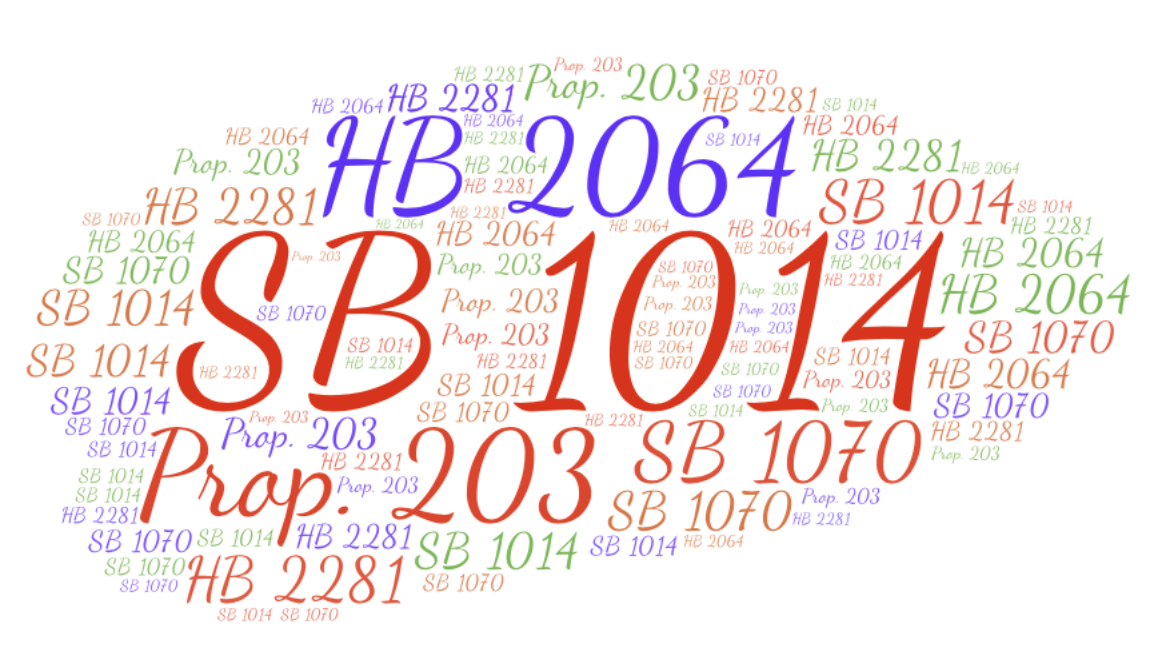
But I have a question. What took them so long? The English Immersion block was just as bad when it began 12 years ago as it is today.
The history of the English Immersion rule makes more sense when it is put in context. On its face it's all about how ELL students are taught, but it's more than that. It's part of Arizona's recent history of legislative efforts to punish not only immigrants specifically, but Latinos and Latino culture in general. And that includes demonizing the Spanish language.
Arizona's English Only law, passed by voters in 2000, and the resulting English Immersion ruling were followed by the "Show me your papers" law, and that was followed by a law designed to outlaw TUSD's Mexican American Studies program. The "Show me your papers" and anti-MAS laws were struck down by the courts in whole or in part. English Immersion survived its court challenges but was finally dragged down by the weight of its own failure.
Tags: English Immersion , ELL students , SB 1014 Prop. 203 , HB 2064 , SB 1070 , HB 2281 , Image
Friday, February 15, 2019

Republican legislators are at it again. They are trying to increase the number of students eligible for private school vouchers. That's in spite of voters saying no to voucher expansion in 2018.
It's a good time to take a close look at the world of vouchers by asking questions and answering them. Let's begin.
In 2018, the popular vote in Arizona went against voucher expansion. Was it close?
Nope. When all the Prop. 305 numbers were counted, vouchers went down by 30 points: 65 percent No to 35 percent Yes.
Wow, a 30 point spread. Isn't that surprising, especially in a red state like Arizona?
Actually, no. Vouchers were on the ballot in Utah in 2007. Utah is redder than Arizona, but the vote margin was close to the same: 63 percent to 38 percent.
OK, that's another example. How about voucher votes elsewhere?
Vouchers have gone down every time they've been put in front of voters, and never by less than 20 points. Counting our vote in 2018, vouchers are zero for seven nationwide.
Lots of states have vouchers. Does that mean all of them have been put in by their legislatures?
Yes, all state voucher programs were voted into law by state legislatures. Arizona's two voucher programs — Tuition Tax Credits (1997) and Empowerment Scholarship Accounts (2011) — were created by our legislature. So were all the revisions which increased the amount of voucher money and the number of students who qualify.
Why do people vote against vouchers?
One reason is not many students attend private schools. In Arizona, it's about 4 percent of the student population. With 1 in 25 students in private school, it's not surprising people aren't excited about sending tax dollars in that direction.
Really, that few students?
Yes, really. In 2014, the most recent year where I could find good data, about 45,000 Arizona students were enrolled in private schools out of a total of about 1.2 million students. Those numbers are approximate, of course, but they're close.
Tags: Vouchers , Tuition Tax Credits , Empowerment Scholarship Account , schools , education , Image
Tuesday, February 12, 2019
Republicans control the Arizona legislature. They're determined to continue their anti-public school crusade by starving schools of funds, and they've been doing a pretty good job of it.
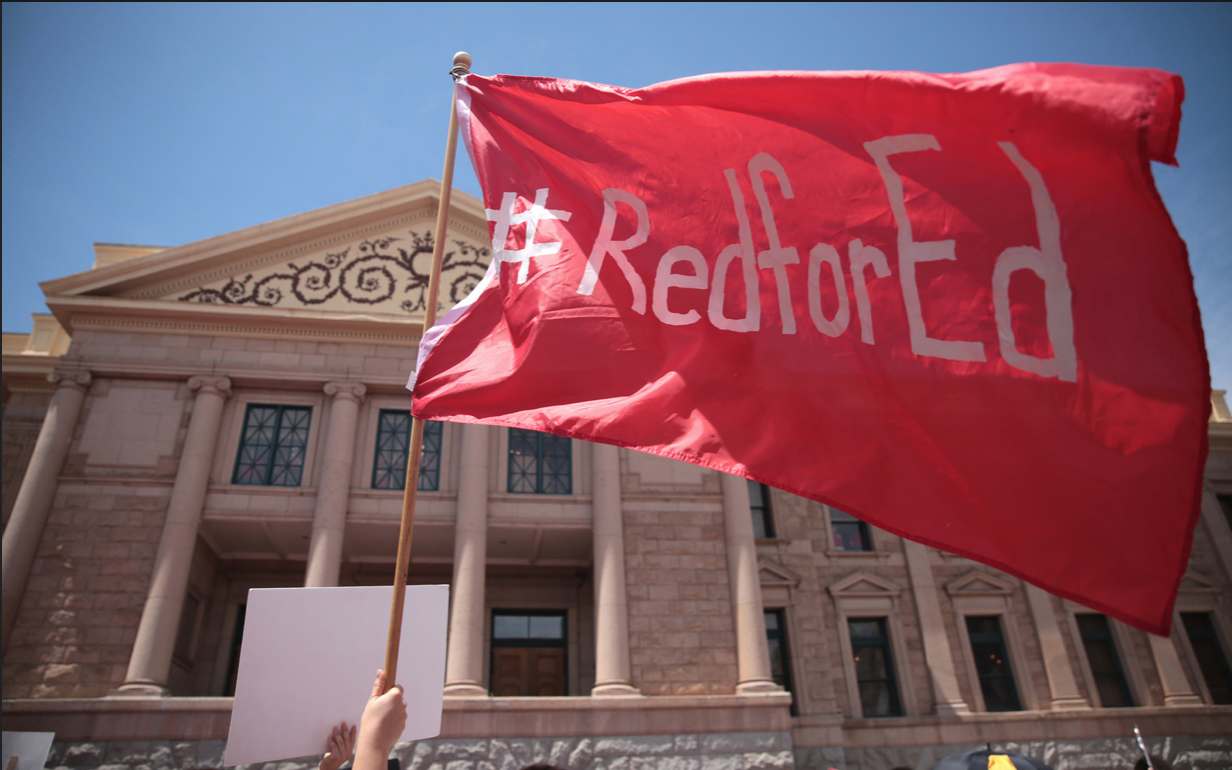
Then teachers donned their RedforEd T-shirts last spring and paraded in front of the Capitol, tens of thousands strong. Teachers won the media battle as well as the hearts and minds of voters. Republicans were forced to paste on smiles and talk about how much they respect teachers and love school children. Gritting their teeth, they voted to budget extra money for teacher salaries. It wasn't enough, but it was more than most people expected, and much more than Republicans wanted to give.
This session, some Republicans think it's time to take revenge on the teachers with legislation that would restrict teachers' speech during school hours, prohibit schools from shutting down during a walkout and allow any legislator to demand that the Attorney General open an investigation into a school district if the legislator alleges it has violated the state's law or the Constitution.
So far, the pieces of legislation have gone nowhere. So far. I dearly hope they will be ignored to death. I wouldn't be giving them this bit of publicity if Arizona was an isolated phenomenon. But two other red states hit by teacher activism have gone the same route: Oklahoma and West Virginia.
If it was only Arizona, well, that's Arizona. But when the same thing happens in three red states, it starts to look like a trend.
Tags: Teacher strikes , Arizona , West Virginia , Oklahoma , California , Colorado , schools , education , teachers , educators , students , Image

