

Friday, January 4, 2019

Let's see, what are the most important education issues facing the legislature this year? Fulfilling its promise to continue raising teacher salaries is definitely on the list. So is increasing charter school transparency and oversight to weed out rampant corruption and profiteering. And decreasing teacher shortages. And decreasing class sizes. And increasing education budgets so old buses can be replaced, old schools can be maintained and old textbooks and technology can be updated. And let's not forget ridding the state of its destructive English Immersion model for ELL students.
Other problems could be addressed as well, like, say, updating the Department of Education's computer data systems and fully funding the oversight and management of the ESA voucher program (Yes, those are important).
Any more? I know I've left stuff out, like increasing access to preschool and who knows what else. In a state that has shortchanged its children for so long, the list is almost endless.
But I know one issue that doesn't even make the top one hundred: getting politics out of the classroom.
So what has the media talked about nonstop for weeks? A proposed bill to get politics out of the classroom.
Yes, such a bill has been proposed. Yes, it would be a travesty if it passed. But no, it doesn't deserve all the attention it's been getting. (And yes, I'm fully aware that I'm giving it more attention by writing about it.)
Giving that much press coverage to a non-story uses up all the oxygen in the room. Substantive educational issues struggle to get the media attention they deserve.
Tags: Arizona schools. Teacher salaries. State budget. Politics in the classroom. RedforEd. , Image
Wednesday, January 2, 2019

The problem was, after declaring in November I was hanging up my blogging hat ("Pretty much, anyway," I added in the headline, just in case) and I had a no-pressure month during which I enjoyed the freedom from deadlines and putting the right words in the right order, I found myself reading something and thinking, "OK, I have to write about that." Then I remembered, "Nope, you can't." I shrugged and moved on. Still, I kept adding new links to my long list of stories I might want to write about. Old habits die hard.
I interrupted my blogging hiatus in December to post about the TUSD decision to get rid of the Freedom Center-created high school course, Ethics, Economy, and Entrepreneurship, for good and all. I mean, I wrote the piece that brought the course to the public's attention, so I should be the guy who writes about its demise. However, the course is still being taught in three local school districts, so the battle isn't over.
Meanwhile, stories about charter problems in Arizona and around the country kept popping up on my desktop, along with items about curriculum, federal spending on education and bills proposed for the new state legislative session. Since I stopped blogging two months ago, I added more than fifty new entries to my list of links.
The tips of my fingers began itching. My keyboard beckoned. So I'm back.
But I've decided, instead of a steady output of two to four posts a week, I'll post on a "Need to write" basis — only when I say to myself, "I really need to write about this." Right now that sounds like once a week, maybe twice a week if the spirit moves me.
That means it'll be harder to find my posts among the steady stream of postings on The Range. If you're a Regular Range Rover (Nice turn of phrase. Maybe I should trademark it), that's no problem. But if you mainly drop by to look for my posts, it can be an issue.
One solution is to bookmark my page on the Weekly which lists all my posts starting with the most recent. You can check occasionally to see if I've posted something new. Also, I usually link to my posts of Facebook or Twitter, so you might find them there. Or if you know how to create an RSS feed (I've never done it, so you'll get no help from me), you can get an email notification when I post something new.
Tuesday, January 1, 2019
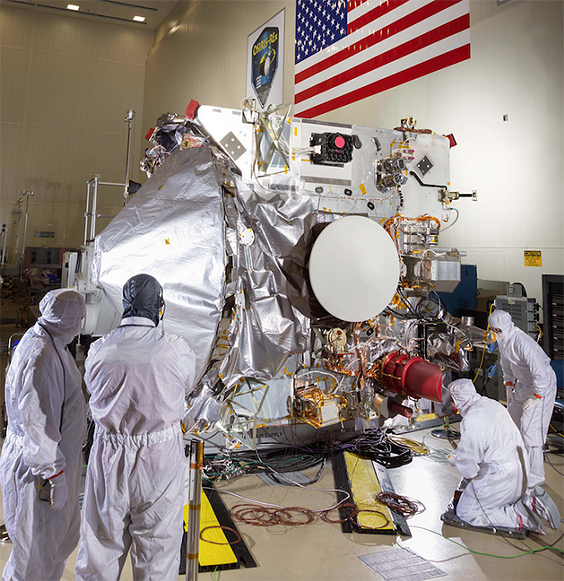
“The team continued our long string of successes by executing the orbit-insertion maneuver perfectly,” said Dante Lauretta, OSIRIS-REx principal investigator and UA professor. “With the navigation campaign coming to an end, we are looking forward to the scientific mapping and sample site selection phase of the mission.”
For the next year, OSIRIS-REx will map and photograph the surface of Bennu, searching for an ideal site to collect samples. Scientists chose Bennu, roughly the size of Pusch Ridge on the Catalinas, as the mission goal due to its carbon-rich surface and near-Earth orbit. From the collected samples of dust and rocks, researchers hope to examine the origins of life on Earth.
However, OSIRIS-REx will not be landing on Bennu to collect the cosmic samples. Instead, the spacecraft will perform a very close flyby, blast the asteroid with gas to knock loose some rocks and dust, and gather the propelled materials. Sample collection is scheduled for early July 2020. Afterward, the spacecraft will fly back toward Earth before jettisoning the "Sample Return Capsule" in September 2023.
Tags: Bennu , Osiris-Rex , Space , exploration , UA , science , Image
Monday, December 31, 2018
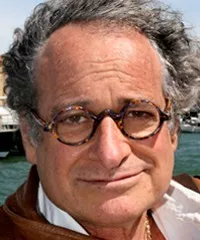
Before Mort Rosenblum reported on international wars, joined the Associated Press, or received eight Pulitzer Prize nominations, he attended the University of Arizona as a young Tucsonan. Now, after more than half-a-century of journalism, Rosenblum is taking to teaching local citizens
about news literacy, and how to find out what’s going on in these complex times.
Part of the UA’s Community Classroom series, Rosenblum’s class, “Keeping Tabs on a Mad World: A Correspondent’s Guide to Global News That Matters” is a series of five weekly lectures to “equip townsfolk who give a damn about how to follow news that matters in the world.”
How did a professor of journalism get involved in teaching to the public? Are you tired of college students?
No, no, it’s the other way around. I started out at the University of Arizona back in 1831 or whenever, and I started working for the Star, then I joined the Associated Press in 1965. Then a couple years later I found myself in the Congo… I was covering a mercenary war in the middle of Africa. But at one point, when I was running the International Herald Tribune in Paris, I got asked do come back and do short courses teaching during summer vacation, and I really liked that. But then in 2004 when I finally left the Associated Press, I was asked to come back and do a short course in international reporting, and that to me is the most important thing I do. Because if we old crocs don’t pass along what we’ve learned the hard way to new generation of reporters that have better tools and often much better skills than we did, things are gonna get lost.
How much freedom did you have in crafting this course, and what are you going to do to ensure it’s not just a seminar or a lecture?
For one thing, I fall asleep in seminars and lectures, so I’d probably fall asleep while doing one. So what I’m going to do is engage an audience, I’ve got some incredible footage and interviews I’ve already done… There will be some lecture and explanation but there will also be lively back-and-forth discussion, there will be video clips, Skyped and taped interviews with people who do the news. So it’s not just me sitting and talking.
What is news literacy?
News literacy is a term someone came up with, and I wouldn’t use... But to be news literate, you need good solid sources to start with: a daily, The Times, The Post, The Guardian. You need to have television sources which take you to a story in certain ways – you get to see the faces and hear the words… So once you have an understanding of what the real-world problems are, the real crises in the world, and once you have an idea of how they fit together, essentially once you open a world map and look at it, then it doesn’t actually take much time to follow the major changes.
Do you think there’s a difference between when you started college and the college students of today, or any seekers of knowledge today?
There’s a huge difference. Today, we have this “Tower of Babble,” words are everywhere. And so the good stuff is better than ever, if you know how to find it. But it’s like looking for nuggets in a garbage can… So the trick is to find those basic, solid sources you trust, individuals more than organizations these days. Give yourself a basic framework, and then go from there. Otherwise you’ll just get drowned out.
Can a person nowadays truly know what’s going on in the world?
A person can know what a person doesn’t know. Truly know? No. But know more than people who just make it up or just listen to what some clown politician tells them? Yeah. And so my purpose for this course is to help people inform themselves with solid reliable sources, about what’s happening now and what’s likely to happen. When you study journalism, the old questions are who, what, where. But the important ones are why, and what next?
Rosenblum teaches “Keeping Tabs on a Mad World” at The Loft Cinema from Jan. 9 to Feb. 6. Wednesdays, 5 to 6:30 p.m. To register for the classes, visit uafoundation.org/NetCommunity/events/madworld
Tags: Mort Rosenblum , UA , teacher , professor , journalist , AP , news literacy , college , public , lectures , The Loft , education , Image
Thursday, December 20, 2018
Tags: Center for Judaic Studies , live stream , Khashoggi Aftermath , Simon Henderson , journalist , Washington Institute , Image
Friday, December 14, 2018

In the end, it wasn’t even close. When the time came for the TUSD Board to discuss the Freedom Center-created textbook for the high school course, Ethics, Economy, and Entrepreneurship, not a single board member had a kind word to say about it. And since the textbook and the course are inextricably linked, the board’s consensus opinion was the course will not return to TUSD.
[A Personal Note: For this post, I'm once again donning the blogging hat I took off recently. I'll most likely return to The Range in January, though I'll be writing less frequently. Stay tuned.]
A bit of history: Ethics, Economy, and Entrepreneurship somehow managed to sneak into the TUSD curriculum in 2016 as a yearlong course which fulfilled the state's economics requirement and could also be taken for dual credit at the University of Arizona. No one at the district knows how it got there (or at least no one is saying).
The Board is supposed to approve new courses, but they were kept in the dark on this one. Most of them first learned of the course's existence when I wrote an article about it in the print edition of the Weekly in October, 2017. Since the school year had begun and students were already enrolled, the board decided to let the course stay until the end of the school year, then discontinue it. Possibly, they said, they would take a closer look at the course at a later date.
That later date was Tuesday, December 11. After the textbook was opened to the public for inspection and evaluation, and a citizens' committee was created to make a formal assessment of the book, it was time for the board to decide on the fate of the textbook and the course.
Tags: Ethics , Economy , and Entrepreneurship , TUSD , University of Arizona , Freedom Center , Kochs Off Campus , Image
Friday, December 7, 2018
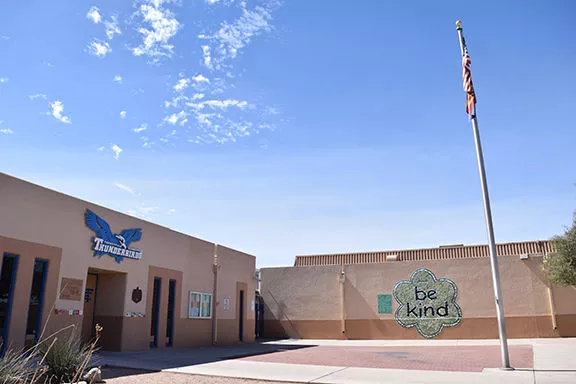
Enrollment at the K-6 school has been declining for over two decades, according to the district. In 1994 there were 733 students enrolled, compared to just 306 this year.
Officials said the decline was caused by a demographic change in the neighborhood, with fewer elementary school-aged children living there. There are no new home developments planned either. Only 192 students at the school live within the Thornydale attendance boundaries.
“In keeping with good fiscal responsibility, the district acknowledges that school district budget revenues are solely generated on a per pupil basis; therefore school enrollment is vitally important to the sustainability of a school,” Superintendent Doug Wilson wrote in an open letter to families of Thornydale Elementary.
The district spends about $2 million annually to keep the school running. At the meeting, Wilson said they spend about $6,468 per pupil at Thornydale, compared to $4,662 at the other elementary schools.
The students of Thornydale will be relocated to the neighboring Quail Run and Butterfield elementary schools. At the public meeting, parents of students enrolled at the school expressed concerns over the hardships of transitioning their children, many of whom have special needs.
Board member Dan Post gave the sole “no” vote, stating that closing the school was the practical thing to do, but not the right thing to do.
Board president Tom Carlson said that this was an extremely difficult decision to make, and that he understood the parents’ frustration. However, he said the closure of Thornydale would be for the greater good of the district as a whole.
Assistant superintendent Carolyn Dumler said all of Thornydale’s teachers, administration and support staff will be relocated to different schools in comparable positions, per district policy.
Following the decision to close the school, the board members unanimously voted to convert the Thornydale campus into a multi-use facility for the district’s Dr. Marianne Valdez Play and Learn (PAL) preschool program, the Extended Learning Opportunities Department, the Health Services Department and the Student Services Department.
The school is expected to close at the end of this school year.
Tags: education , school , Thornydale , Thornydale Elementary , closing , closure , elementary school closing , Image
Monday, December 3, 2018
Eos Planetarium Theatre Show: Black Holes. On Monday, Dec. 3 UA Flandrau Science Center and Planetarium is hosting its documentary on Black Holes. Take a dive into modern science and discover more of what scientists have learned in the recent years. With a fresh, new and updated theater you will be sure to be comfortable while your eyes are on the screen listening to the sweet voice of Academy Award nominated actor Liam Neeson! 4 p.m. 1601 E. University Blvd. Details Here.

Einstein's Legacy: The New Era of Multimessenger Astronomy. Enjoy the last round of the 2018 Steward Public Lectures and learn about the legacy Einstein left behind. Steward Observatory has been hosting public lectures since 1922 so if you're into traditions; this definitely is one. Free. 933 N. Cherry Ave. 7:30 p.m. Details Here.
Events compiled by Brianna Lewis, Emily Dieckman, B.S. Eliot and Jeff Gardner.
Tags: Things to do , Tucson Events , space , astronomy , film , presentations , fun , family , friends , fun things to do in Tucson , Monday , Image
Friday, November 30, 2018

UA was ranked No. 23 out of all public universities and No. 38 for all U.S. universities, according to UA News. This also rates them higher than all other Arizona universities, and was discovered through the Higher Education Research and Development survey.
"University of Arizona researchers have had great success over the past year, both in their efforts to attract funding for their work and in the impact that they have in Arizona and globally," said UA President Robert C. Robbins.
This year's research funding was up nearly $20 million. According to UA News this put the university in the top 5% nationwide. The HERD survey also showed that UA was No. 5 in NASA funding, No. 6 in physical sciences and No. 1 in astronomy and astrophysics.
"The quality of our research is recognized around the world and it's because of the dedication and quality of our staff and faculty," said Kimberly Ogden, interim vice president for research at the UA.
For more information on UA research click here.
Tags: UA Research Top 25 , UA Research , UA Top 25 , university of arizona , Image
Wednesday, November 28, 2018

The Chronicle of Philanthropy that identifies the top 100 organizations that Americans are most willing to support named the University of Arizona number 92.
UA was among only 41 universities and was the only university in Arizona on the list released Oct. 30.
The Chronicle calculated $215.6 million on cash support, money and stock received as gifts from individuals, corporations and foundations at UA in 2017.
The UA Foundation, a 501(c)(3) nonprofit organization that manages UA fundraising, has helped produce more than $3 billion in private funding since it began 60 years ago.
UA is one of 20 public colleges to appear on the list and twenty-one private colleges have made the Chronicle’s list including Harvard at No. 4 and Stanford University and Cornell University in the top 10 as well.
Top 10 for Cash Support:
United Way Worldwide: $3,260,274,867
Salvation Army: $1,467,750,000
ALSAC/St. Jude Children's Hospital: $1,314,189,700
Harvard: $1,283,739,766
Mayo Clinic: $1,140,619,378
Stanford: $1,110,664,853
Boys & Girls Clubs of America: $909,035,450
Compassion International: $819,417,089
Cornell: $743,502,739
Lutheran Services in America: $731,566,533
Data retrieved here.
Tags: University of Arizona , UA , charities , rank , public , cash support , list , money , stock , The Chronicle of Philanthropy , Image

