Tuesday, November 13, 2018
Palo Verde High Magnet School in the Tucson Unified School District received a total donation of $1,075.23 as part of the tenth annual Fall Voting campaign through the chain restaurant SONIC Drive-In. The donation funded a variety of learning materials to local public classrooms not only in Tucson, but all over the country.
SONIC Drive-In has been a long time supporter of public school teachers through a program called Limeades for Learning. The program completed its 10th annual Fall voting campaign last month with donations given to two TUSD classrooms and one in the Sunnyside Unified School District.
During the Fall Voting campaign, SONIC customers were invited to vote for inspiring teachers' projects at LimeadesForLearning.com. The projects that earned the most votes received part of the sum in SONIC's $1 million donation. Some of the teachers' projects included materials such as books, new seating, Chromebooks, art supplies and robotics kits.
SONIC's donation helped 945 public school teachers across the country reach their classroom goal. Thanks to voters, SONIC was able to fund 1,900 teacher projects, support 945 classrooms and donate to teachers in 285 cities across 37 different states across the U.S.
To view the full list of public schools teachers whose projects were funded, including TUSD's teacher projects, Click here. And to learn more about SONIC's Limeades for Learning, Click here.
Tags: donation , teachers , TUSD , schools , education , sonic , limeades for learning , Image

The Southwest Climate Adaptation Science Center, SW CASC, at the University of Arizona received a $4.5 million grant from the United States Geological Survey to support research on climate science and adaptation in the Southern Arizona region.
SW CASC was originally established in 2011 and is responsible for researching the adaptation impacts of land, water and wildlife in the southwest.
With the grant, the SW CASC will be able to continue its seven-year research in partnership with the United States Geological Survey, USGS, to assess the southwest's scientific needs.

Researchers at the SW CASC will be able to use the funds to research topics including vegetation conversion, the theory that after destructive natural events such as wildfires and pathogen outbreaks, new species will appear in the landscapes effected.
The center also announced that it will continue research on drought, the steady increase of summer and winter temperatures and flood risks due to increases in rainfall.
Stephen Jackson is the USGS director of the SW CASC and adjunct professor of geoscience and natural resources and environment at UA. Jackson said that the research would also be able to help other parts of the country.
"The entire world is going to be and already is facing impacts of climate change, but in the southwest, we're seeing it faster and more intensely," Jackson said. "Seeing this first puts us in a good position to tell people in other parts of the country what challenges might be coming to them and pass along information about how to adapt."
To read more about the Southwest Climate Adaptation Science Center, click here.
Tags: adaptation , science , UA , wildlife , research , Image
Tuesday, November 6, 2018

A new study from the University of Arizona's Department of Agricultural and Resource Economics found imported fresh tomatoes from Mexico contributed around $4.8 billion in sales to the U.S. economy and the U.S. imported 3.4 billion pounds of fresh tomatoes from Mexico in 2016.
The study found that U.S. imports of tomatoes from Mexico actively supported nearly 33,000 full and part-time jobs, earning $1.4 billion in employee compensation. It also contributed to $353 million in business owner income and $801 million in corporate profits.
Tomatoes are a species native to the Americas and were first cultivated in Mexico. The U.S. and and Mexico rank as top agricultural export markets with one another, according to the study.
In 2016, Mexico was the largest exporter of crops to the United States, with $11.6 billion in exports. Mexico is the United States’ third largest crop export market destination after China and Canada, with nearly $7 billion in U.S. crops exported to Mexico in 2016.
The trade in tomatoes between the United States and Mexico represents a reciprocal relationship. The U.S relies on Mexico for fresh tomatoes while Mexico relies on the U.S. for processed tomatoes, according to the UA Department of Agricultural study.
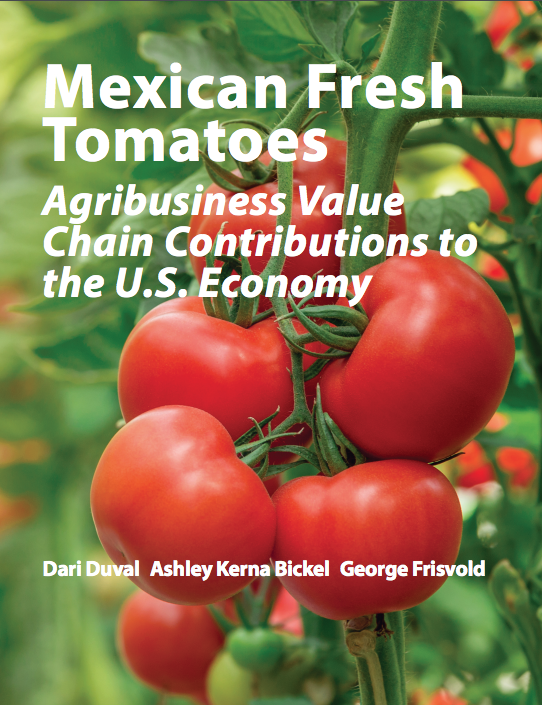
"This study demonstrates that even though grown and harvested elsewhere, imported produce supports economic activity, jobs, and income in the United States through forward and backward linked agribusiness supply chains," said Dari Duval, economic impact analyst with the UA Department of Agricultural and Resource Economics.
To view the full study of the economic contribution in imported tomatoes from Mexico to the U.S visit, cals.arizona.edu/arec/publication/contribution-mexican-tomatoes for more information.
Tags: tomatoes , study , university , Arizona , Mexico , Image
Monday, November 5, 2018
This is my final pitch, as the emails I got asking for more money the day before the election say. (More money? Really?)
Vote! I don't have to pitch that. If you've voted, great, if you haven't, do it Tuesday. However, voting for education can use some pitching, so let me give you a pitch based on personal experience.
I taught for over 30 years, high school English and a few other things (Photography, Yearbook). That means well over 3,000 students passed through my classroom doors. So I've been there, done that. I've been out of the game for quite some time, so I no longer have a dog in the hunt. I reap no personal rewards from your education-related vote.
Here are a few things I learned over the years beyond techniques and strategies that helped me become a better teacher. Money matters. Morale matters. Both will be improved by electing people who support public education.
Money Matters
Salaries matter. Salaries need to be in line with teachers' educational attainment and their importance to the community, and at least high enough teachers aren't frantic a week before the next payday. Nuff said.
Class size matters. My experience is, I can take in an entire class of 25 students, treat each student as an individual, pay attention to them and help them along when I think they need it. I can even remember the essence of what they wrote on their last few essays well enough to talk with them about their work without looking at their papers or my grade book. Add one more student above 25, and someone gets lost. Add 5 to 10 more, and students' individual outlines grow blurry. I start thinking, "I'm really glad those 3 [5, 10] kids are so quiet and don't need my attention so I can focus on everyone else," instead of, "I've got to make sure to get around to those quiet kids, make regular contact so they know I'm thinking about them and ready when they need something." As class size climbed beyond a reasonable number, my effectiveness diminished.
Lowering class sizes takes money. In a high school like the one where I taught with over 100 teachers, you need to add three teachers to lower everyone's class size by one student.
Tags: Public education , Funding , Morale , vote , election , Image
“Meet MCB! is our opportunity to share the scientific research of molecular and cellular biology with Arizona high school students,” said Dr. Joyce Schroeder, Head of the Department of Molecular and Cellular Biology.
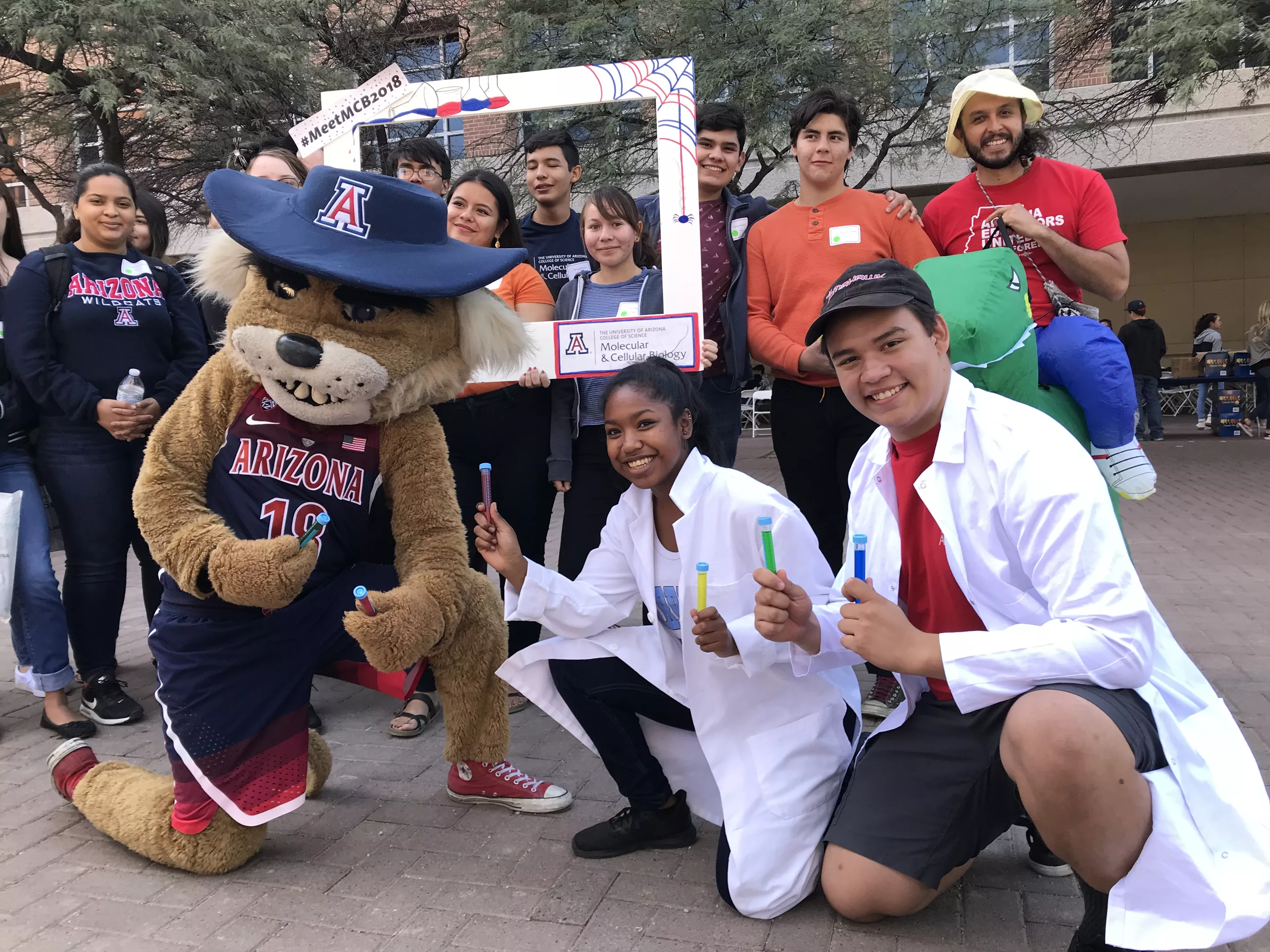
At the event, students toured UA research labs working on cancer research, aging and neurodegenerative disease, while also receiving information on applying to the university and the MCB major.
“Our goal through this event is to showcase the excitement of UA science and give them a glimpse of what life is like as a MCB major at the University of Arizona,” Shroeder said.
All students who attended the event were already linked to the MCB department through the decades-old BIOTECH Project. Through this project, teachers offer high-school students across Arizona hands-on biotechnology experience in professional development workshops, classroom visits, and material and equipment loans.
Dr. Andrew Lettes, biotechnology instructor at Pueblo High School, is heavily involved with the BIOTECH project and attended the Meet MCB! event with his students.
Lettes’ students are currently taking advantage of the BIOTECH project by earning college credit via biotechnology CTE courses at Pueblo High.
This option was first made available in Spring 2013, with the UA MCB department offering three units of credit for two biotechnology courses, MCB101 and MCB102, and for a fraction of the cost: $475 dollars per course. Currently, 12 schools in Pima County offer this opportunity to their students.
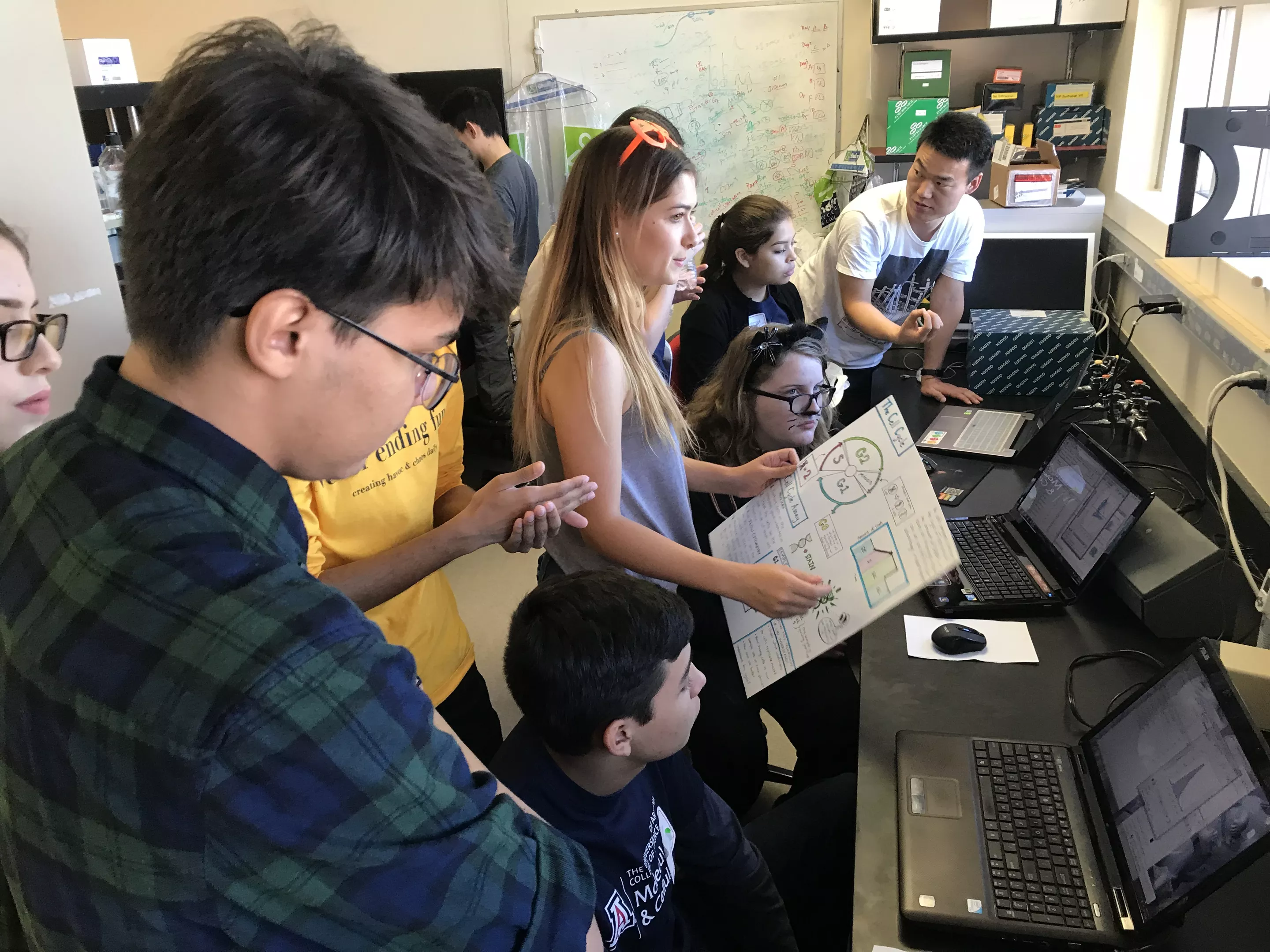
“It’s different than a simple bio course,” Lettes said. “It helps apply the science that they learn to real life.”
During their lab tour with UA associate staff scientist Kimiko Della Croce and her team of university students, the Pueblo High School students walked through a series of large posters explaining why individual cells are studied and how the data is analyzed through cytometry. After, the students saw computers processing data from the cells.
Kara Dyson, the senior academic advisor for the MCB department, said in a press release, “By hosting Meet MCB!, we hope to dispel some of the stigma about big universities and show that our department is a big family of people who truly care for their students.”
The BIOTECH project is supported by the UA BIO5 Institute, the Pima County Joint Technological Education District, the Pima County One Stop Career Center, the UA MCB department and the Marshall Foundation, and continue to use their support to help underrepresented populations of students.
Tags: science , education , BIOTECH , Molecular & Cellular Biology , MCB , UA , Image
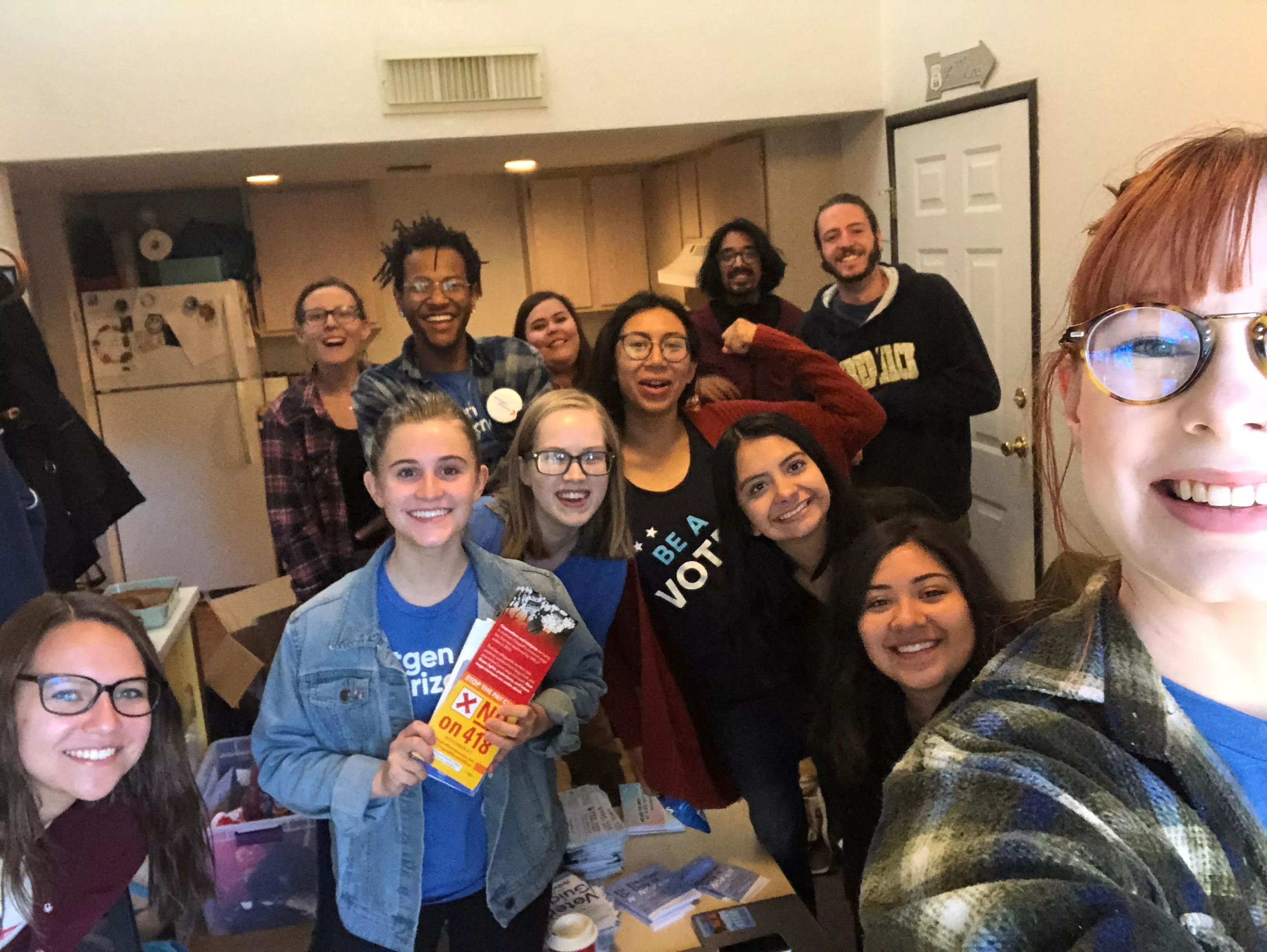
Rides will be going from 9 a.m. to 7 p.m. and pick up will be at the Sixth Street Garage with drop off at the polling station on Donna R. Liggins Neighborhood Center.
The NextGen Arizona team has been working hard all election season to show youth that their vote matters. They work to ensure that every person they have spoken to has a voting plan and information on the candidates. NextGen Arizona has recruited over 1,000 volunteer shifts to get young voters to vote for midterm elections.
NextGen America is making a change across 11 states on nearly 420 college campuses to help young people resist current government views and policies and take matter into their own hands.
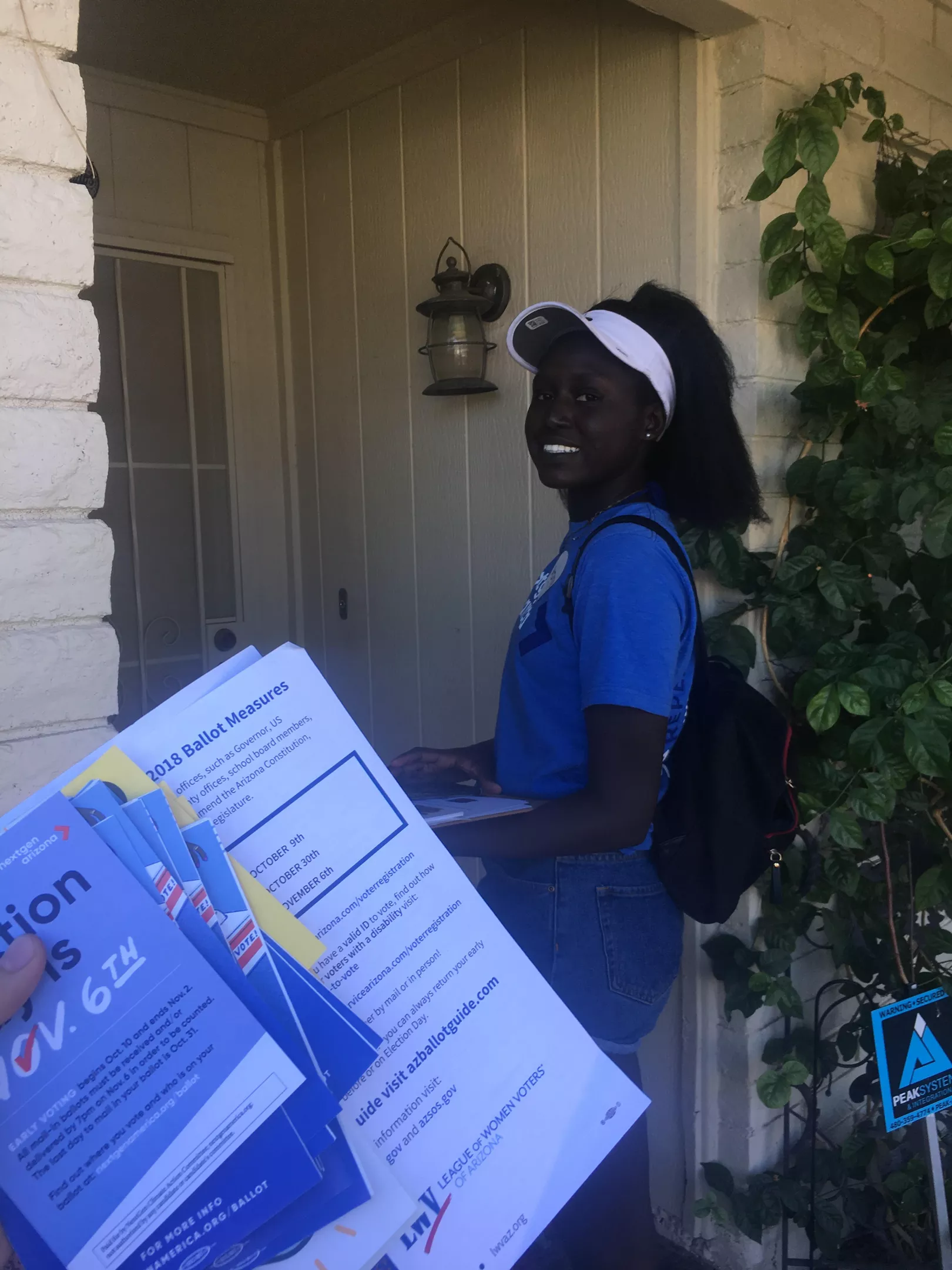
"We have been in the community for months now working on removing roadblocks to young people voting this November 6th. This is just another effort in ensuring we have the highest youth vote turn out possible,” says Belen Sisa AZ State Media Manager of NextGen America.
NextGen hopes to be a leading example for future campaigns and the future of the Democratic Party.
Tags: NextGen , polls , voting , Democrat , Republican , young voters , youth , candidates , volunteer , politics , education , midterm election , party bus , Image
Friday, November 2, 2018

It's not an especially brave act to proclaim, "I am a Jew." I belong to a privileged minority in the U.S. compared to most other minority groups. I have had no antisemitism worthy of the name directed at me in my lifetime. I have never had an opportunity taken away from me because of my religious/cultural identity. I have no personal complaints.
But we are at a moment where I feel the need to say the words, "I am a Jew," if for no other reason than to let myself know I am not afraid to say them aloud or in print. And yet, to be perfectly honest, one reason for saying the words is because, in the current climate, being Jewish doesn't worry me, but saying "I am a Jew" does, a little. That is precisely the time to talk about it.
We are seeing a frightening rise in antisemitism in this country. The latest incident I read about happened Thursday night. Standing alone, it would only be a shudder in the steady undercurrent of antisemitic hatred lurking beneath the surface in this country. But combined with the resurgence of antisemitic rhetoric and events which have been building since 2016 and have accelerated rapidly in the past weeks and months, it is a terrifying example of what could become regular occurrences.
Comedian Ilana Glazer scheduled a get-out-the-vote event at a Brooklyn synagogue Thursday night where she was going to interview a journalist and two Democratic state senate candidates. It was canceled because antisemitic graffiti was found on inside walls of the synagogue, including “Die Jew Rats,” “We are here,” “Hitler,” “Jew Better Be Ready” and “End it now."
Tags: Antisemitism. Charlottesville. "Unite the right". George Soros. Donald Trump. Tree of Life synagogue. , Image
Wednesday, October 31, 2018
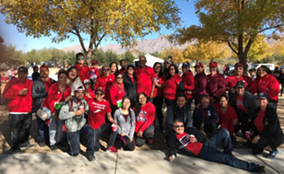
Every walker is provided with sample emails, a personal fundraising page and staff to provide guidance and fundraising (online or through mail) support.
Walkers who raise $100 or more will receive the National Walk Shirt. Walkers who raise $250 or more will receive additional fundraising prizes. The National Silver Sponsor is Salix Pharmaceuticals and the National Partner is CVS Specialty who help by offering product discounts to participants, providing product donations to the event and financial support.
The event features activities for kids, food, entertainment and information about the American Liver Foundation.
More than 10,000 people from across the country come together and raise almost $2 million annually. The event is free, but registration is required either before the event or at the event and there is no fundraising requirement, but walkers are strongly encouraged to raise a minimum of $100.
Form a team of family members, friends or colleagues and walk and fundraise together to make a difference in the fight against liver disease!
Liver Life Walk will take place on Saturday, Nov. 3 at Brandi Fenton Memorial Park from 10 a.m. to 12 p.m. Registration begins at 8:30 a.m.
5 Facts about the American Liver Foundation:
1. Their education programs reached approximately 46,000 people in 2016.
2. They are the leading source of information on liver health and liver disease.
3. Their toll-free National Helpline and 16 divisions across the country provide support to patients, families, caregivers and the public by phone, email and community outreach.
4. Their National Helpline volume doubled in 2016 with nearly 12,000 inquiries.
5. They have provided almost $26 million in research funding to over 840 early career investigators.
Tags: liver , life , walk , awareness , raise , money , disease , liver disease , food , kids , entertainment , information , fundraising , American Liver Foundation , Liver Life Walk , Image

Empowerment Scholarship Accounts (aka Education Savings Accounts, aka Vouchers on Steroids) are a backdoor voucher program which gives debit cards to parents to spend on their children's educations so long as the children don't attend a district or charter school. When parents get the money, they're told it can only be spent on education. "We'll be watching you, so don't use the money for other things," they're told. But actually, no one is watching.
In fiscal year 2018, $700,000 was misspent by ESA parents according to an audit released by the Department of Education. The items include obviously non-educational purchases like beauty supplies, sports apparel and computer tech support. Very little of that money has been paid back to the state.
It's the kind of story the "good government" folks at the Goldwater Institute might want to cover. I say that because G.I. recently published a report on fraud in school districts. The report came fast on the heels of the Republic stories about people making millions on charters, so I'm guessing it was written to counter the bad press — G.I. loves charters almost as much as it loves vouchers — by saying, "Hey look, school districts do it too!" However, something tells me, pointing out voucher-related fraud isn't the kind of deflection G.I. is planning any time soon.
Tags: education , charters , vouchers , ESA , misspent , money , Image
Tuesday, October 30, 2018

It would be foolish of me to say with 100 percent certainty that the Arizona Supreme Court ruling against the "Invest in Education" initiative was politically motivated. I'm only 95 percent certain they wanted to knock the initiative off the ballot for political reasons — with a 5 percent margin of error.
The Supreme Court decision against Invest in Ed fits a little too neatly with the zero tolerance policy toward citizen initiatives enacted by the Republican majority legislature and signed by Governor Ducey to be a coincidence.
The legislature's zero policy law requires "strict compliance" with the rules governing petitions. Ridiculously strict compliance. If people carrying petitions make a mistake in the way they fill it out, no matter how small, the entire petition and all its signatures can be tossed. If people signing a petition go outside the lines with their signatures or other information — if the tail of a "g" or a "y" extends outside the line — that signature can be thrown out.
Why the new ridiculously strict compliance law? Because Republicans hate citizen initiatives. They'll do whatever they can do to make it harder for them to make it to the ballot.
It's easy to understand why. This year a citizen initiative limiting one of Republicans' pet projects, private school vouchers, is on the ballot. So is an initiative to increase the use of clean energy, something Republicans all over the country oppose so deeply, they've decided to ignore science, thermometers and their own eyes and say, "Climate change? What climate change?"
Then there are the two citizen initiatives that didn't make it. One would have banned Dark Money, the lifeblood running through the veins of Republican politics. The other is Invest in Ed, which would have made people whose taxable income is over $250,000 ($500,000 for couples) pay a higher income tax rate.
That's four initiatives Republicans despise. They never would let ideas like those get anywhere near the floor of the legislature, and they hate it that citizens have the ability to go around the Republican political stranglehold on the state by using the initiative process.
Tags: Citizen initiatives , Arizona Supreme Court , Invest in Ed , Strict Compliance , Image