

Thursday, October 25, 2018

Prime example: an op-ed in the Arizona Republic by Rhonda Cagle, chief communications and development officer for Imagine Schools, a national charter chain with over a dozen schools in Arizona. The headline reads, Everything you need to know about Arizona charter schools. Actually, it's not quite everything, and what Cagle states as fact has a whole lot of spin mixed in.
The op-ed begins by saying charter schools have been under scrutiny lately — true fact. Also that scrutiny can be a good way to stimulate dialog — another true fact. And that lots of families choose to send their kids to charters — yet another true fact. It ends by saying we shouldn't be asking whether or not charter schools are better, we should applaud the number of viable educational options presented to students and their parents, both charter and district schools. I agree. Good schools for your children are where you find them, and charters are part of the mix.
All that is fine, pretty much down the middle. But at other times, Cagle's assertions aren't as hard and fast as she makes them out to be.
Tags: Charter schools , Rhonda Cagle , Open enrollment , Public schools , Image

The program offers grants up to $5,000 to fund STEM projects in classrooms including subjects like science, technology, engineering and math. The grant program started in 2008 and has since awarded more than $8 million dollars in grants to teachers. It has provided students with the opportunity to use recent technology tools in their education and supports student achievement.
The CenturyLink Clarke M. Williams Foundation is an organization dedicated to improving local communities. In the 2017-2018 school year, nearly 2,000 grant applications were submitted and more than 300 grants were awarded based on the project's overall innovation and anticipated impact the project would have in the classroom.
Applications for the Teachers and Technology grant will be accepted now through Jan. 12, 2019. The review process will be completed and grants will be presented from April 1 to May 15. To apply for a grant, click here.
Tags: teachers , grant , money , application , students , Image
Tuesday, October 23, 2018

According to an AZ Republic article which gives off only the faintest odor of skepticism, we're about to get significant improvements in Arizona's charter school oversight and transparency courtesy of all those people who have shielded charters from oversight and transparency in the past: Republican legislators and statewide officeholders. We're supposed to believe the people who have always coddled charters and condemned school districts are going to take charters to task for their corruption and profiteering. And they'll do it after the elections are over, when they have a years-long window before they face voters again.
If you believe that, I've got some beach-front property in Marana you can buy with all the money you get back from Trump's middle class tax cuts.
The Republic article begins with the Arizona Charter Schools Association, the state's biggest cheerleader for charter schools, which is very influential in state Republican circles. After seeing all the bad publicity charters have gotten from recent investigative reporting, Eileen Sigmund, the association's CEO, has decided it's the right time to say, some changes should be made.
In 2016, the ACSA got a $1.6 million grant from the Walton Family Foundation. It's a yearly contribution from the multi-billionaire family which owns Walmart, and the money amounts to half the association's budget. The Foundation gave out $190 million in K-12 education grants that year, the majority of which either went to organizations with the word "charter" in their name or to privatization/"education reform" groups. There's no bigger financial supporter of charter schools in the country than the Walton family. Sigmund isn't about to anger her benefactors. Post elections, she will make it her prime mission to be sure any changes to charter regulations happens around the edges, if they happen at all.
Tags: Charter schools , Profiteering , Arizona Charter Schools Association , Eileen Sigmund , Mark Brnovich , January Contreras , Goldwater Institute , Doug Ducey , Kate Brophy McGee , Image
Friday, October 19, 2018

So, my advice to parents is, VOTE! If you have a mail-in ballot sitting around beginning to gather dust, pick it up, fill it out and mail it in. No stamp required. If not, there's early voting at the polls. And there's November 6.
Vote for your children, which means, vote education — whatever that means to you. More on that later.
I figure there are about 400,000 of you parents with school-aged children registered to vote. (I'll explain how I arrived at that ballpark figure at the end of the post.) If you vote at 35 percent, which is typical for non-presidential elections, that's 140,000 ballots cast. Some of you who normally sit on the sidelines could, and should, decide this election is important enough to make the extra effort. If the number goes to 50 percent, that's 200,000. If you double your voting rate, you'll be pushing a quarter million.
Parents are an electoral force to be reckoned with. If you split along party lines as usual, not much will change. But if you vote for candidates who are long-time supporters of public education, not candidates-come-lately who, after years of bashing "failing schools" and "failing teachers," have decided it's politically expedient to say our schools deserve a little more money and support, you can be game changers.
I know what it means to me when I say, "Vote for education," but it may mean something different to you. Here's a thumbnail guide you can use to decide what you think "Vote for education" means.
Vote Democratic if you believe our public education should be fully funded, that Arizona should no longer occupy the nation's bottom rung in per-student funding.
Vote Republican if you don't want to "throw money" at failing schools and failing teachers because more money doesn't translate to better schools.
Vote Democratic if you think charter schools need more oversight and regulation to get rid of the bad actors and profiteers.
Vote Republican if you think the current lax charter rules and regulations are just fine, that we should let the "invisible hand of the marketplace" work its magic.
Vote Democratic if you think our two backdoor private school voucher programs, Tuition Tax Credits and Empowerment Scholarship Accounts, take money away from public education and favor wealthy families who would send their children to private schools anyway.
Vote Republican if you like the idea of vouchers for everyone who wants them.
Whatever you decide, parents, VOTE!
A Number-Of-Voting-Parents Note: Maybe the numbers are out there somewhere, but I didn't find them. So here's how I got to 400,000 Arizona parents of school-aged children who are registered voters.
Start with a million K-12 students. Estimate 2.5 children per family, figuring the range from big families and those with one child. That comes to 400,000 families. Estimate 1.5 parents per family. Now we're at 600,000 parents. Estimate a third of the parents either didn't make the effort to register or aren't citizens and can't vote. That leaves 400,000 parents of school-aged children who are registered voters.
Tags: Voting , Elections , Parents , education , teachers , Image
Thursday, October 18, 2018
So let's take another tack. Let's talk about hammers and nails.
No doubt you've heard the saying, "When you have a hammer, everything looks like a nail." Even if the hammer you're holding isn't the best, or the only tool for the job in front of you, you're going to try and find a way to use it. You know that hammer. You like that hammer. It's the first tool that comes to mind when you have a situation you have to deal with before you consider other options.
It's the same with the ideas you tend to favor. They are going to be readily at hand when you're looking for solutions to problems you have to deal with. You'll call on them before you consider alternatives. Likewise with your personal and professional experience. You're going to lean on what you know to guide you.
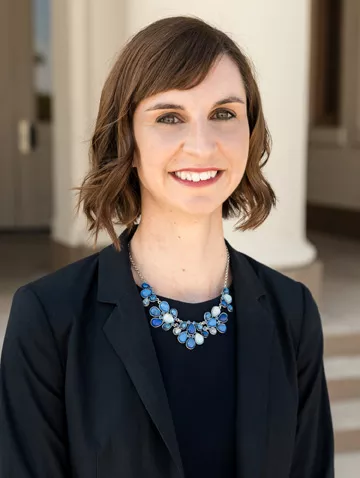
So let's look at the hammer —actually the hammers — Hoffman and Riggs have in their tool belts which they would tend to favor if they became our next education superintendent.
Kathy Hoffman knows public schools. She knows early childhood education. She works with students with disabilities. She speaks fluent Spanish and Japanese. She understands the value of being bilingual and the importance of bilingual education.
If Hoffman becomes superintendent, her first instinct will be to seek out public school solutions to problems or opportunities she faces. She's going to think about Spanish (and other language) speakers as well as English speakers. She's going to consider students who have to overcome problems to reach educational success. She'll consider whether early childhood education should be a part of the solution.
Tags: Kathy Hoffman , Frank Riggs , Superintendent of Public Instruction , Image
Wednesday, October 17, 2018
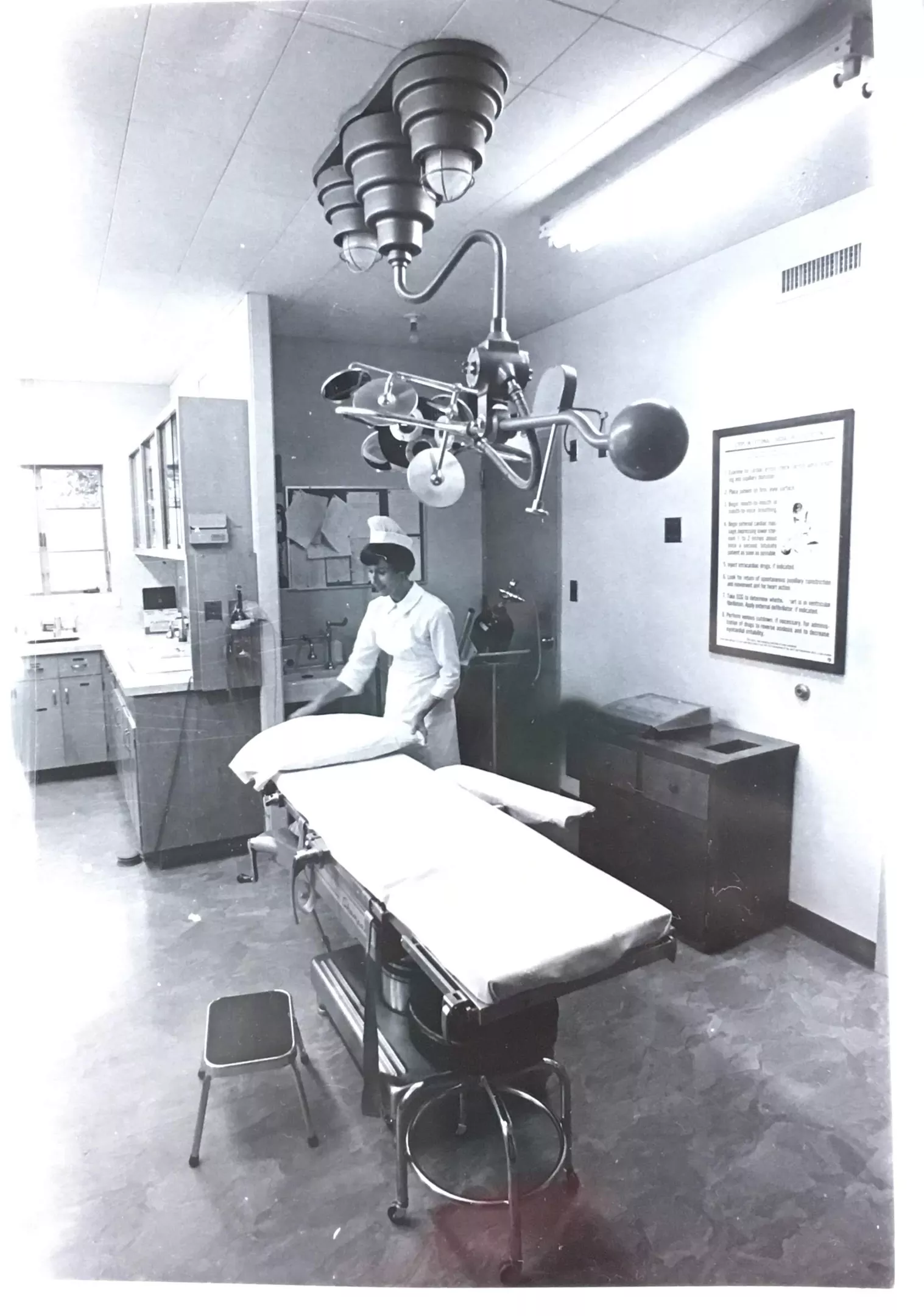
What started as a quarantined Flu Infirmary is now UA's official campus health. In 1918 they first began to fight the Spanish Flu, which was going around campus causing people to become extremely ill. Certain sections of Old Main and the Forbes building were turned into quarantined spaces for infected students and soldiers. Today, Campus Health is one of the longest-serving units on the University, according to UA News.
In 2004, they moved into their current space on Highland Commons that now serves over 70,000 patients a year. Lee Ann Hamilton said in a release, that they see about half of the University population in a given year. Their return rates are high, as 99% of students would recommend it to their friends.
Hamilton says they are set apart in many ways, one being that their three main goals are outreach, education and prevention. She also added that they have a dedicated passionate staff that genuinely wants to help their students. According to the release they were the first credited college health service in the nation and they were ranked No. 2 in Princeton Review's Best Health Services.
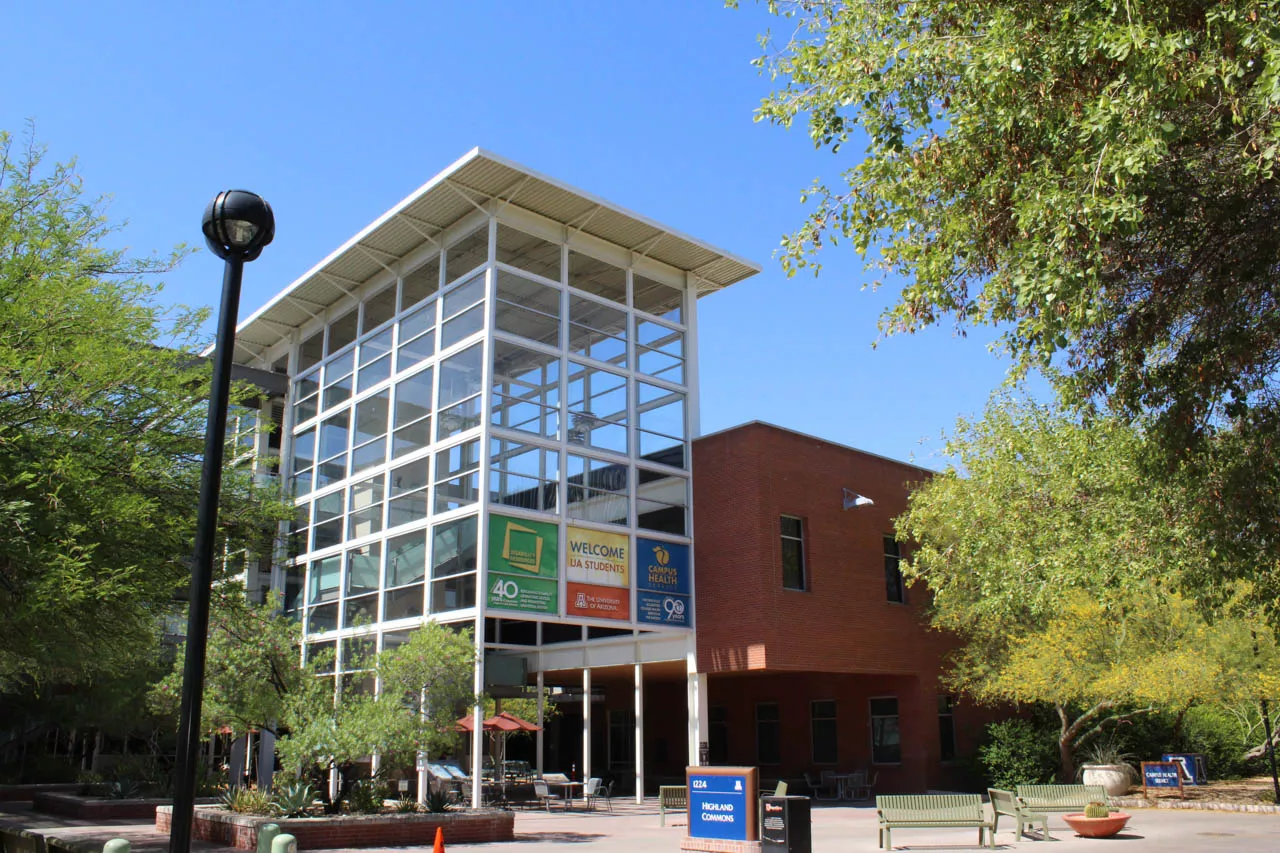
Students taking one credit hour or more at UA are eligible for treatment from Campus Health; employees can also be seen. What began as a flu infirmary is now a health department with a multitude of outreach potential for its students. From a simple cold to mental health, UA Campus Health has got its students covered.
To continue the history lesson, Click Here.
Tags: UA Campus Health , University of Arizona , Centennial , Image
Tuesday, October 16, 2018

"We are all incredibly grateful to the Frederick Gardner Cottrell Foundation for its transformative generosity," UA President Robert C. Robbins said after the Oct. 5 naming ceremony.
The gift was recognized at last week’s ceremony to rename the library to the Albert B. Weaver Science-Engineering Library. The donation and name change mark the renovation of the library which will add student collaborative spaces on two floors adjacent to the libraries 260-seat collaborative classroom, the largest at the university.
The Cottrell foundation is the philanthropic arm of Research Corporation Technologies, a Tucson-based technology investment firm. The library’s new name comes from Albert B. Weaver who was appointed the head of the UA physics department in 1958 and later moved up to provost of academic affairs and vice president of the University. Weaver passed away in 2012.
"This gift honors the accomplishments of a past UA leader and makes our future more promising. It shows how powerful philanthropy is in shaping our campus and our identity," said John-Paul Roczniak, president and CEO of the UA Foundation.
Tags: University of Arizona , Science and Engineering Library , Cottrell Foundation , Research Corporation Technologies , Albert B. Weaver , Library , grant , gift , renovation , collaborative learning , science , engineering , Image
Apologies to fellow teachers. (I know, I've been out of the profession for 15 years, but once a teacher, always a teacher, even after you lose your class [badum-ching!]). I know how much teachers hate being told what to do. I always did. I keep promising I won't give teachers advice, but I keep doing it anyway. My excuse is, I spent 30-plus years in the classroom, so I'm cutting myself a little slack.
My advice to teachers is, VOTE! If you have a mail-in ballot sitting around beginning to gather dust, pick it up, fill it out and mail it in. No stamp required. If not, there's early voting at the polls. And there's November 6.
Teachers, vote for education, whatever that means to you. More on that later.
Arizona has about 50,000 K-12 teachers. Roughly 40,000 of them work in school districts, and most of the remainder work in charter schools. That's a whole lot of people whose lives revolve around governmental decisions. Include an equal number of non-teaching staff, and it adds up to nearly 100,000 potential education-based voters in statewide races, 3,000 per legislative district. That's more than enough to make the difference in close races.
For some reason I've never understood, teachers aren't reliable voters. I've heard figures as low a 35 percent show up for elections, which astounds me. Anything lower than 80 percent from a group of people who dedicate themselves to serving the public interest, who perform their civic duty every working day, seems wrong. Maybe some teachers feel like they use up their quotient of public service in the classroom, then when it comes time to vote, they think, "Screw it, it's time for the rest of you to step up while I work on tomorrow's lesson plan for your kids!"
OK, so this year, don't think about voting as another civic chore to add to your physically and emotionally draining teaching schedule. This year, vote out of self interest.
Tags: Teachers , Voting , School funding , education , Image
Monday, October 15, 2018

And that's why Republicans are making such a big deal about Democrats being angry, or one of the reasons anyway. Sure, they want to use the "Democrat angry mob" attack to rally their base by conflating the Democratic Party with their usual grab bag of scary people, the immigrants and gangs and just about any people of color — you know, the usual suspects in the Republican "Be very afraid, they're coming to get you!" campaign. But as important, they don't want Democrats to use anger to rally their base. The DGA email says Democrats have to "channel all our fury into fighting as hard as we can for the next 23 days until Election Day," so Dems will vote in large enough numbers, they'll win close races. Republicans expect that kind of talk from lefties like MoveOn and Bernie Sanders. But when it comes from the usually staid, measured Democratic Governors Association, that's scary.
Anger and vitriol are supposed to be exclusive Republican weapons used to pummel Democrats into submission, according to Republicans anyway. They know anger works. It gets voters' adrenalin pumping. It's especially effective when Democrats respond as they have historically, with measured tones, using logic to explain why Republican anger isn't justified.
"See?" the aggressors crow after a weak Democratic response. "Republicans are strong, we know how to fight! Democrats are wusses."
Tags: Republicans , Democrats , Democratic Governors Association , Mitch McConnell , Orinn Hatch , Lindsey Graham , Image

On Tuesday, Oct. 16 at 6 p.m., the University of Arizona College of Science will be hosting UA Science Café. This installation of the Cafe is titled ‘The Race for Ground Water-A Shrinking Resource’ and is held at Magpies Gourmet Pizza on Fourth Ave.
Presented by Jen McIntosh, associate professor for UA Department of Hydrology and Atmospheric Sciences, the talk will bring the community together to talk about the competition and shrinking supply of the last deep groundwater resources in the United States.
Barbara Sherwood Lollar, a prominent scientist from the University of Toronto who discovered deep, billion-year-old water resources in the earth’s crust and the microbial life that lives there will be highlighted at the talk.
The Science Café at Magpies Gourmet Pizza series features leading female researchers from the University of Arizona who work in a variety of fields. Each presenter will reference a female researcher who came before them in their field, who inspired them at a time when few women were able to pursue a career in scientific research.
Science Cafés teach the latest research that is being conducted and allow all to come and interact with the faces behind the science. There are five different café series at five different locations in Tucson.
Tags: Magpies , pizza , science , hydrology , groundwater , resources , researchers , research , café , water , Image

