

Thursday, March 22, 2018
We've seen massive Women's Marches and other anti-Trump demonstrations. Women voters may lead the way to flipping the Congressional balance of power from R to D. The nationwide student movement against gun violence is accelerating. It looks like it has the legs to stick around. Our young people may lead the rest of us to some common sense gun regulation—not as much as we need, but some.
And now teachers are hitting the streets demanding much-deserved salary increases. Arizona's teachers are gaining national attention with their #RedforEd movement, which follows a successful teacher strike in West Virginia and coincides with strike rumblings in Oklahoma. Wednesday's sick-outs closed schools and brought teachers to the Capitol demanding a raise to get them out of the salary cellar. Ol' Doug "HalfPercentForTeachers" Ducey must be feeling a wee bit uncomfortable these days.
West Virginia teachers demanded a 5 percent raise, and they got it. But the part of the story which has gotten less attention is that the raise will cost $20 million the state doesn't have. The Republican Senate Finance Committee Chair threatened that some of the money will come out of Medicaid, maybe in an attempt to turn public opinion against the teachers, maybe because he doesn't like health care for low income people. The governor says no, it'll come out of other parts to the budget. But it has to come from somewhere. Oklahoma is in the same situation. It doesn't have the money for teacher raises unless it shorts other parts of the budget.
And there's the rub. Raising teacher salaries by 5 percent—in the neighborhood of $2,200 per teacher, which is really the minimum our teachers deserve—takes serious money. In Arizona, which has a much larger population than West Virginia, the bill comes to about $150 million, and that's only a portion of billion a year Arizona schools need just to get even with 2008 levels.
Tags: Arizona budget , Taxes , Capital gains tax cut , November elections , Image
Tuesday, March 20, 2018

That was the most effective message among African Americans in Alabama's recent Senate election pitting Democrat Doug Jones against the racist, child dating Republican Roy Moore. With so many ways to attack Moore, it turned out the positive message about education had the greatest impact on people's desire to vote.
Would a similar message help Arizona Democrats drive voter turnout, the first necessary step to winning close elections?
A column by the New York Times' David Leonhardt discusses a company testing ads to increase African American turnout for Doug Jones in Alabama. A number of ads targeted Roy Moore's negatives, but this is the 15 second ad that tested strongest.
“My kids are going to do more than just survive the bigotry and hatred,” a female narrator says, as the video shows a Klan march and then a student at a desk. “They’re going to get an education, start a business, earn a good living, make me proud. Education is my priority. That’s why I’m voting for Doug Jones.”The video flashes a shot of white supremacists carrying tiki torches at the Charlottesville march last August and Trump giving a thumbs-up at a campaign rally, but most of the ad shows a boy in school, a mother, and a young African American businessman behind an office desk.
It's "Make American Great Again" for families: "Make the future bright for our children. Vote Democratic."
Tags: Education , 2018 campaign , Democrats , Republicans , Image
Friday, March 16, 2018

They chose disrespect.
Politicians face damned-if-you-do, damned-if-you-don't situations all the time. Both sides of the aisle love to make their colleagues on the other side squirm. This was one of those times for the Republicans.
House Democrats introduced the students in the gallery one by one. It took an hour. Had to be tough for the Republicans to sit through. The fresh faced, idealistic students asked the legislature to pass laws requiring comprehensive background checks, banning bump stocks and hiring more school counselors. Those comparatively mild, measured requests made the Rs squirm further down in their seats. When Democrats made speeches reinforcing student demands, that was too much for the Republicans to take sitting down. Most of them left.
Then came a moment when they were asked to stand quietly for 17 minutes. They could have done it as a simple gesture, a show of respect for the 17 deaths of Florida students who were the same age as the young people in the gallery. It wasn't a vote. It wasn't a commitment to pass gun regulation. Even the nuttiest of their gun nut constituents most likely would have shrugged it off. But they wouldn't do it.
Tags: Arizona Legislature , Republicans , Democrats , March 14 , Gun regulation , Image
Thursday, March 15, 2018
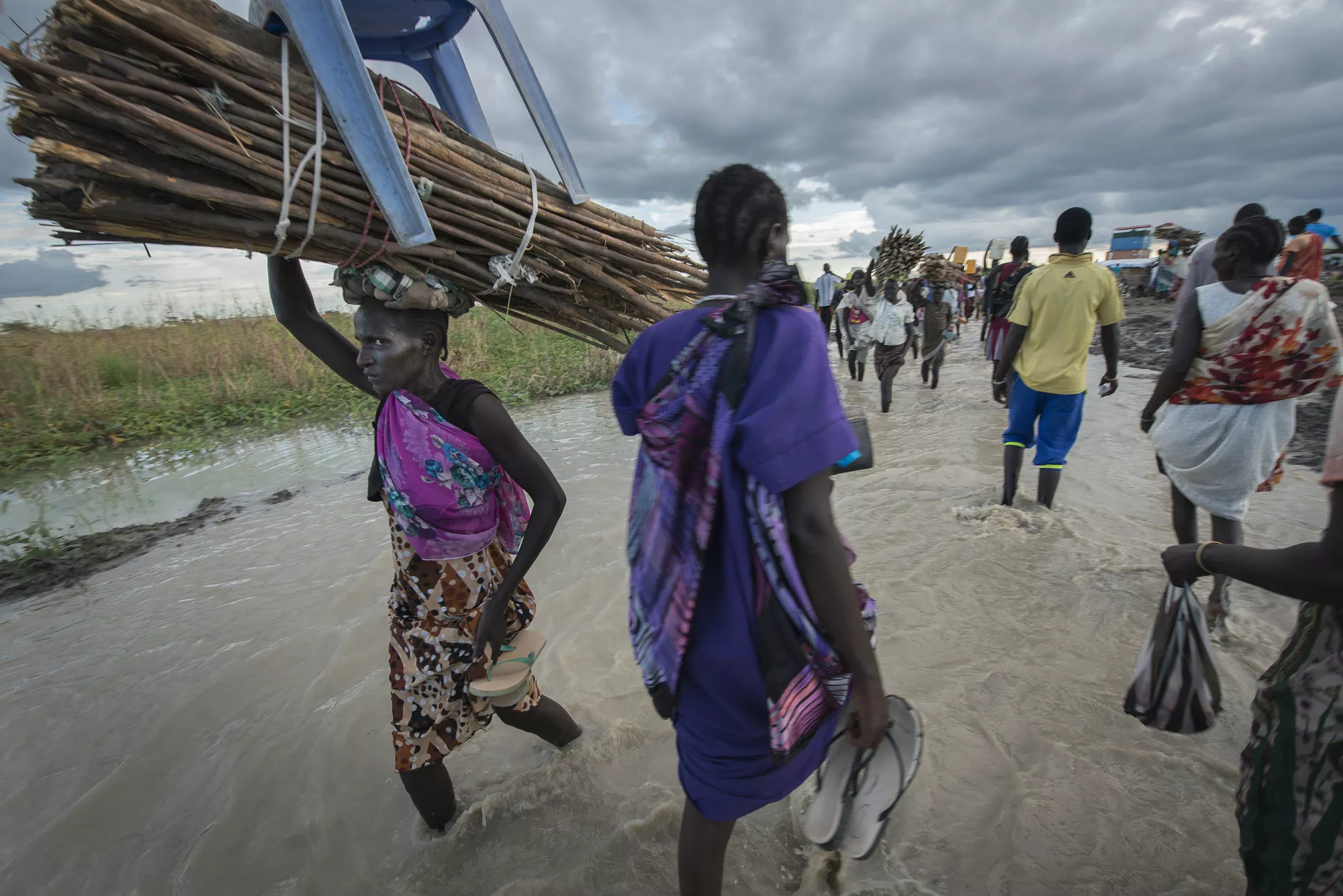
Refugees face adverse hurdles in their origin countries and where they settle. Many believe that they need all the help they can get. There are programs that do this within our own welcoming and supportive community, as Patricia Repolda describes it.
Repolda is the development manager at the International Rescue Committee in Tucson. This resettlement organization helps newly arrived refugees adapt to life here so they can have a smooth transition. The local IRC runs programs that help refugees navigate the missions of finding homes, English language classes, finding a job, legal help, and other services necessary to be successful in the U.S.
“Walk a Mile in a Refugee’s Shoes” which is the first time, according to Repolda, that there is a simulation event in Tucson that allows participants to immerse themselves in the experience a refugee endures.
“They will assume the role of a refugee and they will gain an understanding of the different challenges refugees encounter to access basic needs prior to arriving in the United States,” she said.
Through this interactive event, the IRC wants to inform and unite both the refugee community and the local community alike through education and fostering understanding. Along with simulation exercises, there will also be an advocacy station to inform people how they can help refugees in the community—either through volunteer work or donations.
“Our goal is to provide education to the Tucson community to some of the unique challenges refugees have overcome before coming to the United States. And also, provide education to what’s going on around the world—why we’re helping refugees,” Repolda said.
“There’s different things they can do to share their welcome and support to the refugee population here.”
Nejra Sumic fled her native country, Bosnia, with her family as a child because of religious persecution. She came to the United States in the early '90s as a refugee.
Today, Sumic dedicates herself to helping refugees as the advocacy and outreach coordinator for the IRC in Tucson. To her, events like “Walk a Mile in a Refugee’s Shoes” are ways to show people about the reality surrounding refugees and for them to have more compassion toward refugees.
“Most people have never experienced it, it’s to kind of give them a little glimpse of their lives and their experience,” Sumic said.
She said that events like “Walk a Mile in a Refugee’s Shoes” challenge stereotypes and misconceptions.
“I want to express the importance of a welcoming community for refugees, the refugees are safe, they’re not a burden to the community. Refugees come with the mindset of being driven, of taking ownership of their lives that has been shattered and giving [to] that community that has helped them resettle,” Sumic said.
Benjamin Lawrance, a professor at the University of Arizona and historian that conducts research on African migration.
He said that 60 million people in the world, today, are refugees and only 200,000 of them end up being resettled in another country. Many end up living their lives in an indefinite limbo where they remain in refugee camps for long periods of time while others are lucky enough to go through a lengthy resettlement process and live somewhere. Various refugees end up calling the United States home, a couple of them even becoming our neighbors, here in Tucson.
According to Lawrance, one of the best ways to help refugees is donating money and supplies to local resettlement programs, as well as volunteering. “Refugees need friends. They need helpers to help them learn,” he said.
Events held by refugee centers, like the the International Rescue Committee are the connecting point that brings together refugees and the community, are also important to help them.
“I think it’s very useful to learn about the personal experiences of somebody else, to really become familiar, in whatever way, that you can to the difficulties that people experience,” Lawrance said. “The more exposure you have to other people’s lives, the more capacity of empathy that we have.”
“Walk a Mile in a Refugee’s Shoes” will take place on Sunday March 18 at the Jewish Community Center (3800 E. River Rd.) which is partnering with the IRC. It will begin at 10:00 a.m. For more information, please check out this website.
Wednesday, March 14, 2018
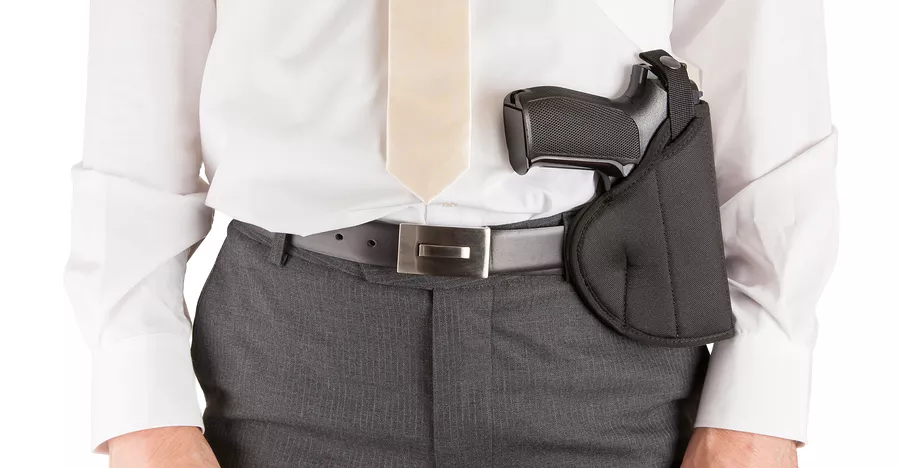
Douglas is standing ankle deep in the NRA Tar Pit. It might not be the best place for an educator facing an election to be stuck right now. The #NeverAgain and #VoteThemOut movements could help rid us of education's gun-crazy dinosaurs come November.
Douglas promoted arming teachers on the Bill Buckmaster show two weeks ago, but no one picked up on it, myself included, until Monday when the AZ Republic ran a story. After reading the article, I went back to the February 28 Buckmaster Show and listened myself.
Douglas used the bank-school comparison twice; she clearly came to the show prepared with the analogy and liked the way it sounded. And she went further, stating that Arizona law already allows teachers to be armed, citing Arizona Revised Statute 15-341 A23. She really loves ARS 15-341. She made sure to repeat the statute number three times so no one would miss her point.
The problem is, Douglas' interpretation of the statute is questionable.
ARS 15-341 states governing boards may
"prescribe and enforce policies and procedures that prohibit a person from carrying or possessing a weapon on school grounds unless the person is a peace officer or has obtained specific authorization from the school administrator."According to the Republic article, Heidi Vega, spokeswoman for the Arizona School Boards Association, believes the language refers to someone like a police officer giving a talk in a classroom. I think the ASBA interpretation is correct, based on a close reading of the passage.
Tags: Diane Douglas , Gun regulation , Guns in schools , ARS 15-341 , Image
Tuesday, March 13, 2018

I'll go over the main points of the audit. If you want to go to the source, here's the entire TUSD state audit, and here are the report highlights. Hank Stephenson's article in the Star does his usual good job covering the issue, though, damn it . . .
[WARNING: Rant Ahead.] I am really tired of the Star's standard "If TUSD bleeds, it leads" headline and opening. The audit and the Star both present a nuanced analysis of district's spending issues, giving valid reasons for some of the expenditures, but you wouldn't know that from the paper's head and the first 70 words. The headline: "Audit slaps TUSD on high costs for administrators, underused schools." "Slaps." That stings. All that's missing are three big red exclamation points to hammer the point home. Next comes the one-two punch of the opening paragraphs reinforcing the "TUSD: Bad!" theme. After that, the article adds nuance, but by then the initial district damning has already set the tone, adding unnecessarily to the community's negative perceptions of the district. [Rant completed. We will continue with the previously scheduled topic.]
Tucson Unified's enrollment has been declining for years, from about 61,000 students in 2000 to around 45,000 currently. The enrollment drop has slowed in recent years, but it hasn't stopped. The result is underused schools, which means higher building costs and more school-based administrators per student than if the schools were at capacity. If enrollments continue to decline, it's going to be hard to resist another round of school closures, which will accelerate the downward spiral. If enrollment numbers rise, other problems will diminish.
Superintendent Trujillo has told me reversing the district's downward enrollment trend is high on his list of priorities. This is his first year at the helm, so it will take time to see what kind of changes he has in mind.
Tags: Tucson Unified School District , State audit , Administration , Transportation , Enrollment , Image
Monday, March 12, 2018
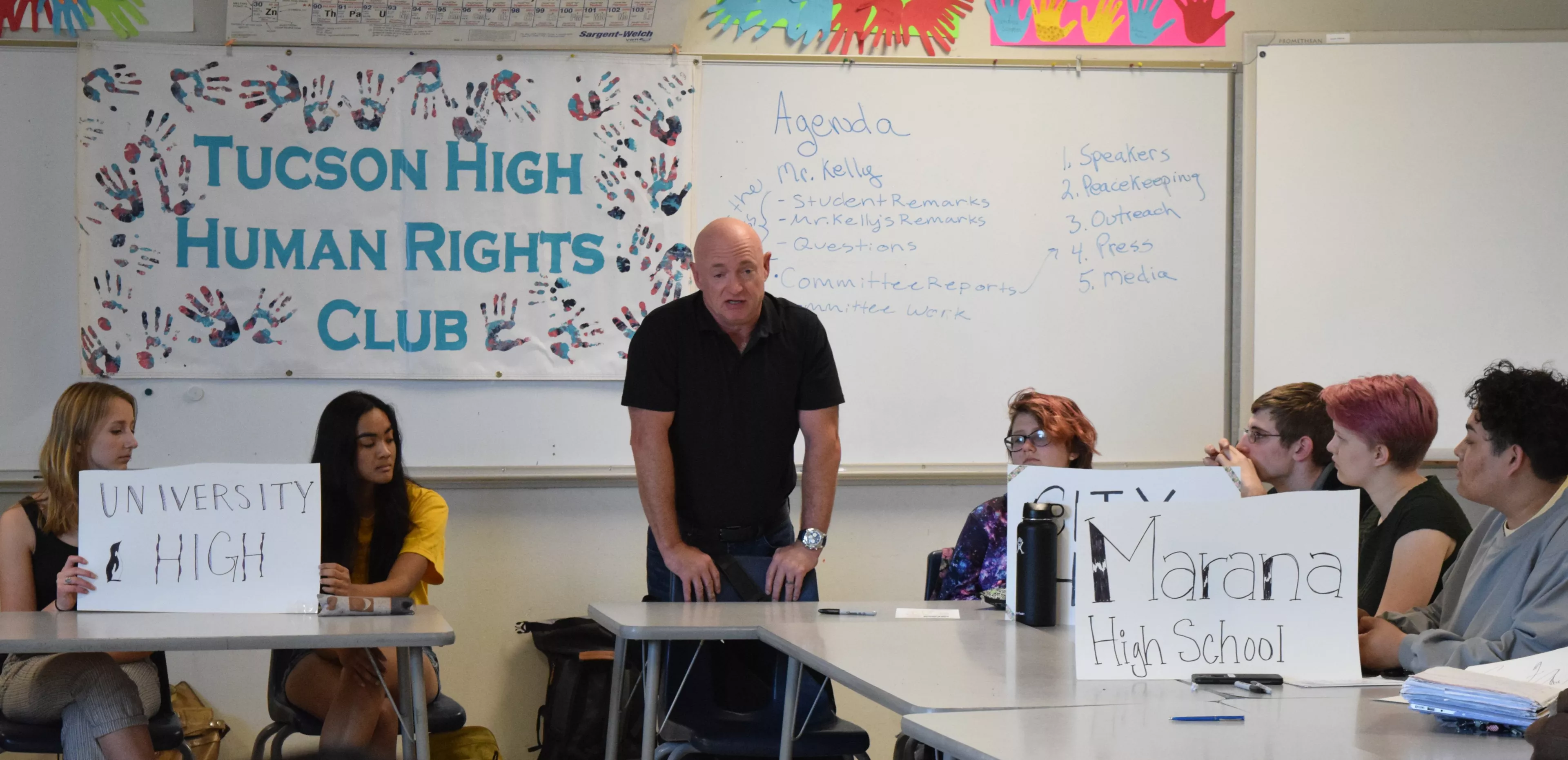
The group of teens gathered in a science class room at Tucson High are not there to talk biology. They’re talking about how fear of being shot is hindering their studies.
“We want regulations on guns,” said Tucson High junior Vivian Reynoso, president of school’s Human Rights Club. “We want to not be afraid to come to school and worry that someone is going to come in with a gun and shoot us.”
Perhaps living in a time when school shootings are no longer shocking has matured these teens. Like many students who endured the Feb. 14 school shooting in Florida, they are having no problem articulating what they want.
Some want stricter gun regulations. They all want the government to take clear action that sees results. They will all be sharing their ideas of what that action looks like at the March 24 rally, March for Our Lives.
“We’re fighting for this, and this is what we want,” Reynoso said. “We’re gonna keep fighting until they give it to us.”
March for Our Lives—a nationwide rally for better gun regulation and school safety measures—was started by student survivors of the Marjory Stoneman Douglas shooting, after 17 people were killed by a former student with a legally-purchased AR-15.
The central march is in Washington D.C., and could be the biggest march, nationwide, since the Women’s March, with close to 600 cities signed up at marchforourlives.com.
Press filled the Tucson High classroom, on Friday afternoon, where about 30 teens from a number of local high schools, including Flowing Wells, Catalina Foothills, University High, Marana High, City High and Tucson High, candidly faced the media’s cameras and spoke of their experience, growing up dealing with gun violence in schools.
“Our safety in school should be the number one concern because no parent should ever have to let their kid go to school and not have their kid come back home,” said Marana High School student Eric Brown. “It shouldn’t be on our minds to be afraid to be in school. Our number one priority is our education—that’s why we’re in school.”
University High sophomore Sharmila Dey said after the Florida shooting, her teachers gave the class a talk about what to do in the event of a school shooting.
Wednesday, March 7, 2018
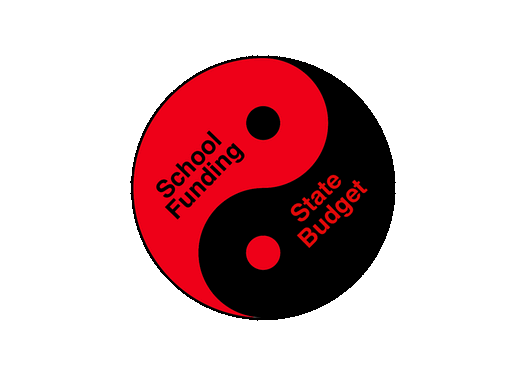
You know, red and black go really good together. Arizona can say yes to the demands of teachers wearing red and still keep the state budget in the black. How do we manage it? The first step is to make a commitment to increase the state budget so we can afford to fund schools, social programs and infrastructure adequately. The next step is to ask, "What's the best way to do it?"
We have plenty of options to choose from. Close tax loopholes for corporations and other special interests. Renew the Prop. 301 sales tax for education, with a penny added to the total. Stop the stupid, goddamn tax cuts for corporations and the wealthy. Increase taxes on the wealthiest among us so they pay their fair share.
I'm not suggesting which are the best ways to increase state revenue. That's the next step, after we agree to take the "red and black" challenge.
However, I do have two suggestions for things we need to do if we hope to add needed money to the state coffers. Give voters the opportunity to repeal Proposition 108 from 1992 which requires a two-thirds majority in the legislature to pass any new taxes. And vote out politicians who say "No new taxes, period."
Tags: Teachers , Teacher salaries , Class size , Taxes , Proposition 108 , Image
Monday, March 5, 2018
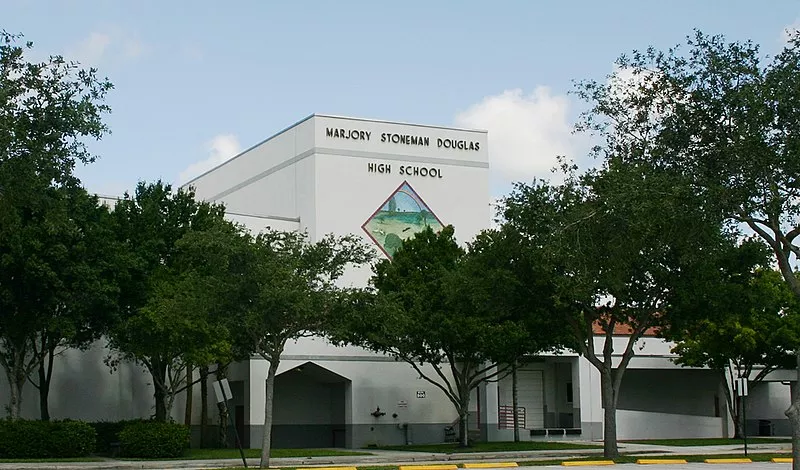
With relief and a strange feeling of pride, I watched these young people remain amazingly poised and well spoken under the most difficult of circumstances. Sure, some of them stumbled a bit, spoke awkwardly now and then, lost the thread of what they were saying. But that happens to lots of non-professionals when they have a camera stuck in their faces and are asked to bare their emotions at the same time they have to talk about complex issues. The Parkland students haven't just held it together. They've shone. They've pointed the way for the rest of us.
I'm an old high school teacher. I know what kids that age can do. But these folks exceeded my expectations.
The students deserve all the credit in the world, but we should reserve a little extra credit for their schools and teachers as well. The students have been educated in the skills they demonstrated to the nation.
Take David Hogg, a young man who seemed so self confident and practiced, it made sense he was singled out by the right wingnuts as a "crisis actor" flown into the school by the anti-gun crowd to pretend he was a student. He's the student director of the school's broadcast journalism program, WMSD-TV. While he was hiding inside a closet with other students during the shooting, he was interviewing them. Other staffers for the student newspaper were also reporting the story while it was in progress, taking photos and videos during the ordeal.
Tags: Marjory Stoneman Douglas High School , David Hogg , Cameron Kasky , Image
Friday, March 2, 2018

Toward the end of that post I wrote a few sentences, almost a throwaway, about the relation between education and poverty.
"Education is not an effective way to fix the country's problems related to poverty when it's working by itself. But lessening the burdens of poverty is the best way there is to improve student achievement, and it's even more effective when schools improve as well."Let me pick up that idea and expand on it.
If we're looking at schools as a primary engine to lift children out of poverty, we're looking in the wrong place. Education is necessary to facilitate greater economic mobility, but it's far from sufficient.
You hear a lot of people say, "Failing schools are the problem." If we just fix our schools, they say — improve the curriculum, get rid of bad teachers, create charters, privatize schools — that's the best way to lift children out of poverty. But it isn't. What it is, is the best way to delay dealing with the root causes of poverty.
Trying to address poverty by improving schools is the rough equivalent of seeing a problem, then creating a committee to study it.
Here's how study committees often work. A group of very serious people get together and spend a few years kicking a topic around. They gather information, call in experts, look at the problem from a number of angles. Then the group publishes a very serious report long after the heat which was the reason the committee was set up has cooled. The report is analyzed and critiqued by some other very serious people, then it's shelved. That's it. No action, no results. Study committees are the place where ideas go to die.
Here's how educational "reforms" which are supposed to help children rise out of poverty usually work. The "reforms" are put in place with fanfare and high hopes, but no one expects to see results right away. It takes a number of years for children to work their way though the educational system before we can measure whether the "reforms" yielded any results. Five years, ten years, twenty years down the line, researchers plow through piles of data and try to measure the effects. Depending on how researchers parse the data and which variables they emphasize, they find students gained or lost a little ground due to the changes. The needle rarely moves very far one way or another in terms of student achievement or improving students' economic mobility.
So we begin anew with another round of "reforms" which are supposed to fix our "failing schools" and move children out of poverty. We wait a number of years, study the results and start over again. Rinse and repeat, ad infinitum.
No Child Left Behind. Charter schools. Vouchers. Blended learning. Common Core. Changes in methods for teaching reading and math. Education innovations come, educational innovations go, they work a little, they don't work at all. If poverty and economic mobility rates budge in the interim, it has far more to to with outside economic and social forces than with what's going on in schools.
Who are the most enthusiastic proponents of those study committees? They tend to be people who want to keep things exactly as they are, people who benefit from the status quo. They measure the success of the committee by how little happens to address the problem it was created to study.
So who benefits most from maintaining that fixing our "failing schools" is the best way to lift children out of poverty, effectively kicking the can down the road a decade or two? I'll give my answer at the end of the post.
Tags: Education , Poverty , "Failing schools , " Education , Education reform , Image

