

Wednesday, March 3, 2021

Gov. Doug Ducey issued an Executive Order on Wednesday requiring schools to return to in-person, teacher-led instruction by March 15, or after Spring Break. This comes as 12 of Arizona’s 15 counties, including Pima, are "in phases where all schools are safe to open." This includes district and charter schools. The majority of Arizona counties are still in the "substantial" category of COVID-19 spread.
“Arizona’s students need to be back in the classroom," Ducey said. "More than half of Arizona’s schools are open and offering in-person options. More schools need to follow their lead, and pave the way for equitable education options for every Arizona student."
However, an individual district may close if the local health department advises closure due to "a significant outbreak" of the COVID-19 virus that poses a risk to the students or staff, and is approved for closure by the Arizona Department of Health Services.
An exception is made for middle and high schools located in the counties with “high” transmission of COVID-19: Coconino, Yavapai and Pinal.
The Arizona Department of Health Services updated their COVID-19 School Benchmarks following the executive order on Wednesday.
Following CDC recommendations, schools should keep track of two metrics to track community transmission: cases per 100,000 and the percentage of positive nucleic acid amplification tests all in the last week. Both will determine whether a school has low, moderate, substantial, or high transmission. ADHS recommends elementary schools remain in hybrid learning if in the moderate to high range, while middle schools and high schools should offer virtual learning if high transmission, unless they are already offering in-person instruction and have few cases or have implemented mitigation strategies to keep cases down. Once schools reach moderate transmission, they recommend all K-12 schools open for full in-person instruction.
Several school districts in Pima County have already reopened schools or plan to reopen them before or after Spring Break. However, most districts offer several different methods of instruction, not a full-five days of in-person learning.
For example, as of March 1, Sunnyside Unified School District has almost half of their students attending school as part of their in-person hybrid program. These students are split into two groups, each attending school two days per week and one day remote. Other districts with varying hybrid programs are Amphitheater and Catalina Foothills.
School districts surveyed teachers, staff, parents and students in order to provide a method of instruction that would suit them. Parents with children attending Tucson Unified School District have until March 7 to decide the method of instruction for their child. According to a TUSD spokesperson, they are still reviewing Governor Ducey’s Executive Order.
Monday, March 1, 2021
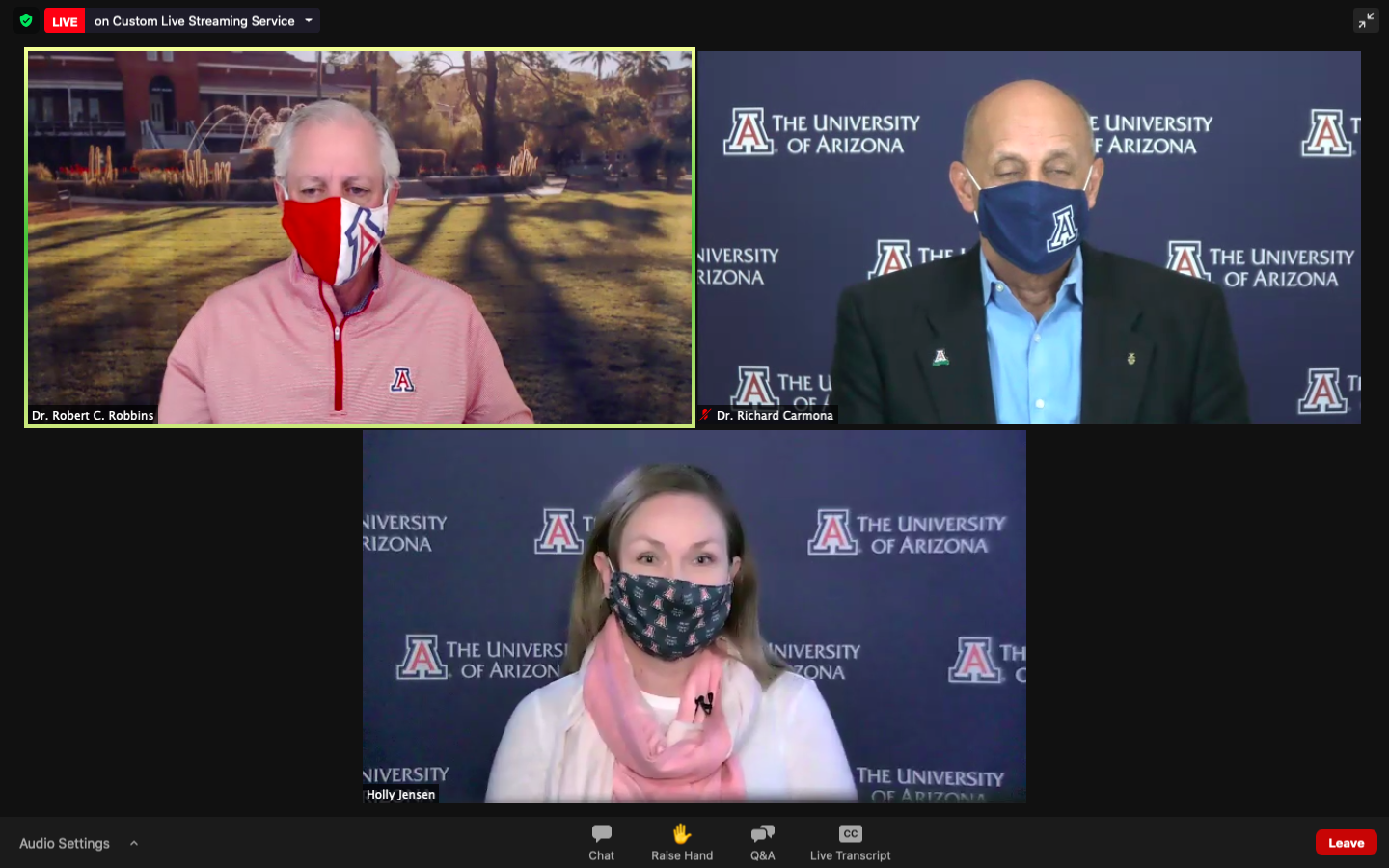
Additional vaccine appointments beginning Sunday for the University of Arizona POD will be made available soon, said UA President Dr. Robert C. Robbins at a press conference this morning.
Robbins asks the public to continue to check for appointments and reminded the public that the number of appointments available is directly proportional to the number of vaccine doses.
The university is scheduled to receive 16,380 doses this week and has distributed more than 35,000 doses, said Robbins.
The POD continues to run from 10 a.m. to 10 p.m. seven days a week, but with an increase in vaccines, the hours may be expanded to become a 24/7 POD by the end of March or the beginning of April, said Arizona Health Director Dr. Cara Christ during a news conference last week.
Robbins said the issue is a supply problem, as with the expanded hours, the vaccine distribution center could deliver 6,000 to 7,000 doses per day with 24-hour service.
"As soon as the state can give us the vaccine that we need, we'll gladly go 24/7, seven days a week, until we get as many people vaccinated as soon as possible," said Robbins.
As vaccines become available at pharmacies like CVS and Walgreens, Dr. Richard Carmona, UA's reentry task force director, hopes people will go to where they can get a vaccine as quickly as they can.
“The more places we have that allow vaccines to be given is clearly part of our value proposition to accelerate herd immunity,” said Carmona.
Tags: UA POD , tucson vaccine , where to get a vaccine in tucson , COVID Robbins , Carmona , Uarizona news , Tucson news , arizona news , Image
Friday, February 26, 2021
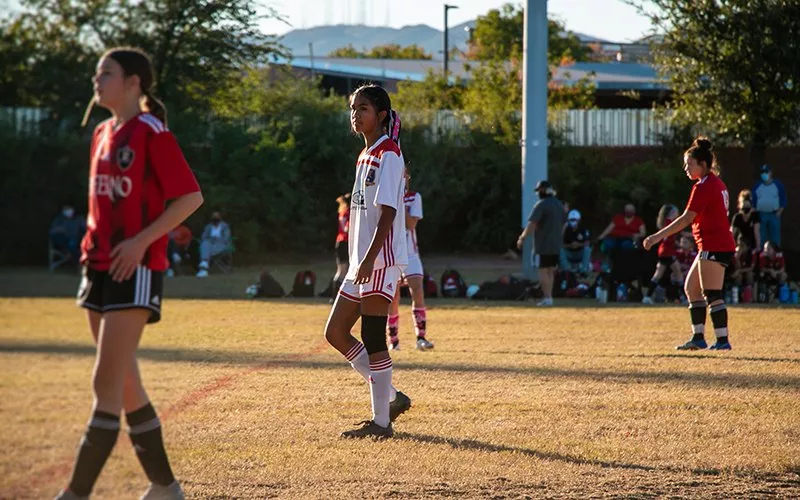
PHOENIX – Krystle Mann, a stay-at-home mother to three sons, makes and sells cornbread and jam to pay for new baseball gear and help cover club fees – approximately $1,500 per year.
Her older son, Sam, 12, plays for the AZ Diamond Dawgs in Queen Creek, while her middle son, Tommy, 11, plays for both the Paladin Knights and AZ Storm in San Tan Valley. Both boys have played baseball for about seven years, making the transition from Little League to club baseball recently.
Club sports are run by private associations that, unlike school-sponsored sports programs, charge high fees to participants who are hoping to enhance their individual or team skills.
“I think this has been the best thing for the boys mentally, physically and emotionally,” Mann said.
Some families say club sports are worth the high costs for the confidence, friendships and athletic skills their children gain, but not all can afford the fees.
A study by the Open Access Journal of Sport Medicine reports that 75% of U.S. families with school-aged children have at least one playing an organized sport, or about 45 million kids.
But there is a clear economic divide between higher- and lower-income families in youth sports.
Wednesday, February 24, 2021
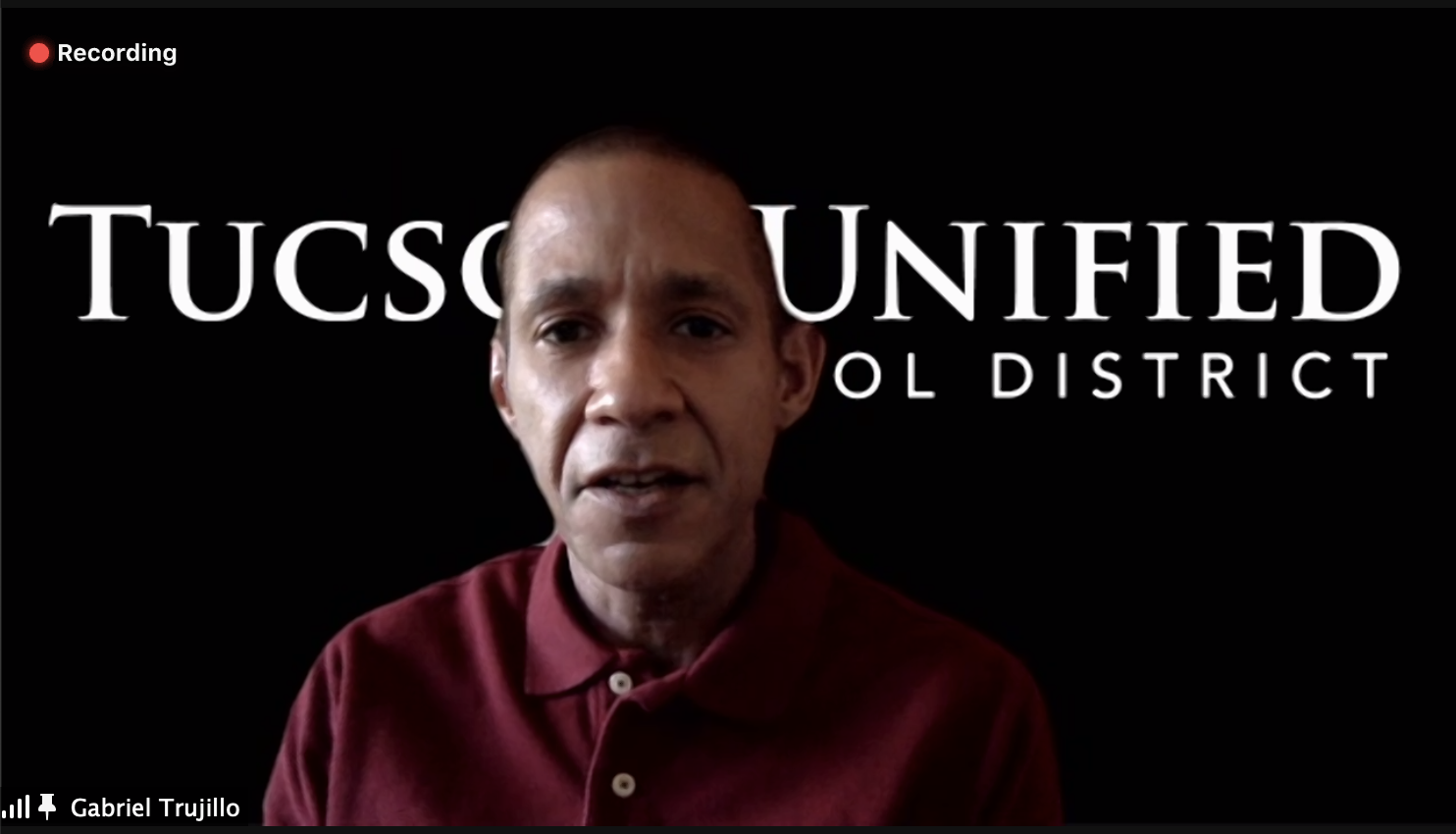
But TUSD Superintendent Gabriel Trujillo said teachers remained concerned about vaccination appointments and class sizes, among other issues.
“I don't think it's any secret that our teachers are not happy,” he said. “They're very concerned right now about coming back.”
Trujillo said the district would be surveying employees and hoped that many of their concerns would be worked out before students return to campus.
Trujillo also said that the district would extend a Feb. 28 deadline for parents to choose their learning option to March 7 because more than four out of 10 parents have yet to make a choice about whether they want to return to school or remain remote.
So far, 30% of TUSD parents have said they will continue with remote learning, 29% have said they will return to in-school instruction and 41% have yet to make a choice.
“If this trend holds up for the remaining 41%, it looks like we're going to be an even 50/50 split, in terms of a district that has half of its student body studying remotely and half of it studying in some sort of in-person learning opportunity,” Trujillo said.
For elementary schools grades K-5 and three K-8 schools (Drachman, C.E. Rose and McCorkle), there are two options available: either attend full-time on-campus Monday through Friday or remain 100% remote. High schools and middle schools, grades 6-12, also have two options. A parent can choose to have their child stay 100% remote or four half-days of in-person learning, meaning students will be on-campus in the morning and remote learning in the afternoon, with Wednesday as 100% remote learning.
Trujillo said the district also came to an agreement with the Tucson Education Association and the Educational Leadership Institute to allow teachers to simultaneously teach both in-person and remote learning students at elementary schools.
Monday, February 22, 2021

WASHINGTON – Arizona continues to be one of the worst states in the nation when it comes to funding higher education, still reeling from deep budget cuts that were made during the recession, according to a new national report.
The Center on Budget and Policy Priorities studied state funds from the time of the Great Recession in 2008 until 2019, right before the COVID-19 pandemic hit.
When adjusted for inflation, Arizona spending per student in the state decreased by 54.3%, the largest drop in all 50 states. Louisiana was in second place, with an inflation-adjusted drop of 37.7% in state support.
Arizona also had the second-highest percentage increase in tuition during the period, with its 78% hike trailing only Louisiana’s 96.8%. But Arizona’s increase was the largest in terms of actual dollars, rising $5,224 over 11 years to an average of $11,921 for in-state Arizona students across all public four-year colleges and universities.
David Lujan, director of the Arizona Center for Economic Progress, called the state’s budget priorities skewed.
“Arizona actually provides more funding each year to our state Department of Corrections to incarcerate people than we provide to all three of our state universities combined,” Lujan said in a conference call to release the report.
Friday, February 19, 2021

PHOENIX – Public education advocates and leaders of the Arizona School Boards Association’s Black Alliance and Hispanic-Native American Indian Caucus gathered at the Arizona State Capitol on Thursday to protest a proposed voucher expansion initiative that they say would further defund public schools.
Senate Bill 1452, proposed by Sen. Paul Boyer, R-Glendale, would allow all children attending schools with a high percentage of low-income families or who qualify for free or reduced-price lunches to be eligible for the state’s empowerment scholarship account program. The proposed legislation was approved in a party-line vote 16-14 by on Monday, with Republicans voting in favor.
The current program, which serves 9,700 students, allows eligible parents to use state funding to pay for religious or other private education and education costs. Boyer’s bill would expand the program to serve a much larger group. More than 600,000 students receive free or reduced-price lunches in Arizona, the Governor’s Office has said.
Among those opposing the legislation were school board members, parents, superintendents, and other community members. Rather than routing money out of public schools, they argue the money should be used to help classrooms and neighborhoods where students live.
“A serious conversation about helping students begins from the premise that children be provided the tools they need in their own neighborhoods, easily accessible, without additional charges, or mandates to sign away one’s rights to antidiscrimination policies,” said Ann O’Brien, president of the Arizona School Boards Association’s executive board of directors. That, she continued, “is exactly what is required when a parent takes an ESA,” referring to empowerment scholarship accounts.
WASHINGTON – The Arizona Department of Education wants to make sure parents understand their kids will be getting letter grades this year – and to drive home the point, the department sent the message in capital letters.
Actions taken by the governor and Legislature earlier this week apply to schools but “NOT individual student grade (ex. ‘A in Chemistry’ or ‘C+ in English’) – those are under the purview of local control,” the department said in a statement Wednesday.
The statement followed Gov. Doug Ducey’s signing of a bill Monday that said state schools will not get grades reflecting their students’ performance on the AzMerit standardized tests this year, because of the ongoing pandemic. An accompanying executive order and statement from Gov. Doug Ducey said the law allowed “some flexibility around the state’s A-F letter grade system.”
Some parents apparently read that to mean the change applied to the letter grades their kids receive – not their kids’ schools.
Phoenix resident Lori Worachek, who has two daughters in the school system, said her initial reaction was that the executive order was unfair to kids.
“It wasn’t the right way to approach it because it’s not fair to the kids that have been working hard,” she said.
Thursday, February 11, 2021
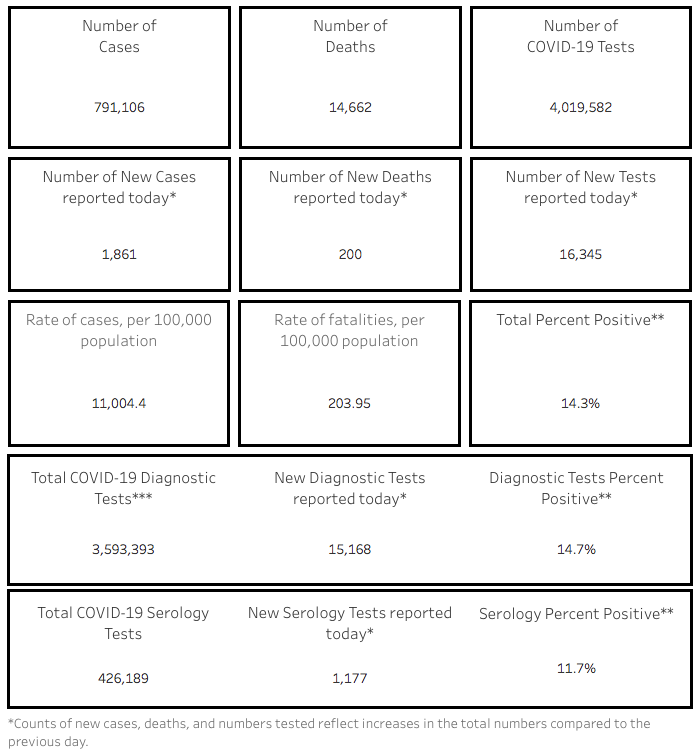
With 1,861 new cases reported today, the total number of Arizona’s confirmed novel coronavirus cases topped 791,000 as of Thursday, Feb. 11, according to the Arizona Department of Health Services.

Pima County, which reported 685 new cases today, has seen 105,909 of the state’s 791,106 confirmed cases.
With 200 new deaths reported today, a total number of 14,662 Arizonans have died after contracting COVID-19. In Pima County, the death toll topped 2,000 with 42 newly reported deaths bringing Pima County’s total number of deaths to 2,023, according to the Feb. 10 report.
The number of hospitalized COVID cases statewide has declined in recent weeks, with 2,507 coronavirus patients in the hospital as of Feb. 10. Thats fewer than half the number who were hospitalized at the peak of the winter wave, which reached 5,082 on Jan. 11. The summer peak was 3,517, which was set on July 13, 2020. The subsequent lowest number of hospitalized COVID patients was 468, set on Sept. 27, 2020.
A total of 1,535 people visited emergency rooms on Feb. 10 with COVID symptoms, down from the record high of 2,341 set on Tuesday, Dec. 29, 2020. That number had peaked during the summer wave at 2,008 on July 7, 2020; it hit a subsequent low of 653 on Sept. 28, 2020.
A total of 719 COVID-19 patients were in intensive care unit beds on Feb. 10, down from a peak of 1,183 set on Jan. 11. The summer’s record number of patients in ICU beds was 970, set on July 13, 2020. The subsequent low was 114 on Sept. 22, 2020.
How to get a vaccine
Currently, Pima County is providing vaccination shots to people 70 and older as well as educators, first responders and healthcare workers. Those who currently qualify in Pima County’s 1B priority group of eligible vaccine recipients can register for a vaccine at www.pima.gov/covid19vaccineregistration or by calling 520-222-0119.
State planning to open vaccine distribution site in Pima County but no word on whether more doses will be coming here
Pima County is getting a state-run vaccination site at the University of Arizona that will begin appointments on Feb. 18.
The new site will follow the state’s current vaccine eligibility, which includes those 65 and older, educators, childcare workers and protective service workers, according to Arizona Department of Health Services Director Dr. Cara Christ.
As the state-run POD, or point of distribution, registrations will go through ADHS’s website.
Appointments will begin on Feb. 18, and registration will open at 9 a.m. on Feb 16. Online registration will be available at podvaccine.azdhs.gov, and those who need assistance can call 1-844-542-8201.
The university says it’s delivered more than 12,000 COVID-19 vaccines at a rate of 1,000 shots per day to the educators it currently serves. According to the governor’s office, the site could reach 6,000 people a day when operated at full capacity.
The site has a drive-through location on the University of Arizona Mall and a walk-up site at the Ina E. Gittings Building.
The university will expand its current hours of operation as a POD that currently serves educators and childcare workers. It will transition to a state site and eventually operate 24/7 as Arizona receives more vaccine doses.
UA President Robert Robbins said the site will eventually move from its current six hours a day of operation to two eight-hour shifts.
According to Christ, the university will start with a “soft launch” with expanded hours at first and will become a fully operational state-run POD by Feb. 22.
However, Christ said the vaccines supplying the state-run site will be taken out of the county’s already limited allocation. This week, Pima County’s vaccine allocation was decreased by 39%.
The state submitted a federal resource request for 300,000 doses followed by an additional 300,000 vaccines a week in January, but the request was denied. Christ said the state was asked over the weekend to re-submit the request and is awaiting an answer.
“We continue to monitor our weekly allocations and we give that out on a pro-rata basis of the population of the phase that each county has. We believe that we are going to stay relatively consistent over the next couple of weeks with the amount of vaccine that we get,” Christ said. “But we always think that it's better to have the resources established. So make sure that they've got staffing, funding, that management systems are put into place so that when we do get an increase in vaccine, those sites are ready to go to full capacity.”
Robbins said the university has asked the state for an incremental increase in vaccine supply, and he anticipates up to a 25% increase in the county’s allocation as production from Moderna and Pfizer ramps up.
“We don't have a demand or throughput problem, we've got a supply problem. We're targeting between 6,000 to 8,000 doses a day. If we ran it seven days a week, we're talking 50,000 doses a week, just at our POD,” Robbins said. “So the state has got to dramatically increase if we're going to build this out and take advantage of running a 24/7 operation. They've got to be able to supply us the vaccine.”
But taking vaccine doses away from the county to support the POD may hinder efforts at other county-run vaccination sites.
“We need more capacity to distribute vaccines, but we need more vaccines. For them to take out of the allocation for Pima County potentially means that some of our other PODs would have shorter hours, less accessibility, might have to temporarily close until we get more vaccines,” said Pima County Supervisor Adelita Grijalva. “While we appreciate the state opening up a state POD, we actually need more vaccines. That is the biggest problem that we have.”
Wednesday, February 10, 2021
Tucson Unified School District Superintendent Gabriel Trujillo told the TUSD Governing Board Tuesday night that he hoped to return to some form of in-class instruction on March 24.
Under Trujillo’s plan, preschool and elementary parents can choose between full-time remote or on-campus learning.
High school and middle school families can opt for either remote learning or a hybrid model with four half days of in-person learning with remote days on Wednesdays.
Parents will be able to select their choice through ParentVue, the school’s online parent portal.
Under a previous board vote, Trujillo was given the authority to decide when TUSD would return to in-class instruction. The district has previously set opening dates only to delay them and has been in remote-only instruction since March of last year.
Trujillo told board members he would flesh out his plan for instruction and COVID mitigation once parents select their educational preferences, which would provide a better sense of how many students would be back in the traditional classroom and how many would prefer to continue with remote learning.
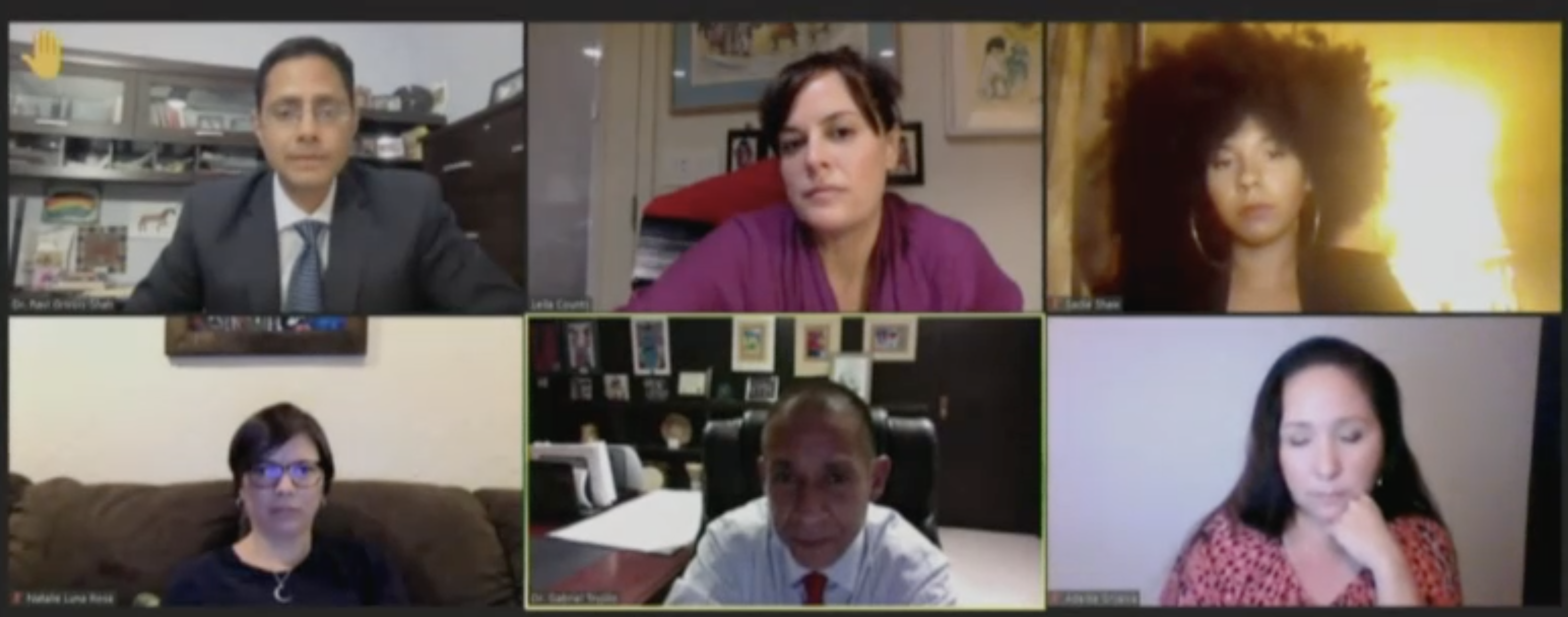
Board Member Dr. Ravi Grivois-Shah is supportive of a return to in-person school sooner rather than later and even suggested an earlier start date of March 1 while staggering grade levels returning with the youngest grades going first.
“Every single conversation I have with parents, they tell me that their kid is struggling, and especially the youngest kids. You know, 100% of the parents I speak to tell me about their struggles with remote learning,” Grivois-Shah said.
Board Member Natalie Luna Rose also supported a staggered return to the classroom.
“It's going to be a year that we haven't had children in the classroom, and I'm just afraid the longer we go on, the harder it will be to perhaps maybe bring back some of the families that we have lost,” she said. “Having that option of being remote, I know that's asking a lot of our teachers, but maybe that would also help mitigate our fears.”
Expressing concerns that not enough of the TUSD staff has received a COVID-19 vaccine yet, Board Member Adelita Grijalva was more hesitant about a March 24 return date.
“Our children can still get COVID, they can still give it to each other and our kids won't be vaccinated,” Grijalva said. “So I want to make sure that we're also cognizant of the fact that we have some parents that are not going to want their children to return for a number of reasons.”
Board President Leila Counts supported the plan proposed by Trujillo as is.
“We need our schools open, and we need to do it in the safest way possible, and I think the proposal that administration has given us tonight allows us to do that with those target dates,” she said. “Everybody has the opportunity to get a vaccine, and we need to open up our schools again. I appreciate the work that's gone into this plan. I think it's doable, it's safe, and it's what's best for our kids. So I support it.”
Board Member Sadie Shaw expressed hesitation with a return to school and said vaccinating TUSD’s staff is not enough to mitigate against the spread of COVID-19.
“Even if we're able to vaccinate all staff, the students won't be vaccinated, some other parents won't be vaccinated and a large portion of our Tucson community will not be vaccinated,” Shaw said. “As the largest school district, I think we really have to take the most care and how we approach the return.”TUSD parent survey results
TUSD sent a survey to parents of students in preschool through third grade and grades nine through 12 on Jan. 26.
Parents were asked to rank their preference on a return to school model out of a menu of choices, including all remote learning, all in-person learning and some days with hybrid learning.
Monday, February 8, 2021
The University of Arizona has delivered 9,866 COVID-19 vaccines at a rate of 800 shots per day, according to President Dr. Robert C. Robbins.
The UA point of distribution, or POD, is targeted toward educators and childcare providers and has two vaccination sites: a drive-through location at the University of Arizona Mall and a walk-through clinic at the Ina E. Gittings building.
While operating as a vaccine distribution center, UA is basing its learning structures for students on the prevalence of coronavirus in the community.
Robbins lauded the state for its improvement in COVID-19 transmission. While Arizona held the highest rate of transmission in the country throughout most of January, it now ranks at No. 8 today.
If conditions continue to improve, the university will enter stage two of its reentry plan on Feb. 22 with up to 50 students attending classes in person. For now, it remains in stage one with in-person instruction for essential courses only.
From Jan. 28 to Feb. 6, UA administered 18,767 COVID-19 tests and found 127 positive cases for a positivity rating of 0.7%, down from last week’s percent positivity of 1.3%.
“Remember, we've tried to shoot for under 5%, and we've been significantly under 5% for a long time now. This last number is very, very encouraging,” Robbins said. “These are good signs, however, remain vigilant, continue to cover your face, wash your hands and keep distance from as many people as possible.”

