

Wednesday, February 3, 2021

Graduating high school seniors could get some financial help for college, thanks to Hughes Credit Union.
Any local senior, who is a primary member of Hughes and entering a college, university, trade school or certification program in the fall, can apply for one of 10 $1,000 scholarships in Hughes' 16th Annual Scholarship Program.
Applicants will complete an online scholarship form with either a written essay or a one- to two-minute video that answers the question, “What is the most important financial lesson you have learned in the past year and how has it impacted your plans for the future?”
Complete details and the online application form are available at HughesFCU.org/Scholarship. Submission deadline is March 15, 2021. Winners will be announced on May 14, 2021.
“Hughes is proud to again support local high school students graduating in 2021 who want to further their education and skills,” said Hughes Business Development Representative Irlanda Cuevas. “As in past years, we expect the essays and video submissions this year to be impressive and informative as it relates to their experience managing personal finances.”
Monday, February 1, 2021
The University of Arizona has delivered 5,810 COVID-19 vaccines after opening as one of Pima County’s five points of distribution, according to the university's President Dr. Robert C. Robbins.
The POD is targeted toward educators and childcare providers, and Robbins estimates it can deliver 800 shots per day this week while it’s open Monday through Saturday.
The university has two vaccination sites: a drive-through location at the University of Arizona Mall and a walk-through clinic at the Ina E. Gittings building.
As cases could transmit even faster with the arrival of more contagious coronavirus variants from the UK, South Africa and Brazil in the U.S., Robbins said becoming vaccinated is even more crucial.
The UK variant has been identified in Arizona after at least three test samples came back positive for it, the Arizona Department of Health Services announced Friday.
“We're seeing problematic variants circulate, and the longer the pandemic continues, the more we will have new variants with clinically significant mutations,” he said. “The vaccine will help us reach herd immunity more quickly and have less illness and certainly less mortality in our population.”
While serving as a vaccination POD, the university will continue in stage one of its reentry plan with in-person instruction for essential courses only at least through the week of Feb. 8, Robbins said. Stage two of the reentry plan involves up to 50 students attending classes in person.
The return to more in-person instruction is based on data tracking the spread of COVID-19 across the state.
While COVID-19 cases in Arizona have decreased for the second week in a row, Robbins emphasized the state still remains number one for transmissibility in the nation.
While the seven-day rolling average for COVID-19 cases is at 45 per 100,000 of the population nationwide, Arizona is experiencing 75 cases per 100,000 people, while Pima County is at 66 cases per 100,000, Robbins shared.
Friday, January 22, 2021
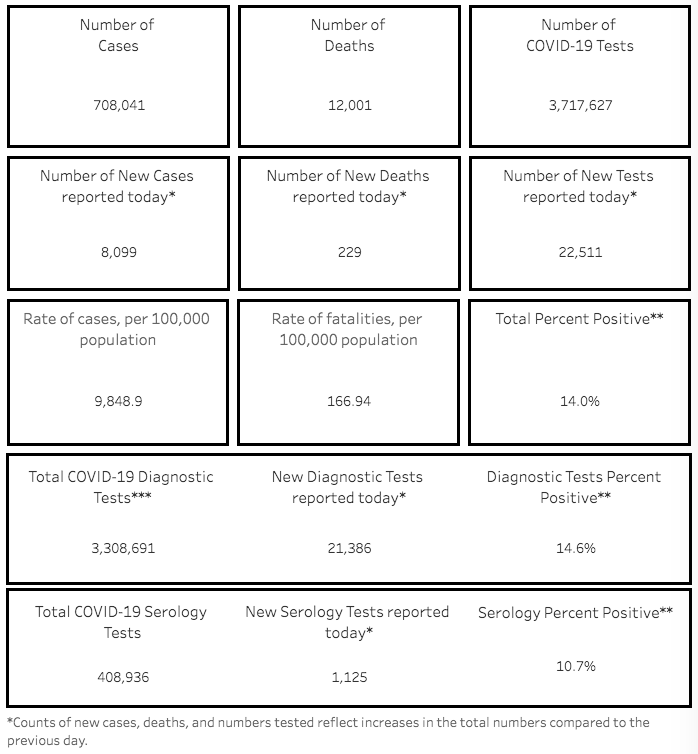
With more than 8,000 new cases reported today, the total number of Arizona’s confirmed novel coronavirus cases surpassed 708,000 as of Friday, Jan 22, according to the Arizona Department of Health Services.

Pima County, which reported 858 new cases today, has seen 94,697 of the state’s 708,041 confirmed cases.
A total of 12,001 Arizonans have died after contracting COVID-19, including 1,571 deaths in Pima County, according to the Jan. 22 report.
The number of hospitalized COVID cases statewide has declined in the last week but still remains far above the peak levels of the summer’s first wave. ADHS reported that as of Jan. 21, 4,495 COVID patients were hospitalized in the state. The summer peak of 3,517 hospitalized COVID patients was set on July 13; that number hit a subsequent low of 468 on Sept. 27, or about one-tenth of the current count.
A total of 2,007 people visited emergency rooms on Jan. 21 with COVID symptoms, down from the record high of 2,341 set on Tuesday, Dec. 29, 2020. That number had previously peaked at 2,008 on July 7; it hit a subsequent low of 653 on Sept. 28.
A total of 1,054 COVID-19 patients were in intensive care unit beds on Jan. 20. The summer’s record number of patients in ICU beds was 970, set on July 13. The subsequent low was 114 on Sept. 22.
Most school districts delaying return to the classroom; Marana will resume hybrid instruction Monday
As the spread of COVID-19 in Pima County continues to reach dangerous levels, most public school districts in the Tucson area are pushing back previously set dates to resume in-person hybrid instruction.
The Arizona Department of Health Services is recommending all counties commit to virtual learning for students with online classes and some onsite support services.
ADHS made its recommendation based on three key benchmarks: cases per 100,000 individuals, percent positivity and hospital visits for COVID-like illness. All benchmarks are currently in a state of substantial transmission throughout the state.
In Pima County, ADHS data shows 8,983 COVID-19 cases per 100,000 of the population and a 12.3% positivity rate of the virus as of Jan. 21. The most recent data available on the state health department’s school benchmarks website shows hospital visits for COVID-like illnesses at 14.8% as of Jan. 3.
While most districts remain in remote learning models, Catalina Foothills has remained open for in-person learning since Oct. 26. The Marana Unified School District anticipates returning to hybrid instruction on Monday, Jan. 25.
Thursday, January 21, 2021
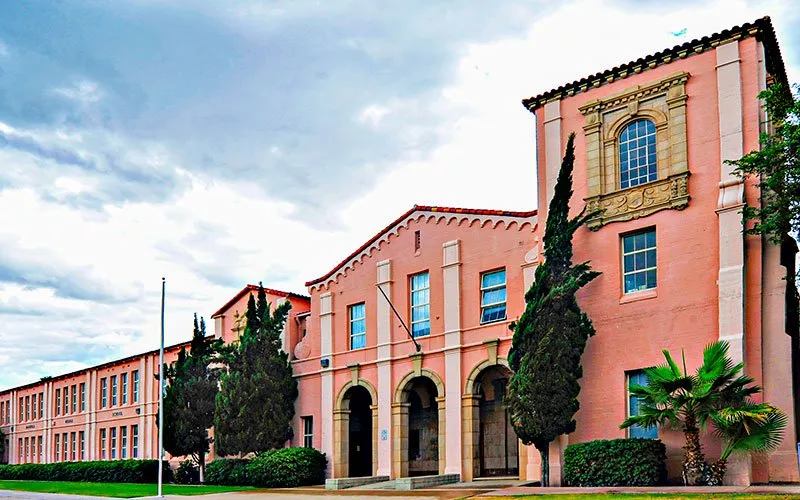
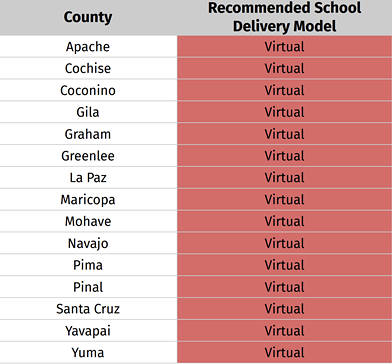
As the spread of COVID-19 in Pima County continues to reach dangerous levels, most public school districts in the Tucson area are pushing back previously set dates to resume in-person hybrid instruction.
The Arizona Department of Health Services is recommending all counties commit to virtual learning for students with online classes and some onsite support services.
ADHS made its recommendation based on three key benchmarks: cases per 100,000 individuals, percent positivity and hospital visits for COVID-like illness. All benchmarks are currently in a state of substantial transmission throughout the state.
In Pima County, ADHS data shows 8,983 COVID-19 cases per 100,000 of the population and a 12.3% positivity rate of the virus as of Jan. 21. The most recent data available on the state health department’s school benchmarks website shows hospital visits for COVID-like illnesses at 14.8% as of Jan. 3.
While most districts remain in remote learning models, Catalina Foothills has remained open for in-person learning since Oct. 26. The Marana Unified School District anticipates returning to hybrid instruction on Monday, Jan. 25.
Amphitheater
Originally set to return to a hybrid model on Jan. 19, Amphitheater Superintendent Todd Jaeger announced in a letter to families on Jan. 4 that remote-only learning would continue until a Feb. 1.
After the county health department said it would not be able to provide guidance until it receives more data, Jaeger said he plans to announce an official return date decision Friday.
Monday, January 18, 2021
WASHINGTON – About 180 white tombstones – each belonging to a child who died while attending the Carlisle Indian Industrial School – stand row-by-row in the dewy grass of central Pennsylvania, bearing the names of those who died while being forced to learn the white man’s way.
From 1,500 to 1,800 Native American students from Oklahoma attended the Carlisle school, said Jim Gerenscer, co-director of the Carlisle Indian School Project, a database that provides information about the school and the students who attended. But some never made it back home, dying from unknown causes at Carlisle.
The purpose of school, as well as others across the nation, was to remove Native Americans from their cultures and lifestyles and assimilate them into the white man’s world.
Carlisle, which opened in 1879 and operated until 1918, was among the first and best-known boarding schools for Native children, and its operational model set the standard for most that came after.
For many tribes in Oklahoma, the horrors of the Carlisle model were experienced closer to home.
Riverside Indian School, outside Anadarko, is the nation’s oldest federally operated American Indian boarding school. Organized by Quaker missionaries in 1871, it was known as the Wichita-Caddo School until 1878.
Joe and Ethil Wheeler were educated there. Anthony Galindo, the grandson they raised, recalls hearing their stories about conditions at the school.
Wednesday, January 13, 2021
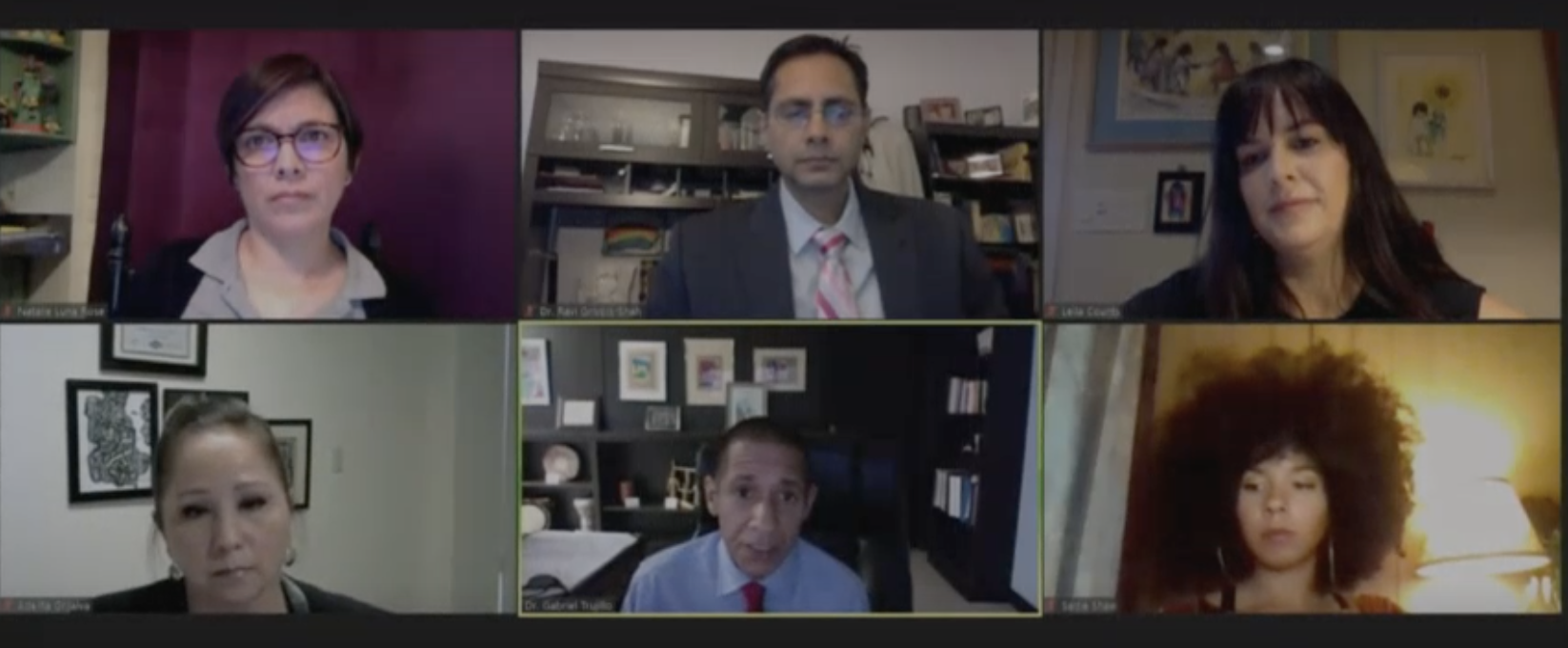
Teachers included in the next phase of Pima County’s COVID-19 vaccine rollout will have less access to vaccine doses than originally expected, Tucson Unified School District Superintendent Dr. Gabriel Trujillo said at a governing board meeting Tuesday.
At a press conference on Jan. 8, Trujillo announced a registration website will go live Friday where TUSD employees can make an appointment to receive a vaccine at one of Pima County’s vaccination sites and schedule a follow up for a second dose 28 days later.
However, the Pima County Health Department has notified TUSD there may not be enough vaccine supply to vaccinate the hundreds of thousands who qualify for the vaccine in phase 1B, which includes prioritized essential workers in education and protective services, essential workers in fields like transportation and government, adults in congregate settings with high-risk medical conditions and individuals older than 75.
In its first week of vaccine implementation starting Jan. 18, the district could be limited to 100 to 200 vaccine appointments weekly for up to a month, Trujillo said.
“The Pima County Health Department's late Friday notification that it received a significantly limited supply of vaccines will not allow them to meet the aggressive targets that they had previously set of being able to vaccinate 2,000 to 3,000 group 1B individuals a day,” Trujillo said.
“So this compromises our efforts as a Tucson Unified community to make sure that all of our 1B employees can get vaccinated by the end of the month of February.”
Monday, January 11, 2021
Gov. Doug Ducey delivered his 2021 State of the State address Monday afternoon with a message of maintaining resilience against COVID-19, returning students to classrooms and advocating for lower income taxes.
The governor began his address calling the Capitol riots on Jan. 6 a “sickening day in Washington D.C. that no American will ever forget.”
Ducey, who campaigned alongside Trump this year, condemned the siege of the capitol building that was incited by the president himself.
“In the United States of America, violence and vandalism have no place in the people's house. Perpetrators should be prosecuted to the full extent of the law,” Ducey said. “Let us condemn it and resolve that it never happens again.”
Ducey refuses statewide "lockdowns" to prevent COVID-19 spread
The governor acknowledged the significant strain on healthcare workers to care for a growing number of COVID-19 patients but adamantly rejected instituting lockdowns in a state currently experiencing the second-highest rate of the virus’ transmission in the nation.
“Why not ban all gatherings and just lock everything down? It's a question that only makes sense if you forget about everything else, all the other troubles that lockdowns set in motion,” he said. “The rest of life doesn't stop in a pandemic. Least of all our basic responsibilities. People still have bills to pay, children in need of schooling, businesses to run and employees who depend on them.”
Ducey made clear he won’t grant authority to local jurisdictions to impose their own pandemic mitigation policies. Pima County has implemented its own curfew, which is being legally challenged by a group of Tucson bar owners.
“I've been entrusted by the people of Arizona with this responsibility. I'm not going to hand over the keys to a small group of mayors who have expressed every intention of locking down their cities,” Ducey said.
An end to remote learning
After mentioning he’s working to ensure teachers “receive the vaccine as quickly as possible,” Ducey advocated for an end to remote learning models for students to attend school from home.
Friday, January 8, 2021
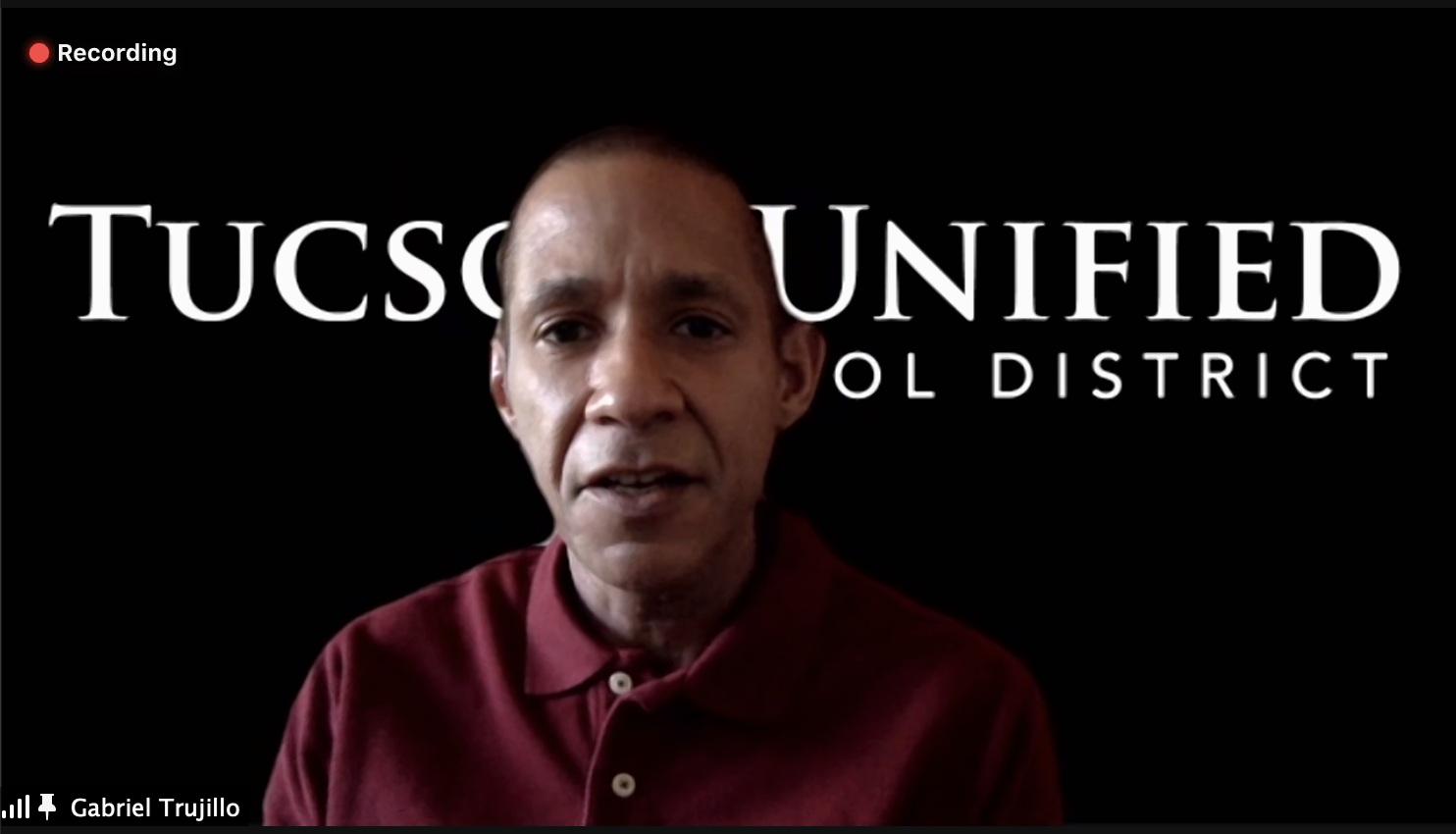
The superintendent of Tucson's largest school district announced it will not be returning to in-person instruction at least through January.
In the meantime, as Pima County is poised to begin administering vaccines to group 1B—which includes teachers—as early as next week, Tucson Unified School District is gearing up to help vaccinate its staff.
The county will set up a “supersite model” of six or seven vaccination centers where all district employees can receive the vaccine, said TUSD Superintendent Dr. Gabriel Trujillo.
On Friday, Jan. 15, a registration website will be set up for employees to make an appointment to receive a vaccination at one of the vaccine sites and schedule an appointment for a second dose 28 days later, he said. He made clear, however, that no employee will be mandated to receive the vaccine.
“We believe that it's our responsibility to create the conditions, create the opportunities for employees who want to go get the vaccine of their own free will and their own accord,” Trujillo said. “We will be creating conditions internally that will make it as easy as possible for an employee to choose to go get the vaccine.”
Some TUSD employees have already been vaccinated in their capacity as nurses, health assistants, athletic trainers, occupational therapists, speech therapists and language therapists that qualified under group 1A of vaccine recipients.
However, Trujillo noted, many who didn’t qualify also received the vaccine.
WASHINGTON – The Trail of Tears, the forced removal of the Cherokee Nation to Oklahoma, was one of the most inhumane policies in American history – but it wasn’t an isolated incident.
In 1831, nearly 16,000 members of the Cherokee Nation were forced under armed guard to leave their native lands in the southeastern United States to trek more than 1,000 miles to what eventually would become the state of Oklahoma.
Almost 4,000 Cherokees died along the way, never making it to the land designated by the U.S. government as Indian Territory.
Removal of the Choctaw Nation began even earlier, in 1830. Like the Cherokees, they were forced to leave their homes in the South and a way of life developed over millennia to start over in an alien environment on the prairie.
But the Cherokee and Choctaw nations are only two of the tribes with a removal story. There are 39 tribes in Oklahoma, five native to the state, that have stories to be told – each with its own trail of tears.
Long before the 1830s, the federal government believed white people could use the Native lands better than the indigenous inhabitants. This “Indian problem” motivated settlers to strip Native people of their land and resources, relentlessly pushing tribal members farther west. That pressure often resulted in violent attacks on Native Americans by settlers. If the Indians fought back, whites considered it proof that they were savages.
Thursday, January 7, 2021
WASHINGTON – Arizona has 304,180 infants and toddlers who need child care but only 234,270 slots to accommodate them, with poor and rural families most likely to be left out, a recent study said.
Arizona child care advocates said they were not surprised by the numbers in the Bipartisan Policy Center study, which they said has inspired them to push harder for accessible care.
“Some people can afford to put their children in high-quality care and their children will get that and we don’t have to worry about those kids, fortunately,” said Marilee Dal Pra, CEO of First Things First, a Phoenix-based children’s advocacy group.
“Unfortunately, in a state like Arizona that has such a high poverty level, especially for the zero to 5 (year old) population, these families don’t have those resources,” Dal Pra said.
The October report by the Bipartisan Policy Center’s early childhood initiative looked at 25 states – an initial plan to get data from all 50 states was derailed by the COVID-19 pandemic – to analyze gaps in child care across the country.
While Arizona fell short, its nearly 70,000-slot deficit was not the worst in the nation. Arizona fell about in the middle of the 25 states, both in terms of whole numbers and percentage shortfall.
North Carolina had just under 200,000 slots for the more than 459,000 children in need of care there, according to the report, which said California had about 1 million slots to accommodate demand from about 1.7 million children. Only Texas had a supply of child care slots that slightly exceeded its need, according to the report.

