

Friday, April 5, 2019
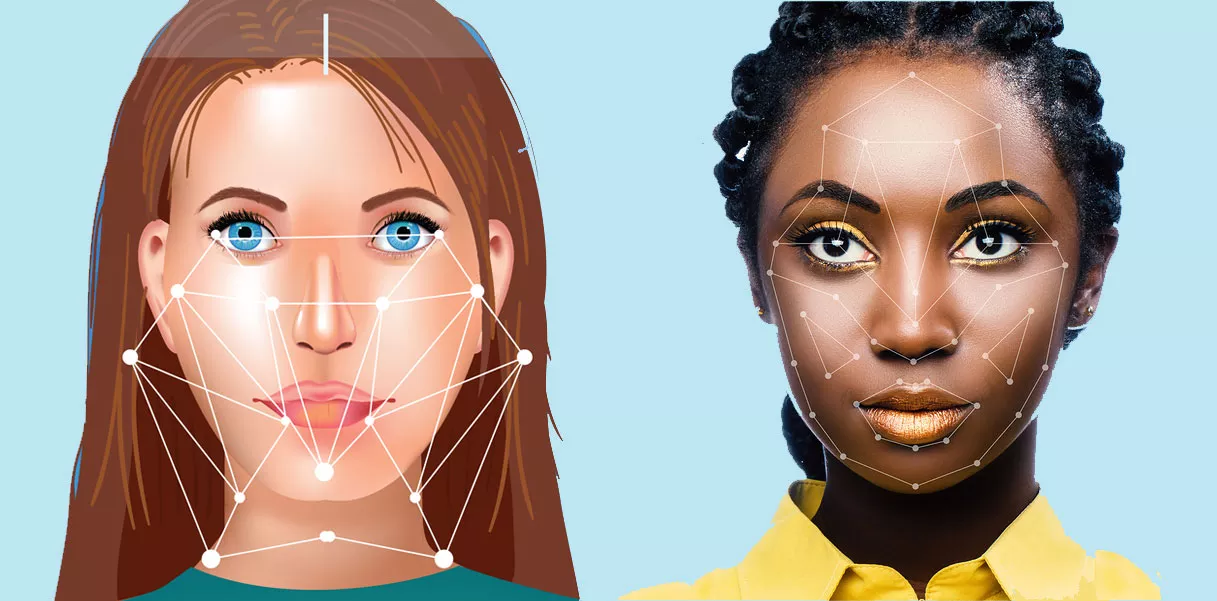
It's the early 1990s. Imagine a U.S. high-tech company has made a quantum leap in face recognition software. The product is so far ahead of the competition, it corners the market and becomes the industry standard.
In this imaginary scenario, the company is owned and staffed by African American techies.
What are the chances the weakest link in the software would be its inability to recognize dark-skinned faces? Almost zero, right?
When early incarnations of the software were tried out on the company staff, any problems with differentiating and recognizing people with dark skin would jump out at them immediately. The company would make it a priority to pinpoint and correct the problems, because who wants to create a program where they, their coworkers, their mothers, fathers, boyfriends, girlfriends, wives, husbands, sons and daughters can be mistaken for someone else? The recognition system for dark-skinned faces would be as close to flawless as the company could make it.
Of course, before bringing the product to market, the company would make sure the system worked with lighter skinned faces as well, because that's where the money is. Still, its accuracy might drop a bit because Anglos were excluded from the initial testing and tweaking process, and they weren't in the room prodding their fellow techies to work out the bugs.
But if, instead of it being an all-African American company, a quarter of the top people were Anglo, white faces would have gotten more attention from the beginning. If you add Asians and people from other ethnic groups into the mix — and women, let's not forget about women — you're likely to have as close to an equal opportunity face recognition product as any company could create.
Now let's jump back into the real world. One of the weakest links in today's face recognition software is recognizing darker faces. In a grotesque example, in 2015 when Google users asked to see images of gorillas, some African American faces were likely to be included. Google apologized and promised to fix the problem. Instead of fine-tuning the software though, Google simply blocked gorillas from its image search options to take care of that one specific problem.
An article in Thursday's Star is about Amazon's face recognition software which appears to have trouble detecting African American women's faces. As you might imagine, the problem wasn't discovered in house. It was pointed out by a female, African American researcher at MIT.
Both Google and Amazon tried to make excuses for their errors. A Google spokesperson said its software made mistakes with other people's faces as well. Amazon attacked the methodology the MIT researcher used in her recent study, though a group of Artificial Intelligence scholars defended her work. Both companies thought it was perfectly fine to downplay the problem and minimize the effort they put into finding solutions.
Problems like these arise regularly in the private and the public sector because too few members of minority groups are sitting at the table. If Silicon Valley had more African Americans in positions of power, they could throw a spotlight on racially insensitive aspects of the corporation's work, which are invisible or unimportant to others, and work to find solutions to the problems.
Here's another recent example, or two or three, from Hollywood.
Tags: Face recognition software , Google , Amazon , Ryan Coogler , Jordan Peele , Michael Abels , Image
Thursday, March 28, 2019
The Green New Deal is an aspirational list of ideas of ways we can improve the environment and lift people's standards of living.
Do we need a Green New Deal? Is it doable? Can we afford it? Democrats are asking those questions seriously while Republicans pretend the GND would mean an end to hamburgers, milkshakes and airplanes.
The best thing about the Green New Deal is people are forced to talk about climate change and the environment. The topics now have a place at the political table. The more politicians and others talk about them, the better the chances we'll do something to address them.
On another front, some Democratic presidential candidates are advocating for Medicare for All. Others are calling for a private/public partnership which guarantees health care for everyone.
What's the best way to deliver health care to the most people? How will we pay for it? Democrats are holding a vigorous debate on the topic while Republicans make another stab at killing Obamacare and claim to have a plan of their own, something which they've been talking about for years but have yet to unveil.
This is another issue which no presidential candidate can avoid talking about. Like the environment, health care has a seat at the political table. It cannot be ignored, and that's a good thing.
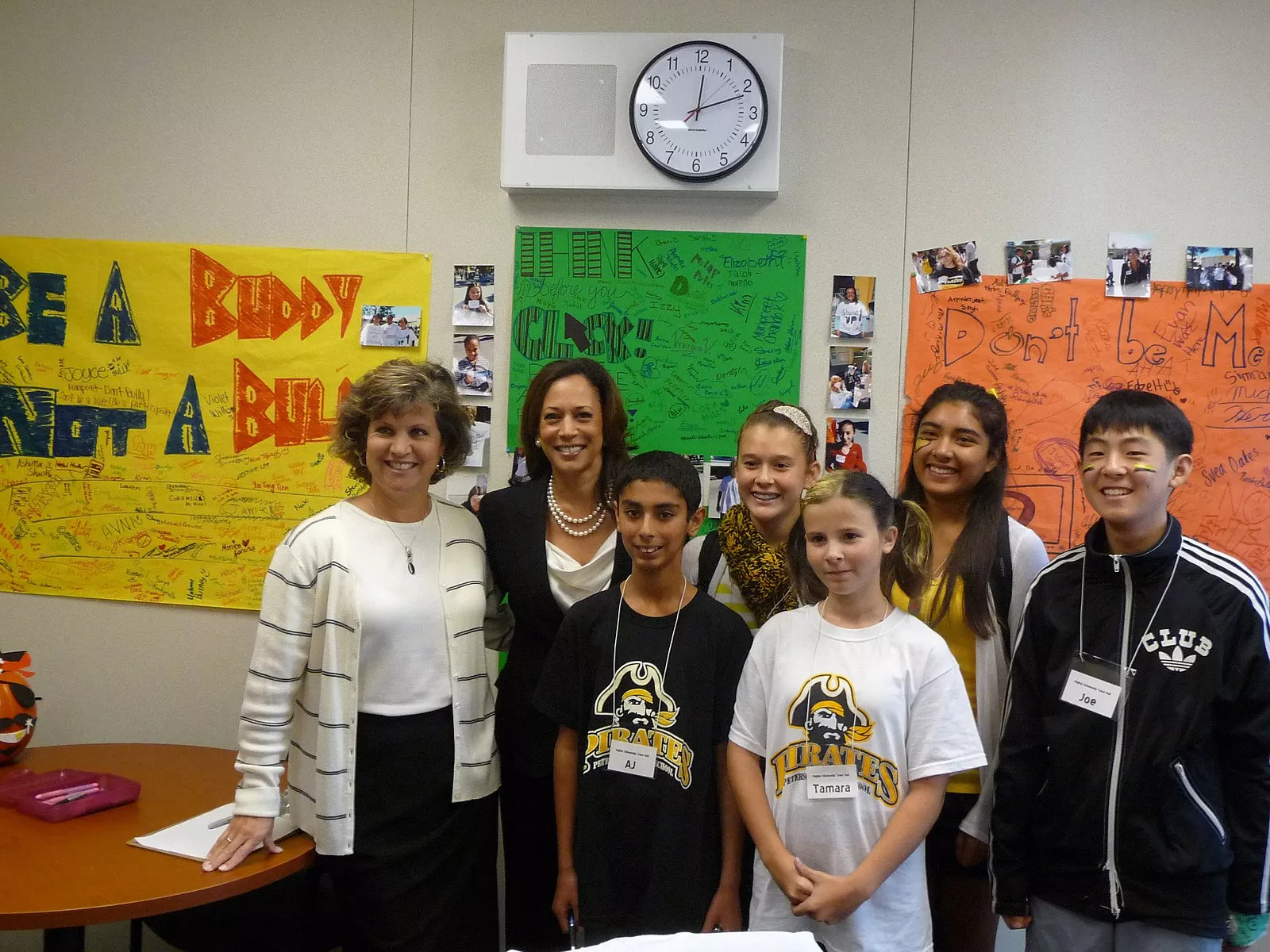
Kamala Harris, Democratic candidate for president, has pulled another chair up to the table, this one for teachers. Harris says teachers are underpaid and under-appreciated, and she wants to increase their salaries using a combination of federal and state funding.
Should we increase teacher pay? Can we afford it? What's the best way to do it? Thanks to Harris, every Democratic candidate will have to address those issues, and Republicans will have to figure out how to fight against a salary increase without sounding like they hate teachers and children. The discussion and debate will increase the possibility that teachers around the country will see a substantial pay increase sometime in the not-too-distant future.
Thank you, Kamala Harris.
Tags: Kamala Harris , Teacher salaries , Health care , Green New Deal , Presidential politics , Image
Tuesday, March 26, 2019
It looks like the charter school bill making its way through the legislature isn't going anywhere. After it passed the Senate, House Speaker Rusty Bowers stopped the bill from getting a hearing in committee. Bowers said he doesn't have the votes to pass it and he's probably right.
The bill's purported goal is to clean up the corruption and profiteering running rampant in some charter schools. People who have been paying attention have known about this for years but a series of articles in the Arizona Republic exposed the seamy underbelly of the charter world to more people, including some Republican politicians who have done their best to look the other way. Not all charters are guilty. Many are run with the primary intent of educating their students, not fatten people's wallets. But as The Republic demonstrated, the bad charter operators are truly bad operators.
The bill's sponsors claim its purpose is to increase charter transparency and lay down some regulations, making it harder for people to game the system. Actually, it does very little, and it does that badly.
Before we look at the bill itself, let's take a look at what's been going on around the bill to see what we can learn.
Here's one clue to what's in the bill: when it passed the Senate 17-13, all the Republicans voted for it. All the Democrats voted against it after trying to amend it to give it more teeth. Seeing as how Republicans created Arizona's charter schools a few decades back and have protected charters from greater regulation and accountability ever since while Democrats have been the ones calling for more transparency and regulation, it makes you think the bill is meant to act as a fig leaf to cover up the naked corruption taking place in some charters, not improve the charter school system.
Tags: Charter schools , Arizona legislature , Arizona Charter School Association , Sen. Kate Brophy McGee , Rep. Eddie Farnsworth , Image
Tuesday, March 19, 2019
According to a recent study by Edbuild, Arizona spends $7,613 more per student in predominantly white districts than predominantly nonwhite districts. That would make us the most inequitable state in the nation when it comes to funding our school districts.
Edbuild's study was picked up by media outlets across the country. You can read all about it in the New York Times, the Washington Post and hear about it on CNN and NPR, to name a few major outlets that carried the story. It's also been covered by Arizona media.
If the $7,613 figure comes from a reputable nonprofit which focuses on problems of funding inequality and segregation in the nation’s public schools and is repeated often enough in the media, it must be right. Right?
Wrong. As I explain in an article which will be running in Thursday's print edition of the Weekly, the figure is not only wrong, it's wildly wrong. Arizona may do a lousy job of funding its schools, but it does a reasonably good job of spreading the money out evenly across districts.
For almost 30 years, Arizona has used a funding equalization formula to distribute money to school districts. Before that, schools were funded primarily by local property taxes, which meant districts with expensive homes were rolling in education dough while districts with lower property values struggled to find enough money to run their schools.
Arizona's equalization system is far from perfect. Some school districts, mainly in high rent areas, find ways to game the system and bring in extra money for their students. But compared to other states, we do a fairly good job of evening out the money each district receives.
Instead of being labeled as one of the worst offenders in the way we distribute our education funds, we should be praised as one of the best.
Here are three reasons I know we're doing a reasonably good job of equalizing education funding:
Tags: Edbuild , District funding , Education funding equalization formula , schools , money , students , districts , funding , educaiton , Image
Tuesday, March 12, 2019
It's been awhile since I've written one of these THREAT (Trump Human Rights Erosion And Termination) Watch posts, which I began writing a week after Trump's election.
It's definitely time for another one. Not because Trump has done anything unusually outrageous or frightening lately. He hasn't. He's been steadily outrageous and frightening in word and deed from day one. He continues to trod down the path he stomped out, campaign speech by campaign speech, tweet by tweet, beginning in the election season and continuing during his two years in office. Though he has done damage to the country and the office of the presidency in ways which may not be remedied in our lifetimes, he hasn't irreparably harmed the country.
Yet.
The only reason Trump hasn't done more harm is because the country's basic institutions have held him in check. The courts have reversed, delayed and curtailed much of what he wanted to do. Once in awhile Congress puts a check on one of Trump's schemes, usually in the foreign policy arena. Rarely, but it happens. And the media—Bless and keep the media, our first line of defense against tyranny!—has stayed strong and independent. The more Trump calls the truth-telling media the Enemy of the People and purveyors of Fake News, the harder reporters work to tell the truth.
Trump should also be held in check by the conventions of the office which say the president is bound by court decisions, by congressional laws and oversight and, possibly most important, by a sense of what's right. A president should have a reasonable amount of honor as well as a sense of shame. When he's done something wrong, or even worse, when he's been caught at it, he should say, "I shouldn't have done that. I'd better back off, maybe even try and make amends. I learned my lesson on that one."
And therein lies the greatest threat Trump presents to the country. He is unbound by the norms of law, society and human decency. He'll lie, cheat and steal, whatever it takes. When he's caught in a lie, he lies harder, repeating the lie more often and ever more outrageously. When the courts rule against him, sometimes he ignores them and other times he works around them, violating the spirit of the court's ruling, trying to find a way to do what he wants in spite of their pesky judicial meddling.
This is nothing new. He's always been this way. But it's gotten worse lately.
Some recent cases in point:
Tags: Trump , media , THREAT Watch , politics , President Trump , News , journalism , government , Image
Tuesday, March 5, 2019
Late in February, Bustos Media, the new owners of KTGV 106.3 FM The Groove announced the re-launch of the radio station. This new addition brings the number of Bustos Media owned and operated stations to twenty-three across the nation.
So, what’s new? Well, The Groove has expanded their playlist, added a special feature they are calling Commercial Free Mondays and incorporated “live DJs” into the morning, midday and evening mix. And, in the digital age of corporate radio, instead of automatons, this is novel.
Now, let’s meet the crew.

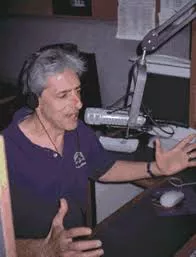

There you have it.
The guys and gals at The Groove are celebrating the occasion with a launch party. The fête takes place Friday, March 8 at Desert Diamond Casino in the Monsoon Nightclub. See 1063thegroove.com for details.
Tags: KTGV , The Groove , 106.3 , Krystal Pino , Big Ed Alexander , SuperSnake , Bustos Media , XOXO , Image
Tuesday, February 26, 2019
As I write this, teachers in Oakland, California, are out on strike for the fourth day. Some charter school teachers are organizing a sick-out to join the district teachers.
In Los Angeles, teachers went on strike in January, ending with a contract agreement with the district. A small group of charter school teachers joined them on the picket lines.
Charter teachers joining a school district strike should put a scare into the privatization/"education reform" crowd. Here's something even scarier. Last December, unionized teachers from a Chicago charter network held the nation's first charter school strike. The teachers succeeded in getting a pay raise, lowering class sizes and granting undocumented students sanctuary.
Then this month, 200 teachers at another Chicago charter school chain were out on strike for two weeks.
Led by the Chicago Teachers Union, striking charter educators staged a camera-ready civil disobedience campaign that filled downtown sidewalks with loud protests, blocked access to a Loop office tower used by CICS board President Laura Thonn and crowded outside Mayor Rahm Emanuel’s office for a Valentine’s Day card writing campaign.The new contract will include "pay raises, class-size limits, one week of paid parental leave and shorter work schedules."
The strikes are the visible tip of the charter school unionization iceberg. Many other charters have unionized teachers who regularly engage in collective bargaining with their charter organizations.
It's a privatizer's nightmare.
Tags: Charter schools , Unions , Strikes , Chicago Teachers Union , Arizona schools , education , students , teachers , Image
Friday, February 22, 2019

Also nearly absent in local reporting (I can't say it hasn't been reported, but I haven't seen it) is the team of reporters who put together the articles that won the prestigious Polk Award in Journalism.
So let me be [among] the first in the southern Arizona news media to congratulate reporters Craig Harris, Anne Ryman, Alden Woods and Justin Price for sharing the honor, as well as the investigative editor Michael Squires.
The reporters received the Polk Education Reporting award, one of 14 Polk awards given in 2018, for:
"disclosing insider deals, no-bid contracts and political chicanery that provided windfall profits for investors in a number of prominent Arizona charter schools, often at the expense of underfunded public schools that educate all but 30,000 of Arizona’s 1.1 million students."This is one of those series that demonstrates the power of the press.
Governor Ducey and Attorney General Mark Brnovich expressed outrage about the corruption and self dealing when the stories were published during the 2018 campaign season. Partially in response, Ducey put money to hire 10 new staff for the Charter School Board into his budget proposal, which would increase the board's ability to spot problems and remedy them.
Republican Senator Kate Brophy McGee eked out a slim win over her Democratic opponent by promising she would work to clean up charter school corruption. She was the sponsor of a charter reform bill, which is a good thing, but it included a loophole letting the biggest charter chains off the hook. After complaints from Brnovich, some legislators, citizens and the media, she closed the loophole. The bill is still weaker than it should be, but it's hard to imagine it would even be considered if it wasn't for the fuss the Republic journalists raised.
Tags: Polk Award in Journalism , Arizona Republic , Charter schools , StarShine Academy , education , schools , students , Charters , Image
Monday, February 18, 2019
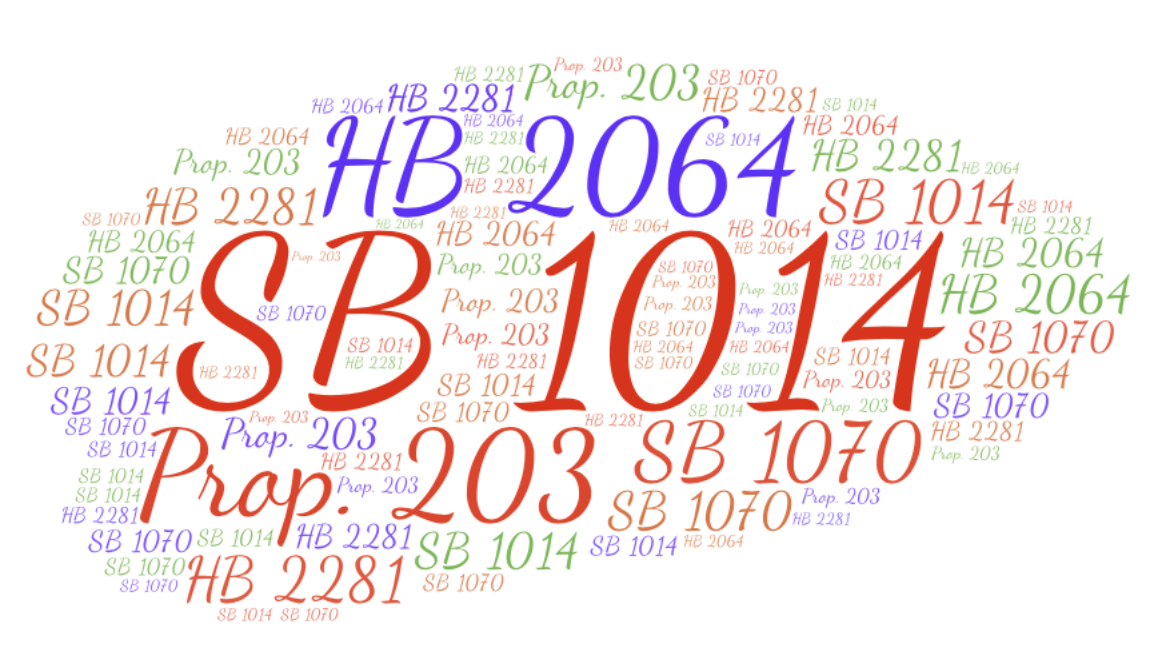
But I have a question. What took them so long? The English Immersion block was just as bad when it began 12 years ago as it is today.
The history of the English Immersion rule makes more sense when it is put in context. On its face it's all about how ELL students are taught, but it's more than that. It's part of Arizona's recent history of legislative efforts to punish not only immigrants specifically, but Latinos and Latino culture in general. And that includes demonizing the Spanish language.
Arizona's English Only law, passed by voters in 2000, and the resulting English Immersion ruling were followed by the "Show me your papers" law, and that was followed by a law designed to outlaw TUSD's Mexican American Studies program. The "Show me your papers" and anti-MAS laws were struck down by the courts in whole or in part. English Immersion survived its court challenges but was finally dragged down by the weight of its own failure.
Tags: English Immersion , ELL students , SB 1014 Prop. 203 , HB 2064 , SB 1070 , HB 2281 , Image
Tuesday, February 5, 2019
SB 1394, a bill intended to bring more oversight and regulation to charter schools, hasn't gone anywhere yet. Like lots of other bills, it's waiting to be considered, amended or ignored to death.
The bill has some good stuff in it, but it also has a loophole big enough to drive an eighteen wheeler through packed tight with all the state's Charter Management Organizations. That means lots of charter schools, including the entire BASIS chain, won't be bound by the new regulations.
There are charter schools, and then there are Charter Management Organizations.
Everyone knows about charter schools. They're buildings filled with teachers and students, just like other schools. (Online charters are the exception, where students work at home sitting in front of their computers [or that's the plan anyway. Whether they're actually sitting and working is another matter]). Like school districts, charters are supported by taxpayer dollars, but with fewer regulations and restrictions.
But not everyone knows about Charter Management Organizations. CMOs work with one or more charters. In some cases, they're outside management companies hired by the schools to take care of things like administrative and accounting duties. In other cases, the CMOs run the whole shebang. They're like school districts in charge of their schools, overseeing everything from curriculum to purchasing to the hiring and firing of administrators and teachers.
Not all charters use CMOs, but lots do, including well known Arizona-based charter chains like BASIS and Great Hearts. Arizona also has charters that belong to national chains, like Imagine Schools with 12 Arizona campuses and online schools like Arizona Virtual Academy, which is part of the publicly traded corporation, K12 Inc.
Charters with CMOs get money from the state based on how many students are enrolled just like everyone else, but they send a portion of their money upstairs to the CMO, where it disappears from sight. In the case of the charter chains I mentioned above, the schools send nearly everything upstairs.
Tags: SB 1394 , Charter schools , Charter Management Organizations , education , schools , K12 , legislation , Image

