

Monday, March 5, 2018
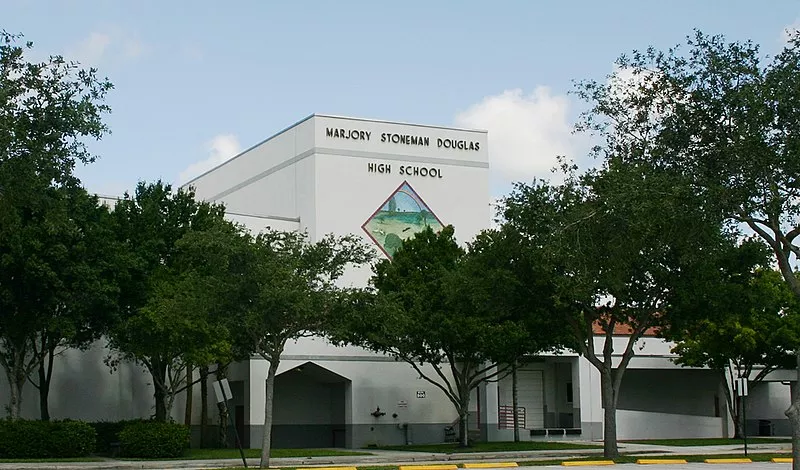
With relief and a strange feeling of pride, I watched these young people remain amazingly poised and well spoken under the most difficult of circumstances. Sure, some of them stumbled a bit, spoke awkwardly now and then, lost the thread of what they were saying. But that happens to lots of non-professionals when they have a camera stuck in their faces and are asked to bare their emotions at the same time they have to talk about complex issues. The Parkland students haven't just held it together. They've shone. They've pointed the way for the rest of us.
I'm an old high school teacher. I know what kids that age can do. But these folks exceeded my expectations.
The students deserve all the credit in the world, but we should reserve a little extra credit for their schools and teachers as well. The students have been educated in the skills they demonstrated to the nation.
Take David Hogg, a young man who seemed so self confident and practiced, it made sense he was singled out by the right wingnuts as a "crisis actor" flown into the school by the anti-gun crowd to pretend he was a student. He's the student director of the school's broadcast journalism program, WMSD-TV. While he was hiding inside a closet with other students during the shooting, he was interviewing them. Other staffers for the student newspaper were also reporting the story while it was in progress, taking photos and videos during the ordeal.
Tags: Marjory Stoneman Douglas High School , David Hogg , Cameron Kasky , Image
Friday, March 2, 2018

Toward the end of that post I wrote a few sentences, almost a throwaway, about the relation between education and poverty.
"Education is not an effective way to fix the country's problems related to poverty when it's working by itself. But lessening the burdens of poverty is the best way there is to improve student achievement, and it's even more effective when schools improve as well."Let me pick up that idea and expand on it.
If we're looking at schools as a primary engine to lift children out of poverty, we're looking in the wrong place. Education is necessary to facilitate greater economic mobility, but it's far from sufficient.
You hear a lot of people say, "Failing schools are the problem." If we just fix our schools, they say — improve the curriculum, get rid of bad teachers, create charters, privatize schools — that's the best way to lift children out of poverty. But it isn't. What it is, is the best way to delay dealing with the root causes of poverty.
Trying to address poverty by improving schools is the rough equivalent of seeing a problem, then creating a committee to study it.
Here's how study committees often work. A group of very serious people get together and spend a few years kicking a topic around. They gather information, call in experts, look at the problem from a number of angles. Then the group publishes a very serious report long after the heat which was the reason the committee was set up has cooled. The report is analyzed and critiqued by some other very serious people, then it's shelved. That's it. No action, no results. Study committees are the place where ideas go to die.
Here's how educational "reforms" which are supposed to help children rise out of poverty usually work. The "reforms" are put in place with fanfare and high hopes, but no one expects to see results right away. It takes a number of years for children to work their way though the educational system before we can measure whether the "reforms" yielded any results. Five years, ten years, twenty years down the line, researchers plow through piles of data and try to measure the effects. Depending on how researchers parse the data and which variables they emphasize, they find students gained or lost a little ground due to the changes. The needle rarely moves very far one way or another in terms of student achievement or improving students' economic mobility.
So we begin anew with another round of "reforms" which are supposed to fix our "failing schools" and move children out of poverty. We wait a number of years, study the results and start over again. Rinse and repeat, ad infinitum.
No Child Left Behind. Charter schools. Vouchers. Blended learning. Common Core. Changes in methods for teaching reading and math. Education innovations come, educational innovations go, they work a little, they don't work at all. If poverty and economic mobility rates budge in the interim, it has far more to to with outside economic and social forces than with what's going on in schools.
Who are the most enthusiastic proponents of those study committees? They tend to be people who want to keep things exactly as they are, people who benefit from the status quo. They measure the success of the committee by how little happens to address the problem it was created to study.
So who benefits most from maintaining that fixing our "failing schools" is the best way to lift children out of poverty, effectively kicking the can down the road a decade or two? I'll give my answer at the end of the post.
Tags: Education , Poverty , "Failing schools , " Education , Education reform , Image
Tuesday, February 27, 2018

That's why a case currently in front of the U.S. Supreme Court, Janus vs. Afscme, is such a big deal, and why conservatives have been funding the cause behind the case for years.
Janus vs. Afscme would take away the ability of public employee unions to make non-union members pay a "fair share" fee. Twenty-two states currently have that requirement, which makes their public employee unions strong as a bargaining force for state employees and a political force during election time. The rest, like Arizona, don't have "fair share," making the unions weaker on both fronts. I don't plan to discuss the merits of the case, though like most people whose politics lean left, I very much hope the Supreme Court rules against Janus. The discussion here is about money in politics, specifically the money of one Richard Uihlein.
I had never heard of Uihlein until I read an article a few days ago saying he was one of the largest donors behind the current effort to get rid of the "fair share" fee. So I did a google search on the guy. One article I found calls him "The Koch of conservative politics in Illinois." Another wants you to "Meet the Illinoisan Trying to Buy a Wisconsin Senate Seat." Another article lists "10 super-rich people [who] dominate giving to super PACs active in midterm elections for Congress." For the 2018 elections, Uihlein is at the top of the list with $19.5 million so far, and we're at the beginning of the funding cycle.
Tags: Richard Uihlein , Labor unions , Janus vs. Afscme , Image
Thursday, February 22, 2018

The answer is, never that I can recall. I can't remember old-manning teenagers about the good ol' days, ever.
Matter of fact, when a discussion in one of my high school English classes led to a moment when it looked like it was time for me to Tut-tut my students, I'd often say, "You know, right about now, I'm supposed to tell you what's wrong with your generation, how young people used to be polite and mind their parents and turn in their homework and join in marches for civil rights and protest the Vietnam war back in my day. But it's kind of hard for me to old-man you when my generation's slogan was 'Sex, Drugs and Rock 'n Roll.'"
Maybe as a teacher I wasn't supposed to say that. Setting a bad example and all. Except it's true. Children of the 60s have plenty to be red-faced about when we think about some of the things we said and did. And as for the 50s, well, we 60s college students were the ones who condemned our formative years for their lock-step conformity, racism and sexism. It would have been beyond hypocritical for me to praise the "Father Knows Best" era.
To my last day in the classroom, I maintained the students I had in the final years of my career were as good as, maybe even a little better than, my first students 30-plus years earlier.
The kids are all right. Always have been — acknowledging the obviously stupid, irrational, dangerous behavior which is part of growing up (also part of being a grown up, as this grown-up can attest). All the way back to the youth of ancient Athens running wild in the agora and, according to the leaders of the city-state, having their minds corrupted by that rabble rouser Socrates, the kids have been all right. When youth do truly awful, vicious, violent things, they're likely mirroring the society they live in.
Tags: Gun violence , Marjory Stoneman Douglas High School , Gun laws , NRA , Image
Wednesday, February 21, 2018

Of the 8.5 million people in Israel (the number doesn't include the 5 million Palestinians in the West Bank and Gaza), about 135,000 of them have gun licenses — more like 100,000 if you remove the security guards. Most of the licenses are for 9 mm pistols.
So why is our "Second Amendment above all else" crowd implying Israel is a model for rampant gun ownership in the U.S.?
Mike Huckabee and Wayne LaPierre have claimed in the past few days that the security guards Israel places in front of schools are the reason the country doesn't have the kind of shootings we do. People in Israel beg to differ. They say the guards are there to protect against the very real threat of terrorism. The country doesn't suffer from the kind of regular, random, out-of-nowhere shootings we have in this country, in schools or elsewhere. One reason is, they have far stricter gun laws.
An article in the New York Times describes Israel's gun laws. Anyone who scoffs and shouts "FAKE NEWS" because the article is in the Times is an idiot. Do your own research and see if the Times reporting bears out. I did, for a column I wrote in the Northwest Explorer in 2012 following the horrific Sandy Hook school shooting. The situation hasn't changed significantly since then.
Tags: Gun laws , Israel , Mike Huckabee , Wayne LaPierre , Sandy Hook , Image
Friday, February 16, 2018

So Gates thought, why not put his entrepreneurial genius and hundreds of millions of dollars a year to work innovating and disrupting and transforming the field of education? How hard can it be?
Pretty hard, he discovered.
Gates has been pouring money into his educational experiments in this country since 2000. Overall, I'd give his efforts a grade of C. Not much help, no grave harm. I'd give what he's learned about education a B. He now understands he doesn't know as much about education as he thought he did.
Bill and Melinda Gates released their annual letter answering The 10 Toughest Questions We Get. Question #2 is, "What do you have to show for the billions you’ve spent on U.S. education?" Their answer employs the couple's usual upbeat tone, but the efforts they describe are less than encouraging, especially given that, "Our foundation spends about $500 million a year in the United States, most of it on education."
A few telling excerpts from their answer:
"One thing we learned is that it’s extremely hard to transform low-performing schools."
"We have also worked with districts across the country to help them improve the quality of teaching. . . . But we haven’t seen the large impact we had hoped for."
"How did our teacher effectiveness work do on these three tests? Its effect on students’ learning was mixed."
Tags: Bill Gates , Melinda Gates , Education , Poverty , Image
Wednesday, February 14, 2018
But nothing Trump proposes, or says, or does, no matter how ridiculous or mendacious, can be considered dead so long as congressional Republicans buckle and bend the knee whenever it's time to show some independence. They're like a character in The Sopranos saying, "Sure I hang around with Tony Soprano sometimes, but I'm my own man. I know when to say no." Uh huh. Sure you do.
So let's look at Trump's DOA, or DBIA, proposals for the education budget, because everything that comes from his mouth or his tweets or his office matters, to the shame of his weak-kneed enablers.
Trump proposes to cut about 5 percent, or $3.6 billion, from education spending.
First, the education budget losers. Here are programs which would end.
• $2 billion for teaching training and class size reduction efforts. Gone.
• $1.2 billion for after-school programs. Gone.
• $400 million for districts to use for a variety of purposes including health-related programs and improving access to technology. Gone.
• $340 million to help get low-income and first-in-their-family students prepare for college. Gone.
• $250 million for states to develop preschool programs in low income areas. Gone.
• $190 million for grants supporting reading programs. Gone.
• $140 million for educational research programs. Gone.
• $73 million for pairing academic programs with health and related services. Gone.
Tags: President Trump , Education budget , Image
Tuesday, February 13, 2018

Teleos charter is part of the Great Hearts charter chain which has 23 schools in the greater Phoenix area. The schools say what clothing and hair styles are acceptable in their handbook, and if students violate the rules, they're sent home. At Great Hearts, boys aren't allowed to have shaved heads, Mohawks, rat’s tails, pony tails, or braids. They also can't have long hair or dye their hair in non-natural colors.
Yawn. Next education story, please?
As the story developed, I realized I was suffering from a case of white blindness. All the other prohibited hair styles are societal statements or personal fashion choices, and reasonable people can debate whether or not they're appropriate in a school setting. But hair braids are part of an African American cultural tradition, and to deny that hair style is to disrespect the traditions and culture of a group of people who have suffered disrespect and far worse since they set foot on this continent. So this is more than a generic dress code issue. Hair braids for an African American male are a different matter entirely from the other prohibited choices.
After first defending the school's actions to the press, the superintendent of Arizona's Great Hearts charters reversed course and issued a statement saying the student is welcome at the school, braids and all. "This event has triggered an internal review," the statement said, "to determine what changes may be needed to ensure this policy is sensitive to the cultural diversity we are proud to have in our academies."
Great Hearts deserves credit for doing the right thing in this case. But there's more to the Great Hearts story which puts this example of racial insensitivity in perspective.
Much like the BASIS charter school chain, Great Hearts charters generally have a rigorous academic curriculum and cater to high achieving students. In most of their Phoenix-area schools, the vast majority of the students are Anglo and Asian. The one exception is Teleos Preparatory Academy where the student's hair braids became a problem. Teleos is 6 percent Anglo and 1 percent Asian. Most of the other students are African American and Hispanic.
Tags: Teleos Preparatory Academy , Great Hearts charter schools , Diversity , Image
Thursday, February 8, 2018
Governor Ducey came in at one-tenth of that, $100 million. At the latest Koch brothers summit, Ducey said to the assembled multi-millionaires and billionaires, “I didn’t run for governor to play small ball. I think this is an important idea.” But that "important idea" in his pitch for campaign cash wasn't public education. It was private school vouchers, which are near and dear to the Koch network's hearts and wallets. When it comes to increasing public school funding, Ducey plays the smallest ball he can manage and still call himself "the education governor" with a straight face.
But education groups and a sizable number of business leaders say, if we're going to give our teachers a reasonable wage and provide the needed resources for our students, it's going to take an extra billion dollars in this budget and every budget in the future.
So who is this radical group that recommends we add $2 billion a year to the school budget? And a one-time allocation of $1.3 billion to make up for past budget shortfalls? And get rid of the law requiring a two-thirds majority in the legislature to increase taxes so all it takes is a simple majority to add to our revenue base?
All those radical proposals come from a not-so-radical group of participants in the 110th Arizona Town Hall held last November. The Arizona Town Hall's topic changes each year. For 2017, it was "Funding preK-12 Education." Community town halls were held in 15 locations around the state, each attended by a few dozen to a hundred participants, and each group submitted a report with findings and recommendations. Then in November, about a hundred people representing community members, business people and educators gathered for three days at the Hilton Hotel in Mesa. (The Hilton venue is an indication of the un-radical nature of the organization, as is the makeup of its executive committee, which includes wealth advisors, realtors, engineers, and even Lea Marquez Peterson, recent CEO of the Tucson Hispanic Chamber of Commerce and current Republican candidate for the CD-2 House seat occupied by Rep. Martha McSally.)
The Town Hall produced a 17 page report explaining why Arizona's current education funding is inadequate and what needs to change. The crowdsourced set of recommendations does a better job of recognizing what it will take to meet the financial needs of our K-12 public schools than just about any other document I've read, including its understanding that we need to get rid of the two-thirds majority the legislature needs to get a tax hike through the legislature.
Here's the short version of the report's recommendations.
"In simple terms, we need to invest at least $1.3 billion (to be updated to reflect the current need) on a one-time basis – and at least $2 billion annually, with annual increases for inflation in the future – to position our preK-12 education system to meet the educational goals that we have identified for it."
Tags: Arizona Town Hall , PreK-12 Education funding , Doug Ducey , Koch Brothers , Image
Tuesday, February 6, 2018

Instead, the board voted down a resolution which declared that teachers have been freed from the racist restrictions which forbade them from using elements of the dismantled MAS program. The three members who formed the majority made a wrongheaded, possibly even shameful, decision.
Let me give the board majority the benefit of the doubt and assume they misunderstood the meaning of Judge Tashima's ruling. He didn't rule on the value of the MAS program itself. His ruling said the state legislature and the Department of Education used unconstitutional means to suppress the educational rights of a minority group. It was part of a long, proud tradition of our country moving toward granting civil rights to individuals and groups regardless of their ethnicity, race, religion, gender or sexual orientation. In this case, the issue was racism. Thanks to the ruling, the racists lost. That's what the victory is all about.
And that's what the governing board needs to acknowledge, publicly and formally. It should state that the judge's ruling is an affirmation that the education of Tucson Unified students should not be dictated by racists, that the district will decide what it believes is the best way to give its students the best possible education, and it will always strive to respect their civil rights and their right to freedom of speech.
Tags: Mexican American Studies , Judge Wallace Tashima , ARS 15-122 , TUSD school board , Image

