Thursday, February 1, 2018
I was browsing through education news last week and came across an op ed in the Houston Chronicle praising Education Savings Accounts, which is the generic name for what our legislators have redubbed Empowerment Scholarship Accounts. As I looked to see who wrote it, I experienced a simultaneous sensation of familiarity and surprise. The author is Matthew Ladner, who I know well from long arguments we carried on in the comments section of my posts when I wrote on Blog for Arizona and Ladner was a vice president of research at the Goldwater Institute. The surprise came when I read the bottom of the op ed and found out he's now "the senior research fellow at the Charles Koch Institute." I knew Ladner had left GI, but last I heard, he was working on policy and research at Jeb Bush's Foundation for Excellence in Education. Since I don't see him mentioned on the current FEE website, I guess Ladner isn't wearing hats in both places. It looks like he's left Jeb for Charles Koch.
The employment and adventures of Matthew Ladner create a series of connected dots where the last dot connects back to the first. Taken together, they offer a revealing snapshot of the very formidable, very influential, very affluent "education reform"/privatization movement.
Tags: Koch brothers , Koch donor network , Education Savings Accounts , Empowerment Scholarships , Matthew Ladner , Goldwater Institute , Foundation for Excellence in Education , Charles Koch Institute , Doug Ducey , Proposition 305 , Image
Tuesday, January 30, 2018
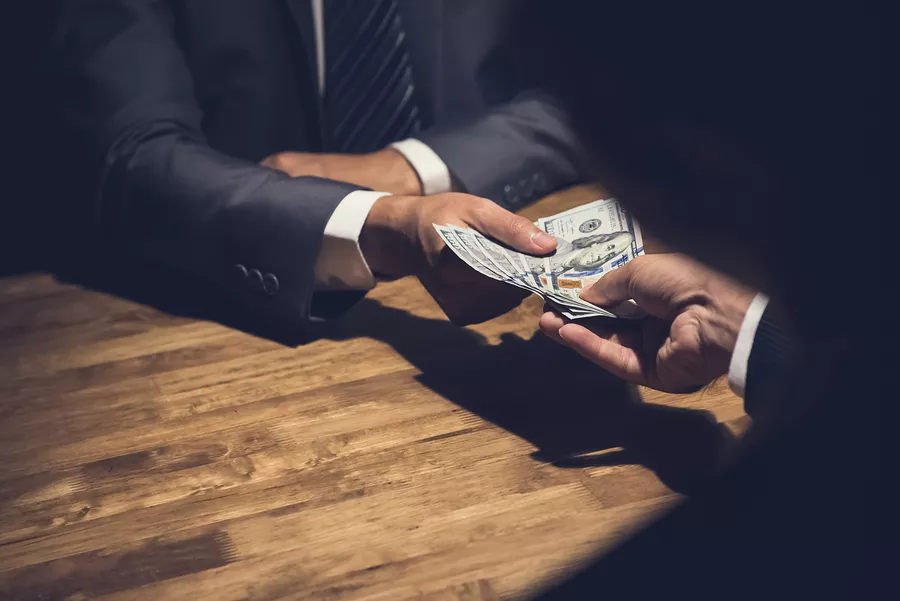
When the Koch brothers, Charles and David, began their push to change politics and economic policy in the U.S. in the 1970s, an important part of their strategy was stealth. Spend millions of dollars, they decided, hundreds of millions of dollars, but stay in the background. Create and help fund multiple organizations, think tanks and college centers, all with lovely sounding names like Americans for Prosperity, Heritage Foundation and The Freedom Center, to help push their version of libertarianism into the center of American life in a determined effort to make this country a better place for the obscenely rich to live—but keep the Koch name out of it. Hold huge donor summits in posh resorts, but don't let the reporters in. Only allow the Koch name into the spotlight when donations are made to causes like cancer research or New York's Lincoln Center for the Performing Arts.
Things have changed over the past few years. The brothers been outed. Their names are regularly featured in the media and Democratic campaign pitches, and people have figured out ways to sneak recorders into their secretive donor summits. So they've emerged from the shadows, a bit, anyway. The spider web of interconnected groups they fund still have the same lovely, Koch-free names, but the Kochs have been forced to give in to the inevitable.
Case in point: The Koch brothers' three-day donor summit in Indian Wells, near Palm Springs, which ended Monday. They let reporters in, with the understanding that they could report on the proceedings but not reveal the names of the 500-plus donors at the summit without the donors' permission. Reporters, however, were allowed to reveal the names of politicians on the guest list, which included two governors: Matt Bevin of Kentucky and our own Governor Doug Ducey.
At the summit, the Koch network announced plans to spend at least $20 million to make everyone love Trump's massive tax cuts for the rich (which included the occasional bone thrown to the non-rich, until the bones go away in a few years). They also plan to spend $400 million on the 2018 midterm elections, more than the RNC, the NRA and the Chamber of Commerce combined. Ducey, a shining star in the Koch firmament, is certain be a recipient of their campaign largesse. A little will be donated directly to his campaign and reported in the light of day, but most it will be in the form of dark money.
On another related front, the Koch brothers plan to dismantle the country's current system of public education and replace it with something more to their liking.
Tags: Doug Ducey , Koch brothers , Koch donors summit , Empowerment Scholarship Accounts , Proposition 305 , Image
Friday, January 26, 2018
I learned about the site from an NAACP magazine I receive along with my membership, which I began soon after Trump was elected.
Non-educators who want to know more about the topic will find the material valuable as well. However, I have to admit, I've only scanned the site. I find it too unsettling to see pictures or even read detailed descriptions of this horrific part of our history. I don't think teachers below the high school level would use the entire site with students, though it would certainly give the teachers the background to discuss lynching with younger children if they felt it was appropriate. I also imagine teachers using this material would warn students about the nature of the contents and give them alternative ways to fulfill class assignments.
Here's how the "About" page describes the site and its purpose.
The Equal Justice Initiative believes we need to change the narrative about race in America in order to advance our collective goal of equal justice for all. As part of this work, we extensively researched the period between the Civil War and World War II, when over 4,000 African Americans were lynched in this country. We published our findings in the report Lynching in America: Confronting the Legacy of Racial Terror, the most comprehensive work done on lynching to date. Many racial terror lynchings, however, went unreported and their victims remain unknown.The entire report is included on the site.
Much of the funding for the organization and this project came from Google, which has contributed $2.5 million to EJI.
Tags: Lynching , "Lynching in America , " Equal Justice Initiative , NAACP , Google
Tuesday, January 23, 2018

I compared elementary schools with similar racial and economic characteristics in Tucson, Sunnyside, Flowing Wells, Douglas, Nogales and Yuma. Since very few of the other districts had schools with fewer than 60 percent of their students on free or reduced lunch, I only compared schools with F/R lunch percentages of 60 percent or higher. All the districts other than Flowing Wells have a high percentage of Hispanic students.
I compared the districts' passing percentages with one another using all the schools I looked at. I also divided the schools into four groups based on the number of low income students, using the percent of students on free or reduced lunch as the measure—60-69 percent, 70-79 percent, 80-89 percent and 90-99 percent—and compared the districts' passing percentages within each of the four groups.
Here are the overall findings:
• When looking at the passing percentages of all the schools, Tucson, Douglas and Sunnyside have identical passing percentages in Language Arts. Douglas and Sunnyside have slightly higher passing percentages than Tucson in Math — by 3 and 5 percentage points. Yuma, Nogales and Flowing Wells have significantly higher passing percentages than the other three: 8-14 percent higher in Language Arts, about 10 percent higher in math.I also looked at the passing percentages for Hispanic students in the schools. The comparisons were close enough to what I found when I looked all the students that a separate analysis of Hispanic passing percentages doesn't yield significantly different results.
• When looking at the schools in the four categories based on income levels, Tucson's passing percentage is significantly lower than the others in the 60-69 percent F/R lunch category. The gap between Tucson and the other districts decreases as the number of low income students increases. In the 90-99 percent category, Tucson's passing percentage is about average.
• Tucson schools have significantly more variation in their passing percentages than other districts, with schools among the lowest and highest in all four categories.
Tags: AzMERIT , High stakes tests , Tucson school district , Sunnyside school district , Flowing Wells school district , Douglas school district , Nogales school district , Yuma school district , Image
Friday, January 19, 2018
On January 14, Ducey went on Sunday Square Off with Brahm Resnik. It was Ducey's first time on the show since he's been governor, and it may be his last, given the tough questions Resnik threw at him about his positions on education and his political debt to the multi-billionaire Koch Brothers. Before I get to the interview, some background is in order.
Doug Ducey first made a name for himself on the national anti-tax stage in 2012 when he was state treasurer and led the fight against Proposition 204, which would have added a billion dollars to education funding by increasing the sales tax. Anyone fighting a tax hike is a friend of the Kochs, and they showed their support by putting $1.8 million into the effort. Their money was instrumental in defeating the measure. [See Note at the end for a correction.]
In 2014, Ducey was running for governor, and he wanted to make sure his Koch connection was still solid.
The Kochs don't supply all the money for candidates and causes they support. Much of it flows from a loosely connected group of fabulously wealthy people who form the Koch network. They come together during regular summits at fancy resorts to plot their strategies and offer up the money necessary to put their political plans into motion.
Ducey attended the network summit in June, 2014, along with conservative favorites like Tom Cotton, Jodi Ernst and Cory Gardner. These gatherings are very secretive. Nothing is supposed to leak out. But someone managed to record the proceedings, including Ducey's moment in the spotlight.
Ducey was introduced to the gathering as someone who "really stood up to a lot of cronyism in the business community in Arizona and led the charge against a tax hike ballot initiative" — referring, of course, to his fight against Prop 204. Ducey followed his introduction with a five minute self-congratulatory talk which let the deep pockets in the room know he was their man. He told them about himself while he stroked their oversized egos, hoping to open their pocketbooks.
"I've been coming to this conference for years," Ducey told them. In politics, he continued, "You're known for the company you keep," referring to the ultra-rich members of the network and the politicians they support. He stated that he had “confidence in the messaging we have here at the conference.”
"I can’t emphasize enough the power of organizations like this," he said as he concluded. “I’m grateful for what this conference does.” What the conference does is fund candidates, both through direct contributions and infusions of dark money. That's "the power of organizations like this" Ducey was talking about.
Tags: Doug Ducey , Koch brothers network , Dark money , Prop 204 , Education funding , tax increase , Image
Thursday, January 18, 2018

I tried my damndest to pull together the details of Ducey's budget proposal by reading a bunch of accounts in the media, but my damndest wasn't good enough. Better would have been to go directly to the source, the official State of Arizona Executive Budget Summary, Fiscal Year 2019. Near as I can tell, Ducey's proposal contains $190.4 million in new money for K-12 education beyond adjustments for inflation and student growth. Here's the part of the proposal listing the education numbers.
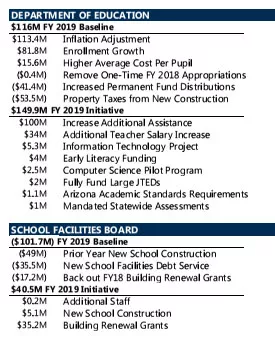
Add together the two "Initiative" lists, and you get $190.4 million.
See the item near the bottom, "$5.1 million, New School Construction"? That's the first of 25 yearly payments to cover the $88.1 million needed to build or expand three schools in Chandler, one in Queen Creek and one in Tolleson Union High district. That means every year for the next 25 years, $5.5 million for those schools will be part of the education budget.
Tags: Education budget , Construction funds , Doug Ducey , Cave Creek school district , Chandler school district , Queen Creek school district , Vail school district , Tolleson school district , Image
Monday, January 15, 2018

Ducey's proposed education budget is filled with items worth discussing, but I want to start here, with new money for school construction, because it's one of the indications that all school districts are not created equal when it comes to our meager state funding. Four districts will build new schools or expand existing schools, three of them in high rent districts. It may be a reasonable move. Population growth may have their buildings bursting at the seams. But at a time when additions to most school district budgets are being doled out by the teaspoon, these districts are getting money by the steam shovelful.
If you subtract the money going to the four districts from the two year education budget total, it gives the lie to Ducey's claim that he's spreading lots of new education dollars around the state. His claim is a wild exaggeration to begin with, considering how far we have to go to get back to 2009 spending levels, but even that exaggerates the benefits to most districts. Ducey says his 2018-19 budget proposal will bring $214 million in new education spending. Add that to last year's total, $163 million, and you get a two year total of $377 million. But about 40 percent of that figure, $152 million, is going to build schools in four districts. That leaves $225 million over two years for everyone else.
Tags: Education budget , Construction funds , Doug Ducey , Cave Creek school district , Chandler school district , Queen Creek school district , Vail school district , Tolleson school district , Image
Friday, January 12, 2018
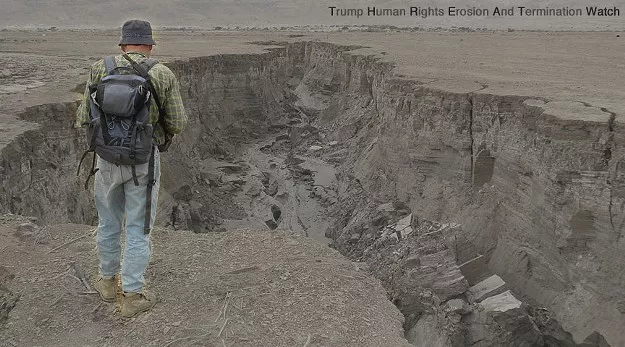
The most obviously vile, but not necessarily the most dangerous, of Trump's three recent statements is Thursday's reference to Haiti and African countries as "shitholes." Trump is a master at painting enemies in the worst possible light with his descriptors, and "shitholes" ranks among the best of them. It refers to a hole dug under an outhouse. While the rest of us walk on clean land, Trump's image has people living in those countries wallowing in the most disgusting kind of filth. For Trump, an admitted germaphobe, the image must be especially revolting.
The president has removed any remaining doubt that he's a racist. Up to this point, only a fan could question his obvious racial animus, but when Trump called countries populated by people of color "shitholes," even his most ardent supporters have their work cut out for them — at least those who are interested in defending him from the "racist" label. I'm sure white supremacists everywhere are overjoyed.
Immigrants of color, even those living here legally, have growing reasons to fear for their safety and security.
Tags: Donald Trump , "Shitholes , " Racism , Libel , Treason , Image
It didn't take a soothsayer or an entrail reader to get that one right. It's what he always says.
Don Quixote, who sang about dreaming the impossible dream in a musical based on the great 17th century novel, had gone mad from reading too many stories about knights and chivalry. He put on a suit of dented armor and rode forth, determined to right the wrongs of the world. He honestly thought a peasant woman was a princess under the spell of a wicked enchanter. He believed with all his heart that windmills were evil giants he could joust against and defeat while riding on the worn-out nag he thought was a noble steed. He believed in his own beautiful folly. His audience has spent five centuries laughing at him and crying with him, wishing they could believe as well.
Governor, I read Don Quixote. I knew Don Quixote literarily and think of him as a friend of mine. Governor, you're no Don Quixote.
Ducey isn't deluded. He knows his promise to add significant education funding to the state budget is a con job, because there's not enough money in the budget for a serious increase, and he has pledged to the state's businesses and wealthiest individuals — and to his greatest benefactors, the Koch Brothers — that he would only lower taxes, never raise them. His only mention of taxes in the address was an increased exemption for military retirement pay.
Ducey spoke of holding the line on prison spending, then said,
"Let’s spend these dollars – tens of millions of dollars combined – where they can go to better use: In our public schools and for our teachers."Some simple math. We have about a million K-12 students in Arizona. "Tens of millions of dollars" translates to tens of dollars per student. In a 30 student classroom, that comes to $300 a year. Ducey knows it. Everyone who understands the size of the education budget knows it. But Ducey hopes he can con potential voters into thinking he promised something real.
Tags: Doug Ducey , State of the State Address , Don Quixote , Education Budget , Image
Tuesday, January 9, 2018

Instead, a decade later, I find myself writing on The Range and competing with the mainstream media and any number of educational professional and volunteer groups for attention. With politicians as well. The governor touts his focus on improving education. His potential Democratic rivals for the office, Steve Farley and David Garcia, can't bring up the sorry state of education funding often enough.
If it sounds like I'm complaining, far from it. I love seeing the increased attention education has been getting in the state. The more the better. And in case this all sounds like bragging, like I think my blogging has pushed the topic front and center, far from it. I don't take a scintilla of credit. Education has bubbled to the surface in Arizona as one of the most important issues facing our state on its own. Its time has come. That's why our schools are at or near the top of every survey of voters' most important concern.
Weekend articles had headlines like "Arizona Legislature begins Monday with focus on education funding" and "School funding is first priority in new legislative session." A preview of the Ducey's coming address to the legislature has the headline, "State opioid crisis and education funding expected topics, State of the State address." Drug addiction seems like the only topic important enough to share the billing with schools.
Tags: Education , Doug Ducey , State of the State Address , Image