

Thursday, March 16, 2017
Reinventing the wheel creatively is also one of its central and most admirable tenants. Imitation is never flattery in this genre. But what about linking regional styles and vastly different musical approaches and lyrical stances?
Thirty-two-year-old Tucson emcee Cash Lansky makes a strong case for the positive merits of that question. Over the course of three solo albums, a high profile and Murs-consigned collaborative record with local rapper Marley B called The Tonite Show and countless one-off releases, Lansky's talent has never been in question. Neither have his commercial instincts. One of his greatest stylistic coups has been his ability to connect the dots between various underground rap sub genres—East Coast boom bap and introspective backpack rap—and make it seem like the similarities far outweighed the seeming fundamental differences in approach and worldview. Lansky's signature has been the erasure of such borders.
While The Tonite Show didn't end up being the commercial breakthrough it was designed to be, but, along with Lansky's subsequent recordings, it propelled him into the upper stratosphere of Southwestern hip hop.
On his new album, The Cool Table, the rapper branches out even further. His lyrics, always impressive, are now completely effortless vignettes of daily life, but the mundanity of daily life is honestly examined with razor sharp articulation. Boredom, pleasure, injustice are all themes that permeate The Cool Table—delivered with either dismissal or pathos, but Lansky never gets bogged down in rage or disgust. Though sometimes reflectively melancholy, this stunningly consistent group of songs are more often elevated to anthems of the idea of just letting things be, a rarity in any genre of modern pop, usually united in bravado.
While Lansky's deft observations are the record's consistent thread, the infectious and accomplished production is where The Cool Table aims for a place in history. Clattering 808 drums suggest contemporary trap on a few songs; soul-based strings and bass lines nod to rap's past on others. But as usual for Lansky, the titles tell a good deal of the story: "Modus Operandi," "Soufwestern State of Mind" and "90's Chill" give half the game away on their own. But naming his record The Cool Table seems to suggest his exclusion from such a place. Or maybe he's aware, accurately, that the implied exclusive club, and his place in it, is at this specific time and place in hip hop's estimable history is one headed by Lansky himself.
The Cool Table release show is Friday, March 17 at Club Congress, 311 E. Congress. With Jae Tilt, Headlock, Street Blues Family, Lando Chill, Marley B. $8-$10. 7 p.m. 21+
Tags: Cash Lansky , Marley B , Murs
Wednesday, March 15, 2017
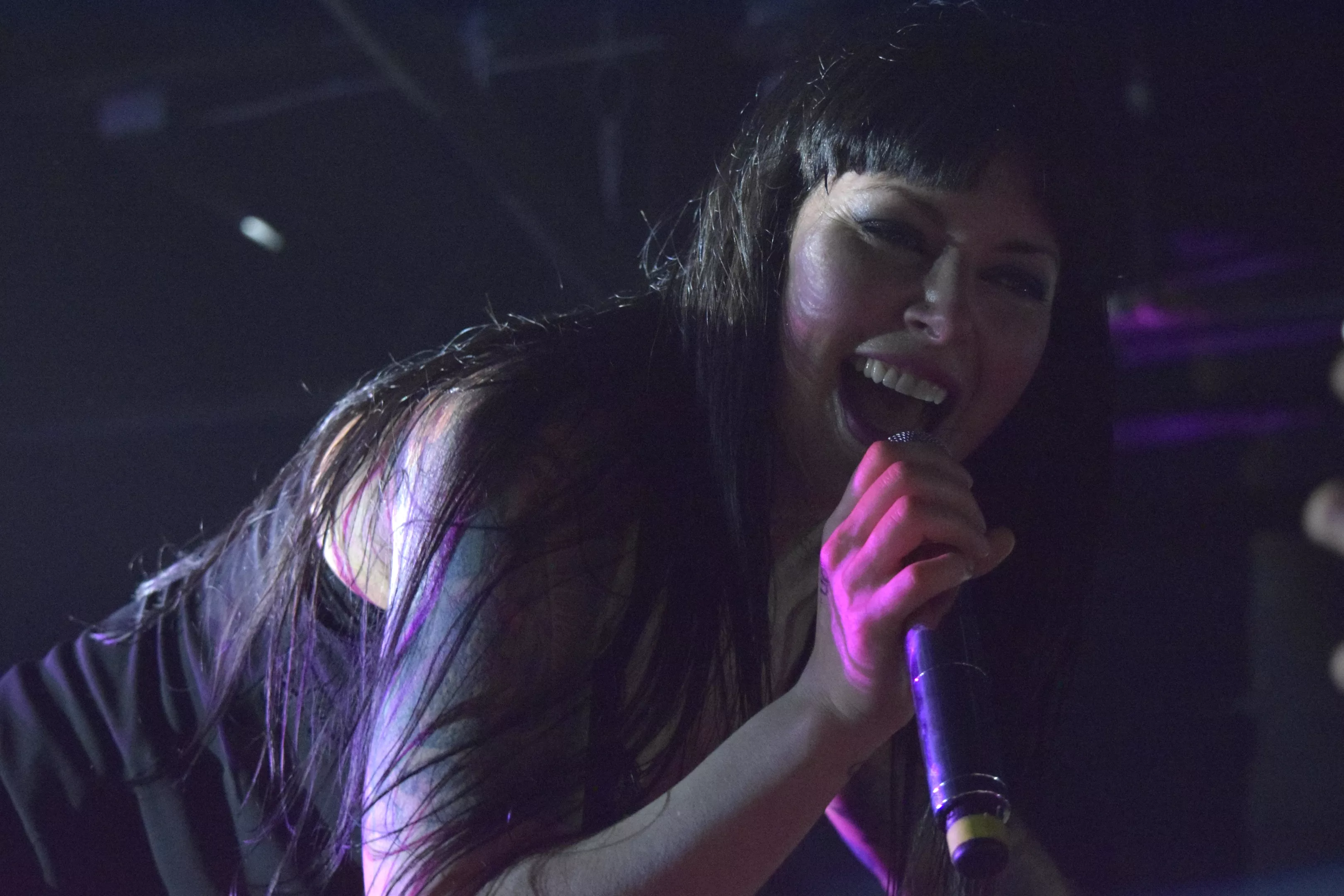
Last night was a party for the record books as we hit up Empire Control Room in Austin to check out the evenings lineup, which mostly consisted of bands with “wild women” front singers.
The lineup included Mothers from Athens, Georgia; Hurray for the Riff Raff out of the Bronx; Julie Byrne from New York City; Girlpool out of Los Angeles and headliners Sleigh Bells from Brooklyn. The only band not to feature a female vocalist was Real Estate from Ridgewood, New Jersey.
Sleigh Bells stuck out like a sore thumb amongst the rest of the lineup, dishing out their ferocious noise pop to the sweaty pit.
“It’s like being blinded by garage rock aliens,” said one fan before the show who had the foresight to wear a pair of sunglasses for the 1 a.m. show.
I don’t know what garage rock is, but it seems an apt description of the band’s brutal shock rock sounds.
The band has certainly come into maturity since their 2008 founding. Four albums later and the hits off their debut, “Treats,” are still crowd favorites.
Their mix of harsh guitar effects and electronic components were even more unforgiving coming from the massive speakers at the live show.
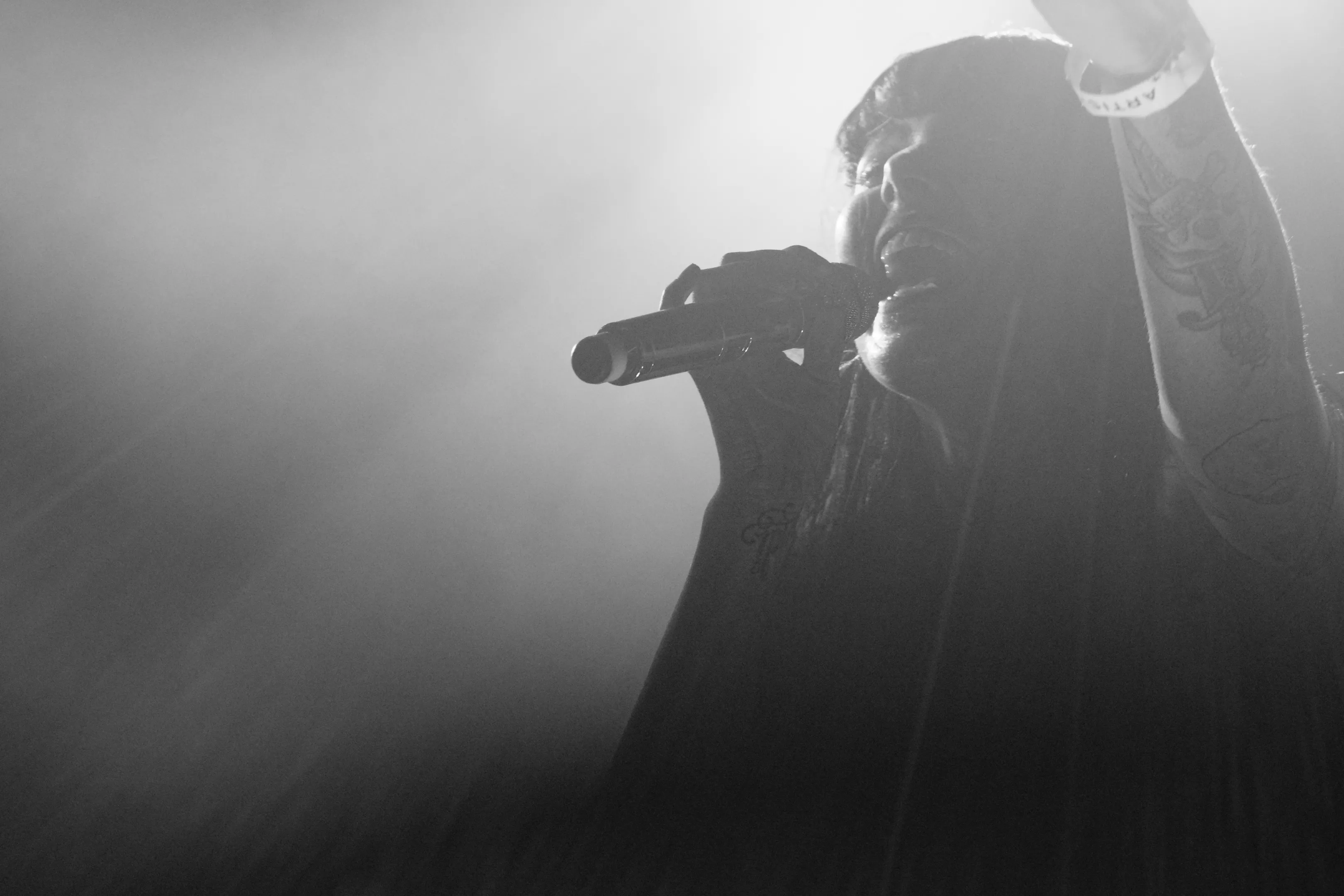
But the speakers were only partly responsible for the immense amount of energy transferred to the crowd. Alexis Krauss on the lead vocals commanded a mastery of the live show, her melodic voice a stark contrast to the abrupt beats—a combination that gives the band its signature sound.
The pit fed off her energy like hyenas in the savannah devouring a lioness as she jumped from stage supports to railings and surfed atop the crowd.
If you’ve never listened to Sleigh Bells before, there’s a small chance that you’ll actually enjoy it your first time, but that’s part of nearly every fan’s obsession with band.
The sentiment was echoed before the show as we spoke with Julia Cunningham and Jenny Eliscu, hosts on SiriusXM’s XMU channel. They confirmed that yes, the people who pick the music for radio (not the hosts) actually do try to play songs so many times that you can’t help but crave them after a while.
The same holds true for Sleigh Bells. You won’t “get it” until you’re sittin’ there with the urge to
get pumped up and one of their earworms burrows into your brain, and headbanging is its only way out.
I’ve loved Hurray for the Riff Raff since I moved to Tucson. Their music, which I could only in find YouTube videos of neighborhood-bar performances, was raw, dirty and real, just like Tucson. It was like sipping whiskey, kickin’ rocks by the train tracks and days ending in blistering pink sunsets. Their brand-new album, “The Navigator” rings of that same feminist Americana fuck-all but sprinkled with the subtle wisdom of time gone by.
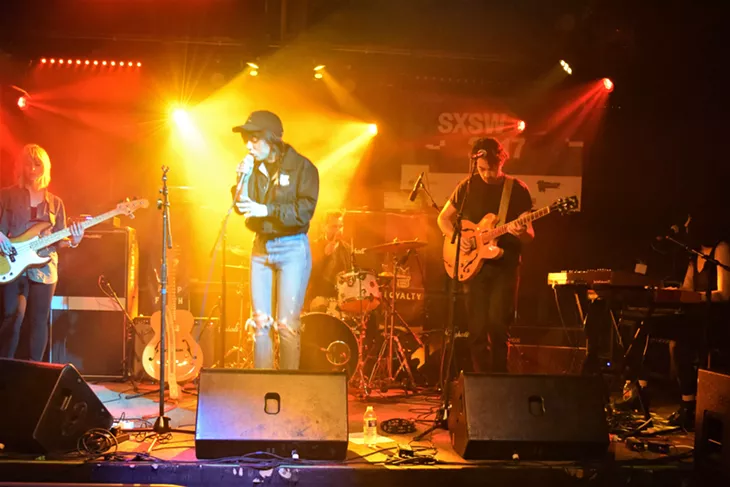
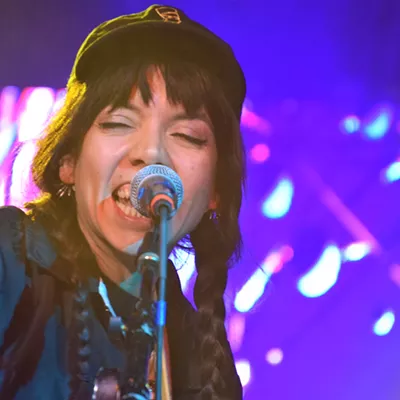
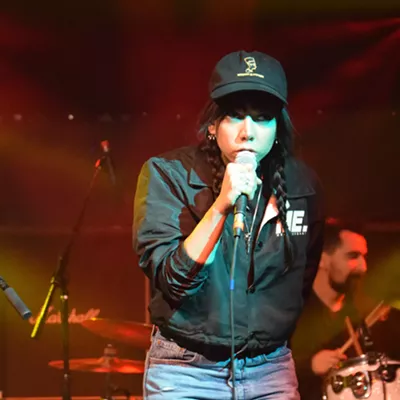
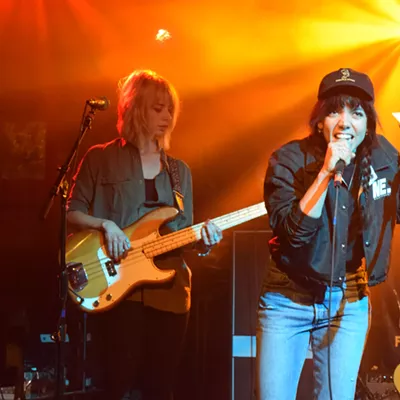
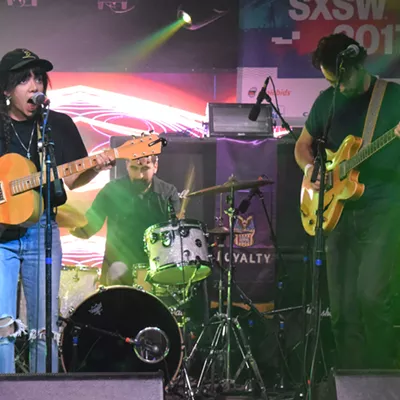
Front woman Alynda Segarra took the stage at SXSW in ripped jeans, a puffy black jacket and black baseball cap. Playing the packed Mazda Studio at Empire Garage, she sings about being an outlaw and getting over heartbreak. Some of the songs in their set have a Latin feel and others, a hint of Surf Rock.
“This is for all the wild woman in the audience,” Segarra says softly into the mic before belting out her new song, “Nothing’s Gonna Change That Girl.”
Whaja Dew
Los Angeles garage/surf punk rockers Whaja Dew kicked things off. Led by cherubic vocalist/guitarist Stephanie Loza, this trio formed a bit over a year ago. With the swagger of a more seasoned band they delivered a high-voltage set, bassist and drummer thundering, kicking out the jams, as it were, leaving the audience of twentysomethings with little alternative but to bounce and headbang to hilariously titled/themed songs like “Saved By The Smell.” Best sight: Loza fearlessly standing atop her amp flaying her Fender and long brown hair about. At set’s end she took to rolling about on the concrete floor, imbued with the almighty spirit of the punk-rock forebearers (Iggy come home!) that came before, unafraid to fuckshitup.
Whaja Dew's new single “Whaja Dewing”:
In certain instances, music facilitates healing. Such is the case for 13-year-old Trey Vincent.
Trey’s life was filled with music even before his autism diagnosis at age two. Right around the time Trey’s mother, Marthajane Vincent, began noticing her son’s atypical development, she also observed his natural inclination toward music.
Trey did not make eye contact, became stiff when comforted, remained nonverbal and ignored others speaking to him. But he paid attention to The Wiggles and Baby Einstein videos.
“One thing we hit on that he really engaged with was music,” Marthajane said. “He would clap his hands and do normal baby things while listening.”
Entering neurologic music therapy as a toddler strengthened Trey’s social functioning and cognitive skills, according to Marthajane. In Trey’s program, the music therapist’s guitar playing gave the children something to interact around. Through peer modeling, Trey learned how to pick up on social cues. While playing the percussion in music therapy, Trey worked on crossing the midline. By following certain rhythms and instructions, Trey developed his motor skills and improved his left-right brain connections. Music therapy can help individuals across the autism spectrum.
Tags: music , music therapy , autism , healing , Arizona
Tuesday, March 14, 2017
Writing music is like falling in love. It’s totally unplanned and sparks something—a drive, said Crista Ru, half the POWERS duo.
Her and Mike Del Rio, the guitarist and singer, fill the voice memos on their phones with 15-second song ideas when inspiration strikes.
Headlining a showcase at Bar 96, on Rainey Street, on Monday—the first taste of some SXSW music—they make the crowd dance while breaking all their hearts.
One of South by’s badass babes, Crista plays bass and sings. Headbanging her bright red hair and stomping her platformed tennies, her voice is like dark chocolate. The audience swoons.
I wait to talk to her after the show while a guy chats her up about sunglasses. He doesn’t want to let her go.
Crista tells me music comes to them like a magical light from heaven that shocks both Mike and her in the brain. I tell them that is very convenient, and they agree.
From New York, the duo is now based in L.A., and despite being over-the-top babealicious and having 1.5 million followers on Spotify, they are sweet and down-to-earth.
When I ask them if they’re a couple, Crista responds, “A couple of nuts.” They look at each other lovingly.
Sunday, March 12, 2017

So imagine my surprise when my editor offered me the opportunity to go to South by Southwest to relay to our beloved Tucson community the performances of the most up-and-coming bands appearing at what is, traditionally, one of the most popular music festivals in the world.
Well, lucky for me, SXSW has much more to offer than the insurmountable schedule of bands and music artists with tracks offering ideas on everything from making music, television and style, to tech, startups and virtual reality, to government, social impact and yes, journalism.
While the music scene doesn’t explode until Monday, we were able to cajole our way to access for all of the festival’s events, and that’s what yesterday was all about. Though much of the day was spent finding our footing, we did manage to make it to some enlightening panels.
Being the journalism and public policy nerd I am, I decided to pop into a panel on “Opening Up Government’s Vault of Data.” This turned out to be an appropriate choice since after I sat down I discovered Rep. Ruben Gallego, D-Ariz., was one of the panelists.
He was joined by Rep. Will Hurd, R-Texas, chair of the congressional Information Technology Subcommittee, and Alex Wirth, a Harvard grad “whiz-kid” and co-founder of Quorum, a website that aggregates legislative data.
The panel was moderated by Rene LaVigne, CEO of IT company Iron Bow and an expert on the intersection of technology and government.
Much of the conversation revolved around the ineptitude of the current congressional representation to effectively use technology to create effective policy and maximize transparency when it comes to the drafting of legislation.
Wirth especially made the point that this is an opportunity for entrepreneurs to play a role in increasing government accountability, leading by example.
Though barely missing out on inclusion in the Millennial generation, Hurd and Gallego joked about how other congress members often come to them for advice on the constantly changing fringe of technology.
With a degree in computer science, Hurd said he could more easily identify the missed opportunities for Congress to employ technology in tracking changes to legislation and government services such as census data.
Thursday, March 9, 2017
Yeah, you may know Simmons from her from her 2012, much-lauded international bio on the big man: I'm Your Man: The Life of Leonard Cohen, or her work for Mojo magazine, or any number of global magazines —from The Guardian to Rolling Stone, or her can’t-set-down Serge Gainsbourg tome from 2002.
But what really gets under one's skin is her beautifully spare Howe Gelb-helmed (recorded in Tucson) debut album. From 2014, Sylvie is a thing of tender authority, girlish innocence and never-grow-up grown-up wisdom, if that makes any sense. Comparisons to early Marianne Faithful or Jane Birkin, might make sense abstractly, but these bittersweet, heavy-lidded lullabies are soundtracks for the flawed dreamers and broken lovers in all of us. Hurtful and oddly familiar-sounding psychic escapes like "Hard Act of Follow" hang in your head long after the record stops. There’s eerie air in the songs, and that says much about Gelb’s graceful backdrop here behind Simmons' slow-train ukulele, which holds rhythms somewhat neatly in place. It’s a late-night record of bruised regrets ("Too many miles on my heart") and hazy memories. Seek the record out if you haven’t already.
Simmons writes of her Tucson one-off on her Facebook page: "I'll be playing a gig in Tucson, Arizona, all by myself at the Owl's Club. You wouldn't want to leave me there on my own now, would you? And it's free. So please come and keep me company, or if you've friends in Tucson send them along. I go on at 8:30 I believe. 236 South Scott Avenue. 9th March 8.30, Free!
(*Note/disclaimer: this writer and Simmons each had a story in a Fleetwood Mac (!) tome Fleetwood Mac on Fleetwood Mac: Interviews and Encounters, which came out summer ’16.)
Tags: Sylvie Simmons , Howe Gelb , Leonard Cohen , Serge Gainsbourg , Jane Birkin , Marianne Faithful , Video
Tuesday, March 7, 2017
Whether backed by a violin or acoustic guitar or muted trumpet or piano, Tucson's Katie Haverly has one of those voices that can lift and soothe, create tension and then release it. It suggests adoration of golden-age (jazzy) folk-pop like Rickie Lee Jones, Judee Sill, David Crosby, and Joni Mitchell—all lovely DNA, certainly—as well as Erykah Badu and Fiona Apple. Yet her songwriting alone could take centerstage. The deceptively breezy “Wood,” from her ’15 album Aviary, slips into your heart with cool, beat country shuffles, but in the end it’s a story of dreaded male gaze and ugly sexualization. It’s brilliant, and works as a personal social takedown inside wide-appeal pop. Many of her other songs are remarkable too because the pathos never sounds forced or fake—sad poetry of deception sidesteps the maudlin; requiems to lost loves steer clear of self-pity. How does she do that? Well, this ex-Copper & Congress singer is a breathing masterclass of songcraft and delivery, but my theory, cornball as it sounds, is she simply was born to do this. That the tune and the voice and the compassion and the ability to translate unfiltered moments into gentle epistles and hurtsongs is nothing that can ever be taught or learned. It just is. And most don’t have it.
So it is that Haverly’s in need of coin to make her next album—her fifth solo—and she’s asking for help. For most anyone else I’d say save your dough for something that really matters. If a record needs to get made it’ll get made. But Haverly’s record needs to be made, and now, because her songs work the senses like some kind of cultural elixir. She’s got golden-eared producer Gabriel Sullivan set to produce too, so you know the LP will have wondrous sonic soundscapes. Her Kickstarter campaign is closing on deadline and is still short on its financial goal.
So Haverly created this live, Julilus Schlosburg-helmed video to help inspire funding. She says this clip for the song "Pluto" is “something a little more intimate … I wrote this song in a cabin in Silver City, New Mexico that I holed up in for four days to help me process our current political and social climate.” She got it here one take here:
Haverly live in Tucson:
Tags: Katie Haverly , Julilus Schlosburg , Video
Saturday, March 4, 2017
A critic's band seemingly uninterested on what N.M.E., or press in general, thought of their locomotive path. They fused Thatcher's England and art-school smarts, and they made more albums, each more haunting and experimental, while learning their way around a studio, engineering songs well ahead of their time.
Collin Newman is the de facto leader who also released solo albums worth owning. Forty years later the group is still regarded as a muscular machine able to challenge listeners— periods of output of pure noise with melody mixed with electronic shards of deconstructed pop, and lyrics most always for the listener to figure out.
For me, Wire's a journal I write my most curious thoughts in. Nothing is algebra, I can reread them and find the cerebral mirror of these musical notepads spinning on a turn table. Wire have now slipped into a method of quick recordings, basically live, with studio tricks inserted after the initial material is down. In a world of plastic music that leaves precious little to enjoy with repeated listenings, this U.K. quartet create incomparable earworms that crawl so slowly into your psyche.
So today, after seven listens of Wire's new single "Short Elevated Period," I was inside that place they take you to. The words: My reasons for living were under review/A parting of the ways, what had it come to?/Standing in the road, where would I go to?/In a short elevated period/In a short elevated period/In a short elevated period. The snare drum so tense, loud, under its grip fuzzy guitars and keyboards of some kind.
Wire's latest album, Silver/Lead, will hit at the end of March. Say what you will, but this band looks forward in a world so scary, one can't help but daydream of the past and reap nostalgia's reward. it's where nothing can hurt you, nothing can stand in your way. They know that. Wire may be here to keep us hearing the tomorrows, playing it dangerous with a frayed safety net just 180 seconds of a new world, which makes a single song a challenge. To compete with the warm misfires of memory. Listen till you take a new way home this afternoon. Long, short or plain wrong we gotta stay up for the last act of the play.
Tags: Collin Newman , Billy Sedlmayr , Video

