

Saturday, March 28, 2020

Elias, a Democrat who has represented District 5 since being appointed to the board in 2002, has been serving as chair of the five-member board.
Justice of the Peace Ray Carroll, who served alongside Elias on the board before declining to seek reelection in 2016, said he respected Elias' commitment and expertise in areas such as healthcare, the environment and housing.
"We had a lot of successes, a lot of disagreements, but we never failed in trying to do our best for our community," Carroll said. "He had a deep understanding of his district and believed in healthy spirit, healthy mind, healthy body."
More details to come.
Friday, March 27, 2020
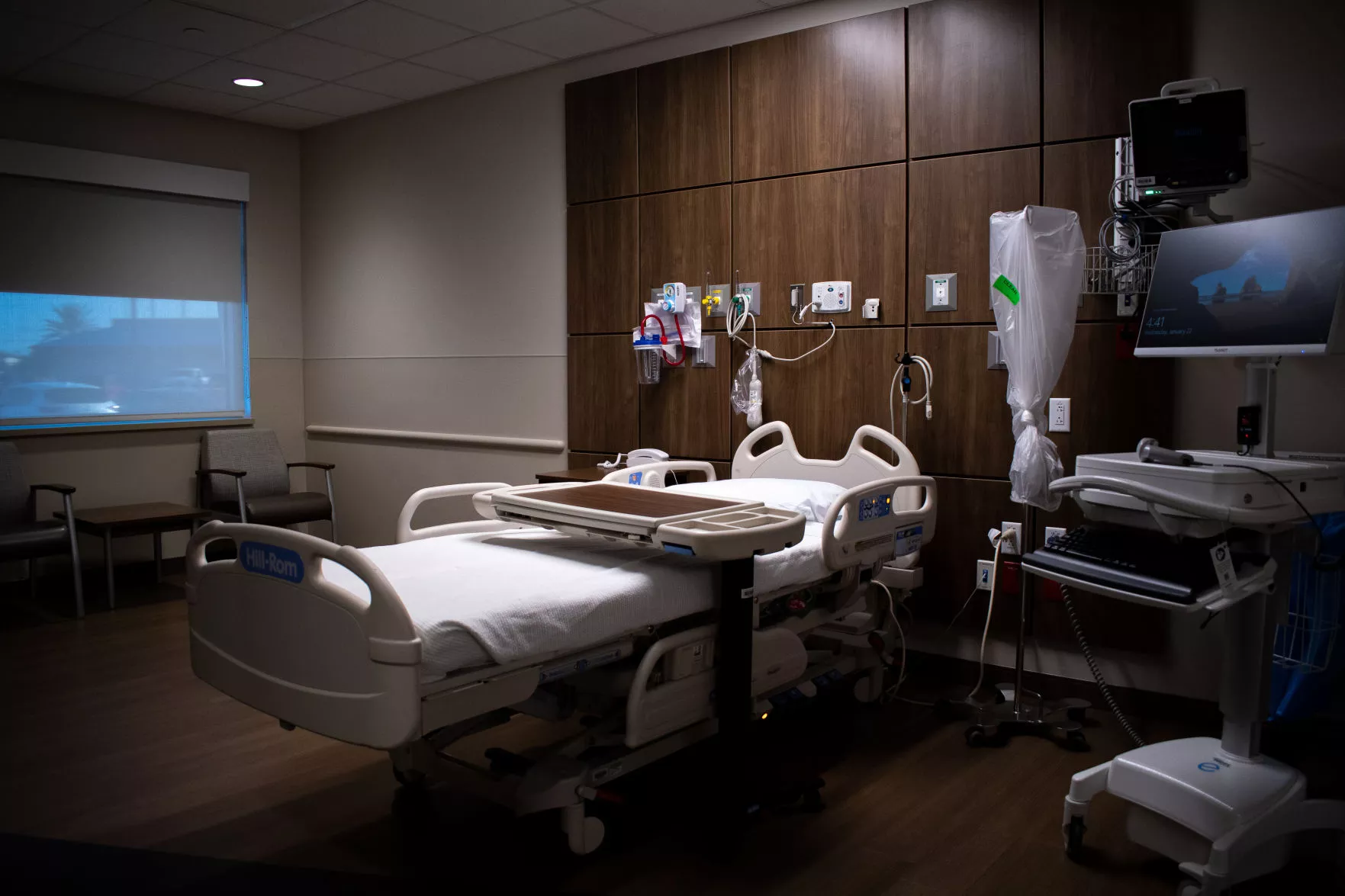
These plans all focus on preventing an eventual hospital overload with more patients than beds, as has happened in other countries where the pandemic has quickly spread.
Dr. Cara Christ, ADHS director, said in a press briefing yesterday that Arizona’s COVID-19 outbreak could peak in April, with the greatest pressure on hospitals in May. But the lack of data (Christ estimated that the state has tested more than 6,600 people, a sliver of Arizona's population) means it’s impossible to say how many Arizonans are already infected with the virus.
COVID Act Now, a team of data scientists, engineers, and epidemiologists working to estimate the growth of infections across the country, projected that a potential overload could happen in Arizona as soon as late April if the state took little action to limit the spread of the virus. By contrast, three months of social distancing could still lead to an overload in mid-May.
Whatever the timeline, there’s a desperate need for more personal protective equipment to keep healthcare workers safe from infection. Earlier this week, Pima County Health Director Bob England warned that the county could not keep up the demand from local hospitals.
Pima County received a shipment of the state's portion of the federal National Strategic Stockpile, but it's not nearly enough, even when combined with the supplies that Pima County was able to find from outside sources, according to England.
England said when the county tried to respond to the requests of local hospitals, they discovered they could only deliver 9 percent of the surgical masks, 3 percent of the goggles and face shields, and 2 percent of the gloves that were requested, and only 1 percent of the gloves that are worn.
“It was just a pathetic drop in the bucket compared to the need,” England said.
Tags: personal protective gear , masks , gloves , hospitals , arizona , tucson , tucson news , arizona news , tucson medical center , northwest hospital , pima county , ducey , Image
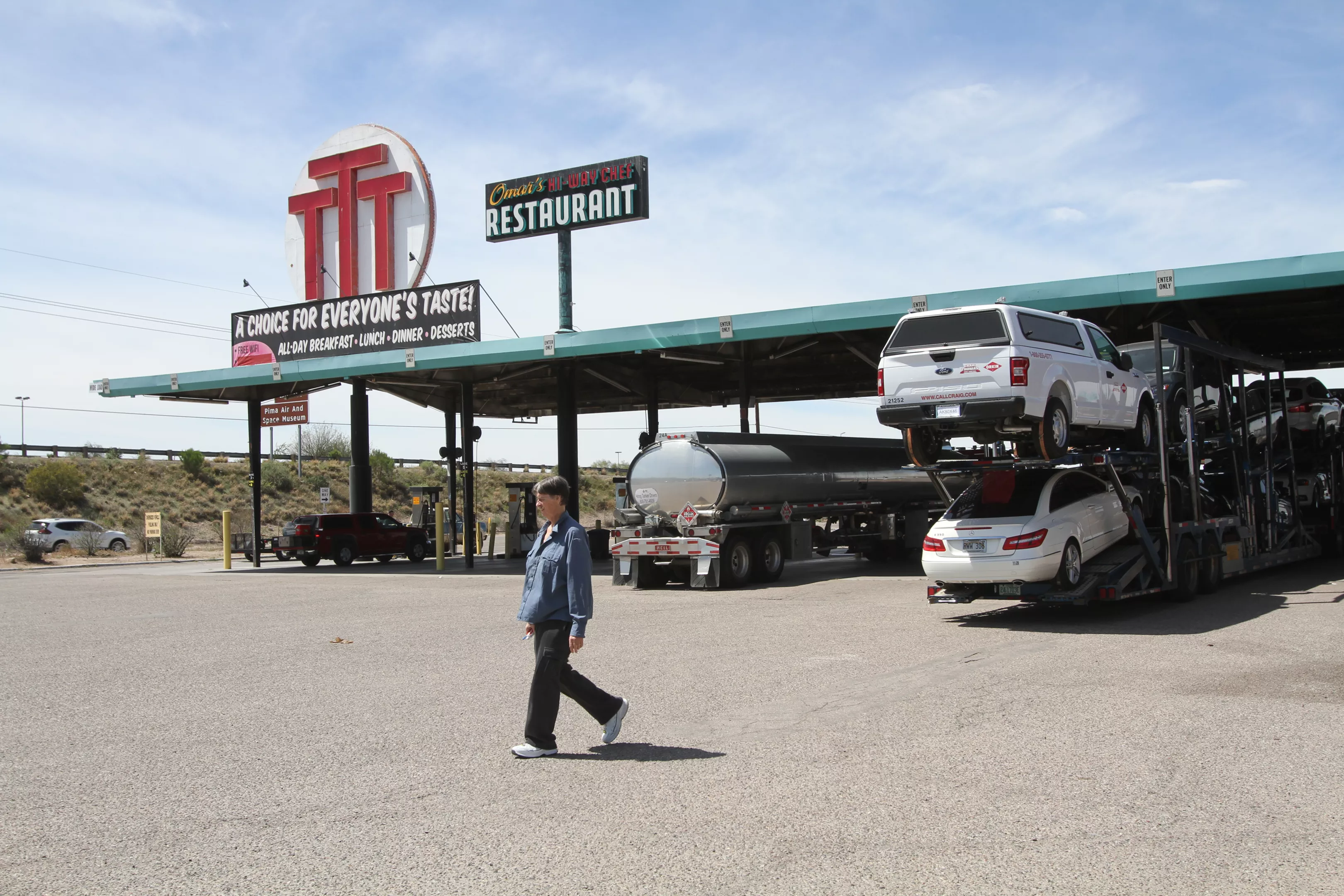
“Everyday day you go to a store looking for toilet paper, you got to remember it came from a truck,” said Kurt Dandoy, president of operations for Triple T Truckstop/Omar’s Hi-Way Chef. “If you shut the trucks down, chaos and mayhem is gonna be the next two words out of people’s mouths. I can promise you that.”
Dandoy is on a mission each day procuring much-needed supplies cross-country truckers are having a hard time finding—toilet paper, bottled water, milk, bread, eggs. If he can’t find what he needs at the big-box stores, like Walmart and Sam’s Club, Dandoy said he would try to find it at local grocery stores in the Tucson area. His daily procurement trips are not about reselling to make money, Dandoy said, but out of duty to his drivers and duty to the country during this unprecedented time.

While Dandoy is doing his best to make sure the Triple T shelves are stocked with the needed goods, he is also helping truckers with another problem they’re facing coast to coast—lack of to-go and take-out options.
Dine-In service is closed at the truck stop’s restaurant, Omar’s Hi-Way Chef, but continues with a skeleton crew of three—a waitress, a cook, and a manager—serving take-out from 6 a.m. until 8 p.m. Dandoy said he’s had to lay off nearly two-thirds of his restaurant staff since the dine-in shut down started mid-March.
“That wasn’t a choice. We don’t have the financial means to fix that,” Dandoy said. “We’re doing less than 10 percent of our normal business at our restaurant.”
Tags: Triple T Truckstop , places to eat on the highway , Tucson news , Arizona news , covid-19 , coronavirus , Omar's hi-way chef , Image
Most dispensaries have adopted social-distancing policies to keep patients a safe distance from each other and sanitation methods such as N-95 masks, latex gloves and liberal use of hand-sanitizer and disinfectant.
Alex Lane, owner of Cave Creek Dispensary, said he has been on the frontlines at the dispensary every day, ensuring proper protocols for the safety of patients, employees and their families.
Lane said he took precautions to ensure his employees can weather the quarantine, providing a $400 bonus for food and supplies, temporarily increasing wages by $3 per hour and allowing employees to take time off as they feel they need it.
Most dispensaries saw a major increase in demand for cannabis during the third week of March, with some reaching record sales over previous years. Fewer than five have closed since Gov. Doug Ducey’s executive order limiting certain types of businesses.
Some dispensaries have discontinued daily deals and several patients have expressed concerns over price gouging. However, some dispensary owners have expressed concerns over the state’s supply of flower.
Tags: cannabis , tucson , weed , dispensaries , safety , covid-19 , coronavirus , tucson news , arizona news , Image
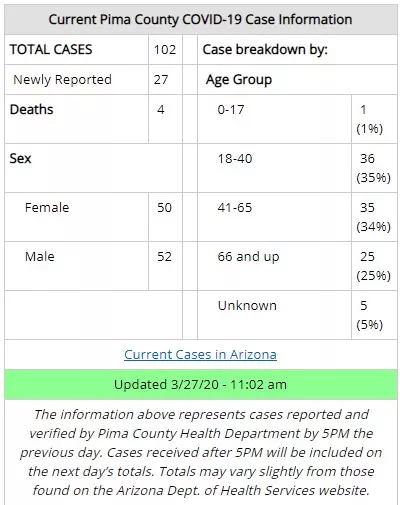
That's a jump of 157 from yesterday's 508.
There are now 102 confirmed cases in Pima County.
The virus has killed 13 people in Arizona, including four in Pima County— two being a woman in her 50s and a man in his 70s who both had underlying health conditions.
In Maricopa County, the number of confirmed COVID-19 cases has risen to 399, with 100 more cases being reported than yesterday.
Health and government officials have urged the public to avoid unnecessary trips and gatherings of more than 10 people. They warn that the extremely contagious virus is rapidly spreading in the community. Symptoms can take up to 14 days to appear, so people can pass COVID-19 without realizing they have been infected with it. Some people remain entirely asymptotic but are carriers.
Arizona's schools remain closed at least through April 10. Schools are transitioning to online learning and districts across the region are delivering lunch and breakfast meals to kids via school buses or setting up central locations.
Tags: covid19 , update , stats , numbers , coronavirus , Image
Thursday, March 26, 2020

• Confirmed cases of COVID-19 grew to 508 today, according to the Arizona Department of Health Services. A second person, a man in his 70s with underlying health conditions, has died in Pima County. The first victim was a woman in her mid-50s with underlying health conditions.
• Pima County is desperately short of personal protective gear for healthcare workers as COVID-19 hits "widespread transmission" status in Arizona.
• The Pima County Board of Supervisors has extended closures of bars, restaurants and gyms until April 10. Restaurants remain open for delivery and takeout only.
• Silver Sea jewelry shop on Fourth Avenue is now operating as a pet-food pantry for those who may need help feeding their dogs and cats.
• The UA is offering rebates on dorm and meal plans.
• The United Way for Southern Arizona has launched a COVID-19 fund.
• The Pima County Public Libraries have some cures for the cabin-fever blues.
Tags: covid 19 , coronavirus , cases in arizona , arizona news , tucson news , news summary , biz closures , deaths in pima county , Image

As the number of COVID-19 cases in Pima County continues to rise each day, the Pima County Board of Supervisors voted 3-2 to extend their mandate on the closure of all movie theaters, gyms, restaurants, bars and other places where people gather in unincorporated parts of the county. Restaurants are still allowed to operate through take-out or drive-thru service only.
The closure was supposed to last until Tuesday, March 31, but the supervisors held an emergency meeting today to extend it to Friday, April 10.
Democratic Supervisors Richard Elías, Sharon Bronson and Ramón Valadez voted in favor, while Republican Supervisors Ally Miller and Steve Christy voted against it.
The move follows Arizona Gov. Doug Ducey and Superintendent of Public Instruction Kathy Hoffman's order to close all K-12 public schools through April 10.
Miller and Christy were opposed to the idea of closing businesses last week. They called the measure "draconian" and said it would cause unnecessary panic within the community.
At today's meeting, Christy said he acknowledges the very real health crisis at hand, but talked about a crisis within the small business community.
"Why are we choosing that date other than it's the governor's?" Christy said. "It's obvious that the April 10 deadline is going to probably be asked to be extended again. These deadlines made only to be extended cause damaging uncertainty to business."
He called for finding "creative ways" to get people back to work. Miller asked if restaurants could be reopened but have their capacities lowered to adhere to social distancing guidelines.
Tags: Pima County , Board of Supervisors , COVID-19 , Coronavirus , Closure , Richard Elias , Ramon Valadez , Sharon Bronson , Ally Miller , Steve Christy , Image
Pima County needs a lot more personal protective gear for healthcare workers on the front line of dealing with the COVID-19 virus that state officials now consider to be be in widespread transmission.
Pima County got a shipment from the state's portion of the federal National Strategic Stockpile, but it's not nearly enough, even when combined with the supplies that Pima County was able to find from outside sources, according to Pima County Health Director Bob England.
"It was just a pathetic drop in the bucket compared to the need," England said in his morning briefing via YouTube.
Pima County could only deliver 9 percent of the surgical masks that were requested, 3 percent of the goggles and face shields that were requested, 2 percent of the gloves that were requested and only 1 percent of the gloves that are worn.
England said the county is continuing to search for alternative solutions, such as working with local distilleries to create hand sanitizer.
"We are pulling out every stop we can but we can't supply what doesn't physically exist and right now, all this stuff is backlogged all around the country," England said. "This is just another reason to, please, don't go seek healthcare right now if you don't need it. We need to preserve these supplies for the healthcare workers who take care of us when we need it."
Gov. Doug Ducey touted the release of 25 percent of the state's supply from the Strategic National Stockpile earlier in the week and said the state had requested more supplies.
Ducey announced today more steps to prepare hospitals for an anticipated surge in COVID-19 cases, including asking hospitals to develop strategies to re-route non-critical patients to other providers, create plans to increase staffing levels, increase bed capacity by 50 percent by April 24, require pediatric hospitals to accept patients up to 21 years of age and increase Medicaid payments to hospitals.
Meanwhile, with COVID-19 cases now confirmed in all Arizona counties except Greenlee and Gila counties, state health officials upgraded Arizona's status to "widespread transmission" of COVID-19.
“Given widespread transmission, all Arizonans should expect that COVID-19 is circulating in their community,” said Dr. Cara Christ, Arizona Department of Health Services director. “COVID-19 is a serious disease that is highly contagious and can be fatal in anyone, especially our elderly population and people with underlying health conditions. Protecting those at highest risk of complications and ensuring that our healthcare system is prepared to deal with a surge in cases is our highest priority. It is imperative that everyone takes precautions to protect themselves and their family from this disease.”
Tags: coronavirus , covid-19 , tucson news , arizona news , pima county news , ppe , personal protective equipment , hospital shortages , coronavirus resources , food banks , schools closed , Image
Wednesday, March 25, 2020

About 140 people currently locked up in Pima County jail could receive an expedited release, thanks to an all-hands-on-deck effort from local criminal justice agencies over the weekend.
Last week Pima County Public Defender Joel Feinman sent a memo to other criminal justice agencies urging a move to release as many nonviolent defendants from the jail as possible, given the COVID-19 health emergency.
COVID-19, also known as the Coronavirus, is a highly contagious disease that can flourish inside jails in prisons.
“There is ample scientific evidence that talks about why this population is more vulnerable to the disease,” Feinman said. “This disease flourishes in conditions of overcrowding, where people are living together in very close quarters, where they have substandard health care, and where there are not as rigorous cleaning protocols in place. You basically just defined jails and prisons across the country.”
The Pima County Attorney’s Office asked the public defenders to generate a list of all defendants they believe should be released. These are individuals considered not dangerous to the community, and are most often facing low-level drug possession charges.
The defendants fall into two categories: those who are awaiting hearings on petitions to revoke probation, and those who are in custody awaiting their trial and have not been convicted.
People who do not have the financial resources to pay their bail must stay in custody until their trial, meaning the people who are at a higher risk of being exposed to COVID-19 are most commonly poor people.
“Given that so many of them are charged with nonviolent drug offenses, and the overwhelming majority of them are in jail because they’re too impoverished to pay for their bail, it’s inhuman to condemn people to illness and death because they can’t afford to post $1,000 bail on a drug possession case,” Feinman said. “It’s simply inhuman.”
Tags: COVID19 , Coronavirus , Jail , Release , Public Defender , Pima County Attorney's Office , Joel Feinman , Amelia Cramer , Image
President Donald Trump is under fire for his reluctance to use the Defense Production Act, a 70-year-old law that empowers the president to order private industry to produce crucial equipment and supplies in an emergency.
But the law may not be the silver bullet its proponents are hoping for to combat the COVID-19 pandemic: It comes with a war chest of only $228 million, with another $1 billion to come assuming the latest rescue legislation passes.
That $228 million is the available balance in the Defense Production Act Fund as of Oct. 1, according to the latest White House budget report. The fund is the designated vehicle for the government to obtain needed supplies from private companies though loans, subsidies or purchases, according to a Congressional Research Service report this month.
As part of a deal reached overnight, the stimulus package will include $1 billion for the Defense Production Act, according to a summary released by Sen. Patrick Leahy, the ranking Democrat on the Appropriations Committee. “This funding allows the Department of Defense to invest in manufacturing capabilities that are key to increasing the production rate of personal protective equipment and medical equipment to meet the demand of healthcare workers all across the nation,” Leahy’s summary said.
The White House and Treasury Department didn’t respond to requests for comment.
The $1 billion influx is less than a previous proposal from House Democrats, who floated the idea of adding $500 million to the fund and authorizing an additional $3 billion. The version of the stimulus bill proposed by Senate Majority Leader Mitch McConnell had no funding for the Defense Production Act. McConnell’s bill failed to advance last week, prompting marathon negotiations that led to the latest deal.
All of those figures are drops in the bucket amid a pandemic response where figures are measured in the billions or trillions. For example, Trump’s national emergency declaration under the Stafford Act unlocked a disaster-relief fund of up to $50 billion.
The existing $228 million in funding is enough to buy about 9,000 ventilators, based on the low-end cost for the type of device used in intensive care units, according to Medtronic, one of the top manufacturers. New York Gov. Andrew Cuomo said Tuesday that his state alone needs 30,000 of the breathing machines to deal with the onslaught of coronavirus patients.
Even without more designated funds, the administration could still use its powers under the Defense Production Act to prioritize other government contracts. The Federal Emergency Management Agency used this authority to expedite contracts for housing, food, water and electricity in Puerto Rico in the aftermath of Hurricane Maria.
On Tuesday, FEMA administrator Peter Gaynor said the disaster response agency would now use the law to obtain coronavirus test kits and was also putting “DPA language” into contracts for 500 million protective masks. By the end of the day, however, the agency backtracked, saying the law wouldn’t be used after all because the test kits were found on the private market.
The reversal came after Trump spoke at an evening White House press conference, saying the Defense Production Act wasn’t needed. Even though Trump formally invoked the law in an executive order last week, he and some of his advisers have been loath to deploy it, under pressure from the Chamber of Commerce and business leaders, The New York Times reported. “We’re a country not based on nationalizing our business,” Trump said at a briefing.
The law is no panacea, added the Chamber of Commerce. “The Defense Production Act isn’t a magic wand to immediately solving medical supply shortages,” Neil Bradley, the chamber’s chief policy officer, told The Wall Street Journal. “It can’t produce highly specialized manufacturing equipment overnight.”
Trump’s position is at odds with pleas from governors, lawmakers and health experts. In a joint letter on Saturday, the top groups representing doctors, hospitals and nurses urged Trump to immediately use the Defense Production Act to increase supplies of protective gear and medical equipment. Rep. Andy Levin, D-Mich., was the lead signer on a letter of almost 60 lawmakers calling on Trump to use the emergency powers this month.
“Time for the DPA — all three sections,” Tom Bossert, who was Trump’s homeland security adviser, with responsibilities including pandemic response, from 2017 to 2018, tweeted on Tuesday.
The Defense Production Act is routinely used by the Pentagon to prioritize contracts and buy military hardware, according to the Congressional Research Service. In 2017, the Defense Production Act Fund supported dozens of military projects such as developing weapons and fuel systems, according to a Defense Department report. The government has not made direct loans from the fund for more than 30 years, the Congressional Research Service said.
Tags: covid19 , coronavirus , defense , act , president , trump , funding , Image

