Friday, December 10, 2021
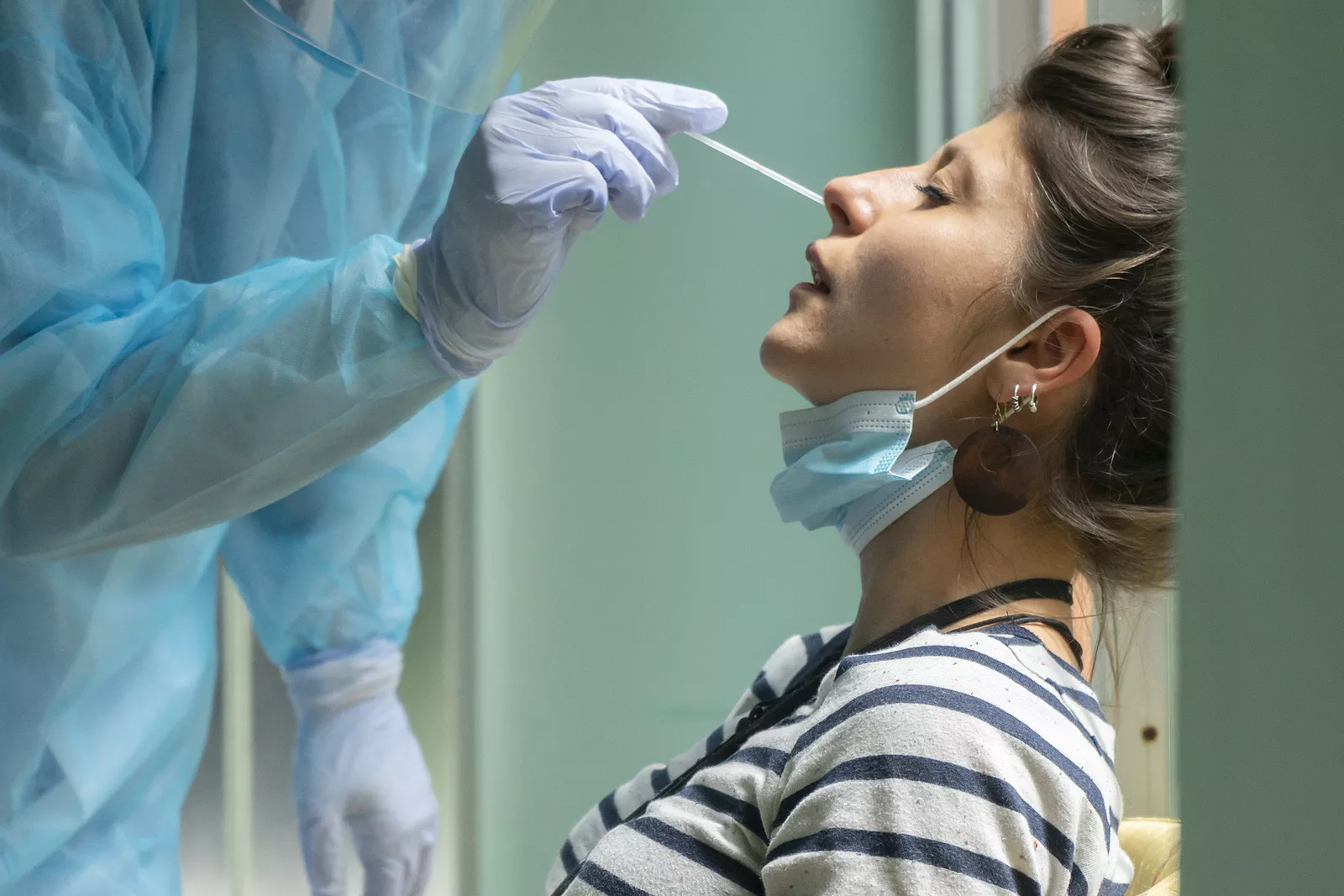
The Arizona Department of Health Services and Yavapai County Community Health Services confirmed Arizona’s first known case of the COVID-19 Omicron variant on Dec. 8.
Although some initial data from the South African Medical Research Council indicates the Omicron variant may have less severe symptoms than previous mutations, health officials advise the public to receive vaccinations or booster shots if they have already gotten vaccinated.
Pfizer-BioNTech released preliminary results from a non-peer-reviewed study showing the Pfizer COVID-19 two-dose vaccination series will somewhat neutralize the omicron variant, but three doses is most effective.
“I think that this finding from Pfizer should be reassuring and should reaffirm to people how important it is for them to get a booster and if they are not vaccinated to please seek vaccination as soon as possible, especially with the holidays coming up,” Pima County Health Department Director Dr. Theresa Cullen said during a Dec. 8 press conference.
As scientists race to understand Omicron, vaccines are the best option to avoid national shutdowns. Cullen said that people who are vaccinated protect themselves, their families and their communities.
“While it is not the only way out of this pandemic, it is an essential component for us to be able to move forward and to start recovering,” Cullen said.
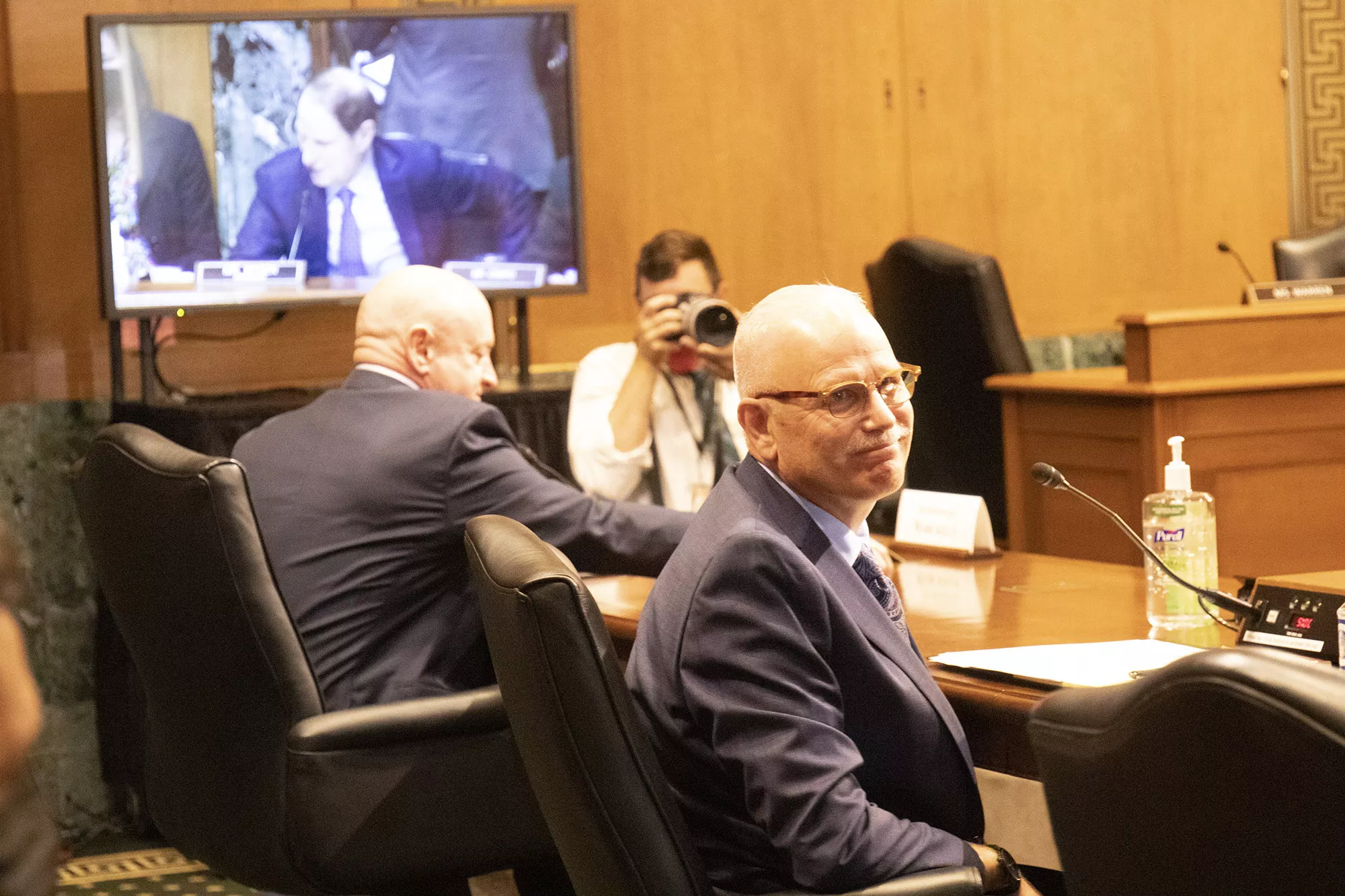
WASHINGTON – The Senate voted by the slimmest of margins this week to make Tucson Police Chief Chris Magnus the next commissioner of Customs and Border Protection, confirming his appointment almost eight months after he was first nominated by President Joe Biden.
The 50-47 vote Tuesday came with just one Republican, Sen. Susan Collins of Maine, joining 49 Democrats to approve the nomination. Despite the lopsided vote, Sen. Mark Kelly, D-Ariz., welcomed what he called the bipartisan confirmation of Magnus to take over at a challenging time for the agency.
“Chris Magnus brings experience and understanding of Southern Arizona that will be important for his new role leading CBP as we continue working to secure the border, upgrade our ports of entry, and ensure a more orderly and humane process at the border that doesn’t fall on Arizona communities,” Kelly said in a prepared statement.
But critics called Magnus the “wrong man at the wrong time” for CBP, which reported a record 1.7 million migrant encounters at the southwest border in fiscal 2021.
Republicans in his Senate Finance Committee nomination hearing in October repeatedly tried to get Magnus to call the border situation a “crisis,” which he declined to do.
While he called the border situation “one of the most serious problems that we face right now,” Magnus said he wanted to spend time working to fix a broken system and “a little less time debating what the terminology is.”
GOP senators also pointed to a Magnus opinion piece in the New York Times in 2017 opposing a Trump administration proposal that would have withheld federal funding from immigration “sanctuary cities,” a move Magnus said then, and during his hearing, would threaten local public safety.
Magnus also came under fire for his criticism of then-President Donald Trump’s decision to send Department of Homeland Security officers into Portland, Oregon, to protect the federal courthouse there during the 2020 protests, a deployment that state and local officials had also opposed. None of those positions assuaged opponents of his nomination.
“As the Border Patrol is overwhelmed with record numbers of people crossing our border illegally – compounded by vast amounts of lethal drugs being smuggled into our country – the men and women who serve in that agency deserve a leader who will provide them with the proper support and resources they need to protect the American people,” said a statement from Dan Stein, president of the Federation for American Immigration Reform. “Chris Magnus is most assuredly not that guy.”

Thursday, December 9, 2021
Proposals from the mayor of Yuma, a coalition of Latino Democrats and a person with the username mango1 took center stage as the Arizona Independent Redistricting Commission returned to action and took the first steps in crafting the boundaries of what will become the final congressional and legislative districts the state will use for the next decade.
On Monday, the commission held its first mapping meeting following a month of hearings in which members of the public voiced their concerns about the proposed districts. The hearings were part of a 30-day public notice period mandated by the Arizona Constitution.
>>VIEW THE DRAFT LEGISLATIVE MAP HERE<<
>>VIEW THE DRAFT CONGRESSIONAL MAP HERE<<
The commissioners opened their day with the two predominantly Latino congressional districts that the AIRC is drawing to comply with the Voting Rights Act. The Arizona Latino Coalition for Fair Redistricting, a group representing Hispanic Democratic interests, submitted a revised version of its proposed congressional map, which the commission debated.
During the first round of meetings that resulted in the AIRC’s draft maps, the majority of the commission was opposed to letting the new 7th Congressional District, which covers much of southern Arizona from Yuma to Tucson, stretch into the western Phoenix suburbs of Avondale and Tolleson, where the coalition had hoped to bring in heavily Latino areas.
Chairwoman Erika Neuberg, however, said she’s warmed to the idea, and now supports doing so.
“I changed my mind,” Neuberg said. “They convinced me, the Latino Coalition. That’s what this whole process is about.”

Wednesday, December 8, 2021

WASHINGTON — As the Senate works to finalize a major annual defense measure, there is a bipartisan push to include a requirement that all young Americans — including women — for the first time register for the military draft.
The $777.9 billion measure, the National Defense Authorization Act of 2022, also would allocate millions to cleaning up toxic chemicals at bases and extend a heath study of the chemicals’ effects on people.
Some lawmakers leading the effort to allow all Americans ages 18 to 25 to be included for registration with the Selective Service System are Reps. Chrissy Houlahan (D-Pa.) and Michael Waltz (R-Fla.), as well as Sen. Joni Ernst (R-Iowa) and the chairman of the Senate Armed Services Committee, Jack Reed (D-R.I.).
“Simply put, as the Selective Service System is currently written it is unconstitutional and discriminates based on sex,” Houlahan said in a statement.
Current law refers to registration of “male persons” and both documented and undocumented immigrants are included.
The military now is all-volunteer, and there hasn’t been a draft since the Vietnam War, but the registration system is maintained.
The White House also agreed with lawmakers on the update to the selective service.
“The Administration supports section 513 and the registration requirement for all citizens, which further ensures a military selective system that is fair and just,” according to the Biden administration, referring to the section of the bill dealing with the requirement.
However, the White House also said it opposes the removal of “incentives for registration” because they are needed “to achieve an equitable system that can be implemented effectively.” When men register for selective service, they remain eligible for federal benefits like state-based student aid, loans and job training programs.
Houlahan is a veteran herself and introduced the amendment on the House side. The House Armed Services Committee backed the amendment 35-24.
Houlahan also included a 12-week maternity and paternity leave for primary and secondary caregivers in the NDAA, the shorthand for the massive defense legislation.

Tuesday, December 7, 2021

Monday, December 6, 2021