

Thursday, March 12, 2020
Area nonprofits use fundraising events to provide essential financial support for their respective missions, and the loss of such events can prove a great detriment.
"CFSA is committed to supporting our nonprofit partners during this time of uncertainty,” said foundation president and CEO Clint Mable, in a statement. “Our goal is to always be responsive to the needs of the community and help ensure that the mission-critical services provided to our community by our nonprofit partners continue without interruption."
To contribute, visit cfsaz.org or call 770-0800.

In response to the coronavirus pandemic and the postponement of this weekend’s games in Frisco and Sioux Falls, along with the state of California’s limit on the size of crowds due to the pandemic, the Indoor Football League will be postponing its season until further notice following Saturday night’s games in Oakland and San Diego.
Both games are still scheduled to kick off at 6:05 PT, but will be played with no fans in attendance. Each game will be broadcast live on Youtube.
“This is an unprecedented situation that we are taking very seriously,” said IFL Commissioner Todd Tryon. “We are monitoring this on a constant basis and are working with the local municipalities and arenas in all of our markets. Our goal is to resume play as soon as possible. The health of our players, coaches, staff, fans, and sponsors is of utmost importance to our teams and to the league, and we will not compromise on those values.”
The IFL will continue to evaluate ongoing events and the safety of our players and will rely on the guidance of public health experts and our league’s Board of Directors in determining when to restart the 2020 season.
Tags: Coronavirus , COVID-19 , news , Tucson news , Arizona News , Tucson Sugar Skulls , Image
The NCAA has canceled March Madness and all other tournament play for the remainder of the season.NCAA cancels remaining winter and spring championships: https://t.co/qzKAS4McEI pic.twitter.com/G6XreZx35E
— NCAA (@NCAA) March 12, 2020
Likewise, the Pac-12 Conference released a statement Thursday morning canceling the rest of the men's basketball tournament and all future Pac-12 events until further notice.
Here's the full statement:
The Pac-12 Conference has made the decision to cancel the remainder of the Pac-12 Men’s Basketball Tournament and all Pac-12 sport competitions and Pac-12 Championship events, effective immediately, until further notice. This decision has been made in consultation with our member universities in an effort to limit the spread of the virus and in the interest of the health and safety of our student-athletes, campus personnel, working and event personnel, and all those who attend Pac-12 events.

Already, this weekend's Tucson Festival of Books has been canceled (although that was more about the reluctance of authors to travel than concern about being in danger of catching COVID-19 at the University of Arizona). Other major events are on the horizon, including the Fourth Avenue Street Fair, the Tucson Folk Festival and the Pima County Fair. As of this morning, all those events are moving forward.
The show is going on at downtown's Rialto Theatre and 191 Toole, according to an email from Rialto Theatre Foundation Executive Director Curtis McCrary, who says that staff is taking additional steps to sanitize surfaces, wash their hands and stay home if they are sick. Likewise, the Rialto asks patrons to stay home if they are not feeling well or have recently traveled to an overseas COVID-19 hot spot.
Here's the letter from McCrary:
Dear Rialto and 191 Toole patrons, ticket buyers, and the Tucson community at large:
We wanted to let you know that we are very closely monitoring the rapidly developing situation with the COVID-19/coronavirus pandemic, as it has officially been deemed as of today.
Although there are very few known cases in Arizona, and only one to date in Pima County, we understand the importance of doing everything possible to mitigate its spread. To that end, we are following CDC guidelines, any governmental guidance or strictures be they local, state, or federal, and we are in close communication with touring artist management as we collectively assess the situation as it unfolds.
We also have instructed our staff that it is of paramount importance they stay home if they are feeling even the slightest hint of sickness, and we will take any recommended measures, such as working from home or other social distancing, should they become necessary. In addition, we have issued extensive instruction to staff regarding hand-washing and sanitation practices that reflect the seriousness with which we take this matter, and will continue to do so on an ongoing basis.
It is our understanding that the spread of the COVID-19 virus comes most readily from surface contact transmission, so we’re taking every precaution possible regarding handwashing, use of hand sanitizer, and disinfection in bathrooms, bars and elsewhere.
For now, as shows and events on our calendar are still going on, we advise anyone planning to attend a show to consider carefully the potential risks, and follow best practices according to the CDC:

"The University of Arizona’s top priority is the health and safety of our students, our employees and our community. At this time, the risk of contracting COVID-19 in Tucson is low, and there are no confirmed cases on any domestic University of Arizona campus," Robbins said. "Nonetheless, like all U.S. universities, the University of Arizona is rapidly ramping up Coronavirus mitigation efforts to keep our community as safe as possible. Accordingly, we are delaying the start of classes to Wednesday, March 18, and moving from in-person instruction to online instruction wherever possible."
U of A students are currently on spring break and were expected to return to classes next Monday. However, the university is delaying the semester's return until next Wednesday to prepare for the move to online classes from in-person instruction classes, according to a letter to students from Liesl Folks, UA SVP for Academic Affairs.
"There is no doubt these policies will disrupt and inconvenience our campus community," Robbins said in the release. "However, I strongly believe these short-term disruptions will greatly reduce the risk of significant long-term negative consequences."
Online classes are expected be in effect until April 6, when UA officials will "assess it's operational status," as reported by the Arizona Daily Star.
ASU and NAU have also canceled in-person classes and are moving online.
Monday, March 9, 2020
With three cases of the global virus confirmed in Pinal County, and an estimated 120 residents of Pima County being evaluated, it seems the virus entering Tucson is inevitable. But the Pima County Health Department reassures the public not to worry, and to treat the spreading virus as they would a bad flu season. To date, no cases have been confirmed in Pima County.
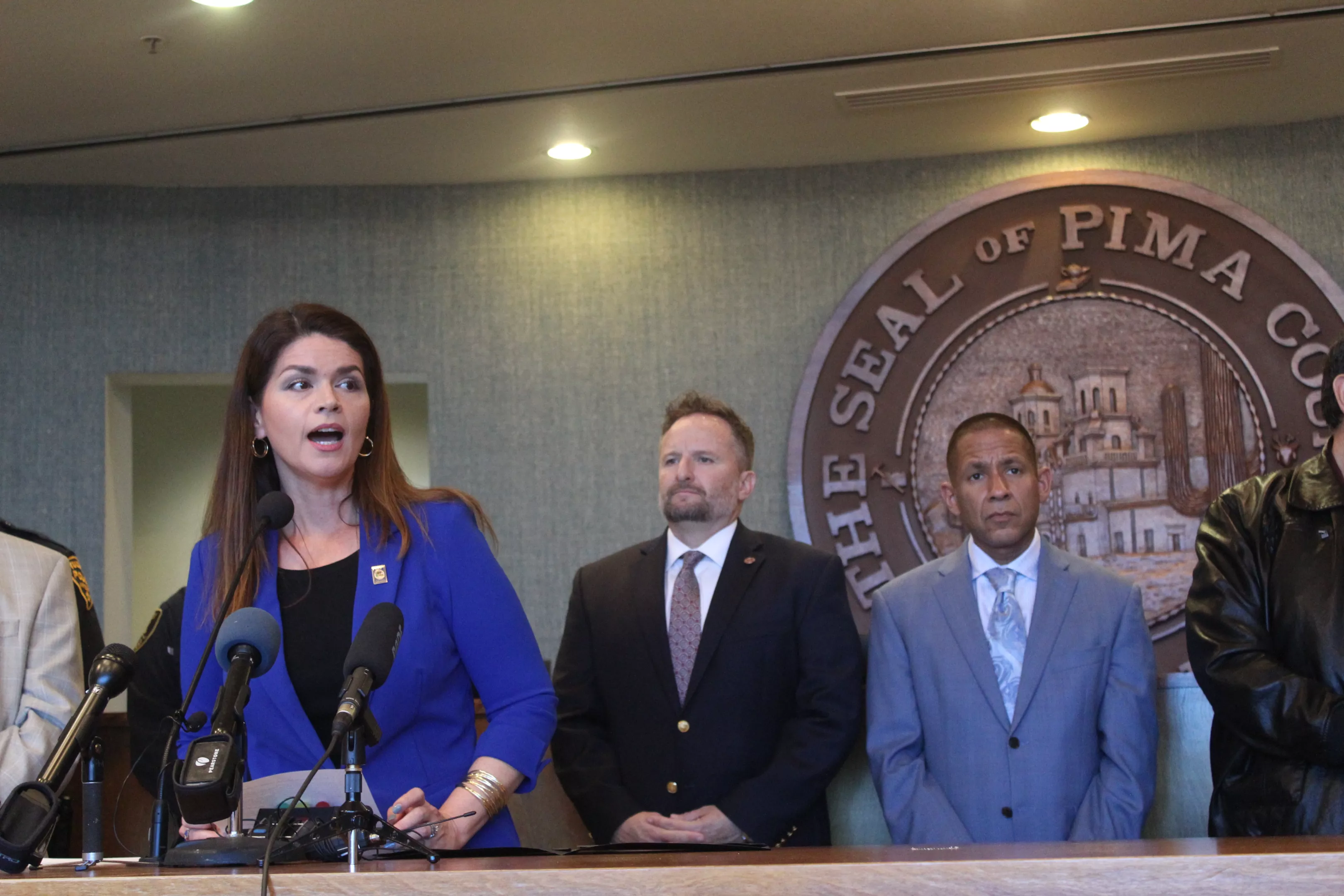
“The vast majority of healthy people will get through this just like we get though the flu season, but our elders and those who are ill are the ones who will have the most serious consequences,” Elías said. “Our community needs to know that this isn’t something that is going to come and go... We are going to be dealing with this illness for some time until it runs its course.”
Pima County representatives request the public to use “common sense” regarding coronavirus: wash your hands, avoid others if you feel sick, cover your cough and don’t touch your face.
“We are actively working with local, state and federal partners to monitor and prepare for the presence of COVID-19 in Pima County,” said mayor Regina Romero. “I want to emphasize that both the county and city have protocols in place to deal with exactly this kind of situation, and are ready to respond to when the virus presents itself in our region… as with other illnesses, sticking to the basics can go a long way.”
Francisco Garcia, chief medical officer of the Pima County Health Department highlighted three important messages in response to the “rapidly evolving situation”: this is the time to optimize your health and the health of your family; we need to focus on protecting the vulnerable – such as the elderly and the medically frail; we need to make sure our first responders are taken care of and are using the correct policies regarding this virus.
“We haven’t found a single case of this testing positive in Pima County yet, but it doesn’t matter, because it’s going to be here,” said Bob England of the Pima County Health Department. “This is probably going to feel to us like a bad flu season. So just as we lose tens of thousands of Americans each year to the flu, this will tragically kill many people. There’s no getting around that, but it's going to be like what we experience every year… We got a lot to learn, but there are a lot of good indications for us to treat this the same way we treat influenza.”
England says he cannot foresee a circumstance where Pima County would need to close a school, as children are becoming infected less often and less severely.
For more information on the disease, and how to best protect yourself, Pima County has established the website pima.gov/covid19
Tags: health , corona , virus , public , pima , flu , covid-19 , Image
Friday, March 6, 2020

I grew up in Hong Kong and was 13 when SARS swept through the city, infecting about 1,750 people and killing nearly 300. As a teenager, the hardest part was being stuck at home and missing my friends. I only started to pay attention to the daily death toll after my parents decided that’s what would dictate when I could go back to school. But the experience shaped me. I picked up personal hygiene habits, like pressing elevator buttons with my knuckles. And I developed a deep respect for front-line medical workers, many of whom labored around the clock until they, too, succumbed.
That was only my first experience with an outbreak.
In 2014, I was a rookie reporter on the Bloomberg News health desk helping to cover the growing Ebola crisis in West Africa when we got word that the U.S. had its first diagnosed patient. My editor looked down his row of reporters and his eyes fell on me, the one with no familial obligations. “Hey Caroline,” he said, “want to go to Dallas today?” The experience gave me a deeper look into how governments and scientists grapple with a fast-moving, deadly target. I learned about contact tracing as I tagged along with CDC disease detectives. A colleague and I delved deep into how the government’s cumbersome contracting process delayed the development of a possible treatment for Ebola. I later covered Zika, reporting on Florida’s lonely fight against the virus, as Congress gave the state little assistance.
Every time, I’ve seen the same gaps emerge in the public’s understanding of what’s really happening. On one side, I have epidemiologists and lab directors explaining to me, in excruciating detail, nuanced models and technicalities, like how PCR assays work. On the other side, I see oversimplified headlines and misleading statistics touted by government officials.
Now I’m on ProPublica’s coronavirus reporting team, speaking to dozens of sources every day, from epidemiology experts and worried medical workers to members of the public, who are not sure what to take from the headlines they’re seeing. ProPublica specializes in accountability journalism, and our goal is to find out what’s happening and let the public know of any shortfalls in emergency response.
Here’s what you need to know:
Testing Is Still Limited
On Tuesday, after days of growing clamor to make more testing available, Vice President Mike Pence announced that the administration was issuing new guidance that “will make it clear that any American can be tested” for COVID-19, the disease caused by the virus, and said that 2,500 kits would be sent out this week, an equivalent of 1.5 million tests.
Lifting restrictions on testing criteria is a much-needed step, but if your takeaway was that hundreds of thousands of Americans will be able to walk into doctors’ offices by Friday and immediately get tested, you’d be wrong.
It doesn’t matter if boxes upon boxes of kits are available if labs are struggling to set up the tests or are short on staff to run them. At the end of the day, what I want to know (and I imagine, what everyone wants to know) is how many people can be tested. That’s the unit that I am pressing public health officials and lab directors for when I interview them.
Here are some basics that may be useful to keep in mind: The CDC test kits can be thought of somewhat like a Blue Apron meal kit; there’s some assembly required before a lab can begin testing. It’s not like a protein bar, ready to eat straight out of the wrapper.
As of Wednesday, the Association of Public Health Laboratories, which represents public health labs across the United States, told me that each CDC test kit can run about 700 specimens. Note the “about” — you might have heard that each CDC test kit can run 1,000 specimens. That’s also true, but labs use up a certain amount of material in the process of setting up the kit and also to ensure that all the results from actual patient samples are accurate. So that’s where the “about 700” number is coming from.
None of those numbers, so far, are in units of what I care about — patients. We’re still talking about samples and specimens. APHL says the labs are running two specimens per patient, to double-check the result. So that means you actually can only test 350 people per kit.
Reporters, if an official gives you a number that’s in samples, I urge you to follow up.
Instead of asking: How many test kits do you have?
Ask this: How many samples are you running per patient?
So that’s the kits. Let’s turn to staffing.
APHL told me on Wednesday that each public health lab can run about 100 samples per day. One hundred public labs received test kits from the CDC. When they’re all up and running, they’ll have a cumulative capacity of 10,000 samples a day. Remember, since we care about patients and not samples, divide by two. That’s 5,000 patients a day. (As of Thursday morning, 67 labs were taking patient samples, so that would come out to 3,350 patients a day.)
Many experts say we need far more testing capacity. A former FDA commissioner, Dr. Scott Gottlieb, told me that he’d like everyone with an influenza-like illness who tests negative for the flu to be able to get tested for COVID-19, which, given that we’re still in the midst of flu season, means a massive ramp-up would be required. In order to do that, the U.S. urgently needs academic medical centers to also come on board. Under pressure to expand capacity, the FDA loosened restrictions on Saturday to allow academic hospital labs to start testing. Some have. You can read more about that here. Testing giants Quest and LabCorp are also aiming to be online next week, which will help tremendously.
I urge reporters to keep labor capacity in mind when talking to their local labs.
Instead of asking: How many samples can you run?
Ask this: How many samples is your lab testing per day right now? How about at maximum capacity? How many hours does it take to get a result?
One last thing that’s good to know: There are commercial manufacturers at work to create off-the-shelf versions of these tests — the microwavable meal equivalent, if you will. But those companies have not given a precise timeline. Last week, Cepheid, a manufacturer based in California, told ProPublica it’s targeting the second quarter of this year for the release of its test.
The Death Rate Is Only an Estimate
The mortality rate is an awfully squishy number that’s being reported as if it’s a stone-cold fact. On Tuesday, a number of headlines trumpeted that the World Health Organization was saying the death rate was 3.4%. Some hand-wringing ensued over how this number was higher than the previous estimate of 2%.
Here’s what WHO Director General Tedros Adhanom Ghebreyesus said: “Globally, about 3.4% of reported COVID-19 cases have died.” Let’s zoom in on the word “reported.” The WHO puts out a daily situation report that you can find here. It defines confirmed as “a person with laboratory confirmation of COVID-19 infection.” As of Tuesday, the total number of deaths reported globally (3,112) as a fraction of the total number of confirmed cases reported globally (90,869) was 3.4%.
Here’s the problem, though. That denominator is laboratory-confirmed cases. As we know, in the U.S., it’s pretty hard to get tested right now. In fact, based on this definition, as of Wednesday night, the U.S. mortality rate based on CDC numbers — 9 reported deaths and 80 laboratory-confirmed cases — was 11%. You know that’s bogus. You know that’s because there’s not enough data, the denominator is pitifully small and we need to be testing a whole lot more people.
Over the last few weeks, many more countries have realized that the coronavirus has hit their shores. Some, like South Korea, are doing tons of testing and generating lots of data. Others, like the U.S., aren’t, as ProPublica has reported. The rate will also depend, country by country, on demographics (this virus is more deadly to the elderly) and resources (like ventilators). It’s not surprising that the global mortality rate based on confirmed cases might fluctuate for a while.
When most people talk about fatality rates, they’re thinking: If I get this, will I die? The only way to actually answer that question is to know how many people have been infected, and for now, that’s nearly impossible. As Marc Lipsitch, an infectious disease epidemiologist at Harvard’s T.H. Chan School of Public Health points out, deaths are the most obvious and easy thing to catch, whereas infected people who stay at home and those with no symptoms are incredibly hard to account for. That tends to skew the fatality rate higher, especially earlier on in an epidemic.
What we do know for now is that it’s more deadly than the seasonal flu, which generally kills far fewer than 1% of those infected, and less deadly than a disease like SARS, which killed about 10% of those infected during the outbreak in 2002-3.
When I write about the mortality rate, I try to use caveats like “estimated” or “scientists understand it to be around” so readers understand it’s not fixed in stone.
Instead of saying: The mortality rate is X%.
Say this: Scientists estimate the mortality rate is X%, based on the information they have.
Be Careful with Projections
Another slippery number out there is what’s known as the basic reproduction number, R₀ (pronounced R-naught). It’s a measure of contagion, the average number of people who will catch the disease from a single infected person. For similar reasons as above, this number is currently a moving target, as more data is gathered from around the world. So far, estimates have largely been in the range of 2 to 3.
What this means for reporters is that if someone tries to say something like, there’s going to be X number of cases by a certain date, that can’t be a hard and fast number. I’d want to know what assumptions were used to calculate that forecast. What was the R₀ presumed? How about the serial interval, the duration between the onset of symptoms between one case and its secondary cases? Tweaking either of those numbers by just a bit can result in very different forecasts, which you can see by playing around with this interactive tool by the University of Toronto. Generally, I shy away from putting a projection in a headline, where any hope of nuance might be lost, but if I have to, a range is safer than a single number that readers might interpret as somehow immutable.
Furthermore, as of early March, there are many fundamental questions about the novel coronavirus that scientists still don’t fully understand. For example, while it’s clear that the primary method of transmission is via droplets, drops of fluid from the mouth or nose emitted when an infected person coughs or sneezes, it’s not clear if it can transmit as an aerosol, meaning it is airborne and floats around (this is considered to be unlikely). It’s also not conclusive if the virus can be spread by infected people before they present any symptoms.
Instead of asking: How many cases will there be at X point in time?
Ask this: What assumptions were used to calculate your prediction? What’s the upper and lower range of your projection?
Information Is Changing Quickly and May Soon Be Out of Date
One last thing I’d like to add: Even more so than usual, things are moving quickly. I’ve been on interviews where the information I was given was outdated — as in just plain wrong — by the time I filed my draft 12 hours later. This is, of course, terrifying as a reporter. So I’m trying my best to put information like “as of Wednesday morning” alongside facts and figures in my stories, and I’m encouraging my sources to update me as often as they can.
OK, but How Do I Protect Myself?
Over the last two days, I’ve gotten numerous DMs over Twitter from concerned members of the public, asking me what they should do to be safe. Honestly, this breaks my heart and speaks to a failure of local health officials to educate them. I’m having the same conversations over and over again, so I thought I’d share some of my thoughts here. I’m not a medical professional, so this is not medical advice.
Start by knowing yourself. Are you elderly or immunocompromised? Young and healthy? Your risk varies depending on your personal profile. If you’re concerned about your health, I encourage you to talk through your fears with your doctor. I’m 29; I know there’s little chance that this virus would kill me given the information I’ve seen. (In data published last month by the Chinese CDC, out of more than 72,000 diagnosed cases, 8.1% were 20-somethings, and the fatality rate in that age bracket was 0.2%.) That said, given my personal medical history and tendency to get bronchitis, I would really prefer not to get infected.
So how does that translate into action? Here have been my personal choices so far. I’m still flying; I just got off a plane to attend a reporting conference in New Orleans. (I would not attend a conference in the Seattle area, however, given how signs are pointing to widespread community transmission.) I don’t see how being on a plane increases my personal risk any more than being on the New York City subway. That said, I am not shaking any hands at this conference, and I’m ramping up my hygiene game: washing my hands more frequently and encouraging my colleagues to do so as well.
I’m aware of the possibility that I may need to work from home in the near future, if I or my husband get sick, or if there’s an explosion of cases in New York City and social distancing measures are encouraged. So we are slowly but methodically picking up a little bit of extra food with every grocery run (for our two cats as well!), just so that we’d have enough at home if we need to be indoors for a few weeks. I’m not panicked, nor should you be. I’d encourage you to check on your neighbors — especially the older ones, or those with young children, and see if you can pick up some additional groceries for them.
Even if we have to stand a little farther apart from one another, the best way to get through this is with a bit of extra compassion to bridge the gap.
Tags: corona , virus , sickness , propublica , health , tips , Image
Thursday, March 5, 2020
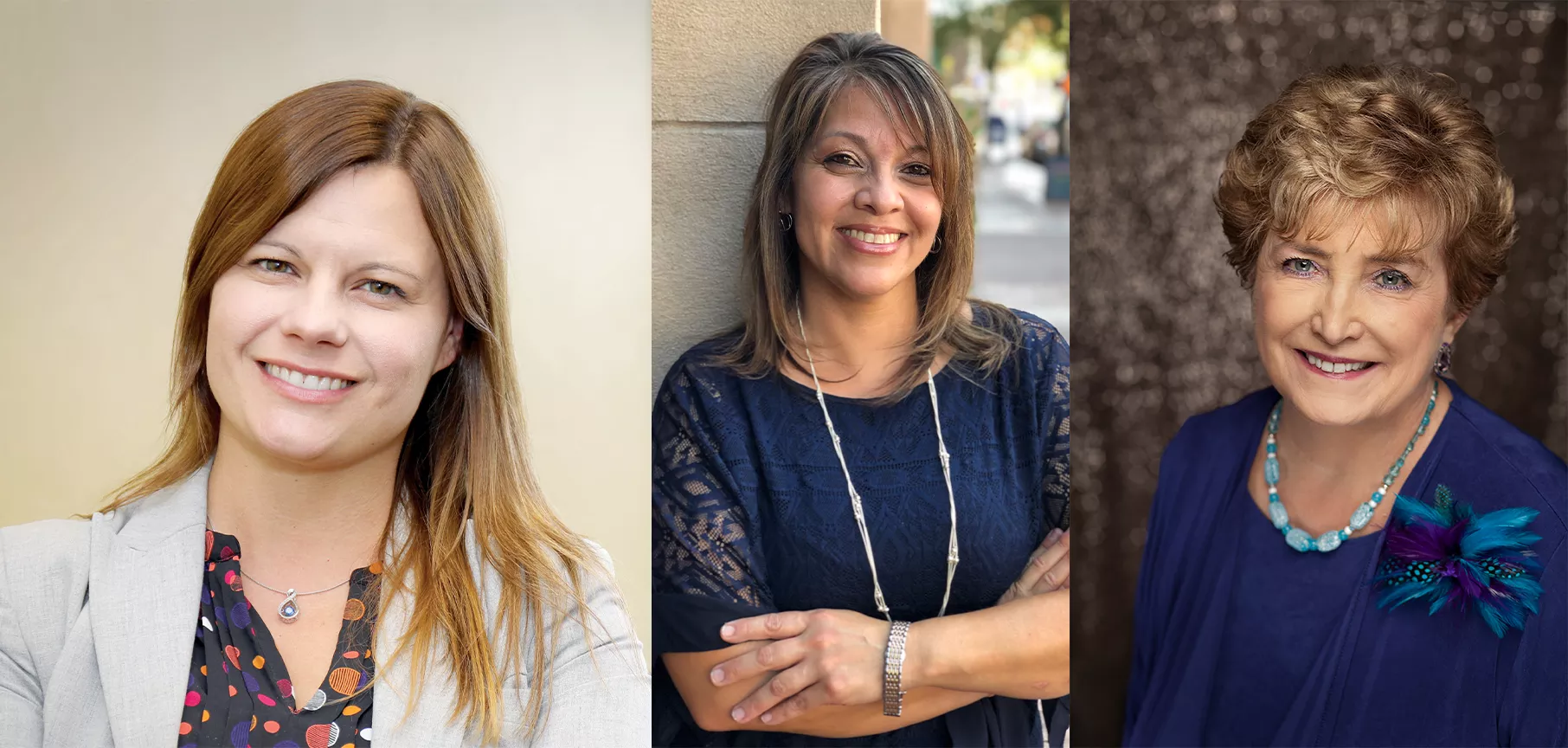
These women shared their gratitude with those they love most at the annual Women of Influence Awards, hosted by Inside Tucson Business and its parent company, Tucson Local Media.
Nearly 600 guests packed into the ballroom of Desert Diamond Casinos & Entertainment, Sahuarita Wednesday evening to celebrate just a handful of accomplished women who make a difference in their communities every day.
From 18 different categories spanning all types of professions, three female nominees were invited to the formal dinner with their friends and family. One was ultimately chosen to be the winner of their category by a panel of three judges.
The event’s keynote speaker, Joan Bonvicini, is a former University of Arizona women’s basketball coach who led her team to the 1996 Women’s National Invitation Tournament Championship, was named the 1998 Pac-10 Coach of the Year, and was inducted into the Pima County Sports Hall of Fame and the UA Sports Hall of Fame.
Bonvicini encouraged the audience to think about the people in their lives who helped them find inspiration and success.
She reflected on growing up in the 1960s and ’70s, when female sports were not widely accepted by society as they are today. Her parents knew she was a talented athlete, and found a support system of coaches and players to help challenge her and build her into the successful athlete she became.
“The four most important words you can ever say to someone is ‘I believe in you,’” Bonvicini said. “Whether you say those words as a coach to a player, a parent to a child, to your spouse or partner, or to your co-worker or employee. Those four words can make a huge difference.”
Many of the night’s winners took Bonvicini’s advice, using their moments in the spotlight to thank their own support systems, particularly the women who influenced their lives and careers.
Kate Marquez, executive director of the Southern Arizona Arts and Cultural Alliance, won the Arts and Culture Champion Award and had her mother, Diana, accept the award on her behalf. Kate sent a message to the crowd saying her mother inspired her to pursue a career in service and fostered her passion for the arts.
Founder and Medical Director of Tula Wellness and Aesthetics, Dr. Arianna Sholes-Douglas, won the Business Owner of the Year Award and said her mother was her own “woman of influence.” Her business focuses on women’s health and beauty, and Sholes-Douglas incorporates integrative and functional medical therapies into her practice.
“Thank you, especially to my [Women Presidents’ Organization] sisters, because you believe in me,” Sholes-Douglas said. “And I didn’t feel deserving, but I appreciate that you believe that I am deserving.”
Minority Business Owner Award winner Samreen Khan also thanked her mother, who came from Toronto to support her.
“I feel like I’m in the best century possible, the 21st century, where I’ve got every possible opportunity, and I feel like I’m in one of the most beautiful countries in the world, that has allowed me to become what I am today,” Khan said.
Lani Baker, Vice President of Finance at Holualoa Companies, won the Real Estate Champion Award and spoke about the importance of women empowerment.
“I’ve been lucky enough to have many influential women to look up to, but most importantly, my mom,” she said. “It’s important for all of us to continue to promote and help women advance and thrive in our community, and particularly, for us women to continue to have each others’ backs.”
The Women of Influence Awards’ highest honor, the Lifetime Achievement Award, was given to Peggy Johnson, executive director of The Loft Cinema on West Speedway Boulevard.
Johnson was one of a small group of investors who bought The Loft in 2002, when it was in danger of closing for good. Since then, she has worked to transform the theater from a privately-owned business to a nonprofit cultural center that features foreign, independent and documentary films.
The Loft also hosts many community and educational events throughout the year with film industry professionals and scholars. During her speech, Johnson said The Loft works with 150 different community organizations each year.
“The reason I was given this award is because of The Loft,” Johnson said. “The Loft is an amazing community asset. Wherever your friends are in the world, they don’t have anything like The Loft. They may have a movie theater that’s great, but The Loft is clearly unique in everything that it does.”
She thanked her family members, including her son JJ, who is the Loft’s marketing director, and Jeff Yanc, their long-time program manager.
“You will be hearing about The Loft’s plans to expand and all the things that we plan to do, but I’m super proud of what we’ve accomplished so far,” Johnson said.
Tags: Women of Influence , women's history month , awards , ceremony , Tucson , Image
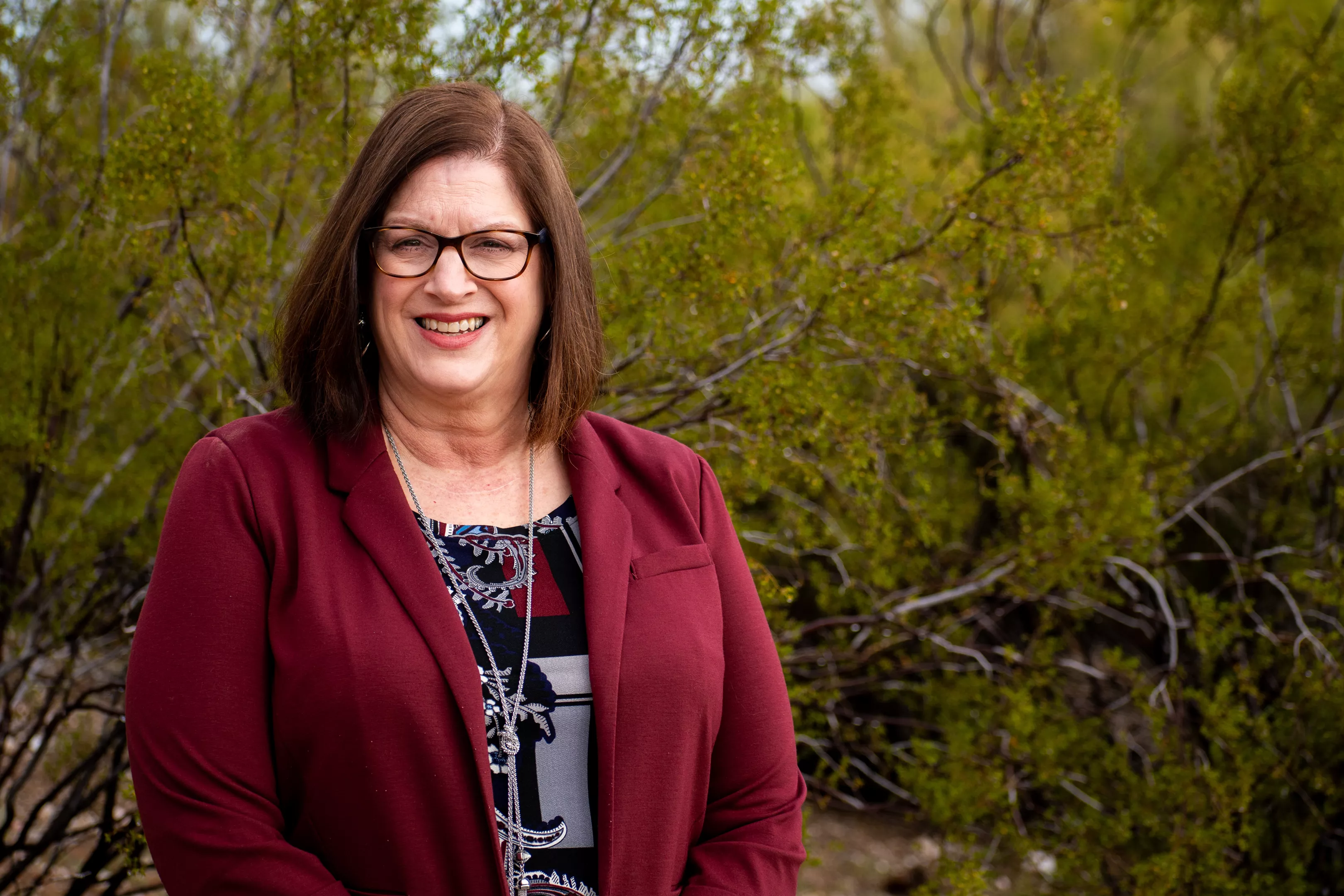
Valenzuela is an Amphi High School graduate herself, and said one of the reasons she wanted to return to the district to teach is because of the closeness of Amphi. Her two sons even attended Coronado K-8 before graduating from Canyon del Oro High School. Because it’s a smaller district, she says it’s like a family.
“We get to know everyone really well and everybody gets along,” Valenzuela said. “We only have 21 schools, and we all work together very closely. A lot of people working at Amphi actually graduated from Amphi, and it’s because of our great schools, hardworking teachers and amazing support from the administration.”
However, education is Valenzuela’s second career. She said she never thought she'd be a principal, and grew up wanting to be a secretary. Upon graduation from Amphi, she worked at an accounting firm as a secretary, and then as a bookkeeper. But she returned to school to earn a Bachelor’s Degree in Elementary Education from the University of Arizona, and a Master’s Degree in Educational Leadership from Northern Arizona University.
Valenzuela then worked as a teacher at Prince Elementary School for 15 years before becoming an instructional coach for the district for two years. She then served as an assistant principal at both the middle and high school levels, before becoming principal of La Cima in 2017.
“Up until the year before I became an administrator, I still didn’t think I’d be an administrator,” she said. “After coaching, I was planning on going back into the classroom, because I learned so many amazing things from all the teachers in our district. So, I was planning on going back into the classroom and using all those great things I learned from other teachers. But then a door opened, and here I am.”
Valenzuela admits it’s difficult for her to talk about herself and her successes, and even kept her acceptance speech short upon winning Administrative Champion. However, she did thank her co-workers: La Cima’s counselor Suzanne Graun who nominated her for the award, and Gayle Taylor, her assistant principal.
“I really love the people I work with at the school,” Valenzuela said. “I love the students and the staff, and it just makes it easy to work when you have people that you respect. It’s easy to go to bat for them and make it a place for them to feel comfortable.”
Valenzuela also attributes her success to having an “open door policy” with her staff and students, wanting them to feel comfortable coming to talk with her.
“I try to be there for my staff and listen and do whatever I can to help them if at all possible, all while keeping in mind that everything we do is in the best interest of the kids,” Valenzuela said.
She says her core educational belief is that "all students can learn." They may learn differently and at different times, but “the sky is the limit” in regard to their learning. In addition, all students should feel welcome and cared about.
“It’s all about working to have strong relationships with kids,” Valenzuela said. “Because if you have strong relationships with kids, that’s half the battle. And once those relationships are strong, kids will be very responsive to learning.”
Tags: women of influence , women's history month , awards , ceremony , Tucson , Image
Wednesday, March 4, 2020
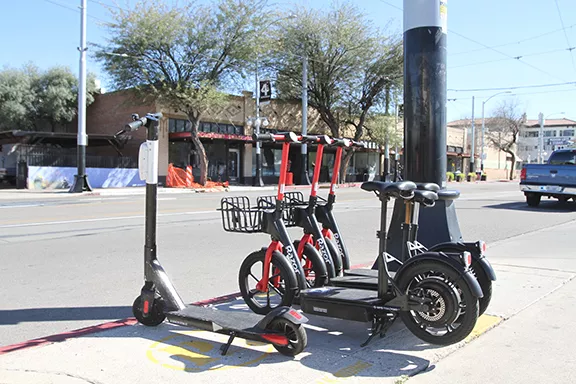
"I would like to consider a motion that we expand the pilot program and continue getting data," Mayor Regina Romero said during last night's study session. "Correct the behavior of users, make it safer and much more accessible in other areas of the city."
Ward 6 Councilman Steve Kozachik was the council's lone vote to end the program stating, "I'm 100 percent opposed to continuing this pilot program."
The majority of e-scooter trips happen in his area. Nearly 80 percent of rides take place in central Tucson's Ward 6. Kozachik cites issues ranging from safety to being cost effective for the city in the long run.
"We've generated $74,000 from (the program) and $16,000 of that has gone into painting stickers on Fourth Avenue sidewalks," Kozachik said before the mayor's motion. "You can build...what...a quarter-mile of a protected bike lane with the kind of revenue we're bringing in with this thing?"
Ward 4 Councilwoman Nikki Lee said she was "very sensitive to Steve's situation," considering Ward 6 has the majority of the program's e-scooters and sees most of the issues. Lee said Ward 4 was open to taking on more e-scooters if it would help Tucsonans get to transit stops. Only 59 e-scooter trips were taken in Ward 4 during the first six months of the program, according to the city's e-scooter evaluation report.
"If there are opportunity zones that are identified, our office would really appreciate being involved," Lee said. "I just wanted to point out, Steve, that I'm very compassionate to your situation."
After Lee's comments, Kozachik offered a substitute motion to end the program before the vote took place. He was unable to get a second on the motion.
Check out our analysis of the city's e-scooter report here.
Tags: e-scooters , Tucson City Council , Steve Kozachik , Fourth Avenue , Downtown , transportation , Image

