

Wednesday, January 8, 2020
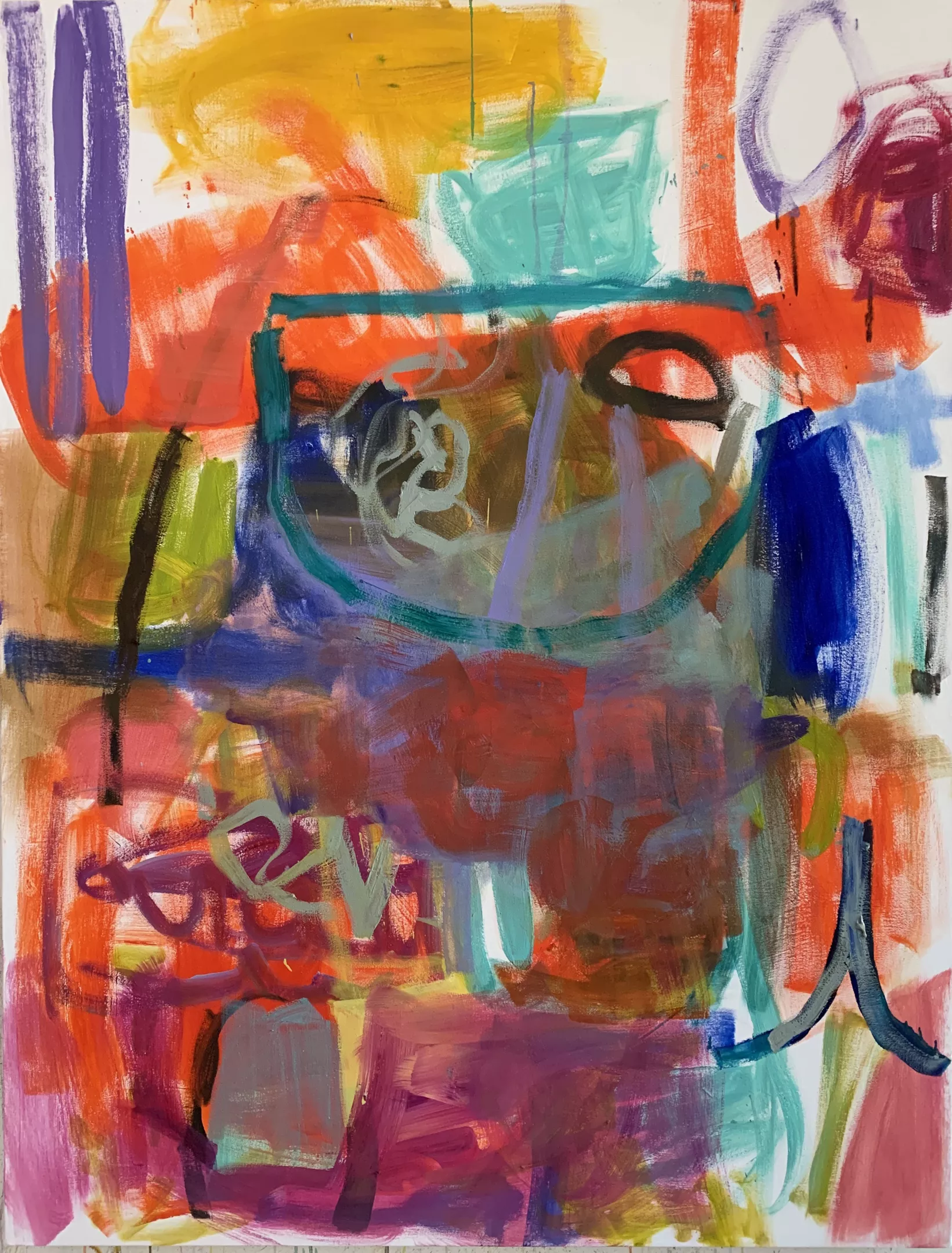
Davis Dominguez, a long-running gallery of contemporary art and a respected venue that shows many local artists, will close its doors at the end of June.
After that, the gallery’s elegant warehouse space at 154 E. Sixth St. may house the popular Mexican restaurant Lerua’s, which lost its own longtime space to the Broadway widening, Lerua’s is in negotiations, says building owner Mark Berman, but no contract has been signed.
Wife and husband gallerists, Candice Davis, age 72, and Mike Dominguez, age 73, say that they had been considering closing the gallery for some time.
“Candy and I have been semi-retired for the last couple of years,” Dominguez said Wednesday afternoon, with painter Juan Enriquez(cq) running the gallery several days a week. The two owners are devoted hikers and, Davis added, “We’re in good shape. There are lots of things we can do.”
Berman said that their current lease actually ends March 1, but he’s allowing the pair to keep the gallery going until June 30, when Davis Dominquez typically ends its season.
The gallery will stage three more shows, including Pure Abstract: Paintings by Joanne Kerrihard, collage and paintings by Amy Metier and sculpture by Steve Murphy, which opens with a reception from 6 to 8 p.m. Saturday night. (See info on all three shows below.)
It will be a scramble to clear out the gallery in the short time after the final exhibition ends June 13. Among the many tasks, the owners will have to ship years of artworks back to the artists.
“I’m nervous about getting it all done,” Davis says.
Dominguez and Davis have rented the space from Berman for some 20 years, and they say they’ve had a productive relationship.
“Mark is the finest landlord and a great supporter of the arts,” Dominguez said.
Tags: Davis Dominguez , Lerua’s , Image
Friday, January 3, 2020

Two recent, lengthy reviews on charter schools are both worth taking a look at.
One is a series of articles by the Arizona Republic reporter Craig Harris, who visited seven states to put together a big picture look at the charter school scene. Harris is probably the most even-handed reporter I've read on the subject. Most writers, including me, come at charter schools with some set agenda, which means the analyses are shaped by the writers' educational preconceptions. That's what makes Harris' reporting so refreshing. He detests charter waste and fraud and has gone after financial corruption in Arizona's charter sector with a passion. But when he looks at schools themselves, he tries to evaluate them on their merits. He finds things to like and dislike.
Harris' most recent investigative report focuses on charters in states other than Arizona which have a record of increasing the performance of students from low income families. The article links back to the earlier articles if you want to read the whole series.
The other important piece of investigative reporting comes from the Network for Public Education, a group begun by educational historian Diane Ravitch and others which has grown into a significant force in the educational battles raging across the country. NPE is decidedly against education privatization and the so-called "education reform" movement in general, which means you're not likely to hear much from them in the way of praise for charter schools. The recent report from NPE details the $1 billion in federal money wasted on charter schools which either never opened or closed since receiving the funds.
Tags: Charter schools , IDEA schools , KIPP schools , Arizona Republic , Network for Public Education , Image
Friday, December 27, 2019
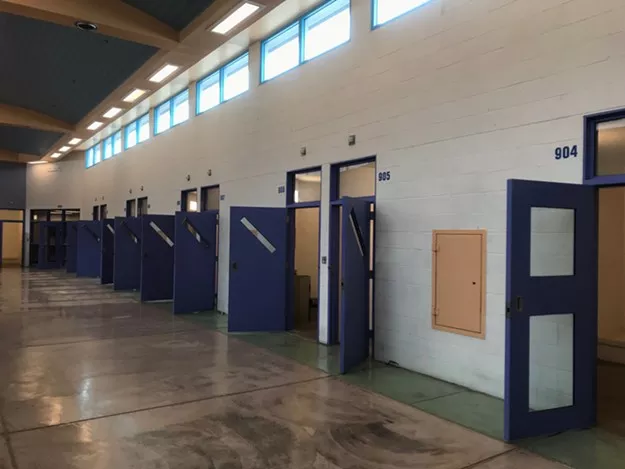
Last May, the supervisors voted 3-2 to accept the controversial grant, with a condition stating more than $200,000 of that money should cover the cost of housing and providing services to the large influx of asylum seekers experienced during that time.
Democratic Supervisor Sharon Bronson was the swing vote and sided with Republican Supervisors Ally Miller and Steve Christy to approve the funding. Democratic Supervisors Ramón Valadez and Richard Elías voted against the measure.
Community activists who oppose the use of Operation Stonegarden in Pima County say the program promotes collaboration between local law enforcement and federal immigration agents, which targets immigrant communities within Southern Arizona.
When the supervisors approved it, activists criticized their decision and said the plan to use federal money for humanitarian aid reimbursement would not work.
Now their criticisms have been validated, as Huckelberry explained in his memo that the county learned “indirectly” from Sheriff Mark Napier that US Border Patrol (USBP) and the Arizona Department of Homeland Security (AZDHS) denied their request. He said the reasons used to deny the request were “seriously flawed,” but the department has the authority to do so “unilaterally without appeal.”
Huckelberry wrote that USBP and AZDHS were concerned that the supervisors had previously rejected the Stonegarden funding in 2017. That decision was made after intense public criticism over the partnership between the sheriff’s department and federal immigration authorities such as Border Patrol and Immigration and Customs Enforcement (ICE).
In a letter from USBP Chief of Law Enforcement Operations Brian Hastings and Federal Emergency Management Agency (FEMA) Assistant Administrator Bridget Bean, AZDHS was informed that Pima County’s request for the reimbursement funds were denied because they believe “there is no border security operational benefit derived from this reallocation request.”
They also wrote that while reviewing the request for humanitarian aid reimbursement, they took into consideration “the previous voluntary return of over $1.2 million in FY17 operational funds by Pima County, which resulted in the loss of over 11,000 Operation Stonegarden-funded overtime hours.”
Huckelberry took issue with that point in his memo, saying Pima County’s previous rejection of the grant allowed the money to be reallocated to other agencies. Essentially, it was not a loss of funds.
He also argued in a response letter to AZDHS Director Gilbert Orrantia that local non-governmental community organizations were so overwhelmed by the influx of asylum seekers that the county had to take action, or else Border Patrol would have had to “deal with the ill-will from releasing several thousand asylum seekers to the streets of Tucson.”
Huckelberry asked Orrantia if there is any possibility the county can appeal the rejection, but has yet to hear back. For now, the possibility of the county receiving reimbursements for the cost of housing asylum seekers within the Pima County Juvenile Justice Complex remains uncertain.
Tags: Stonegarden , Pima County , Board of Supervisors , humanitarian aid , Chuck Huckelberry , grants , Pima County Juvenile Justice Complex , Image
Thursday, December 26, 2019
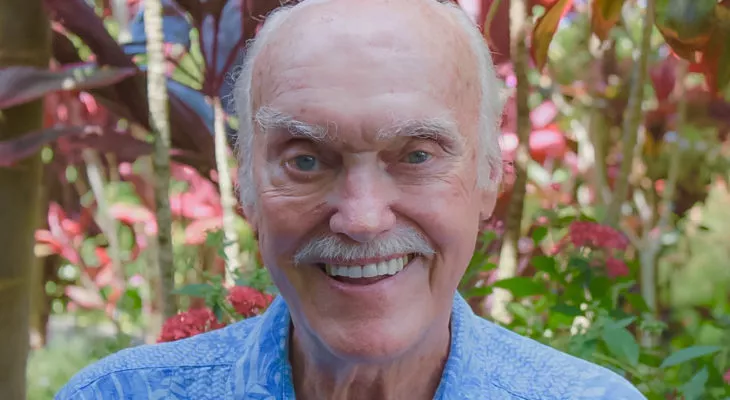
Ram Dass, born Richard Alpert on April 3, 1931, penned numerous new age and spiritually books, including 1971 spiritual best-seller, Be Here Now, and was a contemporary of fellow Harvard academic and psychedelic researcher, Timothy Leary, throughout the 1960s.
Dass’ spiritual awakening came after meeting and becoming a disciple of Maharajji Neem Karoli Baba during a trip to India in 1967. During this time, the Maharajji gave Alpert the name Baba Ram Dass, meaning servant to God.
Under the advisement of the Majarajji, Dass returned to the United States in 1968 and began lecturing about eastern philosophy and spirituality across the country. He believed God existed in everyone, advising followers to “Treat everyone you meet like God in drag."
While Dass continued to write new age best sellers throughout the ’80s and ’90s, he formed various foundations and charities aimed at helping prisoners and people close to death find equanimity. Another of Dass’ foundations is dedicated to fighting blindness in India and Nepal, as well as another promoting health education for Native Americans in South Dakota.
Dass became partially parylzed and briefly unable to speak after suffering a cerebral hemorrhage in 1997. He eventually made a recovery and was able to continue writing books and lecturing on the internet until his passing.
Ram Dass is survived by his son, Peter Reichard, 53, the love child of Dass and an undergraduate student at Stanford University while he was a professor during the early ’60s.
Bob Lee, freelance broadcast journalist, remembers hearing Dass speak at Reid Park’s band shell in 1975. Lee says he was a straight-laced guy for the 1970s, but a former girlfriend had introduced him to Dass’ teachings years prior. Out of curiosity, he decided to attend the event.
“Everyone I knew was into the “Be Here Now” thing, so I was peripherally involved,” Lee said. “In 1975 I went to concerts at TCC, but no too much into the alt-lifestyle.”
Lee says he doesn’t remember what Dass spoke about but the event was unassuming, with Dass sitting on a blanket spread on the ground and without a microphone or amplification.
“There was no P.A. or anything like that, but (Dass) was just speaking to the people who were there,” Lee said. “There was a pretty good crowd of about 100 or so young people too.”
While Dass continued to write new age best sellers throughout the 80s and 90s, he formed various foundations and charities aimed at helping prisoners and people close to death find equanimity. Another of Dass’ foundations is dedicated to fighting blindness in India and Nepal, as well as another promoting health education for Native Americans in South Dakota.
Dass became partially parylzed and briefly unable to speak after suffering a cerebral hemorrhage in 1997. He eventually made a recovery and was able to continue writing books and lecturing on the internet until his passing.
Tags: Ram Dass , spirituality , new age , deaths , Image
Friday, December 20, 2019

It needs to be written in big, bold, flashing red neon letters: Beware of For-Profit Education. Kindergarten through college, all of it. If for-profit education is not banned outright, then we need to regulate and enforce the hell out of it.
Case in point: the for-profit college industry.
For-profit colleges have taken some recent, well deserved hits after decades of swindling their students. Just this month, the University of Phoenix was fined $191 million for its misleading advertising and predatory recruiting tactics. The 105-campus, for-profit Corinthian College chain dissolved in 2015 under the weight of its own misdeeds.
The Obama administration began the latest attempts to clamp down on the worst excesses of the industry — there were a number of earlier attempts — and set about forgiving college loans for students who were bilked by for-profit colleges. The Never-Obama Trump administration has reversed many of the previous administration's regulatory measures, while Secretary of Education Betsy DeVos was held in contempt of court for accidentally-on-purpose bungling the process of loan forgiveness.
Not many people were talking about the sins of the for-profit college industry when I began blogging about them a decade ago, beginning with a piece I wrote in November 2009, For profit colleges need oversight as well. At the time I thought I was being prescient. I thought I was ahead of the curve. It turns out I was actually three decades behind, or 60 years behind if you go back to the genesis of the problem at the end of World War II.
Here is a brief history of the abuses of for-profit higher education and ongoing, bipartisan attempts to fix the unintended consequences of well-meaning legislation which allowed the industry to run roughshod over its customers, followed by the George W. Bush administration's intentional reversal of anti-profiteering regulations so it could run rampant once again. I'm drawing most of the information from a long, detailed history contained in a report by the Century Foundation.
For-profit education scams date back to the 1944 GI Bill, which gave returning soldiers the opportunity to enroll in colleges and training programs. Unscrupulous entrepreneurs took advantage of the easy government money and offered bogus programs to GIs. Investigative reports exposed the fraud as early as 1946 in articles like the Saturday Evening Post's “Are We Making a Bum Out of GI Joe?” Congress passed a series of laws to correct the abuses beginning in 1948 and continuing through the 1950s.
In the 1960s, programs which were part of President Lyndon Johnson's War of Poverty opened new opportunities for scam artists to create fraudulent training programs. In 1971, Carl Bernstein, a few years before he and Bob Woodward began on their famous reporting on the Watergate break-in and its aftermath, wrote a series of articles about abuses at trade schools in Washington DC. Other investigative articles followed in other areas of the country. As a result, the office of Health Education and Welfare imposed new restrictions.
Tags: For-profit colleges , University of Phoenix , Corinthian colleges , GI Bill , Contract With America , Great Recession , Image
Monday, December 16, 2019

Barrio Brewing today announced the move via an Employee Stock Ownership Plan, which begins in January 2020. Employees who work 1,000 hours in a one-year period will be automatically enrolled in the ESOP.
Founded by Dennis and Tauna Arnold in 1991, Barrio started life as Gentle Ben’s Brewing Company near the University of Arizona campus, and their flagship beer, Barrio Blonde, is the oldest continually brewed beer in the state’s history. In 2006, a needed expansion moved the brewery’s production facilities and restaurant to a 22,000 square foot building in downtown Tucson that was originally constructed as a Quonset hut in 1947. In this facility, the brewery produces nearly 15,000 barrels each year in its 30-barrel system.
“Barrio Brewing started as, and will continue to be, a family affair as our employees are family and have put their hearts and souls into making Barrio what it is today,” said Dennis Arnold, Barrio’s soon-to-be brewmaster emeritus, in a release announcing the decision. “Nearly 30 years after our humble beginnings, the decision on our exit strategy was easy for both of us, either sell the business or simply give the business to those who’ve made it what it is, our employees, leaving them with their destinies in their own hands.”
Heading up the newly formed company is beer industry executive Jaime Dickman, who was recently tapped as Barrio’s chief operating officer to steer the business into its next phase. Dickman comes to Barrio with nearly 18 years of beer industry experience that began at Golden Eagle Distributors in 2002.
She has held positions in sales, marketing, and management with a specific focus on craft beer sales, brand rollouts, on/off premise programming, event planning/execution and media support.
“I’ve been a big supporter of Barrio Brewing Company for many years and am excited about the opportunity to come on board at this historic moment on its journey,” Dickman said. “Helping to take the brewery to the next level alongside a spirited staff of 70 hard-working men and women is a great privilege for me, and I’m thrilled to be a part of this local, independent, native, and, now, employee-owned family.”
Barrio Brewing is located at 800 E. 16th St. in Tucson.
Tags: Barrio Brewing , news , employee benefits , Image
Thursday, December 12, 2019

The next Arizona legislative session is on the horizon. Legislators are dropping bills ranging from the sublime — another attempt at ratifying the Equal Rights Amendment — to the ridiculous — prohibiting teachers from discussing the environment from an economic or social perspective.
It's never too early to talk about next year's K-12 education funding, even though the budget is usually the last thing the legislature votes on. So let's talk about it.
When I began blogging in 2008, I wrote a post, We’re Number One!.. In Lowest Per-Student School Spending. It was based on an article in the Star which cited a study putting Arizona at the bottom of the nation in per-student spending.
Ten years later, in 2018, we spent a thousand dollars less per student than in 2008 when you adjust for inflation. To get back to 2008's lowest-in-the-nation levels would have taken an additional billion dollars. We caught up a little this past legislative session thanks to pressure from the #RedforEd movement, but not much. We're still spending significantly less per student than we did a decade ago.
According to the state rankings for 2017-18 from the National Education Association, Arizona's per-student funding is $8,123. It's better than Utah and Idaho, but that's it. We're third from the bottom. The national average is $12,920, half again as much as we spend. You might find different figures elsewhere depending on how the numbers are crunched, but the NEA's are in the same ballpark as most other sources, and since it uses a consistent methodology across the country, we can compare spending state to state.
We have about a million students in our district and charter schools, which means it takes a billion dollars to add a thousand dollars per student. Arizona is $4,800 below the national average, so just to be average, we would have to spend another $4.8 billion a year.
It's true, Arizona isn't a rich state. It's possible average is more than we can manage. Maybe third from the bottom is the best we can do.
Or maybe not. I looked at what four southern states spend per student: Mississippi, Arkansas, Louisiana and West Virginia. All four states have a median income about $10,000 lower than Arizona's. According to a listing of states from richest to poorest, they rank among the five poorest states, while Arizona comes in at 27. Yet all four states have figured out how to spend significantly more per student than Arizona, between a thousand and four-and-a-half thousand more.
Tags: Per-student funding , Arizona , Mississippi , Arkansas , Louisiana , West Virginia , Image
Wednesday, December 11, 2019
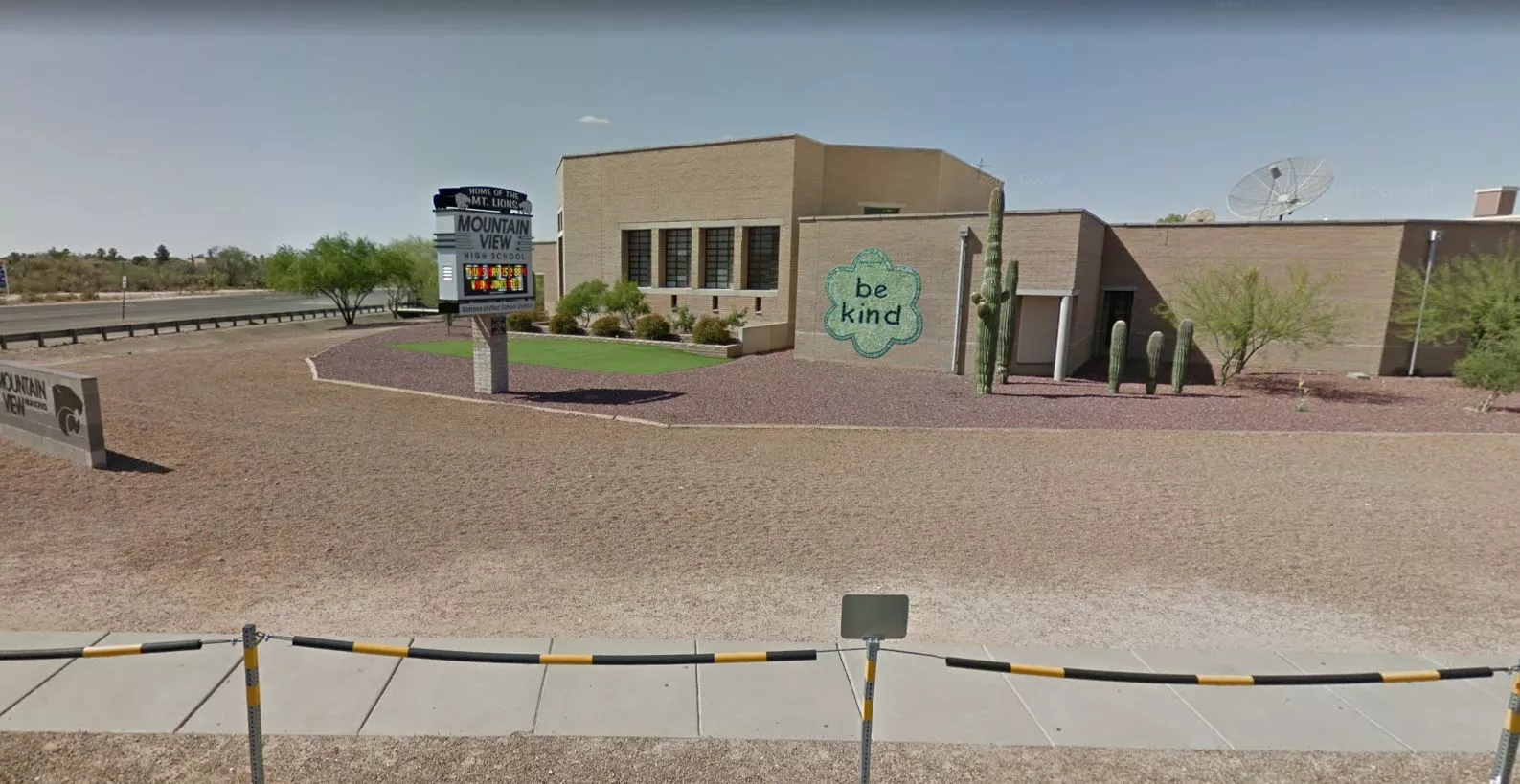
Chipres, who was an automotive instructor at the school, began working at Mountain View Feb. 8, 2016, according to MUSD Director of Public Relations Tamara Crawley, who confirmed his resignation with Tucson Local Media.
According to the district, school administrators immediately contacted the Pima County Sheriff’s Department Monday, Dec. 9 when students reported an alleged relationship between Chipres and an 18-year-old student.
Following an investigation by the Pima County Sheriff’s Department, no arrest occurred, though the school district immediately acted and Chipres resigned from his position.
“We recognize that you may have questions and may also feel a range of emotions surrounding this,” wrote Mountain View Principal Todd Garelick in a Dec. 11 letter to parents. “However, due to confidentiality and personnel laws, we are extremely limited in the information that can be publicly disclosed. I can tell you that this student was not a student in the teacher’s class and the criminal investigation did not result in an arrest.”
Pima County Sheriff’s Department Deputy James Allerton confirmed that detectives investigated Chipres on Monday, and found no criminal activity.
Tags: Mountain View High School , investigation , Pima County , teacher , teacher/student relationship , Image
Tuesday, December 10, 2019

The air show, featuring the famous United States Air Force Thunderbirds, will take place April 24 and 25, 2021. The Thunderbirds most recently flew in Tucson at a March 2019 demonstration at D-M, drawing more than 150,000 spectators.
The Thunderbirds fly six F-16 Fighting Flacons in formations as close as 18 inches of separation. Additional performers at the air show will be announced next year.
Admission to Thunder & Lightning Over Arizona is free, though there are several premium seating areas. Tickets to those areas, including the exclusive “Thunderbolt Club,” will be available for purchase beginning March 2020.
For more information, click here.
Tags: Thuder and Lightning , air show , events , Thunderbirds , Davis-Monthan Air Force Base , fighting falcons , Image

The justices without comment turned down Arizona Attorney General Mark Brnovich’s motion that the court should consider the state’s suit against the Sackler family.
Brnovich had claimed that family members were “looting” Purdue Pharma at a time when thousands of lawsuits are pending that accuse the company of helping create the opioid crisis.
Legal experts at the time called Arizona’s filing a long-shot—cases typically come to the high court only after they have been heard in lower courts—and Purdue has since filed for bankruptcy protection. But Brnovich said Monday he was disappointed with the high court’s decision.
“Today’s ruling will not end our efforts to hold Purdue and the Sacklers accountable for their role in the opioid crisis,” he said in a statement released by the attorney general’s office. “We will continue to fight for Arizona’s interests in the Purdue bankruptcy proceedings.”
The judge in that bankruptcy case has ruled that Purdue and the Sacklers are protected from lawsuits while the bankruptcy proceeds, an order that has been challenged by dozens of states with lawsuits pending.
In its petition to the Supreme Court in July, Arizona called the opioid crisis the “worst man-made disaster in American history.”
“There have been almost 400,000 opioid-related deaths in the United States in the last two decades,” the state’s complaint said, adding that “prescription opioid misuse costs the U.S. economy at least $78.5 billion annually.”
The Arizona Department of Health Services reported last week that there had been 3,768 opioid deaths in the state since June 15, 2017. That’s almost 400 more deaths than had been reported when the state filed its complaint with the Supreme Court on July 31.
The complaint claimed that Purdue has transferred more than $4 billion to eight Sackler family members since 2008, a year after the company pleaded guilty to federal charges that that it misled the public about the addictive properties of its drug, OxyContin.
Purdue now faces “thousands of lawsuits in which plaintiffs, including counties, cities, towns and nearly every state in the country, are seeking to recover billions of dollars under consumer protection and tort law,” the state said in its complaint then.
Purdue reached a tentative settlement this summer that would have included the Sacklers giving up control of the company, selling off foreign drug companies and putting $3 billion toward settlement of claims. The company filed for bankruptcy protection soon thereafter.
The company then tried to block Arizona’s Supreme Court appeal, arguing that “black letter bankruptcy law” mandated that “any and all fraudulent transfer claims against Purdue or the Sackler defendants may only be brought by the bankruptcy trustee.”
In a November response, Arizona argued that letting bankruptcy law dictate what cases the court could hear “strips this court of its jurisdiction to decide this controversy.” It called the opioid epidemic “an unprecedented public-health crisis” in need of a national solution.
“Only this court can enter a judgment that will be respected internationally when Arizona and other creditors inevitably pursue the assets that the Sacklers have stashed overseas,” the November filing said.
Cronkite News reporters Miranda Faulkner and Vandana Ravikumar contributed to this report.
For more stories from Cronkite News, visit cronkitenews.azpbs.org.
Tags: opioids , Supreme Court , Brnovich , lawsuits , Image

