

Tuesday, August 6, 2019
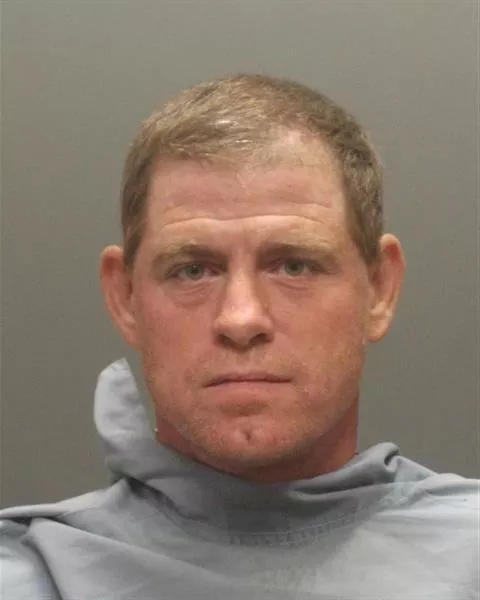
Michael Lewis Arthur Meyer, the 40-year-old founder of the armed, vigilante group Veterans on Patrol, will face two felony counts of third-degree burglary and misdemeanor counts of theft and criminal damage.
Meyer has a history of tampering with water tanks placed in the desert by humanitarian groups and posted multiple videos of himself emptying tanks several times last year.
PCSD Public Information Officer James Allerton said the department received several reports of damage and/or theft of water barrels on private properties in the Three Points and Arivaca areas.
An incident on July 12 where several water barrels on private property were damaged and or taken prompted an investigation.
On Monday morning, around 10 a.m., deputies responded to a report of suspicious individuals in the desert in the Three Points area where they made contact with Meyer. He was arrested and booked into the Pima County Jail where he was held on a $4,450 bond.
Meyer made headlines last year when he started a conspiracy theory that a homeless camp near Interstate 19 and West Valencia Road was the site of a pedophilia and human trafficking ring with global reach. Police investigated and found no evidence that the site was used for such a purpose.
Meyer was also arrested in July and December last year.
Tags: Michael Lewis Meyer , Veterans on Patrol , water barrels , crime , Pima County Sheriff , Image

I had no intention of posting today, and certainly not about another front page Star headline after writing about a misleading front page headline Monday. But then again, I had no idea I would encounter this headline when I opened the morning paper:
Trump vows 'urgent resolve' after weekend's mass killingsIt's atop an Associated Press story about the speech Trump read from a teleprompter Monday in response to the country's two most recent mass killings. The AP story covers what Trump said, but it also notes that this and similar statements he has made in the past fly in the face of his lack of action on gun regulations and his intention to put what he calls the "invasion" of our southern border at the center of his campaign, stirring up hatred and division to drive his supporters to the polls.
The Star headline, unlike the AP article, assumes that Trump's statement in his speech, "We vow to act with urgent resolve," actually means something, that if he said it, we can take the man at his word.
As the old saying goes, or kinda goes: Fool the media once, shame on you. Fool the media a thousand times, beginning way back when you said your father loaned you a million dollars which you paid back with interest when he actually gave you $400 million and bailed your ass out time and time again, shame on the media.
Before I wrote this post, I checked to see if the Star just took the headline from its AP feed, at which time the blame goes to the news agency. Nope. I googled the story. In dozens of news outlets, the headline is a variant of "Trump vows action after the shootings, but gives few details." The last phrase, "but gives few details," adds the necessary skepticism to Trump's "vow." The Star headline traffics in blind faith.
It was definitely a Star exclusive. And, I should add, a print edition exclusive. On the Star's own website the headline reads, "Trump vows urgent action after the shootings, offers few details."
That's twice in two days some creative headline writer at the Star took a reasonably accurate headline and screwed it up, both times on the paper's big front page story. On Monday, a perfectly good headline had already been written for the online version, but it was changed for the worse. Today, a perfectly good AP headline which virtually every other news outlet used or altered slightly was changed to the point that it misrepresented the contents of the article.
Maybe I shouldn't worry. After all, I'm a big supporter of the Star, which I think is a quality local paper with many first rate journalists. I start every day with a cup of coffee in my hand and the Star on my lap. Maybe this is just a one-off — actually a two-off — and it won't happen again.
I certainly hope so. If the Star continues to indulge in this kind of headline writing, the paper and the community will be worse for it.
Tags: Trump , Mass shootings , The Star , the Associated Press , Image
Monday, August 5, 2019

I usually read education articles written for the Star the day before they make it into the paper, courtesy of my Google Alerts which link me to stories about Arizona education the minute they go live. So on Sunday I read an online version of a story about teacher shortages decreasing in Pima County which was written for Monday's paper. I was happy to read that local districts are doing better with teacher recruitment this year.
When I opened my paper this morning, there the story was on the front page, word for word. Except for one thing. The headline was rewritten to take away any impression that our teacher shortage situation had improved.
Because in the Star, if education bleeds, it leads, even if the editors have to bloody it up a bit. "Ain't it awful?" stories about public education make the front page. They sell papers.
According to the story, Pima County districts still have 142 fewer teachers than they need. That's not good news. But also according to the story, that's down 19 percent from last year. That is good news. Our districts moved the needle. They're trending in the right direction.
The article itself is a long, well researched, well written piece by reporter Danyelle Khmara. No surprise there. She does her journalistic homework and it shows.
Then there are the two headlines, which most likely were not written by Khmara.
Whoever wrote the version for the online story captured the sense of the article accurately.
Pima County has fewer teacher vacancies this year, but it's still a problem for schoolsAs for the Monday headline? Not so much.
Teacher vacancies still an issue in Pima County despite raisesThe original online headline says things are better this year, which is accurate.
The rewritten front page headline implies nothing has changed, it's the same old teacher vacancy problem, even though teachers got a raise. It makes it sound like nothing will satisfy those damn teachers. But that's not what the facts in the article say.
This headline change may sound like a minor detail, except that, as everyone who has studied journalism knows, people who take the time to read a headline often get no farther than the first paragraph before they move on. Most people who see the front page of the Star are going to think Pima County has the same teacher vacancy problem it had last year.
That rankles me. I wrote a series of posts recently about how attacking TUSD in particular and public education in general has turned into a blood sport. The Star had an opportunity to leave readers with a sense that things are a little better. Instead, it blasts out a headline saying things were bad before, and they're just as lousy now.
Tags: Arizona Daily Star , Teacher shortages , Teacher salaries , RedforEd , Image
Friday, August 2, 2019

This is one of the saddest articles I've read recently. The daily stories about Trump and his minions keep me in a constant state of anger and anguish, but this is something different. It is an education story about a rare school desegregation success story which looks like it's about to come to an end.
The Jefferson County School District in Kentucky is one of the best examples of a desegregated urban school district in the country. It's actually one of the few examples. School desegregation efforts are not doing well these days, to put it mildly.
But according to a recent article, the school district has lost some of its community support for its desegregation efforts and is likely to become increasingly segregated. Worse, Kentucky's Department of Education is talking about "taking over the district." That's Conservative-speak for "Let's put blacks in black schools and whites in white schools where they belong."
Like I said, it's a sad article.
A few years ago I was part of a book group where we read and discussed recent books about education. Not surprisingly, the discussion often veered from the books we were reading to TUSD. At one point, the district's desegregation efforts became a topic of intense conversation. None of us thought the district's efforts have been a success, but we differed about the reasons for its failings.
I decided to do some research to find urban districts that have gotten desegregation right. My hope was, we could sift through the positive examples and compare them with the mixed — at best — desegregation efforts in TUSD. Maybe we could find some ideas for improving our desegreg efforts.
I took a deep dive into the internet and came up with hundreds of relevant items from newspapers, magazines and scholarly monographs discussing desegregation efforts, beginning with the 1954 Supreme Court's Brown v. Board of Education decision which made school segregation laws illegal, to the present. I created two folders on my computer desktop, one for the successes and one for the failures.
Soon, my deseg failure folder was stuffed to overflowing with examples of individual districts which made, at best, halfhearted attempts at integration and others where a short period of school integration was followed by a long slide into increasing segregation.
My success folder had a total of one example, the Jefferson County School District in Kentucky. It wasn't for lack of looking. It wasn't that I was making the perfect the enemy of reasonably good desegregation results. Other urban districts whose desegregation programs could be considered a success were nowhere to be found.
The Jefferson County school district was the subject of a long 2015 article delving into the complex history of its successful deseg efforts and the continual efforts by some people in the community to dismantle it.
One positive example is better than none, I guess. But the problem is, there is little for TUSD to learn from the Jefferson County success. There is zero chance it will be reproduced here.
The most important thing I learned from Jefferson County is, its desegregation efforts were only successful because the district has a program of mandatory busing which has continued long after most districts abandoned the practice. Requiring students to climb onto buses and travel long distances to attend faraway schools met with fierce resistance all over the country. It still leaves a bad taste in many people's mouths. Thanks to a 1974 Supreme Court ruling (Milliken v. Bradley), communities have been allowed to abandon their mandatory busing programs. The result is, schools have become increasingly segregated.
Love it or hate it, every indication is, mandatory busing is the single most effective way to desegregate schools.
Tags: Jefferson County School District , Kentucky , Louisville , TUSD , School desegregation , Milliken v. Bradley , Brown v. Board of Education , Image
Wednesday, July 31, 2019

HSSA’s Dog Days in the Desert Summer Campers learned how to make dog friendly Frosty Paw treats during their last week of camp. HSSA’s volunteers will be going around on Thursday, Aug. 1st giving each dog a delicious Frosty Paw treat and giving them some extra TLC.
Frosty Paw treats are easy to make and you only need a few ingredients.
Ingredients:
· 32 ounces of plain yogurt
· 1 jar of baby food carrots, or baby food meat, or one mashed banana
· 2-3 Tablespoons of Honey
· 2-3 Tablespoons of Peanut Butter
Mix all the ingredients and freeze in an ice cube tray. Once fully frozen you can give the treats to your pup to enjoy.
You can help make a difference for homeless dogs at HSSA by making a donation at www.HSSAZ.org/DONATE.
*Always check with your veterinarian before giving to your pet to verify there are no health risks for your pet.
Tags: dog birthday , dog treats , Humane Society , HSSA , pets , adoptions , shelters , Image
Tuesday, July 30, 2019

Instead of arguing about the strengths and weaknesses of the district, let's consider a different question: Who benefits when TUSD is trashed incessantly? Who wins when TUSD loses?
The short answer is, the winners are the enemies of public education. They have spent decades building a multi-billion dollar campaign to make terms like "failing schools" and "government schools" part of our vocabulary. They portray our public schools as a national disgrace, then figure out ways to move as many students as they can into charter and private schools. It began as a conservative, Republican-based effort, but an increasing number of progressives, and even people who consider themselves further to the left than garden variety progressives, have joined in.
It's not surprising to hear people on the political right singing in the anti-TUSD chorus. It's built into their anti-"Big Government,” anti-regulation DNA. If you want to shrink government to the size where it can be drowned in a bathtub as Grover Norquist, a man who never saw a tax or a government program he didn't hate, famously said, getting rid of all those nasty "government schools" makes perfect sense.
But when people on the political left join the chorus and sing, "TUSD is awful, let me count the ways," most of them don't realize that they're being played, that they’re singing a tune out of the conservative playbook. I can almost see the players on the right high-fiving each other every time someone on the left lends the anti-public school cause a helping hand.
Unfortunately, this phenomenon isn’t limited to Tucson. The anti-public school movement has been alarmingly successful at working its way into the national consciousness.
Let me go into more detail about the people who win when people trash our systems of public education.
The Demonizers, Privatizers and Profitizers
Demonize. Privatize. Profitize. Those are the three pillars of the “education reform” movement.
It begins with demonizing our system of public education. Before you can persuade parents of public school students to move their children to charter and private schools, you have to convince them their schools are so bad that anything would be better.
There's nothing new about people criticizing the ways we educate our children or suggesting ways we can improve the educational process. It's been going on as long as we have been a country. Way back in 1819, Washington Irving wrote the classic tale, The Legend of Sleepy Hollow, which featured a pompous, undereducated, incompetent schoolmaster named Ichabod Crane. The story lampoons him and the meager education provided in the one room schoolhouses of the day. Many of our greatest writers have continued Irving's tradition of depicting schools and teachers in less-than-flattering, and sometimes damning, lights. Journalists and educators regularly publish articles and essays describing the problems plaguing our schools and suggesting ways to improve them.
All with good reason. The process of educating young people will always be a flawed enterprise. Criticism and constructive suggestions for change are part of the continuing process of figuring out ways our schools can better serve our children.
But today’s “A pox on all your public schools” style of blanket demonization is a recent phenomenon. Its purpose is not to improve the schools. It is to weaken and eventually dismantle them.
If we’re looking for a moment when the demonization movement began in earnest, it would be the Reagan administration's 1983 publication, A Nation at Risk, which argues that the way we educate our children is so deficient, it threatens our nation’s survival. The pamphlet’s thesis is summed up in its most famous passage, which compares the failures of our schools to an attack by a foreign power.
“If an unfriendly foreign power had attempted to impose on America the mediocre educational performance that exists today, we might well have viewed it as an act of war. As it stands, we have allowed this to happen to ourselves. . . . We have, in effect, been committing an act of unthinking, unilateral educational disarmament.”A Nation at Risk took the country by storm. It had people asking, is public education really so bad it poses a risk to our national security?
Yes, replied the demonizers. It really is that bad.
Tags: David Safier , TUSD , Charter schools , Private schools , Education reform movement , Charter management organizations. , Image
Monday, July 29, 2019
Tags: celebrations , galleries , Tucson Convention Center , Juneteenth , abolition , Slideshow , Image
Friday, July 26, 2019
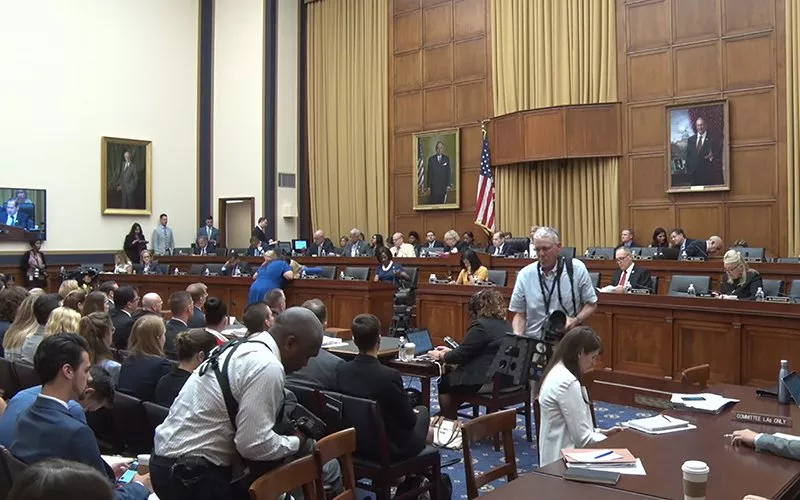
WASHINGTON – A House panel grilled administration officials Thursday over migrant family separations and conditions at border detention facilities, but the hearing produced more partisan sparks than answers.
Both sides at the House Judiciary Committee hearing said the situation at the border has reached crisis levels – but they agreed on little else.
Republicans accused Democrats of holding just another in a series of hearings aimed at political gain and not at finding solutions.
“If you wanted to solve separation, we could do more than have hearings. There isn’t anybody in this room that doesn’t want to deal with the situations that are horrific along the border,” said Rep. Andy Biggs, R-Gilbert.
But Democrats shot back that the GOP is ignoring problems created by policies of an incompetent Trump administration that “exacerbate the crisis” and “compromise safety.” They pointed to overcrowding, unsafe conditions and cases like a Honduran toddler who was reportedly forced to choose between going with her mother, who was staying in the U.S., or her father, who was being deported.
“Asking a 3-year-old child to choose between their parents, not knowing if they’ll ever see one again is unconscionable and traumatic to a child,” said Rep. David Cicilline, D-Rhode Island.
The oversight hearing called witnesses from Customs and Border Protection and the departments of Justice, Homeland Security, and Health and Human Services – all of which have a hand in custody and care of migrants and asylum seekers who are apprehended at the border.
Congress late last month approved $4.59 billion in emergency border funding, after border agencies warned they were in danger of running out of money to cope with the crisis.
Most of the witnesses said they are doing the best they can with the resources they have to handle an influx of migrants, many with children that the system is not used to handling.
The latest numbers from CBP showed that even though apprehensions at the southern border fell in June, they are still at their highest levels in more than a decade. The 104,344 people apprehended at the southern border in June brought the total for fiscal 2019 to 780,638, well above the fiscal 2018 total of 521,090 – with another three months to go in this fiscal year.
The data also show that more than 42,000 of those people were families or unaccompanied minors.
That has led to overcrowding, shortages of supplies and situations that one witness said threaten the health and safety not only of those in custody but of the workers in charge of their care as well, Diana Shaw testified.
Shaw, assistant inspector general for special reviews and evaluations at DHS, said her office felt the need to issue two “management alerts” after inspecting detention facilities. Such alerts are emergency advisories sent to agencies when auditors find problems “so serious that we deem it necessary to report on the issue before completing our standard inspection or review process.”
“The conditions we observed, which put the health and safety of both DHS personnel and detainees at risk, prompted us to publish two management alerts raising the issues to the attention of DHS leadership and requesting immediate action,” Shaw said in her testimony.
Those conditions included severe overcrowding and illness, among other issues, she said.
“When our team arrived at the El Paso Del Norte (PDT) processing center they found the facility, which has a maximum capacity of 125 detainees, had more than 750 detainees on site,” Shaw said. “The following day that number had increased to 900.
“During our May visits at PDT, we observed approximately 75 people being treated for lice and some detainees were in isolation with flu, chicken pox, and scabies,” Shaw said. That has led managers at those facilities to raise concerns about staff illness, employee morale and “conditions that were elevating anxiety and affecting employees’ personal lives,” she said.
CBP Chief Brian Hastings said his staff is being stretched thin as it tries to respond to the results of what he called a “broken immigration system.”
“While the men and women of CBP pride themselves on providing appropriate care for those in its custody, the volume of family units and UAC (unaccompanied children) poses significant challenges,” Hastings said.
The stress is being felt beyond the agencies and well beyond the border, said Rep. Ken Buck, R-Colorado, who said small communities are feeling the impact “as they are attempting to alleviate the human suffering.” Buck blamed “Washington’s failures and Democrat’s negligence” for the system that has created this crisis.
But Rep. Greg Stanton, D-Phoenix, said the GOP shares a large part of the blame.
“I’m trying to better understand how this administration and the agencies that carry out this practice believe this is acceptable,” Stanton said. “Securing the border and treating children humanely are not competing values and this administration’s family separation practice deeply concerns me.”
Tags: Cronkite , immigration , White House , Migrants , detention facilities , Image

College football teams from the Mid-American Conference will book a trip to Tucson every New Year's Eve, starting in 2020, thanks to a new affiliation with the NOVA Home Loans Arizona Bowl. MAC teams will play against those from the Mountain West Conference. The Sun Belt Conference previously participated in the bowl.
Bowl executive director Kym Adair delivered the announcement Thursday morning, adding that the new affiliation will run through 2025. Both conferences will send their “upper-echelon” teams to the bowl game, according to Adair, which will lead to better quality of play.
“This is a huge day in the history of the NOVA Home Loans Arizona Bowl,” she said. “We’re looking at the future, and we’re building something really special here in Southern Arizona. We’re going to bring two great, great football conferences to Tucson, and it really leapfrogs us forward.”
Mountain West commissioner Craig Thompson, who has led the conference since its inception in 1999, said the 13-team league is proud to re-up its partnership with the bowl game.
Thompson said the conference, which has teams in Colorado, California, Idaho, Wyoming, Nevada and Utah, fits perfectly into the football culture of Southern Arizona.
He also believes the region’s support of the bowl game since its inception in 2014 shows how important it is to the civic pride of Tucson.
“Each year, it gets a little bit better, as far as fan experience, hospitality and the pregame festivities are concerned,” Thompson said. “We’re now going to play on New Year’s Eve, it’ll be fun. It will be a place to spend a different time than back home, in a different city.”
MAC commissioner Jon Steinbrecher called the conference’s decision to link up with Adair and company a no-brainer.
Steinbrecher is hopeful that players, parents and fans can all have a great time during the bowl week, which can in turn boost the city’s standing in the Midwest.
“For our student-athletes, what makes this [bowl game] special is that this is an area that many of them have never been to,” Steinbrecher said. “So, who knows how many of them will settle down here.”
Steinbrecher added that the conference’s decision to link up with Thompson and the Mountain West Conference stemmed from their shared vision for student-athletes’ welfare. He has no doubts that the Tucson-based bowl game can thrive on its new time and date, with a 2 p.m. kickoff local time.
Steinbrecher also said the Tucson bowl game can stand out in a crowded field, with 40 games played between Dec. 20 and Jan. 13. The longtime commissioner believes the MAC’s fans will flock to Southern Arizona, if for no other reason than the sunny, warm weather.
“I’ve waited a long time for this day to come around,” he said. “It is truly a privilege for the MAC to be a part of the NOVA Home Loans Arizona Bowl.”
Another draw to the game being moved to New Year’s Eve is the downtown block party that will serve as Tucson’s newest way to countdown to the next calendar year.
With a litany of events planned, as well as the dedicated alumni and fanbases that surround each of the conferences’ programs and their willingness to travel to bowl games in years past, the new pairing brings with it exciting expectations.
Adair said her main concern is ensuring that anyone that makes the trek to Arizona Stadium in years to come enjoys a quality product.
“We want to put together terrific football teams and football games, so that everybody can have an amazing experience,” she said. “[Fans] want to come to the warmth of Tucson in December, so bringing those fans to Tucson is really, really important, and we've got a lot of synergy with that.”
Tags: sports , football , NOVA Home Loans Arizona Bowl , Mountain West Conference , Image
Wednesday, July 24, 2019

Tucson's Green Fields private school is closing. According to an article in the Star, the school's enrollment has fallen from 246 students in 2001 to as few as 105 in 2015. Green Fields is a K-12 school, so the 2015 enrollment numbers work out to an average of eight students per grade. No school can remain financially viable with so few students.
Understandably, students who were planning to attend this coming school year and their families are mourning the school's closing. Actually, though, closures like Green Fields' would be a far more regular occurrence in Arizona, except for one thing. You and I and all the state's taxpayers are helping the schools stay afloat by chipping in to pay students' tuition. Not all students, of course, but a substantial number. I'm not just talking about students from low income homes whose parents couldn't otherwise send their children to private school. High income families are using our money to help pay tuition costs as well.
How much are we chipping in? Last year, nearly $200 million which otherwise would have been in the state's coffers, money which could have been used to boost our shamefully low education budget, is paying for children to go to private schools.
$200 million a year is a whole lot of money. Far too much for my taste. I don't like the idea of using taxpayer money to prop up privately funded schools which can't cut it in the private sector. People on the right like to say, governments shouldn't be picking winners and losers in the marketplace by giving some of them subsidies, but somehow they're fine with using $200 million to help private schools survive.
OK, I'll admit, I don't like private school vouchers, period, and I especially don't like them when they run into hundreds of millions of dollars a year. But I want to try and be fair. If that $200 million means a lot more students are attending private schools, that might not be such a bad deal for taxpayers. After all, if those kids weren't in private schools, we would have to pay for their public educations.
So let's take a look at the kind of bang we're getting for our voucher bucks.
Tags: Green Fields school , Private schools , Voucher , Tuition Tax Credits , Grand Canyon Institute , School privatization , Image

