

Tuesday, May 14, 2019

I don't know which state senator, or senators, stuck a half million dollar request for a new "Freedom School" at Northern Arizona University into the Republican senators' budget proposal. But someone did.
UA and ASU both have versions of the Koch brothers' libertarian outpost on their campuses, but Flagstaff's NAU is currently Freedom-School free. That could change, however, if the proposed funding makes it into the budget.
Don't mistake the request for extra money for a new Freedom School as a Republican change of heart when it comes to funding education. The same budget proposal cuts millions from Ducey's proposed university and K-12 budgets.
I've written often about UA's Freedom Center and less often about its ideological sibling, ASU's School of Civic and Economic Thought and Leadership. Both received lots of money from members of the Koch donor network when they started out. FC became a state budget item in 2014, and SCETL's state funding began in 2017. The current budget includes $3.5 million for FC and $4 million for SCETL. Both centers will likely get the same funding in the upcoming budget.
As for that modest half million dollar funding request for the proposed NAU Freedom School. The small figure is a ruse, a way to get the thing up and running with as little controversy as possible. After all, what's a half million budget request between friends? The UA Freedom Center began the same way, with a half million state budget for its first three years. Now FC's annual budget is seven times that original figure.
Here are a few interesting and unusual facts about the funding for FC and SCETL.
• They are the only university "schools" or departments with their own line items in the state budget.I expect the same deal will hold for the NAU outpost if it's approved.
• Neither school has been able to spend all the money it gets from the state.
• The schools don't have to return what they don't spend. At the end of the year, they just stick the surplus in the bank, to be used at some later time.
Tags: Northern Arizona University , Arizona senate , Freedom School , Koch donor network , Freedom Center , School of Civic and Economic Thought and Leadership , Doug Ducey , Arizona budget , Image
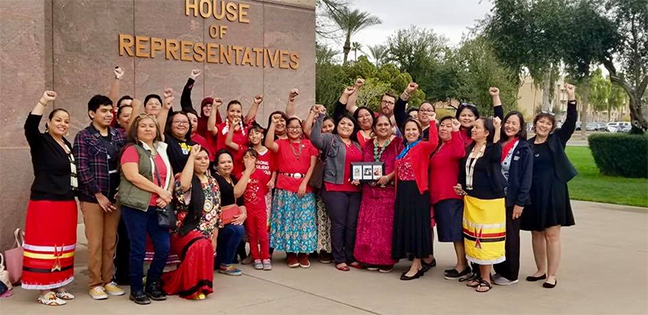
Gov. Doug Ducey has signed House Bill 2570 into law, creating the first state-sponsored study to gather comprehensive data on missing and murdered Indigenous women and girls in Arizona and identify causes of the systemic violence.
These cases, known as MMIWG cases, have historically received limited attention and improper classification. The only national study devoted to the subject—which was published by the Urban Indian Health Institute in Seattle last year—acknowledges that even their data for the number of Indigenous women and girls who have gone missing or have been murdered is likely an undercount.
They reported that in 2016, there were 5,712 reports of missing American Indian and Alaska Native women and girls, though the U.S. Department of Justice's federal missing persons database, NamUs, only logged 116 cases. Arizona was ranked the third most dangerous state for Indigenous women with 54 cases, and Tucson was the fourth most dangerous city in the country with 30 recorded murders.
Activists have pointed to a lack of collaboration between local, state and tribal law enforcement officials and the misclassification of victims' ethnicity and tribal affiliations as the reason for the lack of accurate data.
The new law, introduced by Democratic Rep. Jennifer Jermaine, allows a study committee to be formed, with representation from seven Arizona tribes. The committee will include all members of the Indigenous Peoples Caucus, the Arizona attorney general or their designee, the director of the Department of Public Safety or their designee, attorneys and sheriffs from urban and rural counties, representatives from tribal government and law enforcement, victims advocates, social workers, counselors and legal and health service experts.
Once the study is completed in June 2020, the findings will be presented to tribal leadership and the state legislature. This could provide a framework for better policies to be enacted that would protect Indigenous women from targeted violence.
Gov. Ducey posted a tweet celebrating the passage of the bill this morning:
The crisis of missing and murdered indigenous women and girls must be addressed. Proud to sign #HB2570 to provide better data and information that will help inform our actions going forward #MMNWG #MMIW
— Doug Ducey (@dougducey) May 14, 2019
Tags: MMIWG , Missing Murdered Indigenous Women Girls , Ducey , HB2570 , Legislature , Jermaine , Indivisible Tohono , Image
Sunday, May 12, 2019

Ask anybody who ever experienced success as a football player to describe the coach who had the greatest impact on him and the response will almost always go something like, “Oh man, he was hard on me. He’d yell and scream, get in my face and cuss me out…I loved that dude.”
When you talk to guys who played for Dick Tomey, the former University of Arizona football coach who died Friday at the age of 80 from lung cancer, they generally skip over the preamble and go right to the “I loved that dude.”
This is not to say that Tomey didn’t have the fire and the fury, but he interacted with his players on a more-personal level. One of his best quotes was, “Football isn’t complicated. People are.”
Tomey went out of his way to get to know his players and to try to learn how best to motivate each one. Keith Smith, who shared the quarterbacking duties with Ortege Jenkins during Arizona’s best-ever season, remembered that Tomey somehow treated the two QBs “totally different(ly), but exactly the same.” He was known for his honestly, his compassion and his love of people.
Dick Tomey followed the usual circuitous coaching route, serving as an assistant here and a coordinator there before finally landing his first head coaching job, taking over a woefully bad Hawai’i Rainbow Warriors program. Through force of will and grit, he turned the Warriors into a winner, going 63-46-4 over a 10-year period. What’s funny is that his record on the island averages out to just a little bit better that 6-5, a season record that would follow him around.
While Tomey was building a winner in Honolulu, three time zones to the east, Larry Smith was working wonders in Tucson. Smith had taken over a program that was in the dregs of the Pac-10 AND was in the NCAA doghouse for a variety of violations committed during the previous coach’s tenure. Smith became a local hero when his underdog Cats knocked Arizona State out of a berth in the Rose Bowl in 1982. Smith then built Arizona into something of a power and twice nearly took the Cats to Pasadena on New Year’s Day. It seemed inevitable that Smith would leave for a bigger program. When he did, he did so rather inelegantly to in-conference rival USC.
Arizona then hired Dick Tomey, who was met with a collective “Who?” by Arizona fans. Smith’s last Wildcat team had gone 9-3 and finished the season ranked 11th in the country. Tomey’s first team was the absolute picture of mediocrity, finishing 4-4-3 (back in those days, college games could end in a tie). His next two teams went 7-4 and 8-4, respectively, and Cat fans began to warm to the coach with the folksy charm and preternatural calm.
There was nothing flashy about his teams. The offense scored when it could, special teams did their jobs, but the members of the defense played like their butts were on fire. Two members of the vaunted “Desert Swarm” defense—Tedy Bruschi and Rob Waldrop—are in the College Football Hall of Fame. That 1993 team started a six-year streak in which the Cats won 48 games. (In the 1990s, Tomey’s Wildcats would win more games than any other team in the Pac-10.) It culminated with the 1998 team that went 12-1, missed the Rose Bowl by the flukiest of flukes and ended the season ranked No. 4 in the country.
But when his next two teams went a combined 11-12, the fickle fans called for a change, something most have probably regretted to this day. What has followed is 18 years with a combined record of 103-119 for Arizona football under three coaches (John Mackovic, Mike Stoops and Rich Rodriguez) who won occasionally but mostly brought shame to Arizona with their sideline antics.
A lot of long-time Tucsonans remember Tomey for the way he was off the field. He played in a men’s baseball league, competing against people half his age. And he didn’t play first base or right field; he played catcher, a position that is brutal on an older guy’s knees.
One time I took my daughter to see Tucson legend Linda Ronstadt in concert with Aaron Neville. As the crowd waited for the Tucson Convention Center doors to open, I spotted Tomey and his wife, Nanci. Other coaches might have Big Timed it, huffing and puffing as to why he wasn’t being given special treatment. But Tomey was just part of the crowd. He made small talk with the people around him, always including his wife in the conversation.
I had seen him at press conferences, but I have no idea if he recognized my face. But he asked how I was doing. I introduced my daughter, Darlene. He got a big smile on his face and said, “Father-daughter concert date. That’s so nice.”
I turned to the couple standing behind us and said, “Dick Tomey approves. I’m Father of the Year!”
Tomey’s overall coaching record of 183-145-7 in 29 seasons averages out to 6.3-5. His Arizona record of 95-64 averages out to 6.8-4.8. But those are just numbers. Dick Tomey once won the Provost Award as the UA’s best teacher. I’m pretty sure that’s a record that will never be broken.
Thursday, May 9, 2019

The historic aircraft, nicknamed the “D-Day Doll” flew in the Normandy Invasion of France in 1944, dropping paratroopers, delivering supplies and evacuating the wounded. Now, 75 years later, it is flying across the U.S. for a seven-week, 12,000 mile journey back to France. The plane is returning to Europe as part of a commemorative gathering of World War II aircraft honoring veterans. This June, the C-53D will join 250 other historically significant aircraft for the “largest gathering of war birds since WWII.”
The C-53D can hold 26 paratroopers, plus two pilots. But now instead of troops, the plane holds cargo to take the pilots on their historic tour from the states to Greenland, Iceland, England and finally France. In total, only 380 C-53 Skytroopers were ever constructed.
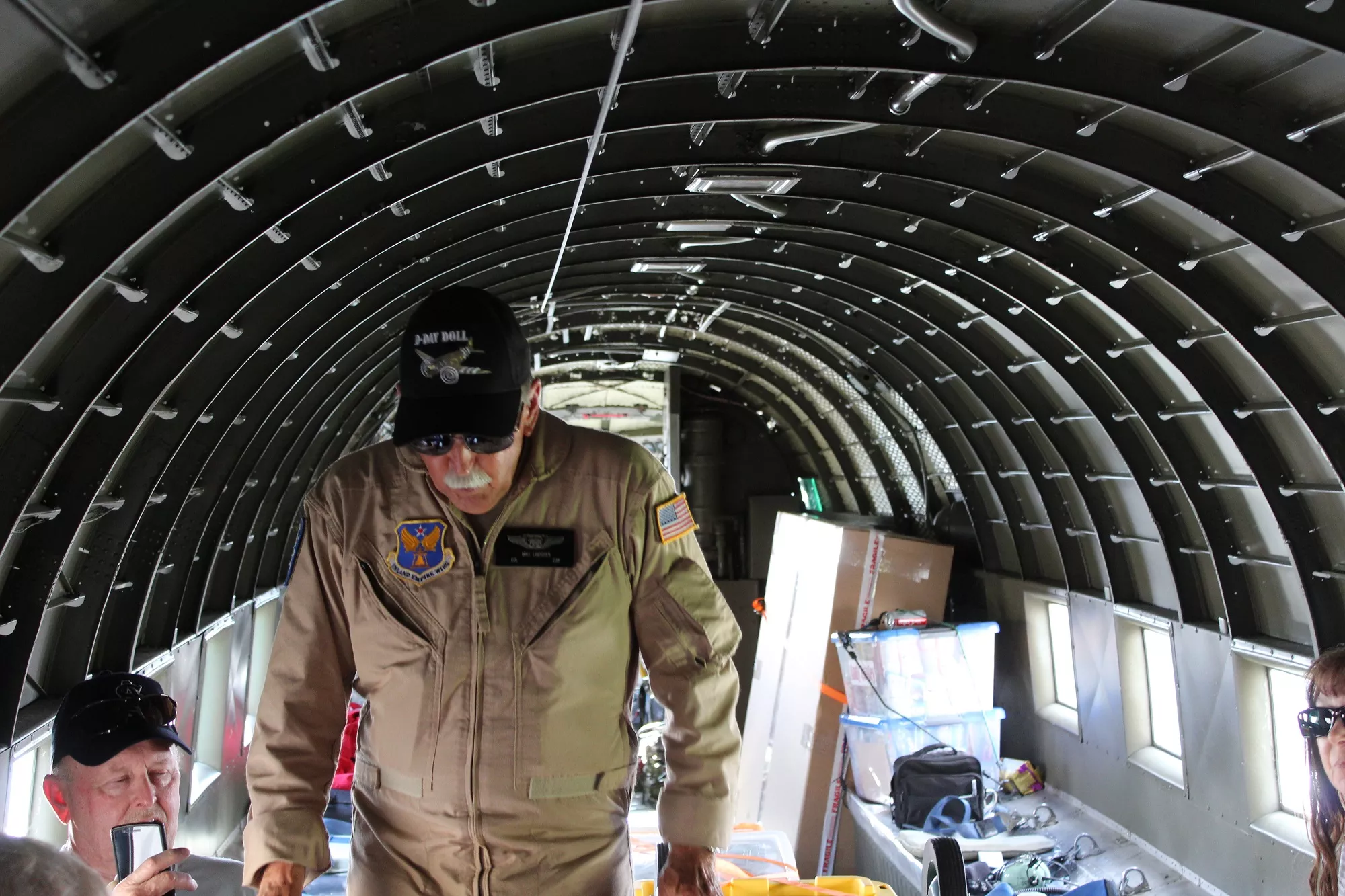
Starting its tour in Riverside, California, the C-53D was not originally planned to stop in Tucson. But support and interest from the Tucson aerospace community brought this historic aircraft into town the afternoon of Wednesday, May 8.
“There was a lot of interest and help for this program out of Tucson,” said D-Day Doll pilot Bill Prosser. “And we’re here to thank them for supporting us.”

Tags: D-Day Doll , WWII , C-53 Skytrooper , Tucson International Airport , veterans , plane , history , Image
Tuesday, May 7, 2019
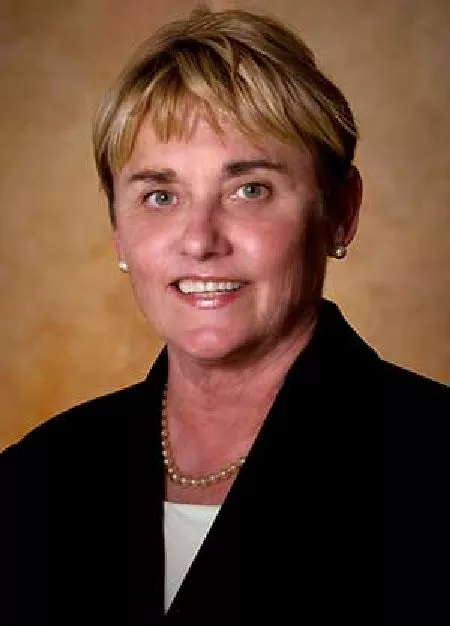
Democrat Sharon Bronson joined Republicans Steve Christy and Ally Miller in voting to accept the controversial federal grant, which provides federal dollars to the Sheriff’s Department to reimburse the county for expenses related to border crime.
Two grants were on the table. One in the amount of about $1.2 million for overtime ($1.5 million), mileage ($50,000) and travel ($13,120) reimbursement. The other was $595,600 for two license plate readers ($33,600), an aircraft FLIR camera ($502,000) and aviation fuel ($60,000). The money is provided by the Department of Homeland Security.
Bronson made the motion to accept the grant with the exception of the license plate readers.
Until last September, Operation Stonegarden had been accepted by the Pima County Board of Supervisors for 12 consecutive years. In response to mounting opposition from community members, the supervisors reversed their decision and rejected it in a 3-1 vote.
The supervisors accepted the grant this year along with new conditions. The county expects to receive the maximum amount of indirect cost reimbursement from the program, which is approximately $256,919. That money will be repurposed for humanitarian aid cost reimbursement provided to local faith-based nonprofits.
The board also requires the Pima County Sheriff’s Department to provide them and the Community Law Enforcement Partnership Commission with data regarding all Sheriff’s Department activities in the Stonegarden program.
The new conditions call for an investigation of vandalization of the water stations left for migrants in Pima County by the nonprofit Humane Borders, and that Sheriff Mark Napier reaffirms in writing his previous commitments for no ICE agency presence in the county jail and no sheriff personnel to perform pretextual stops at Border Patrol checkpoints.
Critics of Stonegarden say the program promotes collaboration between local law enforcement and federal immigration agents, which targets immigrant communities within Southern Arizona.
Concerns about the federal family separation policy have drawn scrutiny to the previously noncontroversial grant, with activists arguing that Pima County should not partner with DHS because they carry out the Trump administration’s immigration policies.
At the meeting, Chairman Richard Elías, who voted against accepting Stonegarden funds, said racial profiling is an issue that affects everyone in the community, and the county has no control over what happens to people after they’re in Border Patrol custody.
Christy countered that Pima County Sheriff Mark Napier is the law enforcement expert, and if he approves of the grant, then that is what the supervisors should support.
Miller said based her experience on the border, she agrees with those who say there is drug trafficking and other criminal activity that negatively affect residents in Arivaca, Amado and other border towns.
“Do a walk along, see what’s happening on the border, because until you experience it, you have no idea,” she said at the meeting.
Supervisor Ramón Valadez said he opposed accepting the Stonegarden grant dollars but it was a difficult decision because there are bad consequences either way. But ultimately, he believes that the same conditions and concerns he had last September still exist today.
Supervisor Sharon Bronson, the swing vote in today’s meeting, has a different opinion about the current state of Stonegarden.
Bronson told Tucson Weekly that previous concerns raised by the Department of Homeland Security’s Office of the Inspector General have been resolved, and there is a public safety issue at the border that opponents of Stonegarden “seem to be denying.”
“This money is coming to this community regardless of whether or not we are accepting the grant,” Bronson said after the meeting. “If we do not accept it, then it will go to the other agencies that are accepting it and the Arizona Department of Homeland Security affirmed that at an Arizona Border County Coalition meeting.”
Pima County residents who spoke at the meeting were split on whether deputies use the extra funding to keep people safe, or whether they put people in danger through support for DHS policies.
Just last week Thomas Torres
-Maytorena, a senior from Desert View High School, was detained by Border Patrol after a sheriff’s deputy ran his plates and pulled him over. The vehicle’s registration was expired and had a mandatory insurance suspension.
Torres-Maytorena's arrest, which happened just two weeks before he is set to graduate, has heightened the issue of Stonegarden in Pima County. Community members say it is an example of how Border Patrol collaborates with local sheriff’s deputies to detain people.
Tags: Stonegarden , vote , Operation Stonegarden , grant , funding , immigration , Border Patrol , police , migrants , Pima County , Democrat , Sharon Bronson , Republican , Steve Christy , Ally Miller , Image

More than 100 Desert View High School students walked from their school to the Pima County Sheriff's Department Benson Highway HQ on Monday, May 6, to protest the Border Patrol's detainment of their classmate, Thomas Torres-Maytorena.
Torres-Maytorena, a high school senior a few weeks from graduating, was pulled over by a Pima County Sheriff's Department deputy on May 2 and ultimately ended up detained by border patrol agents because he was an undocumented immigrant.
Deputy Jeffrey Creller pulled over Torres-Maytorena on the night of May 2 while he was driving a Kia Spectra with an expired registration, according to a Pima County Sheriff's Department report.
Torres-Maytorena, who had two passengers in the car, told Creller he had no ID or driver's license and that he had never been given identification from the state. Initially, Torres-Maytorena told the officer his name was Thomas Torres.
The car was registered to Lorena Rodriguez, who Torres-Maytorena said was his mother. After Torres-Maytorena told Creller his mom was unaware he had taken the vehicle, Creller spoke with Rodriguez over the phone, who “initially indicated she was unaware that he had the vehicle. However, she recanted a few moments later and stated she was indeed aware he had the vehicle, as she had sent him to the store to pick up some things.”
Torres-Maytorena was unable to provide Creller with a Social Security number, so Creller again called Rodriguez, but the SSN she ultimately provided did not belong to Torres-Maytorena.
Creller cited Torres-Maytorena for driving with a suspended license plate and without a driver's license, registration and insurance.
Torres-Maytorena then gave Creller his high school ID, which listed his name as Thomas Torres-Maytorena and, when Creller pointed out he hadn't given him his full name, Torres-Maytorena said that he goes by Thomas Torres, even though it wasn't his legal surname. He also told Creller that Rodriguez "was in fact not his actual mother but more of a ‘stepmother.’”
At that point, Torres-Maytorena revealed he was an “undocumented illegal immigrant.” Creller then called the Sheriff’s Department to send out Border Patrol agents, who ultimately took custody of Torres-Maytorena “for an overstayed visa.”
Tags: Desert View , Thomas Torres-Maytorena , detained , Pima County Sheriff's Department , border patrol , students , protest , Image
Monday, May 6, 2019

But a group of local musicians and educators recently started an initiative to build a new community space for artistic expression – and Tucson is responding.
In less than a week since initiating their Kickstarter campaign for Groundworks, a community arts space and music venue, the organizers reached over 80 percent of their funding goal.
Groundworks is being orchestrated by Logan Greene, a local musician and teacher.
"We're building a community around youth art, music and education and we're focusing on our sustainability so that we'll be here for years to come," Greene said.
According to the Groundworks team, the primary goal of this location is to "provide a space to cultivate young artists in Tucson. Through Groundworks, Tucson’s youth will have opportunities to take classes in music and various mediums of art, attend shows, perform at shows, and even help out with every aspect of running a show".
According to Greene, Groundworks aims to move into a building in the next few months and open their doors in fall 2019.
Groundworks is currently in the process of obtaining 501c3 non-profit status from the IRS.
For more information, visit groundworkstucson.com
Tags: music , news , Groundworks , musicians , Kickstarter , local , performance space , Logan Greene , Image
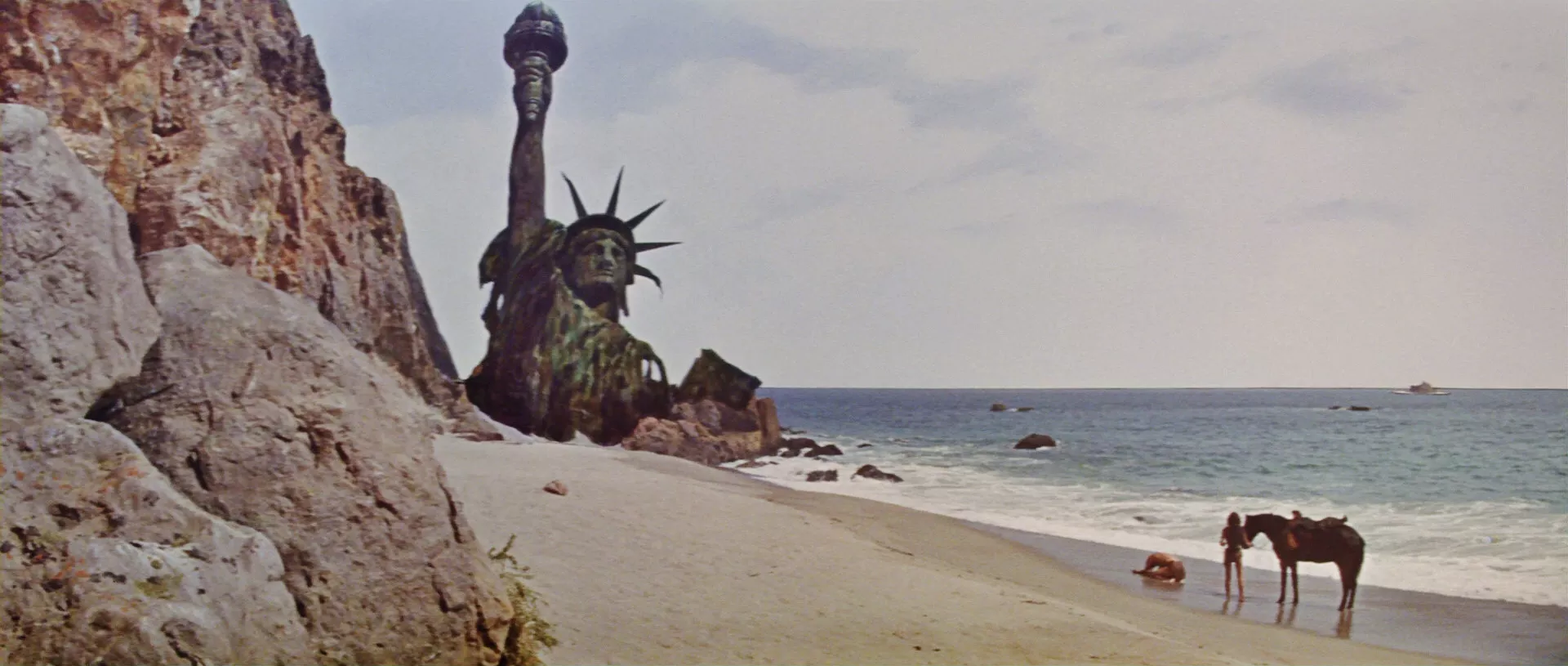
New York magazine sums up the UN's new report on biodiversity:
Human beings are more prosperous and numerous than we’ve ever been, while the Earth’s other species are dying off faster than at any time in human history.
These two conditions are related. But if the second one persists long enough, we will be following our fellow organisms into the dustbin of geological history.
This is the primary takeaway from a new United Nations report on our planet’s rapidly diminishing biodiversity. Humanity is reshaping the natural world at such scale and rapidity, an estimated 1 million plant and animal species are now at risk of extinction, according to the U.N. assessment. Climate change is a major driver of all this death, but burning fossil fuels is far from our species’ only method of mass ecocide. We are also harvesting fish populations faster than they can reproduce themselves, annually dumping upward of 300 million tons of heavy metals and toxic sludge into the oceans, introducing devastating diseases and invasive species into vulnerable environments as we send people and goods hurtling across the globe, and simply taking up too much space — about 75 percent of the Earth’s land, and 85 percent of its wetlands, have been severely altered or destroyed by human development.
[NY Mag]
Tags: news , UN Report , climate change , biodiversity , global warming , humans , pollution , Earth , environment , Image
Friday, May 3, 2019

In some states, school districts are saying they can't afford the raises they promised teachers and may have to lay off staff and increase class sizes to compensate for the salary increases.
That makes sense, right? Teachers may be underpaid, but we have to be realistic. We just can't afford to pay them what they deserve. Right?
Increasing access to early childhood education in Pima County is receiving overwhelming support from individuals, business groups, educators and nonprofit organizations. But Pima County says it doesn't have the money to start the ball rolling.
That makes sense, right? The county would benefit in the short and the long term from having more children receive a quality early childhood education. We just can't afford it. Right?
The legislature is hammering out its 2019-20 budget. It's almost certain K-12 education will get more money than last year, which was an increase over the year before. But even with the expected increase, the education budget will be lower than pre-recession, 2008 level, and back then, our schools were near the bottom of the country in per-student spending. Most Arizonans agree we should have smaller class sizes, new textbooks and computers, and enough supplies that teachers don't have to buy things for their classrooms out of their unconscionably small paychecks. But let's be realistic, folks, the state just doesn't have enough money.
That makes sense, right? Our students would benefit from a more generous education budget, and the state would have a better educated population which would help attract businesses and build the economy. The only problem is, we just can't afford it. Right?
Wrong. Wrong. And so goddamned Wrong it makes me furious every time I hear it.
The amount of money in governments' coffers isn't a force of nature like the amount of rain that falls every year. It's created by human decisions. We may not be able to coax more rain from the sky, but we sure as hell can increase the amount of money government has to spend. All we need to do is bring in more tax dollars, and all that takes is the right number of legislators voting "Aye."
Tags: Taxes , Education budgets , Early childhood education , Teacher salaries , Image
Wednesday, May 1, 2019

The new location includes more than 200 private rooms. It also includes 20 new operating rooms, which are replacing 18 now-closed operating rooms in the original hospital building.
According to Dr. Chad Whelan, CEO of Banner - UMC, this new building is aimed to be a "21st-century academic medical center," with a focus on the latest technology.
“The new operating rooms are a fantastic way to serve the people of Arizona with the latest technology and modern facilities,” said Dr. Benjamin Lee, chief of the Division of Urology in the UA Department of Surgery.
Tags: UMC , Banner Health , medical center , hospital , Tower 1 , operating rooms , surgeries , now open , UA , University Medical Center , Image

