

Friday, February 1, 2019
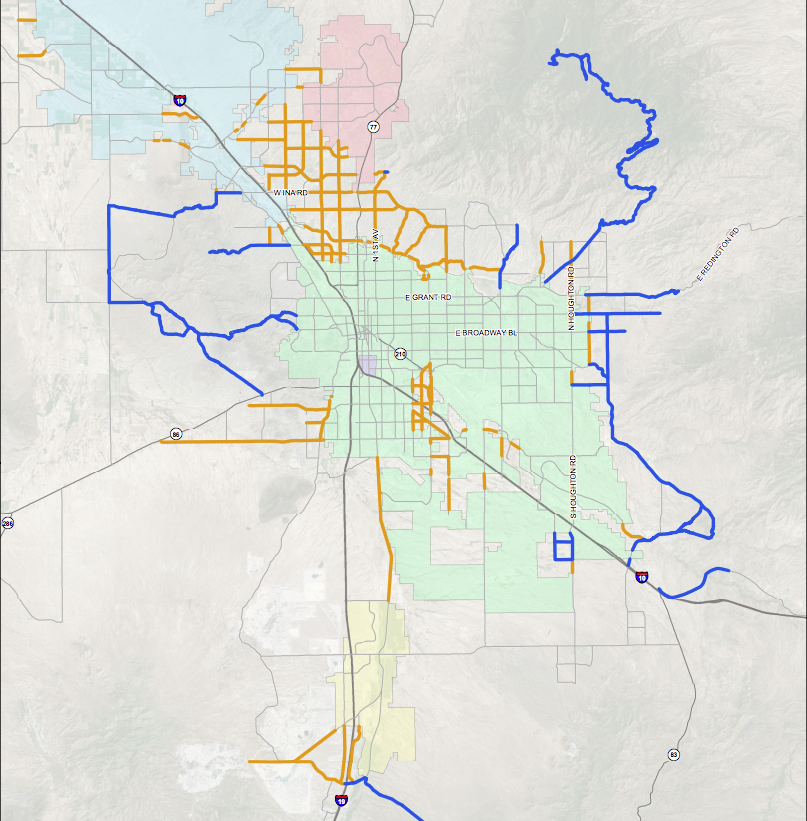
Pima County Administrator Chuck Huckelberry wants to take a portion of the fiscal year 2019-2020 general fund and put it toward road repairs in unincorporated areas.
In a memo to the Board of Supervisors published on Wednesday, Huckelberry recommended a plan to repair arterial roads in unincorporated parts of the county that receive use from at least 40 percent of vehicles originating from towns or cities nearby.
The general fund consists of mainly property taxes, and Pima County residents pay those property taxes regardless of which municipality they live in. County officials believe it would be most fair to use general fund tax revenues in areas outside of specific towns or cities that still receive significant use from residents of those places.
Earlier this month, Huckelberry requested the Pima County Department of Transportation conduct a study that would determine which unincorporated county roads meet the 40 percent criteria. A map and list detailing the roads deemed eligible was attached to the memo, which can be found here.
The transportation department also included “recreational gateway roads” that lead to popular tourism destinations. These roads are also being considered for road repair funding because they are frequently used by out-of-town visitors who contribute to the local economy through hotel bed taxes, according to a county press release.
Huckelberry wrote that local and neighborhood roads would not be eligible for the repairs, since they aren’t widely used by the general public. Transportation staff and the county administration are reportedly working on a separate plan for repairs on those roads using state-shared transportation funds.
The press release indicated if the board approves the use of general fund revenues for road improvements, the priority of roads to be repaired will be determined after the start of the 2019-2020 fiscal year in June.
Tags: Roads , Road Repair , Road Work , Pima County , Tucson , Chuck Huckelberry , Board of Supervisors , Memo , Image
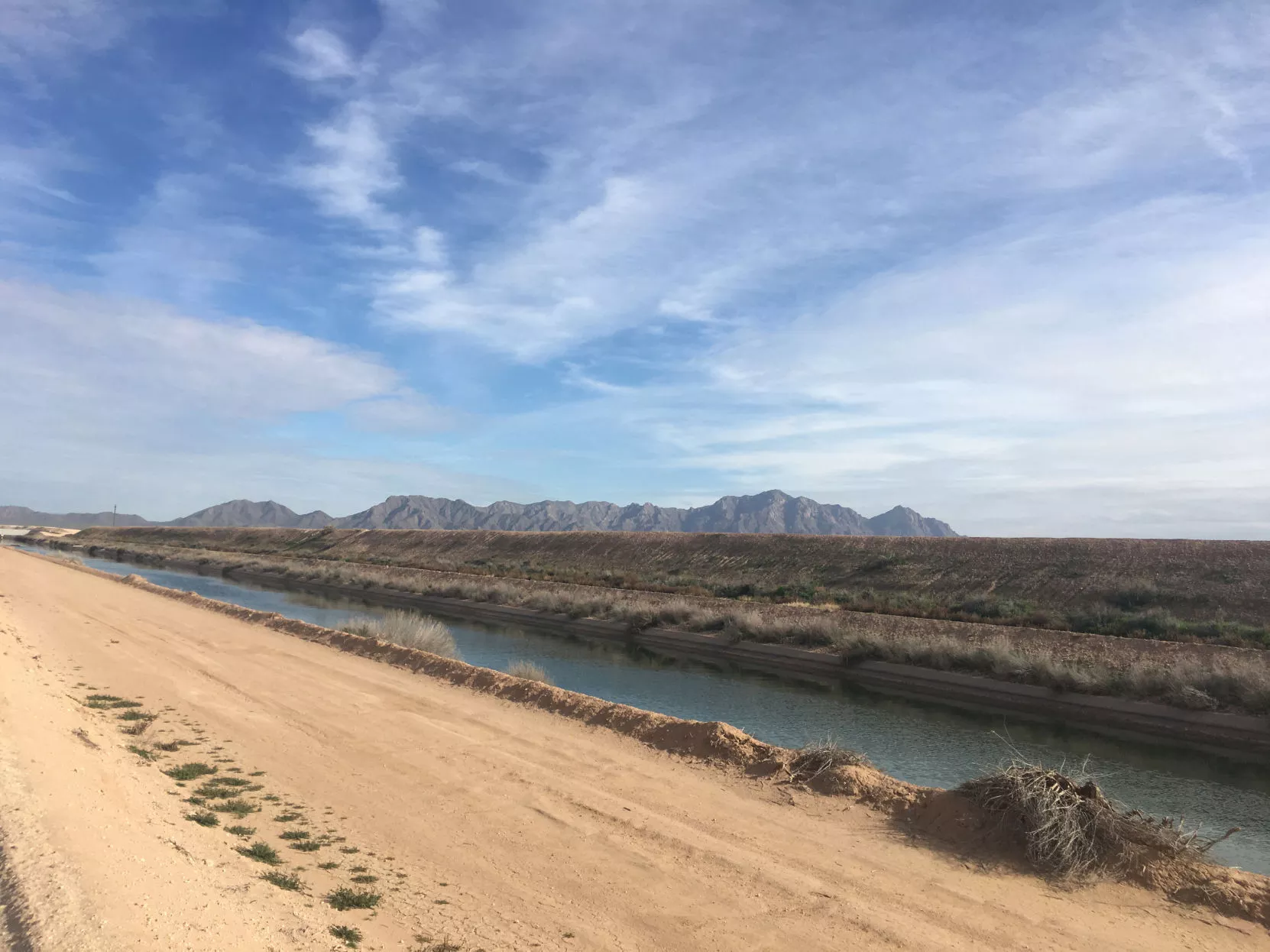
Arizona lawmakers beat a midnight deadline set by the federal government by just a few hours Thursday, agreeing on a plan to balance drought and water supplies in the Colorado River Basin.
The goal is to keep water levels in Lake Mead from plummeting so low there wouldn’t be enough water for the millions of people throughout the Southwest depending on it. For Arizona, that could mean losing about a seventh of the state’s annual water allotment to the Central Arizona Project, which provides much of the state’s water.
Although Arizona has signed off on the drought contingency plan, California’s Imperial Irrigation District may delay the basin-wide deal. According to the Desert Sun, the district wants $200 million to restore the Salton Sea.
Water managers expect Mead’s levels to drop low enough that by May of this year, there would be a shortage declaration and reduced water allocations. The plan Arizona approved will mitigate those cuts.
Arizona was the last of the three Lower Basin states to approve a Drought Contingency Plan, and it’s the only state that required legislative action to put the plan in place. If Arizona had missed the midnight deadline, the federal Bureau of Reclamation, which manages water and power in the west, said it would impose its own drought plan on the entire Colorado River Basin.
The plan is a stop gap approach to manage water shortages, and will be in place until 2026. Colorado, New Mexico, Utah and Wyoming, which make up the Upper Basin, signed their drought contingency plan in December.
“Lake Mead is essentially overallocated,” said Sarah Porter, who directs the Kyl Center for Water Policy at Arizona State University. “There is more water going out of Lake Mead than coming in.”
What the drought plan would do
According to Porter, part of the plan sets a schedule of voluntary cuts that users agree to take to keep lake levels sustainable. The plan also designates rules on when users can take water out of the reservoir.
The plan, which had bipartisan support, aims to keep lake levels high enough to try and avoid a catastrophic shortage in Arizona.
“Arizona has a really hard task because we would take the largest cuts of any of the users, and we need to have our legislature approve singing on to DCP,” Porter said.
What’s behind the plan?
The 19-year drought has forced Southwestern states to orchestrate a plan for more sustainable water usage from the Colorado River.
If the lake levels dip too low, Arizona consumers could also see higher water rates.
This isn’t the first time Arizona has experienced hard policy reform to ensure there’s a water supply.
The lower basin agreed to a plan similar to the DCP in 2007, though the cuts weren’t nearly as dramatic as those Arizona faces now.
“We’re looking at significant decreases in Colorado River deliveries,” Porter said.
The Bureau of Reclamation will declare an official shortage and water cutoffs if Lake Mead’s water level drops below 1,075 feet above sea level. That hasn’t happened yet, but water managers predict it could occur as early as May. At 1,050 feet, stricter cutoffs would be imposed.
Who will feel the most pain?
Arizona has sealed a bittersweet arrangement that addresses how water users would share the pain of a water shortage, Porter said.
Pinal County farmers will be among the first users to take a cut if there’s a drought declaration.
“Long term, those Pinal County farmers are looking at needing to have other supplies of water,” Porter said. “The DCP has included provision for those farmers to be able to develop or redevelop infrastructure to pump groundwater out and they can use groundwater for their operations.”
Brian Rhodes, who farms 15,000 acres of land near Eloy, believes that will be devastating for the agriculture industry.
“Without some type of mitigation proposal, the alternative is Pinal County farmland no longer becomes viable for a large percentage,” Rhodes said. “That is detrimental for not only the farmers like myself, but you’ve got so many industries that are being supported by the farming operation.”
Pinal County ranks in the top 2 percent nationwide in the total value of agricultural sales, according to a study from the University of Arizona’s Agriculture and Resource Economy.
Rhodes said regardless of the Legislature’s decision Thursday, agriculture still will be forced to increase sustainability efforts.
“Even under the mitigation and other proposals that are on the table, we’re still looking at a lot less available water going forward,” Rhodes said. “The drought is something that’s out of anyone’s control. We’re going to all have to adjust to a new frontier as far as water availability and from what we’ve been used to.”
The plan provides farmers with more water than they would receive if lawmakers can’t come to a decision, said Dave Roberts, chief water resources executive for Salt River Project.
“I wouldn’t say they’re in good shape, but they’ll be better off than they would have been,” he said.
The benefit is that the plan will ultimately provide certainty and help protect groundwater in the Southwest, Porter said.
Cronkite News reporter Lillian Donahue contributed to this story.
This story is part of Elemental: Covering Sustainability, a new multimedia collaboration between Cronkite News, Arizona PBS, KJZZ, KPCC, Rocky Mountain PBS and PBS SoCal.
For more stories from Cronkite News, visit cronkitenews.azpbs.org.
Tags: drought contingency plan , water , Arizona , lawmakers , Image
Thursday, January 31, 2019

Will Arizona be among the [un]lucky five states to be part of the new Koch Network education initiative? The states have yet to be named, but I suspect Arizona is on the radar, given the Koch Network and Governor Ducey's mutual admiration society. We know KN loves Ducey's vociferous support of vouchers, and Ducey loves KN's money in equal measure.
The Koch Network announced its decision to put money into education — until recently, it has deferred to other right wing, privatization/"education reform" groups — during its latest summit at Indian Wells, California (about 5 hours down the road from here), where all it takes to get in the door is a commitment to pledge at least $100,000 to the cause.
The announcement came a day after one of the Koch folks' rare kumbaya moments, a celebration of the bipartisan support for the First Step Act, signed into law by President Trump in December to reform the criminal justice system. Friend-of-Obama Van Jones was on board, and he praised the Koch Network's support of the legislation. So was First Son-in-law Jared Kushner (whose interest in the subject was probably spurred by his father's stay in prison [put there by Chris Christie, but that's a whole 'nuther story]).
Don't make the mistake of thinking this is a signal KN is planning to make nice with progressives in the future. Lower incarceration rates, along with fewer laws restricting drug use, have long been part of the libertarian platform. On a number of social issues, libertarians' "less regulation, more freedom" agenda coincides with the progressive viewpoint.
However, the Koch Network is trying to sell its new education initiative as another attempt to join hands with people on the other side of the aisle. Some of its spokespeople went out of their way to praise teachers, who they usually lump together with evil unions and failing schools. The elevator pitch for their new initiative sounds kinda not bad, until you get into the details.
Tags: Koch network. Education initiative. Arizona. Doug Ducey , Image
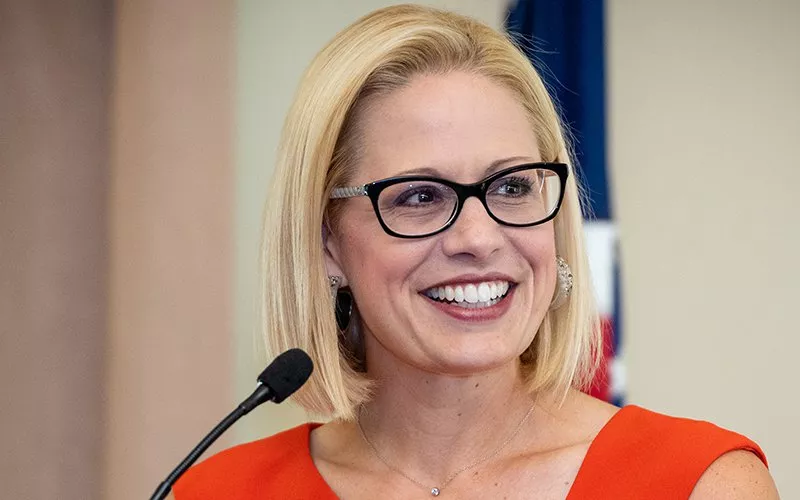
This week U.S. Senator Kyrsten Sinema, along with Sen. Marco Rubio (R-Florida) and Sen. Thom Tillis (R-North Carolina) introduced the Threat Assessment, Prevention, and Safety Act of 2019 (S. 265).
The bill intends to streamline law enforcement efforts on local, state and national levels to better prevent violent acts of mass casualties.
Through the implementation of a Joint Behavioral Threat Assessment and Management Task Force (comprised of federal threat assessment experts, state and local law enforcement officials and mental health service professionals) a national strategy would be created to “prevent targeted violence through threat assessment and management, and evidence-based processes to identify individuals that exhibit patterns of dangerous behavior that may precede an act of targeted violence,” according to a press release.
Since perpetrators of these crimes can act anywhere at any time, the task force is supposed to help state and local law enforcement agencies access the same resources for combating these threats as the FBI and Secret Service.
The task force would be able to make recommendations on how to implement protocols for local law enforcement agencies to effectively preempt dangerous attacks. The bill requires these recommendations to reflect the different needs and resources of communities across the country, in order to prevent the enforcement of a national standard.
These recommendations would be funded through grants awarded by the Department of Homeland Security. Grant money would also be available to community stakeholders such as local governments, tribal organizations, educational institutions and nongovernmental organizations who create “community-based behavioral threat assessment and management units.”
The bill specifically requires recommendations for a Behavioral Threat Assessment and Management School Violence Prevention Program for educational institutions across the country.
A one-page briefing of the bill created by the office of Sen. Rubio states: “We have the expertise to combat the targeted violence plaguing our schools, places of worship, and public spaces, but we have yet to fully implement it to prevent attacks.”
“We must provide law enforcement with the tools they need to keep Arizona families safe and secure,” Sen. Sinema said in a press release. “I will work every day to protect Arizonans from senseless, tragic acts of violence.”
U.S. Representatives Brian Babin (R-Texas) and Val Demings (D-Florida) introduced a companion bill in the House.
Tags: Safety , Violence , Prevention , Threat , Sinema , Rubio , Tillis , Congress , House of Representatives , 116 , Bill , Legislation , Image
Tuesday, January 29, 2019
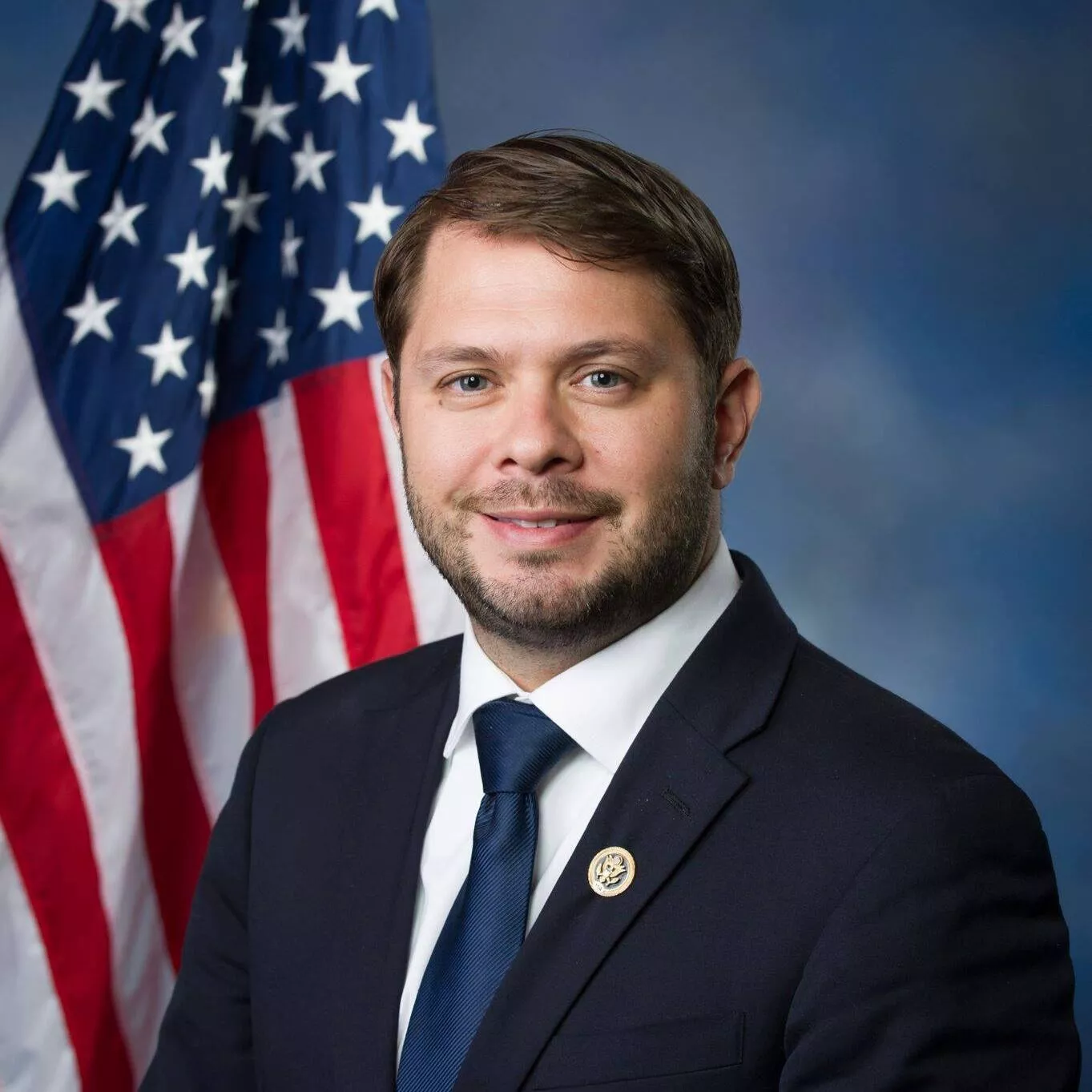
Rep. Gallego said more than 20 million Americans have healthcare because of the Affordable Care Act, while Republicans have “waged a war” against it. He said Democrats need to fight back in order to keep coverage for those who need it most.
“Americans shouldn’t have to choose between paying for healthcare and buying groceries,” he said.
A push for Medicaid expansion and financial assistance for families who need extra help keeping their loved ones healthy is a top priority of the representative from Phoenix, who has held his seat in Congress since 2015.
Held shared a personal story of how access to affordable health care changed her life permanently. She was unexpectedly diagnosed with a tumor in her pituitary gland. Before that time, she had no insurance policy so it took eight years for her diagnosis to happen.
Because of that delay and lack of access to care, Held is now permanently disabled by the condition, which comes with ongoing prescriptions for expensive pharmaceutical drugs just to keep her alive.
Her brain surgery costed $50,000, a price that was paid by her parents through their life savings fund.
“A lot of people were not as lucky as I am to have that family support and financial resources at their disposal,” Held said.
Because of the major sacrifices and life-long effects caused by her condition, Held has become an advocate for affordable healthcare for all, including those with pre-existing conditions, and lowering the costs of prescription drugs.
“I’ve worked my entire life, I have a masters in social work, my family is living on the edge of poverty because of the cost of medical care and the cost of keeping me alive,” she said.
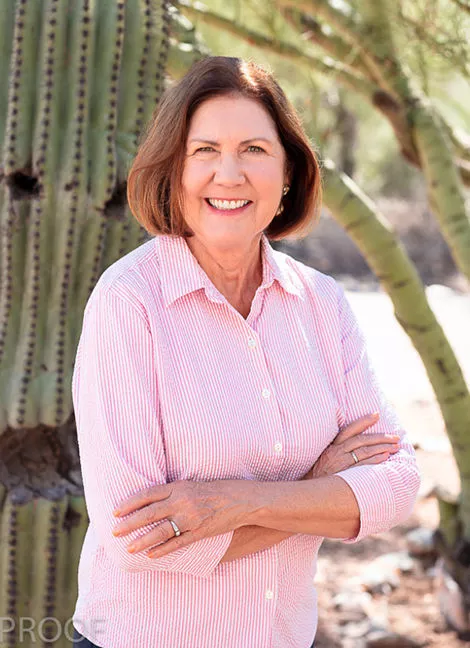
Rep. Ann Kirkpatrick, who has represented Arizona in several state and federal elected offices, said affordable healthcare is so important because you can never expect these financial burdens before they arrive.
“I’m dedicated to keeping people on their health insurance,” she said. “In Arizona we expanded Medicaid which provided almost 400,000 Arizonans with coverage and a 37 percent drop in the uninsured rate.”
Kirkpatrick, who indicated that she is a supporter of Medicare for All, listed the following things she’d like to see changed in either the ACA or national politics regarding healthcare:
- An end to the “war on people with pre existing conditions” and laws passed to make that permanent
- Lower costs for prescription drugs, and pharmaceutical companies held accountable by Congress
- An end to the Republican “sabotage” on health care
- Oversight conducted on the Trump administration’s actions
Tags: Medicare , Medicaid , ACA , Affordable Care Act , Ann Kirkpatrick , Ruben Gallego , CD-2 , CD-7 , Healthcare , Congress , Image
Sunday, January 27, 2019

TUSD is losing 6,000 students a year? Not even close. But that's what a front page article in the Star on Sunday, Jan. 20 suggested, putting it in the running for the worst misuse of numbers in a story about TUSD I've read in the paper, ever. And let me tell you, there's been some stiff competition over the years.
The 6,000 figure is in an article about the district's declining enrollment. Where does the number come from? That's not clear in the beginning of the article, and its origins become murkier as the story continues. Whatever the source, it's six times the actual decline.
Appearing to inflate TUSD's enrollment losses six fold is a big deal, especially when the story is splashed across the front page of the Sunday Star where it's the first thing the reader sees.
The opening paragraphs of the article contain three numbers related to TUSD's declining enrollment:
"This school year alone, around 2,200 students have left the Tucson Unified School District."Those are the only enrollment numbers in the article. They appear to be saying that the district is losing an average of 6,000 students a year. That's how I first read the article over my Sunday morning coffee, and I'm sure most readers took away a similar impression. That number, a 6,000 student decline, is jaw dropping. TUSD's numbers aren't just decreasing, the story implies. The district is hemorrhaging students.
"This accounts for less than half of the 5,100 students TUSD lost to in-state transfers last school year."
"The district lost around 6,100 students on average every year during the four years prior."
But if you know anything about TUSD's enrollment figures, you know the 6,000-a-year figure is impossible, ridiculous. If the district lost 6,000 students for each of the past four years as the story states, that would mean a 24,000 student loss. Four years ago, the district had just under 50,000 students. Take 24,000 from 50,000, and you would have 26,000 students left. In fact, this year the district has in the neighborhood of 47,500 students.
I have tracked TUSD's attendance numbers starting with the 2000-2001 school year. The largest year-to-year drop was 2,200 students in 2011. The district lost an average of 900 students a year since 2000, less than a sixth of the size of the loss the article appears to report.
Tags: Tucson Unified School District. Enrollment. The Arizona Daily Star.Superintendent Gabriel Trujillo , Image
Friday, January 25, 2019

Purdue Pharma Inc., The Purdue Frederick Company, Cephalon, Inc., Teva Pharmaceutical Industries, Ltd., Teva Pharmaceuticals USA, Inc., Johnson & Johnson, Janssen Pharmaceuticals, Inc., Endo Health Solutions Inc., Allergan PLC, Watson Laboratories, Inc., Actavis Pharma, Mallinckrodt, LLC, Insys Therapeutics, Inc., Mckesson Corporation, Cardinal Health, Inc., Amerisourcebergen Drug Corporation, H.D. Smith, LLC, Anda Pharmaceuticals, Inc. and related companies were listed as defendants in the lawsuits.
In a 94-page complaint filed on Thursday, Jan. 17, attorneys argued that the manufacturer defendants knowingly and aggressively promoted misleading advertisements about specific drugs they produced as well as opioids in general.
The document explains:
"Each Manufacturer Defendant used both direct marketing and unbranded advertising disseminated by seemingly independent third parties to spread false and deceptive statements about the risks and benefits of long-term opioid use—statements that benefited not only themselves and the third-parties who gained legitimacy, but all opioid manufacturers. Yet these statements were not only unsupported by and contrary to the scientific evidence, they were also contrary to pronouncements by and guidance from the FDA and CDC based on that evidence. They also targeted susceptible prescribers and vulnerable patient populations."It claims the defendants spent more than $14 million on medical journal advertising in 2011, which is nearly triple their amount spent in 2001. The lawsuit also claims each manufacturer defendant "promoted the use of opioids for chronic pain through 'detailers'—sales representatives who visited individual doctors and medical staff in their offices—and small-group speaker programs."
The lawsuit claims the manufacturer defendants marketed through "third-party, unbranded advertising to avoid regulatory scrutiny because that advertising is not submitted to and typically is not reviewed by the FDA."
The lawsuit listed the most prominent of these groups as APF, which received more than $10 million in funding from opioid manufacturers from 2007 until it ceased operations in May 2012.
"APF issued education guides for patients, reporters, and policymakers that touted the benefits of opioids for chronic pain and trivialized their risks, particularly the risk of addiction. APF also launched a campaign to promote opioids for military veterans, which has contributed to high rates of addiction and other adverse outcomes – including death – among that target population. APF also engaged in a significant multimedia campaign – through radio, television and the Internet – to educate patients about their 'right' to pain treatment, namely opioids."The complaint explained a long history of the distributor defendants coming under scrutiny from the DEA because of their practices. On September 27, 2006, the DEA sent a letter to each distributor defendant warning that they have a "legal duty to design and operate a system to flag suspicious orders, to report all such suspicious orders, and to exercise due diligence to avoid filling suspicious orders that might be diverted into other than legitimate medical, scientific, and industrial channels," according to the document. On December 27, 2007, the DEA sent a second letter reiterating their point.
The attorneys argue that the distributor defendants intentionally and repeatedly breached their legal duties to monitor and report suspicious orders of opioids in the interest of financial gain. Their histories with distribution negligence were described in the complaint:
"In 2008, McKesson paid a $13.25 million fine to the United States to settle claims it failed to report hundreds of suspicious orders from Internet pharmacies that sold drugs online to customers who didn't have legal prescriptions.Attorneys claim that many of the opioid shipments to Tucson should have been stopped or reported as potential suspicious orders.
In 2008, Cardinal Health paid a $34 million fine to the United States to resolve allegations that it failed to monitor or report suspicious opioid orders.
In 2016, Cardinal Health agreed to pay a $44 million fine to the United States to resolve allegations that it failed to monitor or report suspicious opioid orders.
In 2017, Cardinal Health agreed to pay $20 million to the State of West Virginia to resolve allegations that it failed to monitor or report suspicious opioid orders."
The complaint explains there were 526 opioid deaths in Arizona in 2013, a number that increased by at least 100 deaths each year from 2014 to 2017. On June 5, 2017, Governor Doug Ducey declared a State of Emergency because of the opioid epidemic. From June 15, 2017 to September 13, 2018, there were 1,699 opioid overdoses reported in Pima County.
The complaints include the following counts against the manufacturer defendants: violation of the Arizona’s Consumer Protection Act, fraudulent misrepresentation, negligent misrepresentation and strict liability. Counts against all defendants included public nuisance and unjust enrichment.
The City of Tucson and Pima County are represented by the law firms of former Arizona Attorney General Grant Woods, former Mississippi Attorney General Mike Moore, the law offices of Joseph C. Tann and the Tucson-based law firm Rusing Lopez & Lizardi, according to the press release.
Tags: Opioid , Drug , Enforcement , Addiction , Epidemic , Overdose , Legal , Lawsuit , City of Tucson , Pima County , Image
Thursday, January 24, 2019
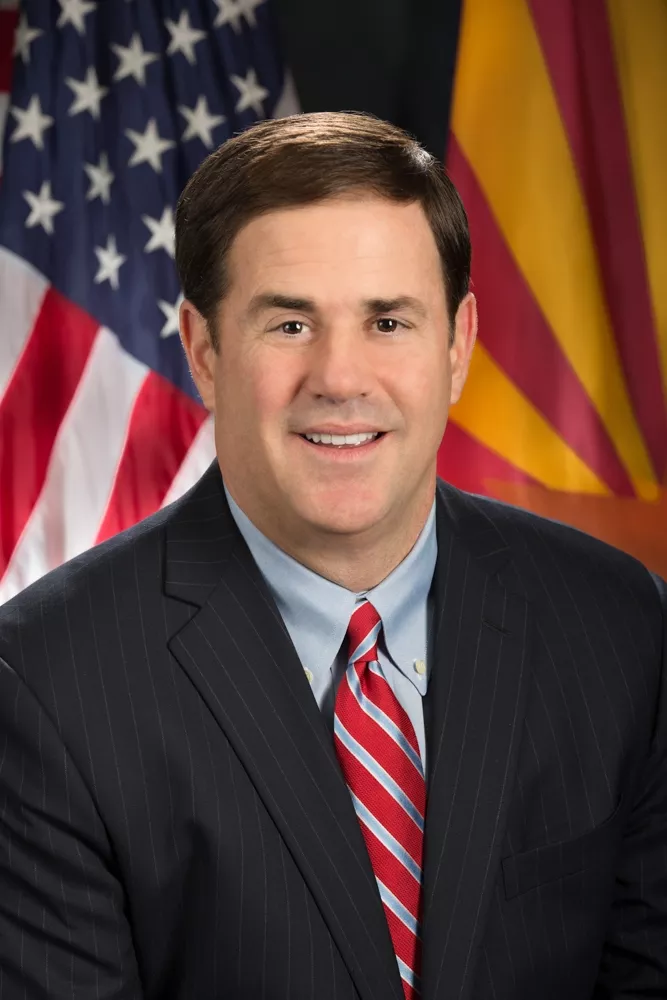
Last Friday the office of Governor Doug Ducey released their proposal for the 2019-2020 fiscal year budget. It includes a sharp increase in spending due to an expected $1.1 billion surplus in revenues this year.
“Over the last four years, Arizona has gone from a $1 billion deficit to a $1 billion surplus, but we aren’t going on a spending spree," Gov. Ducey said in a press release. "We are going to live within our means and prepare for the future, and this budget does that.”
The governor wants to put $542 million, about half of the surplus, into the state's Budget Stabilization Fund, also known as the "rainy day fund." This would make the largest amount of money in the fund in state history.
In his State of the State address earlier this month, Gov. Ducey stressed the importance of water conservation as the state battles a 19-year drought. His budget includes $30 million for protecting the falling water levels in Lake Mead and another $5 million for infrastructure projects to help agriculture companies become more water-efficient.
About $165 million could go towards teacher pay raises in the state's K-12 education system, which promises to fulfill the 20x2020 plan that Gov. Ducey proposed during the tense Red for Ed state-wide teacher walkout last year. This item has been criticized by those in the education field because it doesn't provide any raises for school support staff such as bus drivers, cafeteria workers and others.
However, $9.3 million is offered to provide funding for 89 new school resource officers. Another $12 million over the next two years would go to hiring approximately 224 new school counselors and social workers.
For higher education, the budget plan includes $21 million for expansion of the Arizona Teachers Academy at Arizona State University, the University of Arizona and Northern Arizona University in hopes of combatting Arizona’s teacher shortage.
$20 million is pledged to Pima Community College's aviation program, and another $5.8 million for Maricopa County Community College District's health care program expansion. This is a notable change from four years ago when the state government cut all funding to Arizona's two largest community college districts. A story on this development will be published next week.
The governor's office cited a need for investment in technical training, in order to boost Arizona's skilled workforce. An additional $10 million would go toward supporting various Career and Technical Education programs across the state.
There could also be $130 million in state funds invested over the next two years to widen and improve Interstate 17 just north of Phoenix, which experiences frequent traffic congestion.
The governor's budget also includes pay raises for the following sectors: $21.5 million for a 10 percent increase in Department of Public Safety Trooper salaries, $35.5 million for a 5-15 percent increase in Department of Correction worker salaries and $9 million for a 9 percent increase in Department of Child Safety caseworker salaries.
The governor has also indicated that he hopes to invest $56 million in federal state aid for an increase in child care subsidies to low-income families. Last legislative session lawmakers chose not to use the no-strings-attached Child Care Development Block Grant funds, citing concerns over how the Department of Economic Security would use it. This drew sharp criticisms from child care professionals and advocates because of the high demand and low affordability of quality child care across the state.
The proposed budget has an ending cash balance of $109 million. Nothing in Gov. Ducey's plan is set in stone until the legislature reviews and edits it later this year, but this gives a picture of where the governor's priorities are. To view all the line items of the proposal, view the full budget here.
Tags: Budget , Governor , Doug Ducey , 2019 , 2020 , Spending , Rainy Day Fund , Education , CTE , Water , Conservation , Image
Tuesday, January 22, 2019

Saturday, a group of high school students appeared to be taunting and harassing a Native American near the Lincoln Memorial in Washington D.C. It looks pretty bad, but in this case, it may not be as bad as it looks at first glance.
In a video taken after the Indigenous People’s March in D.C., a Native American man is seen chanting and drumming. Male high school students, some wearing MAGA hats, most of whom are Kentucky students attending the anti-abortion event March for Life, are gathered around him. Some students are making tomahawk chops in the air, and others are clapping in rhythm to the drum beat and jumping up and down. One student is standing directly in front of the Native American man with a smile that looks both derisive and intimidating.
However, as more video surfaced, the nature of the incident itself and the intentions of the students became less clear. It could have been an act of vile racist bullying on the part of the students, but it also could have more to do with boisterous adolescents acting up while acting out Native American stereotypes. That would make their actions on a par with the adults at Atlanta Braves games chanting and chopping in the stands, making the students' actions less about bullying and more a display of their ignorance encouraged by a society which fails to teach them respect for cultures different from their own. (Here's a thoughtful, careful analysis of the events where the writer neither condemns nor excuses the students' actions.)
But there is no gray area in another incident which took place last week. During a high school basketball game, front row fans from a predominantly white Minnesota school displayed a large Trump 2020 banner while their team was playing a predominantly black school. Their racist intent was unmistakable. For these students, the Trump banner was the new Confederate flag.
And during two other high school games, one during the 2016 campaign and another during 2017, students from predominantly white schools shouted "Build the Wall!" at their predominantly Latino opponents. Their use of Trump's racist slogan was a deliberate attempt to bully and intimidate the other schools' Latino students.
But examples are only examples. They don't necessarily indicate a trend. The question remains, has race-based bullying increased among high school students who are Trump supporters? A few studies make it look like that is the case.
Tags: Bullying , Students , Trump , Racism , children , Trump effect , schools , education , Image
Monday, January 21, 2019
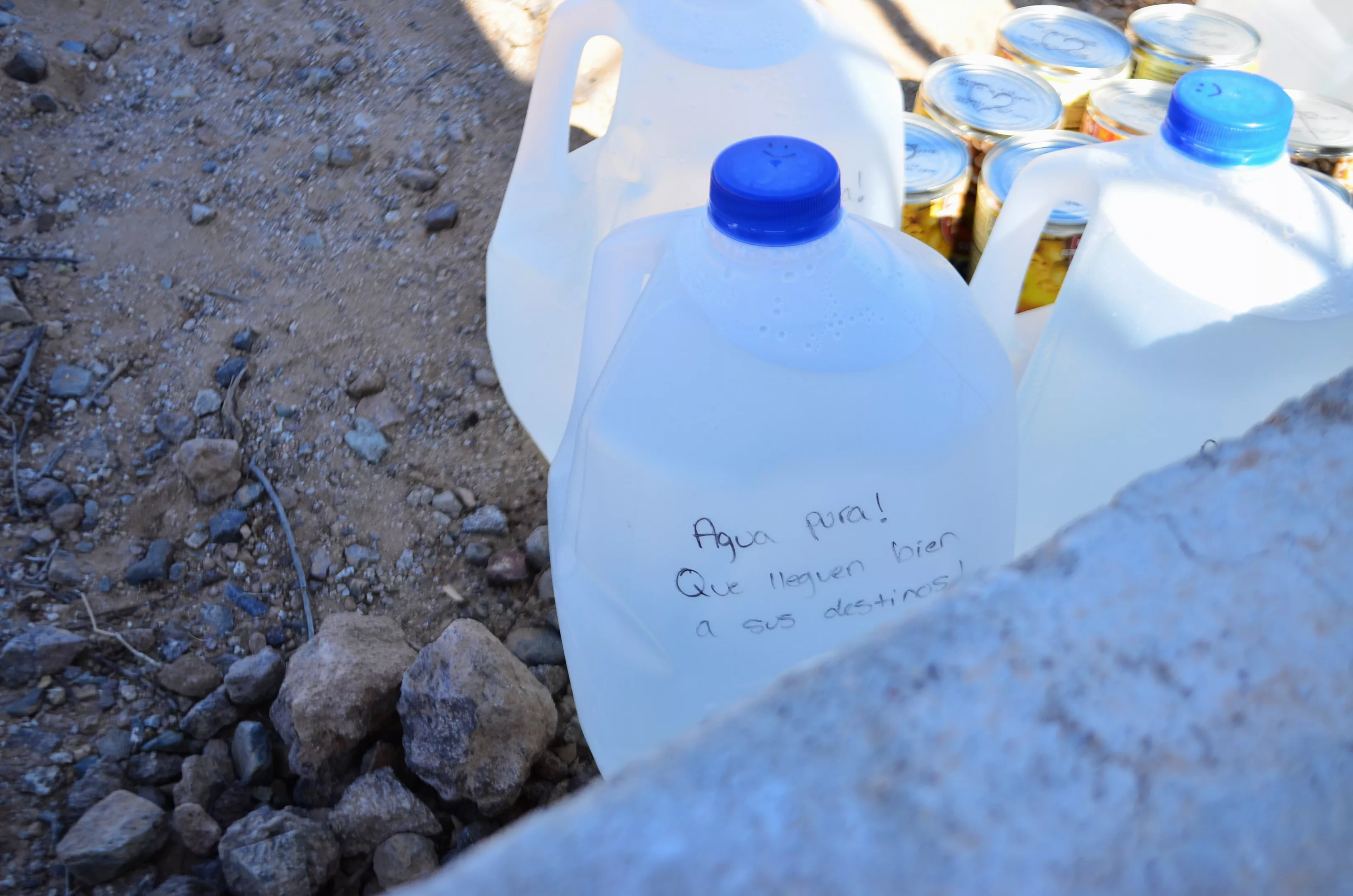
Four humanitarian aid workers were found guilty Friday on misdemeanor charges involving leaving aid in a restricted area of Cabeza Prieta National Wildlife Refuge after a three-day legal battle.
U.S. Magistrate Judge Bernardo Velasco found No More Deaths volunteer Natalie Hoffman guilty of all three charges brought against her, while Oona Holcomb, Madeline Huse and Zaachila Orozco-McCormick were found guilty of the two charges brought against them.
As the defendants await sentencing, they face a maximum penalty of six months in prison and a $250 fine each.
The legal battle the four volunteers fought this week surrounds an incident on Aug. 13, 2017 when they entered Cabeza Prieta without permits.
Hoffman, who drove the vehicle into the wildlife refuge, is charged with operating a vehicle in a wilderness area. All four of the volunteers are charged with entering the refuge without a permit and abandonment of property for the gallons of water and pallets of beans they left in the refuge.
No More Deaths has been leaving aid for crossing migrants along the U.S.-Mexico border for more than a decade. The group specifically leaves the supplies in Cabeza Prieta, which shares 56 miles of the border with Mexico.
In his verdict, Judge Velasco chastised No More Deaths for not properly warning the defendants of the legal repercussions they could face upon entering the refuge.
“No one in charge of No More Deaths ever informed them that their conduct could be prosecuted as a criminal offense nor did any of the Defendants make any independent inquiry into the legality or consequences of their activities,” Velasco wrote in his ruling.
In a press release Friday, No More Deaths stressed the significance of the verdict.
“This verdict challenges not only No More Deaths volunteers, but people of conscience throughout the country,” No More Deaths volunteer Catherine Gaffney said. “If giving water to someone dying of thirst is illegal, what humanity is left in the law of this country?”
Tensions with legal authorities are nothing new for the group, but the last time a humanitarian aid volunteer along the border was found guilty was a decade ago.
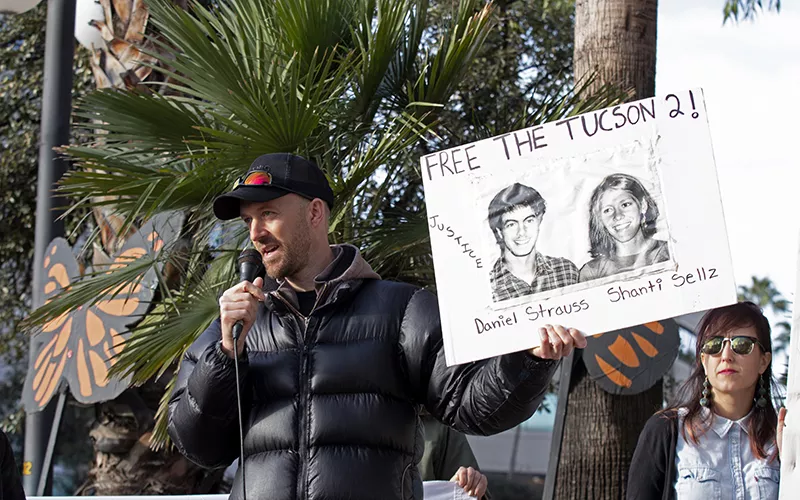
Four more No More Deaths volunteers are scheduled to begin their trials on February 26.
Caitlin Deighan is charged with driving in a wilderness area. Deighan, Zoe Anderson, Logan Hollarsmith and Rebecca Grossman-Richeimer face charges of entering a national wildlife refuge without a permit.
Scott Warren, another volunteer with No More Deaths, is awaiting trial for charges involving harboring undocumented immigrants, which is considered a felony.
During events held in support of the four volunteers’ legal defense last week, No More Deaths volunteer Justine Orlovsky-Schnitzler spoke to the possibility that they are found guilty.
“It’s not over until it’s gone all the way up, you can continue to appeal, and people are certainly prepared for that,” Orlovsky-Schnitzler said.
Tags: news , politics , No More Deaths , No Mas Muertes , Tucson , desert , water , court , U.S. Magistrate Judge Bernardo Velasco , guilty verdict , Natalie Hoffman , Oona Holcomb , Madeline Huse , Zaachila Orozco-McCormick , Image

