
Tuesday, July 3, 2018
Back when I was a younger man and a big Kurt Vonnegut fan, his novel Sirens of Titan was required reading. (Everything of his was required reading.) The book's main character wrote down a list of things he wanted to be sure to remember. I only recall one item: "If the questions don't make sense, neither will the answers." The statement hit me like a lightning bolt. It explained why, when I tried to answer some questions, I found myself tied up in knots. If a question was based on false assumptions and I answered it directly, I had to wrap my answer around the bad assumptions. Vonnegut's insight helped me realize that a direct response to a ridiculous question has to begin with, "Your question doesn't make sense."
I wrote Vonnegut's words down immediately. Decades later, they're among the 30 Stickies residing on my Mac desktop.
Now I'm adapting Vonnegut's statement to high stakes test results, which, since No Child Left Behind became the law of the land 16 years ago, have been the way we've answered the question, "Which schools are succeeding and which are failing?" The "answer" assumes the test results are a reliable way of determining school effectiveness. That's nonsense. Which leads me to the conclusion, if the high stakes tests don't make sense, neither will the results.
TUSD has decided to get rid of the AzMERIT tests at the high school level and replace them with a single ACT test given to 11th graders. I'm all for the change, for a few reasons. (1) It disrupts the A-F state grading system for schools. How do you compare the scores of high school students taking ACT, SAT and AzMERIT tests? It's apples and oranges, or maybe Granny Smith and Red Delicious apples. (2) It takes the "standard" out of "standardized testing," which weakens the whole high stakes testing movement. (3) As an unintended bonus, it takes a baby step toward democratizing the college admissions process.
Let's review what's wrong with AzMERIT and other high stakes standardized tests.
Tags: AzMERIT , High stakes testing , ACT , SAT , Image
Friday, June 29, 2018
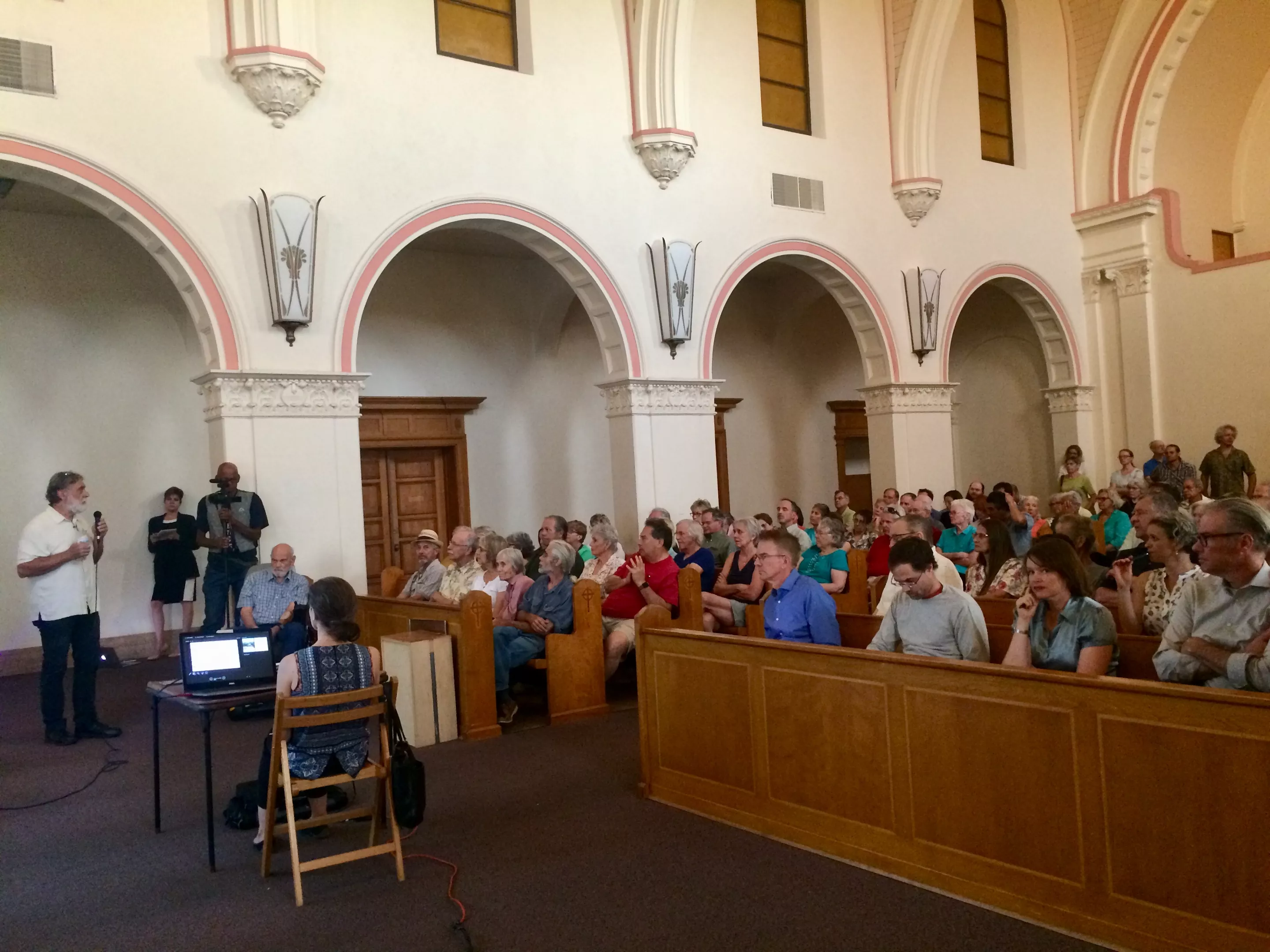
The latest proposal for development around the Benedictine Monastery didn’t receive much support from the 100 or so neighbors who attended a public meeting at the historic chapel on June 28.
Architect Corky Poster with Poster Frost Mirto, a local design firm that emphasizes preservation and sustainability, framed the proposal as being their last effort at compromise before the property and monastery itself is turned into student housing, allowed under the current zoning.
“Plan B is our firm is no longer involved with the project and it proceeds under current zoning,” Poster said.
The current zoning allows for 40 feet (four stories) of high-density residential, which could be used for student housing. The zoning also allows for a maximum 222 living units, given there is ample parking and setbacks from the road.
Tags: Benedictine Monastery , Neighbors for Reasonable Monastery Development , Ross Rulney , Poster Frost Mirto , Image
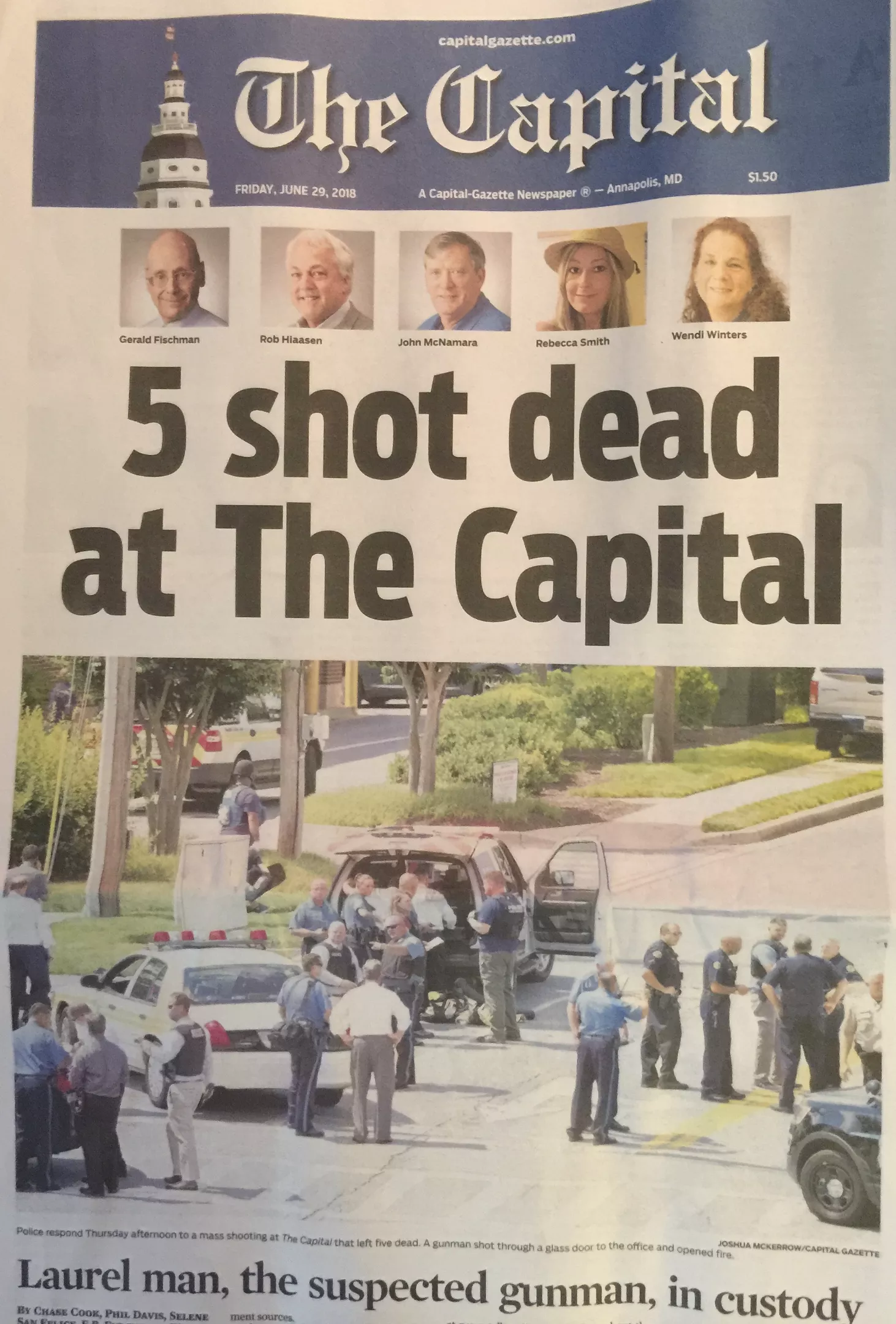
A man with an apparent grievance and loads of ammunition ambushed my former newsroom on Thursday, June 28.
The 38-year-old gunman shot through, then entered the glass-encased front door of the newsroom I once called home, gunning down anyone daring to escape out the back.
The gunman was a well-known figure in the Annapolis Capital newsroom, airing incomprehensible grievances against the paper’s staff, dating back to when I interned there in the summer of 2013.
His murderous intentions became crystalized on a muggy Maryland afternoon, when he indiscriminately slaughtered five of the men and women I once called colleagues.
The assassination was more than an egregious attempt to silence a deranged man’s perceived enemies. It was an attack on the very principles that my industry is founded upon.
It was an attack on the airing of truths, like the 2011 column the Capital wrote about the gunman after he allegedly stalked and threatened a woman online.
It was an attack on a brotherhood of underpaid, overworked servants of truth—who still managed to turn out a damn fine paper after a fourth of its staff were slain.
Five years ago, I sat down with longtime reporter and editor John McNamara in the paper’s dingy old newsroom. McNamara, who was my go-to source for contact info and bits of color for the sports stories I filed that summer, was slain alongside colleagues Robert Hiaasen, Gerald Fischman, Rebecca Smith and Wendi Winters.
This quintet of talented people did nothing wrong. That day they gathered their materials, got in their cars and drove to their nondescript multistory office complex across the street from the Annapolis Mall.
They were fathers, sons, daughters, brothers and sisters to many, and are the latest in an all-too-long list of Americans that found themselves on the wrong end of a loaded barrel.
Tags: news , Capital , newsroom , shooting , journalism , Image
Thursday, June 28, 2018
AP — Advanced Placement — is the first name that comes to most people's minds when they think about college credit courses in high school. But the courses may not be a good as their sales pitch. The fact is, lots of colleges don't give wholesale credit to students who pass their AP exams. And the way teachers are forced to present the material can be constraining. Those are reasons some top flight private schools are dropping their AP classes. Meanwhile, a major battle is raging over AP's decision to begin its world history course in 1450 AD — meaning the "world" would pretty much be boiled down to Europe and the U.S. along with a host of minor players.
The folks who create U.S. News & World Report's high school rankings may think the best, in fact the only way to judge school quality is by counting the number of AP, or IB (International Baccalaureate), courses students take and how well they do on the final tests. But others have their doubts.
Advanced Placement courses are created by the nonprofit College Board, which is also responsible for SAT exams. College Board designs the courses, but more importantly, it sends out the end-of-the-year tests which determine whether students earn college credit. That puts pressure on high school AP teachers to stick closely to the set curriculum and make sure to cover all the topics and minutiae which are likely to crop up on the test. AP teachers are in an academic straitjacket, and students are forced to put too much emphasis on memorizing facts and figures, often at the expense of a more conceptual grasp of the material.
A sidelight: The high school where I taught made the decision not to use AP or IB courses. We contracted with local colleges and universities to grant college credit through their institutions. The teachers had control over the curriculum and made the decisions about who deserved college credit for the courses. I never heard a college complain about lack of preparation of our graduates, nor did I hear graduates say the coursework wasn't college level. The lack of AP courses on student transcripts didn't stop them from getting into some of the country's top colleges and universities.
Tags: Advanced Placement , College Board , International Baccalaureate , SAT exam , Image
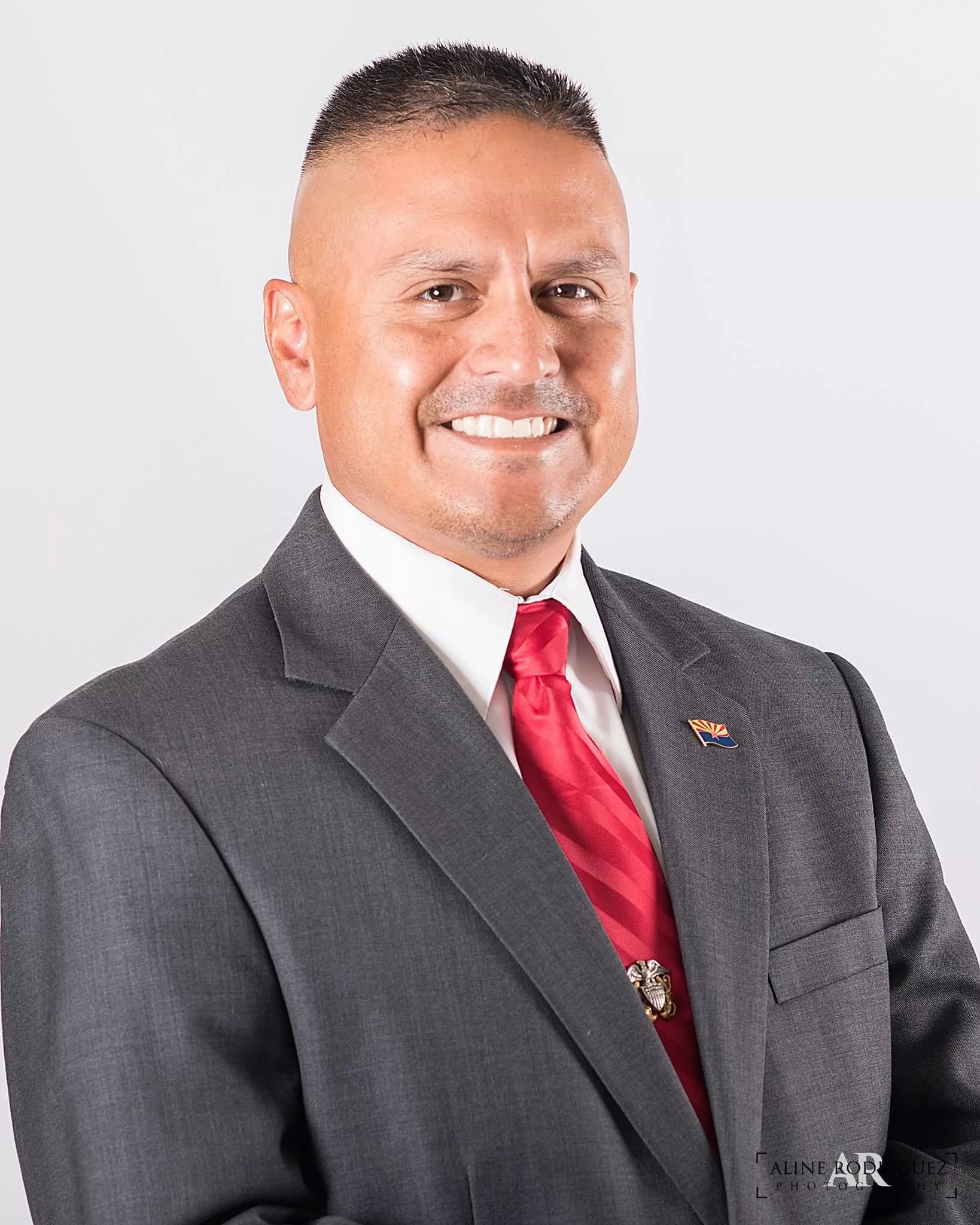
Danny “DJ” Morales considers voters in Congressional District 2 to be his family. Given that the district spans more than 7,800 square miles, two counties and more than 390,000 registered voters, it’s safe to say that’s a big family to take care of.
Morales was born and raised in Douglas until the age of 12, and after attending middle and high school in Massachusetts, he returned to his hometown to start serving the community.
He graduated from the University of Arizona with a degree in biochemistry. Then he joined the Navy in Tucson in 1998 and served 12 years in active duty. After that, he won a 2016 campaign for Douglas City Council in Ward 1. In August of that same year, Morales was appointed to Vice Mayor. He’s the only Republican running for the Congressional District 2 seat with any experience as an elected official.
Morales said his ward includes the southern-most portion of Douglas. This area includes the US/Mexico border, which is a quick three blocks away from his house. He also lives just five blocks away from the Port of Entry.
Tags: Danny DJ Morales , CD-2 , republican , GOP , congress , Douglas , immigration , AZ02 , Arizona congressional district 2 , arizona news , az politics 2018 , Tucson news , Image

But don’t panic yet. Industry insiders and professionals seem to have arrived at the consensus that the court made such a heinous decision that the Arizona Supreme Court will reverse it, and extracts will remain on the shelves in the meantime.
“Cannabis will prevail,” said Mikel Weisser, director of Arizona NORML. “I cannot see us losing—it doesn’t seem like a logical conclusion.”
The decision to appeal to the Arizona Supreme Court lies with the defendant, and the Arizona Cannabis Bar Association has already reached out to offer assistance in the appeal, said Gary Smith, president of ACBA.
The court’s decision hinges on a legal discrepancy between the definitions of “marijuana” and “cannabis.”
The Appellate Court decision refers to the Arizona Medical Marijuana Act definition of marijuana, which refers to “the genus cannabis” and defines “usable marijuana” as “the dried flowers of the marijuana plant, and any mixture or preparation thereof.”
Court cases concerning concentrates often cite the clause, but judges and lawyers rarely seem to come to an agreement on what the clause means. To most people who work in the industry, the clause undoubtedly protects concentrates as a “preparation” of cannabis.
However, the Arizona Attorney General’s Office argues that “possession and use of cannabis is not protected by AMMA because it is neither marijuana nor a preparation thereof.”
The state defaults to a 1973 definition of cannabis as “the resin extracted from any part of a plant of the genus cannabis.”
According to the court’s opinion, the AMMA does not overwrite the definition of cannabis under state law. Cannabis, meaning just about anything other than bud, remains a “narcotic drug,” according to the state’s drug schedule and carries a class four felony punishment.
Furthermore, the court states its “primary objective” is to support the intent of voters who approved the AMMA and does not believe extracts were considered when voters legalized medical marijuana in 2010.
Wednesday, June 27, 2018
Before we look at Arizona, let's take a trip to Oklahoma, a state that hates taxes as much as Arizona—it hadn't passed a new tax in 30 years—and has cut school funding as drastically as we have. In March, its state Senate pulled together the needed three-quarters majority to pass a tax hike. The result was a substantial raise for Oklahoma teachers whose pay, like Arizona's teachers, is near the bottom of the national heap. But like the teacher salary hike the legislature passed in Arizona, Oklahoma's barely moved the salary needle compared to other states, so
teachers weren't happy with the outcome. They staged a nine day walkout in April. They gained a lot of attention, but no more money for their efforts.
Oklahoma held its primary Tuesday. How did the voters react to having their taxes raised and watching the never-satisfied teachers demand more, more, more? They probably turned on the teachers, right? Wrong. The opposite happened.
Over a hundred educators ran for office, from both parties. Dozens either won their primaries outright or made it into a runoff. One of the runoffs is between two Democratic educators.
Back in March when the tax hike bill was in the legislature, ten House Republicans voted against it. Two of them lost their primaries outright. Seven others face runoffs. Remember, these are Republican incumbents in a state that hasn't voted for a tax hike in three decades, yet voting against the increase was a losing issue for them.
What should Arizona's state candidates learn from the Oklahoma primaries? That #RedforEd is alive and well, and Arizona may vote more than ever with students and teachers, and less than usual with candidates who push an anti-tax, anti-public school agenda. Voters may be ready for a few more Democrats in the legislature and in statewide offices. Who knows, they may even vote for a tax increase.
Tags: #RedforEd , Oklahoma teachers , Arizona teachers , Doug Ducey , Invest in Education , Immigration , Image
Tuesday, June 26, 2018

Sal, Tom, Jim and Chris are all criminals. They all broke the law.
So, if jaywalker Sal condemns killer Chris for the murder he committed, does it make sense to respond, "Oh yeah? You're a lawbreaker too, Sal. You're a fine one to talk!"
That is false equivalence at its essence: equating two things which share one quality but are far different in intensity. Offenses — whether they're related to crime, politics, lying, what have you — are not created equal. Pundits and politicians like to play the false equivalence game when someone is condemned for something they've done. "Oh yeah, what about ...?" Whenever that happens, we have to ask ourselves, are the two offenses close to the same in intensity? Or in frequency? A serial shoplifter is more deserving of condemnation than the one-time offender, just as a serial liar is a worse offender than the occasional liar. Here's the general rule of thumb when defining false equivalence: jaywalking and shoplifting aren't in the same league as bank robbery and murder.
Example. Recently, Trump lied more than a dozen times when he was talking to the press corps on the White House lawn. Lying is so reflexive with him, I'm not sure he can distinguish lies from the truth. A standard response from his supporters is, "Oh yeah, what about when Obama said you'll be able to keep your doctor if we pass the Affordable Care Act?" It's true, Obama lied when he said that, and he very likely knew he was lying in an effort to help pass the ACA. Do we have an equivalence here, Obama's ACA lie versus Trump's compulsive, corrosive, hateful, hurtful lying which he resorts to whenever he wants to "prove" his point or distort the reasons behind his policy? Absolutely not. Not by any reasonable standard of comparison.
But let's forget about Trump for a moment. When Obama was saying everyone could keep their doctor, which turned out to be true for many but not all people, Republicans were saying Obamacare included "Death Panels." "They want to pull the plug on grandma!" Republicans screamed. That lie was far more explosive and corrosive than Obama's, and it was never true. "Death Panels" was named Lie of the Year in 2009 by PolitiFact. Creating a "What about?" equivalence between Obama and Trump when it comes to lying is blatantly absurd. But even at the moment when the ACA was in the balance, the Republican lies about the program — there were many, "Death Panels" was the worst — far outstripped Obama's lie. They are not equivalent. Anyone who says they are is distorting the record.
Tags: Donald Trump. Barack Obama , Affordable Care Act , Death panels , Sarah Huckabee Sanders , The Red Hen , Maxine Waters , Image
Monday, June 25, 2018
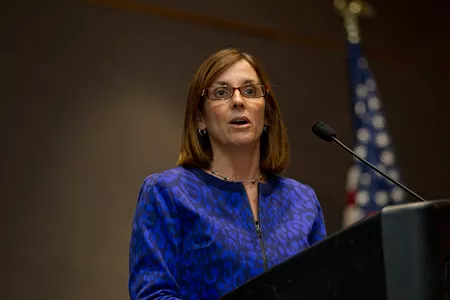
• Kyrsten Sinema and Martha McSally are shaping up to be the front-runners their respective primaries in the race for Jeff Flake’s Senate seat.
• In the governor’s race, Doug Ducey is easily outpacing his opponent Ken Bennett for the Republican nomination, but at the same time his approval rating is lower than President Donald Trump’s by 12 percent. On the Democratic side, roughly half the voters have yet to make up their mind, but David Garcia has the support of 30 percent of Dem voters, while Steve Farley is at a mere 13 percent.
• Despite Gov. Ducey’s recent “20x2020” plan, 64 percent of voters surveyed believe that education is underfunded.
In the Senate race, it's not that surprising to see that Kyrsten Sinema, who represents Arizona's Congressional District 9 in Maricopa County, is at a dominating 50.5 percent while the other five Democratic candidates didn't break the 10 percent barrier. Deedra Abboud had 7.5 percent, Richard Sherzan had 3.7 percent, Cheryl Fowler had 3 percent, David Ruben had 2.5 percent and Bob Bishop had 2.2 percent. 30.4 percent of those surveyed were undecided.
On the Republican side, Martha McSally’s strategy of embracing President Donald Trump is paying off, putting her at a leading 32.3 percent over Kelli Ward with 19.4 percent and Joe Arpaio with 18.2 percent. There are also some dark-horse candidates who are having trouble getting onto the racetrack: Craig Brittain with 1.6 percent, Christian Diegel with 2.9 percent, Michelle Griffin with 2.1 percent and Nicholas Tutora with 0.9 percent. A total of 23.3 percent were undecided.
Amid swirling controversy over his new education plan and the suspected use of Twitterbots, Gov. Ducey is still leading over his opponent, former Arizona Secretary of State and current hard-right conservative Ken Bennett, by 22 percent. 34.8 percent of voters were undecided.
The governor’s approval rating is at 31 percent, with 38.9 percent of those polled disapproving of his job performance, 28.8 percent in neutral territory, and an uniformed 1.3 percent of voters who have never heard of him before. By comparison, President Trump’s approval rating was 42.9 percent among this sample of voters.
Patrick Ptak, the communications director for Gov. Ducey’s re-election campaign, said he didn't put much stake into Emerson College's poll.
"A Democrat poll, using improper methodology, conducted by a Democrat-leaning and historically inaccurate firm to benefit Democrat candidates shouldn't be taken seriously," he said.
Spencer Kimball, the professor at Emerson College who supervised the poll, believes otherwise.
“We do use an innovative methodology of online and landline sampling,” Kimball said. “We happened to be cited by Nate Silver and fivethirtyeight.com last month as the second most accurate/trusted pollster, but everyone is entitled to their opinions.”
He also noted that Emerson College successfully predicted the outcome of Arizona’s special election in the Eighth District last April.
The poll also showed that among Democrats, David Garcia, the associate superintendent for Arizona’s Department of Education, has 30.2 percent of the vote among Democratic gubernatorial candidates. State Sen. Steve Farley has 13.2 percent and Kelly Fryer has 8.5 percent. A little less than a third—30.4 percent of voters—were undecided.
The survey’s education question seemed to reflect Arizona’s support behind #RedforEd, with 64 percent of voters agreeing that education in Arizona is underfunded. A much 8 percent said there was too much funding, while 20 percent took the Goldilocks position that the funding is “just right." Roughly 8 percent were unsure.
“My top priority will be making sure every child has the best shot at opportunity and the American Dream,” Garcia said in a press release celebrating his lead in the survey. “This means making sure our schools have the funding they need to be excellent and safe learning environments for all our kids.”
The survey was conducted between Thursday, June 21 and Friday, June 22, collecting responses solely from registered voters in Arizona in equal proportions in each Congressional District. After weighting for near-equal amounts of responses on both sides of the political spectrum, the number of respondents totaled to 650, half of which responded to an automated landline call and the other half from an online survey. The Bayesian Credibility Interval—similar to a margin of error—was +/- 4 percent. Of that 650, 30.3 percent were registered Democrats (BCI +/- 6.2 percent), 33.3 percent were registered Republicans (BCI +/- 5.9 percent), and 36.4 were registered Independent. 82.2 percent of the Democrats and 80.9 of the Republicans surveyed said they were likely to vote in the primaries on Aug. 28.
• The Network For Public Education released an education privatization report card, the more school privatization, the lower the grade. Arizona earned an F, along with 16 other states. Arizona's is the lowest F of the lot.
• The Bill and Melinda Gates Foundation sunk over $200 million into an multi-year experiment looking at ways to improve teacher effectiveness. Its own analysis indicates it didn't work.
• Trump's Ed Sec Betsy DeVos's family has a stake worth between $5 million and $25 million in an education company which the National Advertising Review Board accused of making questionable claims about its ability to help with problems related to autism, attention-deficit hyperactivity disorder and depression.
Here are the details.
Tags: Education privatization , Network for Public Education , Schott Foundation for Public Education , Bill & Melinda Gates Foundation , Teacher effectiveness , Betsy DeVos , Neurocore , Image