

Tuesday, June 12, 2018
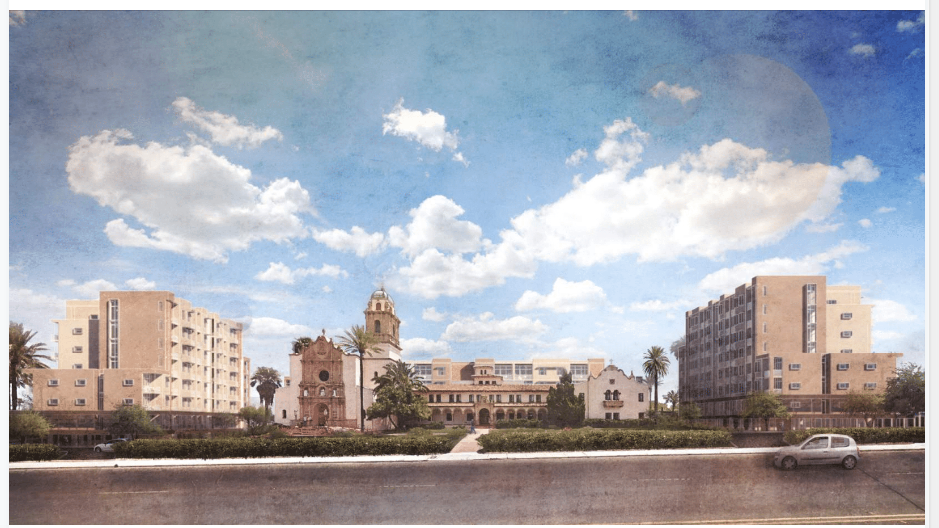
While the Benedictine Monastery might not be torn down, it remains in danger of becoming student housing.
In response to the Tucson City Council’s decision on May 22 to initiate an Historic Landmark designation for the 78-year-old monastery, the property owner Ross Rulney sent a letter to the council threatening to build four-story residential buildings throughout the property and repurpose the monastery into private residential or offices, which is allowed under the current zoning.
The project's architects, from Poster Frost Mirto, presented a proposal to 225 neighbors at the end of March, which included seaking the HL designation and repurpose the sanctuary for public use as a boutique hotel, coffee house or public pool—among other ideas. The plan also included eight-story market-rate residential apartments on the north and south side, and five-story apartments to the east.
Renderings of the high rises surrounding the monastery was met with audible gasps. The architects later lowered the taller buildings to six stories and the shorter to four stories in a new proposal. But Councilmember Steve Kozachik says the height is still too tall.
Former Ward 6 Councilmember Molly McKasson was at the public meeting and says the plans broke her heart. She lives in the Sam Hughes neighborhood, not far away, and grew up visiting the sanctuary.
She said she respects the current zoning but any higher would dwarf one of the city’s most famous and exquisite pieces of architecture. And although Poster cited her in his letter to Mayor and Council as saying six stories is acceptable, she says she doesn’t think that at all.
“There’s an opportunity here to develop that very ample parcel into something beautiful, in the middle of the city, and probably make a pretty good profit,” she said. “My hope is people will work together to come up with some sort of compromise to respect people who own property in the surrounding area as well as these historic structures all over town that people don’t want to see boxed in by six-story towers.”
An HL designation of the monastery would not likely stop Rulney from repurposing the inside of the landmark. The designation requires sensitive design that doesn’t diminish or detract from the primary structure.
Corky Poster, an architect with Poster Frost Mirto, wrote a June 1 letter to Mayor and Council warning that seaking the HL designation could lead to the city owing Rulney millions of dollars in compensation because of Prop 207, a 2006 voter-approved initiative that requires jurisdictions to reimburse land owners when new regulations decrease the property's value.
“In our view, the City of Tucson will likely wind up spending millions of taxpayer dollars to ‘save’ a building that we had agreed, for free, to ‘save’ and rehabilitate four months earlier,” Poster wrote.
He added that if the council shoots down the latest proposal, which would prohibit student housing and include 222 residential units, Rulney will likely decide to build student housing, which yields a higher square-foot rental rate. The monastery would have no public use and probably be turned into student housing itself. And Poster, who has worked on many preservation projects throughout Tucson, would resign from the project
“If the neighbors object to student housing, the City might extend the boundaries of the Landmark to include the whole site, effectively prohibiting any development. That would increase the condemnation payment to the owner substantially,” Poster wrote in his letter.
Tags: Benedictine Monastery , development , historical landmark , Tucson history , student housing , architecture , preservation , Image
Monday, June 11, 2018
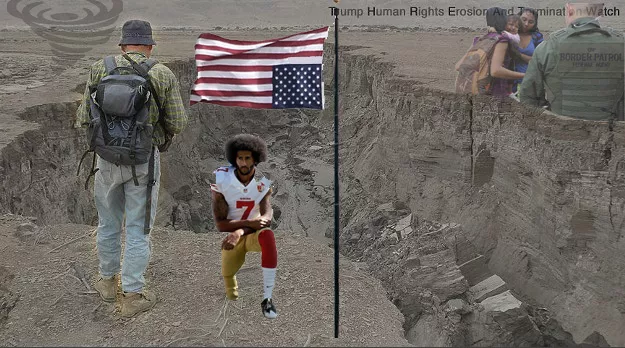
I hear ominous echoes of words and events from a century ago, almost to the year, in the poem by W.B. Yeats, "The Second Coming," which I've reproduced at the end of the post.
We are a country built on a constitution and a system of laws, but they aren't enough to hold us together. We depend on the gravitational pull of societal customs and norms to keep us from falling prey our worst tribal, anti-democratic instincts. With Trump's constant stream of lies and half truths, with his condemnation of every branch of government which isn't under his absolute control, with his willingness to go it alone without guidance from governmental traditions or responsible advisors, he is pulling us ever further from our gravitational center.
If Trump and his enablers continue to spiral out of control, carrying us further from the established norms of the executive branch, they will break free from the force which binds this country, as imperfect and as wrong-headed as it often is, together. Lincoln's appeal to the better angels of our nature, the great president's plea that we use the Constitution to help us form a more perfect union, will become so many pretty words piled on the ash heap of discarded ideals.
The center is barely holding. We're falling apart, with no way of knowing what form the shattered bits and pieces of our country will take when they're reassembled.
When I write these T.H.R.E.A.T. Watch posts, which I began the week after Trump's election, I watch the comments section fill with paeans to Trump and his accomplishments and scorn for anyone who thinks differently. The passionate intensity of Trump's supporters jumps off the page with an untamed energy which makes a response nearly impossible. Most readers who agree with what I write remain silent. A few try arguing with the Trump acolytes, but they find themselves shouted down. They're left with the choice of swapping insults with the Trumpists or leaving the field.
Tags: W. B. Yeats , The Second Coming , Donald Trump , Abraham Lincoln , Ronald Reagan , Jeff Flake , John McCain , G-7 Summit , Image
Friday, June 8, 2018

First, the basics. If the Invest in Education Act passes, an individual making more than $250,000 or a couple making more than $500,000 will pay a higher state tax rate than the rest of us. If an individual makes $500,000 or a couple makes $1 million, the tax rate is even higher. The extra taxes go toward funding education.
Arizona's current personal income tax rate is 4.54 percent. It would go up to 8 percent when an individual's income hits $250,000 or a couple's hits $500,000, then 9 percent at $500,000 for an individual or $1 million for a couple.
So what does that mean in terms of money for the one percenters? Let's use a couple for this explanation, just so I don't confuse things by trying to include figures for individuals and couples.
Let's begin with what the tax measure doesn't mean. It doesn't mean a couple making $499,999 pays 4.54 percent on all their income, but add a dollar and they pay 8 percent on the whole $500,000. Uh uh. Not at all. Adding that one dollar doesn't bring a tsunami of new taxes down on their heads. The rate on the first $500,000 is the same as everyone else's: 4.54 percent. Every dollar above that is taxed at the higher rate.
Let's say our hypothetical couple makes $500,100. Their added tax will be—get ready for it—$3.46. That's right. If the Invest in Education Act passes, they'll pay three dollars and forty-six cents more than if it fails.
See, the new 8 percent rate is 3.46 percent higher than the current 4.54 percent rate, and 3.46 percent of $100 is $3.46. If the couple buys one less Cafe Latte Grande at Starbucks that year, they'll come out even.
Tags: Invest in Education Act , Arizona taxes , One percenters , Image
Thursday, June 7, 2018
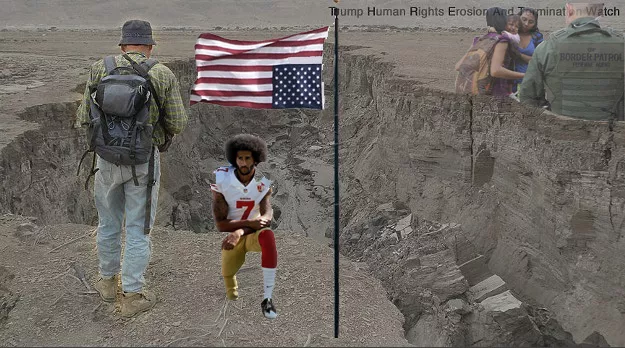
Discuss.
Tags: Donald Trump , Democracy , Image
Friday, June 1, 2018
Patrick Little, Republican, California, running for U.S. Senate. His campaign poster: END JEWISH SUPREMACY OVER U.S. POLITICS & SOCIETY.
"I consider myself a white racialist." "Six million Jews [killed in the Holocaust]? Ridiculous!"
Arthur Jones, Republican, Illinois, former member of the American Nazi Party, ran in an uncontested primary for Congress in Chicago, received 20,000 votes.
"It's not because we're racists. It's because we feel marginalized. We're the ones who are being oppressed."
Arthur Jones supporter
“Armed machine gun turrets every 300 yards [on the border]. And you can automate those. Anyone who approaches that barrier will be treated as an enemy combatant. Man, woman or child.” "Jews…commit a disproportionate number of mass shootings.”
Paul Nehlen, Republican, Wisconsin, running for a congressional seat.
Called Virginia Democratic and Republican candidates for governor "cuck" and "cuckservative." ("Cuck" is short for "cuckhold." In alt right parlance, it refers to a white man who watches his wife having sex with a black man.)
Corey Stewart, Republican, Virginia, running for governor. He came within one percentage point of winning the Republican primary against Ed Gillespie by devoting his campaign to defending Confederate monuments.
Tags: Antisemitism , Racism , Patrick Little , Arthur Jones , Paul Nehlen , Donald Trump , Image
Friday, May 25, 2018
Tags: Donald Trump , Coiln Kaepernick , Image
Wednesday, May 23, 2018
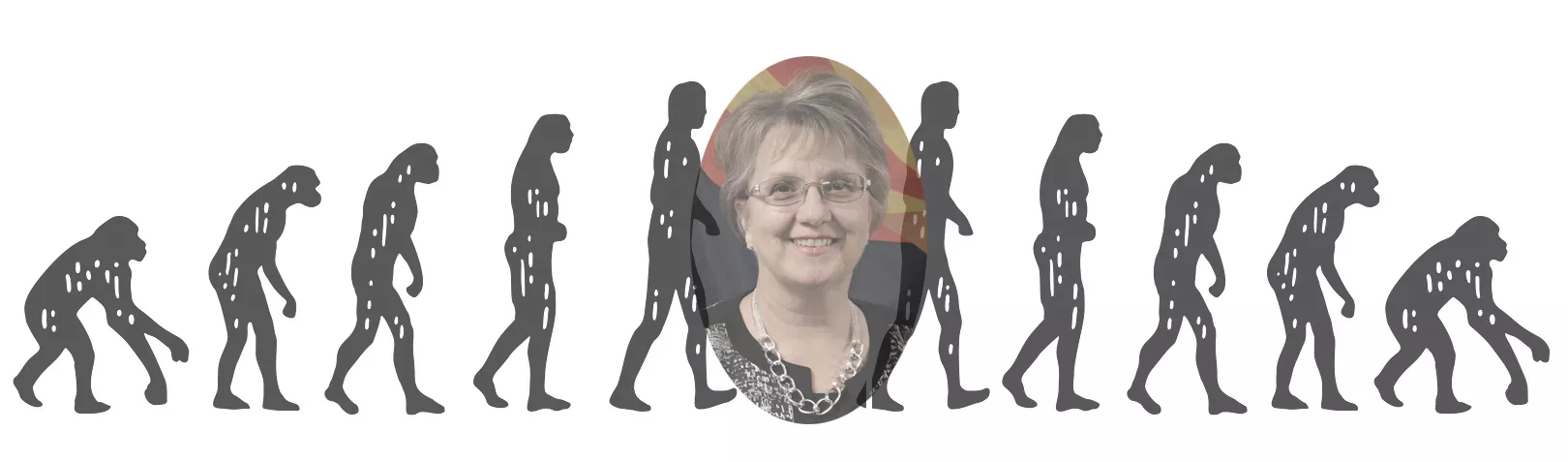
The Evolution and Devolution of Diane Douglas, short version:
In 2014, Diane Douglas was the Republican Tea-Party/Wingnut Education Superintendent candidate from hell. But when she was elected, she evolved into a higher form of herself. She became a do-no-harm official who made an creditable effort at learning on the job and working in a nonpartisan manner for Arizona's teachers and students. Then came Trump's candidacy, which tapped into Douglas' inner wing nut. She's been in a devolutionary slide ever since. A second Douglas term could turn out to be as bad as I feared the first would be. Donald Trump/Betsy DeVos bad. Or worse, since she's closer.
The longer version:
My colleagues and I at Blog for Arizona had a hand in Diane Douglas' winning the 2014 Republican primary. We outed then-Superintendent John Huppenthal's compulsion for writing anonymous comments on blog posts ranging from scattered-but-reasonable to loopy to downright racist. When his anonymous comments made it to the mainstream media, Huppenthal's campaign crashed and burned. Good riddance, I thought. We should be able to defeat Douglas.
Douglas leaned way, way right. An example. When she served on the Peoria School Board, Douglas said she "vehemently opposed" the International Baccalaureate program because its "goal is to promote world government." During the campaign, she was nearly incoherent in interviews and refused to talk to reporters. Her most in-depth interview was with recalled senator and virulent racist Russell Pearce. She stayed out of urban Arizona, spending her time in small towns.
In the general, Douglas lost both Pima and Maricopa counties, yet she managed to eke out a win. I was certain when she took office, she would adopt the racial animus of her predecessors, Horne and Huppenthal, and plunk a pile of soggy teabags on top of their mess.
Tags: Diane Douglas , Superintendent of Public Instruction , Blog for Arizona , Donald Trump , Fake News , Image
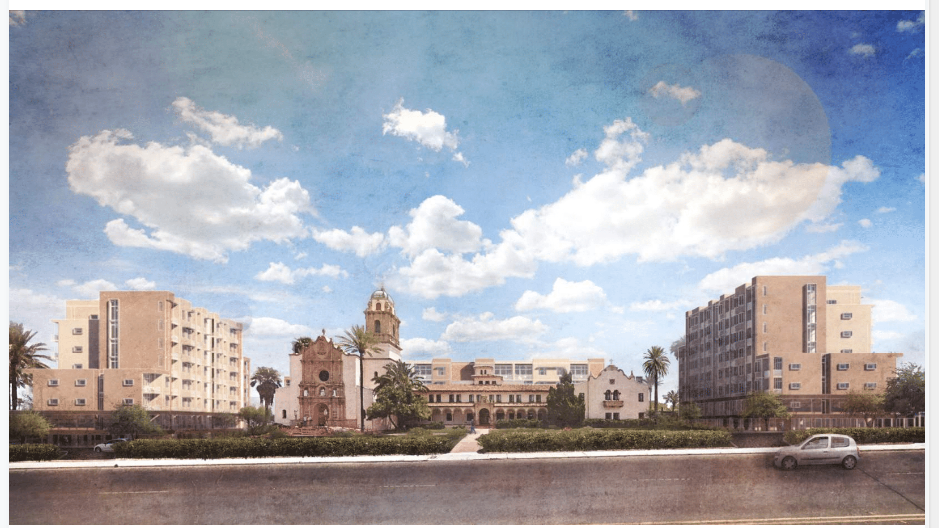
Tucson City Councilmember Steve Kozachik is taking a new tack in the battle over the future of the midtown Benedictine Monastery.
Kozachik initiated a process that could give the monastery a Historic Landmark designation, which the City Council unanimously approved during a May 22 study session. The Historic Landmark designation would protect it from being torn down and create added guidlines about what types of developments can surround it.
“The building remains one of the last expressions of this architectural style in the Tucson area,” Kozachik wrote in his proposal for the Council. “It has been a cultural, architectural and spiritual landmark in Tucson since 1940.”
Local architect Roy Place developed the monastery for the Benedictine Sisters of Perpetual Adoration 80 years ago, in his signature Spanish Revival style. The sisters sold the monastery to local developer Ross Rulney in September 2016 for $5.9 million.
Before the sisters sold the monastery, they put it on the National Registry of Historic Places, thinking that would protect it from demolition. The certification is framed, hanging on the wall of the monastery. But the national registry doesn’t protect the historic structure—it’s purely honorific.
The current zoning in that area is for offices and high-density residential—aka student housing. There’s also a maximum 222 living units and a 40-foot height, or about four stories. There’s no restrictions against tearing down historic structures and no requirement for neighborhood participation or design review.
Architects for the project, Poster Frost Mirto, Inc., said at a March community meeting that they were helping Rulney develop the site and making sure the monastery is protected. It would be the seventh Roy Place creation Poster Frost Mirto, Inc. has worked to preserve.
Together, the architects and developer proposed the Historic Landmark designation, but in exchange, the city would have to allow Rulney to build higher than 40 feet around the monastery and expand the number of allowed apartments or condos. As part of the deal, Rulney would agree to prohibit renting by the bedroom—the typical student-rental arrangement—and to hold several reviews for public input.
Tags: Benedictine Monastery , Tucson City Council , Steve Kozachik , Tucson development , Ross Rulney , Image
Monday, May 21, 2018

I would love to see teachers around the state demand that the 9+1 percent pay hike the legislature built into the budget be shared with everyone in the school community, except administrators, who already receive a reasonable salary.
Would I agree with myself if I were currently an Arizona teacher looking at a raise which doesn't bring me up to the salary I should be making, and doesn't take into consideration the reparations (raise-parations?) I deserve for the years my wage was way below the national average? I don't know. I might have to be talked into it, and even then . . .
With all that in mind, here's why I think teachers should share the raise, coming from someone who doesn't have a dog-eared dollar bill in the hunt.
Teacher wages are bad. Support staff wages are worse. While the legislature earmarked some new money for teachers, it cheated non-teaching staff out of the much-needed raise which was one of the #RedforEd demands.
If teachers sacrificed some of their raise to make up for the legislature stiffing the rest of the staff, it would send a powerful message. It would say, "We're demonstrating the respect we have for the people who work beside us. We understand the value they add to our children's educations." The move would foster unity across the school community in the struggle to achieve full funding for Arizona education. If teachers are willing to share the raise with other staff members, it encourages everyone to share the burden during the political campaign season, at voting time and, if necessary, during a walkout next year.
Tags: #RedforEd , Teacher salaries , TUSD , TEA , Image
Tuesday, May 15, 2018

First I want to write about a hole I just filled in my gap-filled understanding of U.S. history: the Fusion Coalition in North Carolina at the turn of the 20th century and the Wilmington Massacre of 1898, which has been called the only successful coup d'etat in U.S. history. I read a bit about it in articles about Reverend Barber and decided to dig deeper on my own. If you know this history, your education is more complete than mine. If not, it's worth reading about this event, a chilling example of the dangers which can follow from blacks growing in affluence and influence, and joining forces with poor whites, in a place where racism reigns supreme.
Here's the basic story. Wilmington was the largest city in North Carolina in the late 19th century and also home to a large, reasonably affluent and educated black populace made up in part of skilled workers, professionals and business people. The city also had one on the few black-owned daily newspapers in the country, the Daily Record.
At the time, the Democratic Party was the party of racism and segregation and the Republican Party deserved to be called the Party of Lincoln. The Republican party was composed of white and black voters. North Carolina Republicans were joined by the Populists to form the Fusion Coalition. By 1894, the Fusion party had taken the governorship and every other statewide office. Blacks served in local and state governments.
The Democratic Party decided the best way to regain political control was to appeal to whites' racial resentment. The state party chairman stated, "North Carolina is a WHITE MAN'S STATE and WHITE MEN will rule it, and they will crush the party of Negro domination beneath a majority so overwhelming that no other party will ever dare to attempt to establish negro rule here."
White Supremacy clubs formed around the state. In Wilmington, some of the most incendiary anti-black speeches came from Alfred Waddell, a gifted orator and member of the city's upper class. In one speech he said, "We will never surrender to a ragged raffle of Negroes, even if we have to choke the Cape Fear River with carcasses."
Tags: Reverend William Barber , Poor People's Campaign , Wilmington Massacre , Fusion Coalition , Image

