Tuesday, March 20, 2018

That was the most effective message among African Americans in Alabama's recent Senate election pitting Democrat Doug Jones against the racist, child dating Republican Roy Moore. With so many ways to attack Moore, it turned out the positive message about education had the greatest impact on people's desire to vote.
Would a similar message help Arizona Democrats drive voter turnout, the first necessary step to winning close elections?
A column by the New York Times' David Leonhardt discusses a company testing ads to increase African American turnout for Doug Jones in Alabama. A number of ads targeted Roy Moore's negatives, but this is the 15 second ad that tested strongest.
“My kids are going to do more than just survive the bigotry and hatred,” a female narrator says, as the video shows a Klan march and then a student at a desk. “They’re going to get an education, start a business, earn a good living, make me proud. Education is my priority. That’s why I’m voting for Doug Jones.”The video flashes a shot of white supremacists carrying tiki torches at the Charlottesville march last August and Trump giving a thumbs-up at a campaign rally, but most of the ad shows a boy in school, a mother, and a young African American businessman behind an office desk.
It's "Make American Great Again" for families: "Make the future bright for our children. Vote Democratic."
Tags: Education , 2018 campaign , Democrats , Republicans , Image
Sunday, March 18, 2018

U.S. Secretary of Interior Ryan Zinke rode horseback along the border wall in the Buenos Aires National Wildlife Refuge during his first official visit to the border, on March 17.
He rode alongside Tucson Sector Border Chief Patrol Agent Rodolfo Karisch to discuss border security.
“Clearly border protection is mine and the president’s priority,” Zinke said in front of the towering border wall of rust-red metal posts cutting through hills, rolling into the horizon. “Clearly we’re supportive of a wall. Clearly we’re supportive of multiple technologies. And going through what we saw today was a lot of litter, a lot of traffic, a lot of activity—at least signs of activity—and we want to make sure our border is secure.”
Zinke said border security measures should include not just a wall, but technology and sustainable policy.
“We love immigration,” he said. “Our country’s made of immigrants, so we have to have a policy that’s fair, that’s sustainable over the course of time.”
Zinke said that a border wall is important but so is protecting the environment. The Interior Department is the steward of wildlife and Zinke said he needed to ensure the department's actions don't damage that mission. He's leaving it up to the department's expert to determine how to protect wildlife from the environmental damage of a wall.
“Clearly, you want to make sure that a barrier doesn’t adversely affect wildlife, takes into consideration the floodplains,” he said.
The existing wall has already had adverse environmental effects, fragmenting habitats and wildlife corridors.
And during monsoon season, the wall has become a damn, intensifying flooding. In the summer of 2008, when debris piled up against the fence as water rose two to seven feet high, flooding the border towns of Lukeville, Arizona, and Sonoyta, Sonora, and eventually toppling the multi-million-dollar fence.
Chief Karisch, who was showing Zinke around the border, said the footprint created by the wall is less damaging than the traffic it has deterred.
“A wall is just simply another piece that helps us on the border security side,” he said. “It’s not going to solve every problem. But if you can imagine, years ago, volumes of people streaming across here—you’re not hearing that.”
More than 80 percent of the Border Patrol's Tucson Sector is public land, most of which is managed by the Department of Interior. Zinke said the biggest environmental problem he saw was litter.
“Mostly what I saw out there from environmental damage is the unconstrained illegal traffic and the trash left behind,” he said.
Leaving Buenos Aires, Zinke was headed to the Tohono O’odham Nation—whose leadership been staunchly against a border wall on their tribal lands—to talk border security.
“We need a wall. We also need, as the president said, a nice door,” Zinke said. “It’s important for me to go down and talk to the great citizens of Arizona, talk to the tribes and get a tenor of what the temperament is, where there’s an opposition to fences. Our Native Americans have a strong opposition to fence. I’m going to talk to them about that, and then go back to Washington, D.C., and talk to the president.”
Friday, March 16, 2018
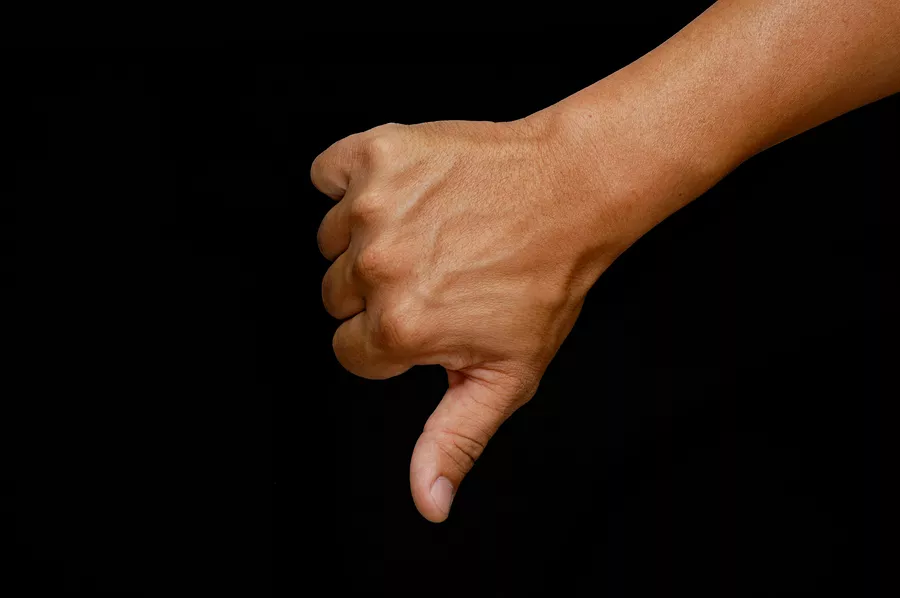
They chose disrespect.
Politicians face damned-if-you-do, damned-if-you-don't situations all the time. Both sides of the aisle love to make their colleagues on the other side squirm. This was one of those times for the Republicans.
House Democrats introduced the students in the gallery one by one. It took an hour. Had to be tough for the Republicans to sit through. The fresh faced, idealistic students asked the legislature to pass laws requiring comprehensive background checks, banning bump stocks and hiring more school counselors. Those comparatively mild, measured requests made the Rs squirm further down in their seats. When Democrats made speeches reinforcing student demands, that was too much for the Republicans to take sitting down. Most of them left.
Then came a moment when they were asked to stand quietly for 17 minutes. They could have done it as a simple gesture, a show of respect for the 17 deaths of Florida students who were the same age as the young people in the gallery. It wasn't a vote. It wasn't a commitment to pass gun regulation. Even the nuttiest of their gun nut constituents most likely would have shrugged it off. But they wouldn't do it.
Tags: Arizona Legislature , Republicans , Democrats , March 14 , Gun regulation , Image
Thursday, March 15, 2018
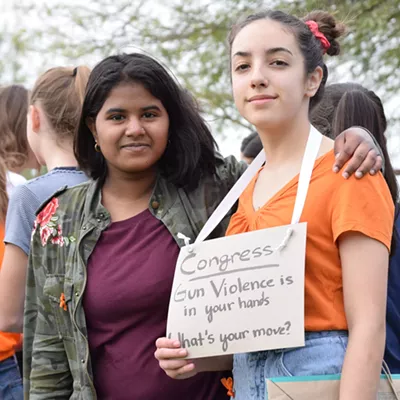
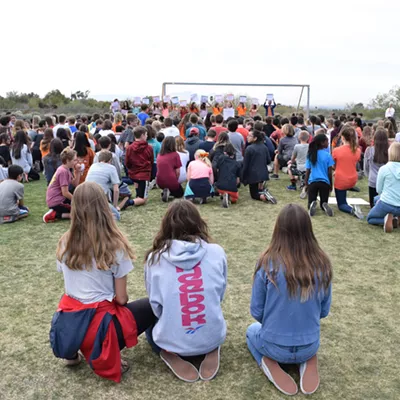

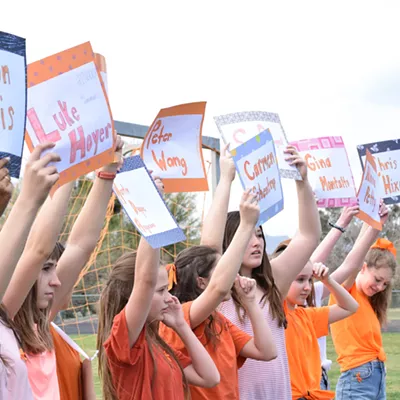
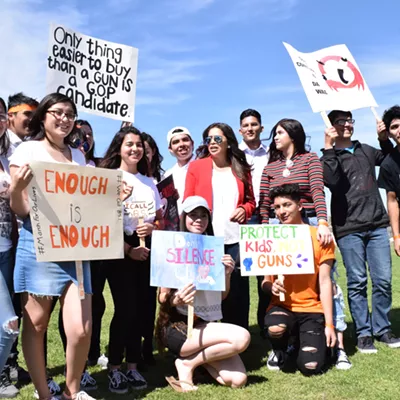
If the wave of pro gun-regulation youngsters is any indication of what the U.S. electorate will look like in one to five years, the NRA is in trouble.
Across the nation, students protested gun violence on National School Walkout Day—the one month anniversary of the Marjory Stoneman Douglas school shooting in Parkland, Florida. And in Pima County, many student bodies held “walk-ins” and assemblies where they boldly and unequivocally called for Congress to act on their behalf.
Leadership across six public school districts in Pima County counted 22 high schools and 23 middle schools with a student-led event to call for change and remember the 17 lives lost in Parkland. That’s not counting charter and private schools or the Tanque Verde, Vail and Sahuarita districts, who couldn’t be reached for a count.
Students at the Canyon Del Oro High School held a walk-in to their football fields at 10 a.m.—the time that students held 17 minutes of silence nationwide, for the 17 lives lost at the Florida school shooting.
The walk-out was organized by student leaders who were clear that the walkout was not about gun control, but a call to Congress and local leaders to act on behalf of students to stop mass shootings in schools.
One of the student organizers, junior Rebecca Shanks, said it doesn’t matter what a student’s opinion is on how to fix the problem, what matters is that you speak up.
“It’s really important that students are getting a voice and being heard by adults,” Shanks said. “We are fed up by gun violence, and we want something done about it.”
Students at BASIS North held a 17-minute vigil, at 10 a.m., for the people killed in Parkland, Florida. At the beginning of each minute, someone spoke about each victims. Public officials spoke about the importance of common-sense gun reform, like Victoria Steele, former state lawmaker and current candidate for Arizona State Senate.
Steele has played a part in a number of regulatory firearm bills in the State House, which she says never even get a hearing. She says the youth today are sending a message to Republican leadership in Arizona that if they don’t start listening, they’ll be replaced.
“They are the power. They are our hope right now—these kids,” Steele said in an interview about the wave of student activists. “I don’t want them to think for a minute that because they’re young and they don’t vote that they don’t have the power.”
Junior Corazón Núñez is turning 18 this year and will vote for the first time in the mid-term elections. She says common-sense gun regulation is one of the issues she’ll base her votes on.
“This is a priority for myself and many of us,” she says. “I will definitely be looking at NRA endorsements…. I want to know that Representatives care about their constituents and not the NRA.”
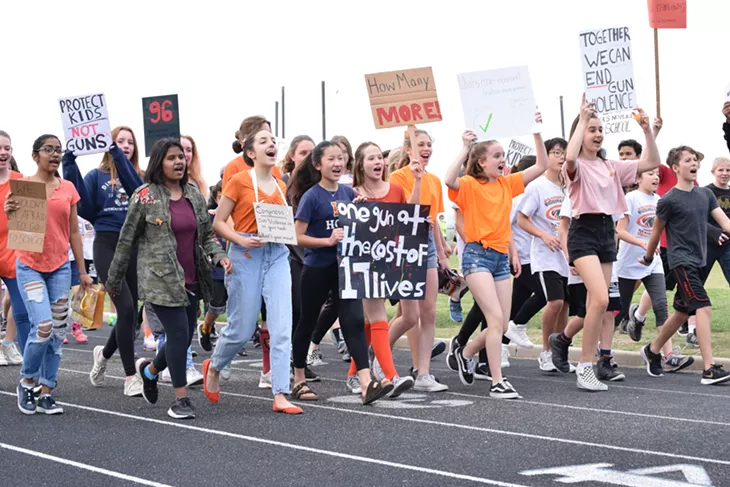
At Orange Grove Middle School more than 500 students marched around their football field,chanting and holding signs calling for gun regulation and an end to gun violence. The march was organized by a group of five 14- and 13-year-old girls. All wearing orange—a color adopted to represent resistance to gun violence—they literally finish each others’ sentences.
They were in awe by the numbers of students who showed up to take part in the march.
“I couldn’t even say anything because of how amazing it was,” said student leader, 14-year-old Simone Gelety.
Organizer and Student Council Member 13-year-old Naomi Holtzman said it’s amazing how their protest “was nothing and suddenly it became everything.”
About a dozen kids on the march chanted “Guns save lives” and held anti-regulation signs that, among other things, compared regulating guns to banning cars (of course, cars are regulated and studied extensively on how to make safer). The girls organizing the march say some of their best friends are against gun regulation, and they’re fine with others having differing opinions.
Tags: NationalSchoolWalkout , NationalWalkoutDay , NeverAgainMovement , MSDstrong , Slideshow , Image
Wednesday, March 14, 2018
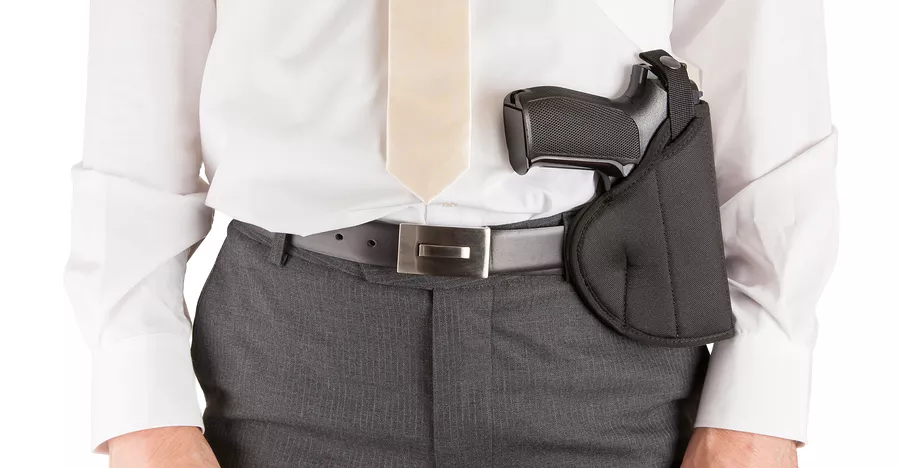
Douglas is standing ankle deep in the NRA Tar Pit. It might not be the best place for an educator facing an election to be stuck right now. The #NeverAgain and #VoteThemOut movements could help rid us of education's gun-crazy dinosaurs come November.
Douglas promoted arming teachers on the Bill Buckmaster show two weeks ago, but no one picked up on it, myself included, until Monday when the AZ Republic ran a story. After reading the article, I went back to the February 28 Buckmaster Show and listened myself.
Douglas used the bank-school comparison twice; she clearly came to the show prepared with the analogy and liked the way it sounded. And she went further, stating that Arizona law already allows teachers to be armed, citing Arizona Revised Statute 15-341 A23. She really loves ARS 15-341. She made sure to repeat the statute number three times so no one would miss her point.
The problem is, Douglas' interpretation of the statute is questionable.
ARS 15-341 states governing boards may
"prescribe and enforce policies and procedures that prohibit a person from carrying or possessing a weapon on school grounds unless the person is a peace officer or has obtained specific authorization from the school administrator."According to the Republic article, Heidi Vega, spokeswoman for the Arizona School Boards Association, believes the language refers to someone like a police officer giving a talk in a classroom. I think the ASBA interpretation is correct, based on a close reading of the passage.
Tags: Diane Douglas , Gun regulation , Guns in schools , ARS 15-341 , Image
Tuesday, March 13, 2018

I'll go over the main points of the audit. If you want to go to the source, here's the entire TUSD state audit, and here are the report highlights. Hank Stephenson's article in the Star does his usual good job covering the issue, though, damn it . . .
[WARNING: Rant Ahead.] I am really tired of the Star's standard "If TUSD bleeds, it leads" headline and opening. The audit and the Star both present a nuanced analysis of district's spending issues, giving valid reasons for some of the expenditures, but you wouldn't know that from the paper's head and the first 70 words. The headline: "Audit slaps TUSD on high costs for administrators, underused schools." "Slaps." That stings. All that's missing are three big red exclamation points to hammer the point home. Next comes the one-two punch of the opening paragraphs reinforcing the "TUSD: Bad!" theme. After that, the article adds nuance, but by then the initial district damning has already set the tone, adding unnecessarily to the community's negative perceptions of the district. [Rant completed. We will continue with the previously scheduled topic.]
Tucson Unified's enrollment has been declining for years, from about 61,000 students in 2000 to around 45,000 currently. The enrollment drop has slowed in recent years, but it hasn't stopped. The result is underused schools, which means higher building costs and more school-based administrators per student than if the schools were at capacity. If enrollments continue to decline, it's going to be hard to resist another round of school closures, which will accelerate the downward spiral. If enrollment numbers rise, other problems will diminish.
Superintendent Trujillo has told me reversing the district's downward enrollment trend is high on his list of priorities. This is his first year at the helm, so it will take time to see what kind of changes he has in mind.
Tags: Tucson Unified School District , State audit , Administration , Transportation , Enrollment , Image
Monday, March 12, 2018
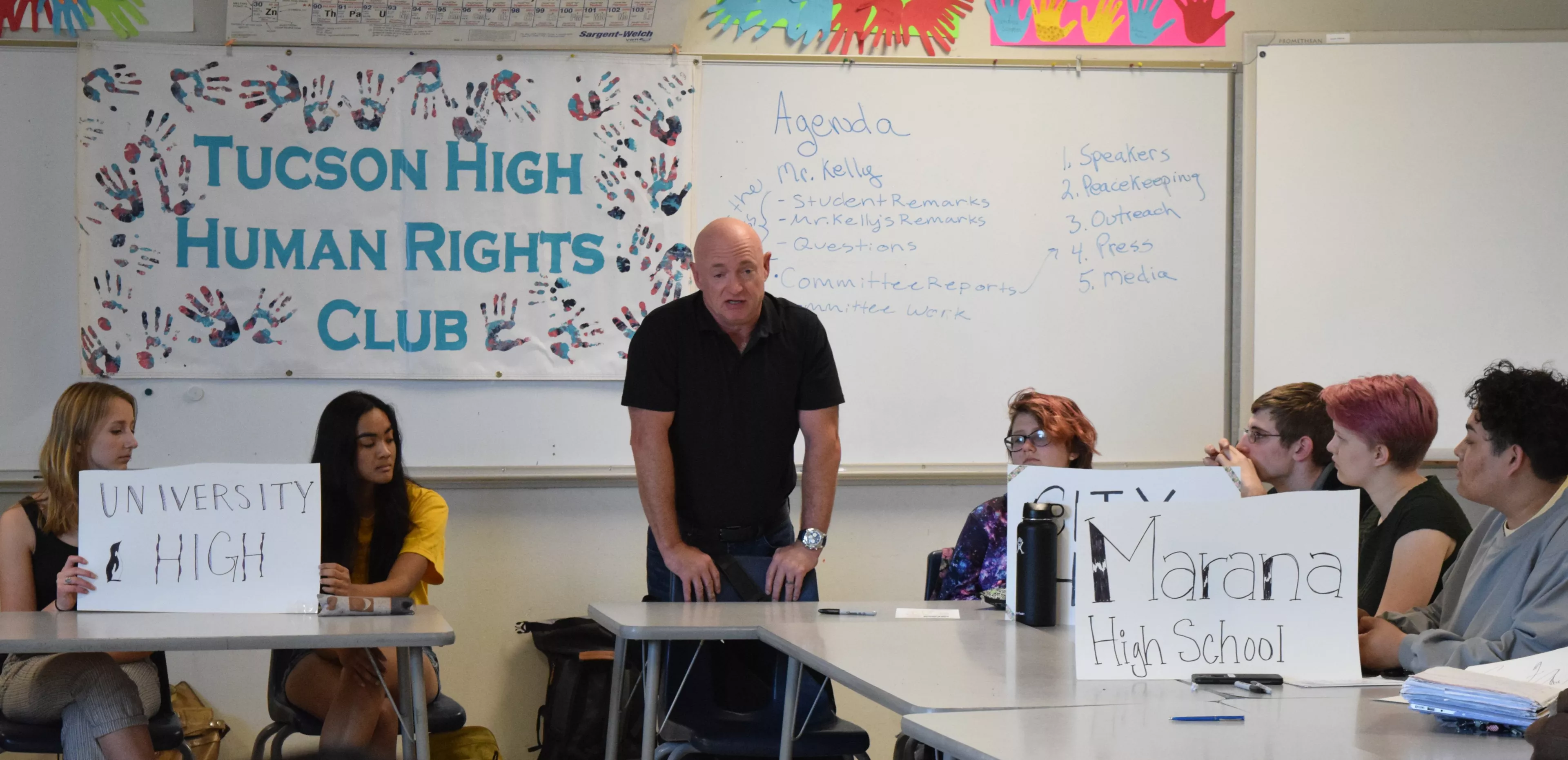
The group of teens gathered in a science class room at Tucson High are not there to talk biology. They’re talking about how fear of being shot is hindering their studies.
“We want regulations on guns,” said Tucson High junior Vivian Reynoso, president of school’s Human Rights Club. “We want to not be afraid to come to school and worry that someone is going to come in with a gun and shoot us.”
Perhaps living in a time when school shootings are no longer shocking has matured these teens. Like many students who endured the Feb. 14 school shooting in Florida, they are having no problem articulating what they want.
Some want stricter gun regulations. They all want the government to take clear action that sees results. They will all be sharing their ideas of what that action looks like at the March 24 rally, March for Our Lives.
“We’re fighting for this, and this is what we want,” Reynoso said. “We’re gonna keep fighting until they give it to us.”
March for Our Lives—a nationwide rally for better gun regulation and school safety measures—was started by student survivors of the Marjory Stoneman Douglas shooting, after 17 people were killed by a former student with a legally-purchased AR-15.
The central march is in Washington D.C., and could be the biggest march, nationwide, since the Women’s March, with close to 600 cities signed up at marchforourlives.com.
Press filled the Tucson High classroom, on Friday afternoon, where about 30 teens from a number of local high schools, including Flowing Wells, Catalina Foothills, University High, Marana High, City High and Tucson High, candidly faced the media’s cameras and spoke of their experience, growing up dealing with gun violence in schools.
“Our safety in school should be the number one concern because no parent should ever have to let their kid go to school and not have their kid come back home,” said Marana High School student Eric Brown. “It shouldn’t be on our minds to be afraid to be in school. Our number one priority is our education—that’s why we’re in school.”
University High sophomore Sharmila Dey said after the Florida shooting, her teachers gave the class a talk about what to do in the event of a school shooting.
Wednesday, March 7, 2018
You know, red and black go really good together. Arizona can say yes to the demands of teachers wearing red and still keep the state budget in the black. How do we manage it? The first step is to make a commitment to increase the state budget so we can afford to fund schools, social programs and infrastructure adequately. The next step is to ask, "What's the best way to do it?"
We have plenty of options to choose from. Close tax loopholes for corporations and other special interests. Renew the Prop. 301 sales tax for education, with a penny added to the total. Stop the stupid, goddamn tax cuts for corporations and the wealthy. Increase taxes on the wealthiest among us so they pay their fair share.
I'm not suggesting which are the best ways to increase state revenue. That's the next step, after we agree to take the "red and black" challenge.
However, I do have two suggestions for things we need to do if we hope to add needed money to the state coffers. Give voters the opportunity to repeal Proposition 108 from 1992 which requires a two-thirds majority in the legislature to pass any new taxes. And vote out politicians who say "No new taxes, period."
Tags: Teachers , Teacher salaries , Class size , Taxes , Proposition 108 , Image
Monday, March 5, 2018
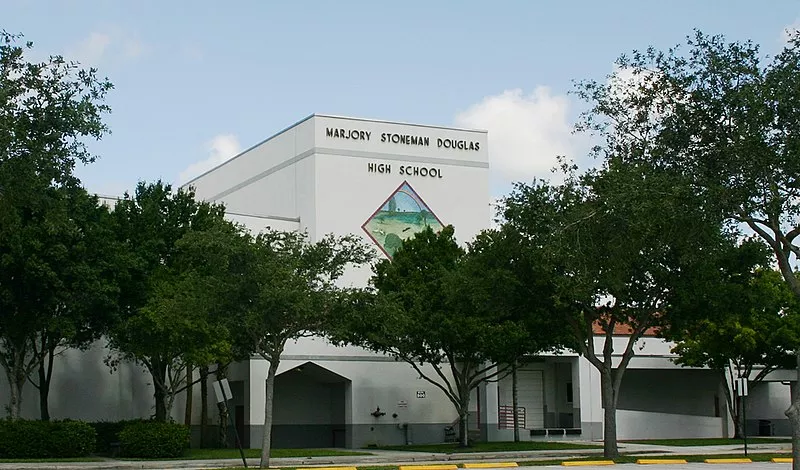
With relief and a strange feeling of pride, I watched these young people remain amazingly poised and well spoken under the most difficult of circumstances. Sure, some of them stumbled a bit, spoke awkwardly now and then, lost the thread of what they were saying. But that happens to lots of non-professionals when they have a camera stuck in their faces and are asked to bare their emotions at the same time they have to talk about complex issues. The Parkland students haven't just held it together. They've shone. They've pointed the way for the rest of us.
I'm an old high school teacher. I know what kids that age can do. But these folks exceeded my expectations.
The students deserve all the credit in the world, but we should reserve a little extra credit for their schools and teachers as well. The students have been educated in the skills they demonstrated to the nation.
Take David Hogg, a young man who seemed so self confident and practiced, it made sense he was singled out by the right wingnuts as a "crisis actor" flown into the school by the anti-gun crowd to pretend he was a student. He's the student director of the school's broadcast journalism program, WMSD-TV. While he was hiding inside a closet with other students during the shooting, he was interviewing them. Other staffers for the student newspaper were also reporting the story while it was in progress, taking photos and videos during the ordeal.
Tags: Marjory Stoneman Douglas High School , David Hogg , Cameron Kasky , Image
Friday, March 2, 2018

Toward the end of that post I wrote a few sentences, almost a throwaway, about the relation between education and poverty.
"Education is not an effective way to fix the country's problems related to poverty when it's working by itself. But lessening the burdens of poverty is the best way there is to improve student achievement, and it's even more effective when schools improve as well."Let me pick up that idea and expand on it.
If we're looking at schools as a primary engine to lift children out of poverty, we're looking in the wrong place. Education is necessary to facilitate greater economic mobility, but it's far from sufficient.
You hear a lot of people say, "Failing schools are the problem." If we just fix our schools, they say — improve the curriculum, get rid of bad teachers, create charters, privatize schools — that's the best way to lift children out of poverty. But it isn't. What it is, is the best way to delay dealing with the root causes of poverty.
Trying to address poverty by improving schools is the rough equivalent of seeing a problem, then creating a committee to study it.
Here's how study committees often work. A group of very serious people get together and spend a few years kicking a topic around. They gather information, call in experts, look at the problem from a number of angles. Then the group publishes a very serious report long after the heat which was the reason the committee was set up has cooled. The report is analyzed and critiqued by some other very serious people, then it's shelved. That's it. No action, no results. Study committees are the place where ideas go to die.
Here's how educational "reforms" which are supposed to help children rise out of poverty usually work. The "reforms" are put in place with fanfare and high hopes, but no one expects to see results right away. It takes a number of years for children to work their way though the educational system before we can measure whether the "reforms" yielded any results. Five years, ten years, twenty years down the line, researchers plow through piles of data and try to measure the effects. Depending on how researchers parse the data and which variables they emphasize, they find students gained or lost a little ground due to the changes. The needle rarely moves very far one way or another in terms of student achievement or improving students' economic mobility.
So we begin anew with another round of "reforms" which are supposed to fix our "failing schools" and move children out of poverty. We wait a number of years, study the results and start over again. Rinse and repeat, ad infinitum.
No Child Left Behind. Charter schools. Vouchers. Blended learning. Common Core. Changes in methods for teaching reading and math. Education innovations come, educational innovations go, they work a little, they don't work at all. If poverty and economic mobility rates budge in the interim, it has far more to to with outside economic and social forces than with what's going on in schools.
Who are the most enthusiastic proponents of those study committees? They tend to be people who want to keep things exactly as they are, people who benefit from the status quo. They measure the success of the committee by how little happens to address the problem it was created to study.
So who benefits most from maintaining that fixing our "failing schools" is the best way to lift children out of poverty, effectively kicking the can down the road a decade or two? I'll give my answer at the end of the post.
Tags: Education , Poverty , "Failing schools , " Education , Education reform , Image