Thursday, October 7, 2021

The Pima County Board of Supervisors voted 3-2 on Tuesday against mask requirements for K-12 schools in Pima County.
Supervisor Matt Heinz presented the proposal for masks in schools in response to research from the Centers for Disease Control and Pima County.
Pima County recently co-authored a study with the CDC that found K-12 schools without mask requirements in Pima and Maricopa counties were 3.5 times more likely to have a COVID outbreak than schools with mask mandates.
“In light of the information that literally came from this county and Maricopa County in Arizona and the CDC,” Heinz said, “I think it makes a lot of sense for us to take a look at this again.”
Heinz reiterated his view that masks protect students and teachers from COVID and that data supported his opinion.
Dr. Francisco Garcia, Pima County's chief medical officer, was asked to discuss the potential mandate with all 12 school district superintendents in Pima County. He presented their feedback during the board's regular meeting.

WASHINGTON – Robocalls to Arizonans dropped by more than 3 million in July, to about 84.4 million for the month, as the first phase of a new federal mandate took effect that requires phone companies to implement anti-robocall measures.
But consumer advocates say phone carriers could be doing more.
A report last month by the U.S. Public Interest Research Group Education Fund found that just 16 of the 49 largest phone companies in the country had fully implemented the STIR/SHAKEN technology by a Sept. 28 deadline, and another 18 had partially implemented it.
In Arizona, of the 18 that reported to the Federal Communications Commission, seven said they had completely integrated the system and 11 had partially done so. Another provider in the state had not reported to the FCC by Sept. 28, USPIRG said.
The FCC regulation gave the five largest carriers a June 30 deadline to install the STIR (Secure Telephone Identity Revisited)/SHAKEN (Signature-based Handling of Asserted Information Using toKENs) system, which lets providers authenticate caller ID in an attempt to reduce spoofed robocalls. Smaller carriers were given until Sept. 28 to report their progress on the new program.
The FCC did not respond to calls on the progress of the providers. But Diane Brown, executive director of ArizonaPIRG Education Fund, said the companies are falling short.
“Our research documented that over half of the companies that reported their status to the Federal Communications Commission were not using the industry standards, but instead were using their own methods to manage robocalls,” Brown said.
“Companies should always use the highest standard to protect consumers,” which Brown said is STIR/SHAKEN.
That was echoed by YouMail CEO Alex Quilici.
“It’s definitely not enough for these guys to create their own plan,” said Quilici, whose company tracks spam and robocalls.
Wednesday, October 6, 2021
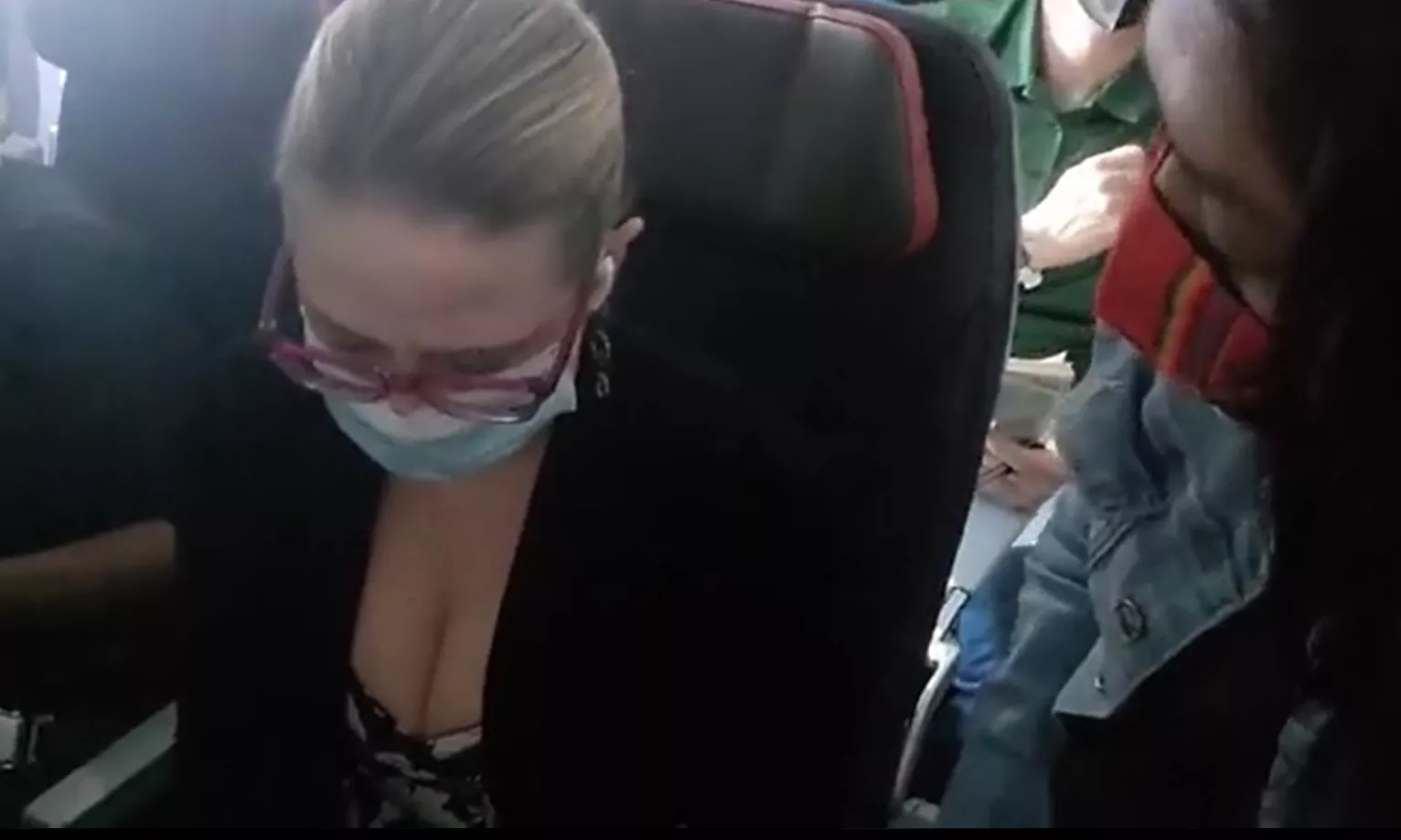
Sen. Kyrsten Sinema of Arizona ignored Karina Ruiz, a local leader who advocates for immigrant communities, when the activist approached her on a flight to Washington, D.C., Monday to urge the senator to commit to passing a pathway to citizenship for millions of undocumented immigrants.
In a video she posted on social media, Ruiz walked down the airplane aisle and stopped next to Sinema, who was sitting in an aisle seat with a laptop in front of her and wireless earbuds in her ears.
“I’m being vulnerable right now to you. My dad passed away last year, and he didn’t get to reunite with my family. I don’t want to disturb you, but at the same time, I want to see if I can get a commitment from you, Senator,” Ruiz said.
Sinema sat silently, staring down.
“This is my life and the life of millions,” Ruiz continued. “I’d just like to hear from you. Can we get a commitment from you to get a pathway to citizenship for millions like me?”
Sinema continued to sit silently, staring down.
“All right, Senator, you don’t want to respond. Thank you for your time,” Ruiz said, and walked away.
You can do more than be sorry for my loss, you can deliver us citizenship. I don't recognize you @SenatorSinema you organized marches against SB1070, and now that we need you remain silent & ignored me, unacceptable. pic.twitter.com/wyYGVw0WG3
— Karina Ruiz (@KarinaIRuiz) October 4, 2021
For years, Ruiz has pushed for different versions of federal legislation that would give thousands of immigrants like her, who arrived in the country at a young age, and her family a pathway to citizenship. Locally, as a leader of the Arizona Dream Act Coalition, Ruiz has worked to reform state laws that prevent undocumented students from accessing in-state tuition.

Tuesday, October 5, 2021
Monday, October 4, 2021

The Women’s Foundation of Southern Arizona has changed its name to the Women’s Foundation for the State of Arizona and will expand the scope of its work to more formally include women and girls throughout the state.
“Decades of experience and proven positive outcomes make us qualified to add the State as a whole to our focus so we can achieve a greater impact,” said Amalia Luxardo, WFSA CEO.
“Our research and legislative advocacy work have included and benefited the state for several years. We feel that at this moment in time – after watching the pandemic destroy decades of momentum for women in mere months – it is essential that we scale the rest of our work to impact women and girls across Arizona.”
WFSA also launched a survey on Monday, Oct. 4, to learn about the issues facing women and girls in the state, and help identify opportunities for future legislative policy, grants, and pilot programs. Survey results will be available in December.
To access the statewide survey, visit womengiving.org or survey.alchemer.com/s3/6540060/AZIssuesSurvey


Tucson's Environmental and General Services Department is bringing back their monthly household hazardous waste collection events, providing an opportunity for residents to drop off their hazardous waste, electronic waste and paper documents for shredding at no charge.
The next event will be from 8 a.m. to noon, Saturday, Oct. 9, at Jacobs Park, 3300 N. Fairview Ave.
Here is the rest of the schedule for 2021:
- Nov. 13 –Tucson Rodeo Grounds – 4823 S. 6th Ave (enter on 3rd Ave)
- Dec. 11 – Hi Corbett – 700 S Randolph Way
The City asks you NOT to bring business or commercial waste, commercial gas cylinders, explosives, ammunition, infectious or radioactive waste, dried paint, alkaline batteries, televisions, or medical waste such as syringes or old medications.
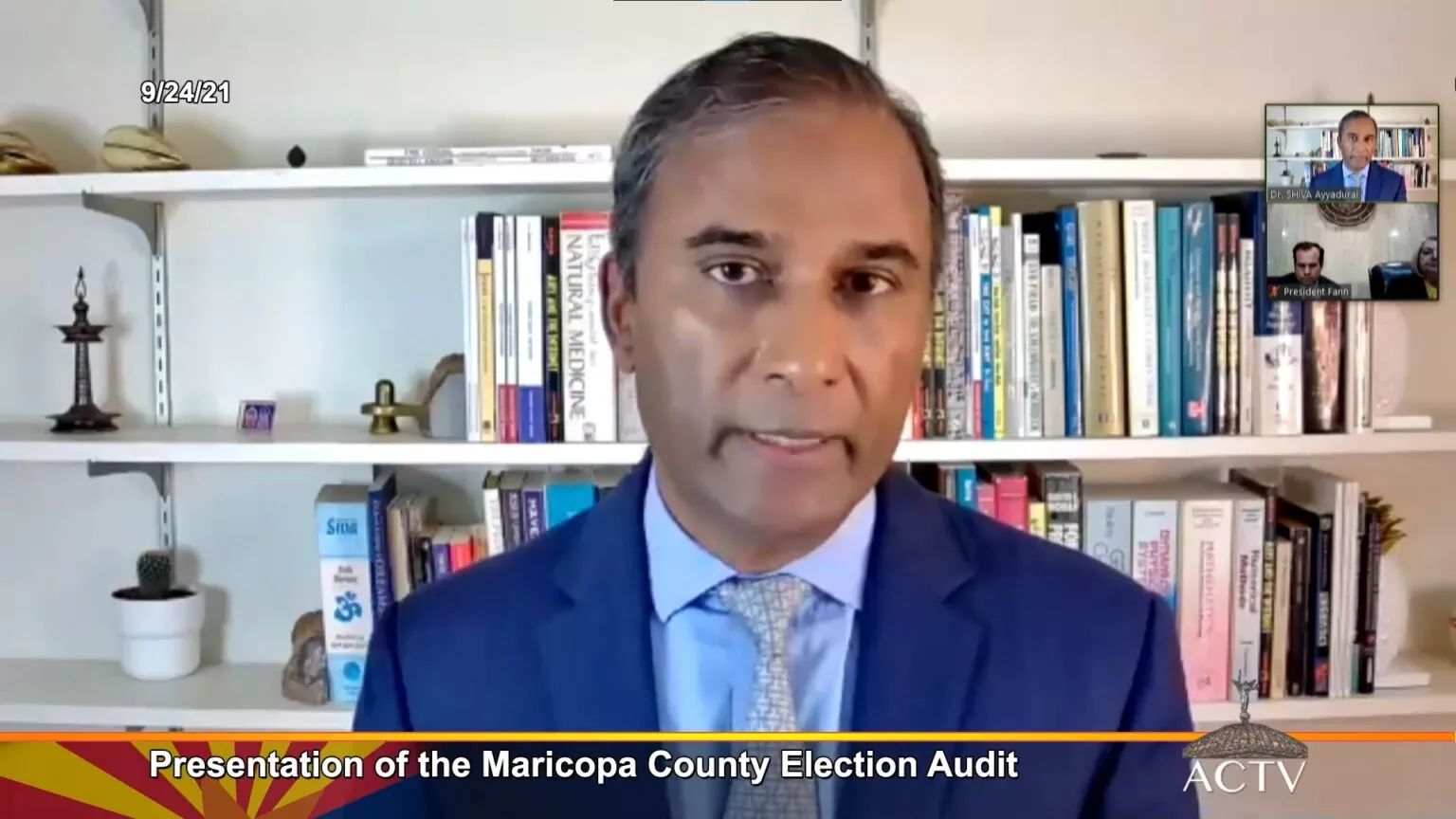
The audience in the Senate gallery oohed and aahed as Shiva Ayyadurai drew its attention to a “verified and approved” stamp that appeared behind a triangle on the image of an early ballot envelope, unsubtly suggesting that it might have been pre-printed that way.
“It’s almost as though it was imaged on there. I don’t want to say Photoshopped, but put on there. But it’s quite fascinating. I’m sure there’s some explanation for this,” Ayyadurai said. The remark elicited laughter from an audience largely composed of audit supporters who believed, without factual basis, that the 2020 election was rigged against Donald Trump, a position Ayyadurai himself has aggressively promoted.
It turns out there was an explanation, and a simple one at that. But Ayyadurai appeared to have absolutely no knowledge of Maricopa County policies and procedures regarding the early ballot envelopes and signature verification. That shortcoming would be a consistent theme as he presented his findings as part of the so-called audit of the election in Maricopa County, portraying commonplace occurrences and standard procedures as potentially suspicious.
And Senate President Karen Fann has asked the attorney general to investigate Ayyadurai’s obviously false findings.
Ayyadurai, known to his fans online simply as Dr. Shiva, is an MIT-trained engineer and entrepreneur known for his disputed claim that he invented email. He has a history of promoting discredited and debunked conspiracy theories about the 2020 election, including during a day-long event at the downtown Phoenix Hyatt several weeks after the election that featured Trump attorney Rudy Giuliani.
The claim about the triangle on the early ballot envelopes was perhaps the most attention-grabbing of the numerous findings he presented during a presentation on Sept. 24, as the team that led Senate President Karen Fann’s review of the 2020 election results in Maricopa County.
“I would consider this potentially a critical anomaly,” Ayyadurai said.
But to those who understand how elections work, the “critical anomaly” was anything but. In fact, it’s not only not an anomaly at all, it’s exactly how the systems used to safeguard the election are designed to work.