
Tuesday, September 21, 2021
The federal government has notified Arizona that it should expect 1,610 Afghan evacuees to arrive through the end of March, according to the state Department of Economic Security.
DES administers the Arizona Refugee Resettlement Program, which partners with the federal government to service refugees as they adjust to making Arizona their new home. The people expected to arrive from Afghanistan, though, won’t arrive through the refugee resettlement process. Instead, they’ll be part of a temporary humanitarian parole program called the Afghanistan Placement Assistance Program, said Tasya Peterson, a DES spokeswoman.
According to a Department of Homeland Security document, the U.S. government will grant entry into the country to thousands of Afghan evacuees on a case-by-case basis through a humanitarian parole program. They’ll be allowed to live in the country for about two years.
In August, as the U.S. government ended its 20-year war in Afghanistan and withdrew its troops, Taliban forces quickly took over Kabul, the capital city. A crisis unfolded resulting in emergency evacuations where U.S. forces airlifted an estimated 116,700 civilians out of the country, according to USA Today. Among those evacuated were people in the process of requesting entry into the U.S. through the Special Immigrant Visa program, a program available to translators and interpreters who worked for U.S. troops or other Afghans who worked for the U.S. government or U.S.-based companies, such as journalists.
But it’s still unclear if those who will arrive under the humanitarian parole program will have access to the resources that refugees have through the resettlement process, such as a work permit, cash assistance, and help with case management, housing and finding a school for their children.
Arizona community groups that are readying resources to welcome Afghan evacuees are concerned about this lack of clarity on whether federal funds will or will not be available means that nonprofits and private organizations will have to provide that assistance to the new arrivals from Afghanistan.
Monday, September 20, 2021

Friday, September 17, 2021

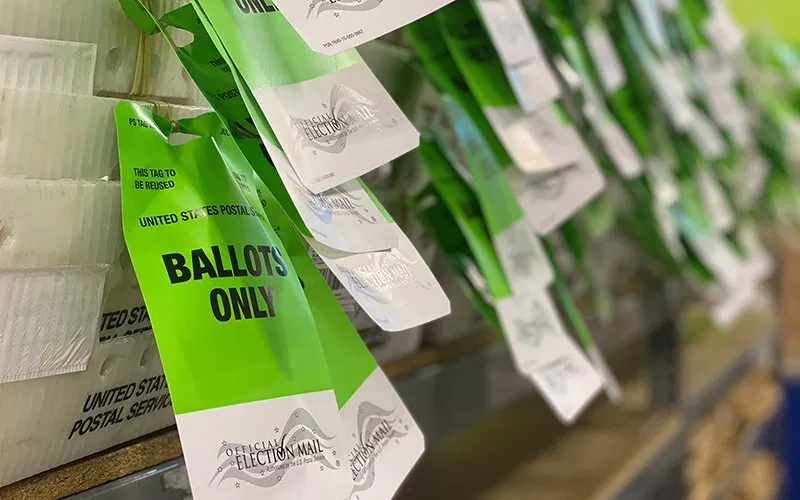
PHOENIX – The mistrust in Arizona’s Nov. 3 presidential election and the months-long audit it spawned is quickly spreading across the country, with politically driven efforts in Wisconsin, Pennsylvania, Florida, Michigan and Texas, the executive director of Secure Democracy said Wednesday.
Secure Democracy, a nonpartisan, nonprofit organization whose stated mission is to improve U.S. election integrity, held a virtual press conference the day after the Arizona Supreme Court ordered that all audit documents be made public. Maricopa County Recorder Stephen Richer provided further insight into the audit process and Cyber Ninjas, the Florida company the state Senate hired to run the “forensic audit” of more than 2 million ballots.
“Twenty-five state legislatures have introduced legislation allowing the legislature and other partisan actors to exert greater control over the conduct of elections,” said Sarah Walker of Secure Democracy. “The threat of financial or criminal sanctions will certainly and likely deter local officials from taking necessary actions to ensure voter freedom and ensure that voters have sufficient access in our democratic process.”
The Arizona audit has captured the attention of former President Donald Trump and his allies, who – despite any proof – continue to claim the Nov. 3 election was stolen from him.
This is the third audit of Maricopa County votes. Although the first two found no issue with the total vote count, the state Senate insisted on conducting another.
Walker said Secure Democracy will continue to work with state-level allies to stop election subversion efforts across the country, which she said are wildly unpopular with voters.
“Republicans, Democrats and Independents are unified in opposing attempts to overturn election results,” Walker said. “However, they do support measures that would address honest collection systems and ensure that the systems are accountable to voters and not to the politicians.”
Also at the news conference was former Kentucky Secretary of State Trey Grayson, who said that before the 2020 presidential election, voters didn’t pay much attention to election audits and the process of counting votes.
Thursday, September 16, 2021

PHOENIX – Some households have suffered serious threats to their health that went beyond COVID-19 over the past 18 months: domestic violence. Arizona has the fifth-highest rate of domestic violence in the country, according to the World Population Review, and throughout the pandemic, domestic violence calls and fatalities in metro Phoenix continued to rise.
According to the Arizona Coalition to End Sexual and Domestic Violence, 102 domestic violence fatalities were reported in 2020, and 48 in the first six months of this year. Shelters for victims, which saw unused beds last year, are filling up again around the Phoenix area.
What does this mean for domestic violence as Arizonans attempt to get back to normal? Experts agree the pandemic had scant impact on the high rates of violence, and they don’t expect those rates to fall anytime soon.
“I think it’s really important for the community to understand that COVID and the pandemic did not cause domestic violence,” said Myriah Mhoon, CEO of New Life Center. “It became a catalyst of aggravating power-control dynamics that were already existing or that started to exist.”
Jenna Panas, CEO of the Arizona Coalition to End Sexual and Domestic Violence, said calls to its Arizona Sexual and Domestic Violence helpline increased 40% to 60% during the pandemic.
However, many victims found it challenging to seek services while confined in the same homes as their abusers, and beds at domestic violence shelters began to open up. The New Life Center is the largest domestic violence shelter in Arizona, and its 104 beds were underutilized during the pandemic.
“It was the first time that we were sitting sometimes weeks if not close to a month of beds not being filled,” Mhoon said.

Wednesday, September 15, 2021

State officials, Arizona refugee resettlement agencies and community groups are preparing for the arrival in the coming weeks of thousands of people evacuated last month from Afghanistan.
The International Rescue Committee in Phoenix, a refugee resettlement agency, welcomed 18 Afghan evacuees on Aug. 29. They were among the tens of thousands of people who fled the country as U.S. troops withdrew and the Afghan government quickly collapsed.
It’s unclear how many refugees and people who evacuated Afghanistan will arrive in Arizona, said Charles Shipman, the state refugee coordinator at the Department of Economic Security, which partners with the federal government to provide services to new refugees seeking to make Arizona their new home.
“This is an emergency effort. This is a U.S. evacuation effort (and) all of the pieces have not been worked out,” Shipman said in a community meeting last week.
Shipman said the federal government has reported that about 29,000 of the people evacuated last month have protections or are in the process of obtaining Special Immigrant Visas, a program available to translators and interpreters who worked for U.S. troops or other Afghans who worked for the U.S. government or U.S.-based companies. Another 50,000 people evacuated are expected to qualify for a program known as humanitarian parole, which allows some immigrants to temporarily live in the U.S., he added.
Shipman said it’s too early to say how many arrivals are expected in Arizona. He added that the state expected a “high number” of parolees, and not as many people arriving through the SIV program.
He said the state agency is working to consolidate and coordinate efforts to volunteer, support and help with new Afghan arrivals in Arizona.
Meanwhile, nonprofits and community groups are working to understand what the more critical needs will be and balance all the donations and support that different people, faith groups and companies are offering.
For now, DES is also compiling a volunteer interest form that people who want to help in by providing temporary housing, interpretation or translation, transportation, donations or places to pick up or drop off donations can fill out and submit.
The Afghan communities in Phoenix and Tucson are also coming together to help, welcome and support those who managed to evacuate, said Asmeen Hamkar, who works with the DES refugee resettlement program.