

Tuesday, June 29, 2021
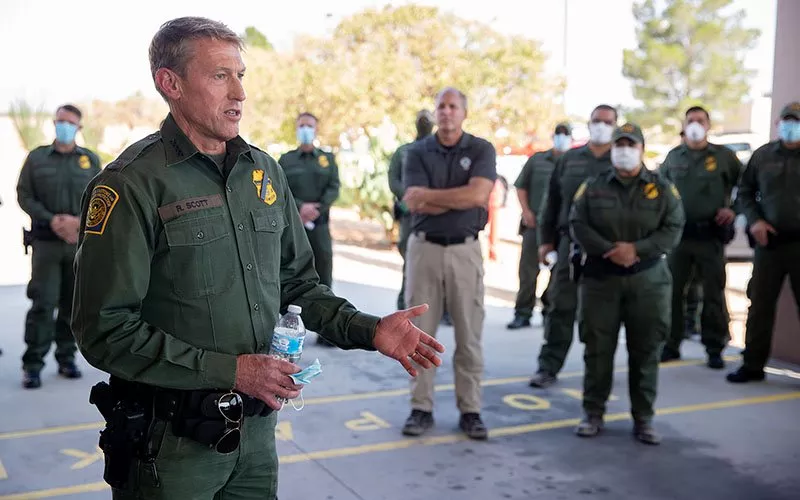
WASHINGTON – The chief of Border Patrol was forced out after just 17 months in the job, a move that critics blasted as a politically motivated decision by the Biden administration.
Acting Customs and Border Protection Commissioner Troy Miller said Thursday that Border Patrol Chief Rodney Scott has been replaced by Deputy Chief Raul Ortiz. Miller’s announcement thanked Scott for his service, but included no details on the reasons behind the departure.
Critics accused the Biden administration of giving Scott a choice of “three Rs” – reassignment, retirement or resignation – because he disagreed with their border policies.
“The chief asked directly why it was happening and was not provided response other than, ‘We want to go in a different direction,'” said Mark Morgan, who served as acting CBP commissioner during the Trump administration and appointed Scott to the chief’s job.
An angry Morgan called the decision “outrageous” and “devoid of all common sense,” saying that the Biden administration is “ending the 29-year career of a man not for just cause, but rather in the name of politics.”
But Doris Meissner of the Migration Policy Institute said Scott’s decision to “align himself, as the head of border patrol, with the president (Trump) personally” was “uncharacteristic” for someone in a career position, not a political appointment.
“From what I know about Chief Scott, he was more political and partisan in the places that he chose to appear during the Trump years than has typically been the case for Border Patrol chiefs,” said Meissner, director of the institute’s U.S. Immigration Policy Program.
“I’m simply guessing that that has been part of the reason that he’s been offered the option to resign or be reassigned,” she said.
The move comes at a challenging time for the Biden administration on its handling of immigration issues. Republicans have repeatedly attacked President Joe Biden for what they call a crisis at the border, where the number of migrants apprehended has surged to the highest levels in years.
Monday, June 28, 2021

WASHINGTON – Despite gains in some areas, Arizona continued to rank among the worst states in the nation for education, according to the latest version of a national report that measures children’s well-being across several areas.
The 2021 Kids Count report said Arizona was 47th overall in education, down one spot from 46th a year earlier, evidence that “we’re not doing a very good job in Arizona,” experts said.
David Lujan, president and CEO of Children’s Action Alliance, said the low ranking “stems from the lack of investments we’ve seen in education, not only K-12 education but early childhood education, going back for more than 20 years now.”
“We’re seeing the ramifications of that in things like large class sizes, the lack of full-day kindergarten in every school district, and teacher shortages,” Lujan said. “Those things matter when it comes to being able to provide a quality education for students.”
The Kids Count report, prepared annually by the Annie E. Casey Foundation, measures children’s welfare in each state through dozens of data points split between four broad categories: education, economic well-being, health, and family and community.
Overall, Arizona improved slightly, going from 42nd place in last year’s report to 40th in the latest report. But the state did not crack the top half of states in any category. Arizona did best in health, where it finished 28th among states, followed by 35th for economic well-being and 46th in family and community.
And those numbers are likely to get worse in next year’s report, which will include data from the pandemic year of 2020, which did not make it into this report, experts said.
“Providing access to quality health care, child care, education and mental health services must be the focus as we come out of the coronavirus pandemic,” Lujan said.
Friday, June 25, 2021
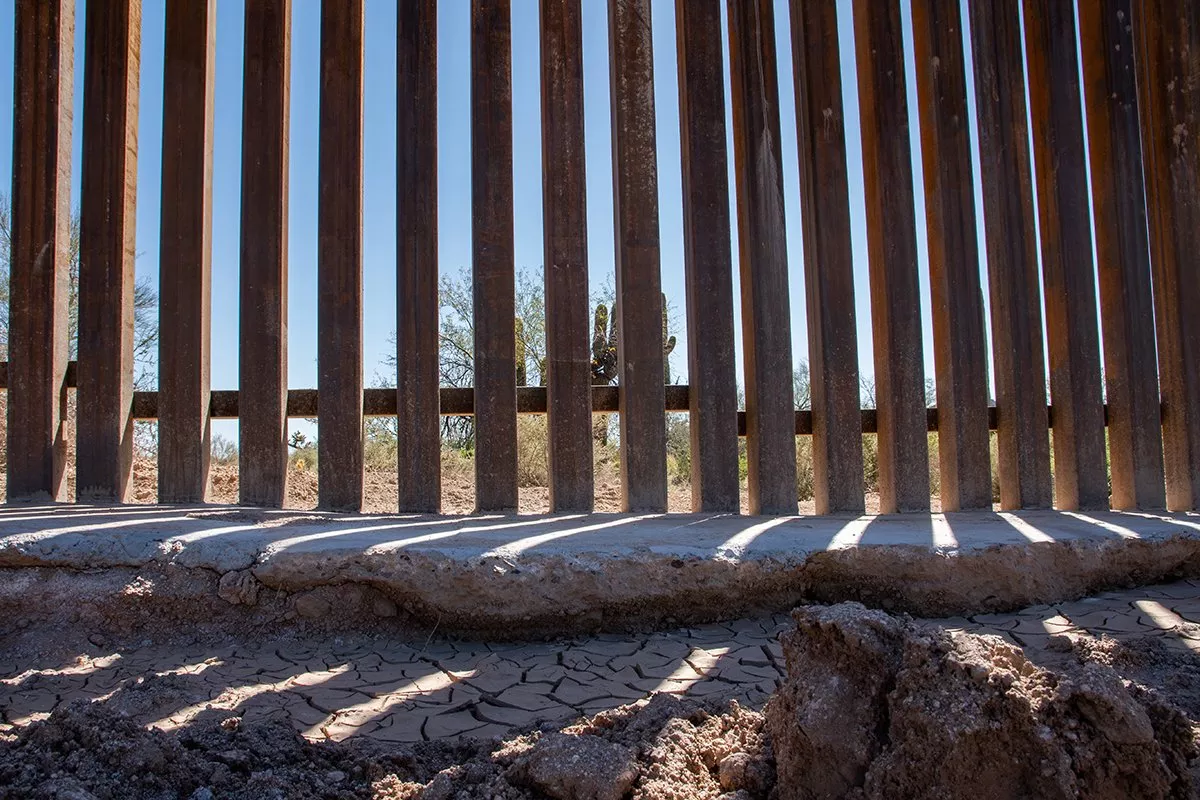
WASHINGTON – Border officials said they were “devastated” this week to find that the federal government has extended a COVID-19 ban on nonessential border crossings for another month, potentially crippling businesses there.
“The ban is a terrible and now-exaggerated response to the pandemic,” said Andy Carey, executive director of the U.S.-Mexico Border Philanthropy Project. “It’s reinstated every month for another month, and it’s been going on for nearly a year-and-a-half now, it’s time for the ban to end.”
The ban was first imposed in March 2020 on nonessential travel – essentially tourists or family visitors – between the U.S., Mexico and Canada in response to the first wave of COVID-19. It was regularly extended but was set to expire Monday.
Customs and Border Protection said that the situation has improved in both Canada and Mexico, as vaccinations have risen and infections have dropped. But it announced Wednesday that things were still too uncertain, particularly given the rise of new variants, to lift the restriction, which was extended to 11:59 p.m. July 21.
CBP did not immediately respond to a request for comment Wednesday. But border community leaders, who had been looking for the ban to end this week, were not happy.
Nogales Mayor Arturo Garino said his city has lost billions of dollars in business from the ban that “should have been lifted months ago.”
Thursday, June 24, 2021

WASHINGTON – Border officials said they were “devastated” this week to find that the federal government has extended a COVID-19 ban on nonessential border crossings for another month, potentially crippling businesses there.
“The ban is a terrible and now-exaggerated response to the pandemic,” said Andy Carey, executive director of the U.S.-Mexico Border Philanthropy Project. “It’s reinstated every month for another month, and it’s been going on for nearly a year-and-a-half now, it’s time for the ban to end.”
The ban was first imposed in March 2020 on nonessential travel – essentially tourists or family visitors – between the U.S., Mexico and Canada in response to the first wave of COVID-19. It was regularly extended but was set to expire Monday.
Customs and Border Protection said that the situation has improved in both Canada and Mexico, as vaccinations have risen and infections have dropped. But it announced Wednesday that things were still too uncertain, particularly given the rise of new variants, to lift the restriction, which was extended to 11:59 p.m. July 21.
CBP did not immediately respond to a request for comment Wednesday. But border community leaders, who had been looking for the ban to end this week, were not happy.
Nogales Mayor Arturo Garino said his city has lost billions of dollars in business from the ban that “should have been lifted months ago.”
“You know it’s going to hurt when 65% of our sales tax comes from residents in Sonora coming here and shopping,” Garino said. “That money keeps us afloat.”
Officials in Yuma and in San Ysidro, California, echoed his comments, saying border communities are suffering from a travel ban that has “outlived its purpose.”
“I represent about 800 businesses, and we would do $895 million in retail sales during a normal year,” said Jason Wells, executive director of the San Ysidro Chamber of Commerce. “We are estimating from March 2020 to March 2021 that the number is about $250 million. That’s about a 72% loss.”
WASHINGTON – Arizona advocates are breathing “a sigh of relief” this week after the Supreme Court again refused to invalidate the Affordable Care Act, a decision that should preserve the health care program for at least several years.
The ruling is the third time the court has upheld “Obamacare” and comes as the number of people signed up for health insurance under the ACA continues to grow under a special open enrollment period. That included more than 23,000 Arizonans, bringing the total number insured through the act to 178,125 as of May 31.
“The strongest case they had by far was the one that failed last week,” said Will Humble, executive director of the Arizona Public Health Association, of ACA opponents. He predicted Monday that the act is here to stay for “at least three and a half years,” given the current administration and the unlikelihood of another court challenge.
Arizona was one of 17 states that joined a Texas lawsuit to overturn the act. Calls to attorneys general in Arizona and Texas were not immediately returned Monday.
But a spokesperson for Arizona Attorney General Mark Brnovich told ABC 15 after the ruling was released Thursday that it is “even more incumbent on Congress to pass legally sound policies to fix our broken healthcare system, further fractured by the Affordable Care Act.”
But Democrats were not nearly so hesitant to react to the ruling.
“Thankfully, the Supreme Court laid down a decisive ruling that protects these provisions,” said Arizona Democratic Party Chair Raquel Terán in a statement Friday, after what she called “the Republicans’ decade-long crusade against the Affordable Care Act.”
The court ruled 7-2 Thursday that the latest challenge to the law had to fail because the plaintiffs – 18 states and two individuals – could not show that they would be harmed by the law and, thus, lacked standing to sue.
Wednesday, June 23, 2021

PHOENIX – Amid recent violence in the Middle East, Arizona Gov. Doug Ducey tweeted “Arizona stands with Israel,” joining Republican leaders across the country in a show of political support.
It also provoked outrage among those who support Palestinians, with one activist calling Ducey’s position a “violation of human rights.”
Despite the polarized viewpoints, Arizona’s aerospace and defense industry not only “stands with” Israel, but technology developed here stands watch over the country: Israel’s Iron Dome defense system was created here. In partnership with Rafael Advanced Defense Systems in Israel, Raytheon Missiles & Defense in Tucson produced the anti-missile defense system credited with blocking thousands of missiles fired by Hamas and other groups since it was first deployed in 2011.
Raytheon employs 15,000 Arizonans, according to its spokesperson, and Israeli partner Rafael formed a joint venture last year to build a version of the Iron Dome for use in the United States.
Leib Bolel, president and CEO of Arizona Israel Technology Alliance, said that when the U.S. provides military aid to Israel, it’s primarily in the form of government contracts.
Raytheon and Rafael “work very closely with the Israeli government to supply them with a number of military applications, but most notably is the Iron Dome,” Bolel told Cronkite News. The midair interception technology came “out of Rafael and Arizona, so there’s a lot of military collaboration between the two governments.”
The Iron Dome is a short-range anti-rocket system, with an intercept range of 2.5 to 43 miles, and has been relied on during the recent conflict. A shaky ceasefire remains in place, but the Associated Press reported Israel launched airstrikes on the Gaza Strip late last week.
Last month, clashes escalated between Palestinians and Israeli police when Israel tried to block some Muslims gathering at al-Aqsa Mosque in Jerusalem’s Old City at the beginning of Ramadan, the AP reported. Tensions over a plan to evict dozens of Palestinians from an east Jerusalem neighborhood also fueled confrontations.
Tuesday, June 22, 2021
PHOENIX – After months of relaxed COVID-19 precautions, including lifting restrictions on face masks and social distancing, India has suffered a second surge that set records for new infections and deaths.
As the United States begins to ease into a new normal and relaxes its own pandemic restrictions, is there a chance of a similar outbreak here? Dr. Janice Johnston, chief medical director of Redirect Health, told ABC15 multiple factors, including emerging variants and vaccines, ultimately will determine the severity of the spread.
“This is what viruses will do,” Johnston said. “They will start to mutate and vary. And what we think right now is that the vaccines are being quite effective with these variants, but time will tell.”
From a global perspective, health officials are watching the variants closely. The Centers for Disease Control and Prevention says its working with partners around the world to detect, track and respond to new variants.
In this video, Cronkite News reporter Jamie Landers explains where the U.S. stands compared to other countries.
Cronkite News has partnered with ABC15 Arizona to expand the station’s Health Insider series, which provides expert advice and insights into health topics. Cronkite News is experimenting with storytelling tools and techniques to help explain the issues.
Friday, June 18, 2021
On June 19, 1865, Union soldiers marched into Galveston, Texas, and announced the end of the Civil War, two years after President Abraham Lincoln signed the Emancipation Proclamation into law, marking the end of slavery. On Thursday, Juneteenth became a federal holiday.
While symbolically meaningful, the nation continues to see police killings of Black people at higher rates than their white counterparts and higher rates of incarceration. Arizona and 22 other states have enacted laws or introduced bills banning critical race theory in schools. In order to learn more about the longest r
In its 50th anniversary celebrating Black history and culture, the Tucson Juneteenth Festival will host several events, including:
Our Black is Beautiful, a virtual event hosted by Pima Community College and the Tucson Juneteenth Committee
- Saturday, June 19, 11 a.m. - 1 p.m. and 9-10 p.m. Join the event here.
Tucson Juneteenth Festival, an in-person event with festival vendors and food
- Saturday, June 19, 4-6 p.m., Dunbar Pavilion, 325 W. 2nd St.
Other events include:
- Films 4 US: Juneteenth Celebration 2021, a screening of "Buck Breaking," a new documentary from the producers of the Hidden Colors Documentary Series about the impact of slavery on the minds of those subject to it.
- Friday, June 18, 7-10 p.m., The Screening Room, 127 E. Congress St.
- $20. $5 from each ticket donated to the Tucson Juneteenth Festival Committee.
- Visit the event website for more information
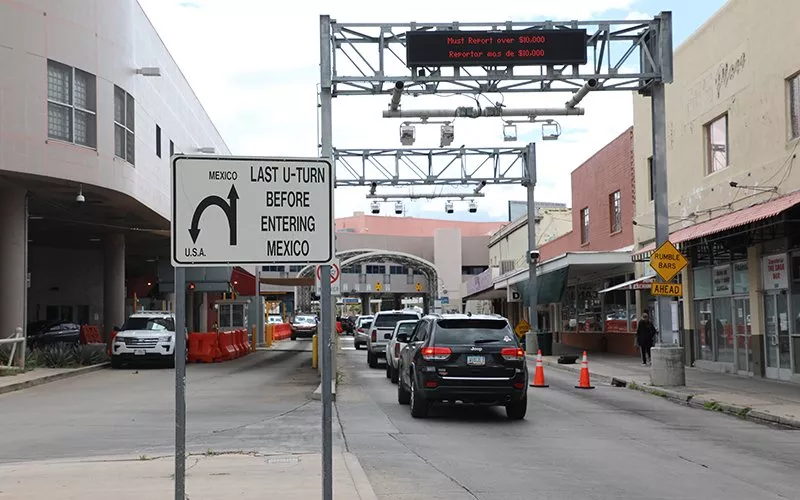
WASHINGTON – Border officials urged lawmakers to stick to a plan to reopen the border to nonessential travel Monday, even as they said more needs to be done to prepare for the expected surge in traffic.
The travel restriction was first imposed in March 2020 because of COVID-19 and has been regularly extended since, with the latest extension through 11:59 p.m. Monday. It was not clear if it will be extended again, but witnesses told a Senate Homeland Security subcommittee Wednesday that border communities cannot afford another delay in the reopening.
“I implore you to work with the White House in lifting border crossing restrictions for nonessential travel,” said Guillermo Valencia, who was testifying on behalf of the Greater Nogales and Santa Cruz County Port Authority.
“While these measures may have served an important role at critical times during the height of the pandemic, the continuation of these provisions are engendering the negative impacts on border economies,” he said.
Valencia testified that border crossings at Nogales are down by more than 46%, a drop that has “decimated” small businesses, restaurants, hotels and stores in the town.
But Valencia and others at the hearing also told senators on the Governmental Operations and Border Management Subcommittee that more workers and better technology will be needed at ports of entry to keep up with any increase in cross-border traffic once restrictions are lifted.
Anthony Reardon, president of the National Treasury Employees Union, said there is a staffing gap of more than 2,000 workers at Customs and Border Protection, which has seen no additional funding for hires since fiscal 2020. Even though border crossings fell during the pandemic, he said workers are stretched thin.
“If these essential travel restrictions are indeed lifted, I have heard from NTEU leaders that the current staffing at land ports will be unable to maintain inspection and processing functions to address the expected increase in traffic flow in a timely manner,” Reardon said.

