
Monday, June 7, 2021

WASHINGTON – Uber Eats, Postmates and DoorDash said they will no longer waive delivery fees for customers who order from Black-owned restaurants in Arizona, to settle charges by the state that the deals violated the Arizona Civil Rights Act.
The agreement, announced Wednesday, settles a claim by the Arizona Attorney General’s Office that waiving fees just for Black-owned businesses “unlawfully discriminated against non-Black owned restaurants and their patrons.”
The companies “adamantly deny any wrongdoing” in the promotions, which were announced last summer at the height of the Black Lives Matter movement. The deals ended in December, as scheduled, but the companies said they will continue working to support Black businesses through such efforts as identifying Black-owned restaurants in a separate category on the apps.
“We’re proud to have supported Black-owned businesses and we’ll continue to make it a priority,” an Uber spokesperson said Wednesday. “We have heard loud and clear from consumers that the ability to easily identify Black-owned restaurants on Uber Eats is a feature they want and appreciate.”
The Attorney General’s Civil Rights Division notified Uber, Postmates and DoorDash in November that the promotions violated the civil rights law’s public accommodations section, which prohibits discrimination based on a person’s “race, color, religion, sex, national origin or ancestry.”
Attorney General Mark Brnovich did not respond to a request for comment Wednesday, but in a prepared statement he said his office took the action “to protect civil rights and ensure businesses offer their services and products based on equal and neutral criteria.”
Friday, June 4, 2021

PHOENIX – Scott Yates is a Denver-based entrepreneur and writer. He’s also one of a select few people around the country who can be described as a “Daylight Saving Time activist.”
Yates has been invited before countless state legislatures, which he’s exhorted to end the biannual switch between Standard Time and Daylight Time, or as he puts it, to “lock the clock.” His goal is to prevent the disruption in circadian rhythms that results from springing forward and falling back, which causes a slew of maladies: “car accidents and workplace accidents and strokes and all the rest,” he said.
Arizona avoids these hazards, as one of just two states with the clock already locked (in its case, on Standard Time). Yates said this makes it a “role model.” And while his movement is gaining ground – 18 states have passed measures locking the clock on Daylight Time, pending federal action – it’s still not exactly receiving mainstream attention.
But Yates does see one particular group show up to support these bills again and again.
“A lot of the states, when I testify,” he said, “the only other ones that show up are the golf people.”
The golf industry has historically promoted the expansion of Daylight Saving Time. One of the earliest advocates for setting the clocks ahead in the summer was an English builder named William Willett who wanted to be able to golf later in the day. And after the U.S. standardized Daylight Saving Time (DST) with the Uniform Time Act of 1966, the golf lobby was right there to push for an extra month of DST in the 1980s, which they said would garner an additional $400 million in revenue for their industry.
The thinking goes that extra daylight after work should entice more people to spend their spare time on the golf course.
“I think that most of us spend more leisure time in the afternoon,” said Calvin Schermerhorn, a history professor at ASU who once spoke about DST before the National Conference of State Legislatures. “So yeah, you may want to get out to the links early and have a nice early tee time, but the real sweet spot is in that afternoon.”
But what about in Arizona? It’s a top-10 state for golf economic output, according to advocacy group We Are Golf, yet it eschews DST.
Thursday, June 3, 2021
Pima County residents in danger of being evicted can get help and resources at a Tuesday event.
The Amphi Coalition and Pima County’s One-Stop will hold an Eviction Prevention Resource Fair from 8 a.m. to noon at Literacy Connects, 200 E. Yavapai Road.
In addition to rent and utility assistance, more than 25 organizations will be offering various other services at the fair, according to a news release.
The Pima County Health Department will offer COVID vaccinations. The Pima Animal Care Center will offer dog and cat food for those with pets. People can also be connected to resources on finding work and mental-health support, signing up for the Arizona Health Care Cost Containment System (AHCCCS) and enrolling children in school.
“This fair is a wonderful opportunity to blend all the resources available to the community — be it health or financial resources,” said Daniel Sullivan, Pima County’s Community Services director. “It will also be the first time that we’ll be able to tell the community about the legal resources that we’re bringing to bear to prevent evictions.”
He said the county and city have about $23 million left to be distributed to families in need, having already jointly disbursed or obligated $11.6 million in rental and utility assistance.
Wednesday, June 2, 2021

WASHINGTON – Both sides agree on one thing about President Joe Biden’s decision to raise this year’s cap on refugee admissions from a historic low of 15,000 to as many as 62,500.
The U.S. is not going to come close to hitting that new ceiling.
“It’s not realistic, it’s just a kind of virtue signaling,” said Lora Ries, senior research fellow for homeland security at the Heritage Foundation.
Biden had said in April that he planned to keep the historically low 15,000-refugee cap imposed last year by President Donald Trump. That decision was immediately criticized by Biden supporters and sent the administration scrambling to back off, with officials promising within hours that a higher cap would be announced by May 15.
Biden unveiled the new cap on May 3, but even as he announced it he conceded that it was aspirational.
“The sad truth is that we will not achieve 62,500 admissions this year. We are working quickly to undo the damage of the last four years,” Biden said in a White House statement.
At the time of the announcement, the U.S. had admitted just 2,334 refugees, or just over 15% of the original limit of 15,000 refugees for fiscal 2021, according to the most recent refugee admissions report from the Refugee Processing Center. The Arizona Department of Economic Security said 161 refugees had been resettled in the state through May 17.
Numbers for the month of May will not be released until next week, but no one thinks the U.S. will be able to admit 60,000 more refugees in the five months left in the fiscal year.
But just setting a higher target will “very likely result in increased admissions beyond what would have happened, and it lays the groundwork for a bigger expansion next year,” said Mark Greenberg, director of the Human Services Initiative at the Migration Policy Institute.
The limit was set at 85,000 in President Barack Obama’s last year in office, but Trump lowered the ceiling to 50,000 in his first year and cut it every year thereafter until admissions were capped at 15,000 for this fiscal year.
Biden’s new cap “is still below the traditional one before Trump,” said Dany Bahar, senior fellow in the Global Economy and Development program at the Brookings Institution, but he expects the number will increase “very rapidly” because the number of people seeking refuge remains high.
Bahar said the higher cap on refugees was expected and that it should be “further increased because it is definitely not meeting the demand.” When he announced the new fiscal 2021 cap, Biden said he wants to raise the cap to 125,000 next year.
“That goal will still be hard to hit,” Biden said then. “We might not make it the first year. But we are going to use every tool available to help these fully-vetted refugees fleeing horrific conditions in their home countries.”
Friday, May 28, 2021

A University of Arizona economics professor said taxing carbon emissions would help solve the significant challenges that climate change poses to U.S. and world economies.
Dr. Derek Lemoine, associate professor of economics at the UA Eller College of Management, presented his research at the 2021 Breakfast With the Economists on Thursday.
Climate as a distribution of weather, which we “live through and experience,” matters for the economy, Lemoine said.
Lemoine discussed rising carbon emissions, saying “we are really restoring carbon conditions from way before even pre-humans ever existed, like we're really taking the planet pretty far back.” By 2050, carbon dioxide could reach levels unseen in 50 million years, he said.
Increasing carbon emissions increases global temperatures. In the early 1900s, Tucson months were cooler than the 20th-century average, and by the early 21st century, more months were warmer than the 20th-century average, according to data from the National Weather Service of Tucson.
Lemoine connected increases in temperature to things that affect humans: mortality, corn yields, electricity use, labor supply and even math scores.
Data from India and Italy showed that extreme heat correlated with an increase in mortality. Corn yields also suffered in extreme heat, he said, and the data has been replicated for other crops around the world. Although not clear as to why, he said minutes of labor per day fall as temperatures increase.
“I don't entirely understand what the channel is but it does seem to be true that productivity does fall in both extreme cold and extreme heat, and that has important implications for the economy as productivity growth is one of the main sources of economic growth in the medium and long run,” he said.
Truly understanding the impact of climate change on the economy means tracking how people are affected not in the short term by weather, but in the long run by permanent changes in climate.
“This is the economics of it. People react differently when things are happening over and over and when they expect them to happen over and over, and that's what we call adaptation,” said Lemoine.
He explained how Arizona residents install air-conditioning, thus adapting to expected high temperatures or after experiencing hot temperatures over time.
“Both of these are relevant to climate change, and both make climate differ from like the one-off kind of weather shocks we've been looking at, because people are going to live with hot weather over and over and over and over with climate change, and it's going to be hot over and over and over with climate change,” said Lemoine. “It’ll drive longer run investments than what you might see otherwise.”
Lemoine finds adaptation actually increases long‐run costs in U.S. agriculture when farmers adapt by using scarce resources.
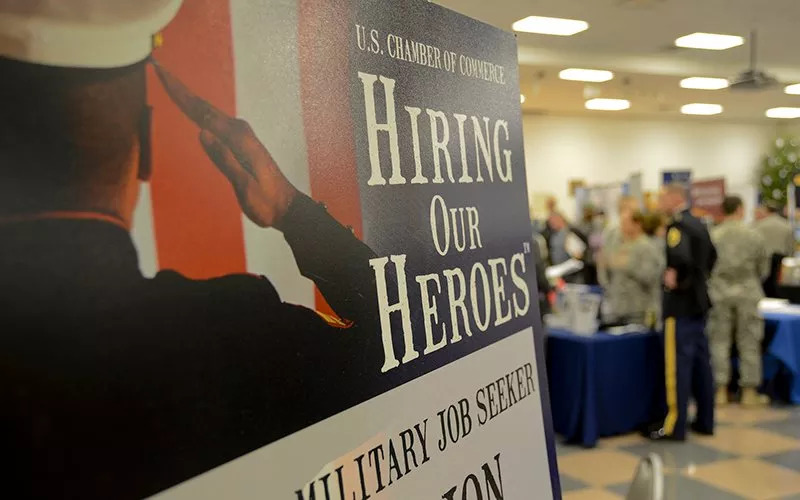
WASHINGTON – An employment program for veterans that began in the days after 9/11 paid off last year when the COVID-19 pandemic rattled employment for vets in the state and across the country, an advocate told House lawmakers Wednesday.
“Communities in Arizona are no different than communities across the United States. We have seen the significant impact of the pandemic on service members, veterans and their families,” said Thomas Winkel, director of the Arizona Coalition for Military Families.
What is different in Arizona, Winkel said, is that public and private organizations have been working together for years now to establish “a robust and sustainable effort to assist veterans with securing meaningful employment.”
Winkel was part of a panel testifying at a House Veterans’ Affairs Committee hearing on veteran employment during the pandemic.
Like all other sectors, veteran unemployment rose sharply in 2020 – although it continued to be lower than jobless for the general population nationally. But witnesses said there is still room for improvement in government programs that are supposed to help soldiers transition from military to civilian life.
Chris Thorne, co-chair of the Military Affairs Advisory Council at the North San Diego Business Chamber, said employers are eager to hire vets, but that too often the transition process “does not adequately prepare transitioning service members for what comes next.”
“To put it quite simply, transitioning service members are walking into a foreign culture that speaks different languages, acts different ways and values different outcomes,” Thorne said in his written testimony. It’s not enough to merely identify a job that requires a skill set learned in the military, he said.
Thursday, May 27, 2021

Zio Peppe will open its dining room and patio on Tuesday, allowing customers to dine on the premises.
While guests have been able to enjoy Zio Peppe, 6502 E. Tanque Verde Road, for takeout and delivery since it reopened earlier this month, “We really want people to come see the space; we couldn't be happier with how it came together,” said Chef/Owner Devon Sanner in a news release.
“We’re thrilled to be able to invite our guests to join us and experience Zio Peppe in person,” he said. “We’ll continue offering takeout and delivery for guests who would like to enjoy our food at home, but we’re elated in anticipation of a well-seated, convivial dining room.”
"The centerpiece of the Zio Peppe space is a unique gas and wood-fired oven with a rotating stone hearth, which tells me that pizza is a central part of their story. And several of the Neapolitan-style pizzas symbolize the Sonoran-Italian connection," wrote Tucson Weekly Chow writer Matt Russell.
Zio Peppe’s menu showcases a confluence of Italian-American and Sonoran cuisines, reflecting the chefs’ love of comfort classics as well as the regional flavors and ingredients of their native Tucson. Characteristic of this Italian and Sonoran synergy is the Fettuccine Alfredorado, which Chef/Owner Mat Cable cites as being among their most popular dishes.
“We’ve got pizzas that are unique; you could only get this in Tucson,” Cable said, referring to the Prickly Pickle, with its pepperoncini-brined cholla buds, nopalitos, and red onion escabeche.
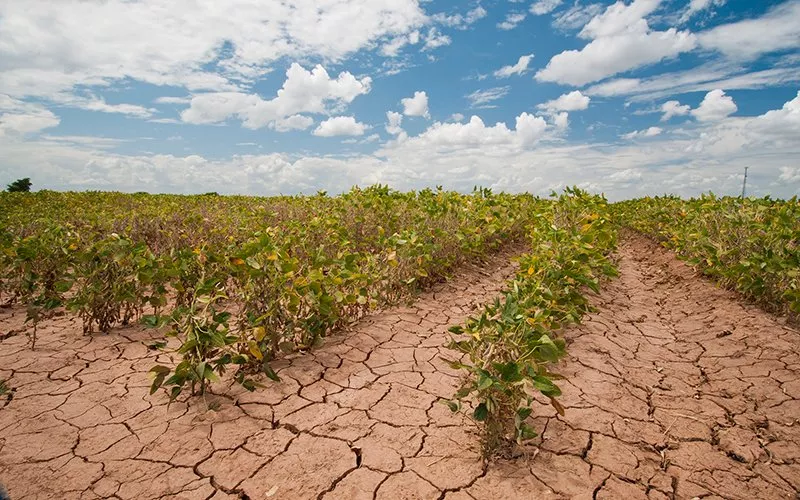
WASHINGTON – Arizona and other Western states just lived through the driest year in more than a century, with no drought relief in sight in the near future, experts told a House panel Tuesday.
The period from last April to this March was the driest in the last 126 years for Arizona and other Western states, witnesses said. It caps a two-decade stretch that was the driest in more than 100 years that records have been kept – and one of the driest in the past 1,200 years based on paleohydrology evidence, one official said.
“We have never seen drought at the scale and intensity that we see right now, and it is possible that this may be the baseline for the future,” Elizabeth Klein, a senior counselor to the secretary of Interior, said in her testimony.
More than half of Arizona is currently experiencing “exceptional” drought conditions, the most severe level of drought, according to the National Integrated Drought Information System. The Arizona Department of Water Resources said most of the state got less than 25% of average precipitation for April.
The water shortage can affect everything from the amount of power generated by hydroelectric dams on the Colorado River to the risk of wildfire.
Tiffany Davila, public affairs officer for the Arizona Department of Forestry and Fire Management, said that this year’s drought is much more severe than what Arizona saw at this time last year.
“Vegetation is stricken across the state; there isn’t one area that isn’t impacted by the drought,” Davila said. “It’s pretty much kindling at this point.”
Low water levels are also likely to trigger reductions in water agreements with agencies like the Central Arizona Project and the Salt River Project. But SRP officials said Tuesday that they have long been taking steps to mitigate the immediate impact of those reductions.
Wednesday, May 26, 2021

WASHINGTON – They came with studies, they came with polls, they came with statistics. And after more than two hours of a congressional hearing Monday, they walked away no closer to agreeing on how voting restrictions affect ballot access.
Democratic and Republican members of the House Administration Committee stuck largely to their talking points during a hearing on the effect that voter ID laws, proof-of-citizenship requirements and lack of language assistance have on elections.
Republicans dismissed suggestions that voter ID laws have a disproportionate impact on minority voters, pointing to the turnout in the 2020 elections as proof.
“In 2020 we saw more people cast a vote than any other presidential election in history, further dispelling the myth that voting ID requirements deter people from legally voting,” said Rep. Bryan Steil, R-Wisc.
But Democrats and some witnesses at the hearing pointed to a long list of studies that they said demonstrate, in the words of Rep. G.K. Butterfield, D-N.C., that, “Voting ID laws have been shown to disproportionately decrease minority turnout.”
The committee debate comes as the Arizona Legislature is considering several election bills that echo the national debate, with one side saying the changes protect and the other side saying they restrict voting.
The state had 23 restrictive voting bills for the 2021 legislative session, the third-most in the nation, according to a report by the Brennan Center for Justice at New York University. It also had 15 Democrat-backed voting-expansion bills, but those were quickly killed in the Legislature.
Tuesday, May 25, 2021

PHOENIX – As Missy Farr-Kaye watched her friend Phil Mickelson master the PGA Championship, the Arizona State women’s golf coach said what everyone was thinking: “He is a fountain of youth right now.”
The legendary lefty and Arizona State alumnus became the oldest golfer to win a major at 50, capturing the PGA Championship Sunday.
It was Mickelson’s sixth major win and first since 2013. With it, not only did he become the oldest golfer to ever win a major but he also joined a prestigious list of golfers to win a major in three different decades.
And it raised an interesting question: Is Mickelson’s success at 50 a sign of things to come for other athletes?
“There are a lot of advantages that accrue over time in sports,” said Jeff Bercovici, author of “Play On: The New Science of Elite Performance at Any Age.” “You acquire a lot of knowledge, and a lot of skill and experience and maturity and emotional control all these things that are advantages to any athlete. The thing is that you’re also acquiring a big disadvantage, which is that your body is getting older. You get slower, you get injured more easily. Historically, the disadvantages have accrued faster than the advantages.
“What we’ve seen, particularly over the last kind of 20ish years, is the science of particularly athletic training but also medicine, surgery, nutrition, recovery, has allowed athletes to slow down the rate at which their bodies age to the point that now we see what happens when the advantages, express themselves more fully than we’ve ever been able to see before.”