
Monday, May 24, 2021
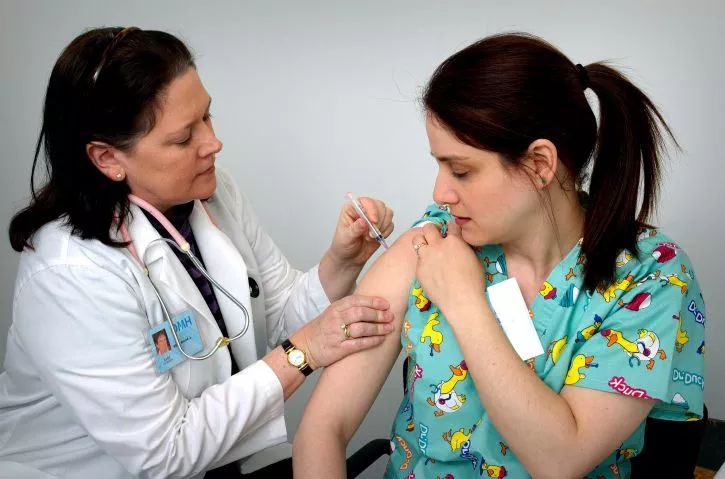
The Arizona Department of Health Services is asking health care providers, especially pediatricians, to prioritize vaccinations over the fear of vaccine wastage.
ADHS Director Dr. Cara Christ said they had heard that some providers may be fearful of opening a bottle to pull out a couple of doses when they may not have to use the other doses on the same day. She said while they continue to minimize waste, it should not be at the expense of vaccinating someone.
“In the beginning when vaccine was in very, very short supply and we had high demand, we were very, very careful about using every single dose of vaccine,” said Christ. “If you do have to open a vial to extract just a couple of doses, take that opportunity, get that individual vaccinated because we don't want any missed opportunities for our providers. And while we do want to minimize vaccine wastage, getting people vaccinated and preventing hospitalization and death is very important.”
The state hopes more providers will register to become COVID-19 vaccinators and receive COVID-19 vaccine. To order vaccine, providers would need to become pandemic vaccine providers through the state or a federal program.
As of May 17, eligible health providers can order all types of COVID-19 vaccine directly from the CDC, without an allocation from their local health department, said Christ.
Previously, eligible providers could order only Moderna. With eligible providers able to request an allocation of Pfizer they would be able to administer the vaccine to children 12 to 15. More information on Pima County vaccination spots.
Christ said they anticipated that about 385,000 Arizonans became eligible for Pfizer after the Center for Disease Control and Prevention’s approval of the FDA’s emergency use authorization of Pfizer for children 12 to 15.

Editor’s Note: Cronkite News photographer Alberto Mariani spent several months documenting the work at Peace Chapel Funeral Home. This story contains images that some may find graphic.
PHOENIX – At 10 p.m. no words are spoken, but a loud buzz reverberates throughout Peace Chapel Funeral Home. It’s the rhythmic beat of an embalming machine pumping a mix of chemicals into a woman in her 50s.
Standing next to the body – working late again – is funeral director Ron Thornson.
Since March 2020, Thornson and his staff have routinely worked 14 to 16 hours a day, without much pause to reflect on the historic events swirling around them during the COVID-19 pandemic.
Like so many other people and businesses across the globe, these workers and this industry were hit hard by the pandemic in myriad ways.
An already trying job grew more stressful, with funeral home directors – often known as the “last responders” – left explaining to grieving customers why they couldn’t mourn in person or have big gatherings to say goodbye. Caseloads also surged as the COVID-19 death toll rose. To date, more than 580,000 people have perished in the U.S. alone.
The assumption, said Claude Robinson, Peace Chapel’s funeral coordinator, is that “death is inevitable with this profession” and that those who work in the industry are somehow immune to the effects of mass casualty events such as a pandemic.
Not so.
The nature of the job demands that workers keep their emotions masked, Robinson said.
“You are almost taught not to break when you are to serve a family,” he said, explaining that revealing too much could transfer more pain onto those already suffering.
“A lot of people don’t understand that as a funeral service worker, you have a big task,” he added. “You are not just picking the body up, cleaning it, putting makeup on and placing it in a casket. You’re expected) to coach the family, to be a financial adviser and to be a psychologist” during one of the toughest moments in life.
And in a year when death became an excruciating daily experience for most Americans, even these men and women have been touched by it.
“It has affected us all, to a certain degree,” said Thornson. “But we’ve stood strong and supported one another.”
According to the National Funeral Directors Association, the average mortuary receives 113 calls a year, with larger funeral homes getting more. But the number of cases seen by funeral workers in 2020 far outpaced those in previous years.
The U.S. death rate increased 16% from 2019 to 2020, according to the federal Centers for Disease Control and Prevention, and the number of U.S. deaths exceeded 3 million for the first time in history.
Thursday, May 20, 2021
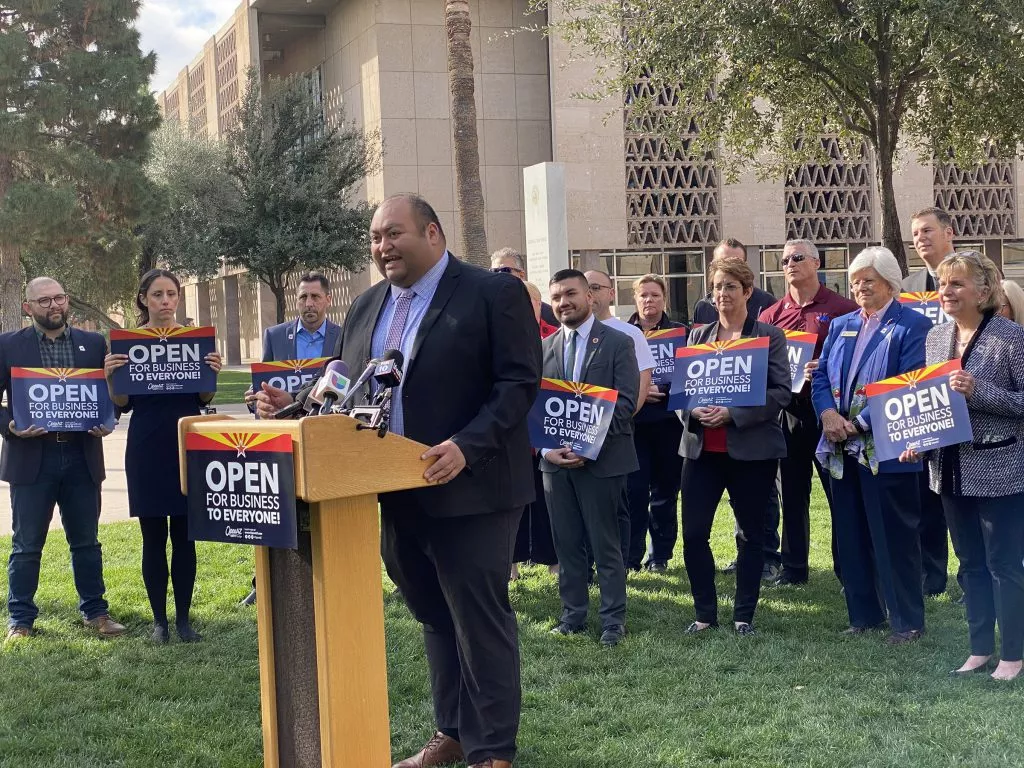
State Rep. Daniel Hernandez (D-announced today that he was launching a campaign for the
congressional seat now held by U.S. Rep. Ann Kirkpatrick, who announced earlier
this year that she would retire after this term.
“As a lifelong Arizonan from a working
class family, I know firsthand that people in Southern Arizona want results
from their representatives, and as our community recovers from this pandemic,
that’s never been more important,” said Hernandez in a prepared statement
announcing his campaign. “In the
Arizona State House I have fought for investments in our schools, our
hospitals, and our roads and bridges. I have worked across the aisle to pass
laws protecting survivors of sexual assault and repealing discriminatory laws
against the LGBTQ Arizonans. I’m running for Congress to keep up that fight for
our values and deliver real results to make our community stronger.”
Two
other state lawmakers, State Sen. Kirsten Engel and State Sen. Randy Friese, have
already launched campaigns in the district.
Hernandez
is best known for being the first person to administer first aid to Gabby
Giffords after she was shot through the head by a crazed gunman at a Congress
on Your Corner event in January 2011. Hernandez was then an intern for
Giffords, but in 2016, he won a seat in the Arizona House of Representatives in
Legislative District 2, which includes downtown Tucson, Green Valley, Sahuarita
and Nogales.
Congressional
District 2 now includes the Catalina Foothills, central and eastern Tucson and all
of Cochise County and has been one of Arizona’s most competitive districts,
being held by Democrat Ron Barber for one term, Republican Martha McSally for
two terms and now Kirkpatrick for two terms. But with redistricting underway,
the boundaries will change ahead of the 2022 election.
The spelling of state Sen. Kirsten Engel's name has been corrected in this article.

Pima County is expanding vaccine opportunities, offering daily walk-in vaccinations at Foothills Mall.
On Sunday, the vaccination site, located in the former Old Navy store, began offering vaccinations for all ages from noon to 8 p.m. every day.
“The large operations made an incredible impact and allowed us to vaccinate hundreds of thousands of people in a matter of just months,” said Dr. Theresa Cullen, director of the Pima County Health Department. “Over the course of the last few months, we have also been tremendously successful in building up and perfecting our mobile and smaller-scale operations as well. It is easier than ever to get a COVID-19 vaccine in Pima County.”
Since the state began vaccinating children ages 12 to 15 after a green light from the FDA on May 13, the county has expanded its locations offering Pfizer.
The county continues to offer vaccinations at several mobile sites every week, along with the FEMA pop-up sites.
Thursday, May 20
- Richey Resource Center, 2209 N. 15th Ave., 9 a.m. - 3 p.m.
- Cornerstone Fellowship Church, 2902 N. Geronimo Ave., 1:30 - 3 p.m.
- New Jerusalem Missionary Baptist Church, 1341 S. Tyndall Ave., 3 - 7 p.m.
- Antigone Books, 411 N. 4th Ave., 6 - 9 p.m.
Thursday, May 20 - Friday, May 21
- Northwest Service Center, 1010 W. Miracle Mile, 10 a.m. – 8 p.m.
- Pima Community College East, 8181 E. Irvington Road, 10 a.m. – 8 p.m.
Friday, May 21
- Amphi High School, 125 W. Yavapai Road, 10:30 a.m. - 2 p.m.
- Grace Temple, 1020 E. 31st St., 4 - 7 p.m.
- Pueblo High School, 3500 S. 12th Ave., 5 - 9 p.m.
Saturday, May 22
- Friendship Missionary Baptist Church, 850 N. 11th Ave., 8 a.m. - 1 p.m.
- St. Joseph Catholic Parish, 215 S. Craycroft Road, 9 a.m. - 1 p.m.
- St. Pius X Catholic Church, 1800 N. Camino Pio Decimo, noon - 3 p.m.
Sunday, May 23
- Saguaro Christian Church, 8302 E. Broadway Ave., 2 - 6 p.m.
- Saints Peter & Paul Catholic Church, 1946 E. Lee St., 8 a.m. - 2 p.m.
- Most Holy Trinity, 1300 N. Greasewood Road, 11 a.m. - 2 p.m.
Sunday, May 23 - Tuesday, May 25
- COPE Community Services, 5401 E. 5th Street, 10 a.m. – 8 p.m.
- Park Place Mall, 5870 E. Broadway Blvd., East Parking lot (east of Park Place Drive), 10 a.m. – 8 p.m.
Ongoing
- Tucson Mall, 4500 N. Oracle Road, 11 a.m. - 3 p.m., Monday through Friday
“The number of places to get vaccinated and how easy the process has become is making it more accessible to those looking to join the over 3.1 million people in Arizona who have received at least one dose,” said Cullen. “Our goal is to be ready and nearby when someone makes the decision to get theirs.”
With its shift to smaller sites, some of the larger operations within the county will close, including the CareMore Health location at 4750 S. Landing Way, near Irvington and I-19, on May 21; and the Tucson Convention Center site will close May 28.
As of Wednesday, May 19, the state has administered more than 5.5 million vaccines, with about 37% of the Arizonans fully vaccinated. The state has remained at a substantial level of transmission for several weeks with a rate of about 65 cases per 100,000 for the week of May 2. Pima County remains below 50 cases per 100,000 for a moderate rate of transmission for the past three weeks.
Tucson Repeals Mask Mandate
After the Pima County Board of Supervisors voted to drop its mask mandate last week, the Tucson City Council followed suit and unanimously voted to repeal its mask mandate Tuesday night.
Tuesday, May 18, 2021

Area organizations that help low-income families access the internet are now able to apply for free Wi-Fi.
During this year, Comcast is selecting nonprofits to benefit from its Lift Zones program, which will supply free internet access for the next three years. Boys & Girls Clubs of Tucson and the Pascua Yaqui Clubhouse were recent recipients of the service.
“Equipping our Pascua Yaqui Clubhouse with a Lift Zone has made a huge difference in the lives of the students we serve,” said Adam Ortiz, Clubhouse Director. “While some of our students have an internet connection at home, staying at home during the summer days often isn’t possible. The clubhouse is a safe space where students can come to connect to the internet, and with each other.”
Comcast is currently accepting nominations for potential Lift Zone sites across Southern Arizona. Community partners can visit arizona.comcast.com/lift-zones to learn more and nominate their organization.
“Access to the Internet is a critical component of digital equity, and we’re proud to partner with key community organizations in making that possible through our Lift Zones,” said Chris Dunkeson, Area Vice President, Comcast. “There is no single answer to address the digital divide, but we’re working hard to bridge the gap for as many students and families in our Southern Arizona service footprint as possible.”
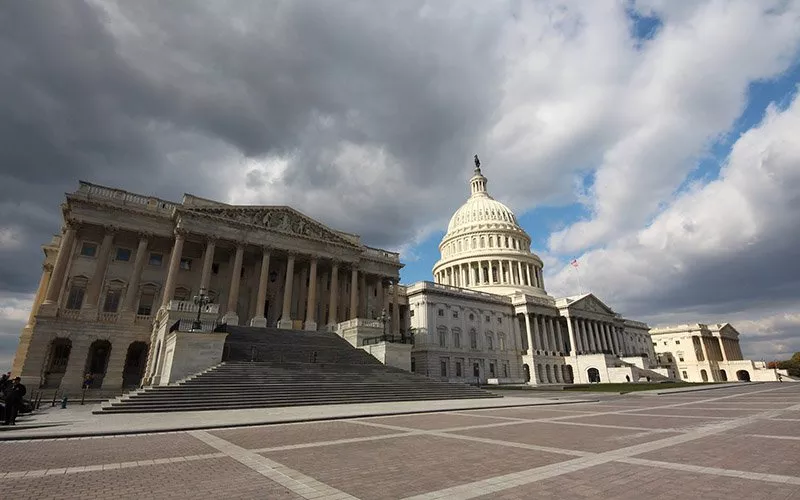
WASHINGTON — They don't have the high profiles or long tenure of other members of Congress, but Arizona lawmakers in the last Congress ranked relatively high on a recent scorecard of congressional effectiveness.
The Center for Effective Lawmaking study, by researchers at the University of Virginia and Vanderbilt University, ranked members on the amount of substantive legislation they introduced and how far it moved toward passage in the 116th Congress.
A compilation of those scores showed Arizona had the 10th-most effective House delegation and 14th-most effective senators. The report’s authors said an unusual number of freshmen and minority party members scored well, showing that “even in these politically challenging times, bipartisanship is still working and … viable.”
“Compared to previous congresses, we have a notably larger number of freshman legislators who are essentially punching above their weight class, they score above expectation,” said Alan Wiseman, a Vanderbilt professor and co-author of the study.
But in Arizona, seniority did appear to come into play: The highest-ranking House member was Rep. Raul Grijalva, D-Tucson, who is both the longest-tenured member of the delegation and who is now in his second term as chairman of the House Natural Resources Committee. He finished 14th among House Democrats and 16th overall in the chamber.
He was one of three Arizona Democrats to finish in the top 10% of House members, along with Reps. Tom O’Halleran of Sedona, who ranked 31st, and Ruben Gallego of Phoenix, who came in at 33rd.
Republicans, as a group, had a lower combined score than Democrats and Arizona was no different. Rep. Debbie Lesko, R-Peoria, was the state’s highest-ranking Republican, in 147th place overall and 26th among GOP members.
Still, Lesko, who just started her second full term in Congress, said she was surprised to be ranked so high, especially given the pace of Washington compared with her experience as a state legislator.
Monday, May 17, 2021
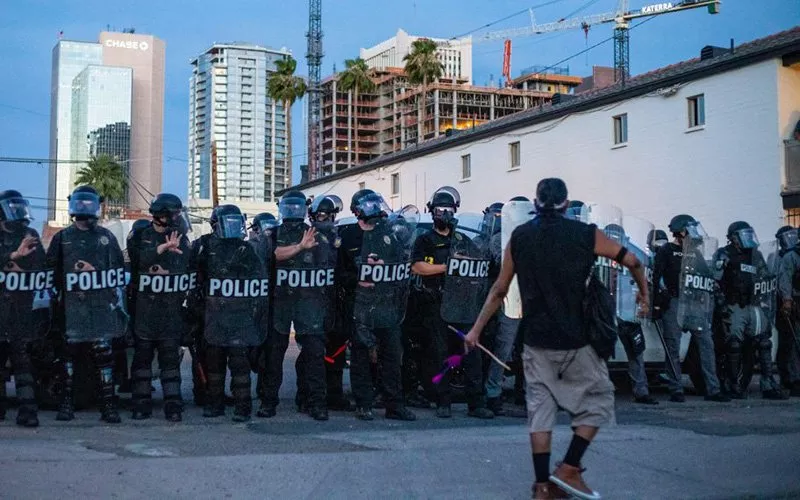
Phoenix police don’t follow Fe’La iniko on social media, but he knows they’re watching.
“They’re pretty hip to Instagram,” the racial justice activist said. “Sometimes they’ll pop up in my story views.”
Iniko, whose given name is Milton Hasley, often uses social media to share fliers on upcoming protests or speak out against police violence. So when officers surrounded his car last summer while he was leaving a demonstration against the killings of George Floyd and Dion Johnson, iniko worried he might have been targeted in advance for his views. As a handful of cop cars trained their spotlights on him, he was careful to keep his hands visible as he placed them on the steering wheel, a video he posted on Instagram shows.
“Try not to look threatening,” he remembered thinking.
Hours later, iniko was booked into jail and charged with two felonies and two misdemeanors, all of which were later dropped. He was one of hundreds of Phoenix protesters arrested during last year’s demonstrations against systemic racism and police brutality, which were met with an aggressive police presence and a number of controversial charges from prosecutors.
Police reports and court records would later reveal that police surveilled some of the protesters on their social media accounts during the summer and fall.
It was a year that would see Black Lives Matter demonstrations and civil unrest followed by anti-lockdown rallies, election protests and the fatal Jan. 6 storming of the U.S. Capitol. In the Capitol insurrection, law enforcement officials scoured social media platforms, sweeping up photos, videos and comments that have helped to identify, arrest and charge hundreds of people.
This form of online policing has gained traction as a means of addressing the looming threat of domestic terrorism. But many agencies — including the Phoenix Police Department — work under barebones guidelines when monitoring online activity.
Friday, May 14, 2021

The Pima County Board of Supervisors voted to 4-1 to repeal the mask mandate and continue recommending masks at the emergency meeting Friday afternoon.
In order to stay in line with the Center for Disease Control and Prevention’s updated guidance on Thursday, announcing fully-vaccinated individuals can go unmasked in indoor and outdoor settings in most cases, the board passed Resolution_2021-35. The resolution repeals Resolution 2020-96, the mask requirement, while continuing to recommend mask use for unvaccinated individuals and in some cases those vaccinated.
The county’s Chief Medical Officer Dr. Francisco Garcia acknowledged the contradictions between the board’s resolution and the CDC’s recommendation, as the resolution required face masks without differentiating between fully vaccinated and unvaccinated individuals.
County Administrator Chuck Huckelberry suggested three directions the board could take.
The first suggested the board could amend its current resolution to apply only to unvaccinated individuals and exempt fully vaccinated persons.
“This action, although symbolically meaningful, would be unenforceable,” wrote Huckelberry in his May 14 COVID-19 update.
The second option, which Huckelberry, along with Pima County Health Department Director Dr. Theresa Cullen and Garcia recommended the board select, opted for considering a new resolution to repeal the previous mask mandate and provide new recommendations.
The last option suggested the Board could simply repeal the resolution, which Supervisor Steve Christy made an unsuccessful motion to pass.
Ultimately the board chose the second option, aligning with the CDC in recommending continued use of masks and other mitigation strategies like social distancing for the unvaccinated people, while also recommending masks for all, vaccinated or not, on public transportation and in 'health care settings, schools, correctional facilities, shelters, congregate facilities and any other setting where it is required by local, state or federal law.” These recommendations are also in line with CDC’s updated guidance.
The resolution also requests establishments provide masks for employees who are not fully vaccinated and encourage the use of masks, but makes clear the resolution does not prevent establishments from setting their own standards on masks and social distancing, or refusing service for noncompliance.
After the resolution, Christy motioned to “rescind, remove and terminate” board Resolution 2020-18, which declared Pima County in a state of emergency related to the COVID 19 outbreak. The motion died for lack of a second.

A new poll shows bipartisan support for President Joe Biden’s infrastructure and care plan in key states, according to Data for Progress.
From the end of April to early May, Data for Progress, a think tank and political advocacy group, surveyed an average of 642 likely voters in each of 10 key states - Arizona, Colorado, Georgia, Michigan, Montana, New Hampshire, North Carolina, Pennsylvania, West Virginia and Wisconsin.
The survey measured the support for Biden’s Build Back Better agenda, including the American Rescue Plan, American Jobs Plan and American Families Plan.
The majority of likely voters in all 10 states supported the American Rescue Plan. In Arizona, 72% supported the plan, with most giving credit to the Democratic Party for passing provisions including vaccine distribution, stimulus checks and expanded child tax credit.
The poll also showed net positive support for The American Jobs Plan and American Families Plan in all 10 states, even when voters were told the plans would be paid for raising taxes on corporations and the wealthy.
“The idea that paying for these plans is unpopular is patently incorrect. In fact, those provisions actually make people more supportive of the idea,” said Sean McElwee, executive director for Data for Progress.
In Arizona, 68% of support the American Jobs Plan and a little more than half of those who self-identified as Republicans support the plan. About 80% of likely voters in Arizona supported the proposed investments in physical infrastructure, lead pipe removal and long-term care.
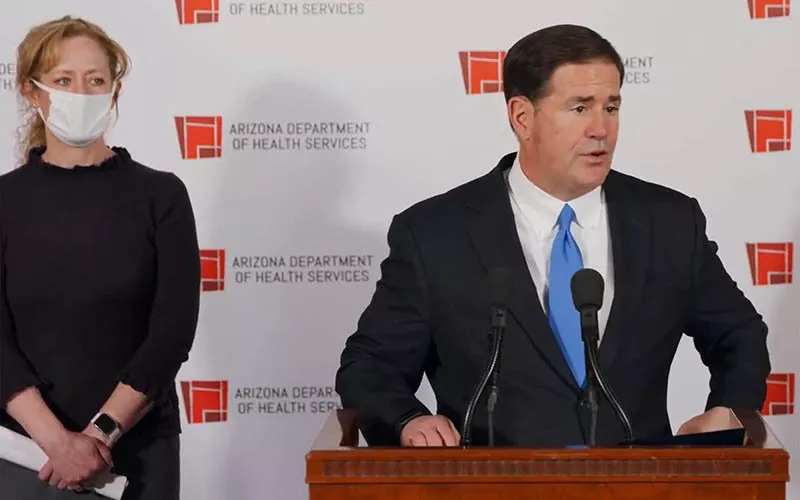
Arizona will no longer provide the weekly $300 federal supplement for unemployed workers during the pandemic, Gov. Doug Ducey said on Thursday.
With his “Arizona Back-to-Work” Plan, thousands of Arizonans on unemployment will return to receiving the maximum $240 on July 10.
Several other states announced they also would stop taking the federal pandemic unemployment benefits, including Alabama, Arkansas, Georgia, Idaho, Iowa, Mississippi, Missouri, Montana, Ohio, North Dakota, South Carolina, South Dakota, Tennessee, Utah and Wyoming.
The Pandemic Unemployment Assistance, extended in March through the American Rescue Plan, provided an additional weekly $300 to cover freelancers, part-timers and anyone who did not qualify for regular unemployment and extended the benefit for an additional 24 weeks. The program is set to end on Sept. 4.
Instead, Ducey will use $300 million in federal money to encourage Arizonans to rejoin the workforce. The plan is a one-time $2,000 bonus for full-time workers and a $1,000 bonus for those who return part-time.
People will receive the bonus after they stop filing for unemployment benefits and complete 10 weeks of work with an employer. The bonuses are on a first-come, first-serve basis.
To qualify, an individual must have already filed for unemployment benefits, meaning anyone who files after May 13 will not be eligible. Individuals must also make $25 per hour or less - about $52,000 a year - at their new job and must begin working by Sept. 6.