
Friday, March 12, 2021
For all the attention on Biden’s changes to border policy, there are plenty of factors out of the U.S.’s control — which might make migrants increasingly desperate.
The cause of the collision between an SUV and a semitruck that left 13 dead in Holtville, California, on Tuesday morning is still a horrific mystery. But federal investigators are exploring a likely explanation for why the overloaded car sped through an intersection in the rural area: a case of human smuggling turned deadly.
Surveillance footage shows the 1997 Ford Expedition and another SUV loaded with people entering the U.S. through a breach in the border fence shortly before the crash. Ten victims were Mexican nationals; the other three were women from Guatemala. While consular officers keep working to confirm victims’ names, special agents from Immigration and Customs Enforcement began piecing together how 25 adults came to be crammed into a vehicle meant for no more than eight.
It’s an all-too-familiar story, and one that has not become less common as the world fights a global pandemic and migrants south of the border wait to see the effects of immigration changes promised by the administration of President Joe Biden. Clandestine migration to the U.S. has accelerated through last fall and into the early weeks of the new administration, as poverty, crime and public health conditions across the border have grown more desperate.
“You’ve lost your source of income, whatever it is. People — especially in the informal economy, which are the ones that drive local economies, as we know — you’ve lost those sources of income. Their own relatives who could have afforded to support them are probably also broke,” says Gabriella Sanchez, a migration researcher with the Danish Institute for International Studies.
“People who might not have thought about migrating, now are like, ‘Well, at this point, I really don’t have anything else to lose. Anything I could have lost, I already lost.’”
For the last year, the U.S. has used an obscure public health law to expel anyone caught trying to cross the border rather than formally deporting them. That keeps the federal government from having to detain migrants for days (and often months or years) after their arrival on the U.S. side of the border. But it also further incentivizes evading detection by the authorities, which is where the smugglers come in.
The crash occurred about 10 miles from the U.S.-Mexico border; United Farm Workers members said the victims weren’t among the 6,000 farmworkers who commute from Mexico to tend crops in the Imperial Valley. The SUV’s passengers ranged in age from 16 to 65, packed into a vehicle manufactured to carry a passenger weight of no more than 2,000 pounds. (All but the front seats of the Ford had been removed to create space.)
An ICE spokesperson told the Los Angeles Times, which has been the authoritative news source on the incident, that Homeland Security investigations agents “responded to the scene of today’s fatal crash” and began their smuggling investigation. The surveillance footage showed a second SUV, which held 19 people, also crossing the border around the same time. It subsequently caught fire; the Holtville fire chief speculated to the Los Angeles Times that the combined weight of the passengers caused the vehicle to malfunction.
There are plenty of ways for migrants to be killed trying to come to the United States. People suffocate in locked tractor trailers, die of heat or cold in the Arizona desert, or drown off the California shore. Migrants die in crashes while being chased by the Border Patrol, a phenomenon that ProPublica and the Times investigated in 2019. Even when they’re not being pursued — as they weren’t in this case — vehicles overstuffed with people can be hard to steer and dangerous to drive, which may have been the case here.
When Sanchez first heard about the crash, she immediately recognized the hallmarks of a smuggling accident. The case “reminded me of when I lived in California, growing up,” says Sanchez. “The trucks are packed, and then immigration coming over or chasing them.”
The need to evade apprehension by border agents creates danger. That’s part of the logic of deterrence — a logic that has guided U.S. border policy for decades. If the point of border security is to make it as difficult and unappealing as possible to enter the United States, the only possible routes will be the most dangerous ones, and the people who are willing to take them will be the most desperate.
For the last few years, national attention has focused on the relatively recent phenomenon of large numbers of children and families coming to the United States, mostly from Central America and mostly to seek asylum. There’s a reason for that: The deterrence system was not built for families and children, so it didn’t have the resources to address them.
The Biden administration is simultaneously trying to expand its capacity to keep unaccompanied children in custody (before releasing them to sponsors, usually relatives, in the U.S.) and trying to slowly unwind some of the policies imposed by the administration of President Donald Trump to expel families from U.S. soil as quickly as possible.
American policymakers can sometimes speak as if the most important factor in migration is U.S. government policy — or at least how welcoming the country is perceived to be. Biden officials take every opportunity to tell would-be migrants explicitly not to come; the new administration’s critics (such as Trump immigration czar Stephen Miller) say that any loosening of immigration restrictions is encouraging a flood of new migrants. But the fact is that beyond U.S. borders, the rest of the world changes too, often in ways that make emigration seem not just appealing but necessary.
In the early months of the pandemic, it seemed that tight restrictions on international travel — including the Trump administration’s mass-expulsion policy under the public health law — had all but frozen migration. But smugglers of drugs and people quickly rebounded, modifying their tactics, taking fewer trips with bigger loads, for example, to adapt to the pandemic while meeting demand. And the demand was very much there.
In Central America, the U.N.’s World Food Program estimates that hunger quadrupled from 2018 to 2020, and that was before the region was pummelled by hurricanes at the end of last year. Interviews with emigrants reveal that many of them have simply lost hope that things will ever get better in their home countries. In Mexico, meanwhile, things have gotten worse. The country’s economy shrank by 8.5% in 2020; its national coronavirus czar was hospitalized last week with the virus, epitomizing a disastrous government response that’s contributed to 186,000 Mexican deaths in the pandemic; and homicides in the first 11 months of 2020 had already passed the record for a full year (set in 2019).
While we don’t know the whole story of migrants like the victims in Imperial County — or any other unknown victims of deadly migrations — it is possible they knew they could be killed on the journey and still felt that it was their best or only option.
Thursday, March 11, 2021
Four cases of the COVID-19 UK variant have been found in Pima County, said Pima County Health Department Director Dr. Theresa Cullen during a briefing this afternoon.
Pima County Health Department has been tracking genomic sequencing of positive COVID-19 PCR tests (aka the nasal swab test). They send a random sample of those positive PCR tests to the Translational Genomics Research Institute (TGen) in Flagstaff for sequencing, Cullen said.
This process takes up about three to four weeks from the collection and procession of the sample to getting a positive result and then sending it to a lab like TGen, where the genetic sequencing takes place. In other words, the variant has been in Pima County for at least three to four weeks since the sample was collected, Cullen said.
According to the CDC, this variant, first detected in the U.S. in late December 2020, spreads more easily and quickly than other variants. Some experts in the U.K. reported the variant may be associated with an increased risk in death, but this finding has not been confirmed.
“It's not to make the community frightened, but it is to remind the community that COVID-19 is a deadly disease,” said Cullen. “It has significant morbidity and mortality and the way we protect ourselves right now is to do the three W's, to abide by the recommendations that we've given.”
When asked if the uptick in hospitalizations for COVID-19, may be related to the variant, Cullen could not be sure of a causal relationship, but said they will monitor both the spread of the variant and the increase in hospitalizations.
Cullen said Pima County has administered a little over 330,000 vaccines. Roughly 209,000 people have received the first dose and around 134,000 are fully vaccinated.
Cullen said daily vaccinations vary from about 5,000 to 9,000, with the Tucson Convention Center currently averaging around 1,400 to 1,500 and sometimes delivering above 2,000 doses, while the UA POD’s goal is around 3,500 to 4,000 vaccines a day.
Pima County Expands Eligibility for 55+ and Frontline Essential Workers
Pima County will expand eligibility to those 55 and older and as well as frontline essential workers, defined by Cullen as “someone who needs to work with the public and are routinely less than six feet for more than 15 minutes in those situations.”
Tags: UK variant;covid-19; Cullen; , Image
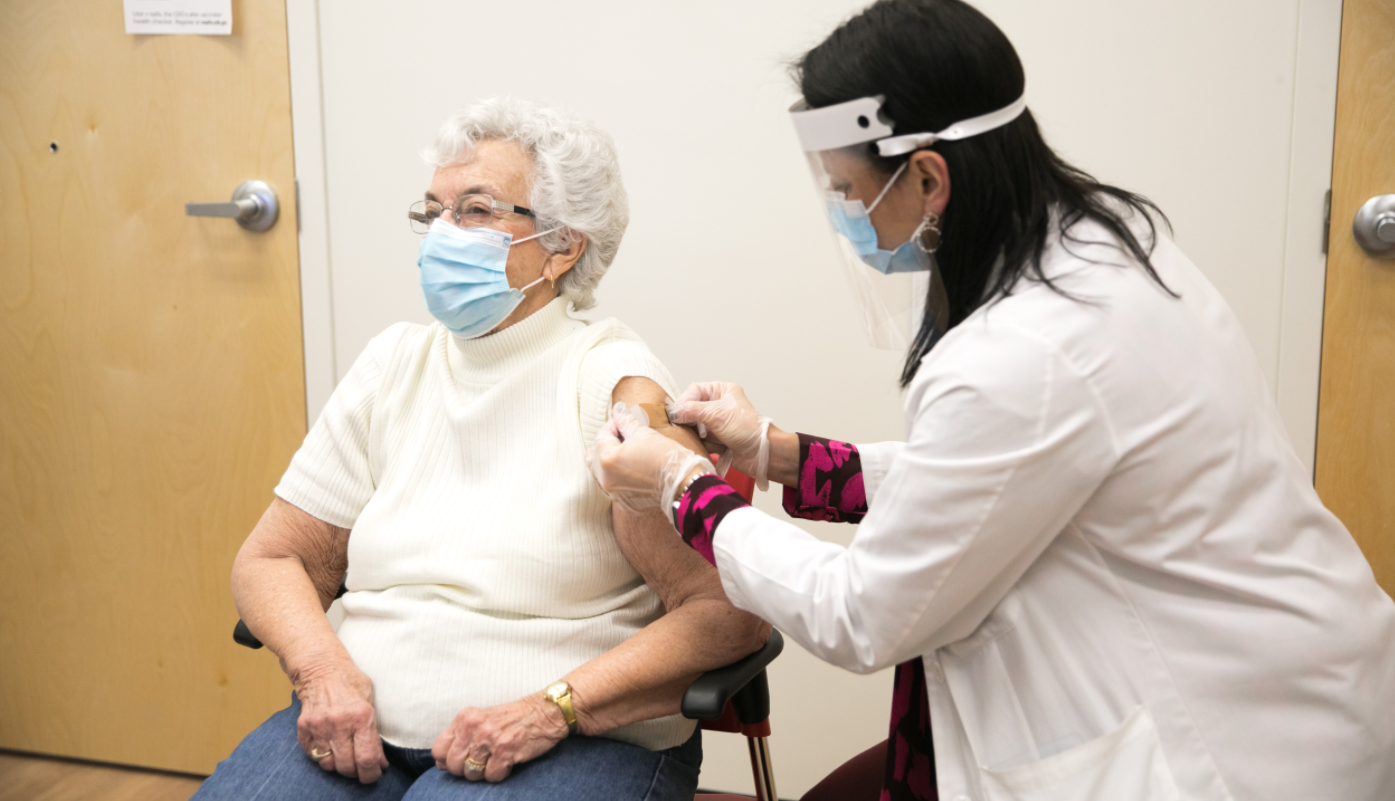
Front-line essential works are defined as people who work in-person, onsite and in close proximity—within six feet—with the public and co-workers and work in the following industries:
Manufacturing
Grocery/Convenience Stores (and Carnicerias)
Restaurants/Bars
U.S. Postal Service
Public transit (buses, light rail, Uber, Lyft, taxis)
Those eligible are able to begin applying for appointments at 9 a.m. Friday, March 12. The Pima County Health Department notes many appointments scheduled at the large county-supported sites will be set for April 2021 at the earliest.
“This is our biggest group of newly eligible people so far and we understand that people will be very eager to register for an appointment as this phase opens up,” Pima County Health Department Director Dr. Theresa Cullen said. “The challenge will be trying to get the vaccine to the most vulnerable people in this group as so many register for their spot in line.”

WASHINGTON – The House gave final approval Wednesday to the Biden administration’s $1.9 trillion pandemic relief bill, a sweeping measure that will directly touch almost every Arizonan and will send billions in aid to the state.
Republicans assailed the American Rescue Plan Act as a wasteful, partisan measure and Wednesday’s vote reflected that, with every Republican and one Maine Democrat voting against the bill. Arizona lawmakers followed suit, splitting down party lines on the bill.
“Americans need targeted, immediate relief from COVID-19, not $1.9 trillion added to the national debt to pay for partisan wish list items and other provisions that won’t take effect until years from now,” Rep. Debbie Lesko, R-Peoria, said in a prepared statement Wednesday.
But while Lesko said the “people of Arizona and America deserve better,” supporters of the bill said it fills an urgent need.
“Our friends and loved ones have died, millions remain unemployed, our children are missing critical in-person learning opportunities and countless small businesses have shuttered,” Rep. Raul Grijalva, D-Tucson, said in a statement released by his office. “A crisis of this magnitude warrants an equal response, and this legislation gets our families, workers, and small businesses the relief they deserve.”
President Joe Biden said he will sign the bill Friday, clearing the way for $1,400 individual stimulus payments, increased jobless benefits, tax credits for children, school and health funding and support for businesses, among other measures.
Wednesday, March 10, 2021

Oportun Inc., a small-dollar loan company, disclosed to investors that it is the subject of a probe by the Consumer Financial Protection Bureau following reporting by ProPublica and The Texas Tribune.
ProPublica is a nonprofit newsroom that investigates abuses of power. Sign up to receive our biggest stories as soon as they’re published.
This article is co-published with The Texas Tribune, a nonprofit, nonpartisan local newsroom that informs and engages with Texans. Sign up for The Brief weekly to get up to speed on their essential coverage of Texas issues.
A federal consumer watchdog agency has launched an investigation into a company that aggressively sued thousands of Latino borrowers in Texas during the coronavirus pandemic while depicting itself as a financial ally of the community.
Oportun Inc., a Silicon Valley-based installment lender, which was founded to help Latino immigrants build credit so they can go on to achieve the American Dream, disclosed to investors last week that it had received a civil investigative demand from the Consumer Financial Protection Bureau.
The company indicated that it was part of a larger probe of small-dollar lenders by the federal watchdog, which was formed by Congress in the wake of the 2008 financial crisis in an effort to better guard Americans from abusive lending practices.
The investigation comes after ProPublica and The Texas Tribune last year revealed that Oportun had become the most litigious personal loan company in Texas, suing thousands of lower-income borrowers at a rapid pace even as other lenders halted or slowed legal action during the pandemic.
Friday, March 5, 2021

PHOENIX – After leaving the Army two decades ago, Miachelle DePiano faced new challenges on the civilian battlefield: a hyper-competitive job market.
“I couldn’t show anybody a portfolio because everything I had written was classified, and I didn’t have a degree to back up my claim,” said DePiano, who served as an intelligence officer in Germany and Croatia.
Other Arizona veterans and advocates said DePiano’s job-hunting experience is all too common, with veterans unsure of themselves and too often overlooked by potential employers. But the job-hunt can be more complex.
In 2019, a Bureau of Labor Statistics report showed the unemployment rate was lower for veterans than for nonveterans. But the financial outlook for vets has drastically changed since then, with unemployment jumping to 5.5% in January 2021, from 3.5% in January 2020.
Another report showed high-ranking veterans more likely to get better pay than noncommissioned veterans and younger veterans.
And, according to data and interviews, women and minority veterans often have a tougher time getting a job.
Thursday, March 4, 2021

PHOENIX – Picture a baseball game at Chase Field. Or a basketball game at Suns Arena. As more fans begin returning to sporting events after the COVID-19 pandemic, they are welcomed by the benefits of live competition, from ballpark hot dogs to the energy of a packed stadium.
In the near future, the Arizona sports fan’s experience could include the ability to place bets inside sports venues while the action unfolds. For others, daily online fantasy sports platforms like Draft Kings and FanDuel might soon be operating legally in the state.
Arizona moved several steps closer to making those opportunities a reality with sports-gambling legislation now moving through both the House and the Senate as two separate bills, each with similar strings attached.
The new legislation would overcome the barriers set by the Arizona Tribal-State Gaming Compacts in 2002. That agreement set the rules for tribes to operate casinos but with no opportunities for sports betting, on or off of tribal land.
Now, HB 2772 and SB 1797 would allow both event wagering and online sports betting, with up to 10 tribes and 10 professional teams licensed to provide online betting platforms. There are 16 tribes in Arizona operating casinos. And there are eight professional teams, including NFL, MLB, NHL, and NBA franchises.
If passed, people would be able to place bets at Chase Field during a Diamondbacks game, or at Gila River Arena with the Coyotes skating. Bettors could also place wagers at sports books at select Indian casinos or legally participate in popular daily fantasy sports games.
Wednesday, March 3, 2021

Tucson Mayor Regina Romero is calling for "an immediate pause" to Reid Park Zoo's planned expansion that would take over the South Pond and Barnum Hill area.
The controversial zoo expansion was to begin this month. But Romero said the community outcry after the plans were unveiled has led her to believe more time is needed to reach a compromise.
"It has become clear to me that resolution to this issue is not on the horizon," Romero said in a release Wednesday.
When the zoo announced that its plans would include taking over the pond, opposition was fierce. Many residents were upset that the pond, trees and open area just west of the zoo would be gone.
But the plan has supporters as well. Romero said she "also heard from community members, who value the educational and recreational opportunities that our Zoo provides to our community."
Tuesday, March 2, 2021
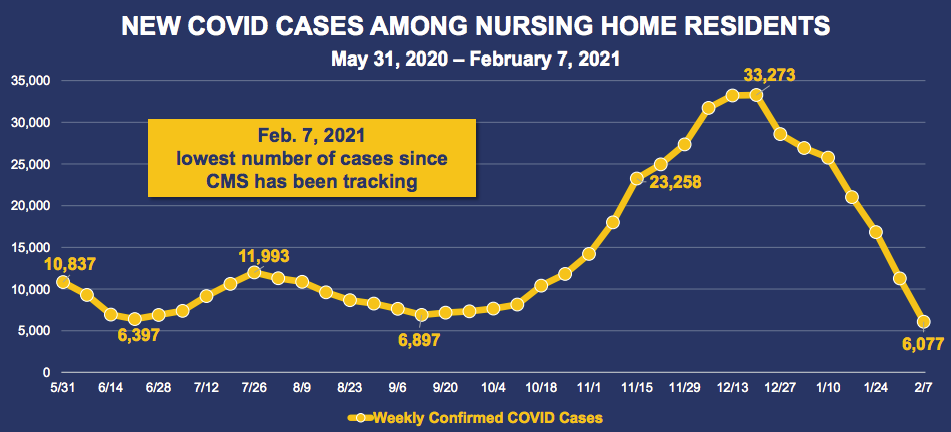
Nursing home COVID cases have declined since vaccines began to be administered in mid-December, according to a report released Tuesday by the American Health Care Association and National Center for Assisted Living. Nursing homes in the US have seen the lowest number of new COVID cases since the Centers for Medicare & Medicaid Services started tracking cases in May.
In the week of Dec. 20, 2020, U.S. nursing homes saw 33,000 new COVID cases. And in the week of Feb. 7, that number dropped to 6,000 cases. In the same period of time, AHCA/NCAL reports community cases in the general population dropped by 46%.
“We still have a long road ahead, but these numbers are incredibly encouraging and a major morale booster for frontline caregivers who have been working tirelessly every day for a year to protect our residents,” said AHCA/NCAL President Mark Parkinson in a press release. “This new data showcases just how important it is for nursing homes residents and staff, as well as the general public, to get the vaccine because it is clearly working.”
In addition to greatly reduced cases, nursing home COVID deaths have reduced by more than 60%. In the week of December 20, 2020, U.S. nursing homes saw 5,900 COVID-related deaths. Compare that to the week of Feb. 7, when U.S. nursing homes saw 2,200 COVID-related deaths.
“Though this report brings hope, we cannot let our guard down. We must continue to encourage folks to get vaccinated, especially caregivers and staff,” Parkinson said.
Monday, March 1, 2021

Looks like Councilman Steve Kozachik has a challenger in this year’s Democratic primary.
Miranda Schubert, an academic advisor at the University of Arizona who has also served as a DJ on KXCI community radio and hosted a feminist-oriented live talk show at Club Congress, announced today that she was challenging the two-term councilman in the Aug. 3 primary.
Schubert said in a statement that she wants to see the council do more to provide affordable housing, policies that lead to higher wages and alternative policing strategies.
“The majority of Tucson’s residents aren’t people who are preoccupied with the resale value of their home,” she said. “They’re families like mine, working for the institutions and small businesses that drive Tucson’s economy, but feeling ignored and left out of whatever future our leadership is imagining for the city.”
She added that increasing rents were creating a housing affordability crisis.
“You cannot tell people in this city that rents are too low or actually affordable when they have evidence in their daily life to the contrary,” she said.

Kozachik said that Schubert “was welcome to take part in the democratic process.”
“These jobs are first and foremost about addressing the day-to-day concerns of our constituents,” Kozachik added. “I believe she’s going to learn that my office has a pretty damn good record with constituent services and being accessible and responsive. Continuing that personal touch is a big reason I’m doing this one more time.”
Kozachik was elected to the Tucson City Council as a Republican in 2009 but switched to the Democratic Party after fighting with GOP members of the Arizona Legislature. He won reelection as a Democrat in 2013 and 2017.
Petition signatures are due for candidates on April 5.
There’s still some question as to whether Tucson will have an election this year, as the city is still awaiting an Arizona Supreme Court decision regarding a state law that would force the city to move elections, including this year’s contest, to even years to correspond with presidential and midterm elections.