

Friday, February 19, 2021
WASHINGTON – The Arizona Department of Education wants to make sure parents understand their kids will be getting letter grades this year – and to drive home the point, the department sent the message in capital letters.
Actions taken by the governor and Legislature earlier this week apply to schools but “NOT individual student grade (ex. ‘A in Chemistry’ or ‘C+ in English’) – those are under the purview of local control,” the department said in a statement Wednesday.
The statement followed Gov. Doug Ducey’s signing of a bill Monday that said state schools will not get grades reflecting their students’ performance on the AzMerit standardized tests this year, because of the ongoing pandemic. An accompanying executive order and statement from Gov. Doug Ducey said the law allowed “some flexibility around the state’s A-F letter grade system.”
Some parents apparently read that to mean the change applied to the letter grades their kids receive – not their kids’ schools.
Phoenix resident Lori Worachek, who has two daughters in the school system, said her initial reaction was that the executive order was unfair to kids.
“It wasn’t the right way to approach it because it’s not fair to the kids that have been working hard,” she said.
Thursday, February 18, 2021
With an already strained vaccine supply, Pima County is seeing delayed COVID-19 vaccine appointments as shipments of doses are slowed due to harsh winter weather conditions across the U.S.
The county says the appointments at risk of being delayed include some second dose vaccine appointments at Tucson Medical Center beginning Feb. 18, as well as appointments at Tucson Convention Center and Banner South beginning Feb. 19.
Two mobile vaccination events set for Feb. 20 have been postponed. The mobile vaccination efforts are targeted to vulnerable populations and will now be held sometime in March, the county announced in a press release.
Further complicating vaccine administration, next week, the county will only receive 12,500 doses for all county-run vaccination sites.
This represents the lowest total of weekly doses allocated to Pima County in 10 weeks, according to the press release.
Last week, Pima County's vaccine supply was decreased to 17,850—a 40% reduction from the previous week. This week, the doses were cut down to 16,300 doses of Moderna, while the new University of Arizona POD was given 1,000 doses.
The state is now taking control of all Pfizer allocations, but the county has no insight into what the Pfizer allotment is.

The University of Arizona began operations Thursday as a state-run POD, or point of distribution, after it served as a county-wide vaccination center since mid-January.
The state plans to eventually transition the site to operate 24/7 and distribute up to 6,000 vaccines a day.
The UA is the third state-run site in Arizona after the State Farm Stadium in Glendale opened on Jan. 11 and the Phoenix Municipal Stadium opened on Feb. 1. It’s the first site to include a walk-up vaccination option in addition to a drive-through site.
The drive-through location is on the University of Arizona Mall and the walk-up site is at the Ina E. Gittings Building.
Adults 65 and over, education and childcare workers and protective service workers are currently eligible to receive the vaccine at the POD through appointments only.
Nearly 12,000 appointments through February have been booked, however.
Currently, the UA POD is administering Pfizer vaccines, as it has the proper cold-chain storage the brand requires.

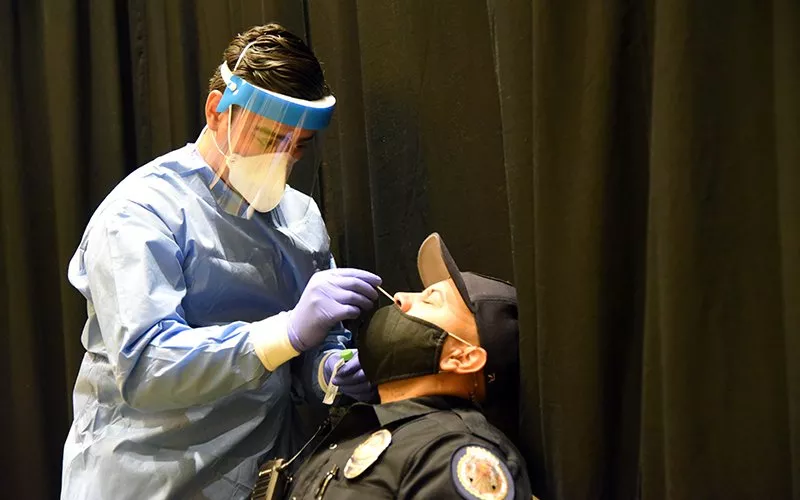
County Administrator Chuck Huckelberry is asking the Pima County Board of Supervisors to suspend county-sponsored COVID-19 testing after notification that the state will not reimburse the county for most of its testing costs.
At a special board meeting Friday, Huckelberry said he'll ask the board to halt free coronavirus testing as of Feb. 22 to avoid incurring further deficit costs.
In a memo to the board, Huckelberry said the county reported to the state that $47.75 million was spent on PCR COVID-19 testing since April, with more than $10.68 million coming from county funds.
State officials said they could reimburse Pima County for only $1 million, according to an email from Eugene Livar, the chief of the epidemiology and disease control bureau at the Arizona Department of Health Services.
When the state submits its budget for federal approval in mid-March, Livar said ADHS can “reassess the funding available to support Pima County's testing needs,” but they likely won’t be able to “support the entirety of the $40,274,448 need but will likely be able to provide some level of support.”
While initially running the county’s testing operations under the assumption they would be partially covered by the $416 million provided to Arizona for testing through the 2021 Consolidated Appropriations Act, Huckelberry wrote in the memo that the federal funds are “being used by the State for other purposes,” adding, “It appears the uses for which the State will be using these funds is for everything but COVID-19 testing.”
Pima County currently has several sites offering free COVID-19 testing through partnerships with Arizona State University, the City of Tucson, Accu Reference Labs and Paradigm Labs.
If the Board of Supervisors approves the motion Friday, the free testing will cease across the county.
“This is unfortunate as it was abundantly clear to Pima County that the State allocation was for COVID-19 testing,” Huckelberry wrote in the memo. “At least that was the impression we were left with in reviewing the Federal 2021 Consolidated Appropriations Act.”
Editor's note: A earlier version of this story misstated the number of SNAP-eligible people who actually received the benefit in 2017. A Census Bureau report said that about one SNAP-eligible recipient in six did not get the benefit that year.
WASHINGTON – The number of food stamp recipients in Arizona has surged over the past year, but advocates worry that the Supplemental Nutrition Assistance Program is still only reaching a portion of those eligible for assistance.
A recent Census Bureau report found that one in six people who were eligible for SNAP in 2017 did not actually get the benefits. The participation was even lower in Arizona, where the bureau said that in 2018 almost 30% of SNAP-eligible people did not receive the benefit.
While the number of Arizonans getting SNAP benefits has spiked in the past year, advocates attribute that more to rising demand during the pandemic than to any narrowing of the gap between those deserving and those getting help.
“Some of the folks we are seeing enroll now are people who have been affected by the COVID pandemic, who have not had to take advantage of some of these programs in the past and are now engaging because they need that assistance to feed their families,” said Cynthia Zwick, executive director of Wildfire AZ, an anti-poverty organization.
Zwick and others fear that the same problems that kept eligible people from getting food stamps before may be challenging the COVID-19 newcomers to the system: confusing and burdensome paperwork, the stigma some feel and just a lack of knowledge about the program.
Wednesday, February 17, 2021
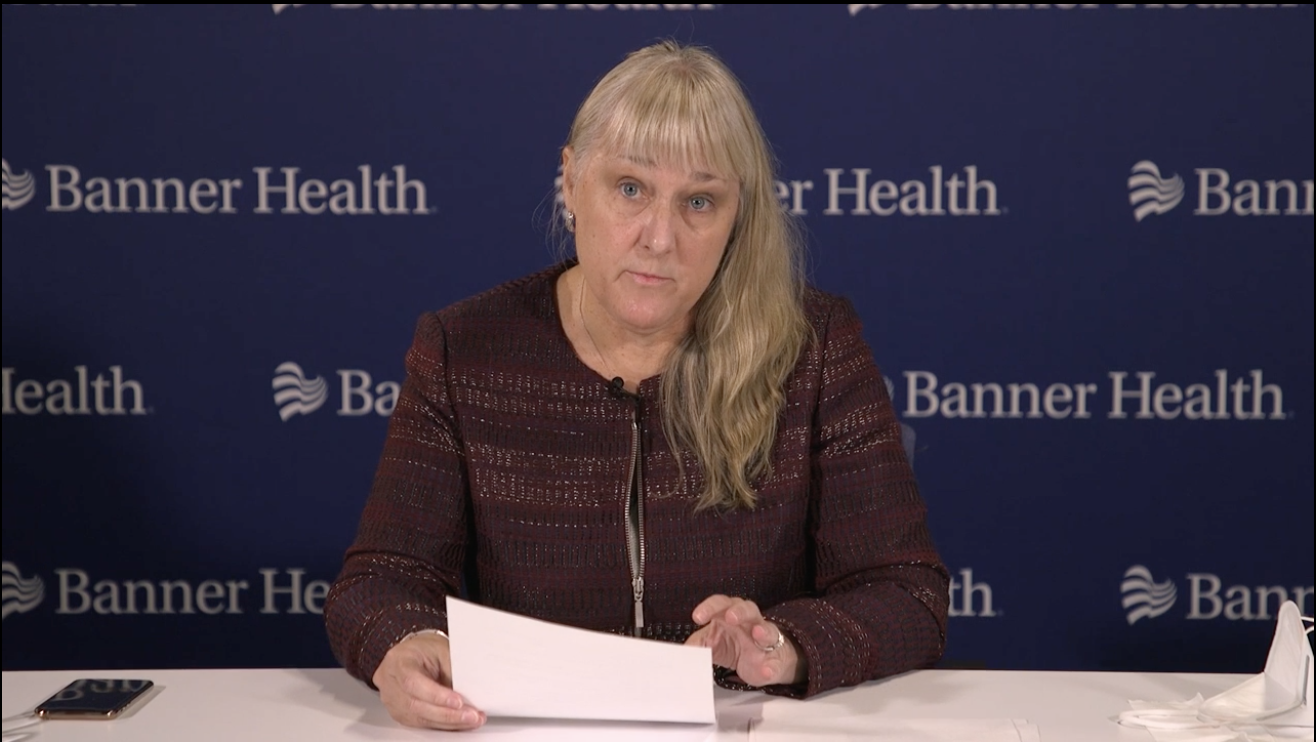
Severe winter weather across the nation is causing delays to vaccine shipments and some appointments may be delayed as a result, said Dr. Marjorie Bessel, the top clinical leader of Arizona’s largest hospital system.
Of the 15 counties in Arizona, the delays are affecting Pima County the most. While Bessel said there’s enough vaccine for appointments at Banner Health locations for Wednesday and Thursday, appointments for Friday and during the weekend are at-risk without more supply.
“The severe weather that many parts of the country are currently experiencing is impacting vaccine supplies over the next several days. We continue to work with all of our different states and counties to load balance those vaccines and supplies to best meet the needs of communities,” Bessel said. “In Pima County is where we have the most significant impact regarding potential need for additional vaccine.”
Pima County announced Friday that its two Banner vaccination sites are consolidating their operations beginning March 4. The Banner North and Banner South sites will operate at the Kino Sports Complex. Banner North has stopped making new appointments.
Bessel said those with vaccine appointments at a Banner location could receive a text, email or phone call saying their vaccine time needs to be rescheduled.
She emphasized that Banner has no control over the arrival of the supplies as weather delays affect the delivery of the Pfizer and Moderna vaccines, as well as the needles and syringes needed to administer them.
While MHC Healthcare previously scheduled appointments for the 70+ population in the Marana and Oro Valley areas, all online registrations are now booked and the center is only supplying second doses for those who already received their first COVID-19 vaccine, according to Director of Marketing and Communications Kimberly Mayfield.
MHC has received 4,200 total doses and administered 3,823 as of Feb. 15. Of the delivered doses, 2,819 went to those 70 and older, while 1,004 went to MHC healthcare workers. The community health center is using the Moderna vaccine.
Last week, the county's vaccine supply was decreased to 17,850—a 40% reduction from the previous week. This week, the doses were cut down to 16,300 doses of Moderna.
The state is now taking control of all Pfizer allocations, and according to County Health Director Dr. Theresa Cullen, the county has no insight into what the Pfizer allotment for this week was.
In addition to the 16,300 Moderna and an unknown number of Pfizer doses to be distributed across the county’s vaccination centers, the state allocated the new UA state-run POD 2,000 doses of Moderna.
According to Pima County Chief Medical Officer Dr. Francisco Garcia, the significant decrease in the county’s vaccine allocation cut off additional vaccine supply to its community health centers.
“One of the things, for instance, that was impacted was none of our federally qualified health center partners, Marana, Desert Senita, United Community Health Center in the rural areas and El Rio in the central core—none of them got new vaccine for new vaccinations,” Garica said. “That was a trade-off that we had to make because of the reduction in the total number of vaccines that we were allowed to allocate.”
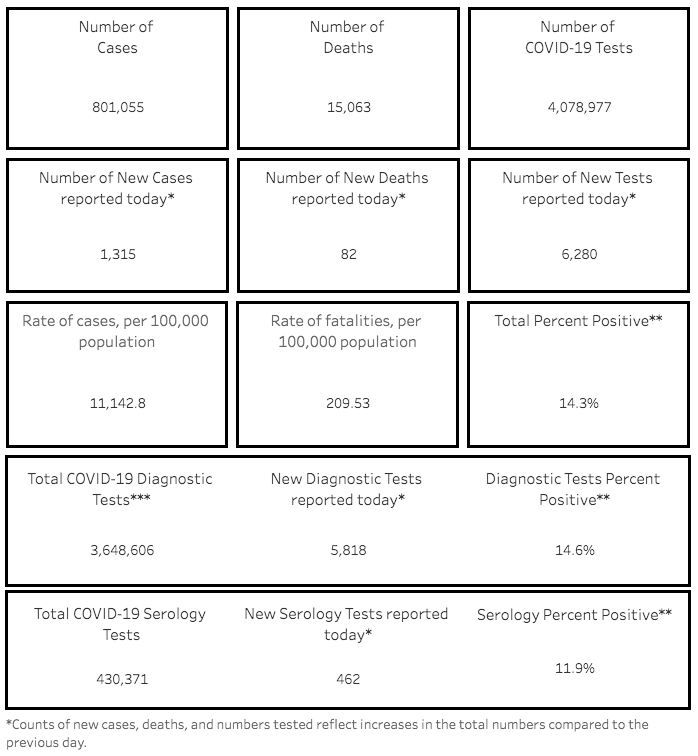
With 1,315 new cases reported today, the total number of Arizona’s confirmed novel coronavirus cases topped 801,000 as of Wednesday, Feb. 17, according to the Arizona Department of Health Services.

Pima County, which reported 188 new cases today, has seen 107,401 of the state’s 801,055 confirmed cases.
A total of 15,063 Arizonans have died after contracting COVID-19, including 2,082 deaths in Pima County, according to the Feb. 17 report.
The number of hospitalized COVID cases statewide has declined in recent weeks, with 1,941 coronavirus patients in the hospital as of Feb. 16. That’s fewer than half the number who were hospitalized at the peak of the winter surge, which reached 5,082 on Jan. 11. The summer peak was 3,517, which was set on July 13, 2020. The subsequent lowest number of hospitalized COVID patients was 468, set on Sept. 27, 2020.
A total of 1,272 people visited emergency rooms on Feb. 16 with COVID symptoms, down from the record high of 2,341 set on Tuesday, Dec. 29, 2020. That number had peaked during the summer wave at 2,008 on July 7, 2020; it hit a subsequent low of 653 on Sept. 28, 2020.
A total of 593 COVID-19 patients were in intensive care unit beds on Feb. 15, down from a peak of 1,183 set on Jan. 11. The summer’s record number of patients in ICU beds was 970, set on July 13, 2020. The subsequent low was 114 on Sept. 22, 2020.
How to get a vaccine
Currently, Pima County is providing vaccination shots to people 70 and older as well as educators, first responders and healthcare workers, but that group will expand to anyone 65 and older tomorrow. Those who qualify in Pima County’s 1B priority group of eligible vaccine recipients can register for a vaccine at www.pima.gov/covid19vaccineregistration or by calling 520-222-0119.
A state-run vaccination site opening at the University of Arizona will begin appointments on Feb. 18. The new site will follow the state’s current vaccine eligibility, which includes those 65 and older, educators, childcare workers and protective service workers, according to Arizona Department of Health Services Director Dr. Cara Christ.
As the state-run POD, or point of distribution, registrations will go through ADHS’s website. Appointments will begin on Feb. 18, and registration will open at 9 a.m. on Feb 16. Online registration will be available at podvaccine.azdhs.gov, and those who need assistance can call 1-844-542-8201. More details here.
Pima County expanding eligibility for vaccine to 65+ tomorrow
Pima County residents ages 65 and over will be able to pre-register for COVID-19 vaccine appointments starting 9 a.m., Thursday, the Pima County Health Department announced Tuesday.
Pima County Chief Medical Officer Dr. Francisco Garcia said the announcement comes not because of increased vaccine availability, but to avoid confusion as the new state-run site at the University of Arizona provides vaccines to the 65+ population.
Garcia said the county health department was poised to make the decision to open vaccine appointments to the 65+ crowd next week, but accelerated the announcement so the county’s eligibility requirements will align with the state’s.

WASHINGTON – Health advocates welcomed the reopening of enrollment for Affordable Care Act coverage, saying the opportunity for more people to get or renew their health insurance could be “really good for Arizona.”
The normal period for Americans to sign up for coverage ended Dec. 15, but President Joe Biden called for this special 90-day open enrollment period in response to the ongoing COVID-19 crisis.
The change could open the door to subsidized health insurance for thousands in Arizona, where as many as 900,000 people may not have health insurance, according to Dr. Dan Derksen, director of the University of Arizona Center for Rural Health. Derksen said as many as half of those people could get covered under the ACA.
“This extension of the open enrollment period Is a way that we can get more information out there so that people understand what they might be eligible for, and then get enrolled,” Derksen said Monday, the first day of open enrollment.
Matt Eyles, president and CEO of America’s Health Insurance Plans, praised the decision to reopen the enrollment period as a “timely and targeted” solution that is “exactly what Americans need.”
“Every American deserves access to affordable health coverage and high-quality care, and that is especially true during a pandemic,” Eyles said in a written statement. “We appreciate the Biden administration for providing this additional opportunity for hardworking American families to enroll in coverage for their health and financial security as they continue to fight to overcome the COVID-19 crisis.”

