

Wednesday, February 10, 2021
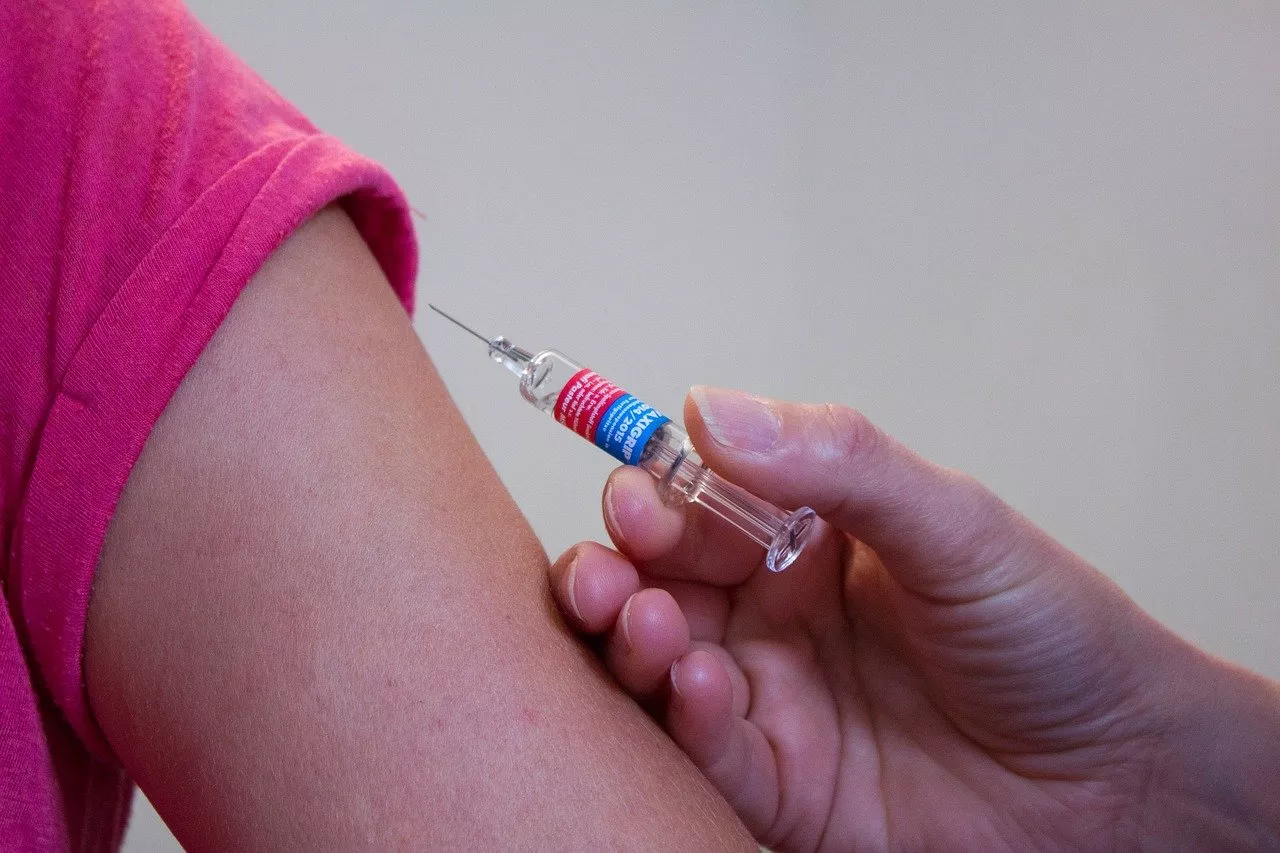
The University of Arizona will serve as the state’s third 24/7 vaccination site beginning Feb. 18, Gov. Doug Ducey and the Arizona Department of Health Services announced Wednesday.
The university will expand its current hours of operation as a POD, or point of distribution, that currently serves educators and childcare workers. It will transition to a state site that will eventually operate 24/7 as Arizona receives more vaccine doses, according to a press release from the governor’s office.
Appointments will begin on Feb. 18, and registration will open at 9 a.m. on Feb 16. Online registration will be available at podvaccine.azdhs.gov, and those who need assistance can call 1-844-542-8201.
The governor’s office said the site can administer up to 6,000 vaccines a day when it runs at full capacity.
However, ADHS Director Cara Christ said in a letter to County Administrator Chuck Huckelberry on Jan. 29 that the vaccines supplying the state-run site would be taken out of the county’s existing allocation.
“Our commitment is to accelerate immunization. If we can get a 24/7, or even 18 hours by seven (days) POD, that is a high-efficiency, high-effective POD, everyone in the county, and probably first and foremost the public health department, would be incredibly supportive of that,” Pima County Health Director Dr. Theresa Cullen said last week. “However, if the only way that is done is to take vaccine from the existing PODs, we have a hesitation.”
The state currently has two 24-hour sites in Maricopa County, one at the State Farm Stadium in Glendale that opened on Jan. 11 and a second at the Phoenix Municipal Stadium that opened Feb. 1. As of Wednesday, the two sites have administered 204,061 vaccine doses.
However, it’s not clear if Arizona will have enough vaccine doses to continue supplying the sites. Ducey submitted a federal resource request for 300,000 doses followed by an additional 300,000 vaccines a week, but the request was denied.
Furthermore, Pima County’s vaccine allocation was decreased by 39% this week.
“The demand for vaccine doses is high, and Arizonans have made it clear they want it. We are working hard to secure more doses from the federal government and partner with private and public organizations to get the vaccine out and protect Arizonans. My thanks to President Bobby Robbins and everyone involved for their work to partner on this vaccination site,” Ducey said in the press release.
As of Monday, the university POD delivered 9,866 COVID-19 vaccines at a rate of 800 shots per day to the educators it currently serves.
“Our POD has the capacity to deliver more vaccinations, and we look forward to working together to further meet the needs of Pima County and Arizonans,” UA President Robert C. Robbins said in the release. “I am incredibly proud of our entire team of professionals and volunteers who have partnered closely with Pima County, established the university POD, and operated it so well.”

WASHINGTON – Tobacco use is the leading cause of preventable death in the U.S. but two recent reports say Arizona needs to do more to help people break free from using tobacco products.
“We certainly need a lot more resources here in Arizona to help people quit smoking,” said JoAnna Strother, senior director of advocacy for the American Lung Association, one of two organizations, along with Campaign for Tobacco-Free Kids, to grade the state’s actions.
The American Lung Association’s annual “State of Tobacco Control” report for 2021 gave Arizona a failing grade in three of five policies it looks at – the state’s tobacco taxes, its limits on flavored tobacco products and its funding for tobacco prevention and cessation programs.
The state got a D for access to tobacco cessation programs and an A for its restrictions on smoking in public spaces.
Arizona was not alone in its troubling grades. A third or more of states got an F for their tobacco taxes, access to prevention programs and limits on flavored tobacco products, while Arizona was one of 23 states with an A for public-smoking restrictions.
The state did relatively well in the Campaign for Tobacco-Free Kids report, which ranked Arizona 15th overall for the amount of money it is spending from the 1998 tobacco settlement on anti-tobacco programs.
Tuesday, February 9, 2021
About 15% of Pima County’s population has received a dose of the COVID-19 vaccine since the rollout began in mid-December.
As of today, the county has administered a total 160,113 shots out of the 189,725 vaccine doses it had received from the state. The county has used 84% of its total state allocation, according to Arizona Department of Health Services data.
A total of 30,411 Pima County residents have received the two doses needed to be considered fully immunized, while 129,363 have received at least one dose.
While they've made significant progress, Pima County’s vaccine allocation was cut down to 17,800 this week—a 39% decrease from the 29,000 doses provided the week before.
Dr. Francisco Garcia, the county’s chief medical officer, said to accommodate the loss, the health department cut back doses given to some community health centers and downscaled vaccine allocation to the county’s five PODs, or points of distribution.
“We've advocated for [vaccine doses] to be higher than they were this week. Certainly, that is going to be a recurring topic of conversation with our friends at the state,” Garcia said.
The county has given vaccines to community health centers like Marana Health Clinics, El Rio and Desert Senita to reach the more rural parts of the county.
Over the weekend, Garcia said the county set up a “pop-up clinic” at St. John's Catholic Church and provided over 500 vaccines for those 70 and older. The medical officer said the county plans on continuing to set up pop-up sites to reach the less privileged parts of the community who need the vaccine the most.
“One of the things that we have been trying to do is pop up vaccination in the same way that we did pop up testing previously. That is, identifying census tracts within our community where we know the burden of disease is high, the risk of infectivity is high and where economic opportunity is relatively low,” Garcia said. “We want to continue to do stuff like that, but we can only do stuff like that when we have sufficient vaccine in our hands to be able to distribute.”
Other available vaccination sites include six retail pharmacy locations around the county. The grocery-store based sites are run by state and federal government contractors, so the county has no control over their operations or who is prioritized to receive a vaccine first.
Garcia said Fry’s has delivered 666 vaccines while Safeway has delivered 274 in the two weeks the retail pharmacy program has operated.
Pima County could get a state-run POD at UAAs the county struggles with a limited vaccine supply, talks are in the works to set up a state-run, 24-hour vaccination site.

Kevin Dahl, the senior program manager for the National Parks Conservation Association, filed paperwork today to run for the seat.
“Paul has been an excellent Council representative for the residents of Ward 3,” Dahl said. “I supported him when he sought the seat, and now I am supporting him in the difficult decision that he has made to step down.”
Dahl, who has also headed up the Tucson Audubon Society and Native Seeds/SEARCH, has already lined up endorsement from Congressman Raul Grijalva and local environmental queenpin Carolyn Campbell, who is chairing Dahl's campaign.
He said he’d also be interested in appointment to the seat, but he understands that council members may be looking for someone who isn’t going to run for the seat and if that’s the case, he’s more interested in campaigning for a full term.
Meanwhile, Juan Padres, who ran against Pima County Supervisor Sharon Bronson in the 2020 primary, announced on Facebook last week that he’s launching a campaign the job.
“I fully understand the problems and challenges that Ward 3 faces, and look forward to working tirelessly to address them,” Padres said. “My campaign platform will be very similar to the one I ran on last time, making poverty the number one issue that needs to be addressed in our community, especially in the wake of this devastating pandemic.”
A primary election for the Ward 3 seat—along with Ward 6 and Ward 5—is set for Aug. 3, with the general election to follow on Nov. 2.
But we’re still waiting to see if that election is going to happen. State lawmakers are still trying to force the city of Tucson to move its election on onto the same even-year cycle that most elections in Arizona take place. If that happens, city elections would take place the same years as presidential and midterm elections.
Monday, February 8, 2021
While Pima County lacks the vaccine supply to vaccinate enough of the population to reach herd immunity, COVID-19 cases are decreasing across the state. Health experts warn, however, that continued mitigation is needed to maintain the downward trend.
According to the latest report by Dr. Joe Gerald, a University of Arizona professor who creates weekly coronavirus epidemiology reports based on Arizona Department of Health Services data, the week ending Jan. 31 saw a 31% decrease in total COVID-19 cases from the week prior.
In Pima County, coronavirus cases saw a 27% decrease the week ending Jan. 17 from the week before, Gerald reports.
Data from the Pima County Health Department reflects a similar trend. The first week of January saw Pima County’s highest weekly number of COVID-19 cases at 8,860, while the following week dropped to 7,052 and the third week to 5,260. Week four reported 2,916 cases, but data from the last 4-7 days are still trickling in.
“I'm cautiously optimistic. So we have 130,000 plus vaccinated. We have over 103,000 cases, which confers some immunity, at least for that particular 90 days. We do seem to be seeing a decrease in our cases day by day,” said Dr. Theresa Cullen, Pima County’s health department director. “Overall, if we look at what we call the epi curve, we do see that epi curve seems to have hit its peak and is coming down. That is also consistent with what we're seeing with our hospitalizations. We have more ICU bed availability than we have had for the past eight weeks.”

However, Cullen said the county’s test positivity of 12.5% is still high, and while COVID-19 testing has decreased, it hasn’t corresponded with a decreased positivity rate.
“That means that we still have a lot of COVID transmission occurring in the county,” Cullen said.
While the week ending Jan. 17 remains Arizona’s deadliest at 913 reported COVID-19 deaths, Gerald said deaths will remain high for the next four to eight weeks.
While Pima County widens vaccine eligibility, it’s receiving a reduced vaccine supply that makes it difficult to keep up with demand.
Last week, the Pima County Health Department announced those over 70 are now eligible to receive COVID-19 vaccines by signing up for appointments beginning Monday.
While only the 75+ age group, protective service workers and educators were previously eligible, the health department is expanding its 1B priority group of vaccine recipients to include individuals over 70 after vaccinating more than 130,000 residents over the past six weeks, according to county health department Director Dr. Theresa Cullen.
However, this week’s vaccine allocation has been truncated. Last week, the state allocated Pima County 29,000 doses. This week, the county will only receive 17,800—a 39% decrease in an already strained vaccine supply.
“Weekly allocations to local jurisdictions are based on population size, which phase a county is currently vaccinating, and the number of doses available for allocation. While Pima County’s allocation this week is lower than in the recent past, in total to date, Pima County has received approximately 14% of the state's overall allocation,” Holly Poynter, the Arizona Department of Health Services’ public information officer, explained in an email. “We have asked the federal government for an increased vaccine allocation, but this has not yet occurred. We are hopeful that the allocation will grow in the coming weeks.”
As of Saturday, Pima County administered 147,229 vaccines out of a total state allocation of 165,950 doses. According to ADHS data, the county has given 26,104 sets of the two doses needed for one to be considered fully immunized.
While doses are taken from the state’s total vaccine allocation from the federal government to send to assisted living facilities, Walgreens, CVS and other store-based pharmacies, Cullen says the health department believes some doses are “taken off the top for other things that we may or may not have insight into.”
As the county expands vaccine eligibility to a wider swath of the population, it still has to ensure second doses are available for individuals who already received their first dose.
“We have worked really closely with our PODs, and we are planning for that inevitable time when we need to expand so people can get their second shot,” Cullen said. “But if the immunization numbers are decreased, we're in a situation where we're going to decide whether to do the first or the second shot. The CDC has given institutions the latitude to go to six weeks for a second shot, but not beyond that right now.”
The health director said she has confidence that all those who wish to receive vaccines in Pima County will get a shot when it’s their time to do so. However, the wait times may be elongated if the county continues to receive a limited vaccine supply.
The University of Arizona has delivered 9,866 COVID-19 vaccines at a rate of 800 shots per day, according to President Dr. Robert C. Robbins.
The UA point of distribution, or POD, is targeted toward educators and childcare providers and has two vaccination sites: a drive-through location at the University of Arizona Mall and a walk-through clinic at the Ina E. Gittings building.
While operating as a vaccine distribution center, UA is basing its learning structures for students on the prevalence of coronavirus in the community.
Robbins lauded the state for its improvement in COVID-19 transmission. While Arizona held the highest rate of transmission in the country throughout most of January, it now ranks at No. 8 today.
If conditions continue to improve, the university will enter stage two of its reentry plan on Feb. 22 with up to 50 students attending classes in person. For now, it remains in stage one with in-person instruction for essential courses only.
From Jan. 28 to Feb. 6, UA administered 18,767 COVID-19 tests and found 127 positive cases for a positivity rating of 0.7%, down from last week’s percent positivity of 1.3%.
“Remember, we've tried to shoot for under 5%, and we've been significantly under 5% for a long time now. This last number is very, very encouraging,” Robbins said. “These are good signs, however, remain vigilant, continue to cover your face, wash your hands and keep distance from as many people as possible.”
Friday, February 5, 2021
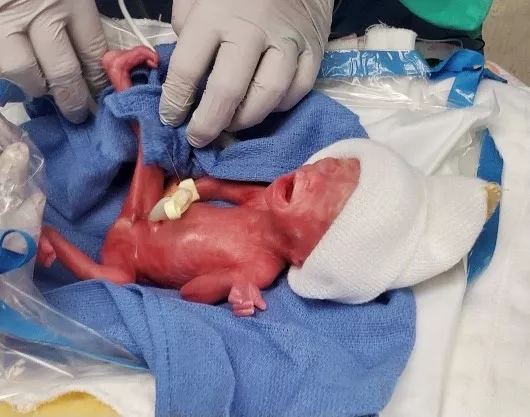
Henry Augustus Truhil was born at 8:44 a.m. after his mother, 33-year-old Nicole Truhill, experienced a headache, stiff neck and couldn’t keep food down, TMC said.
Upon evaluation, doctors at Canyon Vista Medical Center in Sierra Vista found Nicole suffered from placental abruption—a medical phenomenon that occurs when the placenta separates from the inner wall of the uterus before birth, which can deprive the baby of oxygen and nutrients while causing heavy bleeding in the mother.
Nicole was transferred to TMC in an emergency helicopter flight, while Henry’s father, Kyle Truhill, made the 78-mile drive.
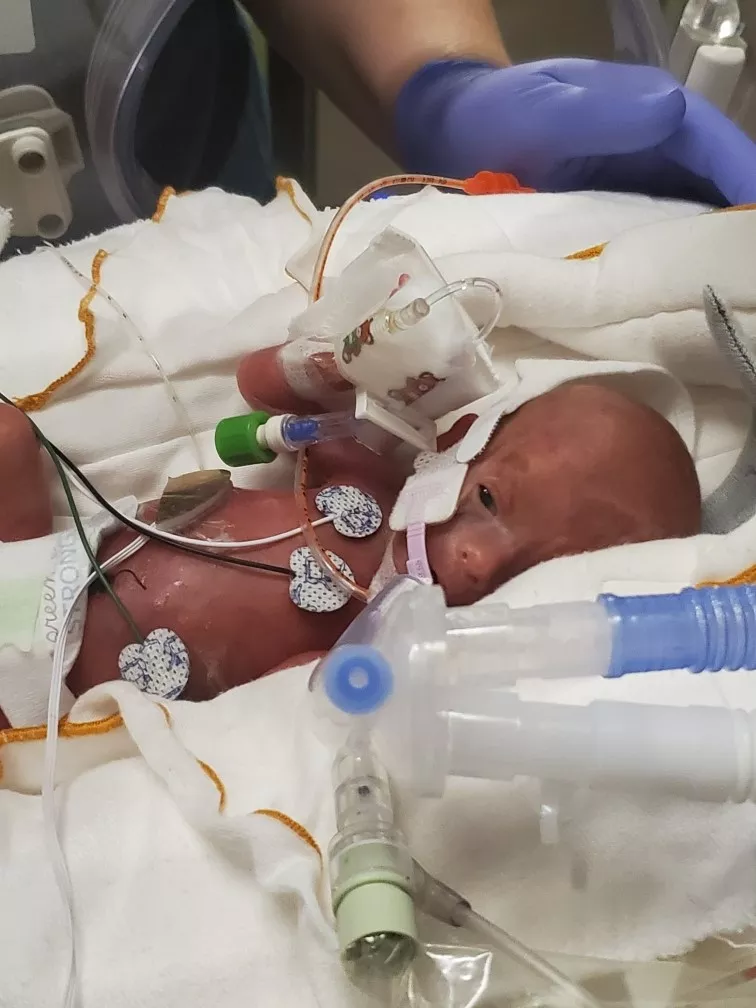
Kyle arrived at TMC to find his wife prepped for an emergency C-section to deliver Henry only 25 weeks into her pregnancy. Doctors gave the baby a 50/50 chance of survival.
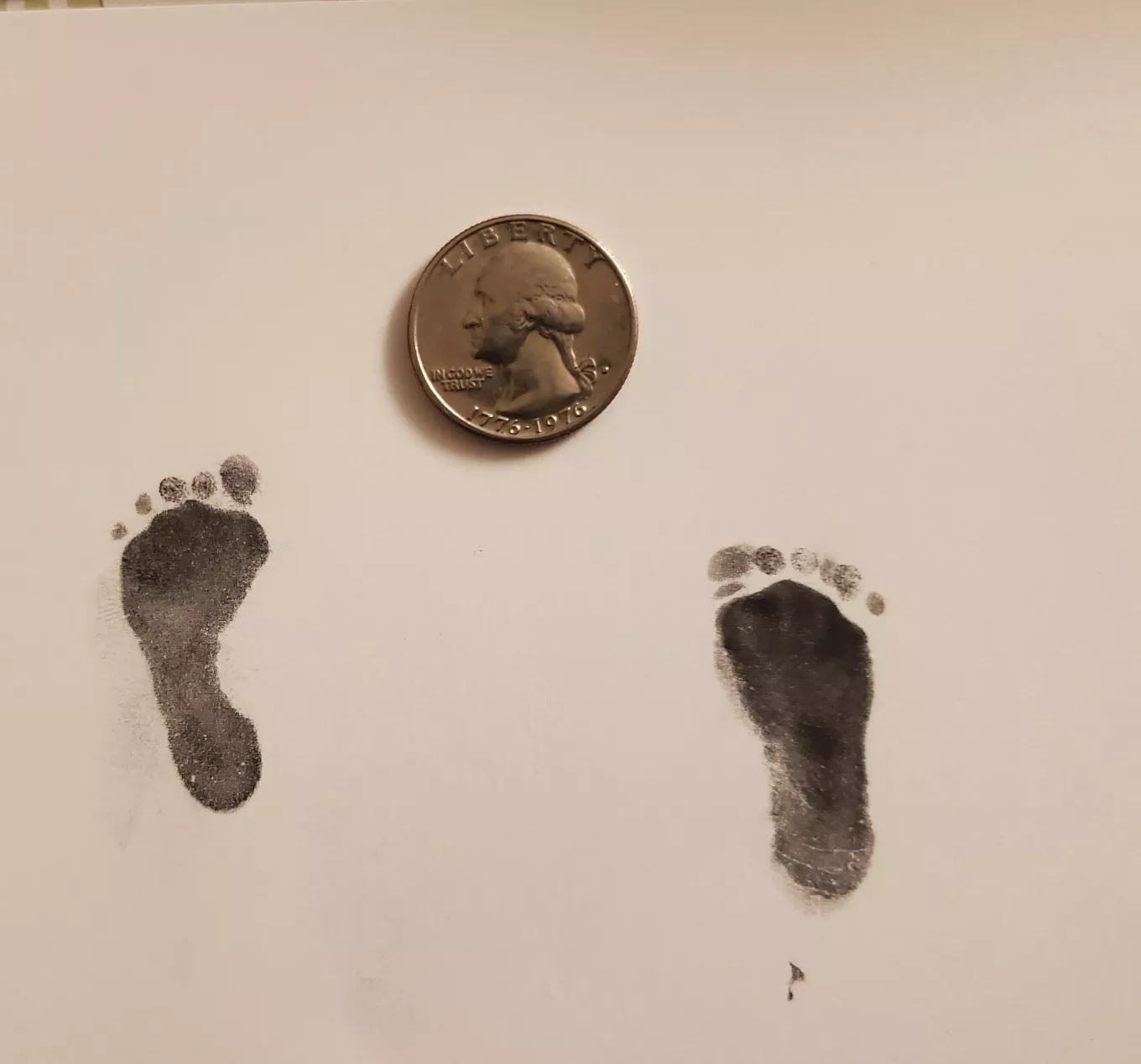
“When baby Henry was born, there was a tense stillness in the room until a tiny cry was let out, which provided Mom, Dad and hospital staff a small sense of relief,” TMC officials wrote in a press release.
The hospital said Henry has remained in stable condition this week and has received blood infusions to increase his oxygen levels. The baby has been breathing on his own, and Nicole is scheduled for discharge soon.
“I have never seen something so beautiful, small and fragile in my whole life,” Kyle said. “I felt overwhelmed with emotion in that moment…gratitude, a sense of miracle, relief and sheer terror all at the same time. I’ve never cried so much in my whole life as I have this week. We just want our baby to live.”
TMC said Henry has a long road to recovery ahead of him, but will ideally be released at the end of May or the beginning of June.
To support the astounding cost of the couple’s medical bills, Henry has a GoFundMe page at gofundme.com/f/help-micropreemie-henry.
Here, Henry’s progress will be documented and donations will be accepted to cover medical costs.
Thursday, February 4, 2021
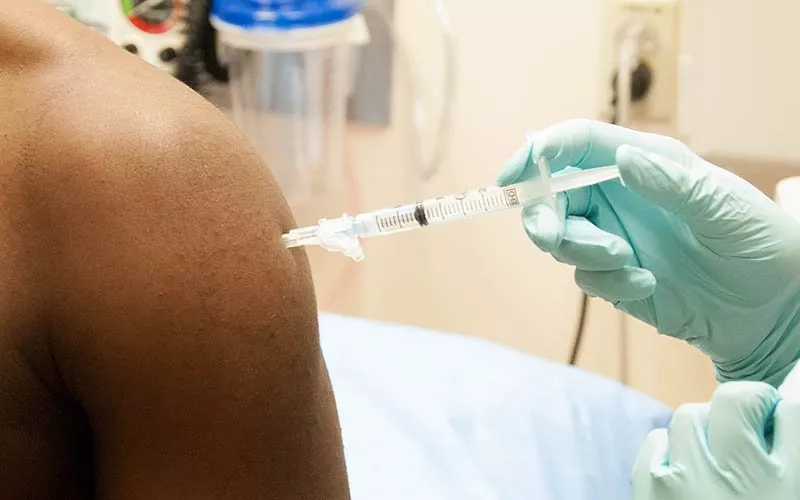
Those over 70 can now begin registering for vaccine appointments that will start Monday, Feb. 8, the Pima County Health Department announced today.
While only the 75+ age group, protective service workers and educators were previously eligible, the health department is expanding its 1B priority group of vaccine recipients to include individuals over 70 after vaccinating more than 130,000 residents over the past six weeks, according to health department Director Dr. Theresa Cullen.
“The pace of appointments for educators and protective services has slowed as we think we’re nearing saturation of the people in those groups who want to be vaccinated, so we’re opening appointments to 70 and older,” Cullen said.
While Gov. Doug Ducey has included the 65+ population in Arizona’s 1B priority group, Pima County is further restricting the qualifying age group based on the likelihood of severe outcomes for older populations who contract COVID-19.
According to the health department, Pima County's population of those over 65 totals more than 212,000. Per the 2019 Census, the county has more than 54,400 residents between the ages of 70 and 74.
“We’re only opening vaccination to 70-plus because we still have a lot of 75+ people to vaccinate and we don’t want to overwhelm our registration system or create more demand than we have vaccine supply,” Cullen said.
Depending on vaccine supply, the health department said those over 65 may be eligible for vaccines in late February.According to Pima County Chief Medical Officer Dr. Francisco Garcia, the state reduced Pima County’s already constrained vaccine supply by more than 12,000 doses. The county received 29,000 vaccines this week and is set to receive 17,800 next week.
“Vaccine supply is the ultimate limiting factor in how many people we can get vaccinated and how quickly. We are wary of getting too far ahead of the available vaccine with our appointments,” Garcia said. “It’s hard to estimate how fast we can move to vaccinating 65 to 69 folks because the state’s system for vaccine distribution is opaque.”
The 70+ population, educators and protective service workers will now be able to register for vaccine appointments at the following locations:
Tucson Medical Center at 5301 E. Grant Road
Banner UA Cancer Center at 3838 N. Campbell Ave.
Banner UMC-South at the Kino Sports Complex at 2500 E. Ajo Way
Tucson Convention Center at 260 S. Church Ave.
While the health department is considering opening the University of Arizona vaccine site to more priority groups, it remains restricted to educators only.
Those who currently qualify in Pima County’s 1B priority group of eligible vaccine recipients of can register for a vaccine at pima.gov/covid19vaccineregistration or by calling 520-222-0119.
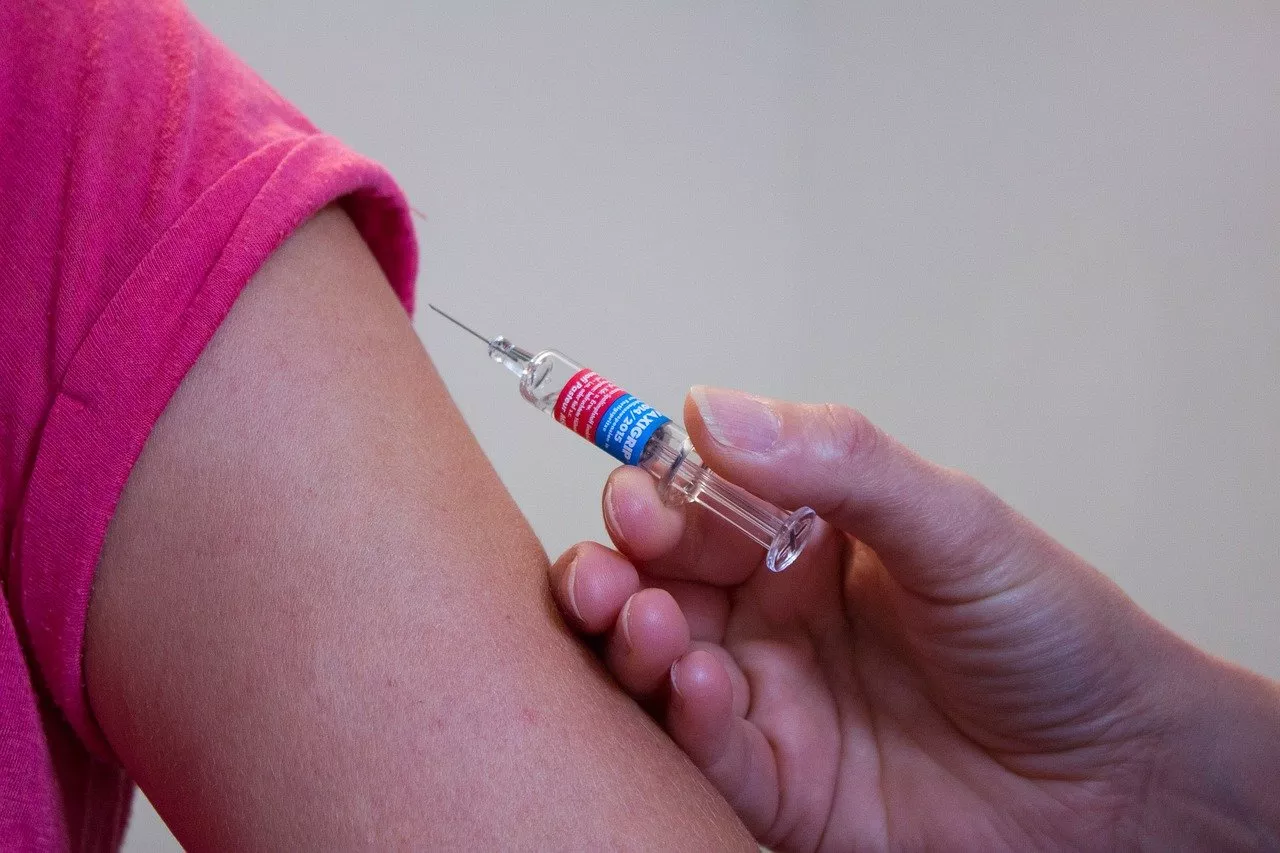
While vaccinations at the Tucson Convention Center were previously targeted toward protective service workers and educators, the Pima County Health Department is expanding vaccines at TCC to the 75+ population.
The health department said many educators and protective service workers are not choosing TCC to make vaccine appointments. While the site can handle up to 1,500 shots a day, only a few hundred daily appointments are being made.
To fill the empty time slots, Pima County and City of Tucson have contacted organizations employing priority 1B vaccine qualifiers—schools, law enforcement agencies, courts—to receive vaccines during the day’s unfilled appointment times.
The health department also announced they’re in the process of expanding TCC vaccine appointments to those older than 75. This population was originally restricted to vaccines at the Banner or Tucson Medical Center sites so that a medical setting would be nearby to aid in any complications with adverse reactions to the vaccine.
Statement about TCC vaccinations Pima County and the City of Tucson, Arizona continue to struggle through a scheduling...
Posted by Pima County Health Department on Thursday, February 4, 2021
“Since reactions have been extremely rare, PCHD has re-evaluated the hospital proximity requirement and is eliminating this appointment restriction and allowing 75+ people to schedule appointments at the TCC and possibly the UA,” the health department announced in a written statement, adding the University of Arizona site is still under consideration and remains reserved for educators.
The health department said there are occasionally leftover doses at the TCC POD, and some people 65 and older received the doses to prevent them from going to waste.
“To prevent wasting those doses, TCC has been vaccinating people who had learned from Social Media that they could hang around the TCC late in the day and they might be able get vaccinated,” the department said.
While speculation has circulated on social media that the 65+ population is now eligible for the vaccine, the county health department emphasizes this is false.
“We’re sorry for the confusion about who can get vaccinated at the TCC, however the ultimate goal of the county is to get as many people vaccinated in the current priority groups as fast as possible so we can move on to the next priority group,” the health department said. “Making sure as many people as possible in the 1B priority groups could get shots at the TCC helps achieve that goal.”
On Thursday, however, Pima County said TCC’s “line has gotten so long” that it will allow those over 70 to receive vaccines, while those under 70 will be turned away.
Those who currently qualify in Pima County’s 1B priority group of eligible vaccine recipients of those over 75, educators and protective service workers can register for a vaccine at pima.gov/covid19vaccineregistration or by calling 520-222-0119.

