

Monday, January 25, 2021
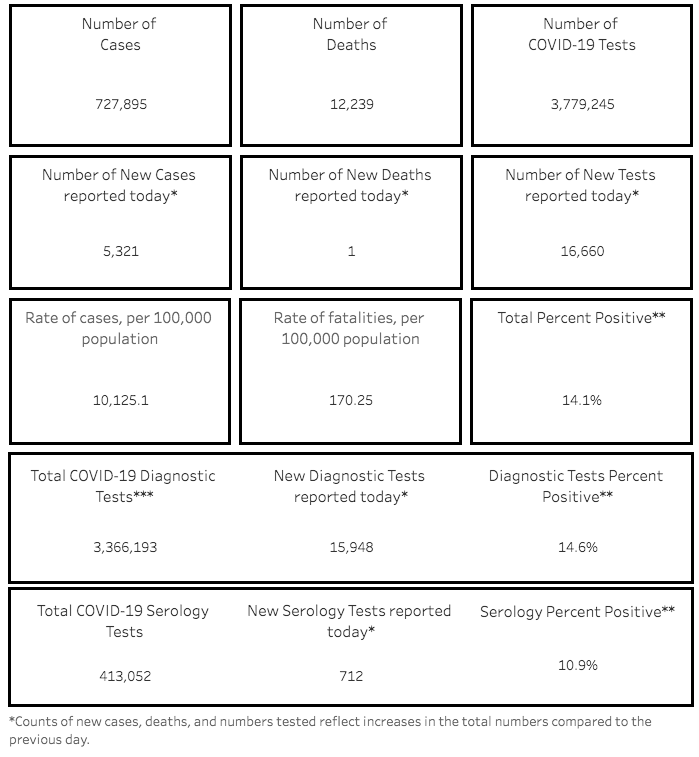
With nearly 20,000 new cases reported since Friday, the total number of Arizona’s confirmed novel coronavirus cases closed in on 728,000 as of Monday, Jan 25, according to the Arizona Department of Health Services.

Pima County, which reported 736 new cases today, has seen 97,474 of the state’s 727,895 confirmed cases.
A total of 12,239 Arizonans have died after contracting COVID-19, including 1,611 deaths in Pima County, according to the Jan. 25 report.
The number of hospitalized COVID cases statewide has declined in recent weeks after peaking at 5,082 on Jan. 11 but remains above the peak levels of the summer’s first wave. ADHS reported that as of Jan. 24, 4,229 COVID patients were hospitalized in the state. The summer peak of 3,517 hospitalized COVID patients was set on July 13; that number hit a subsequent low of 468 on Sept. 27, or about one-tenth of the current count.
A total of 1,834 people visited emergency rooms on Jan. 24 with COVID symptoms, down from the record high of 2,341 set on Tuesday, Dec. 29, 2020. That number had peaked during the summer wave at 2,008 on July 7; it hit a subsequent low of 653 on Sept. 28.
A total of 1,027 COVID-19 patients were in intensive care unit beds on Jan. 24, down from a peak of 1,183 set on Jan. 11. The summer’s record number of patients in ICU beds was 970, set on July 13. The subsequent low was 114 on Sept. 22.
COVID hospitalization on slight decline but pressure remains high
Banner’s top clinical leader began a press conference Friday with a message Arizonans haven’t heard in a long time.
“Positive COVID-19 cases are on the decline nationally and locally here in Arizona,” said Dr. Marjorie Bessel, the chief clinical officer of the state’s largest hospital system. “The positivity rate in Arizona, though still very high, has declined slightly from its peak the last week of December and COVID hospitalizations have been going down since Jan. 11.”
However, she said it's not time to let up on coronavirus mitigation efforts.
Arizona holds the country’s highest transmission rate at 96 cases per 100,000 population, according to CDC data. She also said COVID-19 patients account for 62% of the state’s hospitalizations.
“While we are pleased to see these numbers trending down, we are still experiencing uncontrolled spread of COVID-19 in Arizona,” she said. “The state continues to lead the U.S. with the highest rate of COVID-19 infection in the country.”
On Friday, Arizona passed the grim milestone of 12,000 COVID-19 deaths.
“Knowing that we have lost 12,000 Arizonans to COVID-19 weighs on our hearts and minds each and every day,” Bessel said. “My thoughts are with all those who have lost loved ones to COVID. We are going to battle this virus every day in our hospitals and we are committed to saving as many lives as we can.”
Friday, January 22, 2021
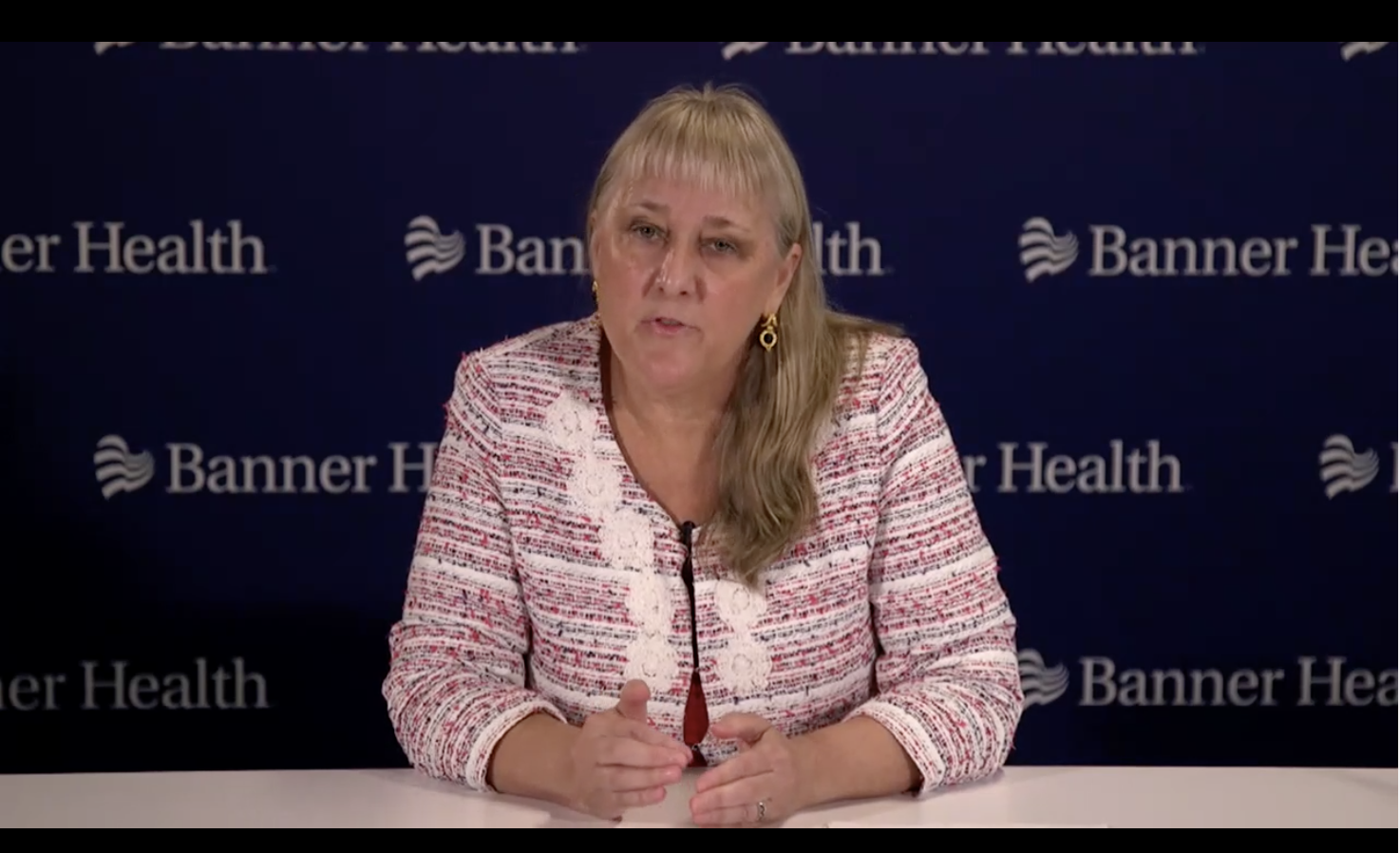
Banner’s top clinical leader began a press conference Friday with a message Arizonans haven’t heard in a long time.
“Positive COVID-19 cases are on the decline nationally and locally here in Arizona,” said Dr. Marjorie Bessel, the chief clinical officer of the state’s largest hospital system. “The positivity rate in Arizona, though still very high, has declined slightly from its peak the last week of December and COVID hospitalizations have been going down since Jan. 11.”
However, she said it's not time to let up on coronavirus mitigation efforts.
Arizona holds the country’s highest transmission rate at 96 cases per 100,000 population, according to CDC data. She also said COVID-19 patients account for 62% of the state’s hospitalizations.
“While we are pleased to see these numbers trending down, we are still experiencing uncontrolled spread of COVID-19 in Arizona,” she said. “The state continues to lead the U.S. with the highest rate of COVID-19 infection in the country.”
On Friday, Arizona passed the grim milestone of 12,000 COVID-19 deaths.
“Knowing that we have lost 12,000 Arizonans to COVID-19 weighs on our hearts and minds each and every day,” Bessel said. “My thoughts are with all those who have lost loved ones to COVID. We are going to battle this virus every day in our hospitals and we are committed to saving as many lives as we can.”
According to Bessel, bouncing back from the ongoing surge in cases will take much longer than it did during the summer surge, and she estimates the state won’t reach pre-surge hospitalization levels for another 10 or 11 weeks.
State hospitalizations are 700% higher than they were on Nov. 1, while the number of patients on ventilators has increased by 1,000%, Bessel said.
Banner hospitals will resume some elective surgeries
Due to the slight decrease in COVID-19 cases and hospitalizations, Bessel announced Banner will resume some elective surgeries on Monday.
While some surgeries will continue to be delayed based on capacity, outpatient surgeries and procedures that require no more than a one-night stay and no care in the ICU will resume.

Harvest Dispensary became the first Tucson-area dispensary to start selling recreational marijuana yesterday, with long lines forming outside the midtown outlet at 2734 E. Grant Road.
Harvest's opening came after the Arizona Department of Health Services gave the go-ahead last week for recreational cannabis sales to begin, letting dispensary owners know adult-use recreational sales can move forward as soon as licenses are approved and dispensaries are set up to handle both aspects of the market.
Applications for adult-use sales began on Jan. 19, but were restricted to existing medical marijuana establishments that qualified for early applications. The language of Proposition 207 that legalized cannabis use for adults over the age of 21 gave AZDHS two months to review and approve applications. As of Wednesday, Jan. 21, there were 62 applications for so-called “dual-licenses.”
Most cannabis advocates and those following the process expected sales to begin in late-March or early April, but with last week’s announcement, the door opened for an accelerated timetable.
Several other local dispensaries have also been authorized for recreational sales, including Green Med/Purple Med, Prime Leaf and Nature Med. But some of those dispensaries are not yet ready to start recreational sales, as there are several barriers to immediately opening up adult-use sales, not the least of which is the current state of the coronavirus pandemic still raging through the state.
Aside from that, some dispensaries might run into space and inventory issues and will need to have new operating procedures and dual point of sales systems to deal with differing tax rates and cost structures.
There is also a looming staffing shortage, as dispensary employees will now have to have multiple certifications to work in the industry.
“For us, it’s COVID—public and employee safety,” said Brian Warde, co-owner and CEO of Prime Leaf in Tucson. “Realistically you could have 150 people in line and might see over 1,000-plus patients a day most the days.”
Just from the standpoint of current patient patronage, that means to properly social distance Prime Leaf would need the equivalent of three football fields of space to accommodate the patient load. Warde says he is also waiting for inoculations for his employees that realistically won’t happen before March.
“Managing the inventory and workflow to ensure medical patients don’t run out of what they need, is also a big consideration,” he said. “We want to give patients what they have come to expect, and not allow the adult-use market to alter our patients’ experience. So slow rolling it to make sure we are in the best possible position to meet everyone’s expectations.”
This post has been updated.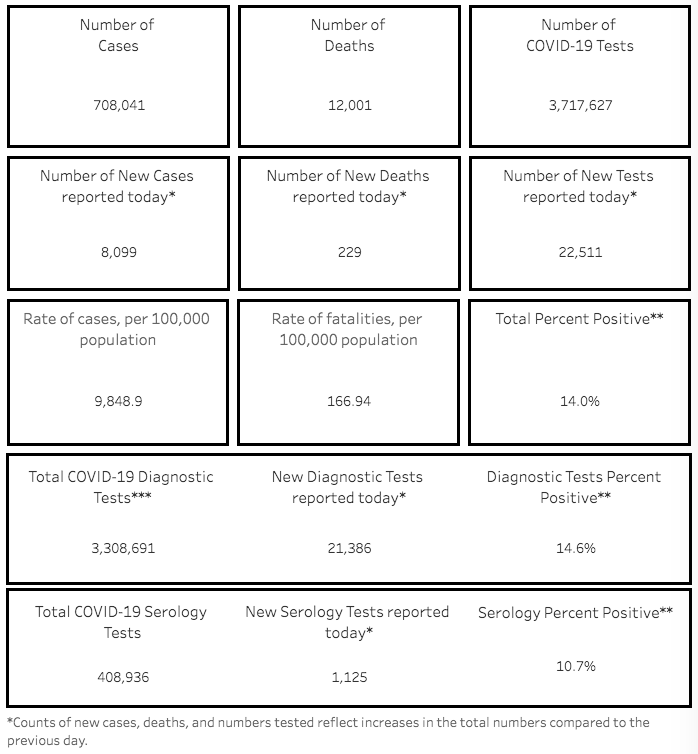
With more than 8,000 new cases reported today, the total number of Arizona’s confirmed novel coronavirus cases surpassed 708,000 as of Friday, Jan 22, according to the Arizona Department of Health Services.

Pima County, which reported 858 new cases today, has seen 94,697 of the state’s 708,041 confirmed cases.
A total of 12,001 Arizonans have died after contracting COVID-19, including 1,571 deaths in Pima County, according to the Jan. 22 report.
The number of hospitalized COVID cases statewide has declined in the last week but still remains far above the peak levels of the summer’s first wave. ADHS reported that as of Jan. 21, 4,495 COVID patients were hospitalized in the state. The summer peak of 3,517 hospitalized COVID patients was set on July 13; that number hit a subsequent low of 468 on Sept. 27, or about one-tenth of the current count.
A total of 2,007 people visited emergency rooms on Jan. 21 with COVID symptoms, down from the record high of 2,341 set on Tuesday, Dec. 29, 2020. That number had previously peaked at 2,008 on July 7; it hit a subsequent low of 653 on Sept. 28.
A total of 1,054 COVID-19 patients were in intensive care unit beds on Jan. 20. The summer’s record number of patients in ICU beds was 970, set on July 13. The subsequent low was 114 on Sept. 22.
Most school districts delaying return to the classroom; Marana will resume hybrid instruction Monday
As the spread of COVID-19 in Pima County continues to reach dangerous levels, most public school districts in the Tucson area are pushing back previously set dates to resume in-person hybrid instruction.
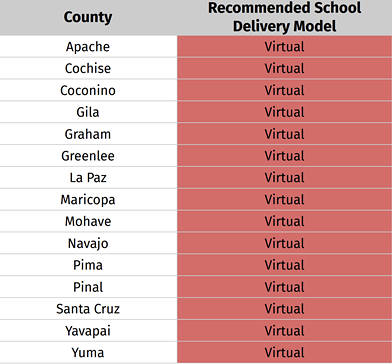
The Arizona Department of Health Services is recommending all counties commit to virtual learning for students with online classes and some onsite support services.
ADHS made its recommendation based on three key benchmarks: cases per 100,000 individuals, percent positivity and hospital visits for COVID-like illness. All benchmarks are currently in a state of substantial transmission throughout the state.
In Pima County, ADHS data shows 8,983 COVID-19 cases per 100,000 of the population and a 12.3% positivity rate of the virus as of Jan. 21. The most recent data available on the state health department’s school benchmarks website shows hospital visits for COVID-like illnesses at 14.8% as of Jan. 3.
While most districts remain in remote learning models, Catalina Foothills has remained open for in-person learning since Oct. 26. The Marana Unified School District anticipates returning to hybrid instruction on Monday, Jan. 25.
Thursday, January 21, 2021
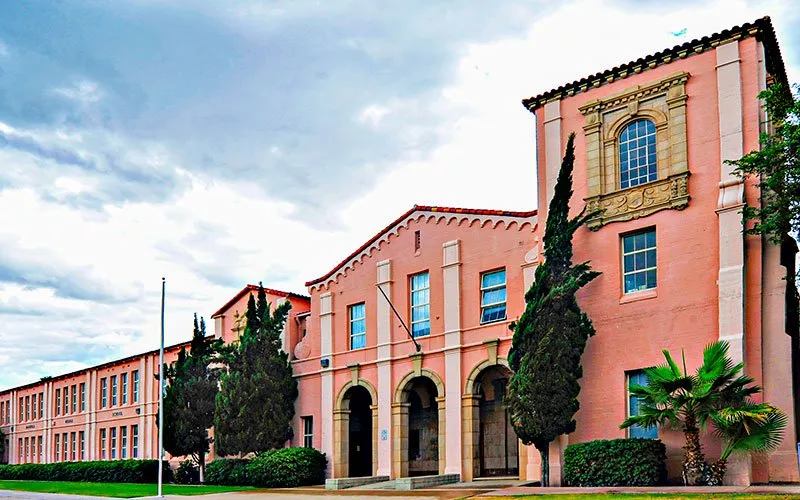
As the spread of COVID-19 in Pima County continues to reach dangerous levels, most public school districts in the Tucson area are pushing back previously set dates to resume in-person hybrid instruction.
The Arizona Department of Health Services is recommending all counties commit to virtual learning for students with online classes and some onsite support services.
ADHS made its recommendation based on three key benchmarks: cases per 100,000 individuals, percent positivity and hospital visits for COVID-like illness. All benchmarks are currently in a state of substantial transmission throughout the state.
In Pima County, ADHS data shows 8,983 COVID-19 cases per 100,000 of the population and a 12.3% positivity rate of the virus as of Jan. 21. The most recent data available on the state health department’s school benchmarks website shows hospital visits for COVID-like illnesses at 14.8% as of Jan. 3.
While most districts remain in remote learning models, Catalina Foothills has remained open for in-person learning since Oct. 26. The Marana Unified School District anticipates returning to hybrid instruction on Monday, Jan. 25.
Amphitheater
Originally set to return to a hybrid model on Jan. 19, Amphitheater Superintendent Todd Jaeger announced in a letter to families on Jan. 4 that remote-only learning would continue until a Feb. 1.
After the county health department said it would not be able to provide guidance until it receives more data, Jaeger said he plans to announce an official return date decision Friday.
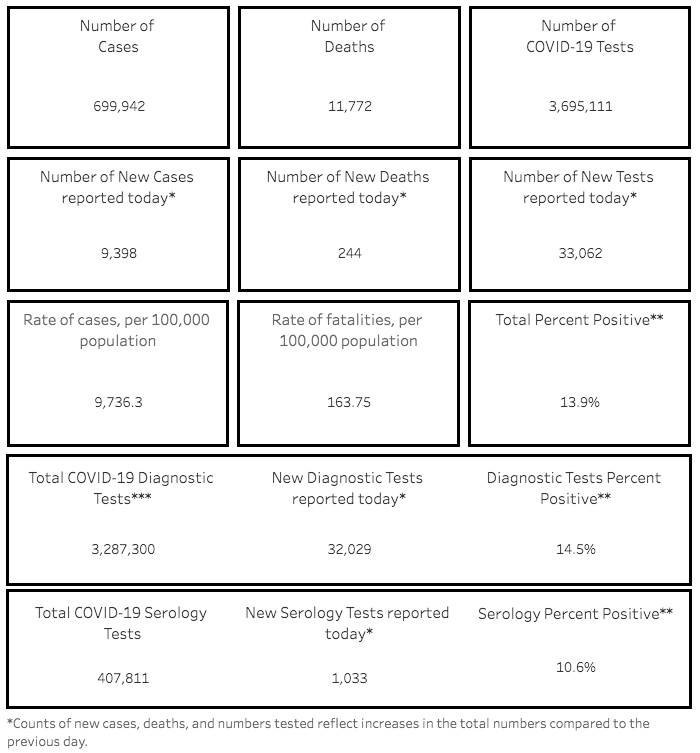
With more than 9,300 new cases reported today, the total number of Arizona’s confirmed novel coronavirus cases nearly hit 700,000 as of Thursday, Jan 21, according to the Arizona Department of Health Services.

Pima County, which reported 1,320 new cases today, has seen 93,839 of the state’s 699,942 confirmed cases.
A total of 11,772 Arizonans have died after contracting COVID-19, including 1,531 deaths in Pima County, according to the Jan. 21 report.
The number of hospitalized COVID cases statewide has dropped slightly in the last week but still remains far above the peak levels of the summer’s first wave. ADHS reported that as of Jan. 20, 4,580 COVID patients were hospitalized in the state. The summer peak of 3,517 hospitalized COVID patients was set on July 13; that number hit a subsequent low of 468 on Sept. 27, or about one-tenth of the current count.
A total of 2,046 people visited emergency rooms on Jan. 20 with COVID symptoms, down from the record high of 2,341 set on Tuesday, Dec. 29, 2020. That number had previously peaked at 2,008 on July 7; it hit a subsequent low of 653 on Sept. 28.
A total of 1,058 COVID-19 patients were in intensive care unit beds on Jan. 20. The summer’s record number of patients in ICU beds was 970, set on July 13. The subsequent low was 114 on Sept. 22.
Bars win round in court against Pima County curfew
Pima County’s mandatory 10 p.m. to 5 a.m. curfew has been temporarily halted after a group of Tucson bars were granted a preliminary injunction barring the county from enforcing the curfew.
Owners of Cobra Arcade Bar, HighWire Lounge and The Maverick filed a joint lawsuit on Jan. 5 contending the county overextended their legal authority to mandate a curfew.
WASHINGTON – President Joe Biden unveiled a sweeping immigration reform bill Wednesday that would create a pathway to citizenship for millions of undocumented immigrants, preserve DACA and end the ban on travel from Muslim-majority countries, among other changes.
The proposal, released on the first day of his presidency, is a sharp reversal from former President Donald Trump’s policies and was hailed by advocates for righting “the cruelty that was the cornerstone” of Trump’s immigration actions.
But other experts warned that while there are many good elements in the bill, it has little chance of passing the Senate without revisions.
“The big thing is the legalization of illegal immigrants, that’s a non-starter for a majority of Republicans,” said Alex Nowrasteh, director of immigration studies at the Cato Institute. In its current form, Nowrasteh, “has no chance of passing.”
Supporters would need to get 60 votes to overcome any likely filibuster attempts in the Senate, which is now evenly divided between Democrats and Republicans with Vice President Kamala Harris, a Democrat, holding the potential tie-breaking vote.
Wednesday, January 20, 2021

With more than 4,800 new cases reported today, the number of Arizona’s confirmed novel coronavirus cases topped 690,000 as of Wednesday, Jan 20, according to the Arizona Department of Health Services.
Pima County, which reported 779 new cases today, has seen 92,519 of the state’s 690,544 confirmed cases.
A total of 11,528 Arizonans have died after contracting COVID-19, including 1,495 deaths in Pima County, according to the Jan. 20 report.
The number of hospitalized COVID cases statewide has dropped slightly in the last week but still remains far above the peak levels of the summer’s first wave. ADHS reported that as of Jan. 19, 4,663 COVID patients were hospitalized in the state. The summer peak of 3,517 hospitalized COVID patients was set on July 13; that number hit a subsequent low of 468 on Sept. 27, or about one-tenth of the current count.
A total of 2,006 people visited emergency rooms on Jan. 19 with COVID symptoms, down from the record high of 2,341 set on Tuesday, Dec. 29, 2020. That number had previously peaked at 2,008 on July 7; it hit a subsequent low of 653 on Sept. 28.
A total of 1,050 COVID-19 patients were in intensive care unit beds on Jan. 19. The summer’s record number of patients in ICU beds was 970, set on July 13. The subsequent low was 114 on Sept. 22.
Vaccines now available at UA for teachers
The University of Arizona—one of six designated points of COVID-19 vaccine distribution in Pima County—began administering vaccines to qualifying individuals Tuesday, according to UA President Dr. Robert Robbins.
“[Pima County] asked us to be a point of delivery to vaccinate not just our 15,000 family members that are on the faculty and staff at the UofA, but also all childcare providers, all K-12 educators and staff and all Pima Community College faculty and staff,” Robbins said. “For the whole county of Pima, we’re the education POD.”
This week, 1,000 Phase 1B.1 educators will receive vaccines at the campus, according to a press release from the university.
UA will work with the county health department this week to “continue to refine” its delivery process, Robbins said, and it expects to deliver 396 vaccines to K-12 education workers Tuesday through Thursday.
Tuesday, January 19, 2021

Monday, January 18, 2021
WASHINGTON – About 180 white tombstones – each belonging to a child who died while attending the Carlisle Indian Industrial School – stand row-by-row in the dewy grass of central Pennsylvania, bearing the names of those who died while being forced to learn the white man’s way.
From 1,500 to 1,800 Native American students from Oklahoma attended the Carlisle school, said Jim Gerenscer, co-director of the Carlisle Indian School Project, a database that provides information about the school and the students who attended. But some never made it back home, dying from unknown causes at Carlisle.
The purpose of school, as well as others across the nation, was to remove Native Americans from their cultures and lifestyles and assimilate them into the white man’s world.
Carlisle, which opened in 1879 and operated until 1918, was among the first and best-known boarding schools for Native children, and its operational model set the standard for most that came after.
For many tribes in Oklahoma, the horrors of the Carlisle model were experienced closer to home.
Riverside Indian School, outside Anadarko, is the nation’s oldest federally operated American Indian boarding school. Organized by Quaker missionaries in 1871, it was known as the Wichita-Caddo School until 1878.
Joe and Ethil Wheeler were educated there. Anthony Galindo, the grandson they raised, recalls hearing their stories about conditions at the school.

